-
From Scars to Strength: How Brokenness Reveals Worth and Fuels Post‑Traumatic Growth

A life-altering loss initiated a fifteen-year healing journey through grief, PTSD, and the steady reconstruction of inner safety. The experience demonstrated that knowledge alone cannot resolve trauma; embodied practices such as somatic breathwork, yoga, and Ayurvedic restorative care are essential for regulation and resilience. Over time, vulnerability became a bridge to connection, reframing imperfections not…
-
Beyond the Witness: How True Meditation Dissolves the Experiencer into Non-Dual Awareness

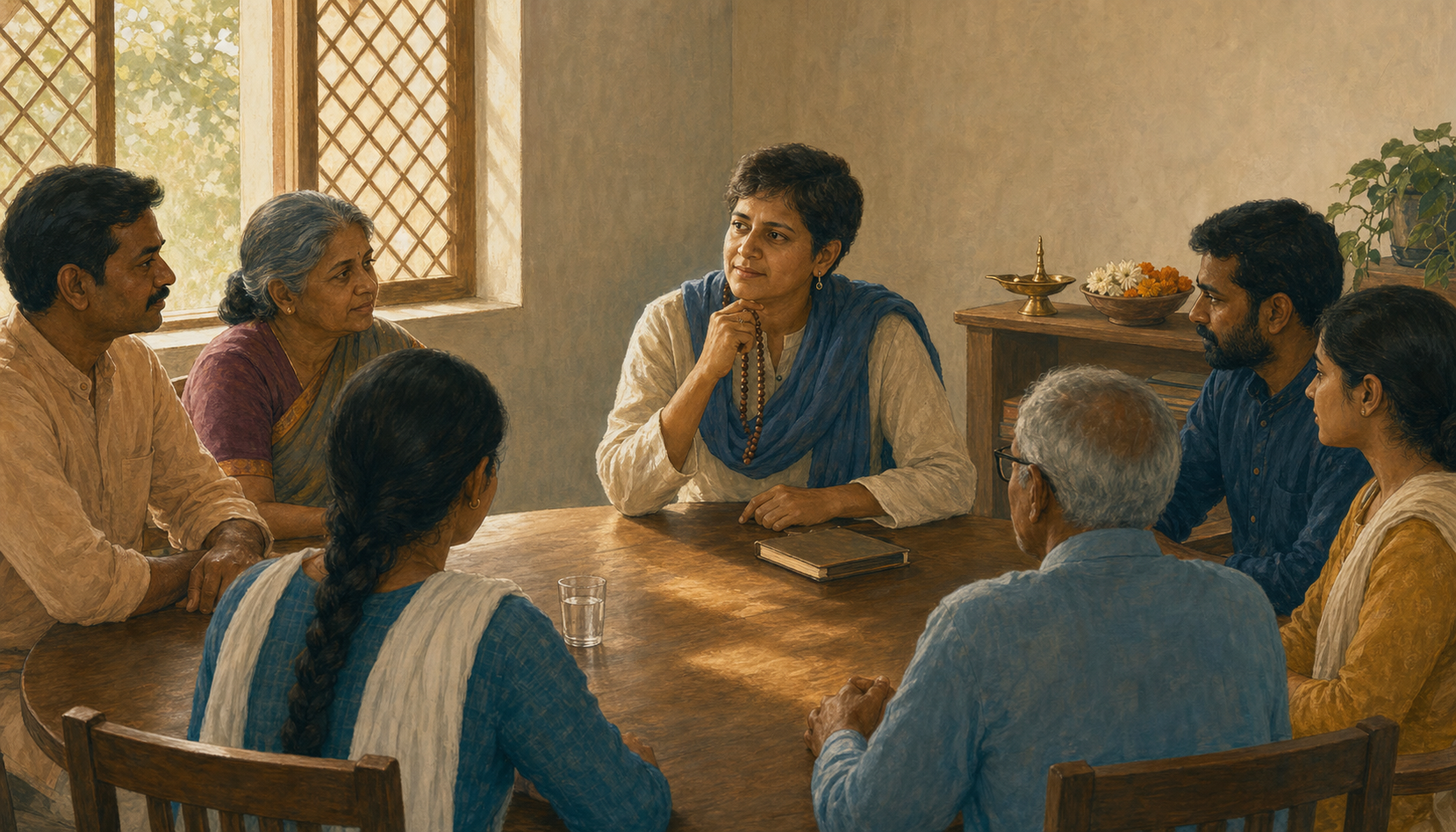
True meditation in Hindu philosophy reaches its culmination when the experiencer, the act of observing, and the observed no longer stand apart. This non-dual insight, often described as moving “beyond the witness,” dissolves the subtle identity of a separate meditator without denying the vividness of life. The Upanishads, Advaita Vedanta, and Yoga philosophy converge on…
-
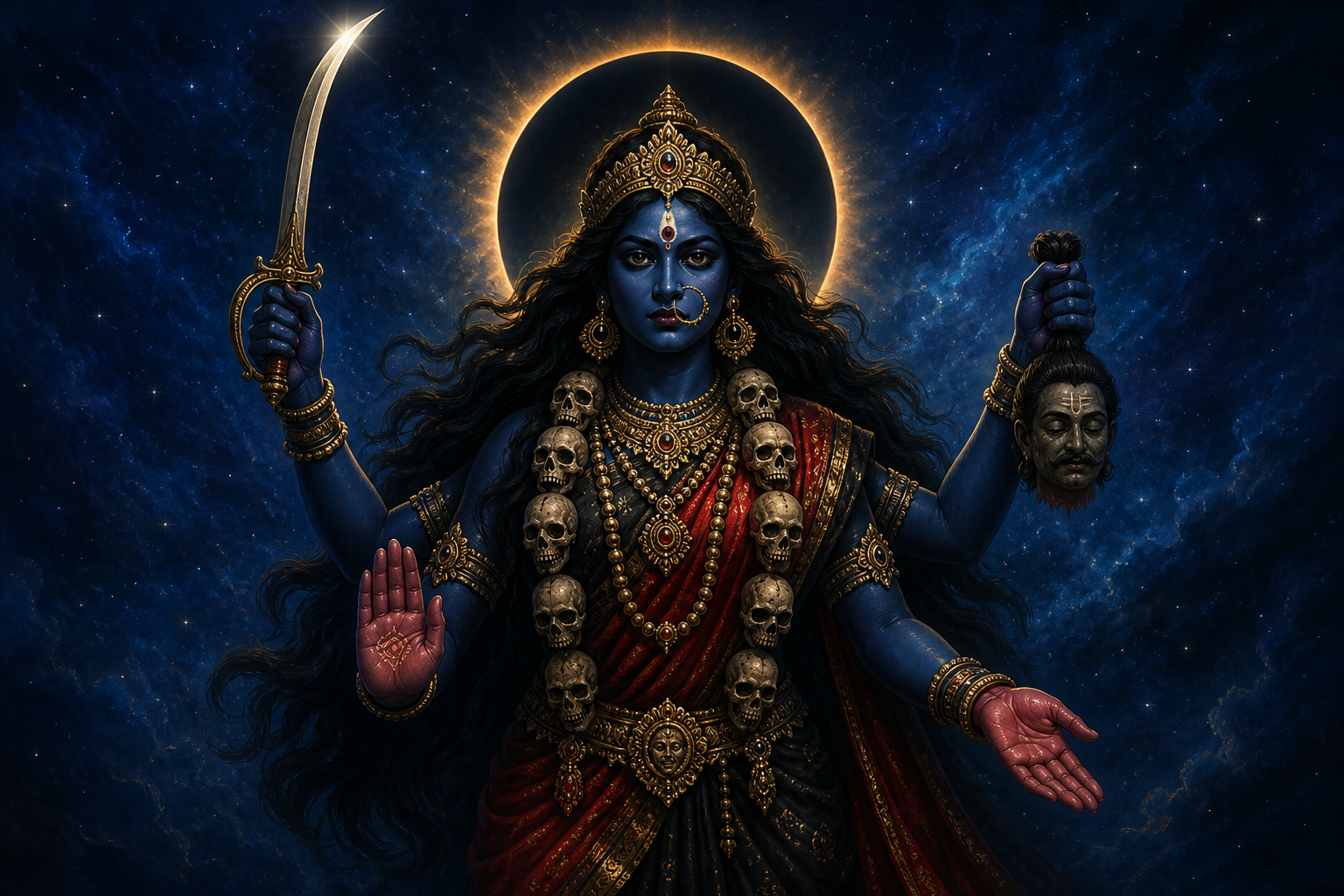
Fierce Grace on Kurukshetra: Goddess Kalaratri’s Sacred Role and Soul-Carrying Symbolism

Goddess Kalaratri emerges in the Mahabharata War as a profound symbol of Time, moral consequence, and fierce compassion. Read as a cosmic witness and soul-carrier, she reframes Kurukshetra not as mere carnage, but as a rite of ethical passage aligned with Dharma-Yuddha. This lens clarifies how endings in the epic serve renewal within a larger…
-
Arjuna and Kirata Shiva vs. Demon Mook: Powerful Spiritual Lessons on Inner Courage

This analysis situates the Kirata episode—where Arjuna and Shiva (as Kirata) slay the demon Mook—within the Mahabharata’s spiritual arc. It clarifies the narrative sequence, from Arjuna’s rigorous tapasya to Shiva’s revelation and the bestowal of the Pashupatastra. It interprets Mook as the symbolic “inner demon” of delusion and tamasic impulse that arises at the threshold…
-
Panchamundi Asana Symbolism: The Goddess’s Awe-Inspiring Throne and the Triumph Over Human Limits

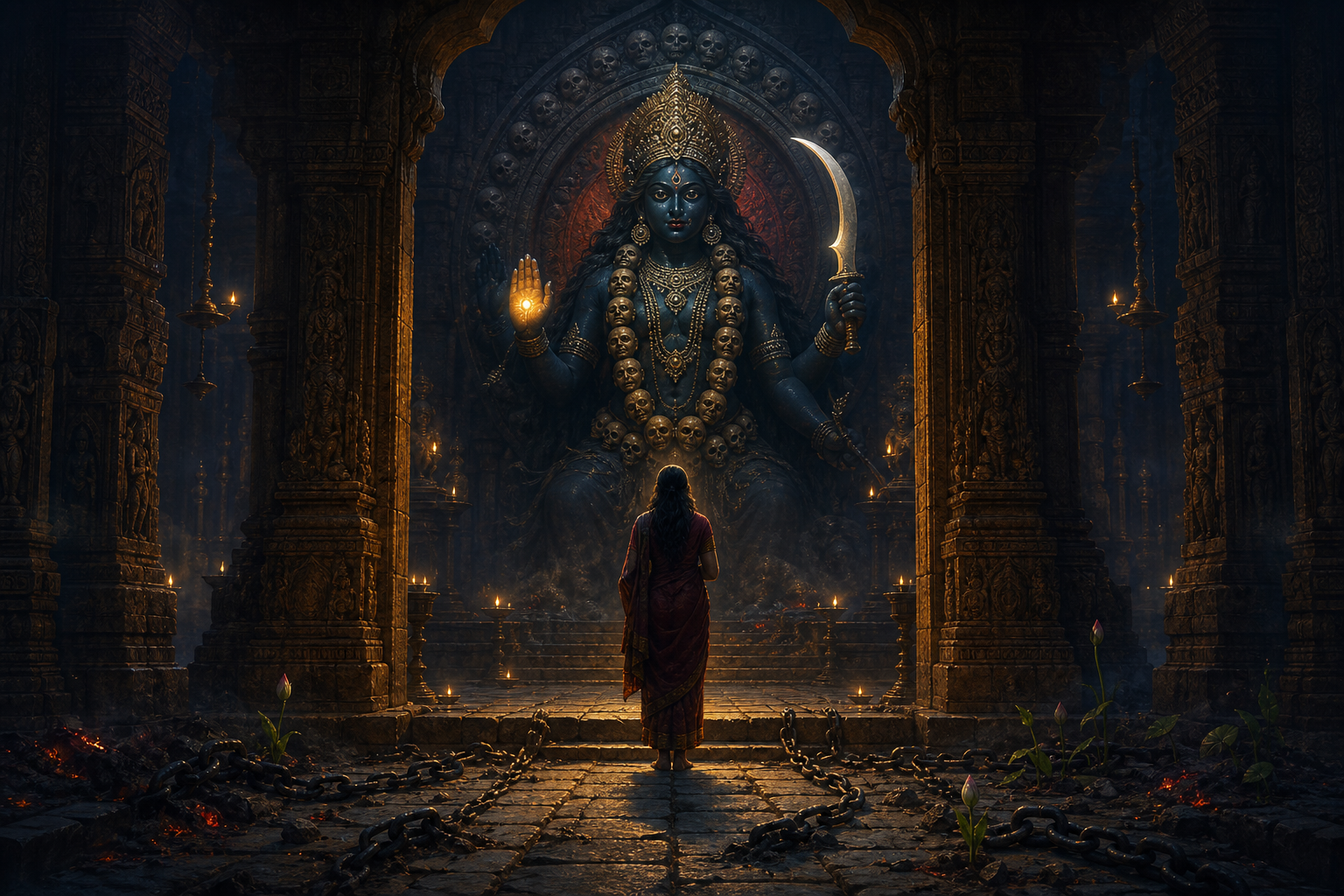
The Panchamundi Asana—Goddess Kali or Durga seated upon five skulls—functions as a precise Tantric statement about transcendence in Hindu temples. The five can represent senses, elements, sheaths, or afflictions, each pointing to mastery of inner limitations. Rather than glorifying death, the icon uses mortality as a mirror that cultivates fearlessness, clarity, and compassion. The symbolism…
-
Profound Review of 64 Elements of Pure Devotional Service in Mayapur with HH Krishna Kshetra Swami

Held on January 10, 2026, at Go-druma Bhavan, Mayapur, the Sat Sanga led by HH Krishna Kshetra Swami offered a clear and compassionate review of the 64 Elements of Pure Devotional Service. The session began with Balya-lila (verses 1–8) from Srila Locana Dasa Thakura’s Sri Caitanya Mangala, setting an emotive and scriptural tone. Participants engaged…
-
Srimad Bhagavatam 11.2.32: Inspiring Dharmic Leadership and Devotion Lessons at ISKCON Juhu

This discourse from ISKCON Juhu on Srimad Bhagavatam 11.2.32 presents a clear, actionable model of dharmic leadership grounded in humility, accountability, and devotion. Drawing on the dialogue between Maharaja Nimi and the Nine Yogendras, it shows why rulers and decision-makers benefit from saintly counsel and ethical review. The analysis connects inner practices—sadhana, study, and satsanga—to…
-
Beyond Ritual: ISKCON Adelaide on Pilgrimage, Eclipses, and Kurukshetra’s Purifying Power

This reflection on ISKCON Adelaide’s Srimad-Bhagavatam class explains why pilgrimage yields its deepest results through śravaṇa, kīrtana, and sādhu-saṅga rather than ritual bathing alone. It clarifies how eclipses, approached as disciplined windows for practice, amplify remembrance and compassion across dharmic traditions. Kurukshetra’s connection to Krishna’s pastimes illustrates sacred geography as a living classroom for devotion…
-
Mastering the Three Gunas: A Transformative Hindu Path to Personality Growth and Calm

Hinduism offers a precise, practice-ready model of personality development through the three gunas—Sattva, Rajas, and Tamas—explained in the Bhagavad Gita and the Srimad Bhagavata Purana. By cultivating Sattva for clarity, channeling Rajas into purposeful service, and reducing obstructive Tamas, individuals gain emotional balance, ethical focus, and resilient energy. Practical steps—meditation, pranayama, sattvic diet, structured routines,…
-
When Harm Returns Home: Dharmic Wisdom on Ahimsa, Karma, and Inner Well-Being

The maxim “In injuring others you really injure yourself” expresses a shared dharmic truth: harm rebounds upon the doer through the natural interplay of karma and dharma. Across Hinduism, Buddhism, Jainism, and Sikhism, ahimsa, compassion, and seva sustain both inner calm and social trust. Practical experience confirms this law—hurtful conduct unsettles the mind, while ethical…
-
Why Sri Rama Is Priyadarshan: A Transformative Vision of Compassion and Dharma

Priyadarshan, a revered epithet of Sri Rama, signifies a disciplined, compassionate vision that recognizes the good in others and remembers acts of kindness while releasing grievances. Rooted in the Ramayana and resonant with the Vishnu Sahasranama, it blends devotional beauty with ethical clarity. Scriptural episodes—from honoring Jatayu to welcoming Vibhishana—demonstrate how this outlook transforms power…
-
When Society Says You’re Incomplete, Hindu Wisdom Boldly Affirms Your Eternal Wholeness

This essay challenges the modern narrative of lack by presenting Hinduism’s vision of innate wholeness. Drawing on Advaita Vedanta and the Isha Upanishad’s insight of fullness, it explains how avidya creates a sense of incompleteness and how practice reveals what is already present. It connects these ideas with contemporary psychology’s hedonic treadmill, showing why external…
-
Bhima vs Duryodhana: The Final Reckoning and Symbolic Resolution of the Mahabharata
The Mahabharata’s Kurukshetra War resolves in a singular, symbolic duel between Bhima and Duryodhana. Framed by gada-yuddha rules and a stark, dried lake bed, the battle concentrates the epic’s ethical tensions into one decisive moment. Bhima’s controversial blow fulfills a vow while testing the bounds of dharma and procedure. The thigh, marked by prior insult,…
-
Kirtan Leadership as Sacred Service: Cultivating Presence, Humility, and Transformative Joy

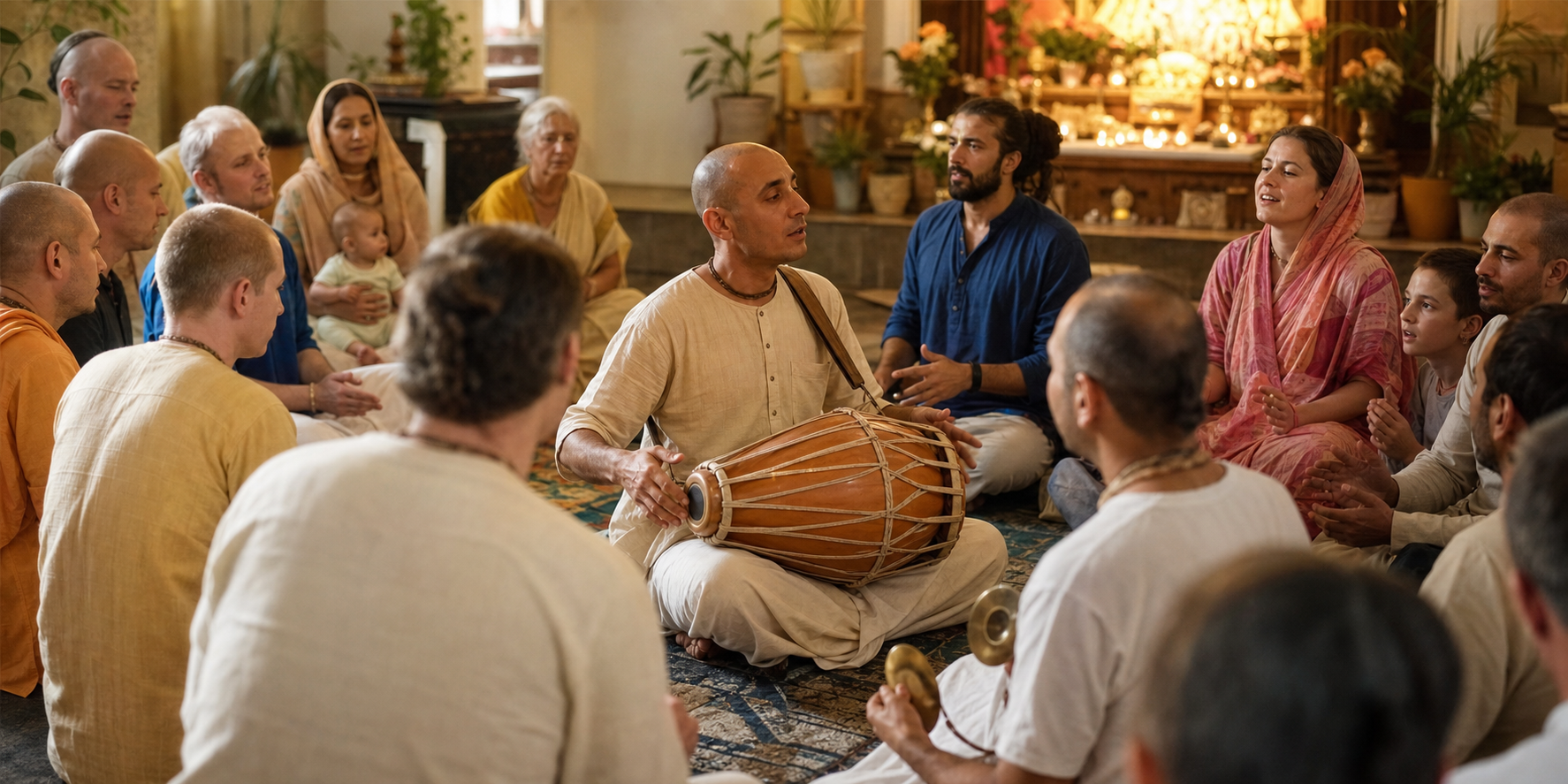
Kirtan leadership is a sacred service that centers collective remembrance of the Divine through sound, attention, and humility. Rooted in the bhakti conviction that Krishna is present in His Name, this role emphasizes disciplined chanting and deep listening over performance. Practitioners may at times feel the Lord’s presence vividly, and at other times experience dryness;…
-
Panchayatana Puja and the Five Elements: A Profound Path to Harmony and Unity

Panchayatana Puja unites devotion and philosophy by aligning multi-deity worship with the Panchabhutas—the five elements of nature. Through panchopachara offerings and a mandala arrangement, practitioners engage earth, water, fire, air, and space in a mindful, integrative ritual. This Smarta tradition, associated with Adi Sankara, honors an ishta-devata while equally revering other forms, modeling unity within…
-
Madhuchandas and the First Ten Suktas: Unveiling the Rig Veda’s Foundational Voice

Madhuchandas, son of Vishwamitra, is traditionally credited with the first ten suktas of the Rig Veda’s first mandala, establishing a foundational voice for Vedic hymnody. These hymns, revered as shruti, combine ritual power with philosophical clarity, highlighting themes of cosmic order, gratitude, and truthful living. The poetic craft—meters like Gāyatrī and Triṣṭubh, and vivid imagery…
-
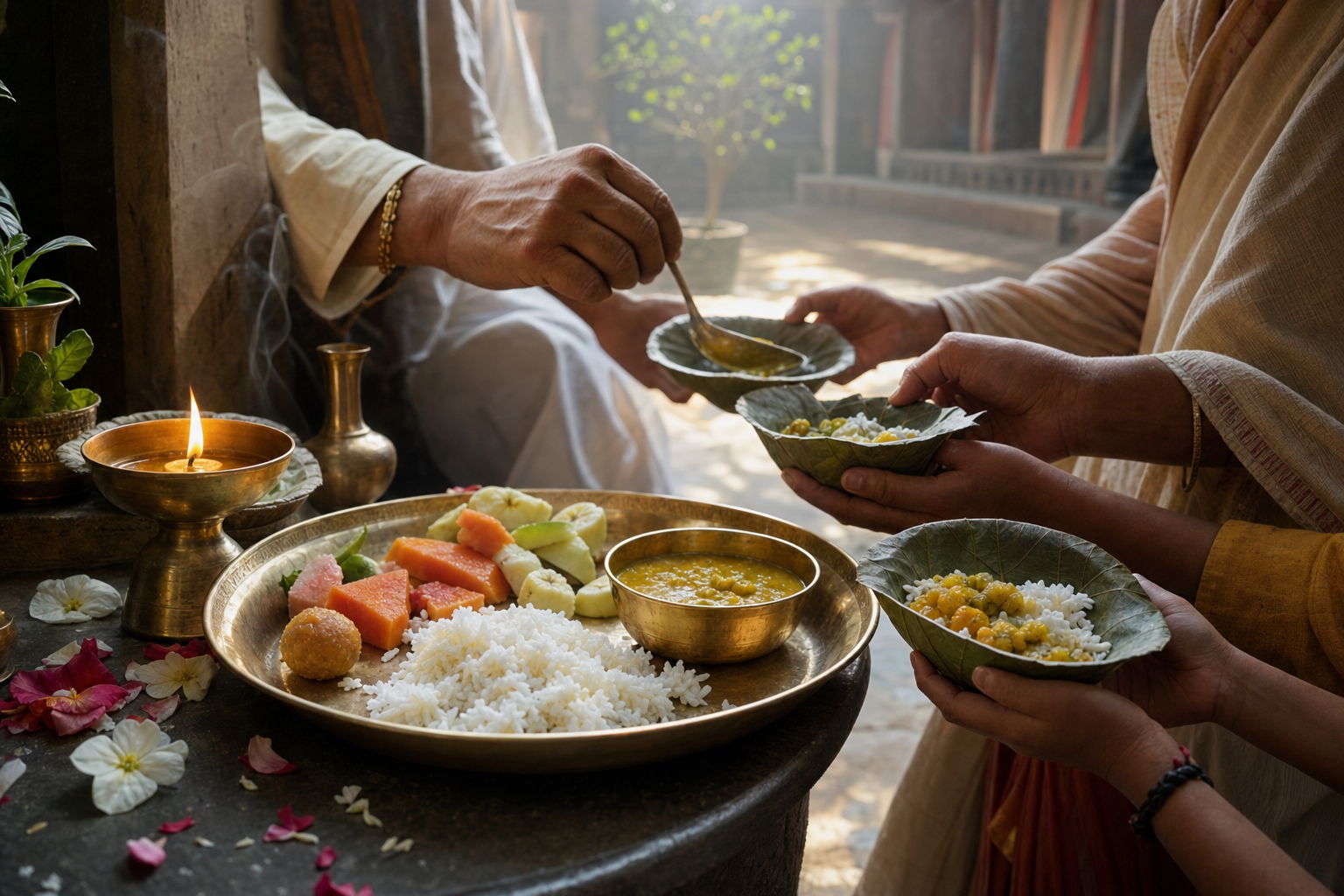
Transforming Temple Visits with Sacred Hospitality: Welcoming Every Guest with Love and Dignity

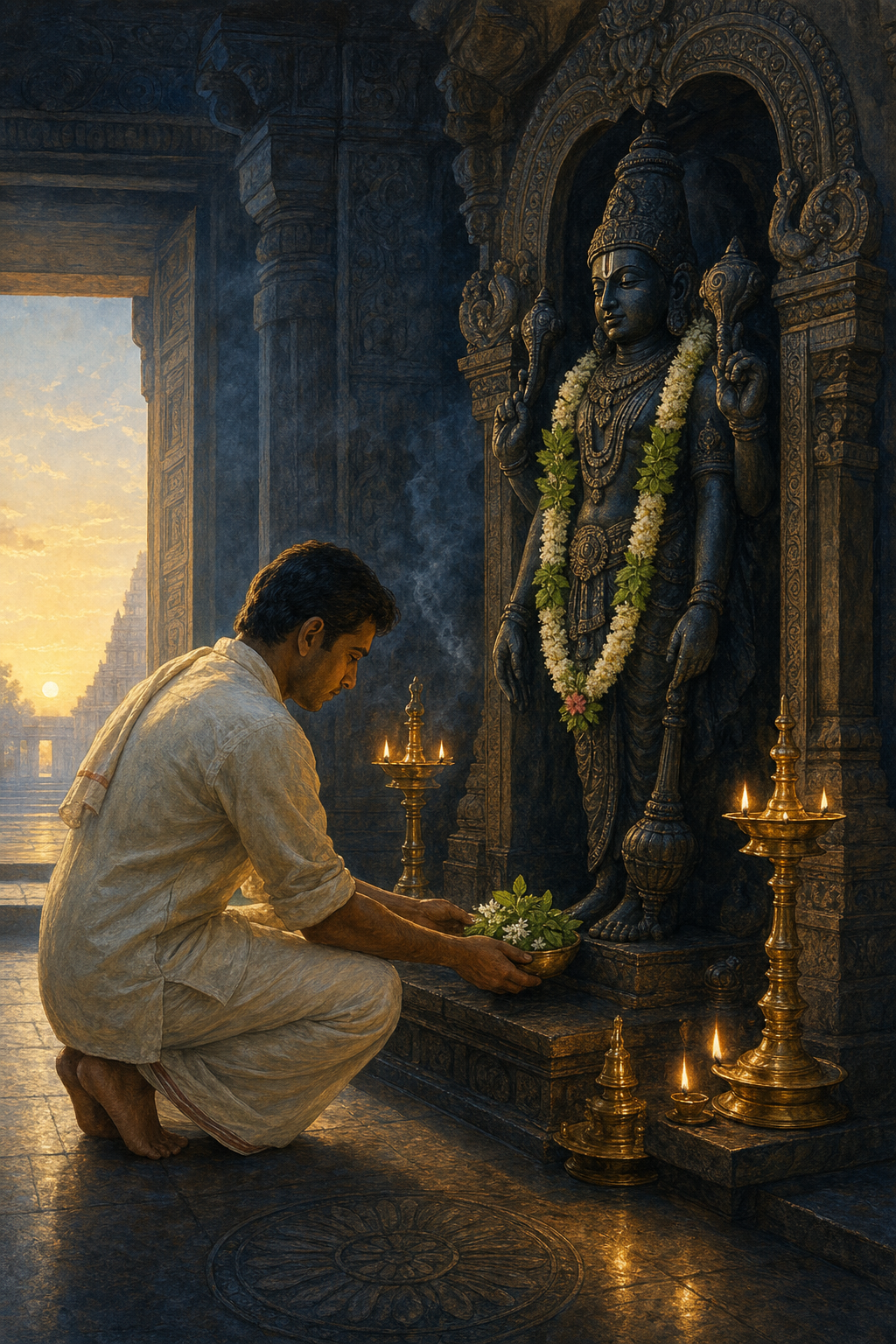
Sacred hospitality turns every temple visit into a dignified, inclusive, and uplifting experience. Drawing on Srila Prabhupada’s guidance, the practice emphasizes affectionate words, simple care, and thoughtful explanations of the Deities. Offering Krishna Prasadam with gratitude deepens devotion while keeping the atmosphere welcoming and serene, akin to Vaikuntha. Extending the same warmth to residents and…
-
Beyond Fragrance: Vaikuntha’s Joy of Seva and the Power of Desireless Devotion

The Vaikuntha tradition describes a community that values seva over sensation, regarding even exquisite fragrances as negligible beside the joy of devotion. This perspective clarifies a hierarchy of aims in bhakti: devotion is both the means and the end, surpassing Mukti, Bhukti, and Siddhi. Such desireless devotion purifies intention, rendering the heart fit for the…
-
Beyond the Five Senses: Hinduism’s Profound Insight into Why Perception Misleads

Human perception is inherently limited, a point Hinduism has articulated for centuries and modern science increasingly affirms. The five indriyas capture only a fraction of reality, making errors of judgment likely without disciplined methods of knowing. Hindu epistemology balances pratyaksha (perception), anumana (inference), and shabda (authoritative testimony) to refine understanding. Concepts like Maya and Avidya…
-
Master Your Inner World: Hindu Spirituality for Resilience, Clarity, and Courage

Hindu spirituality offers a practical, life-affirming framework for mastering the inner world to meet daily challenges with clarity and courage. Grounded in Dharma and Karma Yoga, it strengthens focus, emotional balance, and ethical action without retreating from responsibility. Across dharmic traditions—Hinduism, Buddhism, Jainism, and Sikhism—shared practices like mindfulness, ahimsa, and seva build resilience and compassion.…