-
Master Your Inner World: Hindu Spirituality for Resilience, Clarity, and Courage

Hindu spirituality offers a practical, life-affirming framework for mastering the inner world to meet daily challenges with clarity and courage. Grounded in Dharma and Karma Yoga, it strengthens focus, emotional balance, and ethical action without retreating from responsibility. Across dharmic traditions—Hinduism, Buddhism, Jainism, and Sikhism—shared practices like mindfulness, ahimsa, and seva build resilience and compassion.…
-
Kali’s Fearless Sword: Symbolism that Cuts Ignorance and Awakens Dharmic Wisdom
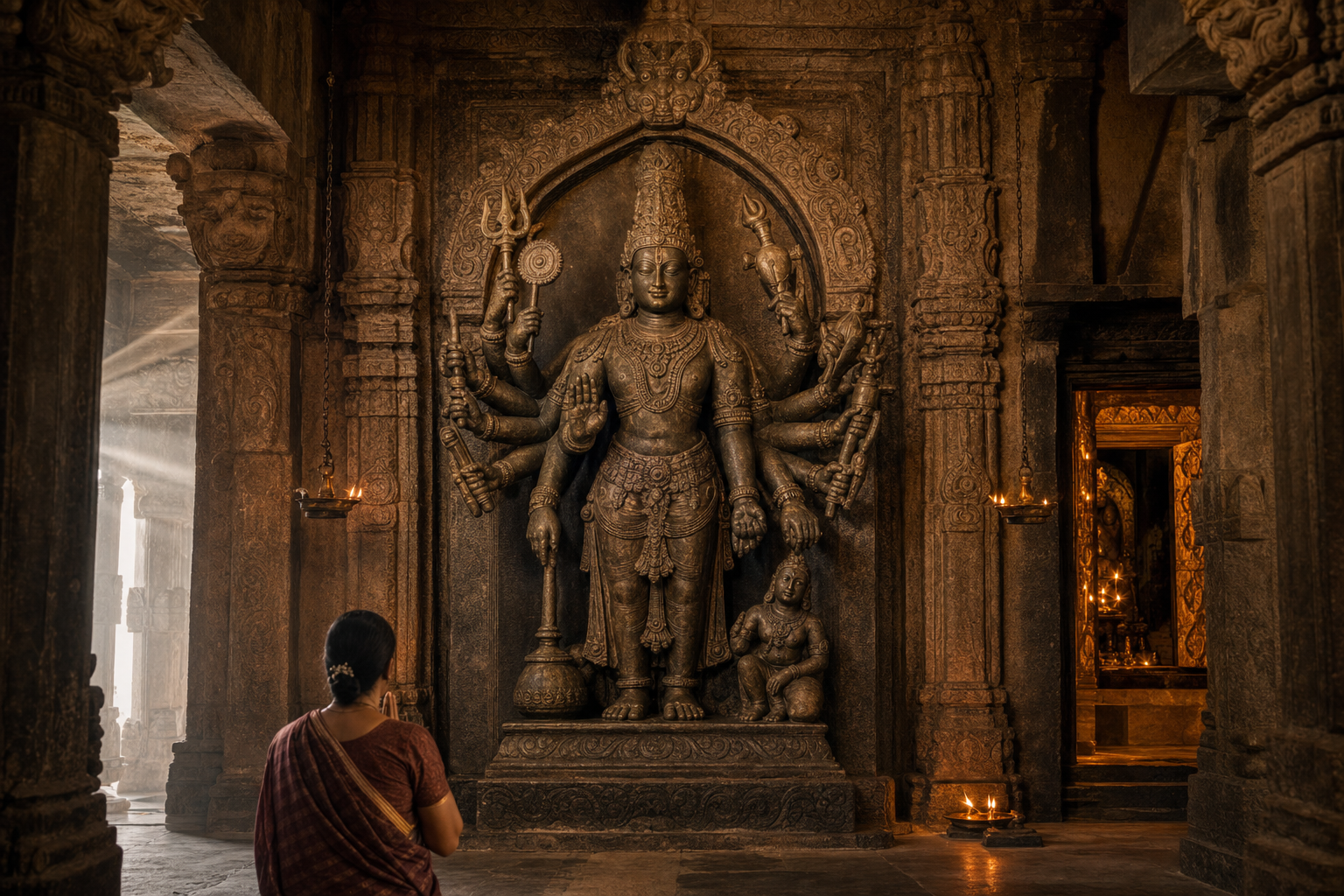
Goddess Kali’s sword (kripana) symbolizes the discerning power that cuts through avidya while illuminating jnana, transforming a seemingly fearsome image into a compassionate guide to freedom. The severed head (chinnamunda) represents the surrender of constricting ego and the release of fear-driven patterns. Her right-hand mudras—abhaya and varada—assure protection and grace, balancing courage with compassion. Read…
-
January 21, 2026 Panchang: Shukla Paksha Tritiya Tithi, Good Time, Nakshatra, Rashi

This Daily Hindu Calendar update notes that Wednesday, January 21, 2026, begins with Shukla Paksha Dwitiya until 2:15 AM and then transitions to Shukla Paksha Tritiya for the rest of the day. Readers gain clarity on how the Hindu calendar (Panchang) structures the waxing phase of the Moon and why local verification matters. Guidance emphasizes…
-
Heaven on Earth Is Contentment: A Dharmic Path to Lasting Joy Beyond Wealth and Status

This article examines why contentment—santosha in Hindu thought—functions as a greater treasure than material abundance and how it manifests as “heaven on earth.” It contrasts the emptiness that can persist despite wealth with the quiet joy possible in simplicity. Drawing on shared insights from Hinduism, Buddhism, Jainism, and Sikhism, it shows how santosha, aparigraha, upekkhā,…
-
Twelve Sacred Names of Surya Bhagavan: Radiant Benefits, Auspicious Timing, and How to Chant

The Twelve Sacred Names of Surya Bhagavan offer a concise, profound practice rooted in Vedic mantras and Hindu rituals. Chanting Mitra, Ravi, Surya, Bhanu, Khaga, Pushan, Hiranyagarbha, Marichi, Aditya, Savitru, Arka, and Bhaskara promotes vitality, focus, and emotional balance while cultivating gratitude and clarity. Sunrise, Sundays, and auspicious tithis such as Ratha Saptami are especially…
-
Kāma vs Prema in Chaitanya-charitamrita: Transforming Desire into Selfless Divine Love

C.C. Adi-lila 4.158–162 offers a lucid distinction between kāma (self-centered desire) and prema (selfless love), showing how intention transforms desire into devotion. The class by H.G. Braja Bihari Prabhu emphasizes that prema seeks to gladden Kṛṣṇa through service, humility, and steadfastness. A preserved Sanskrit verse highlights love’s resilience even when dissolution seems justified. Parallels across…
-
Eternal Gains vs. Fleeting Wins: Sunday Feast Bhagavad Gita with Prabhupada Priya Devi Dasi

This Sunday Feast lecture (January 11, 2026) by Prabhupada Priya Devi Dasi presents a clear contrast between spiritual activities and material pursuits through the lens of the Bhagavad Gita. It highlights that material achievements are inherently temporary, while spiritual advancement carries enduring benefits. Referencing Karma Yoga (Bhagavad Gita 2.40), the talk notes that even small…
-
Mind, Intelligence, and Yoga in Srimad Bhagavatam: Aniruddha’s Grace and Dharmic Unity

This Srimad Bhagavatam (Canto 3, Chapter 26) exploration by HH Mukunda Goswami examines mind, intelligence, and yoga through Srila Prabhupada’s purports and the Gaudiya Vaishnava tradition. It clarifies the mind’s identification with Lord Aniruddha, the ruler of the senses, translating sensory mastery into sacred practice. The session presents a practical, integrated yoga—yama-niyama, pratyahara, dhyana, and…
-
Why the Upanishads Inspire Unity: Timeless, Non-Sectarian Wisdom for All Seekers

The Upanishads endure as non-sectarian, universal Scriptures that speak across traditions and eras. Their core inquiry into ātman, Brahman, and truth encourages seekers to look beyond labels and toward direct realization. By emphasizing disciplined reflection, meditation, and ethical living, they offer tools for clarity, compassion, and inner stability. This approach strengthens unity among the Dharmic…
-
The Inner Inferno: How Hindu Wisdom Transforms Uncontrollable Anger into Clarity and Peace

Hindu philosophy reframes hell as an inner state—uncontrollable anger (krodha)—that distorts judgment and harms relationships. Drawing on the Bhagavad Gita and yogic disciplines, this article explains how anger escalates and how breath, meditation, and self-study interrupt the cycle. Practical steps—such as short pranayama sets, mindful naming of emotions, and satttvic routines—build emotional resilience and self-control.…
-
Chhinnamasta in the Pranatosini Tantra: Divine Self-Sacrifice and Cosmic Renewal

This article explores the Pranatosini Tantra’s account of Chhinnamasta, a Mahavidya who embodies divine self-sacrifice and cosmic renewal. It explains how the Goddess nourishes her attendants through three life-giving streams, an image read as both prāṇa symbolism and radical generosity. The iconography—standing over Kāma and Rati—illustrates mastery over desire and the transformation of passion into…
-
Poh’s Quiet Fire: Separation, Remembrance, and Inner Awakening across Dharmic Paths

Poh, corresponding to the Poush Month of the Hindu calendar, arrives with the Winter Solstice and encourages quiet reflection. Across Sikh, Hindu, Buddhist, and Jain traditions, it frames a threefold journey: separation as restorative pause, remembrance as ethical memory, and inner awakening as steady practice. Observances such as simran, japa, dhyana, samayik, and mindful reading…
-
January 20, 2026 Panchang: Shukla Paksha Dwitiya Tithi, Timings and Auspicious Notes

On Tuesday, January 20, 2026, the Hindu calendar (Panchang) moves from Shukla Paksha Pratipada until 1:59 AM to Shukla Paksha Dwitiya for most regions. The waxing fortnight’s early days symbolize renewal and steady growth, making this period favorable for reflective planning, study, and seva. Those seeking an exact good time (shubh muhurat), Nakshatra, and Rashi…
-
When Nature Turns Fierce, Worship Unites: A Steady, Compassionate Path to Resilience

Natural disasters disrupt lives, strain resources, and test collective resolve. Worship, understood across dharmic traditions as prayer, meditation, and compassionate service, provides emotional steadiness and social cohesion when crises unfold. Shared practices—bhajans, kirtan, langar, mettā meditation, and Pratikraman—create safe spaces for grief, gratitude, and coordination. When integrated with preparedness measures such as drills, first-aid training,…
-
Why Worship Is Never a Waste: Enduring Protection, Inner Strength, and Dharmic Unity

Worship is never a waste because it builds resilient minds, compassionate hearts, and ethical action. Across Hinduism, Buddhism, Jainism, and Sikhism, disciplined devotion and meditation act as a protective shield by stabilizing attention and reinforcing purpose. This protection is not magical; it is psychological, moral, and communal. Unity in spiritual diversity allows many valid paths—bhakti,…
-
Hamsa in Hinduism: Sacred Swan Symbolism and the Vahana of Saraswati, Brahma, Gayatri, Vishwakarma

The hamsa (swan) holds a sacred place in Hindu scriptures and iconography, especially as the vahana of Saraswati, Brahma, Gayatri, and Vishwakarma. Legends situate divine swans in the Himalayan ranges and at Manasarovar Lake, where they signify purity and transcendence. As a symbol of viveka (discriminative wisdom), the hamsa aligns naturally with learning, truthful speech,…
-
Sri Dharma Sastha Bhujangam: Adi Sankara’s Powerful Hymn of Unity, Devotion, and Dharma

Sri Dharma Sastha Bhujangam, attributed to Sri Adisankara, is a Sanskrit devotional hymn that praises Lord Dharma Sastha (Ayyappa) as a compassionate protector and guide to dharma. Composed in the bhujangam meter, its calming cadence supports mindful breathing and focused devotion. The hymn integrates Advaita insight with the Bhakti Tradition, showing how knowledge and love…
-
Sri Hanumad Ramayana: The Awe-Inspiring Himalayan Legend of Hanuman’s Sacred Epic

The legend of the Hanumad Ramayana tells of Lord Hanuman inscribing an early Ramayana on Himalayan rocks and then humbly effacing it to honor Valmiki’s destined epic. Presented as a sacred teaching story rather than a recoverable text, it illuminates core values of devotion, service, and humility. The narrative enriches understanding of Hindu scriptures as…