-
Essential Dharma Breakthrough: How Silent Goodness Enables Eviland How to Transform It

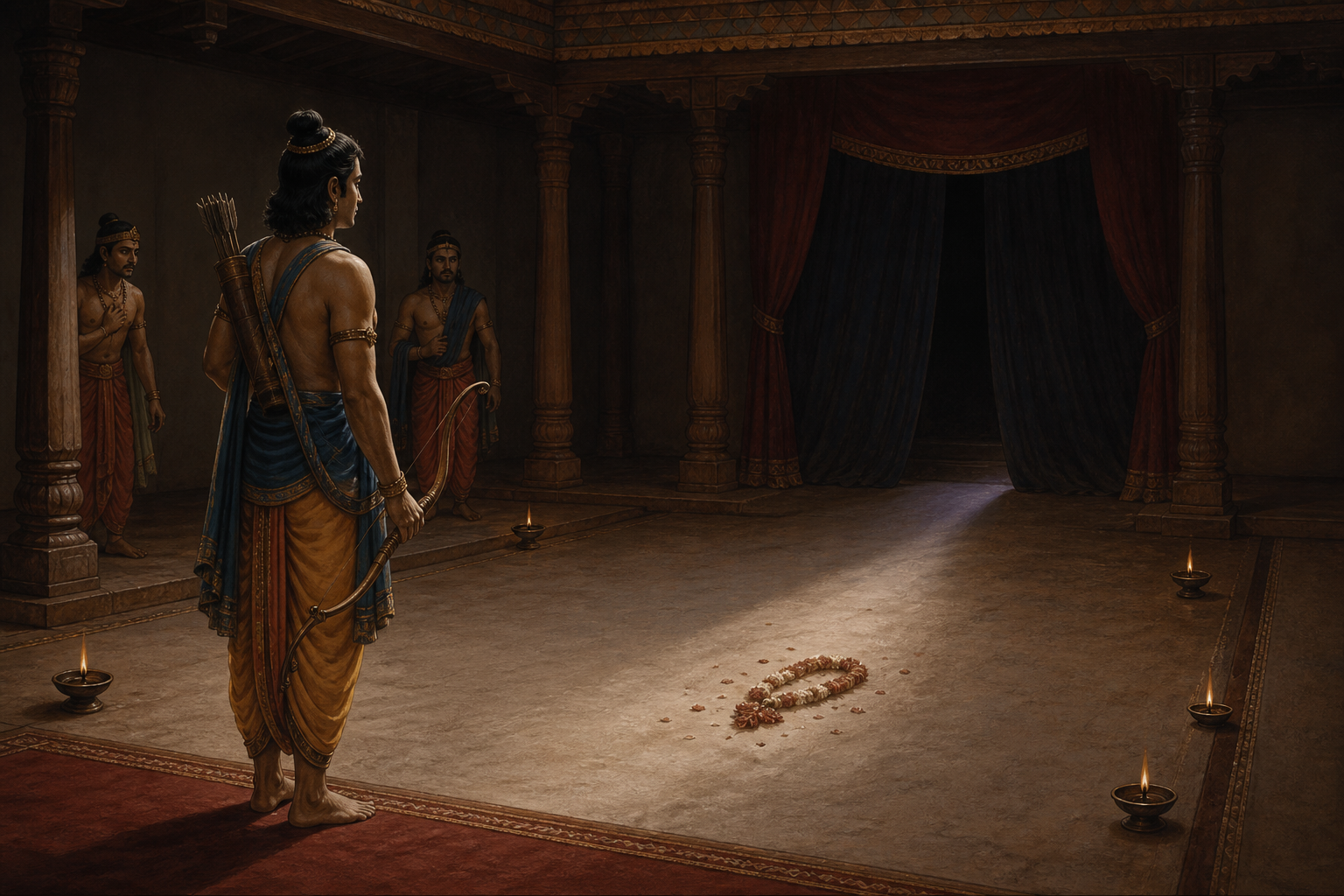
Indraprastha’s Rajasuya yajna offers an enduring lesson: when courtesy lacks boundaries, adharma grows. The Mahabharata shows how excessive toleranceat the Rajasuya and later in the dice hallcan legitimize injustice, as seen in the silence during Draupadi’s humiliation. Dharma demands proportionate, principled action after patient dialogue, a sequence Sri Krishna models in the Udyoga Parva. This…
-
Complete Guide to Manu in Hinduism: Discover the Timeless Law-Giver Beyond Gender and Time

This article examines Manu as both archetype and title within Hindu cosmology, clarifying how fourteen Manus guide each kalpa and why the role is best understood as beyond gender and bound to time cycles. It situates Manusmriti within the broader Dharmashastra tradition, highlighting contextual interpretation and ongoing ethical refinement. The narrative of Vaivasvata Manu and…
-
Discover Chitishakti’s Power: A Complete Guide to Purusha in Patanjali’s Yoga Philosophy

Patanjali’s Yoga presents Purusha as pure consciousnessthe steady witness distinct from Prakriti’s changing field. Clarifying chiti and chitishakti reveals how conscious power illumines experience when mental fluctuations settle. Grounded in abhyasa and vairagya, and supported by pratyahara, dhyana, and samadhi, this approach offers a practical route to Self-Realization. Readers gain benefits such as emotional balance,…
-
Essential Breakthrough: Discover Proven Dharmic Insights to Transform Perfectionism and Thrive

Perfectionism makes life tense and, at times, unbearable; dharmic wisdom offers a practical, compassionate alternative. Hinduism’s Bhagavad Gita reframes success as dedicated action without attachment to outcomes, supported by santosha, aparigraha, and forgiveness. Buddhism adds mindfulness and the insight of impermanence to reduce clinging and soften suffering. Jainism’s anekantavada nurtures intellectual humility, while ahimsa and…
-
Hans Gita Explained: Discover Vishnu’s Proven Path to Knowledge, Enlightenment, and Unity

Hans Gita, attributed to Lord Vishnu and framed as a dialogue with a hamsa (swan), offers a concise yet profound exploration of knowledge, discernment, and dharma within Hindu philosophy. Readers discover how the swan symbolizes vivekathe wisdom to distinguish the enduring from the ephemeral. The text’s verses encourage realization over mere theory, aligning with Upanishadic…
-
Complete Guide to Chit and Achit in Ramanuja’s Vishishtadvaita: Discover Unity and Insight

This academically grounded guide explains Chit (conscious selves) and Achit (insentient reality) in Ramanujacharya’s Vishishtadvaita, showing how both exist in inseparable unity with Brahman. Readers gain clear definitions, core doctrines like the body–soul relation, and the devotional path of bhakti and prapatti that preserves individuality in liberation. Practical applications highlight ecological responsibility, compassionate ethics, and…
-
Complete Guide to Panchadasi’s Twelfth Chapter: Discover and Master Atmananda

Panchadasi’s twelfth chapter, attributed to Vidyaranya of the Sringeri Sharada Peetham, guides readers to distinguish the bliss of the Self (Atmananda) from changing mental states. It explains how sat–chit–ananda is recognized through shravana, manana, and nididhyasana, not acquired from external objects. The chapter clarifies the difference between pure consciousness and reflected consciousness, enabling a stable…
-
Discover the Proven Inner Science of Shanti: Master Inner Peace with Dharmic Wisdom

Hinduism presents Shanti as a cultivated inner energy, stabilized by alignment with Atman and guided by Dharma. Yoga philosophy outlines precise methodsyama, niyama, dhyana, Pranayama, and svadhyayato transform reactivity into steady calm. This inner science resonates across buddhism, jainism, and sikhism through shared commitments to mindfulness, non-violence, and remembrance, affirming unity in spiritual diversity. In…
-
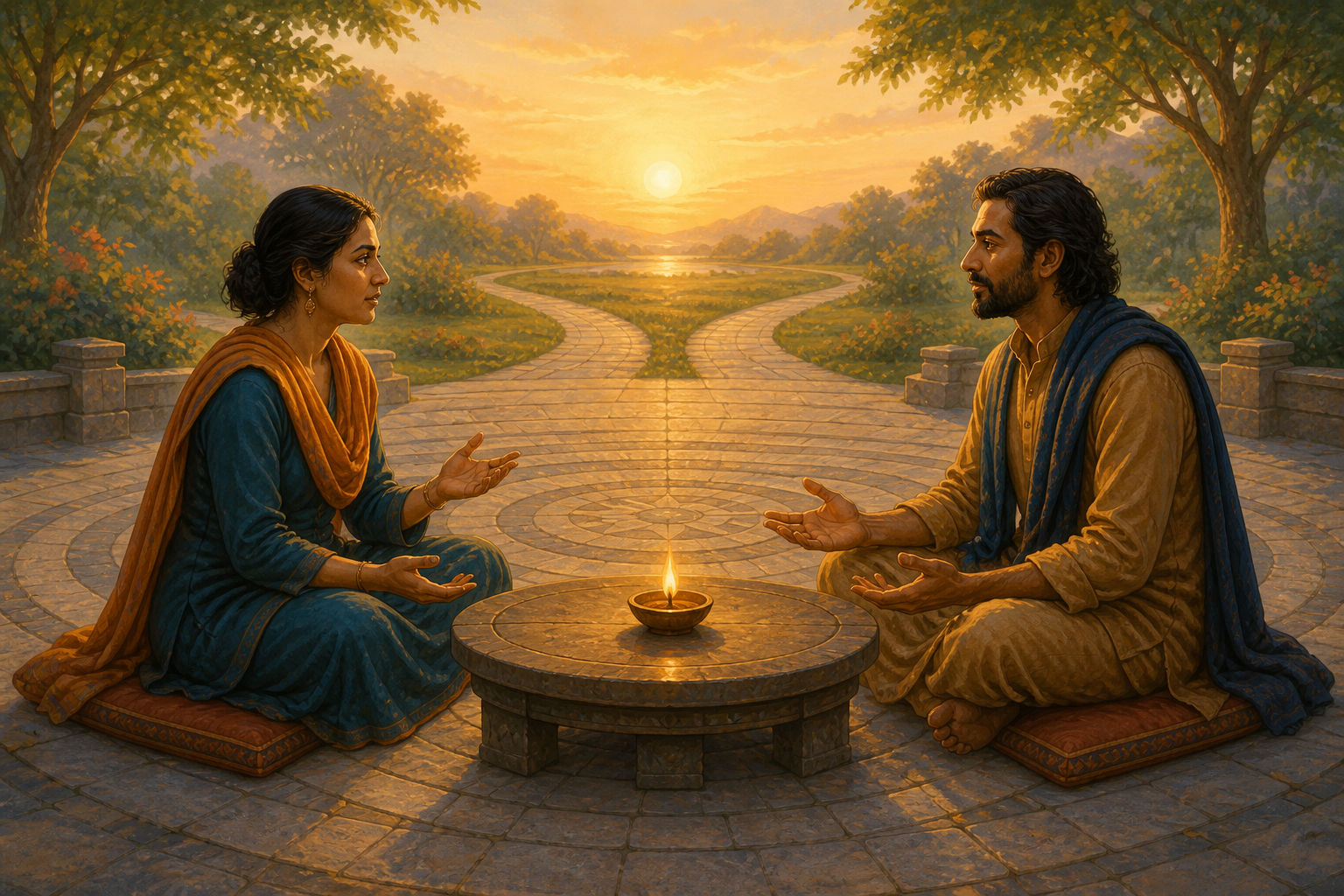
Essential Guide to Sanatana Dharma’s Dialogue: Discover How Debate Shapes Eternal Truth

Sanatana Dharma treats dialogue, debate, and questioning as sacred practices that guide a disciplined search for truth. Foundational texts like the Upanishads and Bhagavad-Gita model inquiry through conversation, while shastrartha formalizes rigorous, ethical debate. This approach supports unity among Hinduism, Buddhism, Jainism, and Sikhism by emphasizing humility, reasoned exchange, and compassion in speech. Pluralism is…
-
Ultimate Guide to Upanishadic Planes of Consciousness: Master the Secrets of Akasha

This article offers a clear, complete guide to the Upanishadic planes of consciousness, explaining Akasha as both physical space and the subtle field of awareness. It unpacks the Mandukya Upanishad’s four stateswaking, dreaming, deep sleep, and Turīyaas a practical map for inner exploration. It also presents the Taittirīya Upanishad’s Pancha Kosha model to show how…
-
Complete Kartik 2025 Inspirations: Master Time’s Secret and Transform Fear of Death

Buddha’s warning that “we think we have time” aligns with Vedic scriptures and becomes the guiding insight for Kartik Inspirations 2025. This piece shows how Hindu, Buddhist, Jain, and Sikh traditions converge on a practical way to face mortality with courage and clarity. Readers discover how Kartik’s reflective season turns fear of death into disciplined…
-
The Complete, Evidence-Based Rethink of ‘Religion’ and ‘Hindu’: Discover Clear, Inclusive Terms

This article clarifies why broad labels like “religion” and “Hindu” often obscure, rather than explain, the nuanced reality of Dharmic traditions. It shows how sweeping claimssuch as “religions cause all wars” or “Science is logic; religion is belief”rest on arbitrary definitions, not evidence. Readers gain a more accurate vocabulary for Hinduism and Sanatan Dharma, emphasizing…
-
Discover Chit Shakti: The Essential, Complete Guide to Sentient Power in Dharmic Wisdom

Chit Shakti (Chicchakti) is the sentient, conscious power at the heart of Vedanta’s vision of reality. It highlights Brahman’s luminous knowing and explains how multiplicity appears within non-duality. The concept resonates across dharmic traditionsBuddhism, Jainism, and Sikhismencouraging unity in spiritual diversity. Readers gain a clear definition, careful metaphysical context, and practical pathways for meditation, mantra,…
-
Discover Yogananda in Panchadasi: The Complete Guide to Bliss of Consciousness in Advaita Vedanta

This article presents a clear, practice-oriented guide to the Yogananda (eleventh) chapter of Vidyaranya’s Panchadasi, a classic of Advaita Vedanta. It explains how the text situates bliss (ānanda) within the nondual identity of Atman and Brahman, and why calming mental activity reveals intrinsic joy. Readers learn the distinctions between sense-based pleasure, the relief that follows…
-
Complete Guide to Ignoring Verbal Abuse: Essential Dharmic Wisdom for Inner Calm

Verbal abuse is a common challenge in contemporary life, yet dharmic traditions offer practical ways to respond with calm and clarity. Ancient Hindu wisdom emphasizes equanimity (samatva) and self-control (dama), while Buddhism, Jainism, and Sikhism reinforce Right Speech, Ahimsa, mindfulness, and simran. Together, these teachings promote dignified, non-reactive responses that de-escalate hostility. A simple five-step…
-
Master the Inner Science of Prakriti: A Complete Path to Infinite Consciousness

This article explains how Hindu philosophy approaches infinite consciousness through Prakriti, the dynamic field of nature and experience. It clarifies how indriyas and tanmatras emerge from Prakriti and how the journey proceeds from the gross (sthula) to the subtle (sukshma). The discussion draws on the Upanishads, Pancha Kosha Viveka, and the disciplines of pratyahara, Yoga,…
-
Master Nyaya’s Chala: The Essential Guide to Spotting Quibbles and Preserving Dialogue

Chala in the Nyaya Sutras refers to a quibble or deliberate misinterpretation that derails honest debate. Situated among the sixteen categories in the Nyayasutras, it exposes how ambiguity, generalization, and literalism can be misused. This piece outlines the three classical forms of Chala and explains how each manipulates meaning. Readers gain practical methodsdefining terms, paraphrasing,…
-
Discover Nātakadīpa: The Complete Guide to Witness Consciousness in Vidyāraṇya’s Panchadaśī

This guide presents the tenth chapter of PanchadaśīNātakadīpaas a clear, practice-ready map of Witness Consciousness (Sākṣī). Readers discover how Vidyāraṇya’s theater metaphor translates nondual philosophy into lived insight: the changeless Self as the steady light, and thoughts and roles as passing scenes. The chapter explains Kūṭastha versus cidābhāsa, examines waking–dream–deep sleep to reveal the invariant…
-
Jealousy vs. Inner Peace: The Complete Dharmic Guide to Transforming Matsarya Now

Jealousy (matsarya) undermines inner peace, relationships, and social trust. Dharmic traditions agree on its remedy: cultivate compassion, equanimity, and ethical clarity. Hindu philosophy classifies matsarya among the Arishadvarga, while the Bhagavad Gita and Yoga Sutra prescribe practical virtues and mental training. Buddhism (issa, kilesa), Jainism (pratikraman, aparigraha), and Sikh teachings (simran, seva) converge on transforming…
-
Master the Eternal Present: Proven Dharma Practices to Transform Life Through Mindful Action

Life constantly changes, yet direct experience happens only in the present moment. Dharmic traditionsHinduism, Buddhism, Jainism, and Sikhismconverge on this insight and offer practical means to live it. Breath awareness and simple meditation techniques ground attention, while ethical disciplines translate clarity into compassionate action. Reflective study of the Bhagavad Gita and the Upanishads refines judgment…