
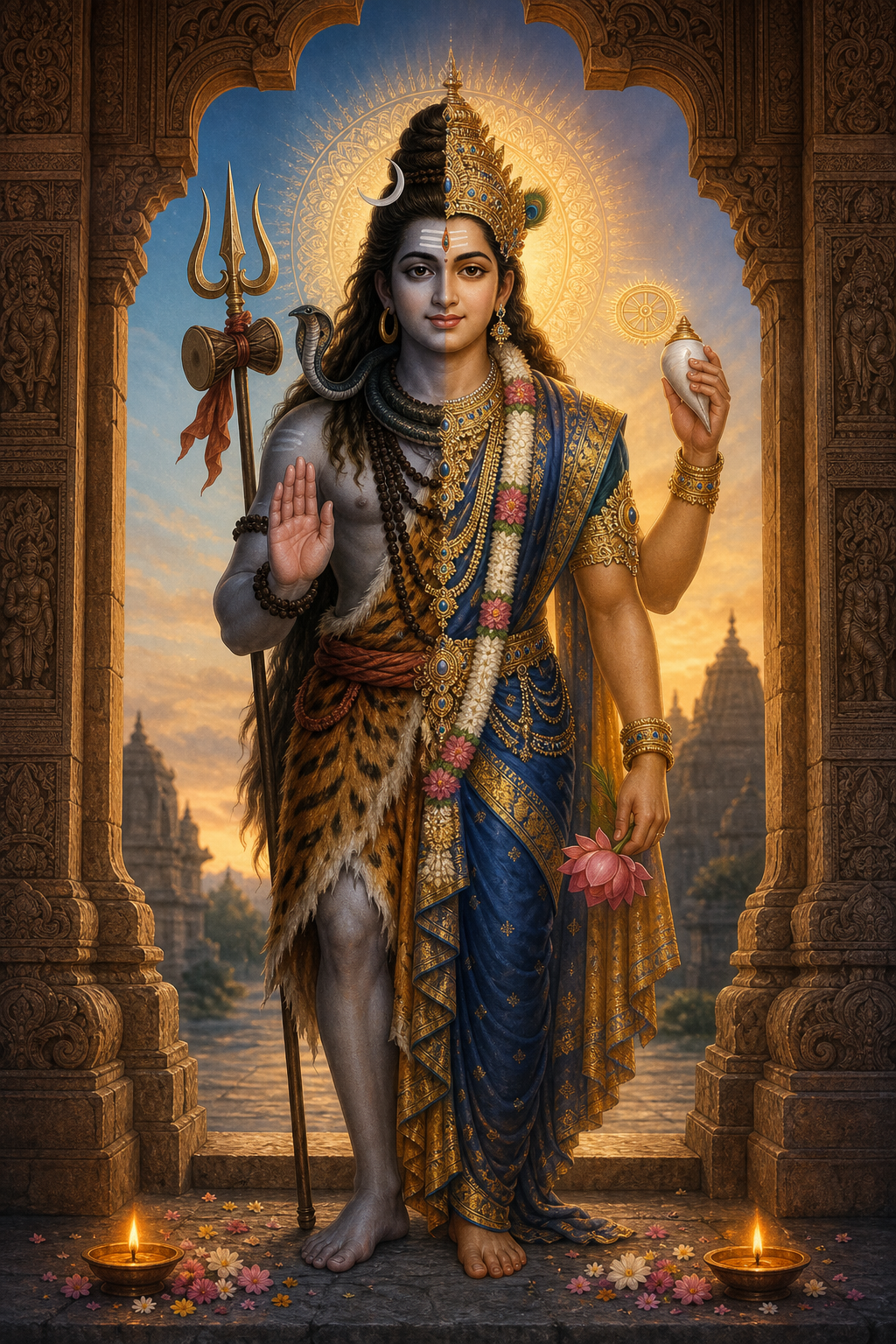
You are standing before an unfamiliar murti or devotional image. It seems to join more than one deity, and the immediate question is practical: are you looking at one divine being, several beings, or a symbolic arrangement? The answer matters because a careless explanation can turn a profound form into either a theological puzzle or the vague claim that “all gods are the same.”
Read the form as a theological sentence expressed through sacred imagery. Its names, attributes, gestures, relationships, and setting tell you what kind of unity is being revealed. The aim is not to erase difference. It is to see how distinct divine powers can belong to one sacred order without becoming rivals.
A composite form is a theological sentence, not a head count
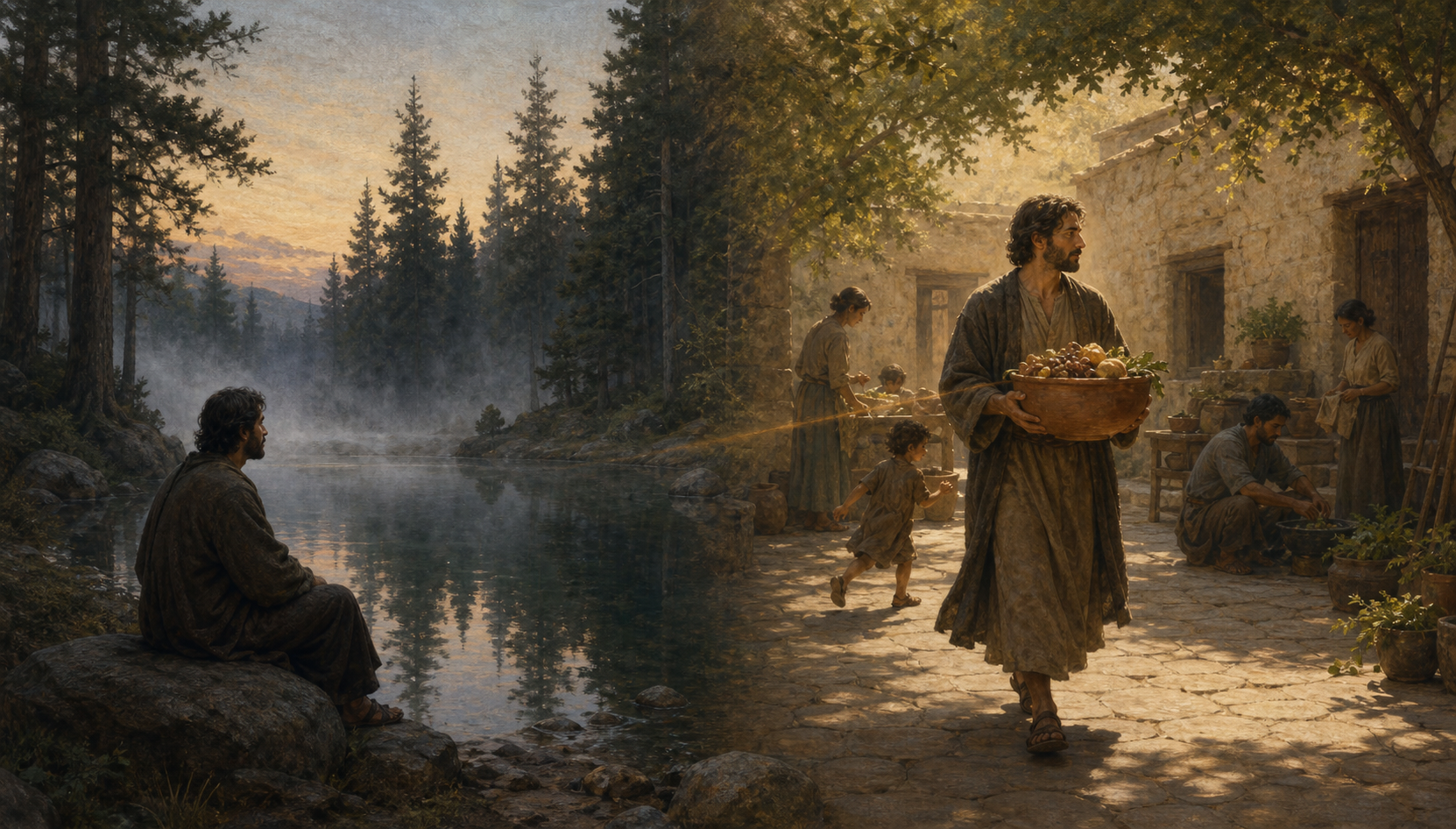
A composite deity joins recognizable identities or functions so that their relationship becomes visible. The form may unite complementary qualities, integrate several cosmic activities, protect a devotee through a divine transformation, or show that apparently separate powers rest in one reality. You therefore need more than the number of faces, arms, or feet to understand what you see.
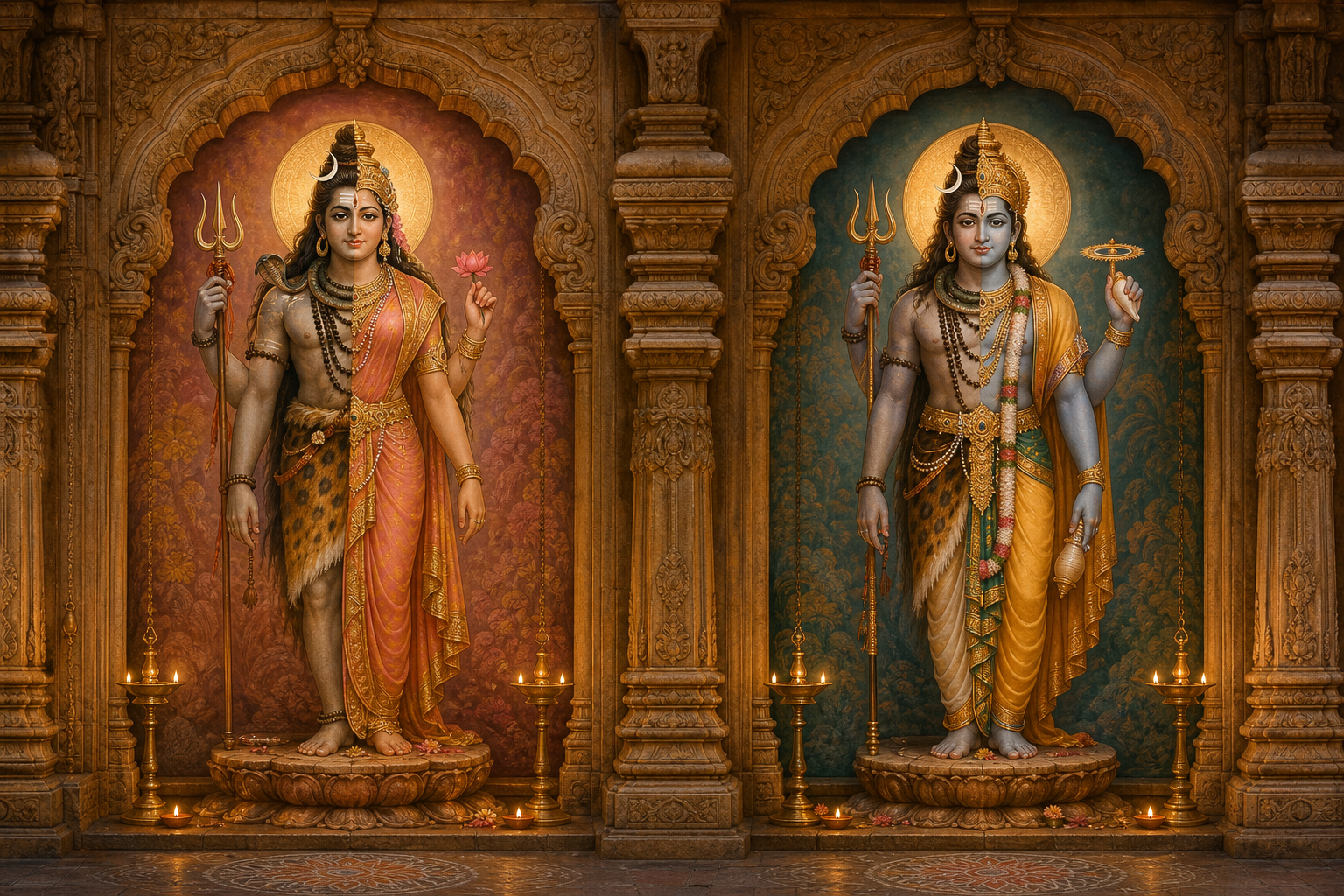
Krishnakali, for example, holds together Krishna’s sweetness and playful compassion with Kali’s fierce, protective shakti. Tripada Trimurti uses a different visual grammar: creation, preservation, and transformation appear as inseparable cosmic functions associated with Brahma, Vishnu, and Shiva. One form addresses a devotional relationship through regional narrative; the other emphasizes the integrated operation of the cosmos.
When you encounter a composite form, ask three questions in order:
- What remains distinct? Identify the deities, attributes, moods, or functions that the image preserves.
- What is being united? Look for a shared body, common support, transformation, or coordinated action.
- What response does the form seek from you? It may call for trust, humility, balanced action, freedom from sectarian rivalry, or protection of sincere devotion.
Those questions prevent two opposite errors. The first is treating the form as a literal collection of unrelated beings. The second is declaring every distinction meaningless. Hindu sacred imagery can affirm unity precisely by keeping meaningful differences in view.
Keep unity and difference in the same frame
The phrase “all forms are one” can be helpful, but it becomes empty when it is used to skip the character of each form. Krishna’s madhurya is not interchangeable with Kali’s raudra. Creation is not the same activity as preservation, and preservation is not transformation. The unity lies in their sacred relationship and common ground, not in the disappearance of every name, quality, and function.
The Hindu concept of Ishta gives this insight a practical shape. A seeker may approach the divine through the form that most deeply resonates with the seeker’s inner disposition. Choosing an Ishta establishes devotional focus; it does not require hostility toward other forms. Your chosen relationship can become deeper while your respect becomes wider.
Use this four-step method when interpreting an unfamiliar composite deity:
- Describe before interpreting. Note the visible deities, attributes, posture, shared body, feet, and ritual setting without immediately assigning a doctrine.
- Name the kind of relationship. Decide whether the form shows complementary qualities, coordinated cosmic functions, a narrative transformation, or another kind of unity.
- Keep each claim in its proper register. A regional devotional memory, a temple image, a philosophical teaching, and a household custom can illuminate one another, but they are not automatically the same kind of authority.
- State the ethical consequence. Ask what the form changes in conduct: Does it restrain rivalry, protect devotion, balance action, or deepen respect?
This method is especially important with regional traditions. Locality is not a defect, but a beloved regional telling should not be promoted into a universal historical or scriptural claim without evidence. Krishnakali’s literary references and modern usages vary, while its devotional meaning remains rooted in Bengal’s living memory. Precision protects the tradition from both dismissal and exaggeration.
Two composite forms, two different lessons in unity
Krishnakali protects devotion through divine adaptability
In Bengali folkloric tellings associated with Radharani, the setting is a dark Amavasya night during Kali Puja. Jatila and Kutila become suspicious of Radharani’s private devotion. Krishna then assumes an awe-inspiring form resembling Kali, household suspicion gives way to reverence, and arati is offered. The remembered form of Krishnakali allows devotion to continue without a direct confrontation.
Notice what the transformation accomplishes. Divine unity is not presented as an abstract formula. It resolves a human tension. Krishna’s tenderness does not vanish when fierce protection appears, and Kali’s power is not reduced to a costume with no theological meaning. Madhurya and raudra become complementary responses to the needs of the moment.
You can apply that lesson whenever sincere practice meets social scrutiny. Do not assume that spiritual courage always requires escalation. First ask whether wisdom, patience, discretion, or a change in approach can protect what is sacred without humiliating another person. Krishnakali makes adaptability a form of strength rather than a retreat from conviction.
The regional setting also matters. Kirtans, local observances, family storytelling, and home altars in Bengal and eastern India have carried the form’s meaning. Treat that location as part of the interpretation. A tradition becomes more intelligible when you ask who worships the form, on what occasion, and with what inherited story.
Tripada Trimurti turns cosmic balance into a life audit
Tripada means “three-footed.” In this Trimurti expression, the legs of Vishnu and Shiva may be visible while the third principle is represented through Brahma or implied by the composite form. Regional depictions can vary, but the central teaching remains: generation, sustenance, and transformation belong to one interdependent divine movement.
The emphasis on feet is useful. Feet support, steady, orient, and carry a being forward. The image therefore asks you to see the three functions not as remote departments of the cosmos, but as supports beneath every complete process. A beginning that cannot be sustained remains fragile. Preservation without transformation becomes stagnation. Transformation without regard for what deserves protection becomes disorder.
Use the three functions to examine one real decision:
- Creation: What needs to begin? Name one concrete initiative rather than a general intention.
- Preservation: What discipline, relationship, resource, or daily action will keep it alive?
- Transformation: What habit, assumption, or obsolete commitment must be released so the new work has room?
Write one answer under each heading before you act. If one answer is missing, the plan is probably incomplete. Tripada Trimurti becomes practical when its threefold balance changes how you begin a project, sustain a vow, guide a household, or let an outworn pattern end.
Bring divine unity into worship without manufacturing uniformity
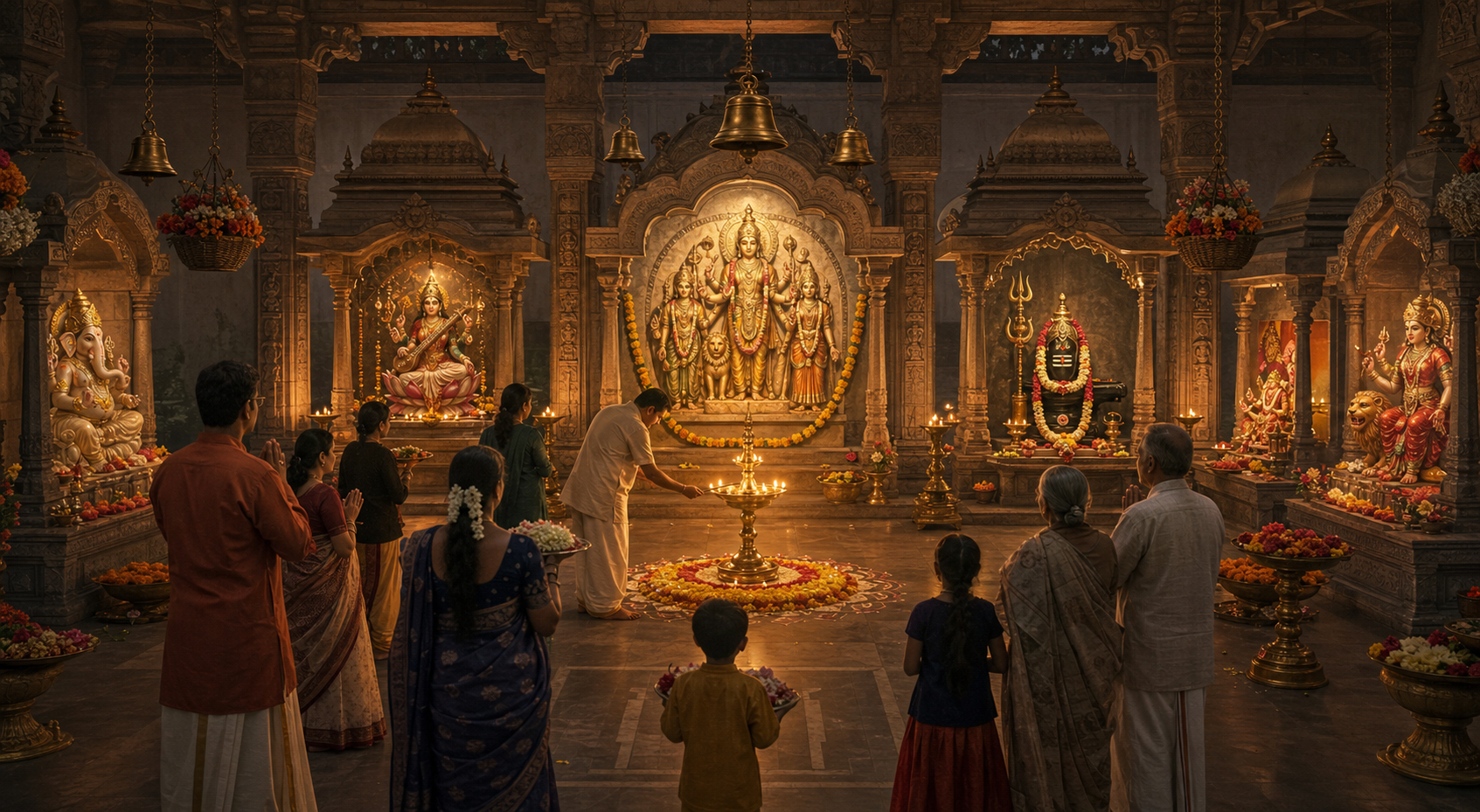
You do not have to merge every ritual, mantra, or altar arrangement to honor the teaching of a composite deity. Unity is not a command to improvise a new liturgy. It is a discipline of devotion and perception: remain faithful to the form through which you worship while refusing to demean the sincere worship of another.
- Keep your Ishta at the center of your regular practice. Focus gives devotion depth; respect for other forms gives it maturity.
- When you meet an unfamiliar image, learn its regional name, constituent deities, associated occasion, and central quality before translating it into your own theology.
- When children ask whether two deities are “really the same,” avoid both a flat yes and a competitive no. Explain that distinct sacred forms can reveal different qualities and relationships while belonging to a deeper divine unity.
- When sectarian speech appears, move the discussion from rank to function. Ask what each form creates, preserves, transforms, protects, or awakens in the devotee.
- Let reverence become conduct. If an interpretation of unity makes you less patient, less truthful, or more contemptuous of another devotee, it has not yet reached the level of dharma.
The same care is needed when speaking about the wider Dharmic family. Hindu composite imagery can encourage kinship, but it should not be used to claim that Hinduism, Buddhism, Jainism, and Sikhism teach identical doctrines. Their differences deserve honest attention. What can be cultivated together is an ethical field that includes compassion, self-discipline, nonviolence, humility, and seva.
In conversation with someone from another tradition, do not begin by telling that person what their path is “really” saying. Ask how a shared value is understood and practiced within their own tradition. Respectful unity listens before it translates.
Key takeaways
- A composite deity is best read as a visual teaching about relationship, not as a numerical count of gods.
- Unity does not make divine names, moods, functions, regional histories, or devotional relationships interchangeable.
- Krishnakali joins sweetness with fierce protection and shows how wisdom can protect devotion without needless confrontation.
- Tripada Trimurti joins creation, preservation, and transformation; you can use those three functions to test whether a personal plan is complete.
- Devotion to an Ishta and respect for other sincere paths strengthen one another when neither is used to erase real differences.
The next time you encounter a composite form, write three short lines: what remains distinct, what has been united, and what the image asks you to change. If you cannot answer all three, stay with the form a little longer. Sacred unity becomes useful when it sharpens how you see, worship, and act.
References
- DharmaRenaissance Blog – Krishnakali: Bengal’s Enchanting Fusion of Sri Krishna and Goddess Kali, Devotion and Unity
- DharmaRenaissance Blog – Tripada Trimurti Unveiled: The Profound Symbolism of Shiva’s Three-Footed Trinity
