

You have heard a public figure ridicule a sadhu, dismiss a sacred gathering, or reward someone whose conduct does not deserve admiration. The easy reactions are anger, silence, or indiscriminate defence. None is sufficient.
A dharmic response must do three things at once: protect human dignity, distinguish criticism from contempt, and direct public reverence toward conduct that serves the common good. That gives you a firmer standard than either forced politeness or outrage.
Public respect requires discernment, not blind approval
Confusion begins when dignity, courtesy, and esteem are treated as if they were the same.
- Dignity belongs to every person. Disagreement does not cancel it.
- Courtesy governs how you speak, especially across religious or cultural differences. It allows firm criticism without humiliation.
- Esteem and authority must follow character, knowledge, discipline, and service. They should not be awarded merely because someone is famous, wealthy, loud, well connected, or dressed for a role.
This distinction protects a community in both directions. Respect for Saints and Sadhus does not require pretending that every person claiming spiritual authority is beyond scrutiny. At the same time, misconduct by one person does not justify contempt for an entire order, pilgrimage, lineage, or tradition.
The allocation of honor is a public act. Whom a family celebrates, whom an institution places on its stage, and whom a community permits to speak with authority all teach observers what conduct is worth imitating. Misplaced honor therefore does more than cause personal offence. It distorts incentives and gradually weakens trust.
Skanda Purana, Kedara Khanda 3.45, expresses the danger through the grave sequence of fear, famine, and death when honor moves from the worthy to the unworthy. This need not be read as a mechanical prediction about every public mistake. It works as a diagnostic: fear grows when institutions lose moral credibility, scarcity follows poor stewardship, and social life withers when trust disappears.
The Daksha yajna narrative dramatizes the same disorder. Daksha’s refusal to accord Shiva rightful honor is not a minor breach of etiquette; it reveals pride displacing discernment until the larger order is disrupted. The practical lesson for you is not to demand praise for your own side. It is to examine whether your respect is aligned with virtue or captured by vanity, faction, and status.
Use three tests to distinguish criticism from contempt
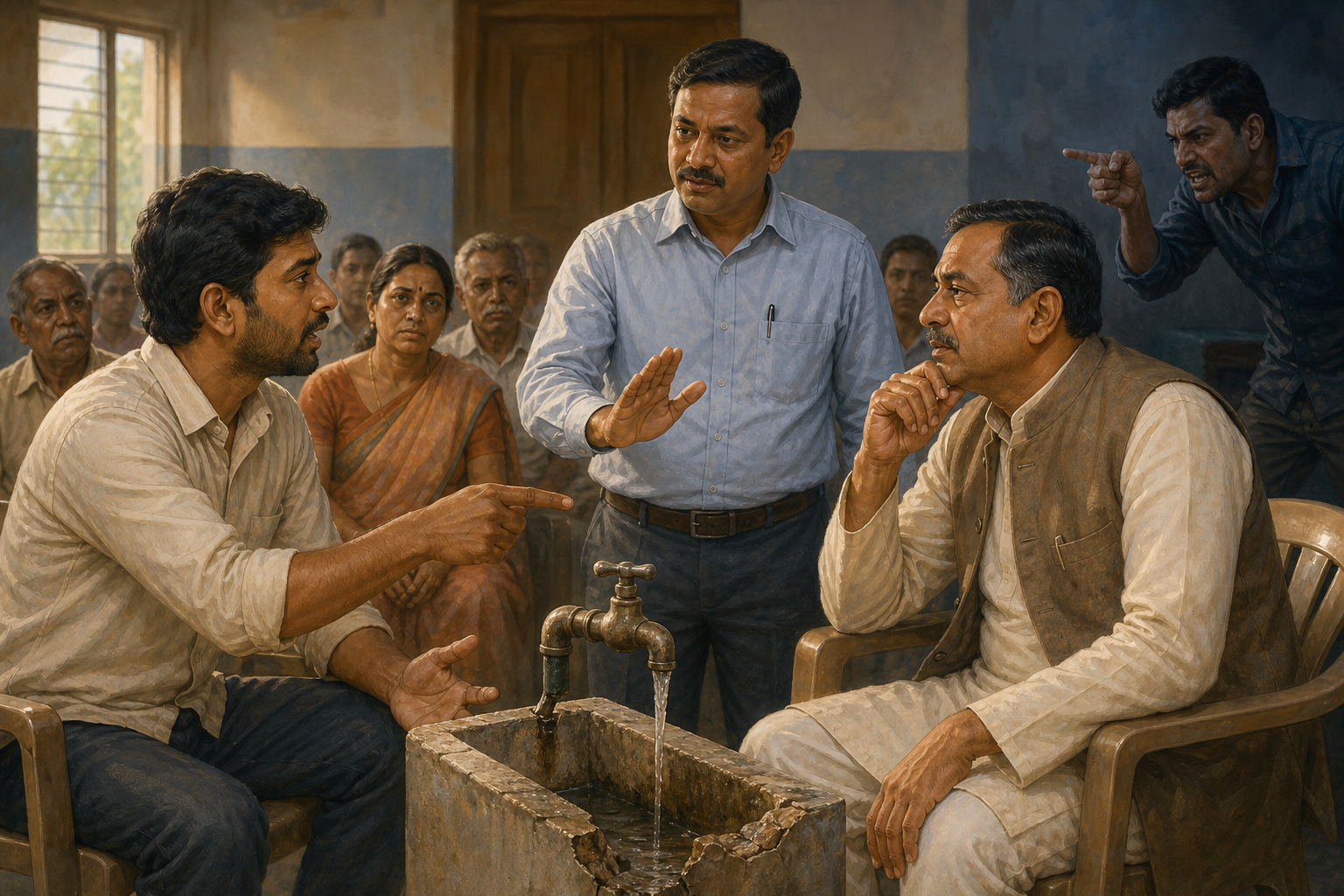
Not every uncomfortable statement is an attack on Dharma. Religious institutions, teachers, organisers, and public representatives can be questioned. In fact, precise accountability can protect a tradition from exploitation. The line is crossed when scrutiny gives way to careless generalisation, derision, or collective degradation.
- Identify the object. Does the criticism name a decision, claim, action, use of funds, teaching, or institutional failure? Or does it treat Saints, Sadhus, devotees, or a whole religious community as one contemptible category?
- Examine the method. Are evidence, context, and relevant distinctions provided? Or does the speaker rely on mockery, insinuation, selective clips, and stereotypes that make a serious reply nearly impossible?
- Ask what remedy the speech seeks. Responsible criticism points toward correction, explanation, accountability, or reform. Contempt seeks humiliation, social exclusion, or applause from an already hostile audience.
These tests help when the subject is a gathering such as the Simhastha Kumbh Mela. For devotees, the Mela is not simply a large event that can be understood by photographing crowds. Shared meals, spiritual discourse, ritual, service, pilgrimage, and reverence for spiritual guides form part of its lived meaning. Coverage that removes this context can misrepresent the gathering even when isolated details are technically accurate.
Cultural context is not a demand for favourable coverage. It is a demand for competent coverage. A journalist may investigate an organiser, challenge a claim, or examine a public consequence. The responsible method is to identify the particular issue, use the tradition’s terms accurately, distinguish an individual from a whole class of practitioners, and allow a meaningful response.
You should apply the same discipline to speech from your own community. A defence of Hindu dignity loses moral force when it answers a generalisation with another generalisation, attributes one person’s remark to an entire faith or profession, or treats threats as evidence of devotion. Ahimsa governs the response as well as the initial offence.
Respond firmly without reproducing the adharma
When a remark appears insulting, your first responsibility is to establish what was actually said. Save the complete recording, transcript, publication, or programme context. A short clip may omit a qualification; an outraged paraphrase may be less accurate than the original words. Do not increase the reach of degrading material merely to prove that you oppose it.
Then write a response that another reasonable person can evaluate. Name the words or conduct at issue, explain the missing cultural context, identify the people affected, and state the correction you want. Avoid vague accusations about hatred when you can point to a specific falsehood, stereotype, or breach of professional responsibility.
Choose a remedy proportionate to the problem:
- For an ambiguous phrase or an evident misunderstanding, request clarification and provide the relevant context.
- For a factual error, request a visible correction and supply the material needed to verify it.
- For a degrading generalisation, request withdrawal of the claim, an apology, a right of reply, or a contextual correction where the original audience will see it.
- For a repeated professional failure, use the organisation’s editorial, employment, or grievance process and ask for a recorded outcome.
- For conduct you believe may be unlawful, consult a qualified legal professional or the appropriate authority. Do not treat online opinion as a legal conclusion.
A formal complaint is a request for examination, not a verdict. Calls for respect surrounding disputed remarks about the Simhastha Kumbh Mela also bring due process into focus. The accused must have a fair opportunity to answer, the exact allegation must be examined, and supporters should not announce guilt before the relevant process has run its course.
Community leaders carry an additional burden. They should publish the exact objection rather than circulate inflammatory summaries, prohibit threats and personal abuse in campaigns conducted under their name, and tell supporters what remedy is being sought. If new context changes the case, they should correct their own account as publicly as they made the original charge.
This is not passivity. It is controlled moral force. A response becomes harder to dismiss when it is accurate, proportionate, nonviolent, and attached to a remedy. It also prevents a legitimate defence of Dharma from becoming an excuse for factional intimidation.
Make reverence credible by joining worship to service

Public respect cannot be sustained by demanding better language from others while neglecting public welfare ourselves. Dharma asks what our reverence produces.
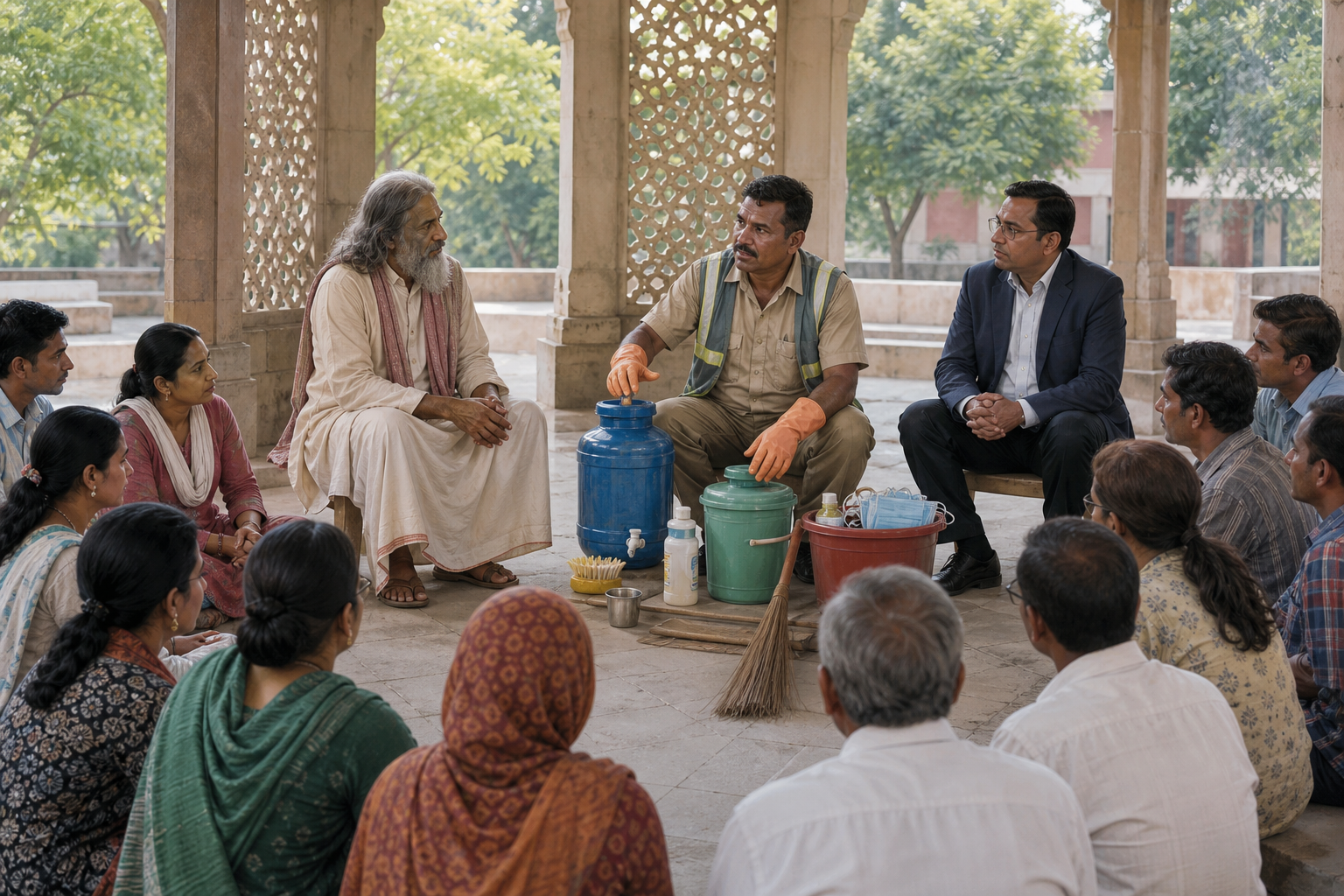
The Hindu principle of Ishtapurta joins ritual offering with socially beneficial action. Ishta includes practices such as yajna, homa, temple support, and other forms of worship. Purta includes maintaining water bodies, supporting education, feeding people in need, planting trees, and providing rest facilities. Spiritual intention and public responsibility are not rival paths; each tests the integrity of the other.
You can apply this principle without turning worship into a publicity exercise. When a committee plans a festival, pilgrimage, discourse, or public felicitation, it should place a corresponding service commitment on the same agenda. Name the work, the person responsible, the resources assigned, and how completion will be reported. A promise of service with no steward or follow-through is ceremonial language, not Purta.
- Pair a pilgrimage or sacred gathering with clean water, simple food, rest facilities, and responsible care for the site.
- Pair religious instruction with educational support and cultural literacy that helps outsiders represent the tradition accurately.
- Pair ecological worship with the maintenance of water bodies and the planting and care of trees.
- Pair the public honoring of a teacher with transparent criteria grounded in knowledge, conduct, humility, and service.
- Pair a demand for media accountability with an accessible briefing that explains the gathering, vocabulary, roles, and practices being covered.
Service does not purchase immunity from scrutiny. A charitable institution can still make mistakes, and a respected spiritual figure can still be asked precise questions. The point is different: reverence becomes publicly intelligible when it generates care, discipline, and trustworthy institutions rather than privilege alone.
This ethic also creates a practical meeting ground across the dharmic family without pretending that all doctrines are identical. Hindu Ishtapurta and lokasamgraha direct action toward the welfare of the world. Buddhism and Jainism give dāna an important place in ethical life. Jain ahimsa and aparigraha challenge injury and acquisitiveness. Sikh seva, sat, and nimrata join service with truth and humility. A shared project can preserve these distinct vocabularies while bringing people together around food, education, water, ecological care, or another defined public need.
The strongest defence of a living tradition therefore has two parts. Correct its misrepresentation, and make its social contribution difficult to overlook. If only the first part is present, public advocacy can become permanently reactive. If only the second is present, service may coexist with unanswered contempt. Dharma requires both dignity and duty.
Key takeaways for your next public dispute

- Give every person basic dignity, but reserve esteem and authority for worthy conduct.
- Do not confuse precise scrutiny of an individual with contempt for an entire tradition.
- Test disputed speech by its object, method, and intended remedy before reacting.
- Preserve full context, state the exact objection, and seek a proportionate correction.
- Treat a complaint as the beginning of examination, not proof of guilt.
- Reject threats, collective blame, and humiliating retaliation, including when they come from your own side.
- Join public reverence to a named act of service with clear responsibility and follow-through.
- Honor teachers and leaders for knowledge, integrity, humility, and contribution to the common good rather than fame or faction.
At the next community meeting, public controversy, or felicitation, put two questions on the table: What conduct are we teaching people to honor, and what public good will this honor produce? Record the answer, assign the work, and let your response demonstrate the Dharma whose dignity you are defending.
References
- DharmaRenaissance Blog — Complaint over Simhastha Kumbh Mela Remarks Spurs Calls for Respect, Harmony, and Due Process
- DharmaRenaissance Blog — Ishtapurta Unveiled: Powerful Harmony of Vedic Offerings and Social Charity in Hinduism
- DharmaRenaissance Blog — When Honor Is Misplaced: Skanda Purana’s Warning – Fear, Famine, and Death Follow
