

If someone asks whether Hindus worship one God or many gods, you may feel pushed toward one of two inadequate answers. A fixed divine headcount makes Hindu practice sound like a collection of competing cults. Saying that every deity is simply “the same” avoids the headcount, but erases distinctions that devotees consider meaningful.
There is a clearer answer. Begin with three different questions: What is ultimately real? How does that Reality relate to the world and the worshipper? Through which name and form does a particular person approach it? In Advaita Vedanta, those questions lead respectively to Brahman, Ishvara, and Ishta-devata. Once you keep the terms distinct, Hindu unity-in-diversity stops looking like a contradiction.
Keep Brahman, Ishvara, and Ishta-devata distinct
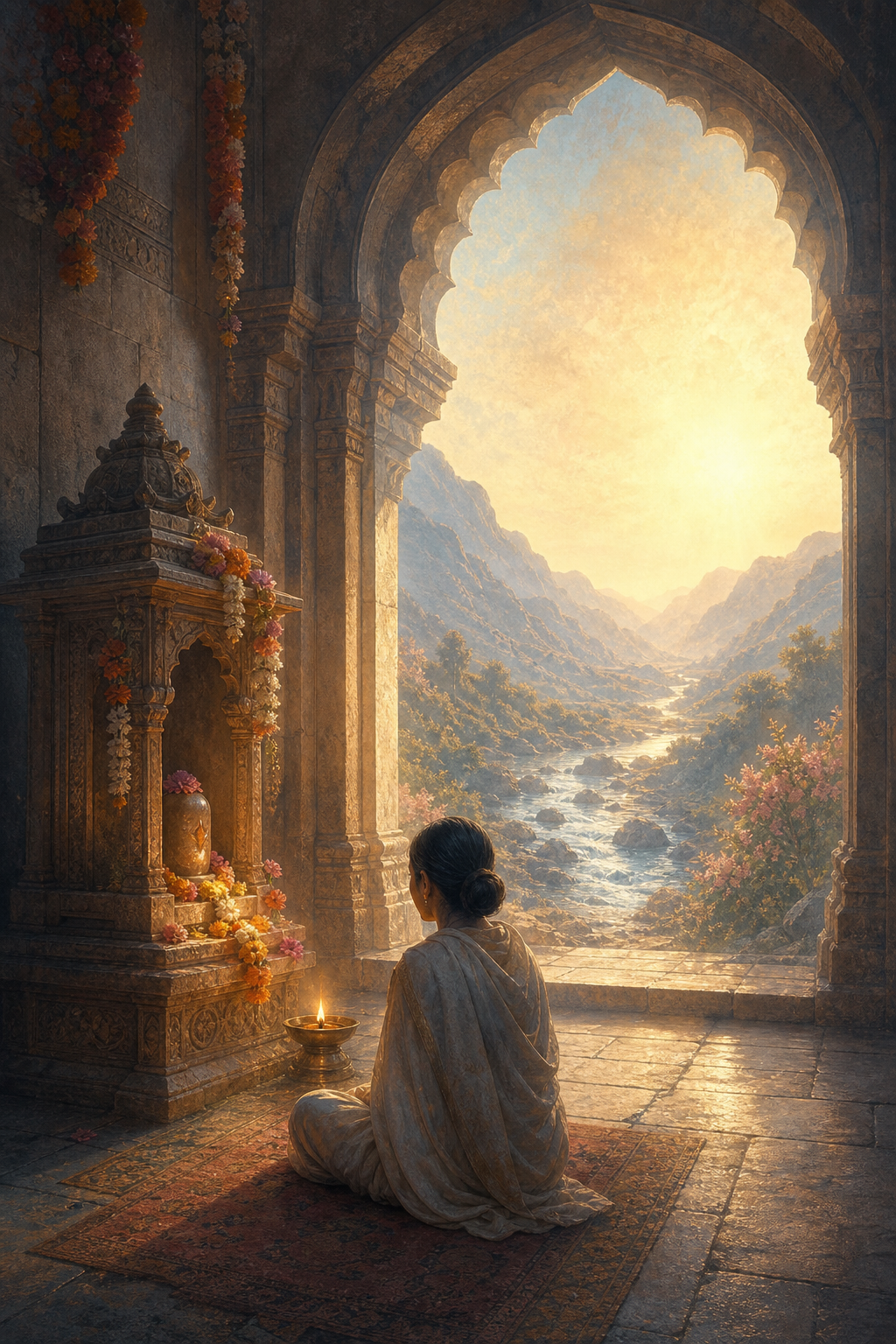
Advaita Vedanta begins with Brahman as the one ultimate Reality. Brahman is described as nirguna, beyond attributes. This does not mean a vacant nothing or an impersonal object hidden somewhere outside the universe. It means that no quality, form, relationship, or concept can place a final boundary around Reality.
Ishvara is not a second reality standing beside Brahman. Ishvara is Brahman understood in association with Maya, the cosmic power that conditions how reality is experienced. Here Brahman is saguna, apprehended with attributes and in relationship. Ishvara can therefore be worshipped, trusted, loved, and approached as the source of cosmic order, dharma, moral consequence, and grace.
An Ishta-devata answers a more personal question: through which chosen form will you cultivate that relationship? One devotee may turn toward one divine name and form, while another turns toward a different one. The choice gives worship concentration and intimacy without requiring the devotee to declare every other form false.
| Term | Question it answers | Meaning in Advaita | Practical role |
|---|---|---|---|
| Brahman | What is ultimately real? | The unbounded Reality, nirguna or beyond attributes | The ground of non-dual knowledge and the recognition of Atman as Brahman |
| Ishvara | How is Reality encountered in the ordered, relational world? | Brahman associated with Maya and apprehended as saguna | Prayer, surrender, moral orientation, grace, and devotion |
| Ishta-devata | Through which form will this devotee approach the divine? | A chosen name and form through which the one Reality is worshipped | Focused worship, meditation, ritual, and a durable personal relationship |
Use the distinction whenever a discussion becomes confused. Brahman concerns the nature of ultimate Reality. Ishvara concerns that Reality as Lord and the ground of order within lived experience. Ishta-devata concerns the devotee’s chosen approach. Treating the three terms as synonyms is what creates much of the apparent contradiction.
Many divine forms are not many competing absolutes
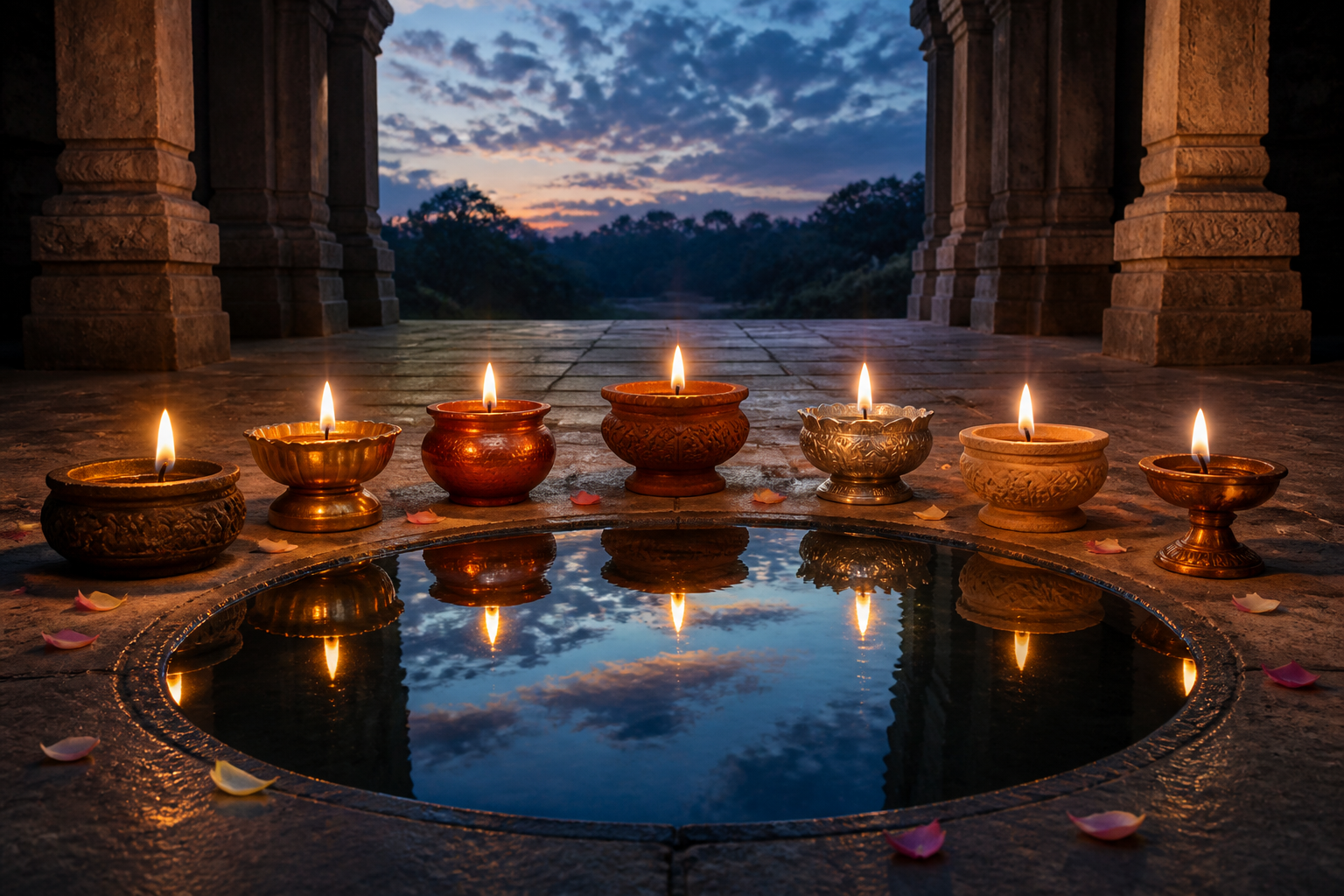
The familiar question about “three crore gods” usually assumes that each deva or devi must be an independent supreme being. That assumption imports a model Hindu traditions need not accept. The popular figure is not a canonical census of separate deities; it conveys the abundance of divine names, qualities, manifestations, and cosmic functions.
This is why a household can honor different forms across the sacred calendar without experiencing a theological crisis. Worship associated with Durga, Ganesha, or another form can awaken a different devotional mood or moral emphasis. Plurality operates as a spiritual vocabulary: many relationships with the sacred remain possible because no single finite description exhausts the infinite.
Three common replies nevertheless create avoidable confusion:
- “Hindus believe in exactly three crore gods.” This turns devotional abundance into an unsupported numerical catalogue.
- “The deities are merely symbols.” The word “merely” dismisses the reality of worship and the devotee’s relationship with Ishvara.
- “Hinduism is just monotheism under different names.” This hides the nirguna-saguna distinction and forces Hindu categories into a framework that may not fit them.
A more accurate reply is direct: Hindu traditions permit worship through many devas and devis without requiring each to be a rival absolute. Advaita explains this by distinguishing the one ultimate Brahman, Ishvara as that Reality approached with attributes, and the chosen form through which a devotee offers worship.
That answer is strong because it neither apologizes for Hindu plurality nor exaggerates agreement among every Hindu school. It explains one influential Advaitic framework on its own terms. Other sampradayas need not formulate the relationship identically for Hindus to recognize a shared sacred world.
Devotion to Ishvara does not obstruct non-dual knowledge
A second misunderstanding appears inside spiritual practice. If Brahman alone is ultimately real, you may wonder whether prayer, temple worship, ritual, or surrender belongs only to an immature stage that should be discarded. Advaita’s distinction between paramarthika and vyavaharika standpoints prevents that conclusion.
Paramarthika refers to the ultimate standpoint, at which Brahman is the non-dual Reality. Vyavaharika refers to the empirical standpoint in which persons act, choose, suffer consequences, uphold dharma, and relate to Ishvara. These are not two universes or two competing truths. They are two ways of understanding the same existence, appropriate to different questions.
You still make decisions within lived experience. Your conduct can be truthful or deceptive, compassionate or cruel, disciplined or careless. At this level, Ishvara gives devotion and moral life a coherent place within non-dual philosophy. Ultimate teaching does not provide permission to treat ethical distinctions as irrelevant.
Bhakti and jnana can therefore correct different distortions in the same seeker. Devotion can soften self-importance through reverence, trust, and surrender. Inquiry can loosen attachment to every limited identity and disclose the Advaitic teaching that Atman is not separate from Brahman. Bhakti without discernment can become narrow attachment to form; abstract non-dualism without devotion or ethics can become an excuse for spiritual pride.
You can embody the integration without inventing an elaborate new routine:
- Approach Ishvara personally. Pray or perform your established worship through your Ishta-devata rather than treating the divine as a remote philosophical proposition.
- Let worship govern conduct. Carry the qualities cultivated in prayer into duty, restraint, compassion, and service. If devotion changes no behavior, it has remained compartmentalized.
- Make room for inquiry. Study and contemplate what Advaita means by a Reality beyond every name, attribute, and limited identity.
- Return insight to relationship. Let non-duality make you less possessive about your chosen form, not less devoted to it. Depth of commitment need not produce hostility toward another person’s path.
The practical test is not whether you can repeat “all is Brahman.” It is whether the teaching makes your devotion steadier, your conduct more dharmic, and your treatment of other worshippers less insecure.
Dharmic unity requires resonance without erasure
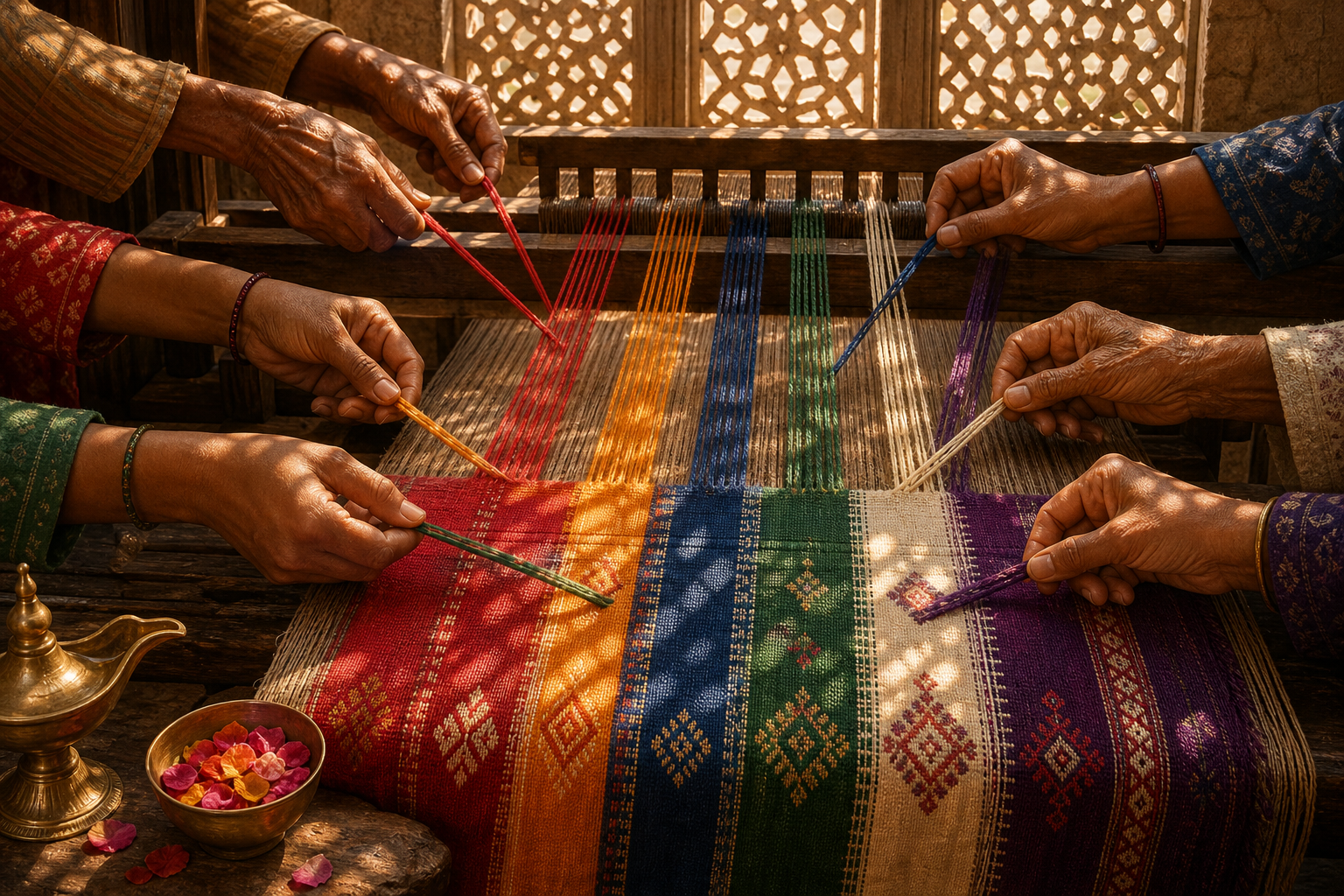
Hindu unity-in-diversity becomes shallow when unity is mistaken for uniformity. It becomes stronger when you can identify a family resemblance while preserving each tradition’s own language and commitments. The same discipline matters when speaking about the wider dharmic family.
There are meaningful resonances. Buddhist discussions of ultimate and conventional truth show that more than one standpoint can be used without careless contradiction. Jain anekantavada trains attention on the many-sidedness of reality. Sikh teaching centers devotion on the One through expressions such as Ik Onkar, while Akal Purakh conveys the timeless divine. Across these traditions, diversity need not imply that truth is arbitrary or that disciplined practice is unnecessary.
Resonance, however, is not identity. Buddhist accounts of two truths should not be relabelled as Advaita. Anekantavada should not be reduced to another name for Brahman. Ik Onkar should not be absorbed into Hindu terminology as though Sikh teaching had no voice of its own. Such equations may sound conciliatory, but they achieve unity by deleting the very diversity they claim to honor.
Use a three-part discipline in dharmic dialogue:
- Name the resonance. Identify the shared concern, such as the relation between the unbounded and the lived, or the need for compassion, non-violence, service, and disciplined conduct.
- Name the distinction. Retain each tradition’s own terms instead of translating all of them into your preferred metaphysics.
- Name the common responsibility. Ask how the insight forms character through dharma, karuna, ahimsa, or seva rather than stopping at an agreeable slogan.
This approach gives civilizational unity substance. Hindus, Buddhists, Jains, and Sikhs do not need to become interchangeable in order to recognize overlapping ethical inheritances, historical proximity, or related ways of accommodating spiritual plurality.
Key takeaways for conversation and practice
- Brahman answers the ultimate question: what is the unbounded Reality beyond limiting attributes?
- Ishvara answers the relational question: how is that Reality approached as Lord, source of order, grace, and dharma within lived experience?
- Ishta-devata answers the devotional question: through which chosen name and form will you worship with concentration and intimacy?
- Divine plurality is not a census: devas and devis need not be understood as rival absolutes competing for supremacy.
- Bhakti and jnana can support one another: devotion disciplines the ego and conduct, while inquiry prevents the chosen form from becoming a boundary around the infinite.
- Unity should preserve real differences: respect another path by learning its own terms, not by declaring every doctrine identical.
The next time the one-or-many question arises, resist the urge to answer with a slogan. Ask which level of the question is actually under discussion: ultimate Reality, the Lord encountered in relationship, or the chosen form of worship. Then answer at that level. In your own practice, offer the same discipline to your Ishta-devata: be wholehearted in devotion, exact in understanding, and generous toward forms you did not choose.
References
- DharmaRenaissance Blog — Ishvara in Advaita Vedanta: Unveiling the Compassionate Face of Non-Dual Reality
- DharmaRenaissance Blog — ‘Three Crore Gods’? A Scholarly, Respectful Reply Clarifying Hinduism’s Unity-in-Diversity
