-
Beyond Fashion: Recognize the True Guru and Surrender with Discernment for Inner Clarity

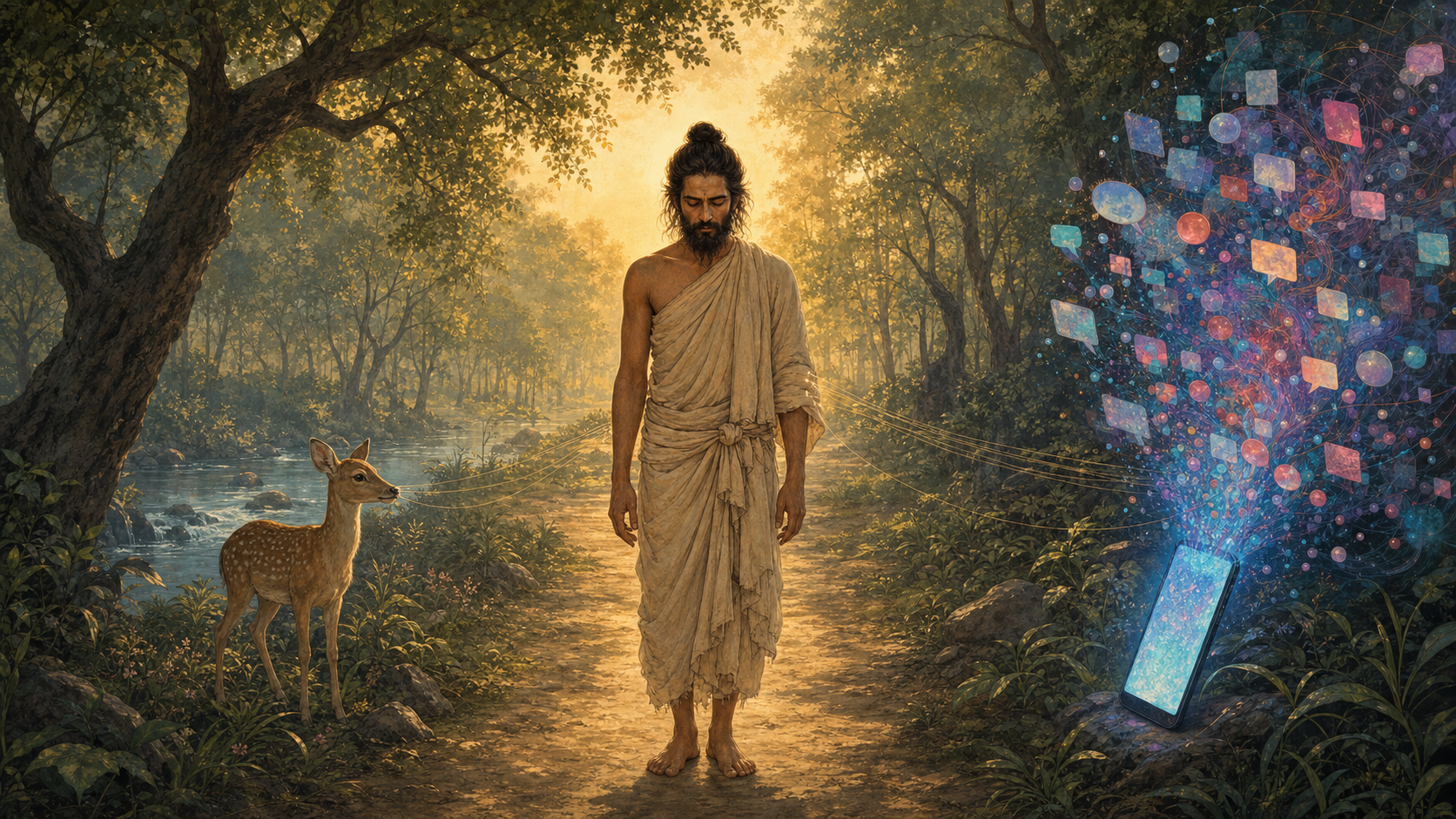
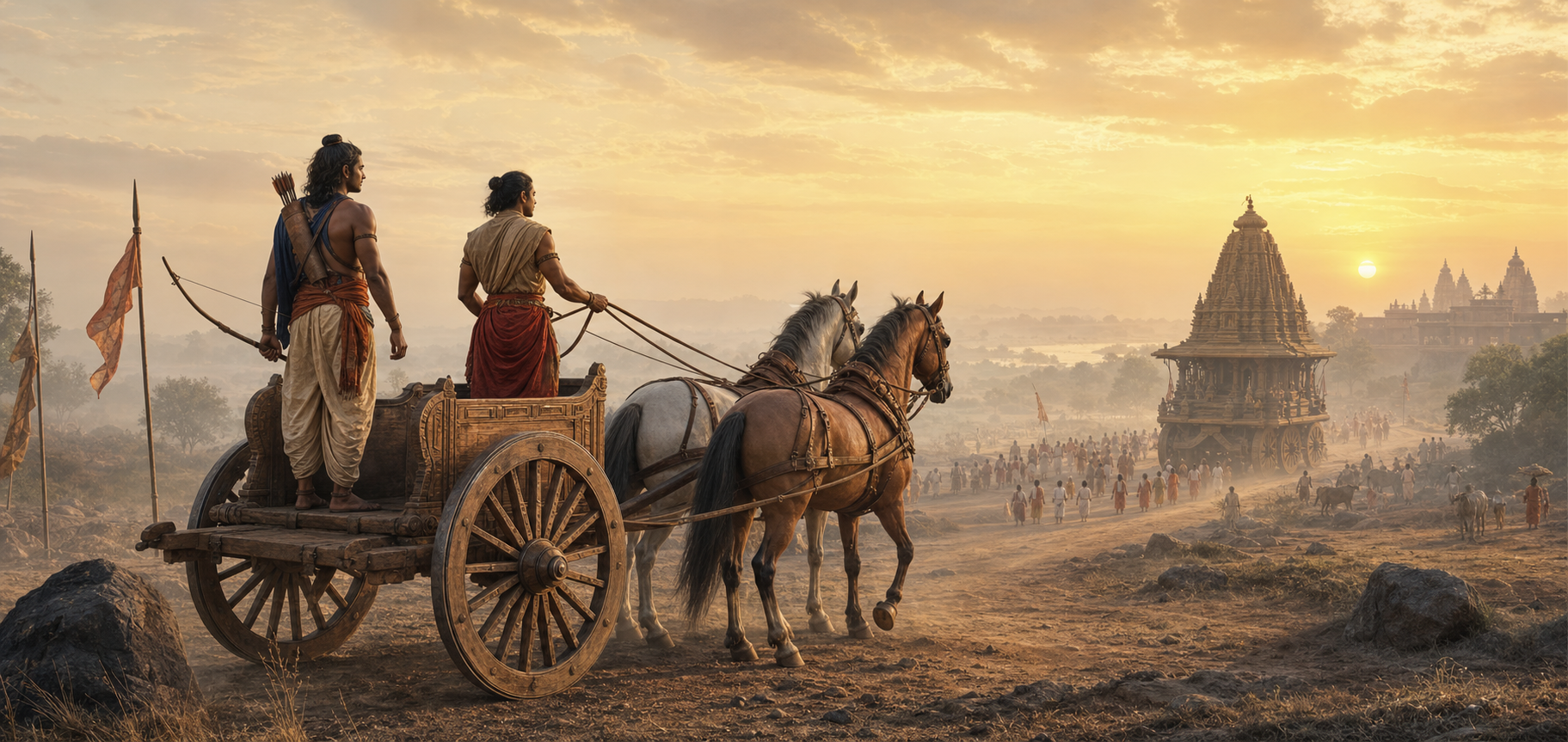
In dharmic traditions, a guru is not a trend but the principle of authentic guidance shaping a seeker’s life. Surrender means practicing the guru’s counsel with integrity, not passive or blind obedience. The Bhagavad Gita’s example of Arjuna and Sri Krishna illustrates how discerned acceptance refines agency and aligns action with dharma. Across Hinduism, Buddhism,…
-
Hinduism’s Holistic Vision: Purusharthas and Ashramas for a Balanced, Ethical Life

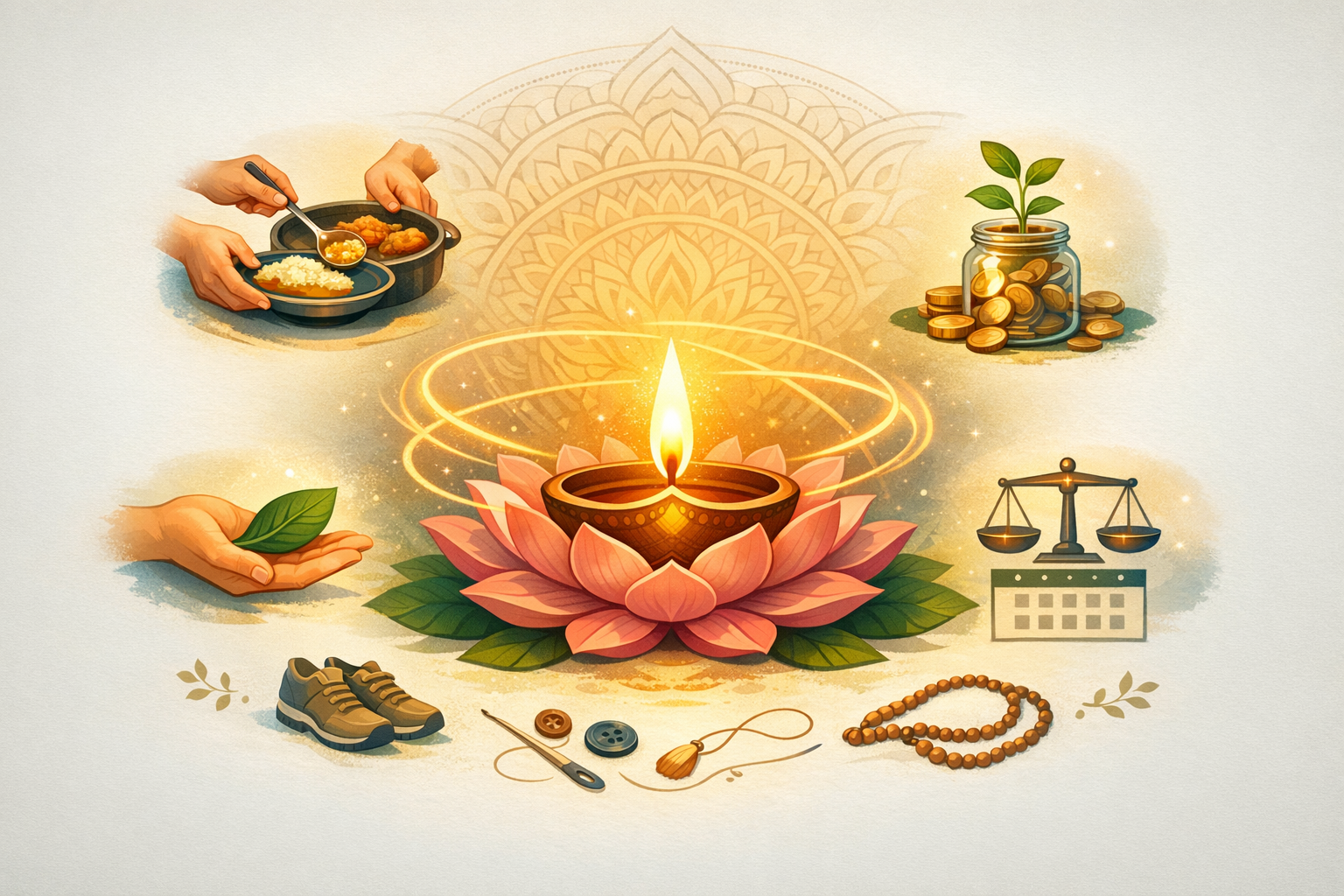
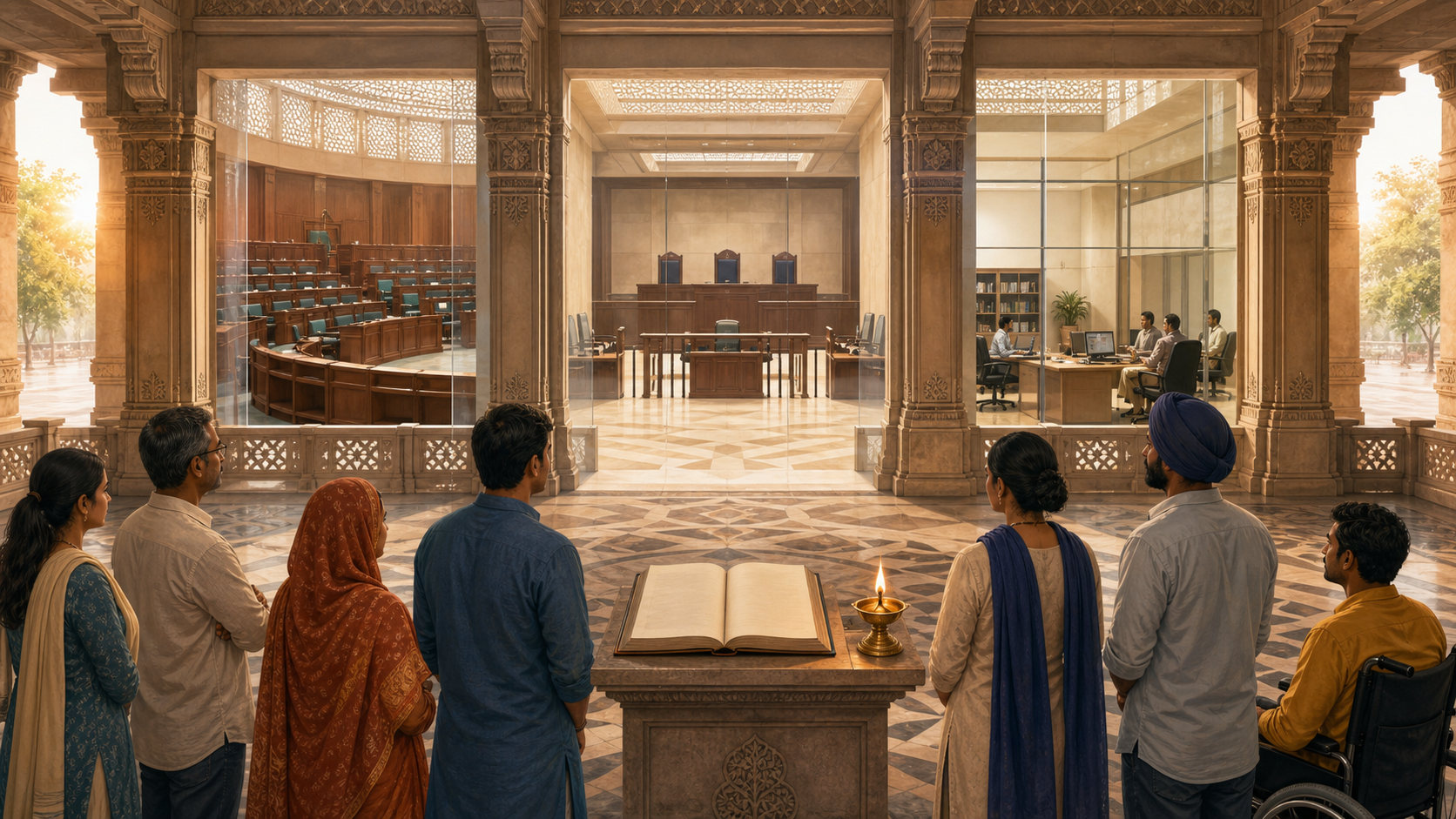
Hinduism offers a holistic, pragmatic model for living through two complementary frameworks: the Purusharthas (dharma, artha, kama, moksha) and the Ashramas (Brahmacharya, Grihastha, Vanaprastha, Sannyasa). These principles balance ethical clarity, material stability, meaningful enjoyment, and spiritual liberation. They also map a realistic life rhythm in which responsibilities evolve with time. Applied to modern challenges, this…
-
Lakshmana’s Impossible Choice: Duty, Honor, and Dharma in Ramayana’s Golden Deer Episode

The Golden Deer episode in the Ramayana crystallizes Lakshmana’s ethical dilemma between explicit duty and perceived emergency. The narrative contrasts svadharma with maryada, asking how to act when a clear mandate collides with an uncertain cry for help. By highlighting discernment, foresight, and proportional response, it shows how intention and outcome must be balanced. The…
-
Piercing Shunya: Kashi’s ‘Pagal Baba’ on Effulgent Truth and the Infinite Void

This rigorously documented Kashi encounter presents the profound teachings of the saint known as the “Pagal Baba,” framed within a careful, comparative dharmic lens. It maps a structured ascent through Jagat-Surya, Praṇava, Bindu, and luminous Jyotis toward the elusive Nirañjana Jyoti. The discussion of Shunya—layered, vast, and culminating in Ananta Shunya—offers rare clarity on the…
-
Trapped Yet Aware: Awakening From a 23-Year Nightmare and the Call for Compassion

A widely reported case described a Belgian man believed to be in a coma for 23 years who was actually conscious throughout, illuminating urgent questions about consciousness, communication, and medical ethics. His testimony—”I screamed, but there was nothing to hear”—reveals the lived trauma of awareness without a voice. The account underscores the need for clinical…
-
Keep Your Feet on the Ground: Timeless Dharmic Humility and Detachment for Modern Life

Groundedness, understood as humility and realism, aligns with dharmic ethics across Hinduism, Buddhism, Jainism, and Sikhism. Anchoring conduct in dharma and tempering outcomes with vairagya cultivates equanimity amid modern pressures. The Bhagavad Gita’s emphasis on samatvam mirrors contemporary insights on mindfulness and well-being. Practically, this approach strengthens leadership, relationships, and community trust. Everyday examples show…
-
Beyond the Seeker’s Paradox: Unveiling “You Are That” and dissolving the illusion of separation

This essay explores the Advaita Vedānta insight expressed in “You cannot know That; You are That,” showing how objectifying the Absolute sustains the illusion of separation. It clarifies why tat tvam asi affirms identity rather than distance and how śravaṇa–manana–nididhyāsana stabilize non-dual understanding. Practical guidance highlights self-inquiry, meditation, and breath awareness as means to quiet…
-
Guru Nanak’s Timeless Guidance: Seven Life‑Changing Teachings for a Fractured World

Guru Nanak’s teachings offer a precise, compassionate framework for modern life while aligning with the shared dharmic values of Hinduism, Buddhism, Jainism, and Sikhism. Naam Japna establishes inner steadiness; Kirat Karo restores dignity in ethical work; and Vand Chhako converts private success into public resilience. Sarbat da Bhala widens compassion to the whole community, while…
-
Why Souls Reincarnate: A Profound Look at Karma, Play, and Purpose in Birth and Death

Why do souls return to life again and again? Drawing on Sri Sri Ravishankar’s Satsang insight, this piece reframes reincarnation through the analogy of play: repetition serves growth, not redundancy. It explains samsara and karma in accessible terms and highlights how Hinduism, Buddhism, Jainism, and Sikhism converge on ethical living and liberation. Readers gain a…
-
Does God Really Exist? Experiential Practices to Sense the Divine Within Every Day

This reflection presents an experiential approach to the timeless question: Does God exist? Drawing on Sri Sri Ravishankar’s assurance that the Divine dwells within, it integrates methods shared across Hinduism, Buddhism, Jainism, and Sikhism. Readers gain practical steps—breath awareness, dhyana (meditation), mantra (japa), ethical alignment, and seva—to cultivate inner clarity. The guidance of community and…
-
Unlocking Abhinaya Dharma: Natyadharma vs. Lokadharma in India’s Timeless Dance-Drama

Abhinaya Dharma denotes the guiding codes of Indian dance-drama, balancing stylized Natyadharma with naturalistic Lokadharma. Understanding these two modes clarifies how performers move from bhava (inner feeling) to rasa (aesthetic experience). Natyadharma refines gesture, voice, costume, and inner affect into a luminous grammar; Lokadharma anchors performance in everyday realism. Together, they deepen narrative clarity, audience…
-
Vel of Murugan: Unlocking Inner Clarity, Courage, and the Compassionate Slaying of Ego

The Vel of Lord Murugan is more than a spear; it is a precise symbolic tool for cultivating inner clarity, dissolving egoic patterns, and aligning life with dharma. Its single-pointed tip represents focused attention and discerning wisdom, transforming philosophy into lived practice. Ritual observances such as Thaipusam and Karthigai reveal the Vel as a visible…
-
You Are Already That: Effortless Realization of Infinite Pure Consciousness—A Dharmic Perspective

This article clarifies a core Vedantic insight: infinite pure consciousness is not something to attain but to recognize. It explains how Hindu philosophy, especially Advaita Vedanta and the Upanishads, frames self-realization as effortless recognition rather than forced achievement. It highlights convergences with Buddhism, Jainism, and Sikhism, reinforcing unity in spiritual diversity. Practical guidance shows how…
-
Anatmabuddhi Explained: Unmasking the Not-Self Illusion and Awakening to Self-Realization

Anatmabuddhi names the intellect’s tendency to mistake the not-self for the Self, a root cause of anxiety, craving, and conflict. This article explains the concept in clear, accessible terms and connects it to allied insights in Buddhism’s anatta, Jainism’s anekantavada, and Sikh perspectives on ego. Readers gain practical tools—viveka, dhyana, ethical living, and a short…
-
Daksha–Shiva and the Dharma Dilemma: Powerful Lessons on Order, Freedom, and Unity

The Daksha–Shiva narrative illuminates a universal dilemma: how to balance social order with individual freedom without sacrificing either. This analysis interprets Daksha as the guardian of institutional harmony and Shiva as the emblem of spiritual sovereignty, arguing that dharma requires both. Drawing parallels with Buddhism’s Middle Way, Jainism’s Anekāntavāda, and Sikh ethics, it highlights a…
-
Unshaken Cosmos, Quiet Mind: Aligning with Dharma for Lasting Peace and Inner Resilience

This reflection explores how the universe remains steady despite mental turbulence and how dharmic disciplines cultivate alignment with that steadiness. It highlights convergent insights from Hinduism, Buddhism, Jainism, and Sikhism that guide equanimity, ethical living, and social harmony. Readers gain practical methods—breathwork, mantra japa, mindfulness, scripture contemplation, and nature-based rhythms—to calm anxiety and increase resilience.…
-
Origins of the Universe: A Thoughtful Bridge Between Srimad Bhagavatam and Big Bang Theory

This piece compares the Srimad Bhagavatam’s concept of pradhana with the Big Bang theory’s initial singularity, highlighting resonances without conflating scripture and science. It clarifies that both accounts point to a pre-manifest state where familiar space, time, and physical laws do not yet operate. Readers gain an accessible overview of Vedic cosmology alongside contemporary astrophysics.…
-
Why Judging Living Sadhus Fails: Humility, Neti Neti, and Dharmic Unity

Jaiva Dharma notes a common human pattern: people easily revere departed mahajanas yet hesitate to trust living sadhus. This reflection explains why sense-bound judgment is unreliable and why applying neti neti to appraise persons misuses a contemplative method meant for inner realization. A dharmic framework—anchored in scripture, community validation, and observable transformation—offers a balanced path…
-
Who Really Acts? Bhagavad-gita on Nature’s Forces, Karma, and Dharmic Freedom

Bhagavad-gita’s teaching that all beings act under the modes of material nature (Bg. 3.5; 18.40) reframes agency as skillful alignment with dharma rather than absolute autonomy. This perspective resonates with broader dharmic insights: Buddhist dependent origination, Jain karma theory, and Sikh understanding of Hukam all address conditioning and the path to freedom. Readers gain a…
-
Endure the Challenge: Timeless Hindu Wisdom for Modern Resilience and Steady Mind

This reflection explores the Bhagavad Gita’s teaching on sthithaprajna—steady wisdom—as a practical guide to modern resilience. Rooted in Chapter 2 (Verses 55–72), it emphasizes equanimity as the basis for ethical action and emotional balance, not detachment from life. The discussion connects Hindu insights with related ideas in Buddhism (upekkha), Jainism (sāmāyika), and Sikhism (Sehaj and…