-
Beyond Sattva, Rajas, Tamas: A Transformative Path to the Pure Self and Dharmic Unity

This essay explores how the three gunas—sattva, rajas, and tamas—bind experience and how dharmic traditions point beyond them to a liberating awareness. It clarifies Hindu perspectives on Atman and moksha while drawing resonant parallels with nirvana in Buddhism, kevala jñāna in Jainism, and Naam-centered living in Sikhism. Readers gain a clear, practical map grounded in…
-
Beyond Opinions: A Dharmic Guide to Truth, Clarity, and Compassion in the Social Media Era

Opinion overload in the social media era often obscures truth. Drawing on Hindu philosophy, Buddhist mindfulness, Jain Anekantavada, and Sikh humility, this piece outlines a Dharmic path that loosens attachment to opinions while strengthening discernment and compassion. It presents practical steps—pause, validate, widen perspectives, speak with ahimsa, and allow silence—to transform debate into inquiry. Readers…
-
Dronacharya and Dhrishtadyumna: Destiny, Deception, and Dharma in the Kurukshetra War

This analysis traces the full arc of Dronacharya and Dhrishtadyumna, from Drupada’s humiliation to the prophetic birth of Dhrishtadyumna, the guru–shishya paradox, and the Kurukshetra stratagem involving Ashwatthama. It clarifies competing versions of Drona’s death and weighs the ethical dimensions of deception in warfare. Readers gain a clear timeline, context for motives on both sides,…
-
Forgiveness Demystified: Practical Dharmic Steps to Release Resentment and Reclaim Peace

Forgiveness, in a dharmic view, is a gradual inner process that reduces resentment without excusing harm or forcing reconciliation. This guidance clarifies myths, distinguishes forgiveness from condoning and justice from hostility, and offers practical steps grounded in Ahimsa, karuna, and mindful breathing. It integrates insights from Hinduism, Buddhism, Jainism, and Sikhism to cultivate compassion, balance,…
-
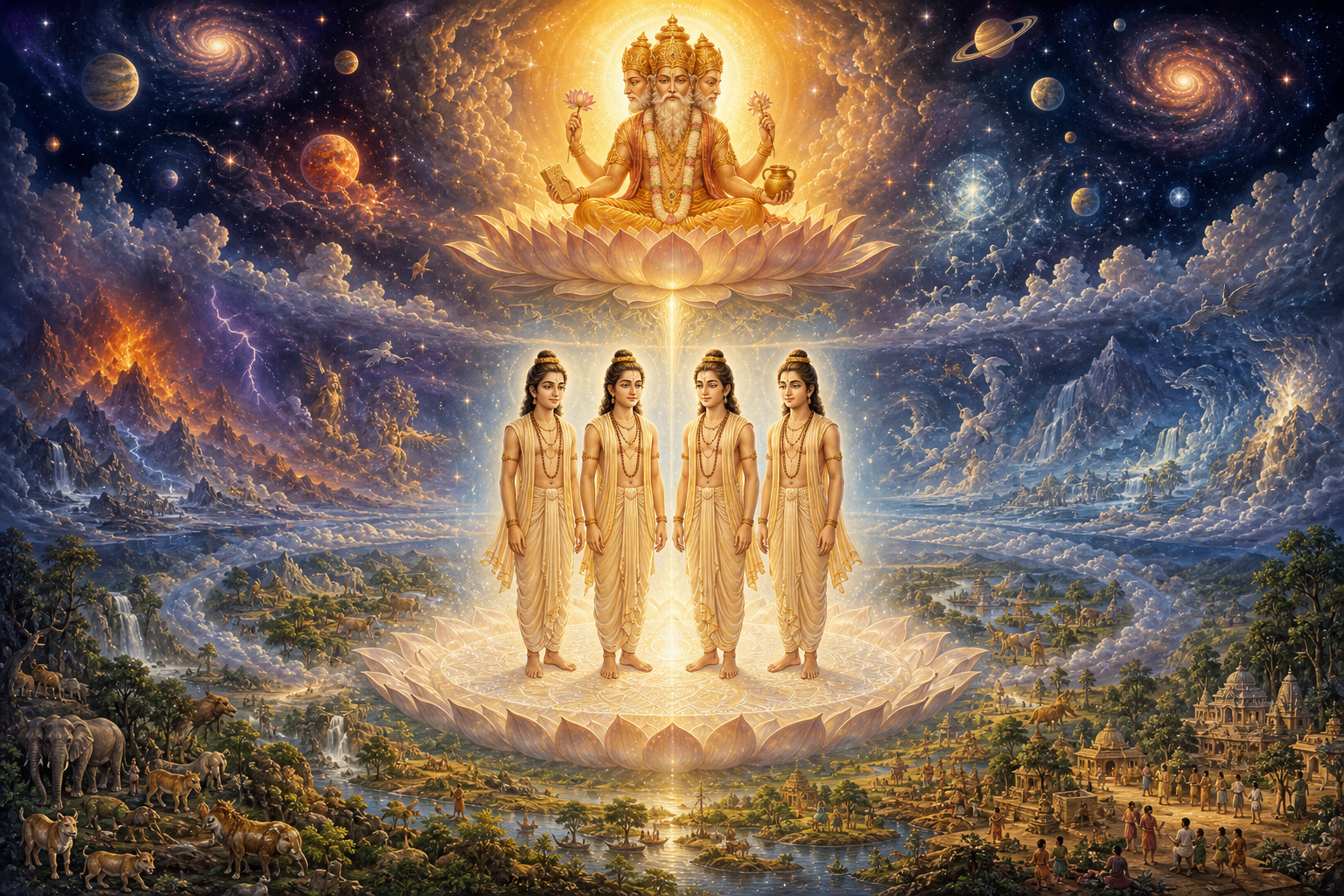
Hanuman’s Trimurti Teaching: Healing Grief by Living the Present with Brahma, Vishnu, Shiva

This article explores a lesser-known Ramayana narrative in which Hanuman meets Sage Kandu, grieving the loss of his sixteen-year-old son, to illuminate a practical teaching on the Trimurti—Brahma, Vishnu, and Shiva. It explains how living in the present harmonizes creation, preservation, and transformation without denying the depth of sorrow. Readers gain a clear, actionable framework:…
-
Kalpanagaurava Unveiled: Master Tarka’s Antidote to Excessive Imagination in Debate

Kalpanagaurava (कल्पनागौरव) identifies the burden of excessive assumptions in reasoning within Hindu philosophy’s tarka tradition. Recognized as one of the eleven varieties of tarka, it cautions against arguments that lean on imaginative postulates rather than evidence. By favoring economical explanations, it strengthens clarity and doubt-resolution in debate. Readers will find this principle intuitively useful in…
-
Nirvāṇa Through Bhakti-Yoga: Expanding Transcendental Bliss and Dharmic Unity

Śrīmad-Bhāgavatam (ŚB) 4.13.8–9 depicts liberation (nirvāṇa) as freedom from bodily bondage through deepened knowledge of the Supreme Brahman. The text frames transcendental bliss as a stable, ever-expanding condition made possible by continual practice of bhakti-yoga. This vision aligns with dharmic concepts such as moksha, nirvāṇa, kevala jñāna, and union with the Divine, highlighting unity across…
-
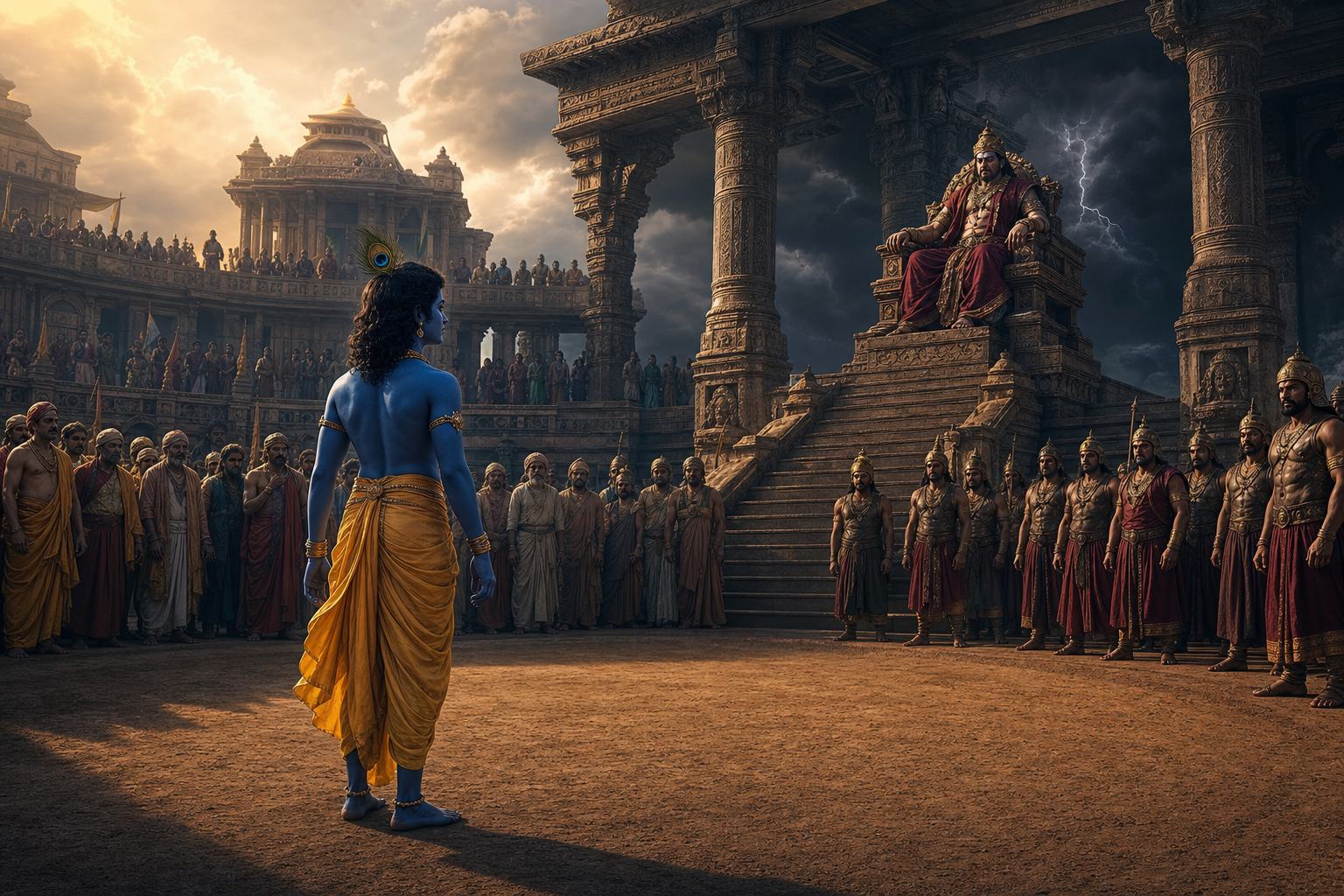
See the World Anew: Krishna’s Test of Duryodhana and Yudhishthira on Perception and Dharma

A classic teaching from the Mahabharata tradition, guided by Sri Krishna’s wisdom, shows how perception shapes reality. In the story, Duryodhana sees faults everywhere while Yudhisthira discerns redeeming qualities in all, revealing the inner lens each brings to the world. Read alongside the Bhagavad Gita’s discipline of equanimity (samatva), the lesson becomes a method for…
-
Reclaiming Joy: A Dharmic Guide to Defining Personal Happiness with Mindful Freedom

Happiness is not a one-size-fits-all formula; it flourishes when individuals claim the freedom to define joy from within. Drawing on dharmic traditions—Hinduism, Buddhism, Jainism, and Sikhism—this piece shows how Mindfulness, non-attachment, seva, and Karma Yoga cultivate Self-awareness and Inner peace. It explains why chasing approval leads to hollowness and how values-based alignment sustains meaningful contentment.…
-
Vedic Knowledge Reimagined: Dharmic Epistemology for a Reliable Path to Truth

Veda, from the Sanskrit root ‘vid’—to know—presents a holistic vision of knowledge that is both empirical and spiritual. Dharmic traditions converge on three pramāṇas: perception, inference, and reliable testimony, each balancing the limits of the others. Classical critiques identify four defects in human cognition—limited senses, illusion, mistaken inference, and a cheating propensity—calling for humility and…
-
From Instinct to Insight: Tapasya and Self-Discipline for Lasting Peace and Purpose

This essay reframes classical teachings on tapasya and self-discipline as a unifying, compassionate ethic shared across Hinduism, Buddhism, Jainism, and Sikhism. It explains key scriptural principles—Tapo divyam and pravrttih esam bhutanam nivrtes tu maha-phalam—while clarifying their practical relevance in modern life. Readers learn how modest shifts in consumption and attention reduce restlessness and increase clarity.…
-
Breaking the Illusion of Attachment: A Dharmic Perspective on Samsara and Family Love

Attachment to the body and to loved ones is natural, yet it often fuels anxiety and illusion. Dharmic traditions teach a unifying remedy: refine love through non-attachment while fulfilling responsibilities with compassion. Hindu philosophy, echoed by Buddhism, Jainism, and Sikhism, encourages care without possessiveness and action without clinging to outcomes. The Bhagavad Gita clarifies this…
-
Embracing Samsara: The Unavoidable Cycle of Life and Transformation in Hindu Thought

The insight that life moves through birth, growth, flowering, fruiting, decay, and transformation reflects Hinduism’s vision of Samsara as a meaningful cycle shaped by karma and oriented by dharma toward moksha. This piece explains how the metaphor of nature clarifies impermanence while cultivating equanimity and ethical responsibility. It highlights scriptural coherence found in the Upanishads…
-
Beyond the Brain: Transformative Dharmic Wisdom on Mind, Universal Consciousness, and Well-Being

Where is the mind? This essay bridges Hindu philosophy and contemporary science to show why the mind cannot be reduced to the brain alone. Drawing on Advaita Vedanta, Sāṅkhya-Yoga, and the Pañca Kośa model, it explains mind as a subtle instrument illuminated by universal consciousness. It highlights shared dharmic insights from Buddhism, Jainism, and Sikhism…
-
Dharma as Cosmic Law: A Timeless Path of Harmony, Responsibility, and Dharmic Unity

Dharma is presented as the cosmic law that sustains life and nurtures harmony across individuals, societies, and species. It is dynamic rather than rigid, aligning personal duty with universal values and linking ethical action to spiritual aims such as Karma and Moksha. The dharmic traditions—Hinduism, Buddhism, Jainism, and Sikhism—converge on compassion, responsibility, and pluralism, making…
-
Dharmaskandha in Chandogya Upanishad: Three Pillars of Vedic Life for Timeless Ethical Living

Dharmaskandha in the Chandogya Upanishad (2.23.1) presents three complementary pillars of Vedic life: the Vedic student, the householder, and the forest-dweller. Together they integrate disciplined learning, social responsibility, and contemplative depth into a unified ethic. This triad offers a relatable blueprint for modern living—continuous education, family and civic stewardship, and mindful simplicity. The framework resonates…
-
Raghunātha Śiromaṇi and Navya-Nyāya: The Daring Indian Modernity Before Descartes

Indian modernity did not require a rupture with the past. Through Navya-Nyāya, Raghunātha Śiromaṇi advanced “reason and evidence-based critical inquiry” a century before Descartes, crafting a precise technical language to analyze reality from the finest concepts to composite bodies. This tradition flourished around Mithila, Navadwīpa, and Varanasi, drawing scholars from Tibet and nurturing cross-dhārmic exchange.…
-
The Illusion of Need: Dharmic Wisdom on Desire, Contentment, and Modern Consumer Traps

Modern marketing often manufactures desire, creating an illusion of need that fuels restlessness rather than fulfillment. Drawing on shared dharmic insights from Hinduism, Buddhism, Jainism, and Sikhism, this analysis shows how contentment can be cultivated through santosha, aparigraha, mindfulness, and santokh. Readers learn a clear, five-step decision sequence to pause, examine, align with dharma, simplify,…
-
Hindu Goddess Kali’s Fifty-Skull Garland: Fearless Wisdom on Creation, Death, and Renewal

Kali’s mundamala, the garland of fifty skulls, is a precise philosophical symbol rather than a macabre accessory. Each skull corresponds to a Sanskrit phoneme, expressing the creative power of Vāk and the sovereignty of Shakti over time and form. The image teaches fearlessness, non-attachment, and ethical clarity by confronting impermanence and dissolving ego. Variations in…
-
Beyond Male and Female: Dharmic Wisdom on God, the Soul, and Transcending Gender

This exploration reframes the question of God’s gender by first distinguishing spiritual identity from bodily identity. Drawing on the Bhagavad-gita (8.5), it explains how reincarnation reveals gender as transient while the soul remains enduring. It then argues that, in the bodily sense, God is neither male nor female, since the Absolute transcends material attributes. The…