-
Whom to Worship? A Clear, Compassionate Guide to Ishta within Dharmic Unity

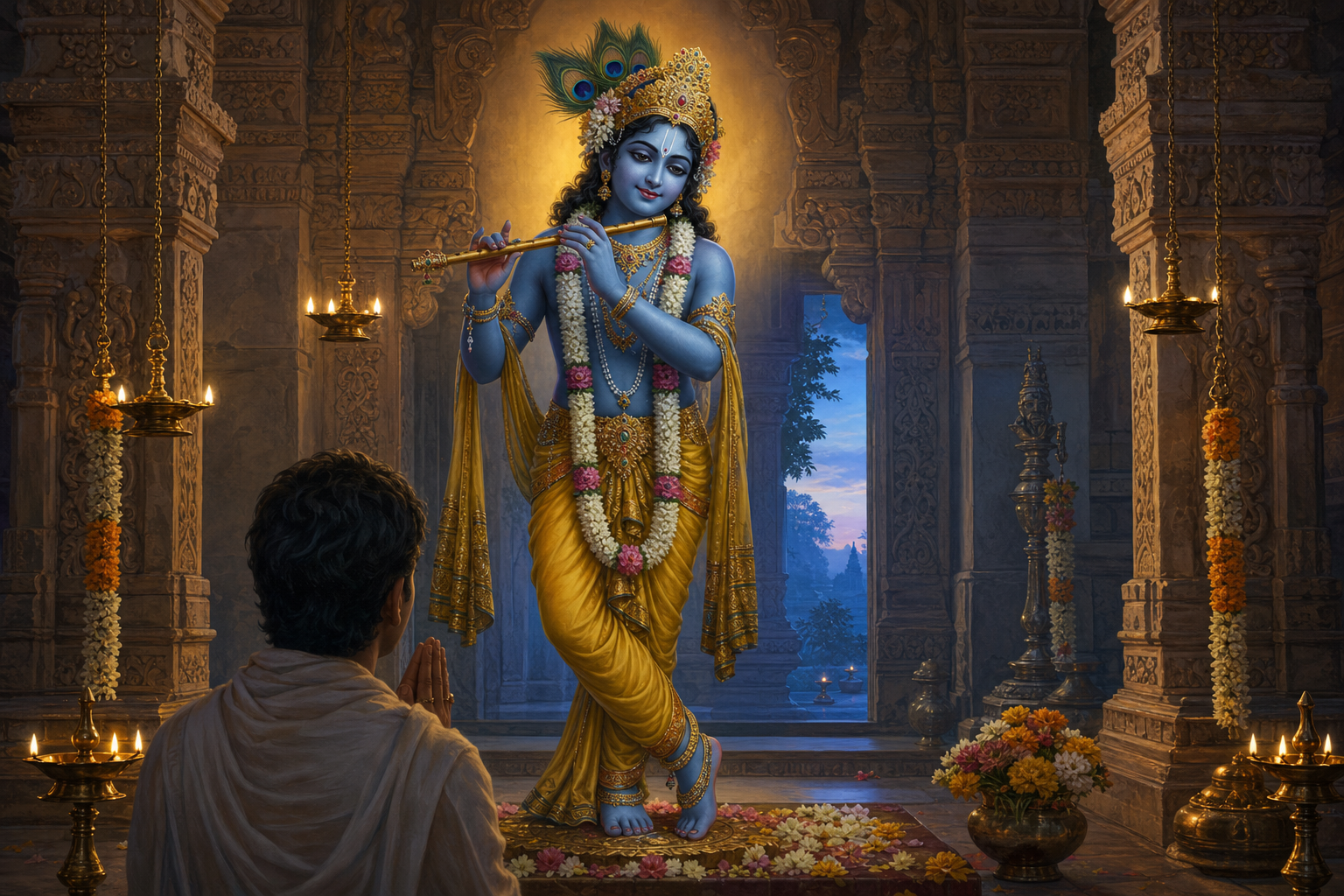
Many seekers encounter multiple deities on the home altar and wonder whom to worship. The dharmic traditions affirm unity with meaningful distinctions, where Ishta in Hinduism offers a focused, loving path without diminishing other forms. A team-photo analogy clarifies why context and study matter for understanding sacred diversity. Hindu philosophy encourages rigorous inquiry through texts…
-
No Life Is Lesser or Greater: A Transformative Dharmic Insight on Sacred Equality

This article explores the Hindu philosophical teaching that no life is inferior or superior, grounding sacred equality in Atman and the unity of all existence in Brahman. It clarifies how this insight becomes an ethical imperative through Ahimsa and Dharma, encouraging compassionate, responsible action. Readers gain a clear understanding of sama-darśana in the Bhagavad Gita…
-
Kali Yuga’s Silent Crisis: Contentment as the Missing Key to Inner Peace and Dharma

Kali Yuga is marked by restlessness despite material progress, and ancient wisdom identifies contentment as the missing key to inner peace. This piece explains how santosha is understood across Hinduism, Buddhism, Jainism, and Sikhism and why these convergent teachings matter now. Readers gain a clear distinction between contentment and complacency, seeing how inner steadiness enables…
-
The Sacred Black of Goddess Kali: Profound Symbolism, Unity, and Inner Awakening

Goddess Kali’s blackness is a precise spiritual symbol, pointing beyond physical color to the infinite and unmanifested. In Hindu philosophy and Tantra, it signifies the absorptive wholeness that dissolves ego and form while nurturing clarity and courage. Practitioners often report calm and resilience when contemplating Kali, suggesting a lived integration of psychological and contemplative insight.…
-
When Desires Multiply, Clarity Fades: A Dharmic Path to Focus, Peace, and Purpose

The principle that multiplying desires breeds ambiguity is a shared insight across Hinduism, Buddhism, Jainism, and Sikhism. Hindu philosophy links scattered aims with cognitive dispersion and recommends abhyasa, vairagya, and aparigraha to restore clarity. The Bhagavad Gita underscores one-pointed understanding, while Yoga Sūtras provide a method for stabilizing attention. Parallel teachings in Buddhism (mindfulness), Jainism…
-
Beyond Circumstances: The Transformative Hindu Truth of Inner Freedom and the Ever-Free Self

This essay explains a core Hindu philosophical insight: true freedom is inner and independent of circumstance. Drawing on the Upanishads and the Bhagavad Gita, it clarifies how bondage stems from misidentification and how moksha is the recognition of the ever-free Self. It outlines practical pathways—Karma, Bhakti, Jnana, and Raja Yoga—that cultivate equanimity and clarity in…
-
Power and Tapas in Kalidasa: Tagore on Raghuvamsha and Kumarasambhava’s Lesson

Rabindranath Tagore’s reading of Kalidasa reveals a profound dialogue in Sanskrit literature between worldly power and inner discipline. Raghuvamsha maps the ascent born of tapas and the decline that follows indulgence, using dawn-and-dusk imagery to frame a moral architecture. Kumarasambhava then proposes the remedy: harmonize renunciation and enjoyment so that strength is born from balance.…
-
Master the Mind, Transform Reality: Dharmic Wisdom for Inner Freedom and Resilient Living

Dharmic wisdom teaches that mental mastery, not circumstances, determines freedom. The Bhagavad Gita, the Upanishads, the Dhammapada, Jain disciplines, and Sikh teachings converge on a shared insight: inner clarity transforms how reality is experienced. Practical methods such as breath awareness, mindfulness meditation, japa or simran, ethical restraint, and seva stabilize attention and soften reactivity. This…
-
Why We Hoard What We Can’t Use: Behavioral Science Meets the Dharmic Atyāhāra Warning

Recent behavioral studies reveal a persistent bias to accumulate more than can be used—even when boundaries are explicit. Dharmic traditions have long warned against this tendency through the principle of atyāhāra and the virtues of Aparigraha and Asteya. By integrating consumer behavior insights with Hindu, Buddhist, Jain, and Sikh teachings on contentment and sharing, the…
-
Becoming an Empty Vessel: Surrendering Doership for Peace and Clarity in Dharmic Paths

This reflection explores the Dharmic insight that ego-driven doership is an illusion and that becoming an “empty vessel” restores clarity, peace, and ethical strength. It explains how the Bhagavad Gita’s Karma Yoga reframes action as service, releasing attachment to outcome without weakening responsibility. The discussion highlights convergences across Hinduism, Buddhism, Jainism, and Sikhism—anatta, aparigraha, samayik,…
-
Pashupati’s Sacred Symbolism: How Shiva Liberates Bound Souls and Guides All Beings

Pashupati, the profound epithet of Shiva, unites care for all beings with the promise of liberation from worldly bondage. Drawing on Hindu philosophy, it presents the Lord as protector of the bound soul and the One who severs the cords of ignorance and karma. The symbolism nurtures compassion, non-harm, and ethical living while guiding seekers…
-
Plato in Dialogue with Dharmic Wisdom: Insights from a Three-Day Symposium at SKUAST-Kashmir

A three-day international symposium at SKUAST-Kashmir brought Plato into conversation with Dharmic traditions, emphasizing unity in spiritual diversity. Scholars and students explored ethics, political philosophy, and the Socratic method alongside the Upanishads, Buddhist dialectics, Jain Anekantavada, and Sikh ethical reflection. The program modeled rigorous comparative studies and civil discourse, strengthening critical thinking and textual analysis.…
-
Indra’s Crown vs. a Beggar’s Freedom: The Astonishing Dharma Paradox of Real Happiness

Hindu philosophy contrasts Indra’s celestial power with a beggar’s unburdened freedom to reveal how non-attachment, not possession, anchors lasting happiness. Upanishadic insight, Bhagavad Gita ethics, and the shared perspectives of Buddhism, Jainism, and Sikhism converge on a single truth: clinging creates suffering, while Aparigraha and Vairagya cultivate inner sovereignty. Psychologically, the paradox aligns with the…
-
Trusting Time: kāla as tuṣṭi in Sankhya Karika to cultivate calm, patience, and mukti

This article explores kāla as a form of tuṣṭi in Sankhya Karika (verse 50), showing how trust in time can cultivate calm, patience, and steady progress toward mukti. It clarifies the philosophical role of tuṣṭi as both a stabilizing force and a potential pitfall when mistaken for fatalism. Readers gain practical ways to embody engaged…
-
From Disposable Bonds to Enduring Freedom: Dharmic Wisdom for Modern Relationships
Modern society’s disposable culture often extends to human bonds, eroding trust and meaning. Drawing on dharmic wisdom, this reflection explores how Hindu principles—dharma, viveka, vairagya, ahimsa, and aparigraha—can restore depth to relationships without endorsing indifference. It highlights convergences across Buddhism (anicca, karuṇā), Jainism (aparigraha, ahimsa), and Sikhism (seva, sarbat da bhala) to model unity in…
-
Bhagavad Gita Leadership Lessons: Timeless Strategies for Ethical, Resilient Decision-Making
The Bhagavad Gita articulates a clear, practical framework for ethical leadership and resilient decision-making. Grounded in Dharma and Karma Yoga, it strengthens self-leadership, reduces anxiety through non-attachment, and aligns choices with long-term social good. The dialogue between Sri Krishna and Arjuna models calm, courageous action under uncertainty. Compassion, dialogue, and Lokasangraha reposition leadership as stewardship…
-
A Beginner’s Path to Inner Peace: Understanding Sikhi’s Wisdom for Everyday Harmony

This reflective guide introduces beginners to Sikhi as a practical path to inner peace and everyday harmony. It explains Ik Onkar and the pillars of Naam Simran, Kirat Karni, and Vand Chhakna, showing how they cultivate mindfulness, ethical living, and compassionate sharing. Readers learn how Sangat, Langar, and Seva build belonging and resilience, while Miri-Piri…
-
Why Desires Persist in Kali Yuga: A Dharmic Roadmap to Master Craving, Age, and Satiety
Desire often outlives satiety and age in Kali Yuga, a pattern recognized across Hinduism, Buddhism, Jainism, and Sikhism. Dharmic teachings trace this persistence to avidya, samskaras, and ego, rather than mere lack of fulfillment. The Bhagavad Gita, Upanishads, Buddhist suttas, Jain ethics, and Sikh Gurbani converge on a practical cure: ethics, contemplation, and service. This…
-
11 Compassionate Ways to Handle Criticism: Dharmic Wisdom for Calm, Clarity, and Growth

Criticism can be transformed from discomfort into growth with a calm, dharmic approach. Drawing inspiration from Satsang guidance associated with Sri Sri Ravishankar Guruji and consonant with shared values across Hinduism, Buddhism, Jainism, and Sikhism, these 11 principles emphasize mindfulness, compassion, and equanimity. Readers learn to pause before reacting, listen deeply, and separate message from…
-
Sacred Ecology in Hinduism: How Nature Worship Shapes Dharma, Ethics, and Daily Life

Nature worship in Hinduism is a core expression of sacred ecology that unites philosophy, ritual, and ethics. Rooted in the Vedas, Upanishads, and Puranas, it affirms cosmic unity and the sanctity of the five elements. Rituals like offerings to Surya and the care of Tulsi translate reverence into daily practice. Ethical pillars—Ahimsa, Aparigraha, and devotion…