-
Arjuna’s Grief as Yoga: The Transformative Power of Vishada in Bhagavad Gita Chapter 1

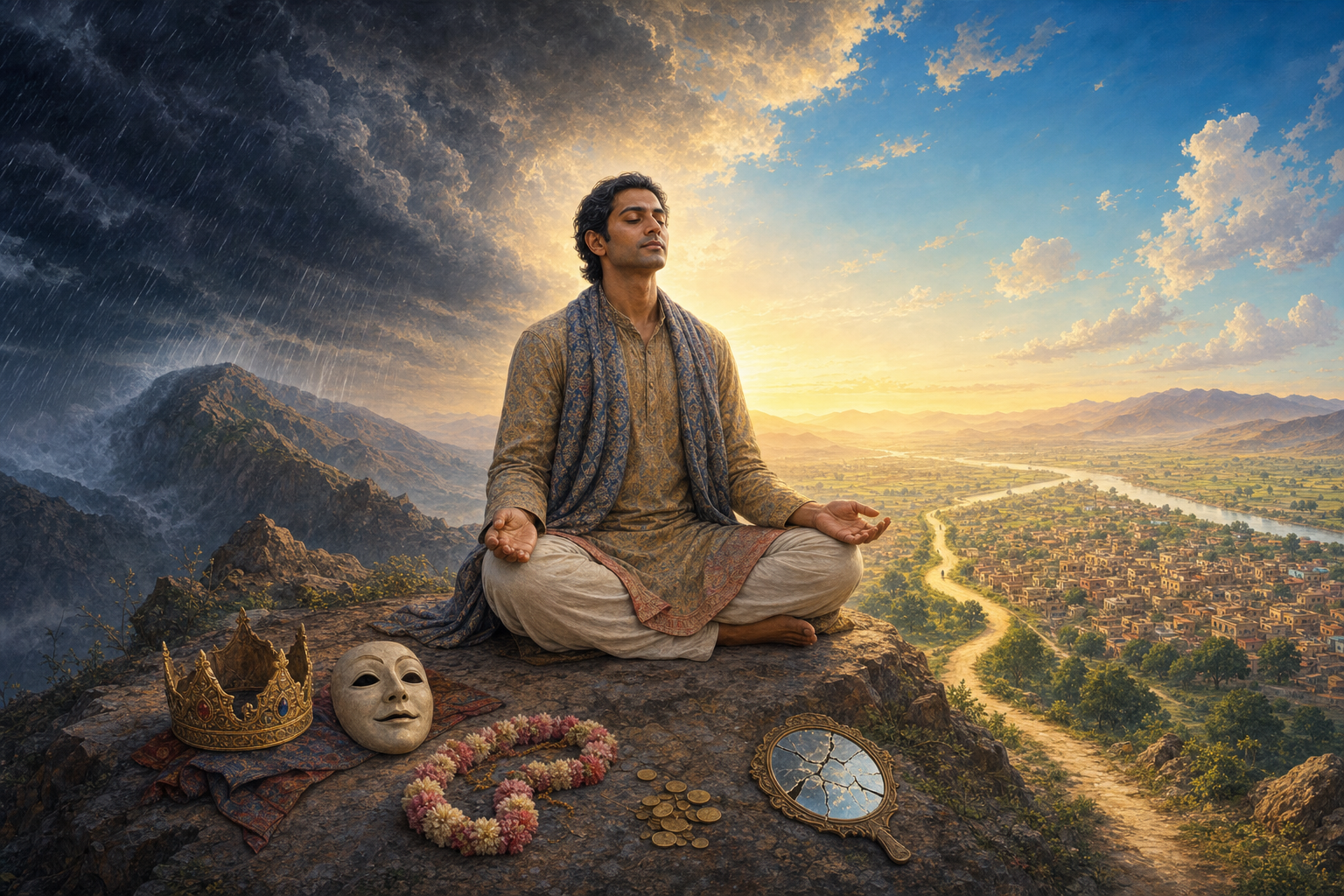
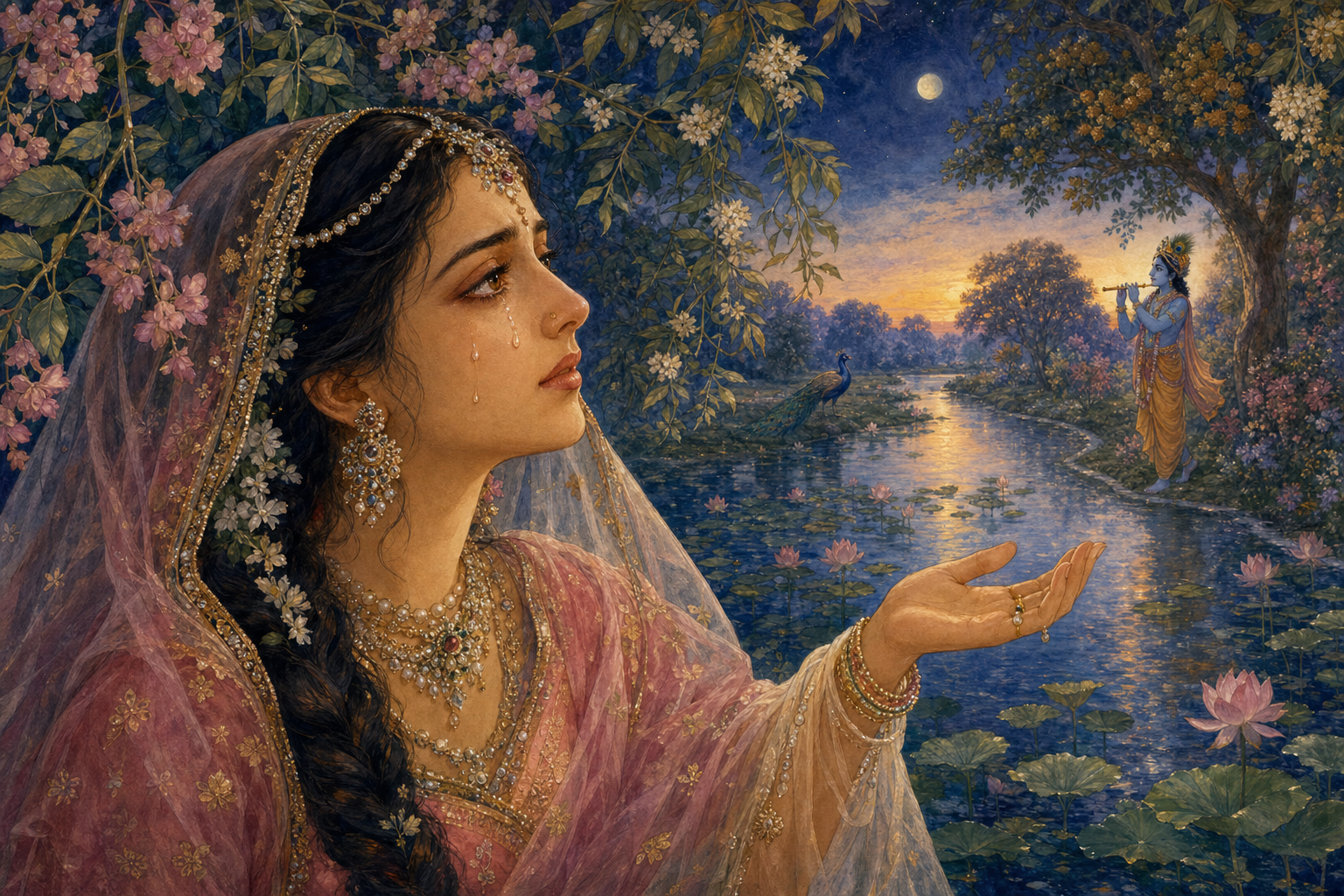
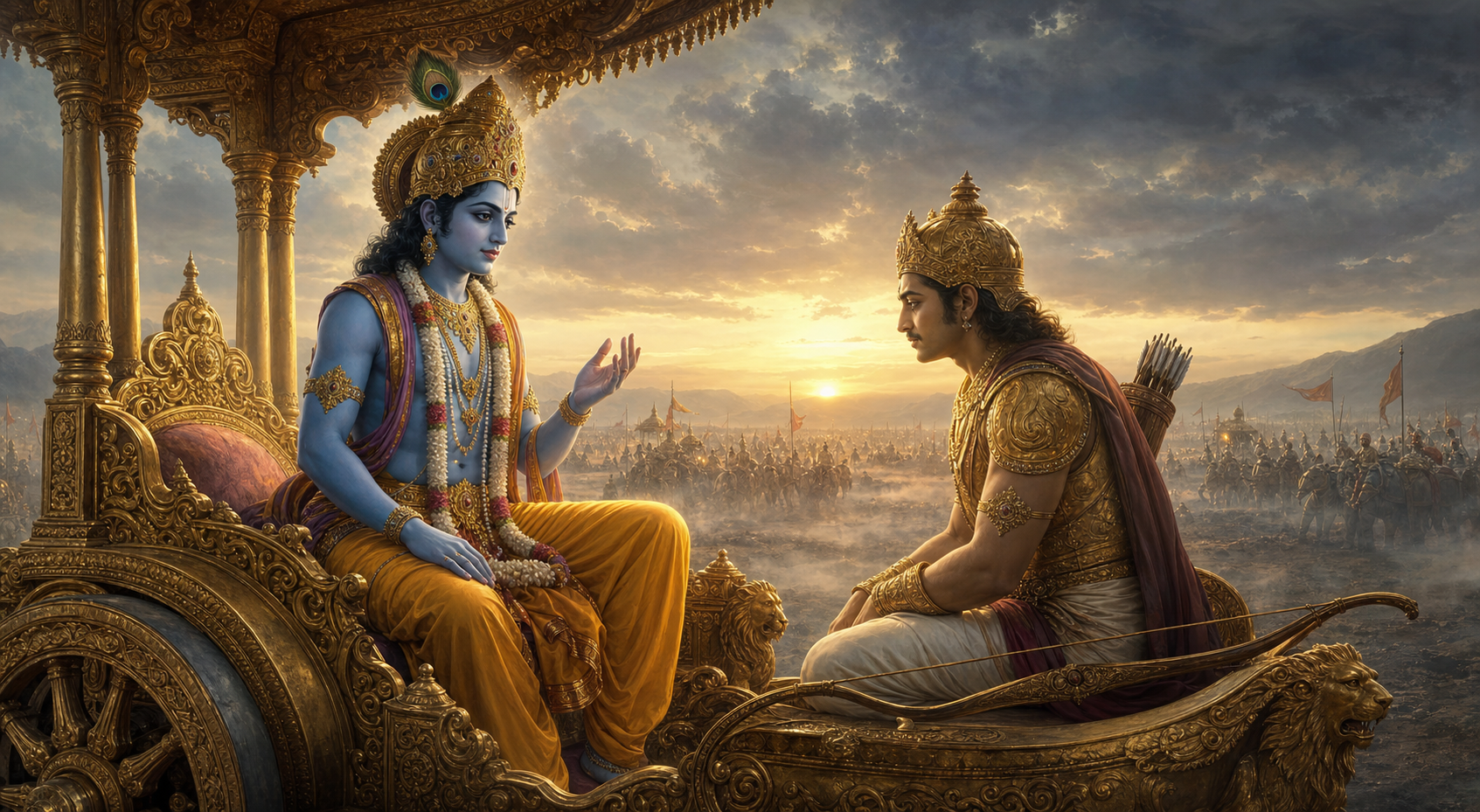
The Bhagavad Gita calls its opening chapter Arjuna-Vishada-Yoga to teach that honest suffering can initiate authentic spiritual discipline. Arjuna’s despondency exposes moha, leads to surrender (śiṣyas te ’haṁ), and prepares the ground for buddhi-yoga, samatva, and Karma Yoga. By defining yoga as equanimity and skill in action, the Gita frames grief as a catalyst that…
-
Affection Without Weakness: Timeless Dharmic Wisdom for Compassionate, Courageous Living

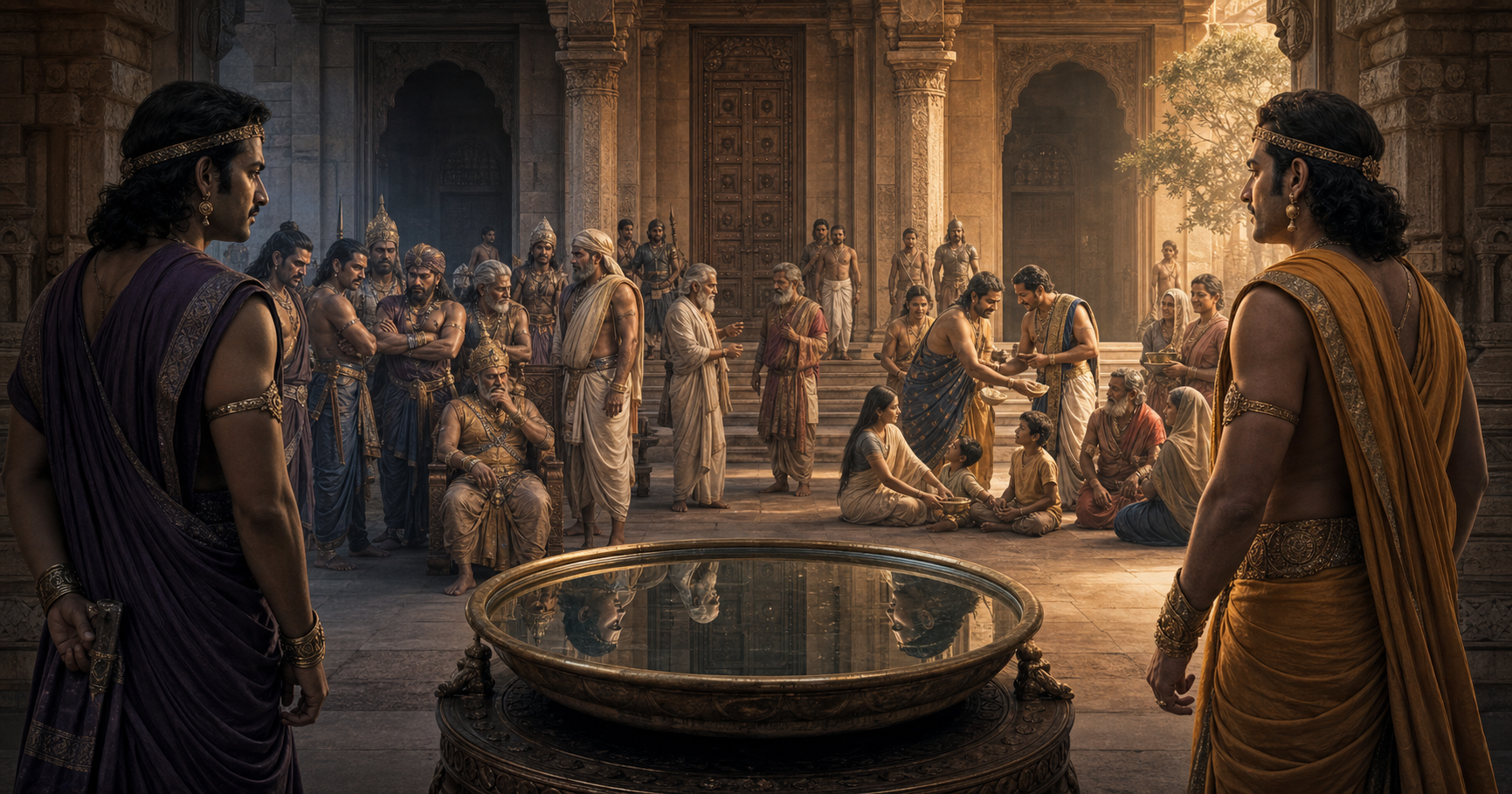
This article reframes affection as a resilient strength when aligned with discernment, boundaries, and ethical purpose across Hinduism, Buddhism, Jainism, and Sikhism. Drawing on the Bhagavad Gita, Vidura-niti, the Brahmavihāras, Anekāntavāda, and the Sikh Sant-Sipahi ideal, it shows how compassion matures with wisdom and becomes courage in action. Readers gain a practical decision process rooted…
-
No Two Days Are Alike: Hindu Wisdom on Impermanence, Resilience, and Joyful Equanimity

The insight that no two days are alike is a core teaching of Hindu philosophy, linking impermanence to disciplined resilience rather than despair. Drawing on the Bhagavad Gita, the Upanishads, and the Yoga Sutra, it explains how abhyasa, vairagya, and titiksha cultivate equanimity in the face of change. Comparative perspectives from Buddhism (anicca and upekkha),…
-
Unity in Diversity: Harnessing Dharmic Pluralism for Deeper Spiritual Harmony and Growth

This analysis presents Unity in Diversity as a disciplined dharmic pluralism that elevates both personal practice and community life. Anchored in Srila Prabhupada’s insight that spiritual variety leads to agreement, it distinguishes unity from uniformity and diversity from fragmentation. It clarifies acintya-bheda-abheda and Ishta in Hinduism, integrating Swami Vivekananda’s views to show how devotion can…
-
A Guru Can Guide, Not Save: Self‑Realization Across Hindu, Buddhist, Jain, Sikh Paths

Across Hinduism, Buddhism, Jainism, and Sikhism, a unifying principle stands out: a guru can guide, not save, and Self-Realization depends on disciplined personal effort. This article grounds the point in the Bhagavad Gita and Upanishads, while showing its parallels in Buddhist, Jain, and Sikh teachings. It clarifies how grace and effort cooperate without inviting passivity,…
-
Decoding Hindu Iconography: Beyond Idolatry to Metaphysics—Bridging Dharmic–Abrahamic Insight

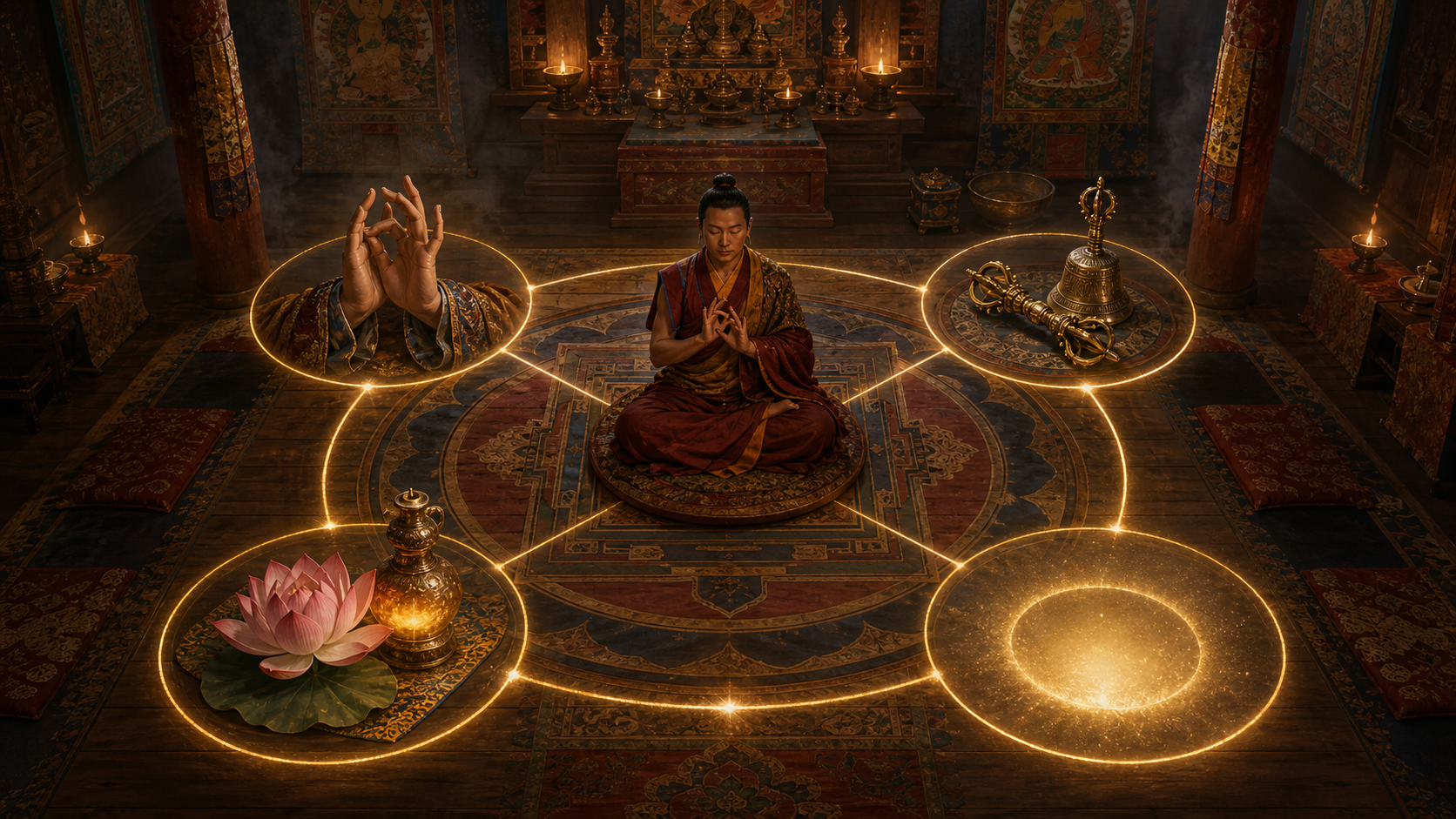
This article decodes Hindu iconography as a rigorous symbolic language that encodes metaphysics, ethics, and contemplative practice, rather than mere ‘idolatry’. It situates medieval misunderstandings within Abrahamic aniconism and outlines how mūrti, prāṇa-pratiṣṭhā, mudrā, and vāhana together form a coherent semiotic system. Readers gain a comparative framework linking Hindu saguṇa–nirguṇa practice to apophatic and cataphatic…
-
Decoding Krikala in Advaita Vedanta: Harness the Throat’s Subtle Prana for Clarity and Calm

Advaita Vedanta locates Krikala (Krikara) in the throat as a minor prana governing hunger, thirst, and protective reflexes that make clear speech and comfortable swallowing possible. By placing Krikala within the five primary and five subsidiary pranas, the tradition shows how subtle energy integrates physiology, psychology, and practice. Gentle methods such as light ujjayi and…
-
From Brahman to Cosmos: Decoding Hindu Cosmology, Cyclic Time, and Dharmic Unity

Hindu cosmology portrays creation as emergence from an undivided reality, Brahman, rather than a one-time act ex nihilo. Drawing on the Upanishads, Sāṅkhya, Vedānta, and the Puranas, it explains how the subtle becomes gross through ordered stages, from mahat and ahaṅkāra to the five elements. Cyclic time—yugas, manvantaras, and kalpas—replaces linear beginnings with rhythmic manifestation…
-
Beyond the Body-Illusion: How Intense Concentration Unveils Pure Consciousness in Hindu Thought

Hindu philosophy teaches that in deep concentration the usual sense of having a body recedes, revealing pure, self-luminous awareness. Drawing on the Upanishads, Yoga Sutras, and the Bhagavad Gita, this article explains how pratyahara, dharana, and dhyana systematically reduce sensory dominance and disclose the witnessing consciousness. It relates these insights to parallel practices in Buddhism,…
-
Why Pleasure Escapes Us: Hindu Wisdom on Desire, Avidya, and the Path to Lasting Ananda

Why does pleasure fade so quickly, and why does desire return so reliably? This long-form analysis uses Hindu philosophy—Bhagavad Gita, Yoga Sutras, and Upanishads—to explain the psychology of craving via avidya, raga-dvesha, samskara, and the gunas. It clarifies the distinction between sukha (contact-based pleasure) and ananda (enduring joy) and situates kama within the purusharthas under…
-
The ‘Maya Times’ of the Mind: A Dharmic Guide to Illusion, Suffering, and Liberation

This analysis reframes “Maya Times” as a precise metaphor for how the mind misreports temporary pleasures as lasting happiness. Drawing on the Bhagavad Gita, with Srila Prabhupada’s observation as a focal point, it clarifies why contact-born pleasures cannot deliver enduring fulfillment. It then situates this diagnosis within Buddhism, Jainism, and Sikhism, showing their shared strategies…
-
Clash and Convergence: How Vedic and Western Worldviews Shaped Science, Faith, and History

This long-form essay traces how encounters between Vedic knowledge systems and Western scholarship reshaped global debates on science, faith, and history. It contextualizes John Bentley’s 1825 rebuke of John Playfair within wider conflicts over chronology, authority, and civilizational legitimacy. Readers gain a clear view of India’s mathematical and astronomical achievements, the emergence of Indology, and…
-
Can God Be Seen? Discipline, Darshan, and the Hard-Won Freedom of True Liberation

Can God be seen? Dharmic traditions answer yes—but only when the instrument of knowing is refined by ethics, contemplation, study, service, and grace. Drawing on the Bhagavad Gita, the Upanishads, Yoga Sutras, and parallel insights from Buddhism, Jainism, and Sikhism, this essay explains why darshan is not a spectacle but a disciplined way of seeing.…
-
The Art of Objectivity: Dharmic Wisdom for Clear Thinking, Equanimity, and Just Action

This essay presents a rigorous, dharmic approach to objectivity that integrates Hindu, Buddhist, Jain, and Sikh wisdom. It explains how Nyaya pramana, Sankhya-Yoga, and the Bhagavad Gita’s buddhi-yoga cultivate clear perception and ethical decision-making. It shows how Jain Anekantavada prevents dogmatism, while Buddhist mindfulness builds equanimity and Sikh ideals of nirbhau-nirvair align clarity with courage.…
-
Dissolving Matter’s Mirage: Dharmic Wisdom on Returning to the Primordial, Nondual Source

This essay examines how dharmic traditions understand the illusion of materiality and the emergence of a primordial, nondual source through deep inquiry. Drawing on the Upanishads, Bhagavad Gita, Advaita Vedanta, and yogic practice, it explains the movement from gross to subtle via pañca-kośa and the triad of sthūla–sūkṣma–kāraṇa śarīra. It highlights complementary perspectives in Buddhism…
-
Unlocking Kosha: From the Five Sheaths of the Self to the Treasury of Hindu Statecraft

Kosha holds a powerful dual meaning in Hindu thought: the five sheaths (panchakoshas) that veil the self in Vedanta and the treasury that sustains a kingdom in classical statecraft. Grounded in the Taittiriya Upanishad and Pancha Kosha Viveka, this analysis clarifies each sheath—annamaya, pranamaya, manomaya, vijnanamaya, anandamaya—and maps practices from asana and pranayama to pratyahara,…
-
Why Sanskrit Calls Humans “Nara”: Deep Origins, Dharma, and the Power of Karma

The Sanskrit term “nara” does more than denote a human being; it encodes a civilizational understanding of agency, ethics, and liberation. Its deep Indo-European etymology, rich scriptural presence, and philosophical nuance explain why Hinduism treats human life as uniquely suited to dharma and karma. Classical distinctions—sañcita, prārabdha, and kriyamāṇa karma—show how present choices reshape experience.…
-
Disarming the Ego: A Cross-Dharmic, Science-Backed Guide to Self-Realization and Freedom

Ego is the single greatest barrier to self-realization because it fuses awareness with passing roles and narratives, a pattern Dharmic traditions diagnose with remarkable agreement. This essay integrates Vedanta, Buddhism, Jainism, and Sikhism with cognitive science to explain how Avidya and identity habits form—and how to unwind them. Readers gain a precise map of the…
-
Bali’s Mercy Toward Ravana: A Ramayana Lesson on Dharma, Restraint, and Modern Leadership

The Bali–Ravana encounter in the Ramayana tradition yields a precise ethic for modern life: power must be governed by restraint. Later tellings and purāṇic echoes preserve the episode of Bali subduing yet sparing Ravana, illustrating kṣātra-dharma, proportionality, and the protection owed to a suppliant. The narrative anticipates principles of international humanitarian law while aligning with…
-
Satyakama Jabala: A Timeless Upanishadic Tale of Truth, Inclusion, and Vedic Learning

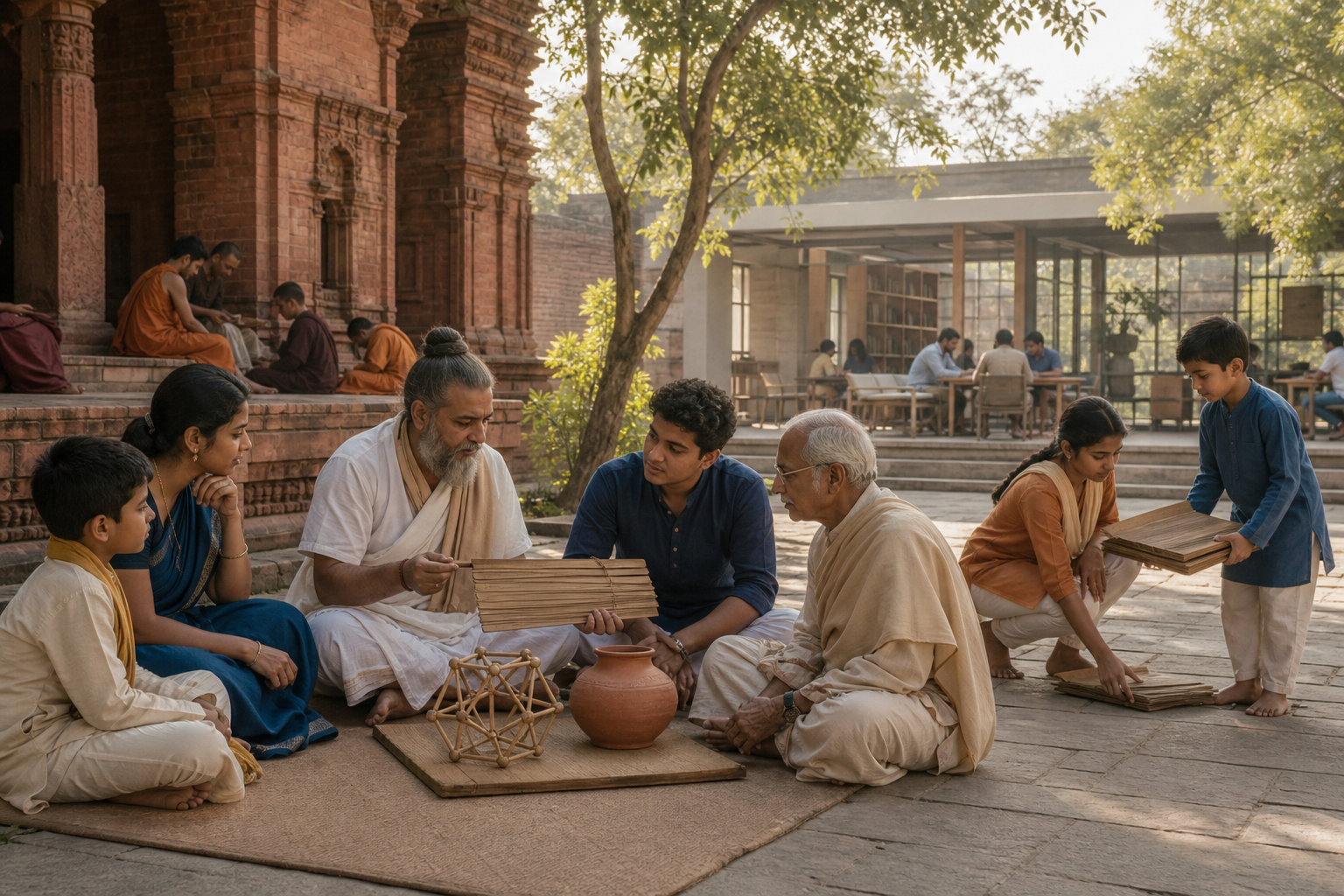
Satyakama Jabala, celebrated in the Chandogya Upanishad, embodies the Upanishadic conviction that truthfulness, not lineage, determines eligibility for the highest learning. His candid admission of uncertain ancestry and his acceptance by the sage Haridrumata Gautama have long been read as a scriptural affirmation of inclusion grounded in dharma. Through years of disciplined service in the…