-
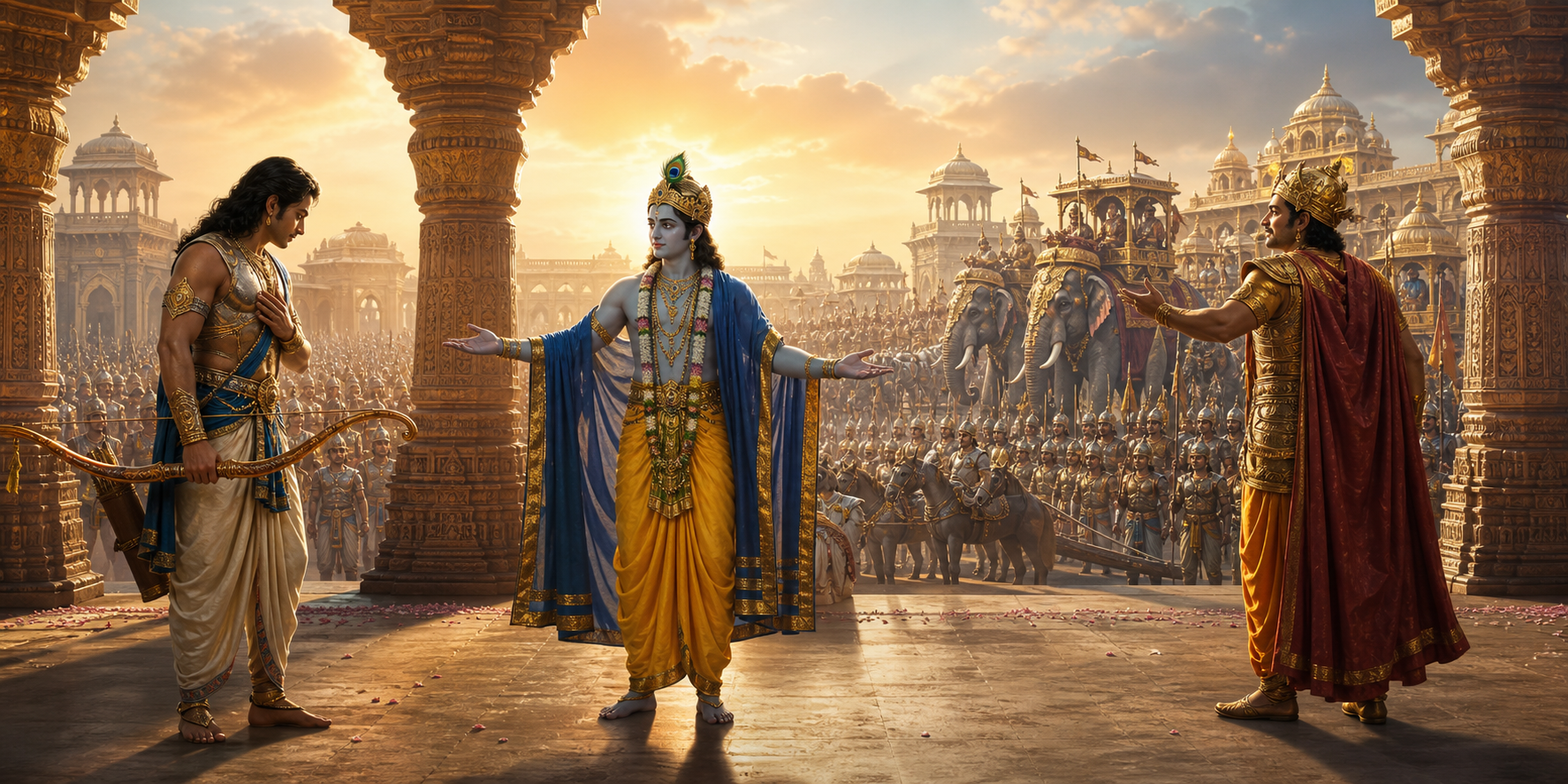
When Krishna Lifts Govardhan: Tribhanga Beauty, Bhakti-Rasa, and the Ease Found in Surrender

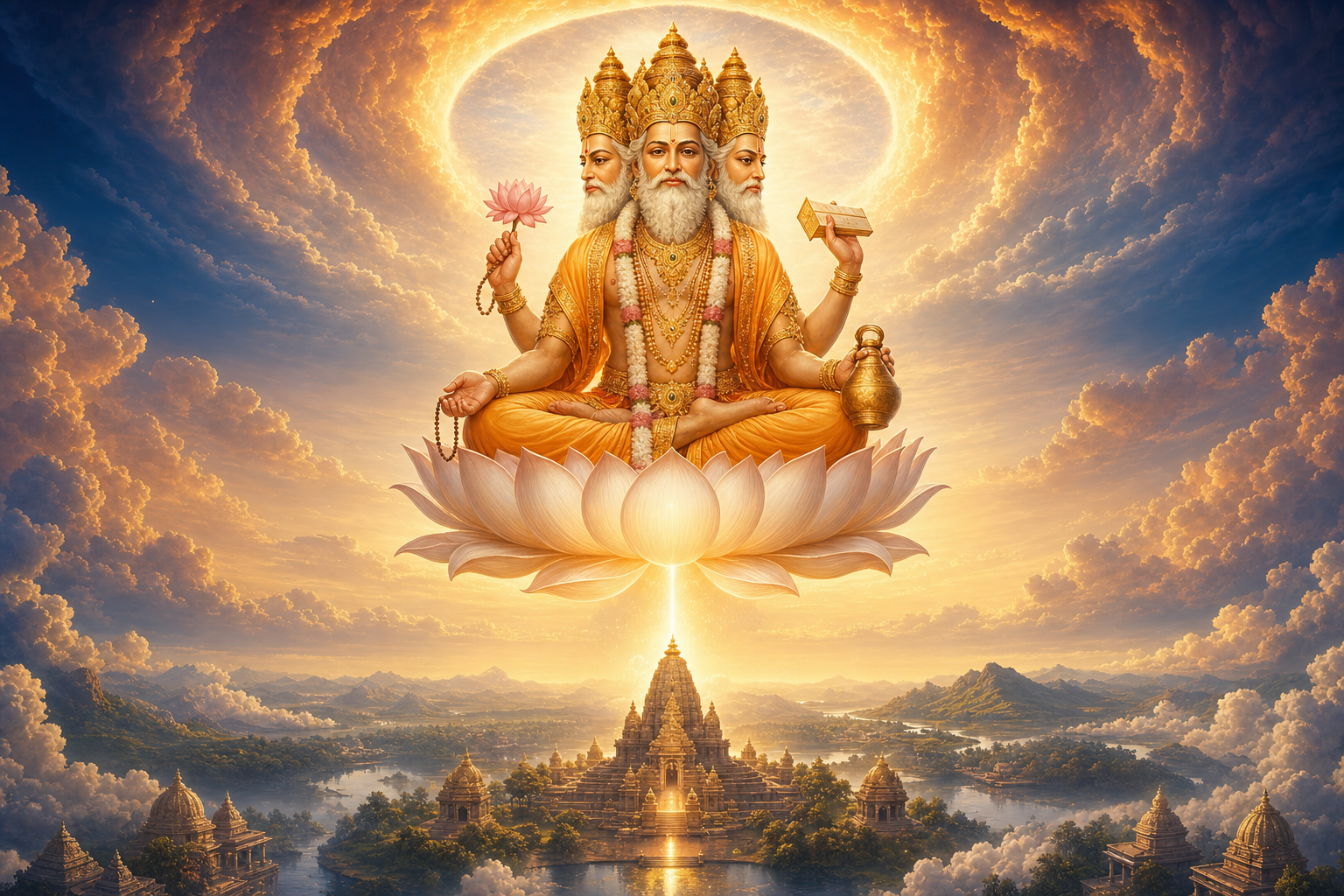
This essay offers a close reading of Krsna’s tribhanga posture amid the Govardhana-dhara-lila, highlighting how visual detail, poetic mood, and theology interlock to transform crisis into joy. It explains how the left foot ‘kissing’ the earth and the effortlessly raised arm express immanence and transcendence in one gesture. Drawing from Srimad-Bhagavatam and Sanskrit aesthetics, it…
-
True Humility, Not Self-Hatred: A Dharmic Guide to Ego, Worth, and Inner Strength

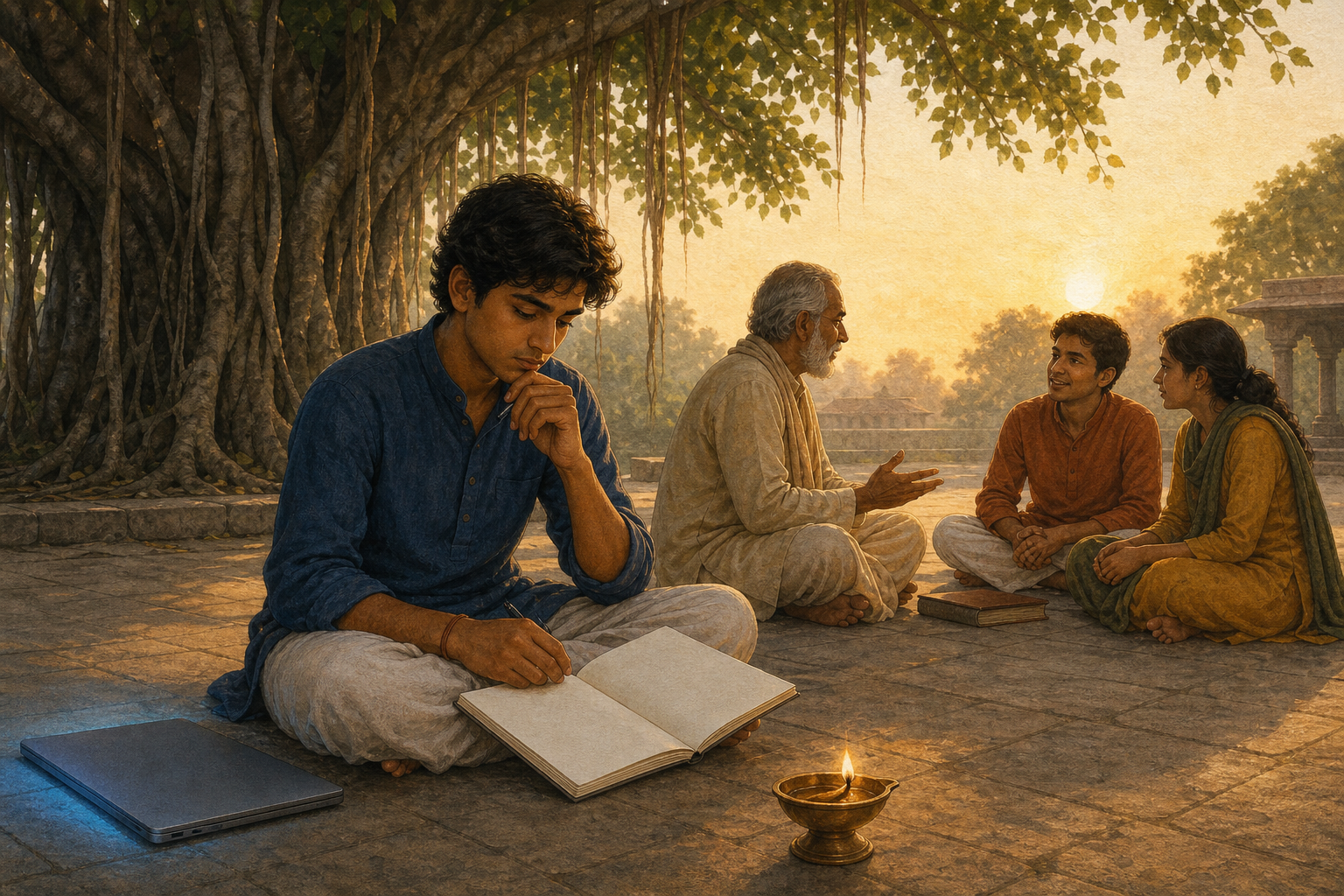
Humility in the shastras is not self-hatred; it is an accurate acknowledgment of limitation that preserves self-worth while dismantling narcissism and self-promotion. Across Hinduism, Buddhism, Jainism, and Sikhism, humility appears as amanitvam, anatta, Anekantavada, Aparigraha, and nimrata, forming a shared dharmic ethic. Cognitive biases and modern incentives make humility difficult, but dharmic psychology and disciplined…
-
Break the Grip of Envy: Dharmic Wisdom on Desire, Aparigraha, and True Wealth

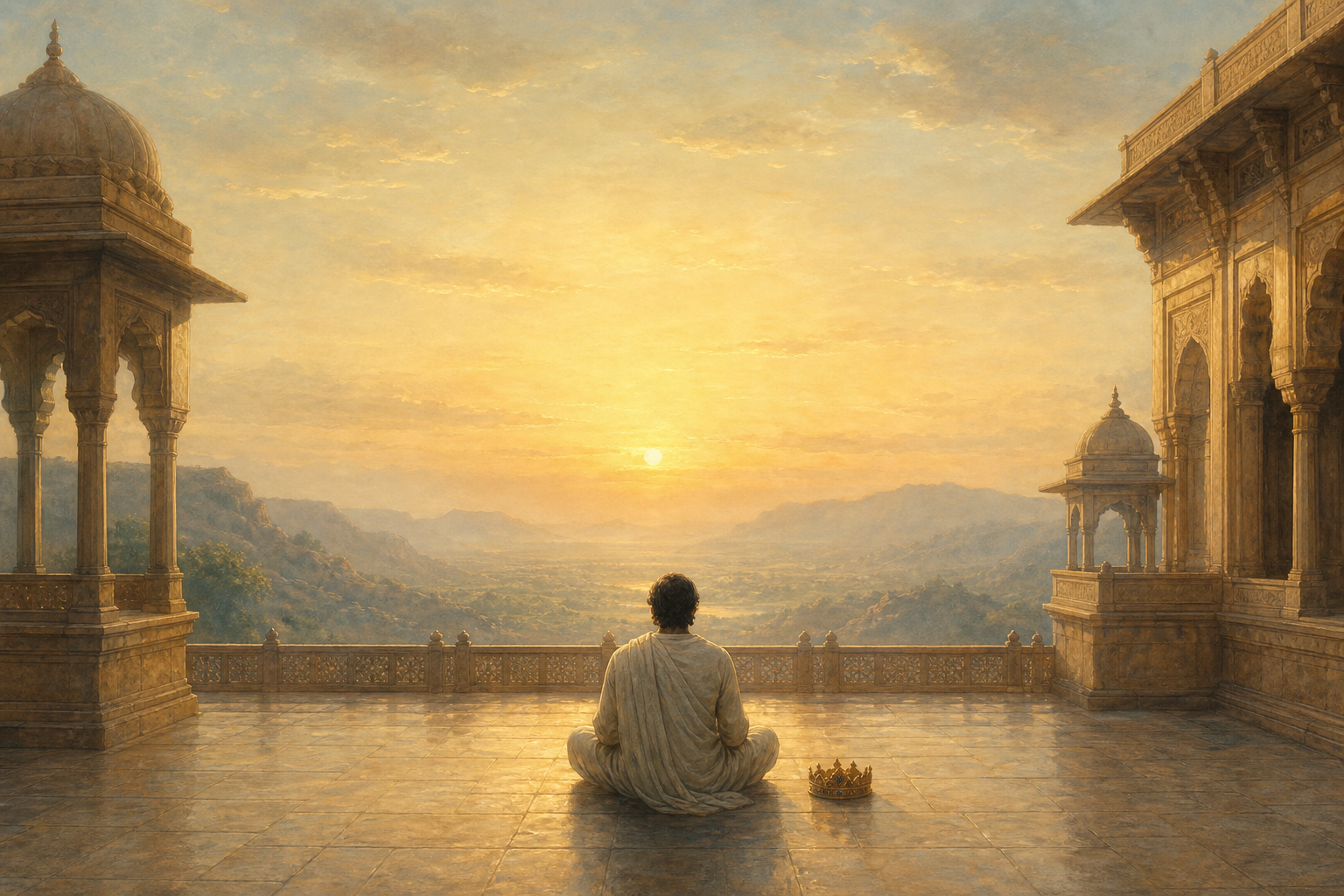
A timeless dharmic principle—“Do not covet what is not yours”—is examined through Hindu, Buddhist, Jain, and Sikh frameworks to show how freedom from envy safeguards inner clarity and social trust. The analysis grounds the ethic in the Isha Upanishad, the Bhagavad Gita’s psychology of desire, and Patanjali’s yamas of Asteya and Aparigraha. It then aligns…
-
Anirvacanīya-khyāti in Advaita Vedanta: Decoding Illusion, Truth, and Liberation

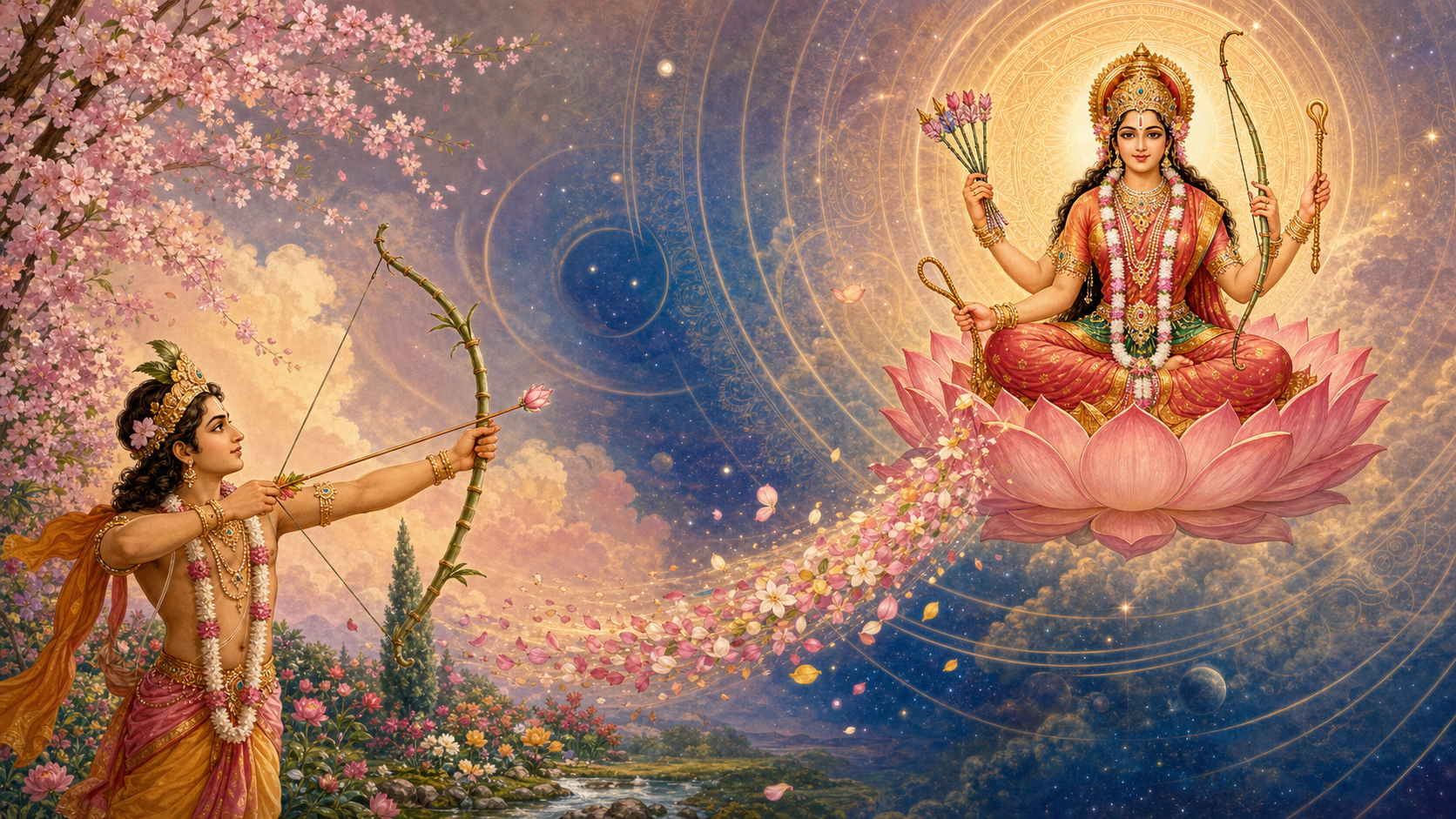
Anirvacanīya-khyāti, often popularized as “Anirvachaniya Akhyati,” is Advaita Vedānta’s nuanced account of illusion: what appears in error is neither absolutely real nor absolutely unreal, but indeterminable until corrected. This theory situates everyday misrecognition—like mistaking nacre for silver or a rope for a snake—within Advaita’s three levels of reality and its method of sublation (bādha). It…
-
Bhagavad Gita on Inescapable Action: Krishna on Nature’s Gunas and Dharmic Responsibility

The Bhagavad Gita teaches that action is inescapable because Nature (Prakriti) operates through the gunas, compelling continuous activity. Krishna reframes the human challenge from “whether to act” to “how to act” through Karma Yoga—duty aligned with dharma and freedom from anxious attachment to results. Key verses (3.5, 3.27, 18.60, 2.47–48) establish a compatibilist vision in…
-
Darwin and the Vedas: Reconciling Evolution with Dharmic Wisdom for a Unified Path

This article examines how Darwinian evolution and dharmic wisdom can enrich each other without conflation. It maps three major differences—teleology, consciousness, and ethics—showing why evolution’s non-teleological mechanisms complement rather than contradict dharmic metaphysics. It highlights ancient Indian reflections on change (Sāṃkhya, Nyāya–Vaiśeṣika, Ayurveda, Purāṇic cosmology), alongside Buddhist dependent origination, Jain classifications of life, and Sikh…
-
Shiva as Shava Beneath Kali’s Feet: Decoding the Cosmic Union of Consciousness and Shakti

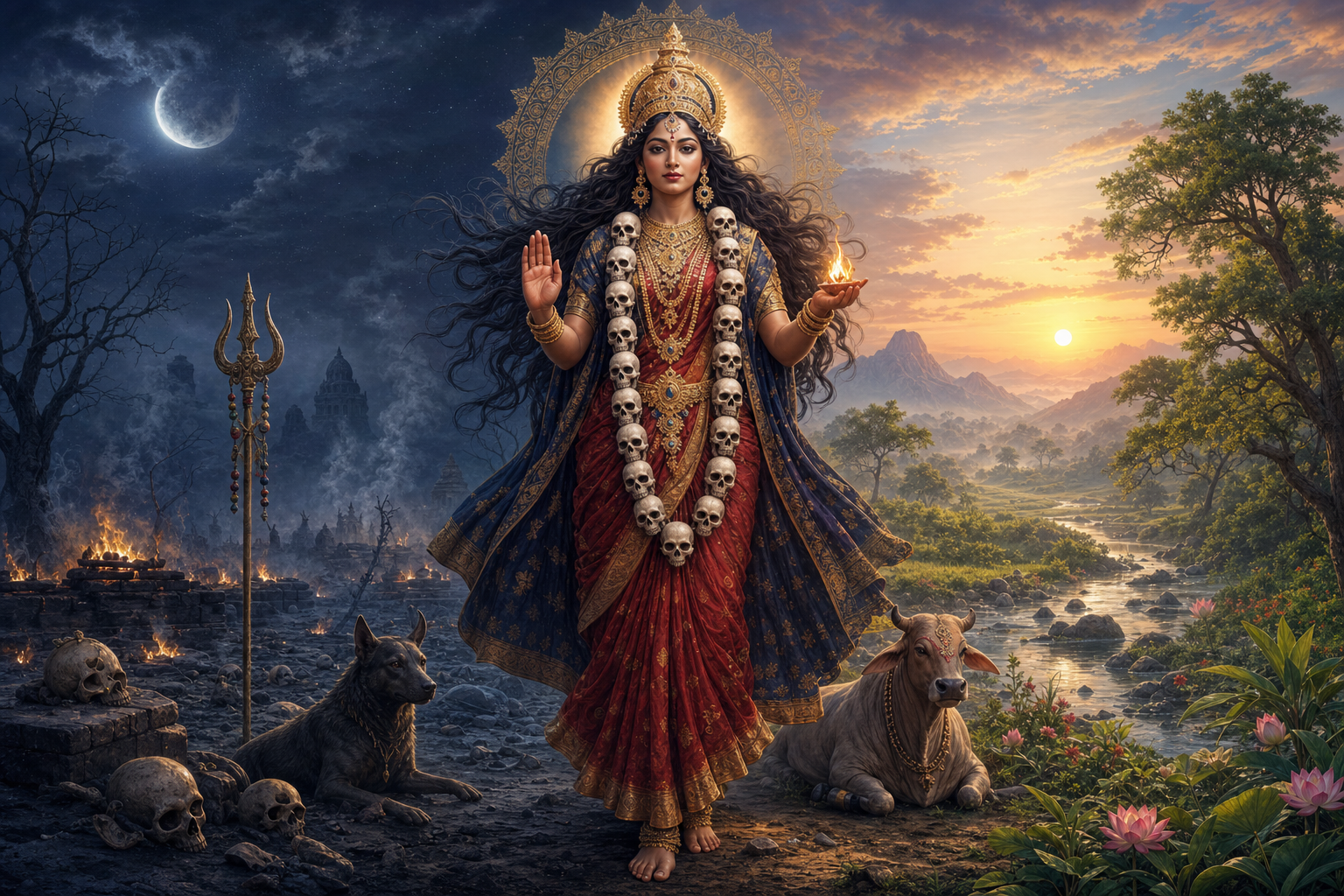
This essay decodes the renowned icon of Mother Kali standing upon Lord Shiva as a precise visual theology of consciousness and energy. It integrates insights from Shaktism, Shaivism, Tantra, Advaita Vedanta, and Kashmir Shaivism to clarify why the image symbolizes complementarity, not domination. Readers gain a technical understanding of the śava–śiva pun, the role of…
-
Beyond Crisis Prayers: Kabir’s Smaraṇa and the Dharmic Science of Constant Remembrance

Kabir’s doha captures a universal tendency: many remember the Divine only in hardship. This article presents smaraṇa as a rigorous, unbroken discipline that stabilizes attention and ethics across both adversity and prosperity. Drawing from Hindu bhakti, Buddhist mindfulness, Jain samayik and pratikraman, and Sikh simran, it outlines a shared dharmic science of remembrance. It explains…
-
Wrath to Wisdom: Parashurama and Rama’s Timeless Ethics for Power, Justice, and Dharma

This long-form analysis interprets Parashurama and Rama as complementary modalities of Dharma: emergency correction and constitutional restraint. Drawing on the Ramayana, Puranas, and classical ideas of Dharma-Yuddha, it shows how the “axe” symbolizes decisive action against entrenched injustice while the “arrow” symbolizes calibrated governance under maryada. Readers gain a practical framework for leadership—when to act…
-
Beyond Self-Help: Ashtavakra Gita’s Radical Path to Effortless Freedom and Peace

In a culture obsessed with optimization, the Ashtavakra Gita advances a precise Advaita Vedanta insight: liberation is recognition, not improvement. The text dismantles the self-help treadmill by distinguishing instrumental refinement of the mind from Self-realization, which rests on witness-consciousness and non-doership. Practical contemplations—neti neti, seer-seen discernment, resting as awareness—integrate easily into daily life without breeding…
-
Unshakable Calm in Life’s Storms: Vedantic Truth and Dharmic Resilience Across Traditions

This essay examines the adage, “Storms will be ever present in life, and the best anchor is knowledge of Supreme Truth,” through Hindu philosophy and related dharmic traditions. It clarifies how Advaita Vedanta, the Upanishads, the Bhagavad Gita, Buddhism, Jainism, and Sikhism converge on a practical, verifiable path from instability to resilience. Readers gain a…
-
Karma and Karmaphala in the Ramayana and Mahabharata: Dharma, Consequence, and Liberation

This essay reads the Ramayana and Mahabharata as precise ethical maps of karma (action) and karmaphala (consequence), showing how intention, duty, and context shape outcomes. It explains sañchita, prārabdha, and āgāmi karma, and situates them within dharma and the puruṣārthas. Through case studies—Daśaratha’s unintended harm, Rāvaṇa’s hubris, the dice hall’s complicity, Karna’s complexity, and Bhīṣma’s…
-
Reimagining ISKCON Governance: A Federated Affiliate Model Rooted in Unity-in-Diversity

This analysis outlines a federal affiliate model for ISKCON that safeguards Gaudiya Vaishnava siddhanta while empowering regional adaptation in line with Srila Prabhupada’s principle of unity in diversity. It assigns the GBC custodianship over non-negotiables—doctrine, sadhana standards, ethics, safeguarding, and brand integrity—while delegating cultural and operational adaptations to accredited regional councils. The framework emphasizes subsidiarity,…
-
Beyond Blind Chance: A Dharmic Inquiry into Evolution, Consciousness, and Life’s Purpose

This article examines two assumptions often attached to evolution: that life’s diversity is driven entirely by chance and law, and that consciousness is reducible to chemistry. It distinguishes well-supported evolutionary mechanisms from the still-open questions of abiogenesis, emphasizing that conflating them obscures both scientific strengths and genuine uncertainties. It then surveys leading origin-of-life hypotheses and…
-
Sankalpa to Samadhi: How Focused Intention Forges Divine Union Across Dharmic Paths

This article examines how strong intention—saṅkalpa, cetanā, bhāvanā, or alignment with Hukam—becomes the central engine of transformation across Hinduism, Buddhism, Jainism, and Sikhism. It explains the shared architecture that links ethics, attention training, contemplative absorption, and compassionate action, showing how these elements cohere into divine union or ultimate realization. Drawing on the Bhagavad Gita, the…
-
Ravana’s Fatal Breach of Rajadharma: Desire Over Duty and the Ruin of Lanka’s Statecraft

This long-form analysis examines Ravana’s breach of rajadharma in the Ramayana as a rigorous lesson in Dharmic statecraft. It situates kingship within Hindu, Buddhist, Jain, and Sikh ethical frameworks, showing how a ruler’s personal desire must remain subordinate to public duty. It explains how Ravana’s abduction of Sita, dismissal of counsel, and politicization of private…
-
The World as a Roadside Inn: A Dharmic Guide to Impermanence, Detachment, and Freedom

This essay explores the classic dharmic metaphor of the world as a roadside inn to clarify impermanence, detachment, and ethical action. A teaching story of a mendicant and a king introduces the theme, which is then examined through the Bhagavad Gita, Upanishads, Patanjali’s Yoga Sutra, and Jain, Buddhist, and Sikh perspectives. Readers learn how anitya…
-
Break Free from Fragmentation: Seeking the Whole in Vedanta and Dharmic Paths for Inner Peace

This article unpacks the insight that suffering arises from fragmentation and shows how Vedanta and the broader dharmic traditions offer a precise remedy by seeking the whole. It explains avidya through the Upanishads and the Bhagavad Gita, connects Yoga’s kleshas and eightfold discipline to integration, and brings in Buddhist, Jain, and Sikh perspectives that converge…
-
Madhava Dasar: Timeless Vedantic Scholar and Bhakti Luminary Bridging Knowledge and Devotion

Madhava Dasar is remembered as a Brahmin exemplary in morality, a Janaka-like householder-sage, and a scholar steeped in the four Vedas, Vedic Vedantas, and Vaiseshika. Traditional accounts place him at the confluence of Vedantic insight and bhakti expression, where rigorous philosophy meets accessible devotional song. His remembered teachings integrate knowledge (jnana), disciplined action (karma), and…
-
The Divine Voice Within: How Conscience Elevates Human Life across Dharmic Traditions

Conscience in Hindu philosophy is an inner compass cultivated through viveka, buddhi, and alignment with dharma. Anchored in the Upanishads and the Bhagavad Gita, it is clarified by sattva and refined by yoga, devotion, service, and self-study. This academic overview integrates Hindu insights with parallel concepts in Buddhism (hiri–ottappa), Jainism (samyak-darshana, pratikraman), and Sikhism (hukam,…