-
Universality as the Heart of Spirituality: Bridging Reason and Intuition across Dharmic Paths

Universality is the defining mark of spiritual maturation: it expands identity beyond self-interest into a lived concern for the whole. In Dharmic traditions, reason and intuition are complementary—analysis clarifies and prepares, while intuition unifies and completes. Hindu, Buddhist, Jain, and Sikh frameworks each root this universality in distinctive insights and practices—from Upanishadic oneness and Buddhist…
-
Seeing the Banyan in a Seed: Profound Hindu Wisdom on Infinite Potential and Dharmic Unity

Hindu wisdom describes spiritual vision as the ability to perceive wholeness within the smallest fragment of reality, symbolized by seeing a vast banyan in a tiny seed. Drawing on the Chandogya and Mundaka Upanishads, the discussion clarifies how potentiality unfolds lawfully into form and how this insight aligns with Vedanta, Sankhya-Yoga, and systems science. Convergences…
-
Suchimukham Unveiled: The Chilling Karmic Price of Hoarded Wealth in Hindu Dharma

Suchimukham, the needle-mouthed hell in Hinduism, powerfully encodes the karmic consequences of hoarding wealth and neglecting compassion. Drawing on the Vishnu Purana, Devi Bhagavata Purana, and Garuda Purana, this analysis situates Suchimukham within a reformative, not eternal, Puranic model of Naraka. It clarifies the difference between prudent stewardship and miserliness, showing how dharma guides artha…
-
Timeless Lila: Exploring the Divine Play of Being and Becoming Across Dharmic Paths

This long-form exploration presents Lila—the eternal divine play—as a framework for understanding how being and becoming interrelate across Hinduism, Buddhism, Jainism, and Sikhism. Drawing on the Upanishads, Vedanta (Advaita, Vishishtadvaita, Dvaita), the Bhagavad Gita, and Shaiva–Shakta thought, it clarifies how creation, preservation, and dissolution express a living unity. It maps key concepts like dharma, karma,…
-
Navya Nyaya’s New Logic: Precision Tools for Knowledge across Dharmic Traditions

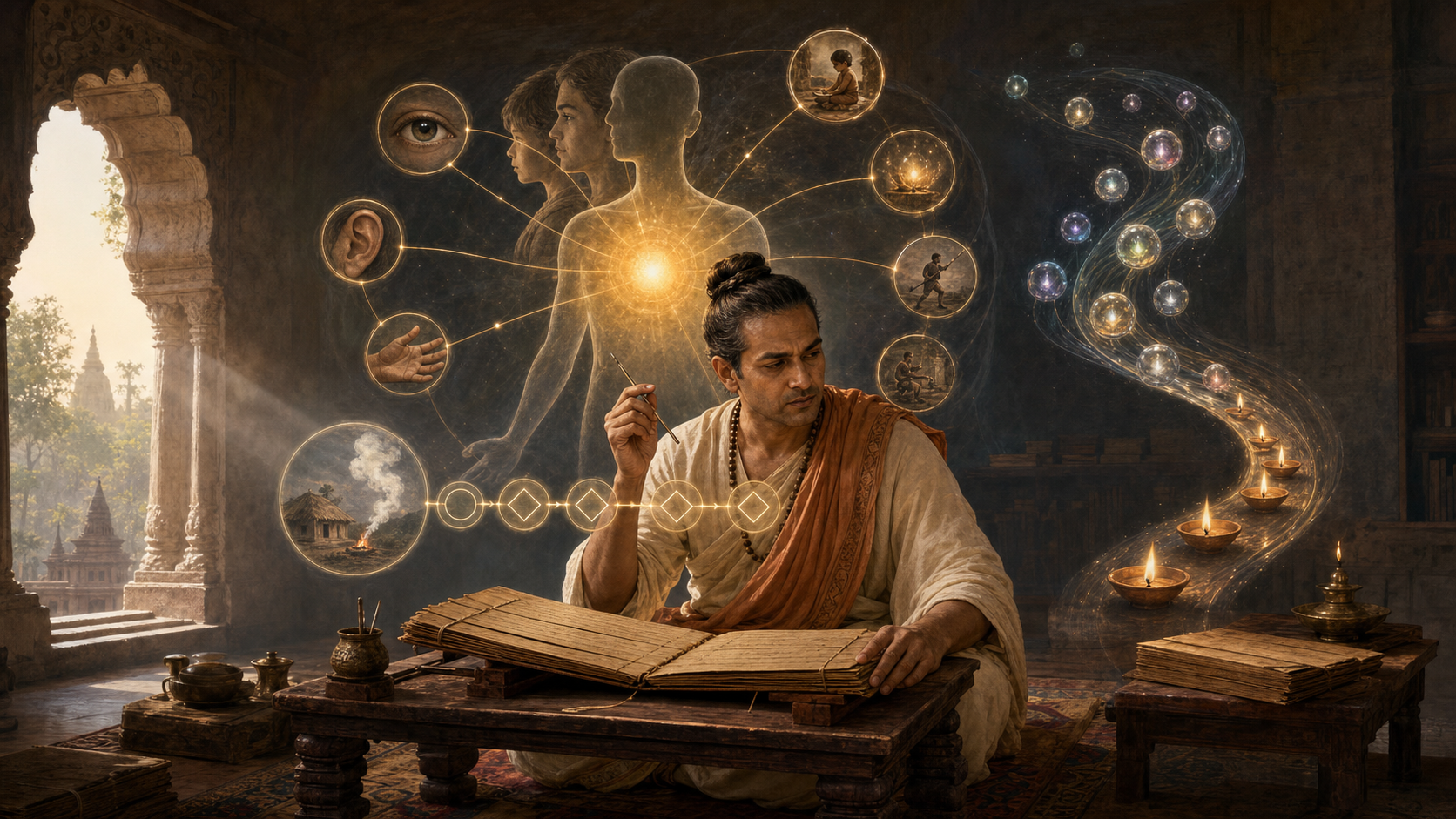
Navya Nyaya, the “New Logic” within the Nyaya tradition, emerged in 13th-century Mithila with Gangesha Upadhyaya’s Tattva-Chintamani and transformed Indian epistemology through unmatched analytic precision. It refines the four pramanas—pratyaksha, anumana, upamana, and shabda—using a technical idiom that specifies locus, qualifier, and delimitor to prevent ambiguity. Later masters such as Raghunatha Siromani and Gadadhara Bhattacharya…
-
Beyond Shadows: Plato’s Cave, Dharmic Wisdom, and the Mind’s Illusion of Reality

Plato’s allegory of the cave explains why humans often mistake partial images for complete reality; Dharmic philosophies show how to correct that error through disciplined practice. This article integrates Plato’s ascent with Hindu, Buddhist, Jain, and Sikh frameworks—avidya and maya, the two truths, anekantavada, and Naam—demonstrating how perception can be retrained. Readers gain a rigorous…
-
Unlocking Sacred Meaning in Hindu Philosophy: Vācya, Lakṣaṇā, and Vyañjanā Demystified

Language in Hindu philosophy operates through three layered modes of meaning—vācya (literal), lakṣaṇā (indicated), and vyañjanā (suggested)—that guide readers from clear denotation to transformative insight. This long-form, research-driven exploration clarifies each mode with classical examples, links them to Nyāya, Mīmāṁsā, Vedānta, and Alaṅkāra-śāstra, and highlights the contributions of Ānandavardhana, Abhinavagupta, and Bhartṛhari. It demonstrates how…
-
Pure and Trained Mind in Hindu Dharma: A Practical, Science-Backed Guide to Wise Decisions

This article presents a comprehensive, academically grounded framework for cultivating a pure and trained mind to improve decision-making in contemporary life. Drawing on Hindu philosophy and complementary insights from Buddhism, Jainism, and Sikhism, it explains how sattva, abhyasa, and ethical guardrails like yama–niyama elevate judgment under stress. It details a practical viveka–vichara loop for real-world…
-
Cosmic Harmony in Daily Puja: Aligning Five Elements and Senses for Transformative Worship

Daily puja in the Hindu way of life is a precise, sense-centered discipline that aligns the five elements (Pancha Mahabhuta) with the five senses (Pancha Indriya). Drawing on the Bhagavad Gita 7.4 and allied traditions, it maps offerings such as gandha, pushpa, dhupa, deepa, and naivedya to smell, sight, sound, touch, and taste. Earth, water,…
-
Indra and Varuna’s Celestial Rivalry: Vedic Kingship, Cosmic Law, and the Battle for Order

Indra and Varuna frame a profound Vedic conversation about power, law, and legitimacy. Indra’s thunderous decisiveness (kṣatra) complements Varuna’s guardianship of ṛta, revealing why force must be answerable to truth and why law must be capable of protection. Rigvedic hymns, especially RV 1.32 and RV 7.86–7.89, ground this dialectic, while Brāhmaṇa and Upaniṣadic texts transform…
-
Lagna Nirnaya Demystified: Choosing a Powerful Ascendant for Life, Rituals, and Dharma

Lagna Nirnaya—the choice of a suitable ascendant—anchors Vedic astrology, muhurta, and the practical timing of vows and beginnings across dharmic traditions. This comprehensive guide explains how the lagna is calculated astronomically in the sidereal zodiac using ayanamsa, why sign modality and element matter, and how the lagna lord’s strength shapes outcomes. It integrates shadbala, ashtakavarga,…
-
Darshan as Divine Reciprocity: The Two-Way Vision that Transforms Hindu Worship and Life

Darshan, derived from the Sanskrit root “drsh,” is presented as a two-way exchange: the devotee beholds the divine and is, in turn, beheld. The article explains how this reciprocity operates in Hindu ritual life through consecrated images, temple choreography, and the distribution of prasad as an embodied blessing. It engages classical Indian theories of perception…
-
Krishna as Purna Purusha: Revealing the Feminine Divine That Completes the Supreme Being

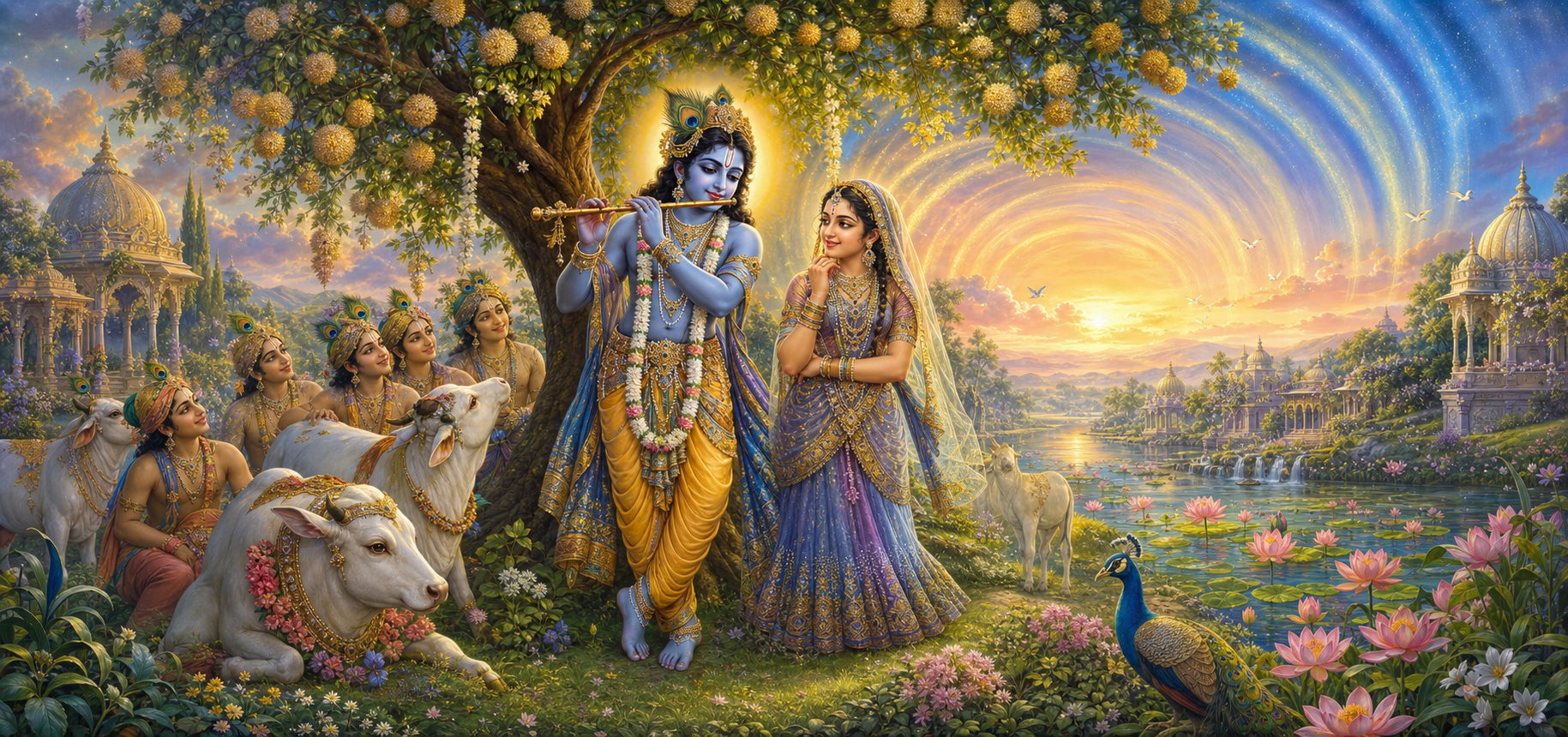
This long-form exploration presents Sri Krishna as Purna Purusha—the Complete Being—who integrates both masculine and feminine dimensions without contradiction. Drawing on the Bhagavad Gita, the Bhagavata Purana, and Vaishnava theology, it explains how Radha as Hladini Shakti reveals the feminine divine at the very heart of Krishna’s identity. The article situates Mohini within Vaishnava-Puranic tradition,…
-
Beyond Facts: Transformative Teaching through Dharma—Timeless Hindu, Buddhist, Jain, Sikh Insights

Education is not the mere transfer of facts; in dharmic traditions it is a transformative process that unites knowledge, character, and contemplative depth. Drawing on Hindu, Buddhist, Jain, and Sikh insights, this analysis explains why śravaṇa–manana–nididhyāsana, anekāntavāda, and the triad of śabad–sangat–seva map onto evidence-based practices like active learning and mindfulness. It clarifies the parā/aparā…
-
Beyond the ‘Better’ Trap: A Dharmic Guide to Hope Without Clinging or Burnout

Hope is powerful fuel, but it can become a trap when peace depends on outcomes. This long-form, research-informed reflection clarifies the difference between direction and demand, showing how mindfulness, equanimity, and non-attachment protect motivation without creating pressure. Drawing on a unified dharmic lens—Buddhist equanimity, Hindu Karma Yoga, Jain aparigraha, and Sikh hukam and seva—it reframes…
-
Why Arjuna’s Grief Is Called Yoga: The Transformative Power of Viṣāda in the Bhagavad Gita

Why is Arjuna’s grief in the Bhagavad Gita called “yoga”? The first chapter, Arjuna Viṣāda Yoga, frames sorrow as a disciplined gateway to discernment and ethical clarity. By exposing attachment, catalyzing viveka–vairāgya, and inspiring surrender—“śiṣyas te ’ham”—grief becomes the very condition for transformative instruction. The Gita’s own colophon names it a yoga-śāstra, indicating that each…
-
Two Yet One: Advaita Vedanta’s Science of Oneness and a Dharmic Bridge across Traditions

The teaching ‘you and I are two persons; yet we are one’ expresses Advaita Vedanta’s core insight: empirical plurality and ultimate unity coexist without contradiction. This long-form exploration clarifies Brahman, Atman, and the roles of maya and avidya, situating ethics and devotion within a rigorous non-dual framework. Drawing on the Upanishads and the Bhagavad Gita,…
-
Mukhyartha in Hinduism: Unlock the Power of Abhidha-Shakti for Precise, Sacred Meaning

Mukhyartha—secured by abhidha-shakti—provides the primary, literal meaning that anchors Hindu hermeneutics, ritual, and scripture. This article clarifies how primary sense operates in sentences, why context can trigger shifts to lakshana (secondary meaning) and vyanjana (suggestion), and how classic criteria like akanksha, yogyata, and sannidhi preserve coherence. It surveys perspectives from Mimamsa, Nyaya, Vedanta, and the…
-
Shakini Yogini Unveiled: Lion-Headed Shakti, Bhairava’s Wrath, and Deep Tantric Symbolism

Shakini Yogini, often depicted with a lion face, crystallizes Tantric teachings about fearless clarity, ethical speech, and disciplined power. Emerging mythically from Bhairava Samvarta as mahauraudra, she embodies purgative intensity in service of transformation, not harm. Many traditions map her to the Vishuddha chakra, where the seed sound HAM refines voice and intention into vāk-siddhi—truthful…