-
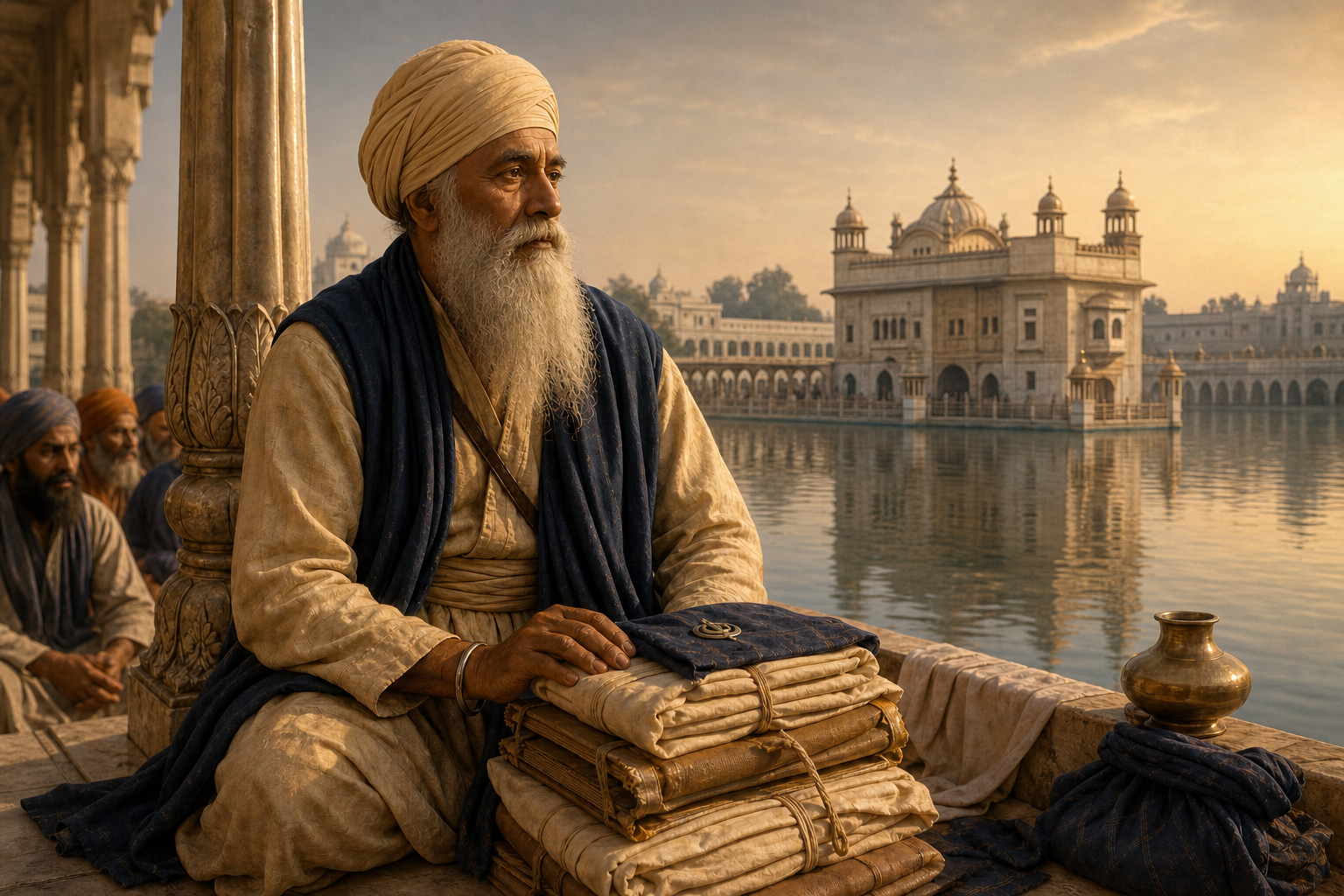
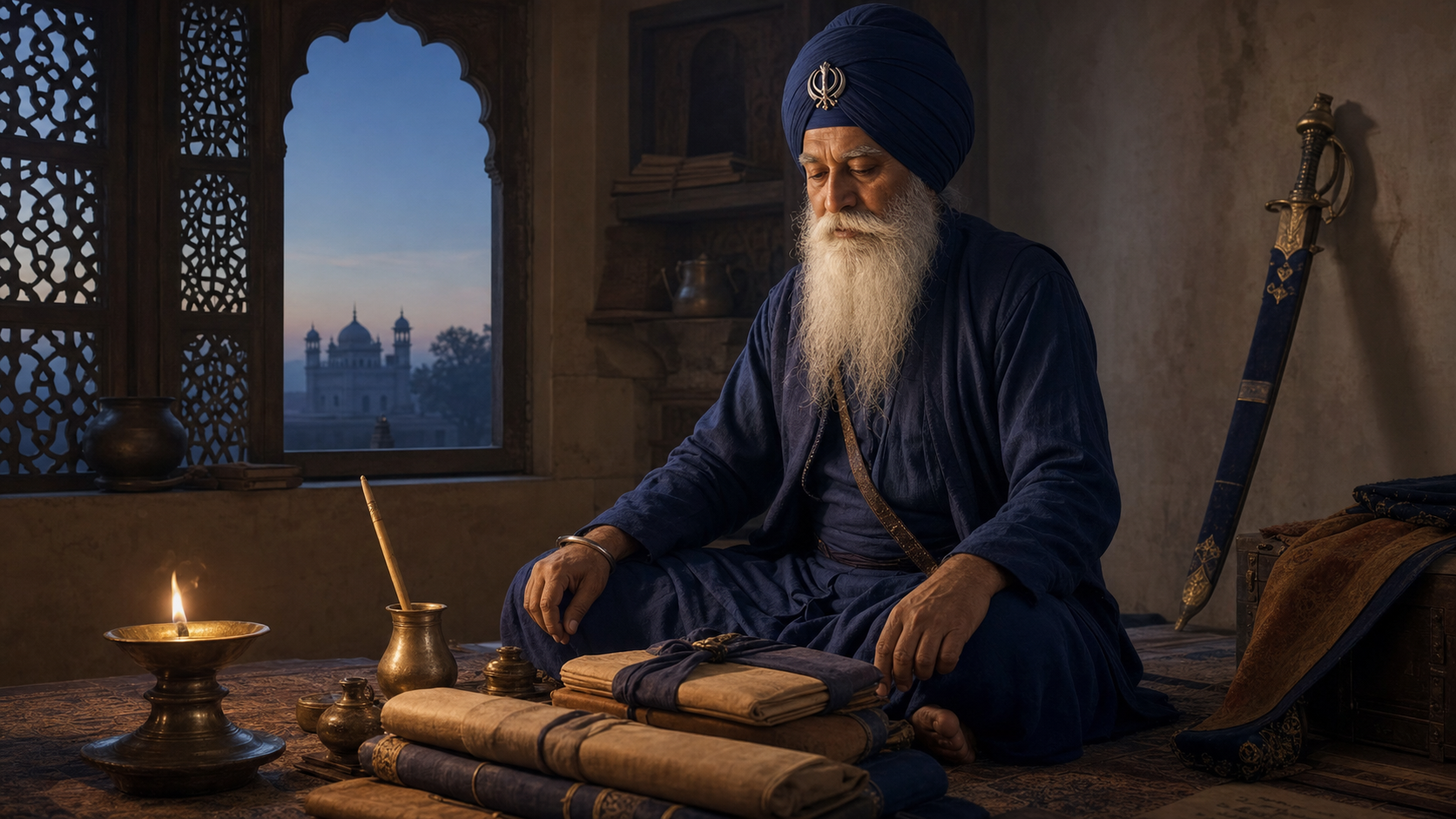
Sardar Baghel Singh: The Visionary Who Etched Sikh Heritage on Delhi’s Sacred Map (1783)

Sardar Baghel Singh (c. 1730–1802) transformed Delhi’s sacred geography in March 1783 through a negotiated accord with the Mughal court that authorized, secured, and funded the construction of Sikh shrines at historic sites. Rather than a mere military episode, his intervention institutionalized Sikh memory—most notably at Sees Ganj Sahib and Rakab Ganj Sahib—through a sustainable…
-
Sardar Baghel Singh: The Visionary Who Etched Sikh Heritage on Delhi’s Sacred Map (1783)

Sardar Baghel Singh (c. 1730–1802) transformed Delhi’s sacred geography in March 1783 through a negotiated accord with the Mughal court that authorized, secured, and funded the construction of Sikh shrines at historic sites. Rather than a mere military episode, his intervention institutionalized Sikh memory—most notably at Sees Ganj Sahib and Rakab Ganj Sahib—through a sustainable…
-
Honoring S. Raja Singh: Unwavering Service, Dharmic Unity, and Hyderabad’s Heritage

This tribute examines S. Raja Singh’s leadership in Hyderabad through an academic, governance-first lens. It highlights how constituency service, public safety, and cultural stewardship can align with India’s constitutional guarantees of religious freedom. It explains how dharmic traditions—Hinduism, Buddhism, Jainism, and Sikhism—share a service ethic that strengthens social trust. Readers gain a practical framework (seva,…
-
Nilakantha Chaturdhara’s Bharatabhavadipa: Illuminating Mahabharata’s Dharma and Depth

Nilakantha Chaturdhara’s Bhāratabhāvadīpa (Bharatabhavadipa) stands as one of the most trusted gateways into the Mahabharata’s narrative, ethics, and philosophy. Framed by rigorous Sanskrit exegesis, it clarifies complex episodes, reconciles apparent contradictions, and highlights the epic’s enduring guidance on rajadharma, dharma-yuddha, and moksha. Attentive to philology and textual variants, the commentary equips readers to engage the…
-
Jagannatha Pandita’s Rasagangadhara: Mastering Rasa, Poetics, and Indian Aesthetics

Jagannatha Pandita (1590–1670 CE) transformed Sanskrit poetics through Rasagangadhara, a landmark synthesis that clarifies how language, context, and propriety culminate in rasa—the refined relish of emotion. Born in Andhra Pradesh to Perubhaṭṭa and Lakshmi, he bridged southern scholastic lineages with the cosmopolitan courts of North India, reportedly earning the honorific Paṇḍitarāja. His oeuvre, including Bhaminivilasa…
-
Honoring His Holiness Badrinarayan Swami: A Peaceful Vrindavan Departure and Enduring Bhakti Legacy

His Holiness Badrinarayan Swami departed peacefully on 26 February 2026 in Sri Vrindavan Dham, a moment held as supremely auspicious within Gaudiya Vaishnava theology. This comprehensive tribute situates his passing in the sacred geography of Vrindavan, explains the doctrinal significance of final remembrance, and highlights his distinctive blend of scriptural rigor and pastoral care. Readers…
-
From Humble Beginnings to Enduring Eminence: Scholarship, Faith, and Dharmic Unity

This essay maps the path from humble beginnings to enduring eminence through the dharmic lenses of scholarship, faith, struggle, legacy, and inspiration. It shows how the Guru-Shishya Tradition, Nalanda-style scholastic cultures, Jain Anekantavada, Sikh Seva, and vedantic inquiry create complementary routes to excellence. Readers gain a pragmatic five-vector blueprint—Vidya, Sadhana, Seva, Sangha, and Shraddha—for integrating…
-
Who Was Madhava Dasar? A Profound Bhakti Legacy Across Vedas, Vedanta, and Vaiseshika

Madhava Dasar is remembered as a Brahmin exemplar who harmonized Vedic learning, Vedanta, and Vaiseshika with an accessible Bhakti ethos. Hagiographic accounts compare his householder ideal to Janaka, signaling ethical engagement in the world without attachment. His devotional legacy—evoked in searches for “who is Madhava Dasar,” “Madhava Dasar Katha,” and “Madhava Dasar bhakti songs”—illustrates how…
-
Sri Hanuman Das: A 1st-century Devotee-Poet of Rama and Hanuman—History, Poetics, Legacy

Sri Hanuman Das is remembered as a Hindu saint and Sanskrit poet from present-day Uttar Pradesh, traditionally dated to the 1st century CE and celebrated for deep devotion to Lord Rama and Lord Hanuman. The devotional name “Hanuman Das” reflects dāsya-bhāva—service as a spiritual path—linking Hanuman’s exemplary loyalty to Rama-bhakti. While the precise chronology remains…
-
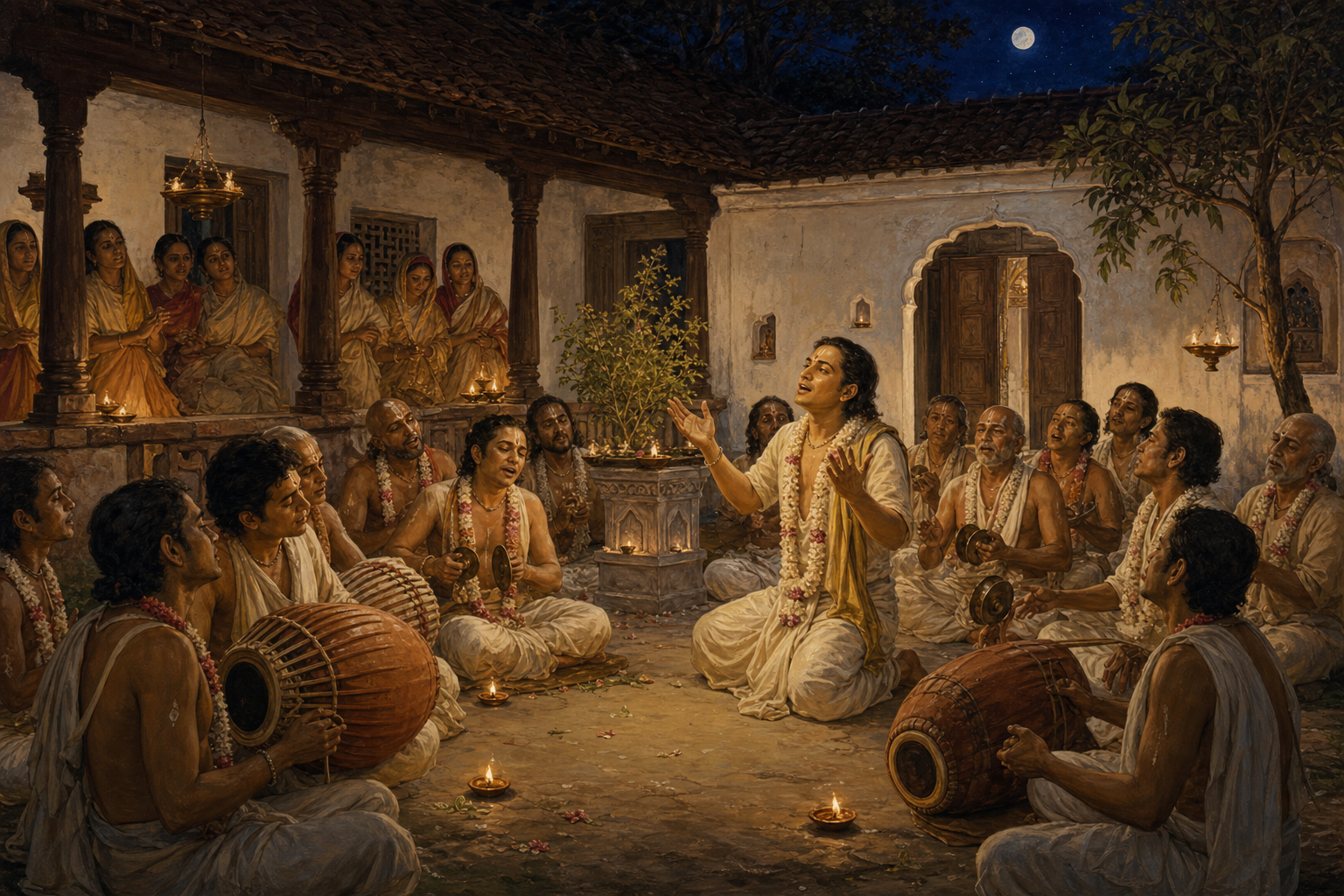
Narottama Dasa Thakura: Unifying Gaudiya Bhakti Through Timeless Kirtana and Scholarship

Narottama Dasa Thakura (16th–17th century) helped translate Shri Chaitanya’s vision into enduring practice by uniting theology, kirtana, and community-building across Bengal and present-day Bangladesh. Born into an aristocratic family in Kheturi, he received advanced training in scripture and music, studied in Vrindavan under Jiva Goswami, and accepted initiation from Lokanatha Goswami, remaining celibate throughout life.…
-
Madhava Dasar: Timeless Vedantic Scholar and Bhakti Luminary Bridging Knowledge and Devotion

Madhava Dasar is remembered as a Brahmin exemplary in morality, a Janaka-like householder-sage, and a scholar steeped in the four Vedas, Vedic Vedantas, and Vaiseshika. Traditional accounts place him at the confluence of Vedantic insight and bhakti expression, where rigorous philosophy meets accessible devotional song. His remembered teachings integrate knowledge (jnana), disciplined action (karma), and…
-
Sri Hanuman Das: Enigmatic Early Bhakti Poet of Uttar Pradesh and Rama-Hanuman Devotion

Sri Hanuman Das is remembered as a Hindu saint and Sanskrit poet from Uttar Pradesh, celebrated for ardent devotion to Lord Rama and Lord Hanuman. While a 1st-century CE date appears in some traditions, available evidence suggests this chronology is hagiographic, not epigraphically confirmed. Placed within the broader Bhakti Tradition and the ritual geography of…
-
Narottama Dasa Thakura: Architect of Gaudiya Bhakti, Kirtan Pioneer, and Kheturi Revival

Narottama Dasa Thakura (c. 1534–early 17th century) stands as a principal architect of Gaudiya bhakti, translating Shri Chaitanya’s ecstatic devotion into lasting institutions of song, scholarship, and pilgrimage. Born in Kheturi (present-day Bangladesh) to a zamindar family, he trained under Lokanatha Goswami and Jiva Goswami, mastering the theology of achintya-bhedabheda and the practice of raganuga-bhakti.…
-
Muthuswami Dikshitar: Timeless Master of Carnatic Music’s Sacred, Scholarly Soundscape

Muthuswami Dikshitar (1775–1835) shaped Carnatic music with compositions that unite devotion, Sanskrit scholarship, and raga–tala architecture. A pillar of the Trinity, his kritis function as sonic maps to South Indian temples, preserving iconography, rituals, and sacred geography. Anchored in the Venkatamakhin asampurna tradition, he crafted raga-lakshana masterpieces and explored talas beyond the ordinary with serene…
-
Srila Gaura-Kisora Dasa Babaji: Austerity, Bhakti, and a Timeless Blueprint for Inner Freedom

Srila Gaura-Kisora dasa Babaji exemplified uncompromising renunciation within the Bhakti Tradition, keeping only Tulasi-mala and a few core texts while declining all personal service. Set in late colonial Bengal, his life centered on nama-japa and the deep internalization of Narottama Dasa Thakura’s Prarthana and Prema Bhakti Chandrika. His method foregrounded aparigraha and guarded attention, modeling…
-
Vaisnava Sarvabhauma Srila Jagannatha Dasa Babaji: Disappearance Day and Sacred Yoga Pitha Legacy

The Holy Disappearance Day of Srila Jagannatha Dasa Babaji is observed as a celebration of enduring guidance rather than an ending, highlighting his role as Vaisnava Sarvabhauma and his profound influence on Gaudiya Vaishnava practice. Traditional accounts preserved in Sri Navadwipa Dhama Mahatmya recount his decisive affirmation of Sri Caitanya Mahaprabhu’s birthplace at Mayapur’s Yoga…
-
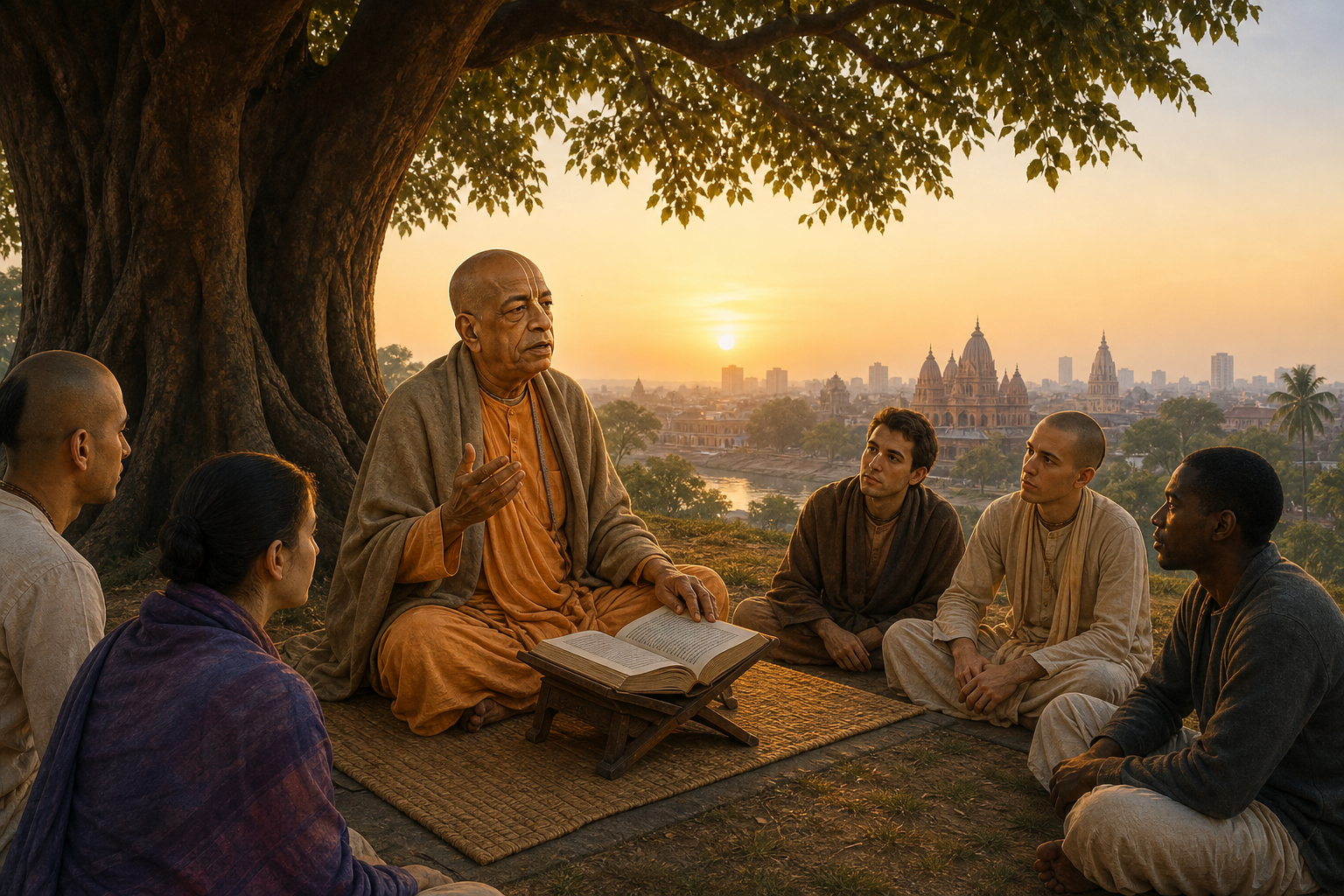
A Little-Known 1977 Moment with Srila Prabhupada: Consolation, Realism, and Generous Service

A quietly powerful 1977 exchange with Srila Prabhupada captures three enduring pillars of ISKCON’s ethos: compassionate consolation grounded in the Bhagavad-gita’s teaching of the soul’s immortality, pastoral realism that dignifies the grihastha path, and purposeful philanthropy directed to printing Srimad-Bhagavatam. In a few sentences—“Oh Srila Prabhupada, whatever Krishna desires.” and “Every girl wants to get…
-
Feb 16, 2026 Health Update: HH Mahavishnu Swami navigating influenza with pneumonia and sepsis

On Feb 16, 2026, clinicians in Kathmandu confirmed that HH Mahavishnu Swami tested positive for influenza while under treatment for pneumonia and sepsis. This update explains how influenza can intensify lower respiratory tract disease and interact with sepsis, and outlines evidence-based priorities such as timely antiviral therapy, antibiotic stewardship, respiratory support, and sepsis stabilization. It…
-
In Memoriam: HG Ekanātha dāsa—Guardian of the Bhaktivedanta Archives and ISKCON’s Living Memory

HG Ekanātha dāsa’s sudden departure is a profound loss for ISKCON and for all who rely on the Bhaktivedanta Archives to study Śrīla Prabhupāda’s teachings. This tribute situates his long service within the larger context of cultural heritage, explaining why careful archival practice is an expression of bhakti and a cornerstone of Hindu heritage preservation.…
-
Sri Isvara Puri’s Disappearance: Guru-Seva, Gaudiya Lineage, and a Living Bhakti Legacy

Sri Isvara Puri’s disappearance day is a lucid window into Gaudiya Vaishnava history, doctrine, and practice. Drawing on Sri Caitanya Caritamrta, the post explores how the desire tree of devotion moves from Sri Madhavendra Puri to Sri Isvara Puri and culminates in Sri Caitanya Mahaprabhu’s universal sankirtana. It analyzes guru-tattva, mantra-diksha, and guru-seva as the…