
-
Hundreds Gather in Ponda, Goa: Hindu Rashtra-Jagruti Sabha Galvanizes Dharmic Unity
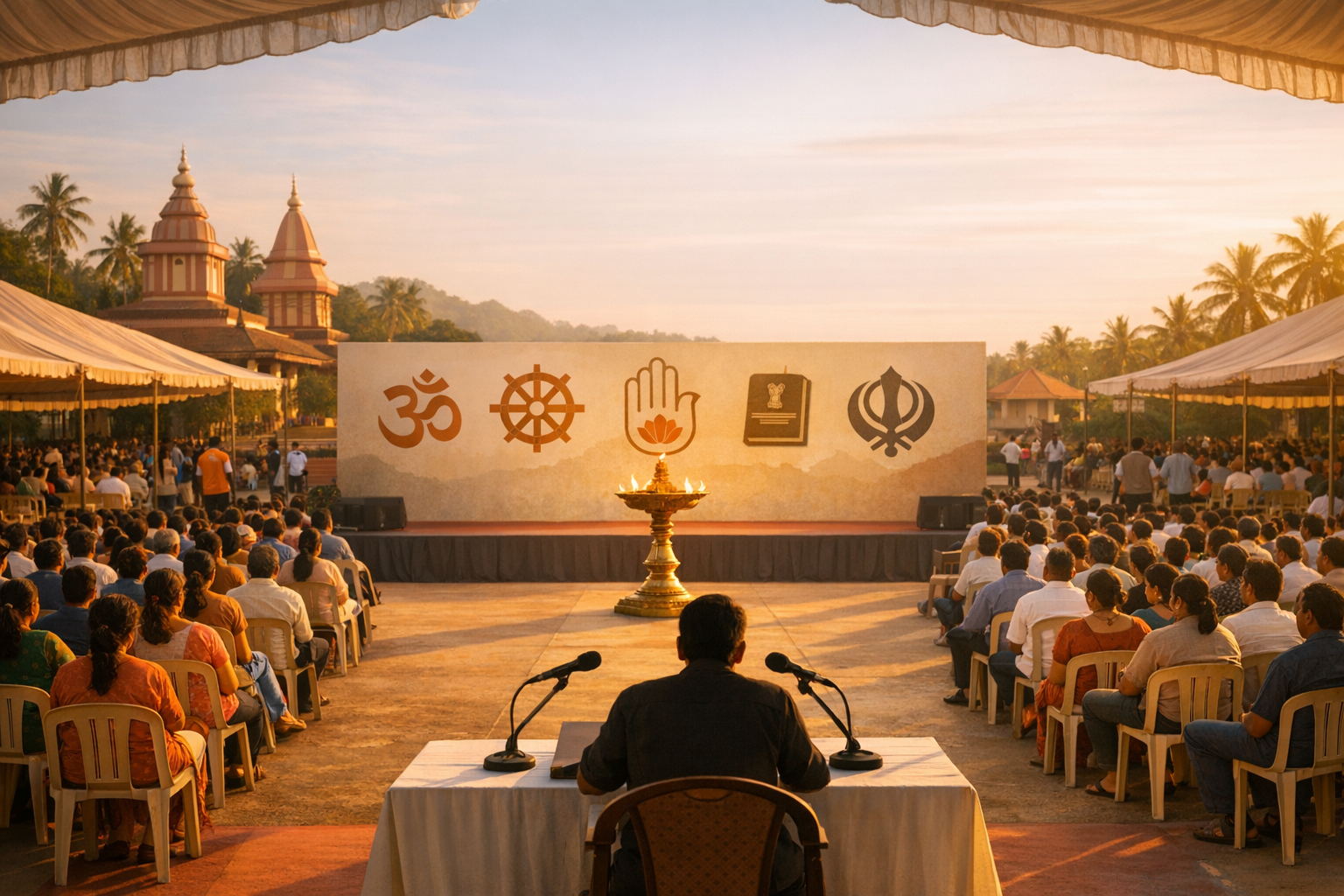
A recent Hindu Rashtra-Jagruti Sabha in Ponda, Goa, drew over 300 participants for a peaceful, community-centered assembly anchored in constitutional rights and cultural continuity. Featuring Bhagyanagar MLA T. Raja Singh and HJS National Spokesperson Ramesh Shinde, the event highlighted the role of sabhas in fostering civic literacy and non-violent public engagement. Set in Goa’s temple…
-
Inside Medieval Indo‑Islamic Chronicles: Rhetoric of Conquest, Bias, and Erased Lives

This long‑form analysis examines how medieval Indo‑Islamic court chroniclers crafted narratives of conquest, iconoclasm, and authority in India. Drawing on Al‑Utbi, Hasan Nizami, Ziauddin Barani, Amir Khusrau, and Minhaj‑us‑Siraj, it reproduces representative primary passages to show how panegyric and polemics shaped policy and public memory. It identifies two key traits: the elastic reframing of defeats…
-
Reimagining Mumbai’s Slums: A Data-Driven Blueprint to Replace Informality with Dignity

Mumbai’s clearance of slums can be a turning point—if matched by a rigorous plan that both preserves urban livelihoods and ends unsafe, illegal housing. This analysis explains why slums form, how they subsidise city life through labour and logistics, and why a law-aligned city must replace them. It proposes a practical blueprint: mixed-income housing tied…
-
Work Without Motive: Sri Sri Ravi Shankar on Intuition, Nishkama Karma, and Flow States

This article unpacks the axiom “the best work comes out when you work without any motive” through Sri Sri Ravi Shankar’s description of intuition as a “sudden sprout of thought,” the Bhagavad Gita’s Nishkama Karma, and insights from modern psychology. It distinguishes non-attachment from aimlessness, showing how purpose can remain strong while egoic craving for…
-
Again Become Mouse: A Powerful Bhagavatam Parable on Ego, Desire, Fear, and True Growth

This essay retells the widely shared Bhagavatam parable “Again become mouse” and analyzes its enduring relevance for self-assessment. It shows how external upgrades without inner transformation intensify fear, inflate ego, and erode gratitude. Drawing on Srimad Bhagavatam’s ethical psychology—and resonances from Buddhism, Jainism, and Sikhism—it proposes an integrative, dharmic path where power follows purification. Readers…
-
Unlocking Innate Bliss: A Cross-Dharmic Guide to the Self and the Veils of Matter

Human beings everywhere seek happiness because, as Vedanta-sutra affirms—anandamayo ‘bhyasat—consciousness is intrinsically blissful. This essay maps the beginning of spiritual knowledge across Hinduism, Buddhism, Jainism, and Sikhism, showing how each tradition diagnoses the veils of matter and mind and prescribes ethical and contemplative methods to remove them. Readers learn the shared language of gross and…
-
Pancha Kosha Demystified: An Upanishadic, Cross-Dharmic Guide to the Five Sheaths and Practice

Pancha Kosha—the Upanishadic model of five sheaths—offers a precise map from gross to subtle embodiment for Yoga, meditation, and Vedantic inquiry. This article clarifies each sheath, explains why some teachers highlight an ecological “first body,” and shows how Pancha Kosha Viveka aligns inner practice with environmental responsibility. It integrates comparative insights from Buddhism, Jainism, and…
-
London’s 2026 Rathayatra: An Immersive Walking Tour of Devotion, Culture, and Unity

London’s 57th Rathayatra on 24 May 2026 transformed Park Lane, Piccadilly, and Trafalgar Square into a vibrant corridor of devotion and community from 2:00 pm to 5:00 pm. This immersive, one-take, 1 hour 13 minute walking tour documents how kirtan, hand-pulled chariots, and public darshan reconfigured central London’s iconic spaces. Rooted in the Jagannath tradition…
-
Asitanga Bhairava Unveiled: Iconography, Mantras, and the Sacred Power of the Golden Lord
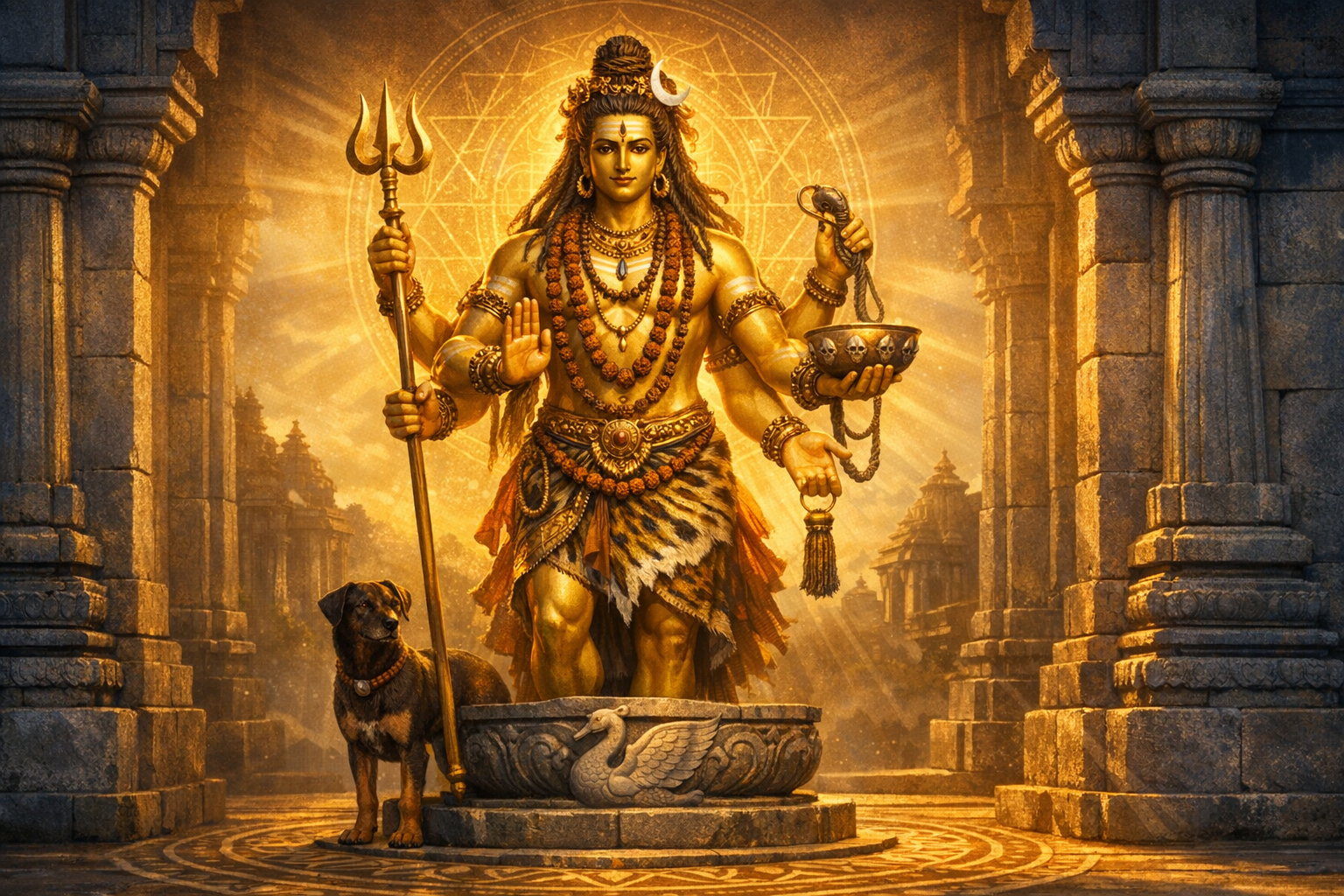
Asitanga Bhairava, the Golden Lord of the First Octet, embodies a luminous, eastward guardianship that unites protection with awakening. This long-form exploration decodes his iconography—golden hue, trident, drum, skull-bowl, and threshold placement—so readers can recognize and interpret the form in temples and texts. It clarifies how attributes map to disciplined practice, turning weapons into inner…
-
Samiti and Sabha Unveiled: Vedic Roots of Democracy in Ancient Hindu Civilization
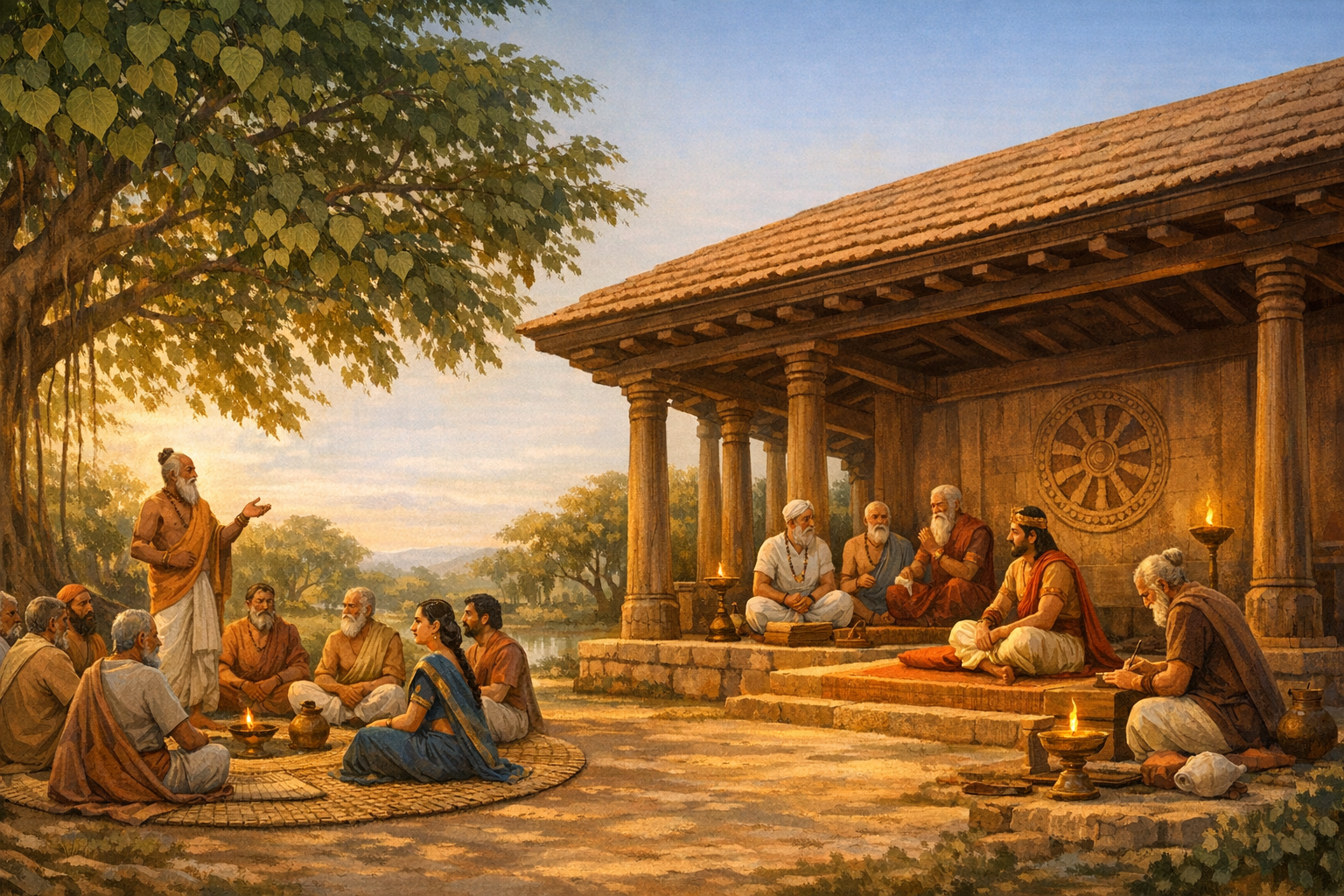
Ancient India’s Vedic tradition preserved two hallmark assemblies—Samiti and Sabha—that balanced public participation with expert counsel. The Rigveda and Atharvaveda reference these bodies, which anchored governance to dharma and prioritized consensus, accountability, and communal welfare. Over time, their logic resonated through gana-sangha republics cited in Buddhist sources and through administrative codifications visible in medieval South…
-
Maharashtra Temple Trusts Slam ‘Devasthan Inam Abolition Act 2026’, Seek Equal, Transparent Rules

A statewide conclave of trustees and community voices in Maharashtra has opposed the proposed ‘Devasthan Inam Abolition Act 2026,’ asking why Devasthan temple lands appear targeted while other religious endowments are treated differently. The discussion clarifies what Devasthan inam lands are, why they matter to worship, welfare, and heritage, and how constitutional safeguards under Articles…
-
Safeguard Residents’ Health: End Illegal Animal Slaughter in Housing Societies this Bakri Eid

Illegal animal slaughter in housing societies during Bakri Eid raises significant public-health, environmental, and legal concerns in Maharashtra’s urban clusters, including Mira-Bhayandar. Judicial directives and municipal by-laws require slaughter only in licensed slaughterhouses with veterinary oversight; violations can contaminate water, overload drains, and spread pathogens. This analysis details the central and state legal frameworks—PCA Act…
-
Vishalgad Dispute Rekindled: Safeguarding Maratha Heritage while Respecting Urus Traditions

The Vishalgad Urus Dispute in Kolhapur has resurfaced, raising a familiar challenge: how to protect a fragile Maratha-era fort while respecting a long-standing Sufi tradition. This analysis sets out a constitutional, conservation, and community-based roadmap that avoids identity-driven bans and anchors decisions in law, safety, and heritage science. It explains how Article 25–26 protections can…
-
How One Gita Bridged Burma and New York: A Transformative Journey of Language, Bhakti, and Unity

A real-world case links New York City’s street book distribution to community transformation in Burma (Myanmar) through a single Bhagavad Gita. Burmese doctors, initially drawn by the Dasavatar image that includes Lord Buddha, passed the text to a Hindu colleague aligned with Sankharacharya, and it eventually reached a college student seeking to learn English. Through…
-
Morning Class on SB 10.6.10: Pūtanā, vātsalya-rasa, and the life-changing power of divine grace
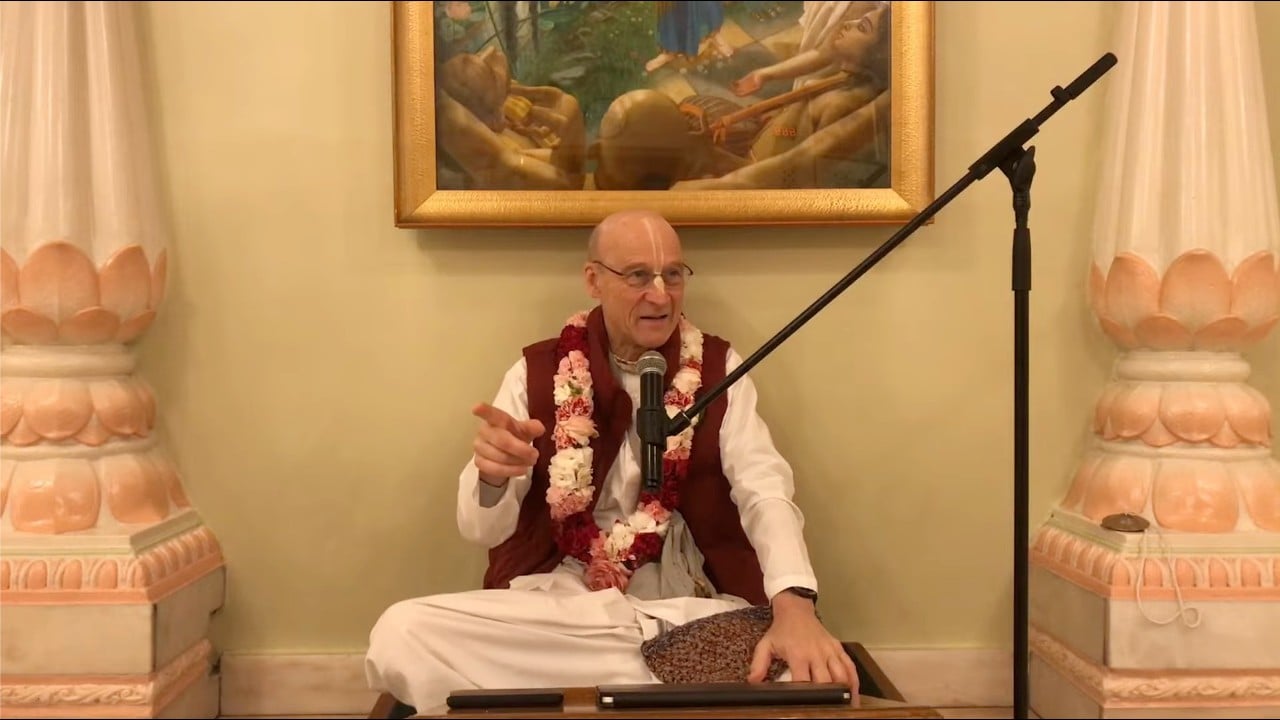
Delivered on 27 May 2026, this Melbourne morning class examines Śrīmad Bhāgavatam 10.6.10 within the broader Pūtanā narrative to illuminate how divine grace transforms karma through the aesthetics of vātsalya-rasa. The analysis connects Gaudiya Vedānta insights to the Bhagavad-Gītā’s vision of devotion reshaping destiny. Ethical nuances of intention, compassion, and communal responsibility are explored alongside…
-
Padma in Hindu Sculptures: The Lotus as Cosmic Throne, Purity Symbol, and Living Geometry
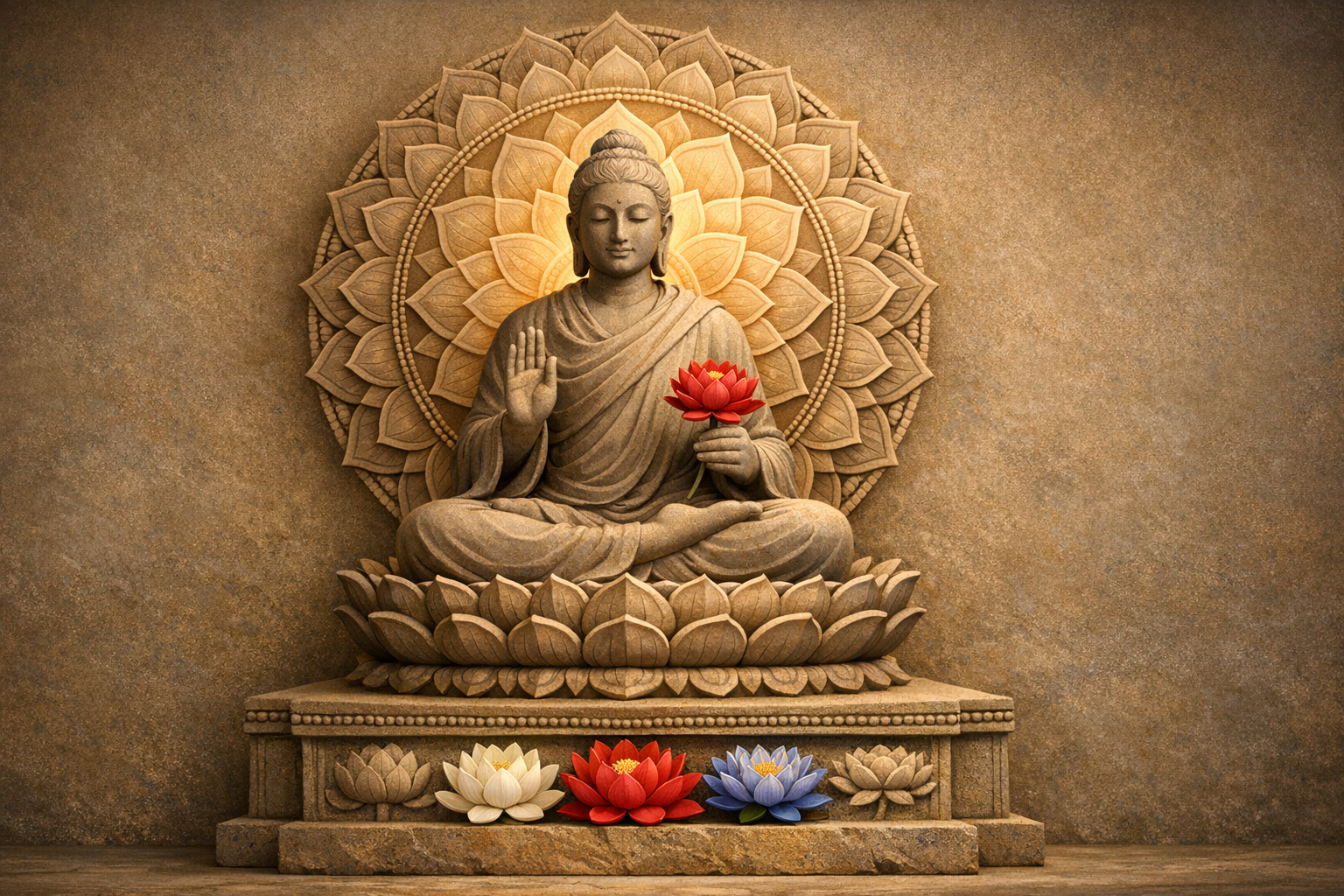
This in-depth guide decodes how the lotus (padma) functions in Hindu sculptures as attribute, throne, halo, and yogic sign, translating sacred meaning into readable form. Readers learn to distinguish bud, half-bloom, and full bloom, recognize color symbolism, and spot double-lotus pedestals with confidence in temples and museums. Clear references to Shilpa Shastra canons show how…
-
Lead with Devotion, Live Unattached: Dhruva Maharaja’s Lessons in Bhagavatam 4.12 (10–16)
Bhagavatam 4.12 (10–16) presents Dhruva Maharaja as a saint-king who unites devotion with rāja-dharma, demonstrating how to lead decisively while remaining inwardly detached. The passage operationalizes the Bhagavad-Gita’s counsel to act and remember simultaneously, turning smaraṇaṁ into a discipline that purifies action at its source. Readers gain a practical, stepwise protocol—establish attention with śravaṇa-kīrtana, return…
-
Azhwars and Ramanujacharya: Timeless Bhakti, Living Vedanta, and the Path of Grace

This comparative study explores how the Azhwars and Ramanujacharya jointly shape the Sri Vaishnava tradition by uniting ecstatic devotion with systematic Vedanta. It situates the Azhwars’ Divya Prabandham and Ramanuja’s Viśiṣṭādvaita within one inclusive, Ubhaya Vedanta canon that values both Tamil and Sanskrit revelation. Readers gain a clear map of similarities—Vishnu’s supremacy, Sri’s compassion, bhakti…
-
Agneyas among the Gandharvas: Timeless Insights into Kubera’s Celestial Musicians

This article examines the Agneyas as a Gandharva collective in Hinduism, drawing on Puranic and allied textual traditions to clarify their identity as celestial musicians and attendants in divine courts. It explains how several narratives place the Agneyas in the orbit of Kubera (Vaiśravaṇa), the god of wealth and guardian of the northern direction, where…
-
Acharya Periyavachanpillai and the ‘Dull-Headed’ Disciple: When Guru’s Grace Unlocks Genius
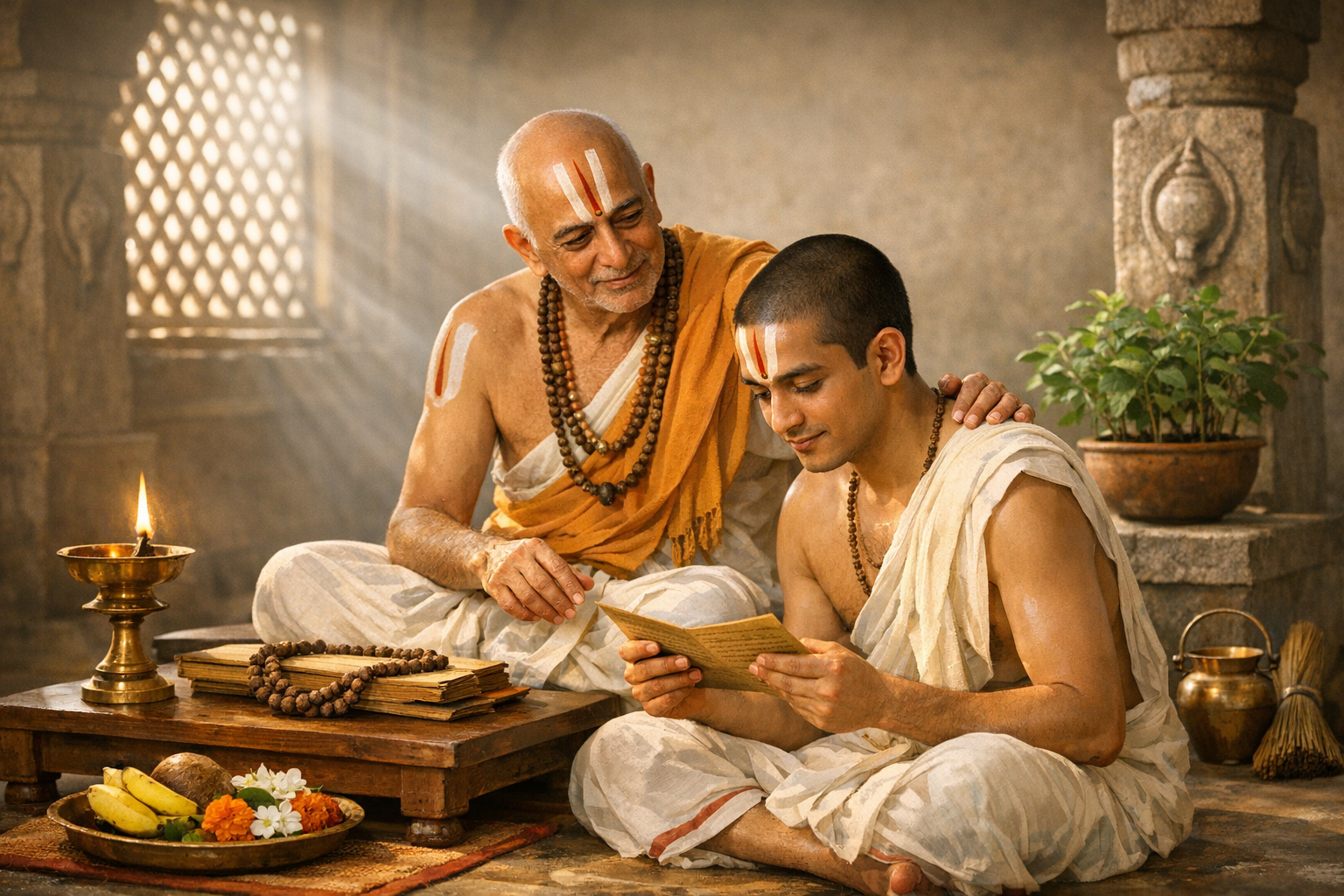
This essay explores a classic Sri Vaishnava teaching story—Acharya Periyavachanpillai guiding a so-called “dull-headed” devotee—to illuminate how Guru’s Blessings align with disciplined effort to unlock understanding. It situates the episode within the Ramanujacharya lineage, drawing out doctrinal themes such as śabda-pramāṇa, bhakti, and prapatti. It then shows how mantra, seva, and structured study purify the…