
-
TTD Tirumala Closure for Chandra Grahanam on 3 March 2026: Darshan Resumes After Suddhi: Key Timings

The Sri Venkateswara Swamy Temple (TTD) at Tirumala will be closed from 9:00 am to 7:30 pm on 3 March 2026 due to the Chandra Grahanam. Darshan will resume only after Suddhi and related purificatory rituals, with entry expected from 8:30 pm onward. These timings help devotees plan travel, meals, and rest, ensuring a smoother…
-
Why Worship Is Never a Waste: Enduring Protection, Inner Strength, and Dharmic Unity

Worship is never a waste because it builds resilient minds, compassionate hearts, and ethical action. Across Hinduism, Buddhism, Jainism, and Sikhism, disciplined devotion and meditation act as a protective shield by stabilizing attention and reinforcing purpose. This protection is not magical; it is psychological, moral, and communal. Unity in spiritual diversity allows many valid pathsbhakti,…
-
Markandeya Jayanti 2026: Auspicious Date, Meaning, and Practices to Deepen Devotion

Markandeya Jayanti 2026 will be observed on January 22, aligning with Shukla Paksha Chaturthi in the Magha Month of the Hindu calendar. The day honors Sage Markandeya, celebrated for unwavering devotion to Lord Shiva and the transformative power of the Mahamrityunjaya mantra. Observances typically include Shiva and Markandeya puja, mantra recitation, reading from the Markandeya…
-
The Forgotten Warrior: Reclaiming Vrishasena’s Valor Beyond Abhimanyu’s Shadow

This essay re-examines the Kurukshetra War to recover Vrishasena’s overlooked valor alongside Abhimanyu’s celebrated martyrdom. It explains how narrative framing and cultural pedagogy can elevate certain episodes and obscure others in the Mahabharata. Readers gain a clearer view of kshatra-dharma by recognizing courage across both Kaurava and Pandava camps. The piece outlines Vrishasena’s disciplined role…
-
Kushmanda: Unveiling the Cosmic Creative Power of Durga and Its Life-Shaping Symbolism

Kushmanda, the fourth manifestation of Goddess Durga, is honored as the creative force that brings the universe into being. Her name evokes the primordial warmth that animates the cosmic egg (Brahmanda), linking metaphysical insight with practical devotion. In Navaratri worship, Kushmanda symbolizes new beginnings, inner vitality, and disciplined compassion. Iconography portrays her as Ashtabhuja, radiating…
-
Essential Guide to January 15, 2026 Panchang: Dwadashi to Trayodashi, Tithi, Rashi

On Thursday, January 15, 2026, the Panchang indicates Krishna Paksha Dwadashi until 8:09 PM, followed by Krishna Paksha Trayodashi. This transition supports steady, reflective practices earlier in the day and preparatory observances later, as appropriate to local custom. Shubh Muhurat, Nakshatra, and the Moon’s Rashi should be confirmed with a regional Panchang due to location-based…
-
The One Question That Reclaimed Time, Energy, and Presence: A Lean Life Approach

This article examines a simple, repeatable method for reclaiming time and energy through values-based decisions and mindful living. It traces a shift from reflexive busyness to intentional presence, beginning with one clarifying question: “Does this bring me value?” A practical audit separates what nourishes from what drains, and small, gentle adjustments replace wasteful patterns. A…
-
Magh Navratri 2026 Dates & Ritual Guide: Experience Gupt Navratri’s Sacred Nine Nights

Magh Navratri (Magha Navaratri), also known as Gupt Navratri, will be observed from January 19 to January 27, 2026. The festival unfolds during the Shukla Paksha of Magha maas and honors Goddess Shakti over nine sacred nights. Many households follow the Navadurga sequence, balancing devotion with inner sādhanā characteristic of Gupt Navratri. Simple practicesvrata, diya…
-
The Sacred Pace: Dharmic Wisdom on Slow, Mindful Progress for Lasting Inner Peace

Modern speed often delivers exhaustion rather than fulfillment. Dharmic wisdom across Hinduism, Buddhism, Jainism, and Sikhism converges on a practical remedy: slow, steady, mindful progress. Hindu philosophy and Patanjali’s principle of nairantarya abhyase emphasize continuity over haste, cultivating resilience and clarity. Mindfulness, seva, and patient inquiry align personal growth with Dharma. The result is less…
-
When Money Vanished: How Reframing Worth Rescued a Marriage and Built Inner Wealth

Financial stress can erode self-worth and strain relationships, but reframing identity from provider to partner restores connection and dignity. This narrative analyzes how mindful communicationnaming fear rather than disputing billsreduces defensiveness and builds teamwork. A daily “Proof of Worth” log documents non-financial value, countering money shame and strengthening emotional resilience. Practical examples show how small…
-
Meena Rashi Chandrashtama 2026: How to Find Accurate Dates, Timings, and Plan Calmly

Meena rasi (Pisces Moon) nativesthose under Purvabhadra Nakshatra 4th pada, Uttarabhadra, and Revatiexperience Chandrashtama when the Moon transits the eighth house (Ashtama Sthana). In 2026, this occurs each month as the Moon moves through Tula (Libra), typically spanning about two to two-and-a-half days. Exact dates and timings depend on location and are best found by…
-
Khalsa Mero Roop Hai Khaas: A Powerful Call to Courage, Love, and Truth in Dharmic Unity
This reflection interprets the line “Khalsa mero roop hai khaas” as a call to live courage, love, and truth in daily life. It situates the phrase in Sikh history and shows how its ethical core resonates with dharmic traditions across Hinduism, Buddhism, Jainism, and Sikhism. Readers gain practical guidance for family, civic, and professional settings,…
-
Narayana and the Waters of Creation: Profound Symbolism, Etymology, and Shiva Purana Insights

This article explores Narayana as a symbol of creation through water, uniting Sanskrit etymology, Hindu symbolism, and Puranic cosmology. It explains how the roots “nara” (water) and “ayana” (abode) reveal a precise theological insight anchored in the Shiva Purana (2.1.6). Readers gain a clear view of Vishnu iconography and Kshira Sagara as metaphors for potentiality…
-
Atala in the Puranas: Awe-Inspiring Splendor of the Hidden Realm Beneath Bhuloka

Atala, the first of the seven Patala-lokas beneath Bhuloka, is portrayed in the Puranas as a realm of radiant beauty rather than infernal gloom. Drawing on the Bhagavata Purana and Vishnu Purana, this article clarifies Atala’s place in Hindu cosmology and explains how its opulence complements broader philosophical themes of maya and discernment. It offers…
-
Honoring the Fading Ācārya: Guiding New Generations Toward Unified Dharma in Naperville
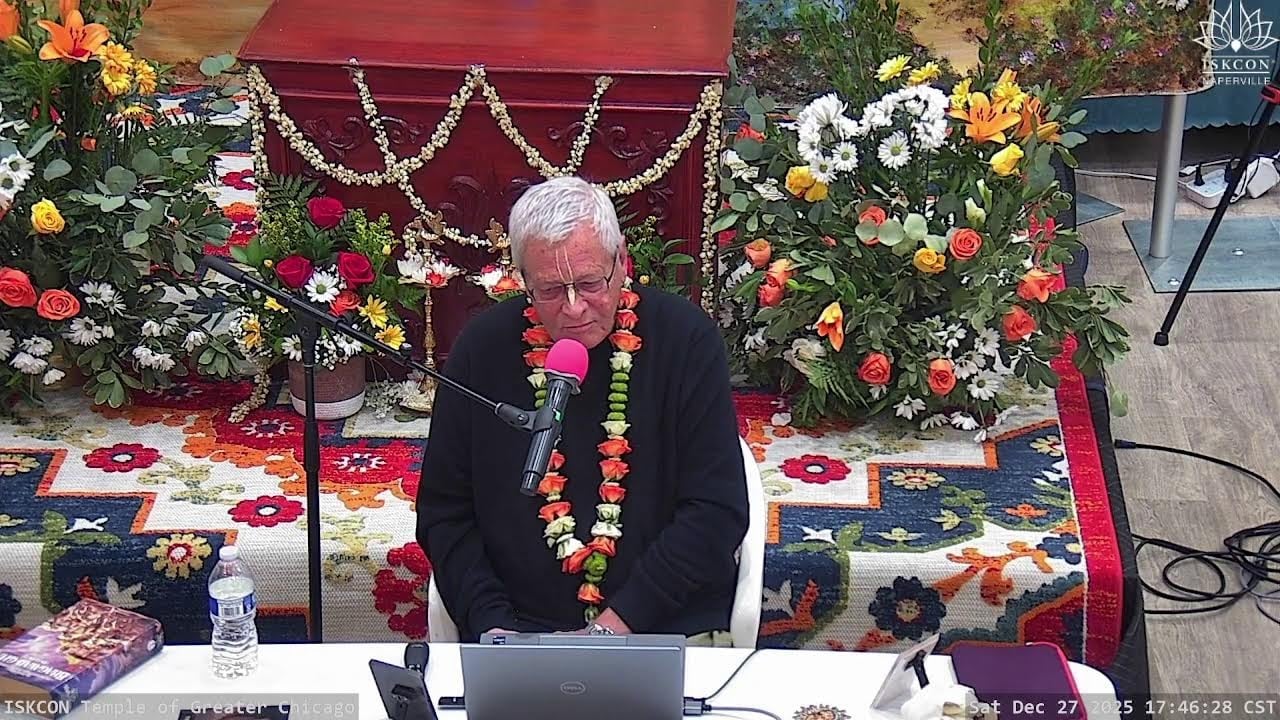
A December 27 gathering in Naperville, led by HG Gopal Bhatta Prabhu, explored how communities can honor a “fading ācārya” by strengthening intergenerational stewardship. Anchored in Srila Prabhupada’s metaphor of the “skyscraper skeleton,” the reflection urged later generations to refine and complete the legacy without compromising high standards. It outlined a progression in which the…
-
Suvendu Adhikari calls on Bangladesh to protect Hindu minorities in urgent Kolkata meet

On 26 December 2025 in Kolkata, WB LoP Suvendu Adhikari met officials at the Bangladesh Deputy High Commission to convey serious concern over reported attacks on Hindu minorities. The outreach urged immediate protection, impartial investigations, and swift legal action to uphold rule of law. It framed the issue within a rights-based, non-polarizing approach centered on…
-
Jharkhand Rallies Roar: HJS Leads Powerful Protests, Urges Action on Bangladesh Violence

Coordinated protests across Jharkhand, led by Hindu Janajagruti Samiti (HJS), urged urgent diplomatic intervention after reports of the lynching of Dipu Chandra Das in Bangladesh. Demonstrators submitted memoranda to district administrations, calling for independent investigations, accountability, and protective measures for minorities. The movement framed its appeal within human rights, rule of law, and regional stability.…
-
Why Sanatana Dharma Endures: The Self-Correcting Wisdom Unifying Dharmic Traditions

Sanatana Dharma endures because it carries a built-in, self-corrective system that updates practice without losing core principles. Hinduism’s framework of shruti, smriti, ācāra, and yukti enables context-aware refinement guided by reason and community debate. Buddhism, Jainism, and Sikhism share this ethos through councils, Anekantavada, and collective deliberation, demonstrating a broader dharmic commitment to internal reform.…
-
Sashti 2026: Skanda Sashti Viratham Dates Explained, Fasting Rites, and Devotional Insights

Sashti 2026 brings two monthly observancesafter Purnima and after Amavasyarooted in the Hindu calendar’s precise tithi system. This guide explains how to identify locality-specific dates using a regional Panchang, why Skanda Sashti in Aippasi is especially significant, and how Shashti fasting (vratham) can be adapted responsibly. It outlines core practicespuja to Lord Subramanya (Murugan), hymns…
-
Upanishadic Wisdom and the Profound Oneness of Life: A Call to Spiritual Solidarity

The Upanishads present a clear and compelling teaching: all life is fundamentally one. By illuminating the non-dual relationship between ātman and Brahman, these scriptures ground ethics in spiritual unity and inspire compassion in action. Their inclusive approach honors multiple pathsjñāna, bhakti, karma, and dhyanasupporting religious pluralism and interfaith harmony. Resonating with Buddhism, Jainism, and Sikhism,…