
-
Cheating Death by Hours: Missing the Indian Ocean Tsunami Rewired Purpose, Service, and Faith

A narrowly averted tragedy during a Sri Lanka eco-tourleaving a beachfront hotel hours before the Indian Ocean tsunamireorganized priorities without fanfare. This research-grounded reflection explains how near-miss events recalibrate risk perception and catalyze post-traumatic growth, moving focus from pleasure to purpose. It traces a gradual shift toward seva, karuṇā/dayā, and dāna, expressed through sustained community…
-
Decoding Lokapala Vishnu: Powerful Iconography, Sacred Symbols, and Cosmic Guardianship
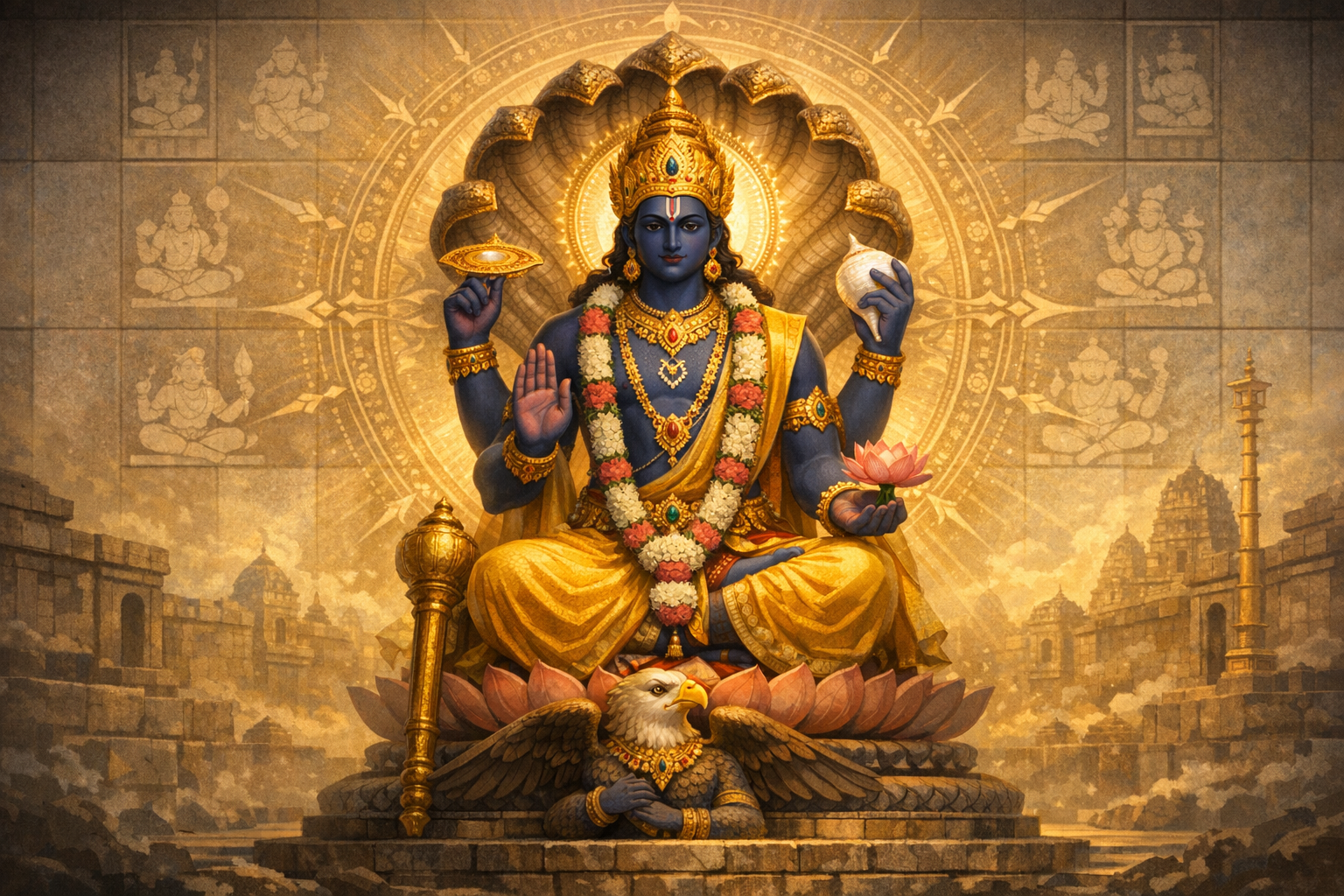
This in-depth exploration decodes Lokapāla Vishnu as a coherent synthesis of Vaishnava theology and Hindu iconography, clarifying how Vishnu’s āyudhas, mudrās, ornaments, and temple placement express cosmic guardianship. Readers learn to interpret core symbols like the Sudarśana Chakra, Pāñcajanya Śaṅkha, Kaumodakī Gadā, and Padma as a protective grammar ordered toward dharma. The article maps textual…
-
Madhyandina Shakha of the Shukla Yajurveda: Yajnavalkya’s timeless legacy, texts, rituals, and reach
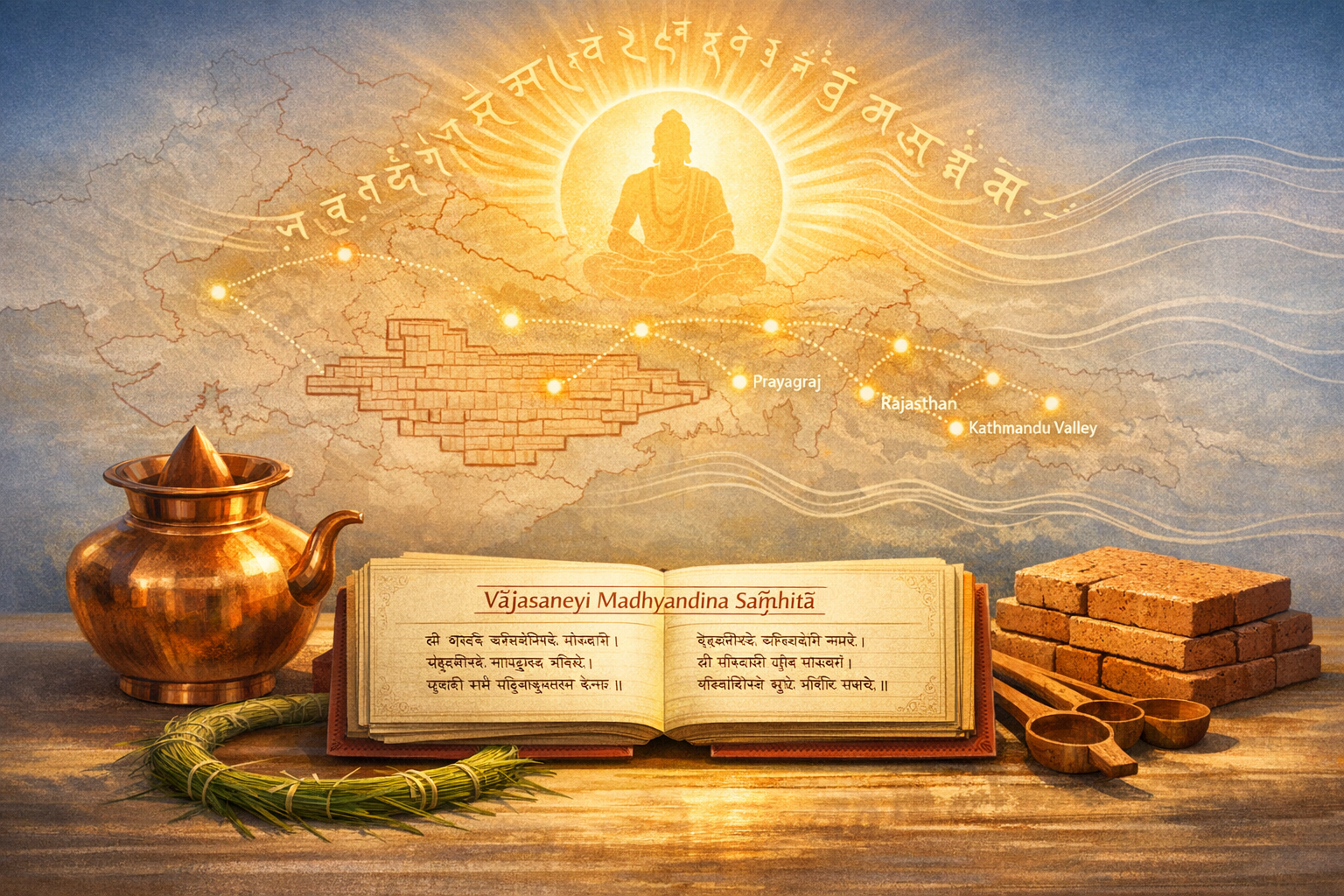
Madhyandina Shakha is a principal recension of the Shukla Yajurveda, tracing its lineage to Yajnavalkya and preserving a carefully ordered ritual and philosophical corpus. Its core textsthe Vājasaneyi Madhyandina Saṁhitā and the Śatapatha Brāhmaṇa (Madhyandina)transmit the Isha and Brihadaranyaka Upanishads, uniting precise liturgy with deep inquiry into the Self. Auxiliary works such as the Kātyāyana…
-
Unveiling the Cosmic Blueprint: Srimad Bhagavatam SB 2.5.11 with HG Mukunda Datta Prabhu
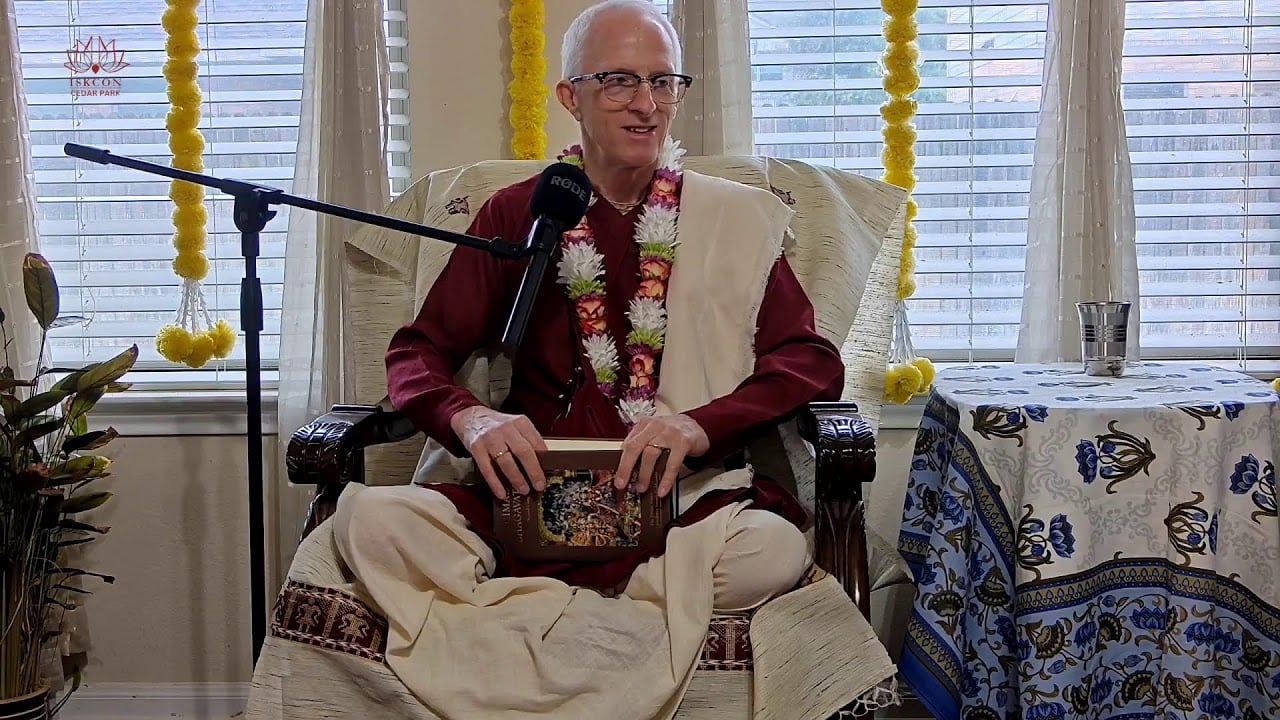
This in-depth analysis of Srimad Bhagavatam SB 2.5.11, based on a June 5, 2026 class by HG Mukunda Datta Prabhu at the Hare Krishna Temple of Austin (ISKCON Cedar Park), situates the verse within the Bhagavata Purana’s rigorous cosmology. It explains how the Supreme functions as the cause of all causes, activating pradhana through kala,…
-
Ajmer’s Adhai Din Ka Jhonpra: Hindu Sena seeks rigorous ASI survey to clarify origins and foster harmony

Hindu Sena has called for a scientific ASI survey of Ajmer’s Adhai Din Ka Jhonpra to resolve long-standing questions about the monument’s origins. A rigorous, non-invasive methodologyGPR, LiDAR, ERT, archaeometric dating, and advanced epigraphic imagingcan produce verifiable, peer-reviewed evidence. Framed within AMASR protections and ICOMOS ethics, the survey can prioritize preservation, not alteration, of a…
-
Wild Berries and Boundless Bhakti: Shabari, Krishna, and the Sacred Gift of Food
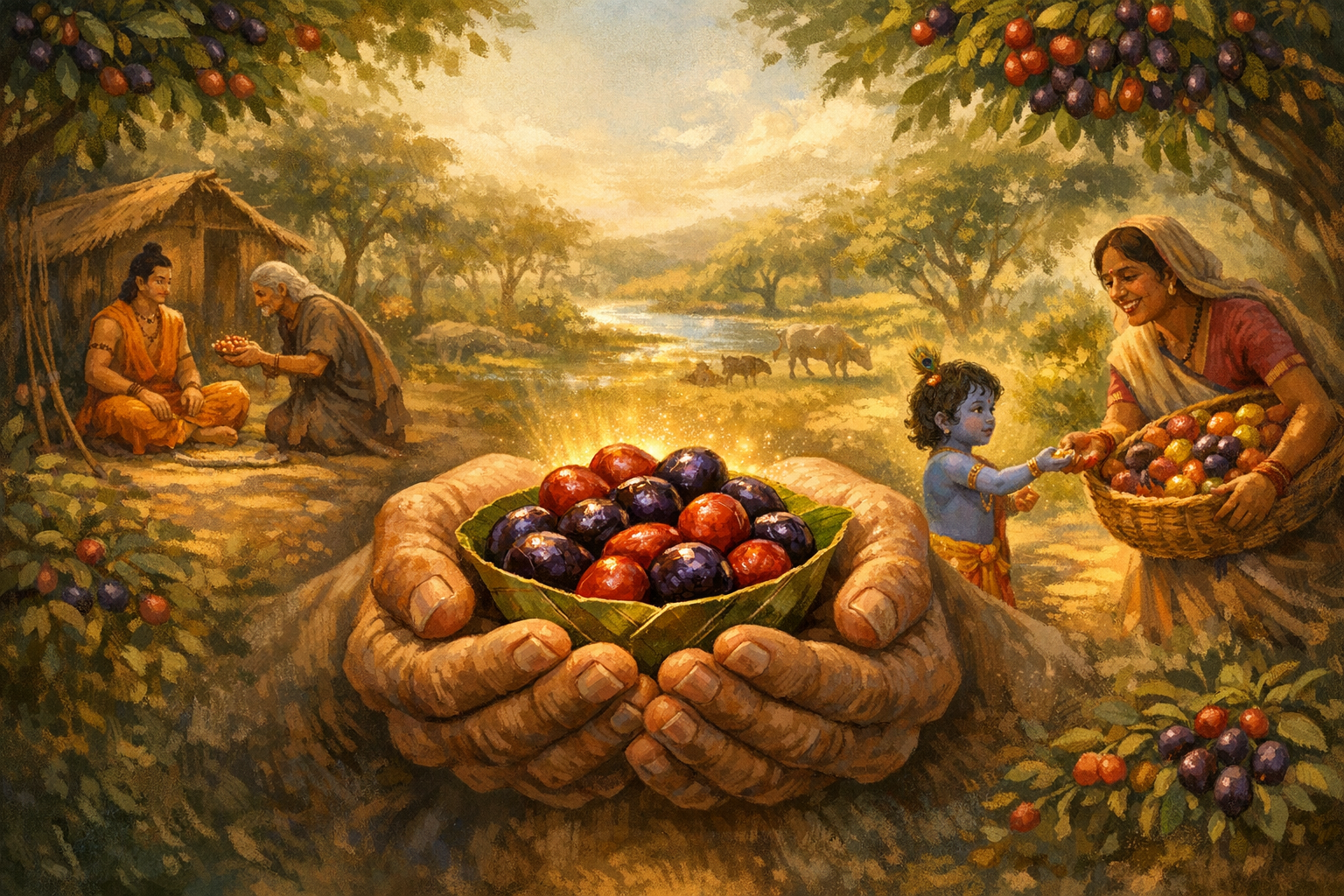
Wild berries in the Ramayana and Krishna traditions encode a precise theology of bhakti, a social ethic of sharing, and an ecologically rooted way of life. Shabari’s ber (jujube) in the Ramayana and the fruits exchanged in Vraja with Krishna show how humble offerings become sacred through loving intention and grateful acceptance. The narratives dissolve…
-
11 Root Causes of Dejection (Part 2): A Dharmic Framework for Resilience and Joy
This Part 2 deep-dive completes a unified, dharmic map of dejection by examining six Yoga Sutra obstaclesillness, stagnation, doubt, heedlessness, laziness, and over-attachmentthrough the shared wisdom of Hinduism, Buddhism, Jainism, and Sikhism. Readers learn how these factors interlock, why they amplify heaviness of heart, and how to respond with integrative practices grounded in the Bhagavad…
-
Slow Growth That Sticks: Evidence-Based Habits and Dharmic Wisdom for Real Change

This article reframes personal growth as disciplined maintenance rather than dramatic reinvention. It follows a decade-long arc in which small, repeatable habits compound into durable change while anxiety gradually loses influence. Readers gain evidence-based methodshabit design, implementation intentions, boundary-setting, and emotion regulationintegrated with dharmic wisdom from Hinduism, Buddhism, Jainism, and Sikhism. The piece explains how…
-
Honoring HG Kratu Prabhu: A Lifelong ISKCON Servant Inspiring Dharmic Unity and Hope
This academic tribute reflects on HG Kratu Prabhu’s five decades of service to Srila Prabhupada’s mission in ISKCON, situating his legacy within the Bhakti Tradition and the Guru–Shishya parampara. It explains how long-term seva manifests through teaching, kirtana, community building, and fidelity to śāstra. The piece highlights convergences across Hinduism, Buddhism, Jainism, and Sikhismseva, karuṇā,…
-
Why Detachment Unlocks Maximum Happiness: A Dharmic, Evidence-Based Guide from Gita to Yoga

Detachment in Hinduism is a trainable skill that unlocks maximum happiness by freeing the mind from compulsion. Grounded in the Isha Upanishad and Bhagavad Gita, it reframes enjoyment as arising from renunciation and the release of outcome-clinging. Yoga Sutra’s abhyasa-vairagya method makes this pragmatic, while allied teachings in Buddhism, Jainism, and Sikhism affirm the shared…
-
Savarkar Jayanti in Kolkata: Debating ‘Hinduize the Politics and Militarize the Hindudom’
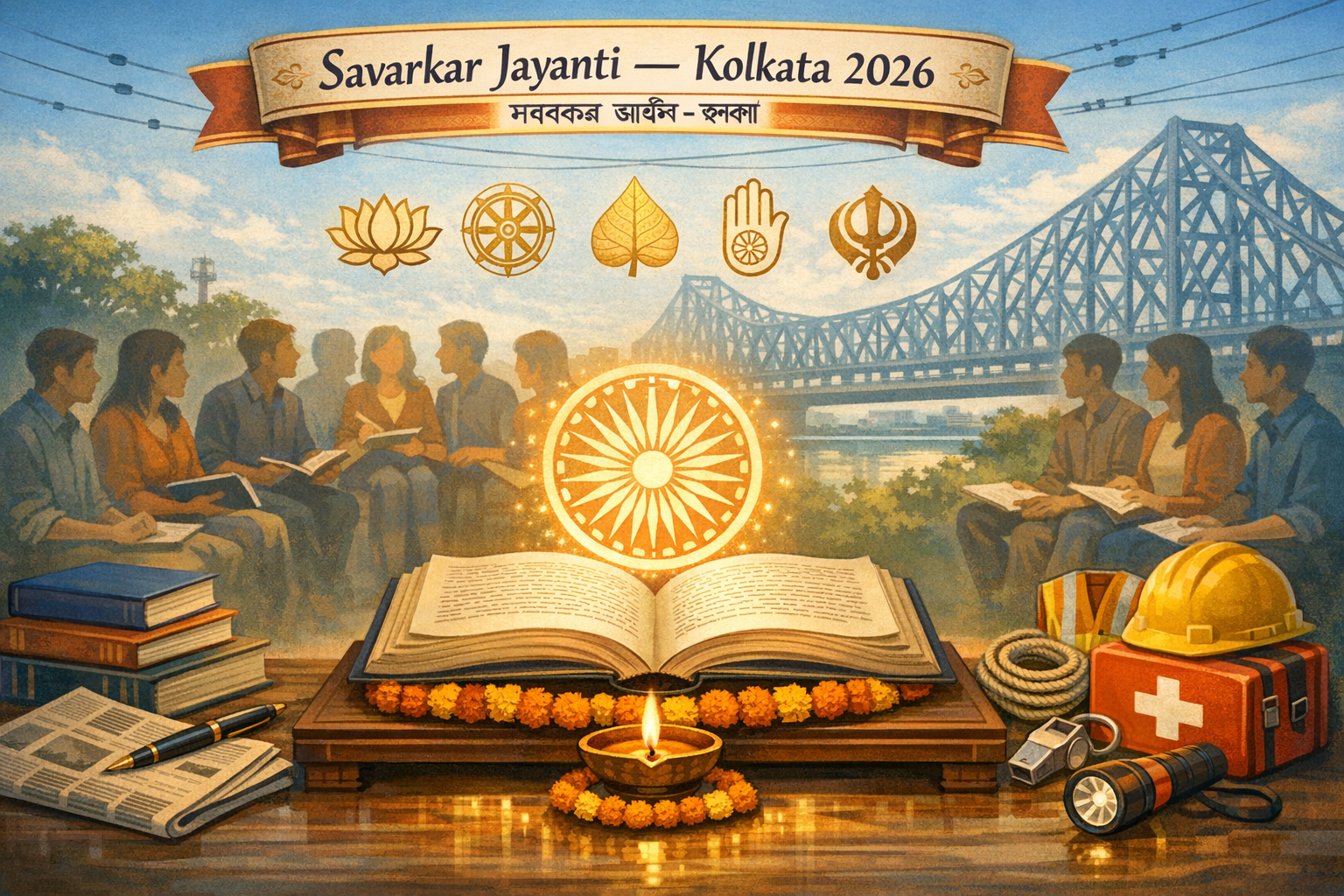
Held on 28 May 2026, the Hindu Samaj Kalyan Samiti’s Savarkar Jayanti in Kolkata revisited the maxim ‘Hinduize the Politics and Militarize the Hindudom’ through a constitutional, dharmic lens. The analysis situates V D Savarkar’s thought historically and reframes the slogan as a call for ethics-driven public life and lawful, nonviolent resilience. It underscores pathways…
-
Unlocking Innate Bliss: A Cross-Dharmic Guide to the Self and the Veils of Matter

Human beings everywhere seek happiness because, as Vedanta-sutra affirmsanandamayo ‘bhyasatconsciousness is intrinsically blissful. This essay maps the beginning of spiritual knowledge across Hinduism, Buddhism, Jainism, and Sikhism, showing how each tradition diagnoses the veils of matter and mind and prescribes ethical and contemplative methods to remove them. Readers learn the shared language of gross and…
-
Krishna’s Personal Descent on Earth: Scriptural Evidence, Bhakti Practice, and Dharmic Unity

This in-depth exploration examines the Vaishnava conviction that Lord Krishna personally descended to Earth, situating the claim within scriptural sources (Bhagavad Gita, Bhagavata Purana, Brahma-samhita) and the technical doctrine of avatara-tattva. It shows how Gaudiya concepts like achintya-bheda-abheda map divine unity and plurality, while the yuga-dharma of nama-sankirtana translates theology into transformative practice. Using the…
-
Decoding Ashta Bhairava’s Eight Directions: Names, Fierce Symbolism, and Sacred Geometry

Ashta Bhairava, the eight directional manifestations of Bhairava, unify Tantric metaphysics with temple architecture, ritual time, and ethical practice. This guide clarifies widely attested mappings of names to directions and explains how each form functions as a guardian of thresholds, conduct, and clarity. It situates the Ashta Bhairava within Agamic design, sacred geometry, and living…
-
From Axe to Bow: Parashurama and Rama’s Weapons across India’s Civilizational Evolution

Parashurama’s axe and Rama’s bow are more than weapons; they are precise metaphors for India’s civilizational evolution from corrective severity to codified restraint. Read together, they chart the passage from foundational pruning to lawful kingship, illuminating Kshatra Dharma and maryada in the Ramayana. The parashu symbolizes necessary removal of entrenched harm, while the Kodanda embodies…
-
Sat Sanga Deep Dive: Tradition, Inclusion, and Purushottama Masa in ISKCON’s Living Dharma
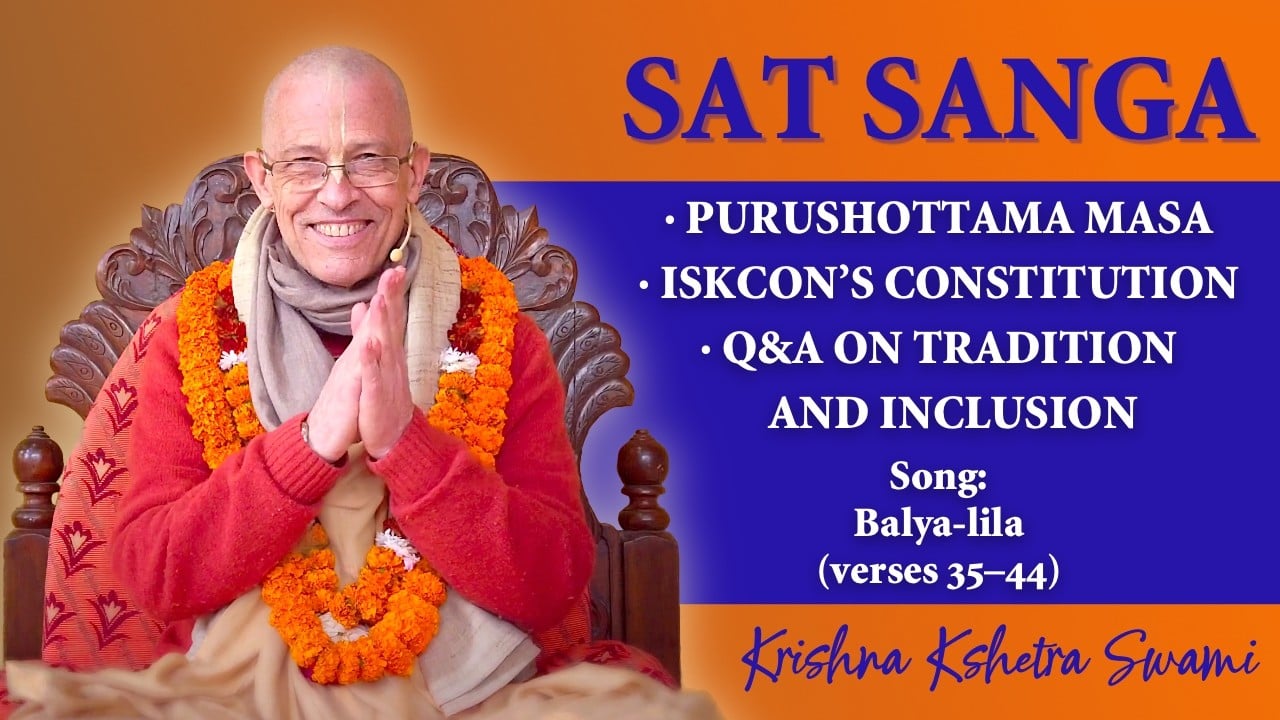
This Sat Sanga (16 May 2026) examines Purushottama Masa with calendrical accuracy, showing how Adhik Jyeshta Maas 2026 becomes a devotional opportunity rather than a mere intercalary fix. It clarifies how ISKCON’s emerging Constitution anchors mission fidelity, transparent governance, and culturally sensitive inclusion without compromising core siddhānta. The guidance on “Try to chant and be…
-
“I Feel No Fear”: How the Hare Krishna Maha-mantra Builds Abhaya Across Dharmic Paths

A memorable exchange crystallizes a core promise of mantra meditation: asked what chanting the Hare Krishna maha-mantra feels like, Srila Prabhupada replied, “I feel no fear.” This article unpacks that claim in an academic yet accessible way, explaining how abhaya (fearlessness) emerges at the intersection of Bhakti theology, rhythmic sound, and breath regulation. It clarifies…
-
Bond of Love Part II: HG Jagattarini Dasi on Bhakti, Sacred Art, and Dharmic Unity

This archival overview documents Bond of Love Interview Series ~ Part II – HG Jagattarini dasi (Vaishnavi Ministry NA), a live-streamed conversation centered on bhakti, sacred art, and community formation. It analyzes how narrative pedagogy and devotional aesthetics transmit core Hindu spiritual traditions with clarity and depth. By highlighting women in spirituality, the program strengthens…
-
The Donkey’s Silence at Krishna’s Birth: Textual Evidence, Folk Memory, and Sacred Symbolism

A widely told folk variant claims a donkey brayed during Devaki’s earlier births yet fell silent at Krishna’s birthsometimes after Vasudeva’s quiet prayer that no sound betray the child. Canonical sources such as the Bhagavata Purana and Harivamsa do not mention a donkey, focusing instead on a divinely wrought hush: chains loosened, doors opened, and…
-
Bhojshala at a crossroads: Saraswati idol reportedly installed; entry rules tighten after court
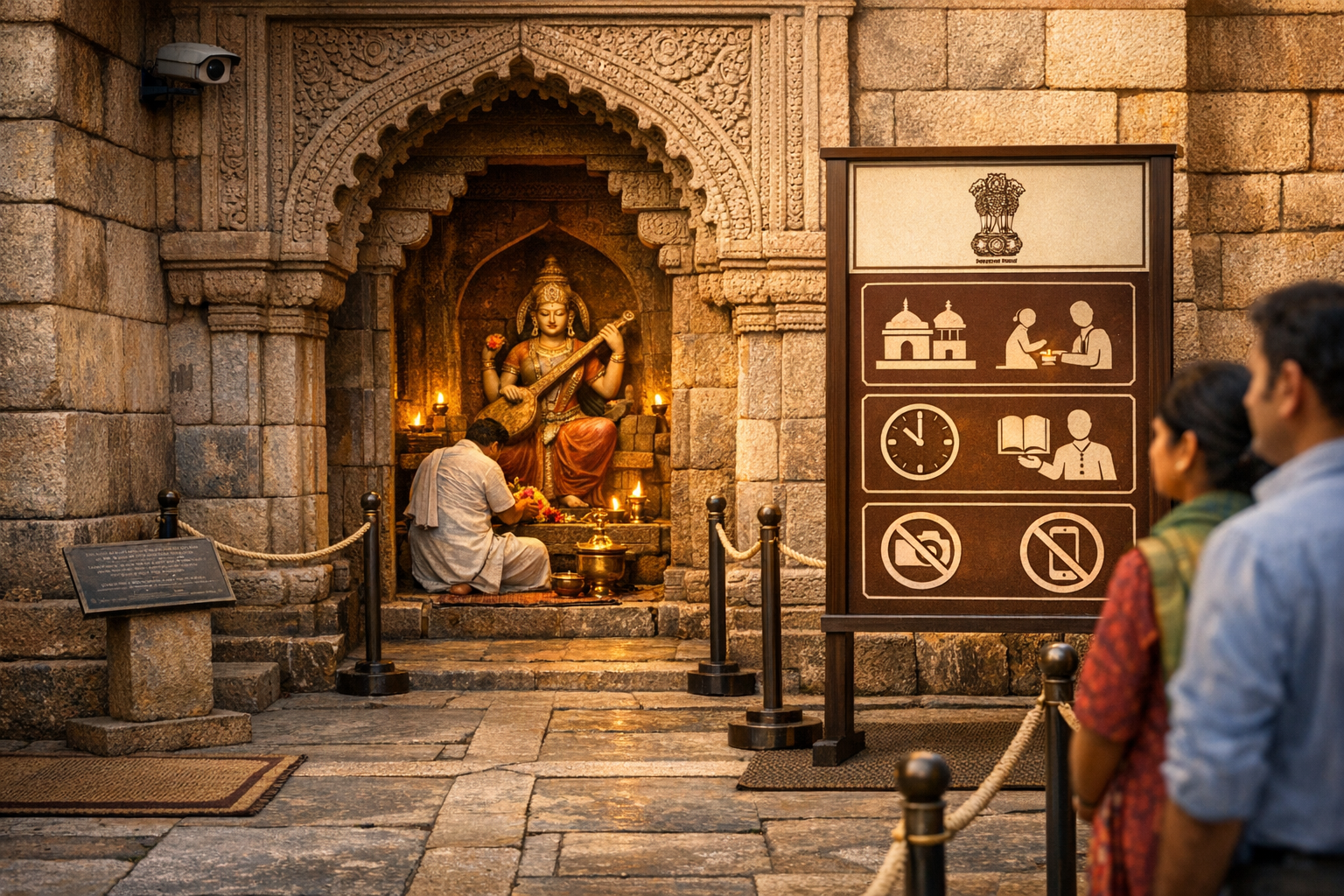
Reports from Dhar, Madhya Pradesh suggest that a consecrated idol of Mata Saraswati has been installed at Bhojshala with daily worship commencing, and that entry protocols have tightened following a court directive. This analysis explains the legal frameworks (Articles 25–26, AMASR Act, and the Places of Worship Act) that shape permissible action. It outlines how…