
-
Maniman the Yaksha: Agastya’s Curse and Bhimasena’s TriumphA Parable of Hubris and Karma

This long-form, academically grounded retelling of Maniman the Yaksha traces how Agastya’s curse and Bhimasena’s fated victory form a precise moral parable within the Mahabharata and allied Puranic traditions. It clarifies the Yakshas’ ambivalent role as Kubera’s guardians, explains the ethical import of a rishi’s shaapa, and shows why Bhima’s disciplined strength is celebrated as…
-
Sri Caitanya Mahaprabhu’s Living Tree of Love: Nityānanda, Advaita, Gadādhara and the Gaudiya Legacy

The Sri Caitanya Mahaprabhu Tree is a precise Gaudiya Vaishnava metaphor for how divine love becomes a living tradition. Rooted in scripture and embodied by saintly exemplars, it unfolds through three great trunksNityānanda, Advaita, and Gadādharainto innumerable branches that nourish communities via kīrtana, study, and service. Śrīla Prabhupāda’s emphasis on remembering the names of Vaiṣṇavas…
-
Radha–Krishna, Bhakti, and Opera: Sir John Tavener’s Mantra Quest and the Cosmic Rasa-līlā

In 2005, Sir John Tavener and Ranchor Prime centered an ambitious Krishna opera on the theological and musical problem of choosing a mantra for Radha–Krishna’s love duet. This essay maps the devotional core of rāsā-līlā (Bhagavata Purāṇa 10.29–33) to operatic craft using Rūpa Gosvāmi’s rasa theory. It outlines why nāma is doctrine as much as…
-
Atma vs Anatma Explained: A Scholar’s Guide to Inner Freedom, Clarity, and Lasting Peace

This in-depth guide clarifies the difference between Atma (the changeless witness) and Anatma (all that arises and passes), showing why this insight is the key to inner freedom and lasting peace. Drawing on the Upanishads, the Bhagavad Gita, Vedanta, Sāṅkhya-Yoga, and Nyāya-Vaiśeṣika, it presents multiple, mutually reinforcing methods: Pancha Kosha Viveka, Drg-Drsya Viveka, Avasthātraya analysis,…
-
VHP seeks rollback of ‘Devasthan Inam Abolition’ bill to safeguard temple lands and heritage
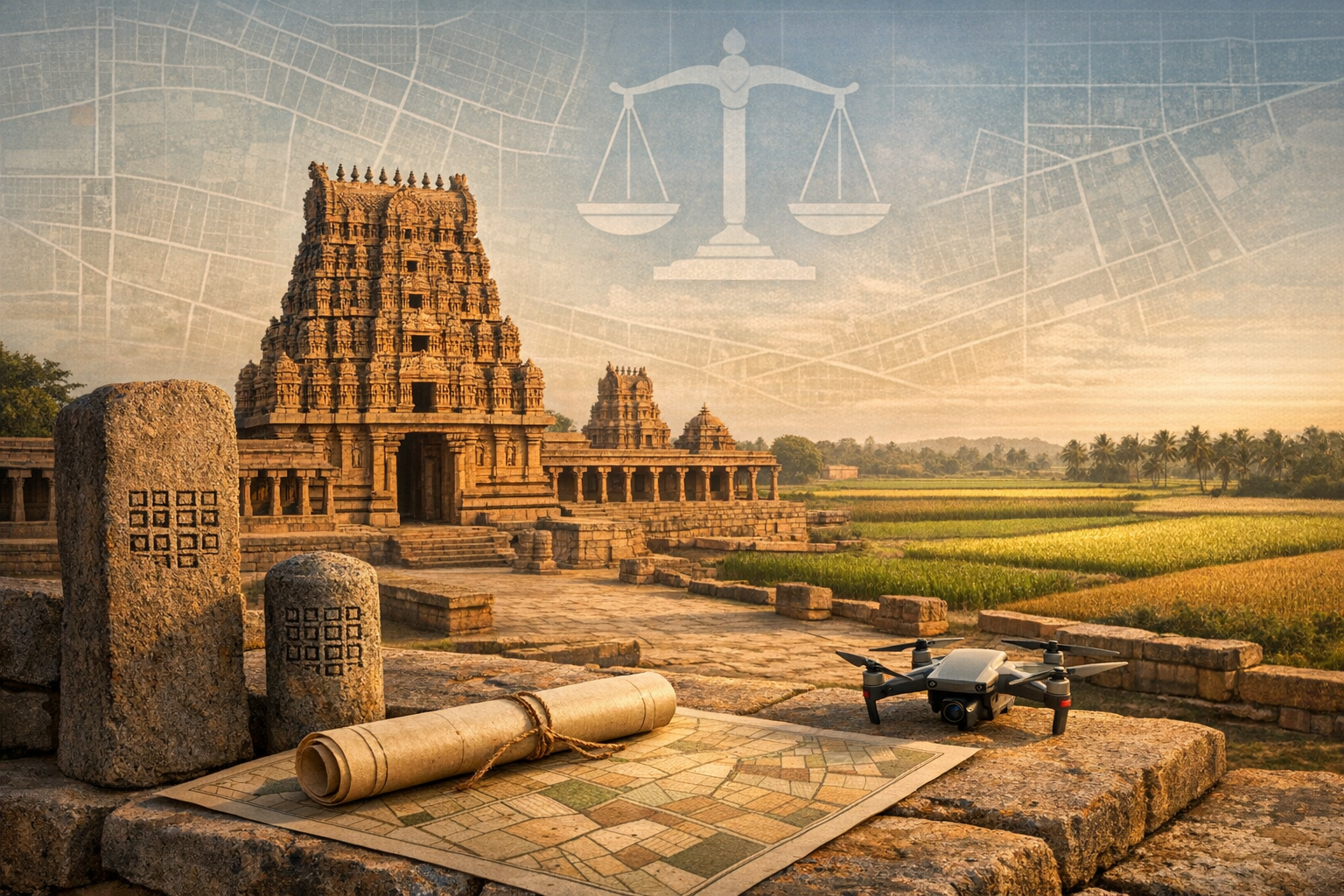
Vishwa Hindu Parishad (VHP) has called for the withdrawal of the proposed ‘Devasthan Inam Land Abolition Act’ and launched a parallel demand for time-bound removal of encroachments on temple lands. The issue implicates Articles 25 and 26, the public trust character of religious endowments, and decades of land-reform jurisprudence. Devasthan Inam lands historically financed daily…
-
From Navadvipa to Neal’s Yard: Discover a Dharmic Sanctuary in London’s West End

A short turn from Covent Garden into Neal’s Yard reveals a compact London courtyard designed by scale, color, and greenery to function as a threshold oasis. Read as a cultural metaphor, the path ‘From Navadvipa to Neal’s Yard’ links Gaudiya Vaishnavism’s living bhakti lineage with everyday West End life through the Hare Krishna Movement (ISKCON)…
-
Arise, Awake: Swami Vivekananda’s Call to Relentless Focus, Dharmic Grit, and Goal Mastery

This essay situates “Arise, Awake, and Stop not till the Goal is reached” within its Katha Upanishad roots and explains how Swami Vivekananda shaped it into a modern, action-oriented ethic. It decodes the triadArise (initiate), Awake (attend), and Stop not (complete)as a full cycle of disciplined effort aligned with Dharma. Drawing on the Bhagavad Gita…
-
Kalithokai’s Elephant Parable: Timeless Sangam Wisdom on Selflessness and Dharma

Kalithokai, a jewel of Sangam literature, pairs the intimacy of akam poetry with a clear ethical imagination. A vivid elephant vignettewhere a tusker shields a female and calfembodies selflessness as the readiness to absorb risk for the vulnerable. The analysis situates this teaching within the anthology’s five tiṇai ecology, the kali metre’s craft, and the…
-
Ishta Devata and Bhakti Yoga: Transformative Rituals, Guru Guidance, and the Journey from Gauni to Para-Bhakti

This long-form exploration clarifies how Ishta Devata and bhakti yoga work together to transform ritual into inner freedom. It explains why gauni bhakti (preparatory devotion) is essential for cleansing the mind and cultivating niṣkāma, disinterested love for Bhagavan. It details the role of the guru within the Guru-Shishya Tradition, showing how guidance ensures safe, authentic,…
-
Old Age, Urgency, and Surrender: A Dharmic Reflection on Mortality and Authentic Living

Old age can function as a clarifying blessing that reduces distraction and redirects attention to Bhakti and Krsna consciousness. Drawing on lifespan psychology, the reflection explains how perceived time horizons encourage meaning-centered goals and stable sadhana. It unifies perspectives from the Bhagavad Gita, Buddhist maranassati, Jain anitya-bhavana, and Sikh simran to show how mortality awareness…
-
Batuk Bhairav Jayanti 2026: Date, Tithi, Puja Vidhi, Mantras, and Protective Blessings

Batuk Bhairav Jayanti 2026 falls on 24 June 2026 and honors the first manifestation of Baba Batuk Naththe child-form of Shiva’s protective wisdom. The observance typically aligns with an Ashtami tithi of the Krishna Paksha, so local panchang confirmation is advised. This guide presents a complete puja vidhi: sankalpa, abhishekam, mantra-japa, aarti, and naivedya, together…
-
Temple Lands at Risk? Why Maharashtra’s 2026 Devasthan Inams Draft Act Alarms Dharmic Bodies

Maharashtra’s proposed Devasthan Inams Abolition Draft Act, 2026 has raised alarms among temple trusts and dharmic institutions that rely on endowment-backed revenues for worship, welfare, and heritage conservation. This analysis clarifies what devasthan inams are, why they matter to community life across Hindu, Buddhist, Jain, and Sikh traditions, and how constitutional safeguards under Articles 25,…
-
Maharashtra Temple Trusts Slam ‘Devasthan Inam Abolition Act 2026’, Seek Equal, Transparent Rules

A statewide conclave of trustees and community voices in Maharashtra has opposed the proposed ‘Devasthan Inam Abolition Act 2026,’ asking why Devasthan temple lands appear targeted while other religious endowments are treated differently. The discussion clarifies what Devasthan inam lands are, why they matter to worship, welfare, and heritage, and how constitutional safeguards under Articles…
-
Truth Is Multi-Dimensional: Anekantavada, Vedanta, and Practical Ways to See Clearly

Many hear the phrase “truth is multi-dimensional” without a clear explanation. This article clarifies the concept using dharmic frameworksJain Anekantavada, the Buddhist two truths, Vedanta’s three levels of reality, and Sikh insights on Ik Onkar and satnam. It distinguishes objective, subjective, and intersubjective truth and shows how Indian pramanas (perception, inference, testimony, and more) rightly…
-
Beyond Appearance: How Karma and Dharma, not Looks, Define True Greatness across Dharmic Paths

Societies often confuse status and surface with substance. Dharmic traditions counter that true greatness rests on karma and dharmaethical action aligned with sustaining principlesrather than on appearance. Drawing on the Bhagavad Gita and parallel insights from Buddhism, Jainism, and Sikhism, this analysis defines karma with its causal layers and presents dharma as a context-sensitive compass…
-
New Vrindaban’s Palace of Gold: A Living Testament to Devotion, Craft, and Dharmic Unity

This long-form reflection examines New Vrindaban’s Palace of Gold in West Virginia, the focus of a second documentary by Vrsabhanu das. It traces the site’s evolution from a planned residence for Srila Prabhupada to a memorial shrine and cultural landmark within ISKCON. Readers gain a technical view of materials, methods, and process disciplinemarble inlay, glass…
-
Calcutta HC upholds Bengal’s Bakri Eid cattle curbs, says cow sacrifice non-essential

Calcutta High Court has upheld West Bengal’s pre‑Bakri Eid notification that restricts cattle slaughter and bars public slaughter, clarifying that cow sacrifice is not an essential religious requirement of Islam. The bench led by Chief Justice Sujoy Paul and Justice Partha Sarathi Sen anchored its analysis in Article 25, stressing that religious freedom is subject…
-
Golden Grace and Neem-born Humility: Decoding ‘Gauranga’ and ‘Nimai’ of Chaitanya Mahaprabhu

This article decodes the dual symbolism embedded in Chaitanya Mahaprabhu’s epithets “Nimai” and “Gauranga.” It explains how “Nimai,” rooted in neem’s purificatory aura and Bengal’s domestic piety, conveys protection, intimacy, and inner cleansing. It then unpacks “Gauranga” as a theological epithet signifying Krishna’s golden, compassion-filled form, central to Gaudiya Vaishnavism’s mission of Nama Sankirtana. Drawing…
-
Karvetinagaram Venugopalaswamy Brahmotsavam 2026: Dates, Rituals, Vahanams, and Pilgrim Guide
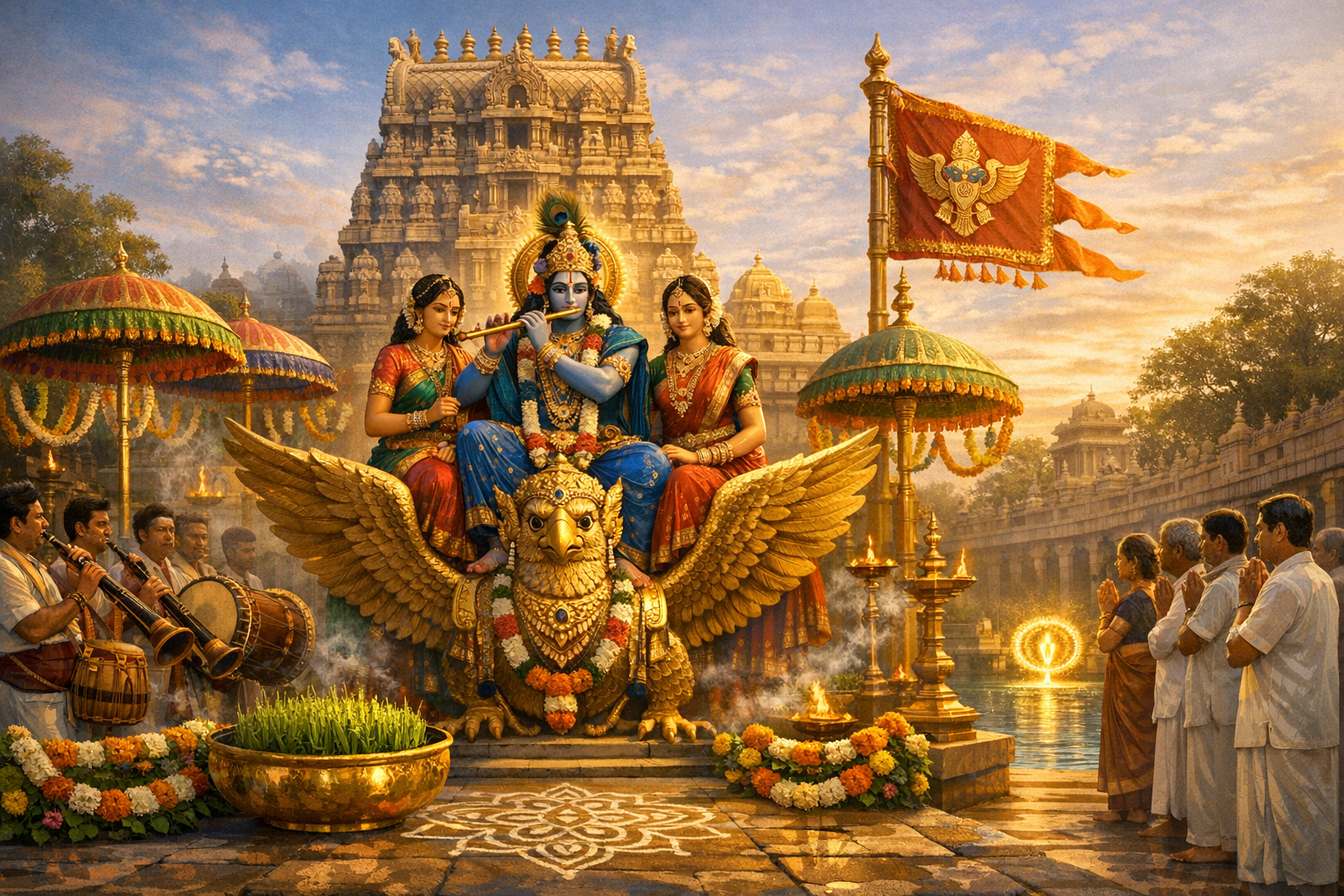
Karvetinagaram Venugopalaswamy Temple will celebrate its Brahmotsavam from 6–14 June 2026, preceded by Ankurarpanam on 5 June and the sanctifying Koil Alwar Tirumanjanam in early June. This comprehensive guide explains the festival’s Vaishnava Agamic foundations and how daily vahana processions, Garuda Seva, and culminating rites like Chakrasnanam and Dwajavarohanam structure the nine days. Readers gain…
-
Varsana Parikrama: Ascending Srimati Radharani’s Hill via Jaipur Mandir and Dan garh
This guided overview of the Varsana (Barsana) parikrama presents a clear, research-based orientation to ascending the hilltop temple of Srimati Radharani and visiting Jaipur Mandir and Dan garh. It situates these landmarks within Braj’s sacred geography and explains how architecture, ritual movement, and sound cohere into a contemplative experience. Readers gain architectural insights into North…