
-
From Shame to Self-Compassion: Overcoming Erythrophobia with Science and Dharmic Wisdom

Erythrophobiathe fear of blushingoften arises not from physiology itself but from shame-based interpretations that amplify anxiety and avoidance. This comprehensive guide integrates clinical psychology, neurophysiology, and dharmic wisdom to reframe sensitivity as attunement rather than defect. Readers learn how cognitive and attentional biases sustain the fear cycle and how psychoeducation, attentional retraining, and graded behavioral…
-
Usharavṛṣṭi Nyāya: Why Wisdom Fails on Unprepared Mindsand How Dharma Cultivates Readiness

Usharavṛṣṭi Nyāyathe maxim of rain on barren landexplains why even profound wisdom fails when inner preparedness is lacking and how dharma cultivates the conditions for genuine transformation. Drawing on Hindu philosophy and allied dharmic insights, it frames readiness (adhikāra) as a cultivated fitness grounded in ethical discipline, attention, and stability. The essay relates the maxim…
-
High-Stakes Showdown: Prakash Raj Faces ₹100 Cr TTD Notice, Delhi Case over Ramayana Remarks

Reports dated April 20, 2026 indicate that Prakash Raj faces a ₹100 crore defamation notice from a TTD Board Member and a criminal complaint in Delhi over allegedly derogatory remarks about the Ramayana. This analysis explains what a civil defamation notice entails, how criminal provisions like IPC Sections 499–500 and 295A are applied, and why…
-
Decoding Kumbhakarna’s Sleep: Valmiki Ramayana vs Folklore on Duration, Boons, and Symbolism

This analysis clarifies what the Valmiki Ramayana actually states about Kumbhakarna’s sleep and why folk Ramayanas frequently specify a six‑month cycle. It explains how later boons-and-curse narrativesespecially the Sarasvatī speech motifemerged to teach ethics of intention and speech. Drawing on cosmology (Uttarāyaṇa/Dakṣiṇāyana and ṣaḍṛtu), it shows why “six months” became a memorable mnemonic in oral…
-
Beyond the Bodily Concept: SB 10.4.20 on ātmā, family ties, and fearless devotion
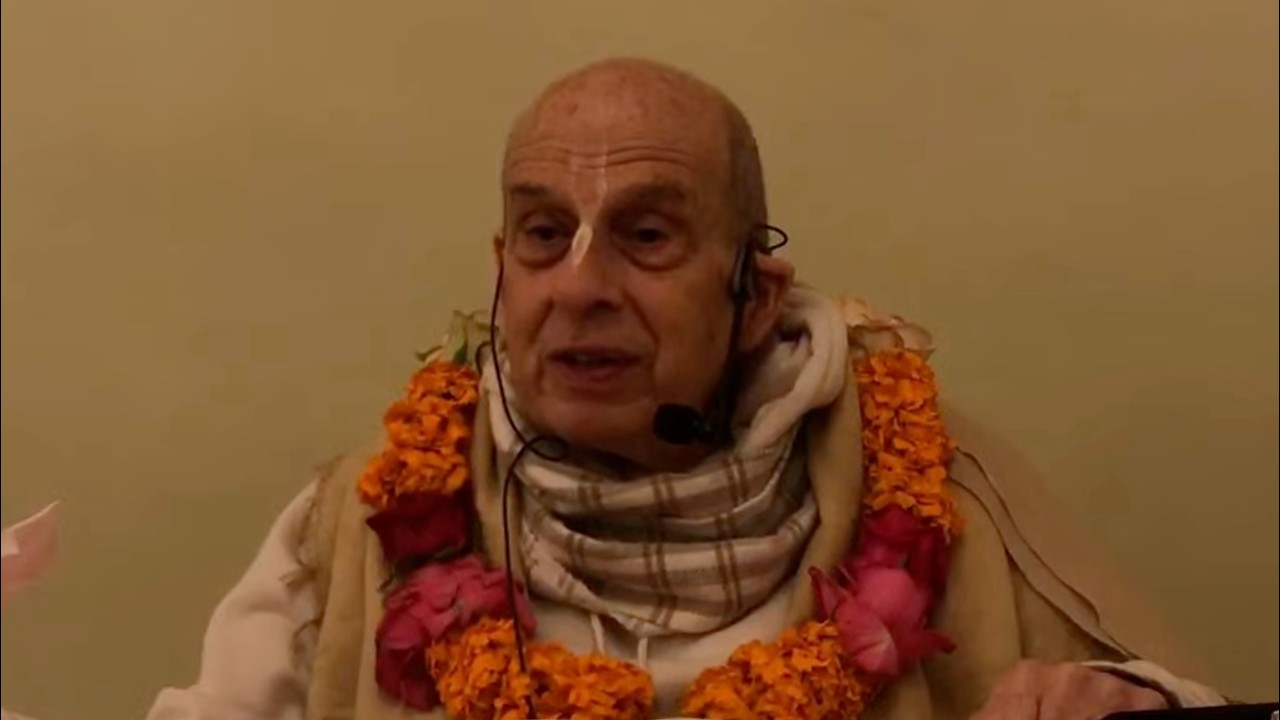
This analysis of Śrīmad-Bhāgavatam 10.4.20, as presented in a morning class by HG Bhurijana Prabhu, explains how mistaking the body for the ātmā intensifies attachment and vulnerability to the pains of union and separation within family, society, and nation. It offers a precise Vedic framework (tri-śarīra and pañca-kośa) to clarify identity and reduce suffering. Practical…
-
April 24, 2026 Panchang: Shukla Ashtami Tithi, Auspicious Times, Nakshatra/RashiDefinitive Guide

Friday, April 24, 2026 carries Shukla Paksha Ashtami as the Udaya tithi, with Shukla Paksha Saptami having ended at 1:17 AM in most regional Panchang listings. This definitive, academically grounded guide explains how tithi is computed, why Udaya tithi governs daily observances, and how to identify shubh muhurta using Brahma Muhurta, Abhijit Muhurta, and Choghadiya.…
-
Nose Ring Miracle and Awakening: How Saraswati Bai Transformed Purandara Dasa and Carnatic Music

This long-form Hindu story examines the famed “Nose Ring of Grace,” where Saraswati Bai’s compassion catalyzes the spiritual awakening of Srinivasa Nayaka into Purandara Dasa, the Father of Carnatic Music. It situates the narrative within the Bhakti Tradition and the Vijayanagara Empire, explaining how a household act of dāna and dayā redirected a merchant’s life…
-
Nyāyasudhā of Jayatirtha: The Masterwork that Fortified Dvaita Vedānta and Vedic Realism
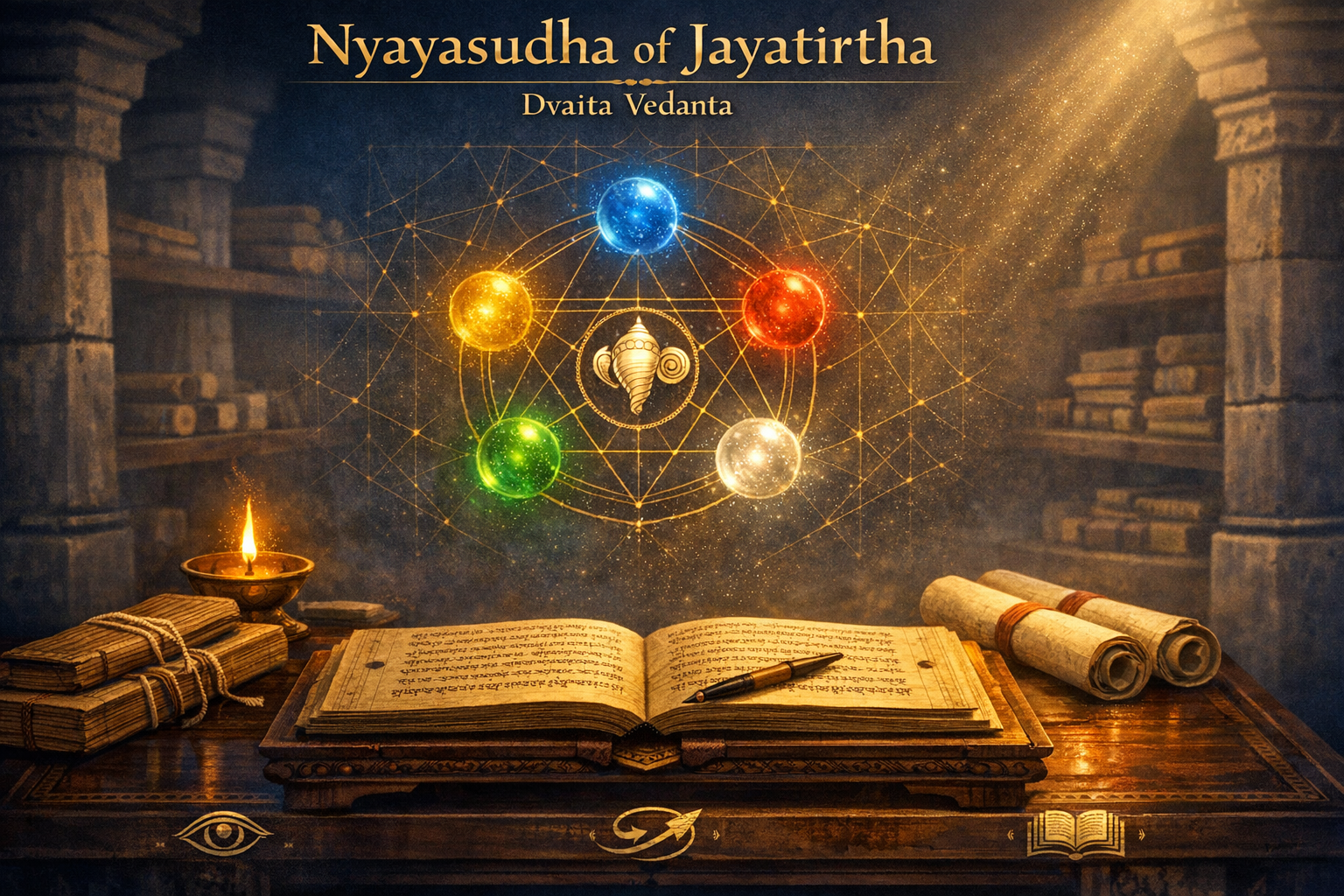
Nyāyasudhā, Jayatirtha’s classic commentary on Madhvacharya’s Anuvyākhyāna, is a cornerstone of Dvaita Vedānta and Vedic realism. It integrates scriptural testimony, disciplined reason, and experience to defend a plural, theistic ontology centered on Viṣṇu-sarvottama. The work clarifies pañcabheda, reinterprets nirguṇa in a theologically coherent way, and presents mokṣa as everlasting personal bliss grounded in bhakti and…
-
At the Guru’s Last Breath: A Mango, Mindfulness, and the Taste of Immortality

A classical Hindu teaching story recounts a Guru who, at the threshold of death, uses a simple mango to demonstrate how breath awareness, mindful attention, and remembrance reveal the peace of the Atman. The narrative is analyzed through the Bhagavad Gita and the Upanishads, showing how last-thought psychology aligns with daily practice in dhyana, japa,…
-
When Dharma Bows Before Battle: Yudhishthira’s Sacred Humility and the Ethics of Kurukshetra

Before the first arrow flies at Kurukshetra, the Mahabharata pauses for an indelible act of humility: Yudhishthira lays down his arms and seeks blessings from elders on both sides. This ethical rite aligns rajadharma and kshatra-dharma, signaling that even warfare must be governed by Dharma-Yuddha. The gesture affirms the guru–shishya tradition, anchors strength in reverence,…
-
Definitive Panchang for April 17, 2026: Chaitra Amavasya Timings, Nakshatra, Rashi, Shubh Muhurat

April 17, 2026 features Chaitra Amavasya until 5:13 PM IST, followed by Shukla Paksha Pratipada through 3:13 PM IST on April 18. The overview explains how tithis are computed from Sun–Moon longitudes, why month naming differs (Amanta vs. Purnimanta), and how this Amavasya aligns with Chaitra Navratri preparations. It situates the luminaries in Mesha (Aries)…
-
Shakti Peeth vs Siddha Peeth: Origins, Rituals, and the Power of India’s Sacred Seats

Shakti Peeth and Siddha Peeth occupy central yet distinct roles in Hindu sacred geography. Shakti Peeth are mythically anchored in the Sati narrative and emphasize Devi–Bhairava worship, major festivals like Navaratri, and communal pilgrimage. Siddha Peeth are experientially anchored in the attainments of siddhas and in anushthanas that reliably catalyze inner transformation. Many renowned shrines,…
-
Unveiling the Soul’s Journey: Life After Death in HinduismKarma, Yama, Moksha

Hinduism presents life after death as a just, compassionate, and educative journey governed by karma and oriented toward moksha. Foundational textsthe Upanishads, Bhagavad Gita, and Puranasaffirm that the immortal ātman continues through realms (lokas) or returns via reincarnation according to ethical causality. Lord Yama Dharma embodies impartial moral order, while rites such as antyeṣṭi, śrāddha,…
-
Cut Through the Noise: Yoga Vasistha’s Radical Call for Direct Experience over Debate

Yoga Vasistha confronts the overload of modern discourse with a precise remedy: shift from argument to direct experience. Framed as a dialogue between Vasishta and Rama, this classical Hindu scripture privileges aparoksha-anubhutiimmediate realizationover conceptual accumulation. It maps a practical path through dispassion, inquiry, meditation, and ethical alignment, showing how transformation is verified in everyday equanimity…
-
Mapping Krishna’s Four Horizons: Jagannath, Dwarka, Nathdwara and Udupi as Guides in Kali Yuga

India’s sacred geography can be read as a spiritual compass: four living centers of Krishna-bhaktiPuri (Jagannath), Dwarka (Dwarkadhish), Nathdwara (Srinathji), and Udupi (Sri Krishna)situated at the subcontinent’s horizons. This article explains how each manifestation offers distinct guidance for Kali Yuga: communal kirtana and prasada at Puri, dharma-anchored leadership at Dwarka, seva and aesthetic devotion at…
-
Show the Path, Not Carry the Burden: Empowering Dharmic Wisdom for Inner Freedom

Across Hinduism, Buddhism, Jainism, and Sikhism, a unifying principle prevails: sages can show the path, but seekers must walk it. The essay grounds this ethic in the Bhagavad Gita, Upanishads, Dhammapada, Jain Tattvartha-sutra, and Sikh teachings, explaining how grace, community, and guidance support but never replace personal agency. Technical concepts such as svadharma, adhikara-bheda, abhyasa–vairagya,…
-
Vishu Festival Rituals and Customs: A Complete Guide to Vishukkani, Kaineettam, and Sadya
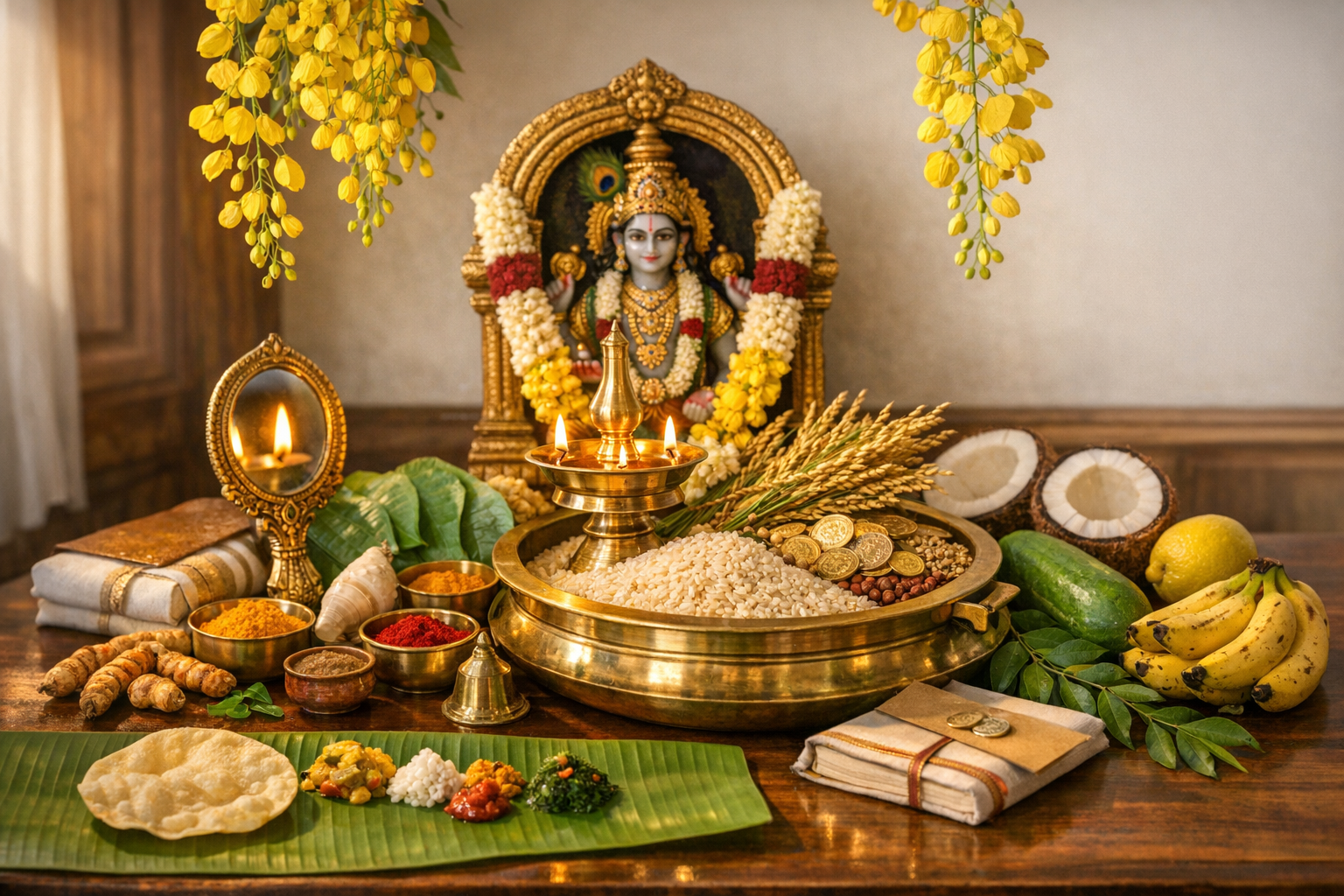
Vishu, Kerala’s astrological New Year, is observed on the first sunrise after Mesha Sankramana and centered on the sacred first sight called Vishukkani. This comprehensive guide explains the astronomy behind timing, clarifies the distinction between Vishu and the Malayalam civil new year, and details how to assemble the Vishukkani with nilavilakku, uruli, kani konna, grains,…
-
Decisive heritage win in Pune: stepwell restored to public records; lawful audits intensify in Gokak

A historic stepwell in Manchar, Pune has reportedly been delisted from waqf records after documentary verification, reinforcing how heritage preservation can align with the Waqf Act 1995. The analysis explains the legal architecturesurveys, listings, and Waqf Tribunal jurisdictionso readers know exactly how record corrections are lawfully achieved. It outlines the documentary evidence authorities typically assess…
-
ISKCON Chaplaincy in UK Hospitals: Elevating Compassionate Hindu Care Across London

Bhaktivedanta Manor’s Devotee Care Team is building a professional Hindu–Vaishnava chaplaincy pathway to serve NHS hospitals, hospices, and care homes across London and other UK cities. The initiative aligns with NHS chaplaincy guidance and UKBHC competencies, ensuring safe, consent-based, and non-proselytising care. Training covers safeguarding, confidentiality, cultural fluency, end-of-life support, and evidence-informed spiritual assessment tools…
-
When Inventions Rule Their Makers: Dharmic Ethics to Reclaim Agency in a Tech Age

Humanity stands at a crossroads where powerful inventions often master their makers. Drawing on Hindu, Buddhist, Jain, and Sikh wisdom, this long-form analysis shows how Dharmic ethics can reorient technology from compulsion to stewardship. It translates core ideas like Dharma, Anekantavada, mindfulness, and seva into practical tools such as Karmic Impact Assessments, sattva-first interface design,…