
-
Unraveling the Indo-European Homeland: Evidence, Myths, and South Asia’s Living Heritage
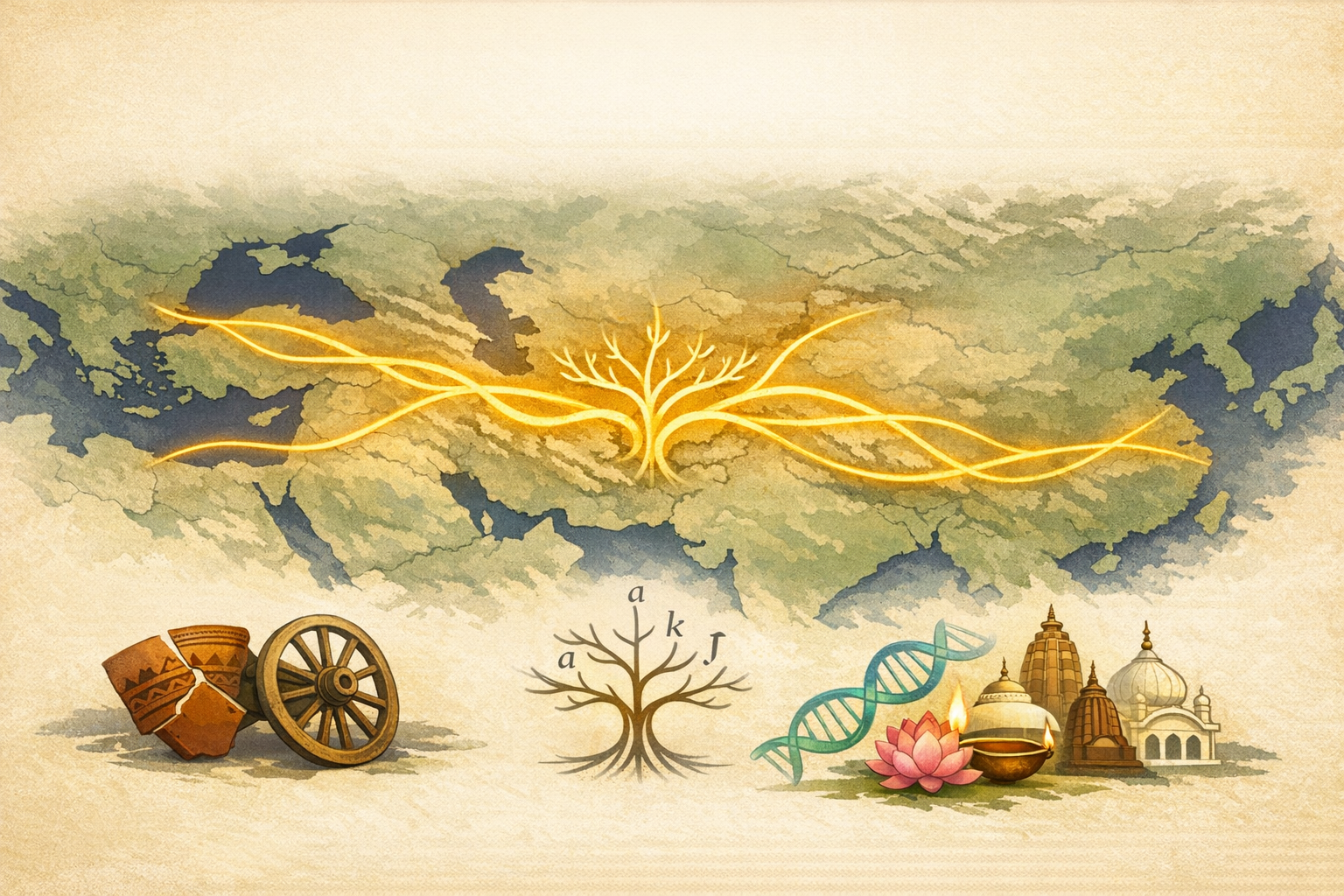
The search for the Indo-European homeland remains unsettled, but today it is informed by a stronger synthesis of comparative linguistics, archaeology, and ancient DNA. This article surveys the three leading proposalsAnatolian-Neolithic, South Caucasus, and Pontic-Caspian steppeand distills J. P. Mallory’s critiques, including the problem of massive language shifts without clear archaeological correlates. It explains how…
-
Oppiliappan Temple’s Sacred Vow: Vishnu’s Marriage to Bhumi Devi and the Saltless Offering
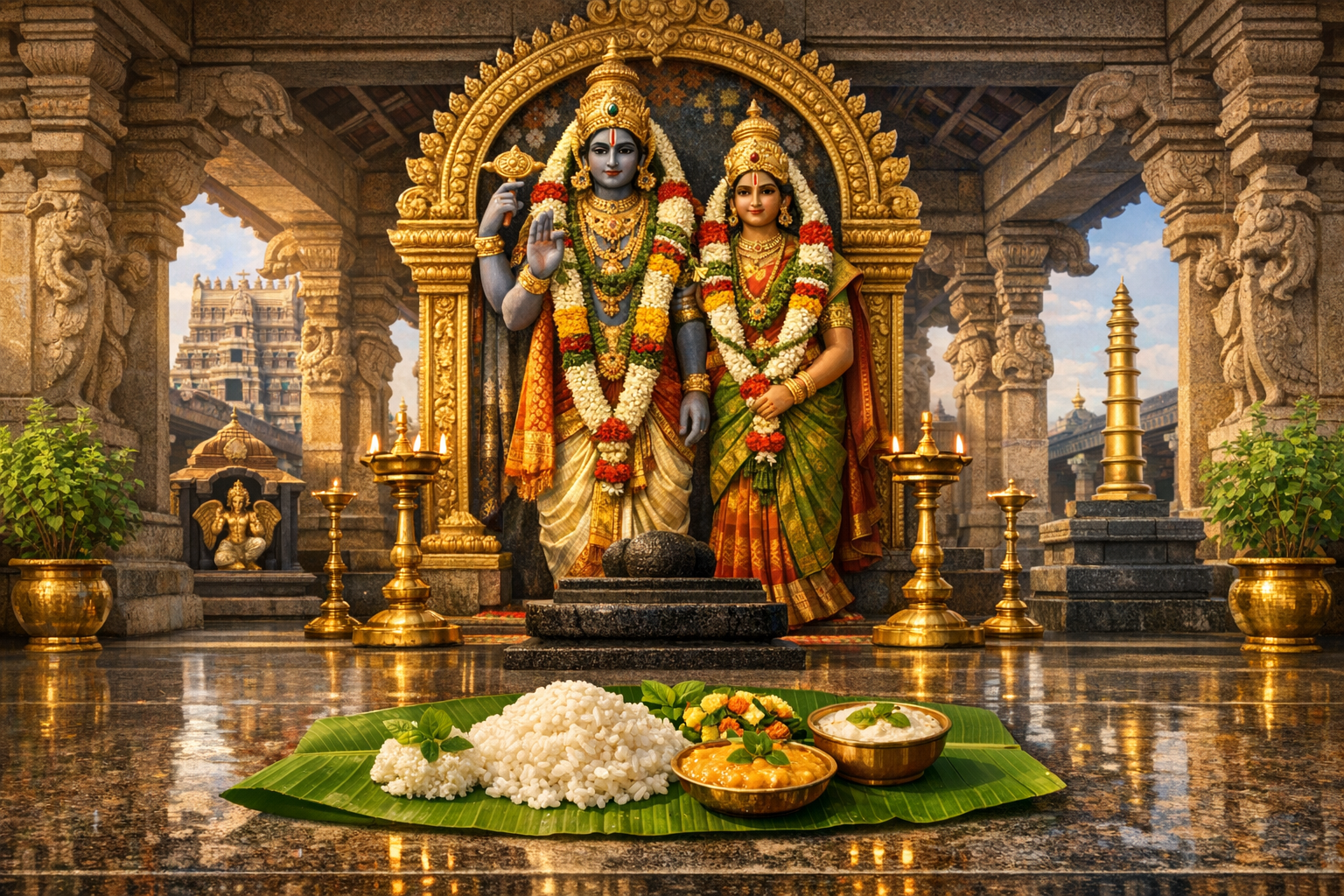
Oppiliappan Temple at Thiruvinnagar near Kumbakonam enshrines Vishnu’s sacred marriage to Bhumi Devi and preserves a distinctive liturgical vow: all offerings are prepared without salt. This long-form study situates the temple among the 108 Divya Desams, explains the Markandeya-based sthala-purāṇa, and interprets the saltless naivedyam as a pedagogy of grace, humility, and ecological restraint. It…
-
Mahaperiyava’s Living Grace: Academic Portrait of the Sage of Kanchi’s Path to Unity
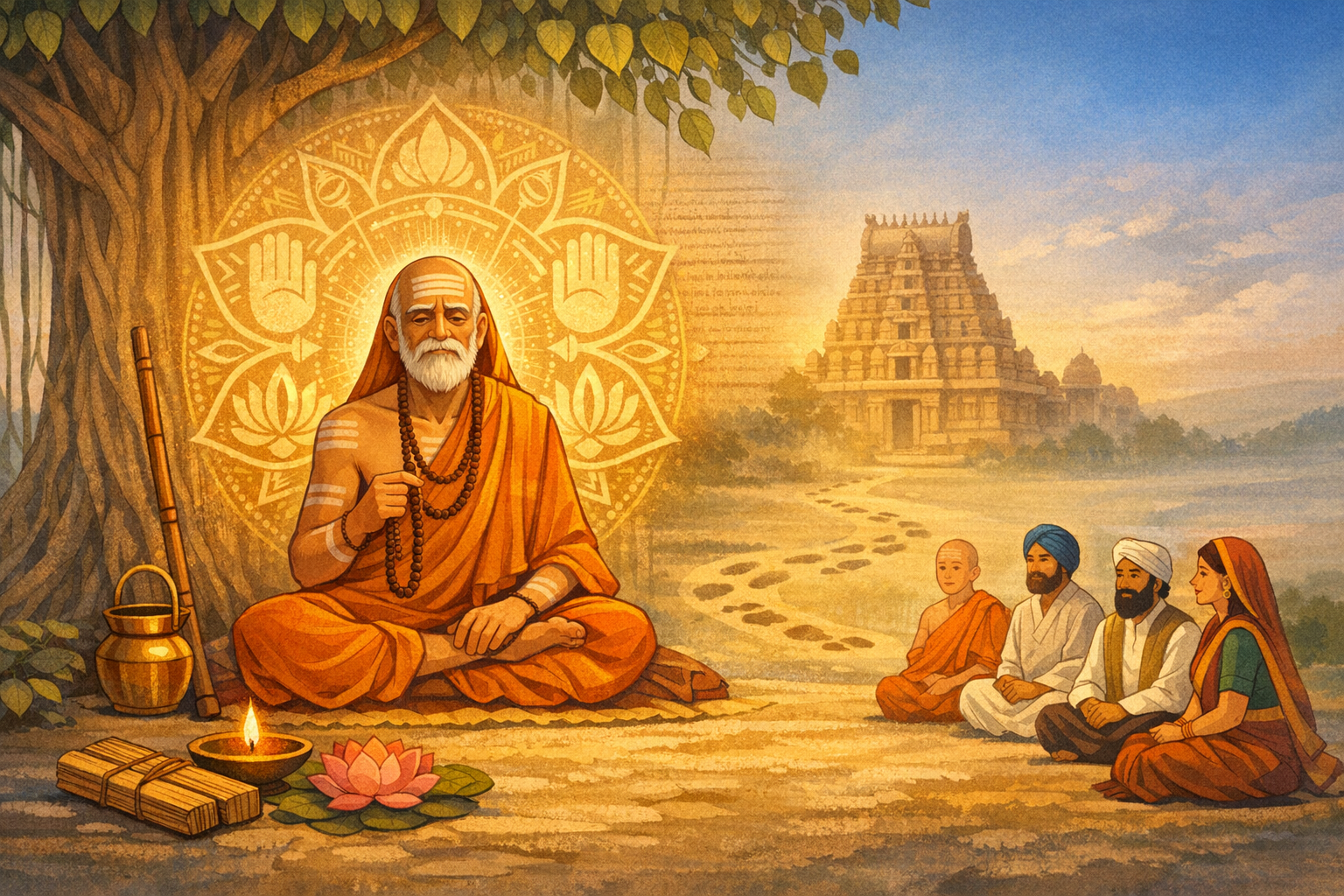
Shri Chandrashekarendra Saraswati Swamigal (Mahaperiyava), the 68th Jagadguru of Kanchi Kamakoti Peetam, exemplified Advaita Vedanta through disciplined practice, inclusive compassion, and service. This academic portrait situates his life within the Shankaracharya Parampara, outlining how padayatra, temple revitalization, and Vedic learning strengthened communities. It clarifies core methodssadhana-chatuṣṭaya and śravaṇa–manana–nididhyāsanawhile showing how bhakti and karma integrate with…
-
Sacred Science of Nidra: Yogic Sleep in Vedas, Upanishads, and Ayurveda for Whole-Person Wellbeing

Nidra, or sleep, occupies a sacred and carefully defined role in yoga and Hindu scriptures: it stabilizes the nervous system, ripens sattva, and supports deeper meditation. The Upanishads interpret deep sleep as a vital experiential key to understanding consciousness, while Patanjali frames nidra as a distinct mental modification that can inform contemplative practice. The Bhagavad…
-
Devaki’s Six Sons and Krishna’s Grace: The Harivamsa Tale of Curse, Karma, and Redemption

This long-form exploration synthesizes Harivamsa, Mahabharata, and Purana traditions to explain why Devaki’s first six sons were slain by Kamsa and how Krishna’s grace ultimately redeemed them. Readers gain a clear map of the narrative’s variants, from the Shadgarbha’s primordial transgression and curse to their rebirth in Mathura and liberation after Kamsa’s fall. The essay…
-
NCW Flags Alleged ‘Toxic Culture’ at TCS Nashik: Evidence-Based Guide to POSH and Faith Respect

Media reports from May 2026 suggest the NCW has flagged allegations of a “toxic culture,” POSH lapses, and religious harassment at a TCS unit in Nashik. This analysis translates that moment into an evidence-based roadmap for Indian IT–BPO workplaces. It explains the POSH Act 2013 in plain terms, outlines what constitutes a hostile environment online…
-
Lakshmana in Sacred Art: Powerful Iconography, Proportion Rules, and Spiritual Meaning

Lakshmana’s sacred form in Hindu sculptures fuses epic narrative with precise Shilpa Shastra proportion rules to communicate seva, discipline, and fraternal loyalty. Typically positioned to Sri Rama’s left (viewer’s right) with bow, arrows, and quiver, Lakshmana’s slightly reduced scale expresses devoted service rather than sovereignty. Regional schoolsfrom Chola bronzes to Hoysala stone and Vijayanagara ensemblesretain…
-
Narashamsa in the Rig Veda: The Sanctifying Voice Bridging Human Praise and the Divine

Narashamsa (Naraśaṁsa) in the Rig Veda personifies sanctified praise, revealing how Vedic ritual transforms human voice into a potent bridge to the divine. Etymology and liturgical usage in the Aprī hymns show a deity defined less by myth and more by function: protecting and amplifying rightly formed invocation. Closely allied with Agni, Narashamsa safeguards the…
-
Bhuridakshinaya Bhairava: Guardian of Dharma, Southern Direction, and Sacred Abundance

Bhuridakshinaya Bhairava unites fierce guardianship with ethical generosity, drawing on the multiple meanings of dakshina as offering, right-hand propriety, and the southern direction. The epithet’s Vedic resonance with bhuri-dakshina illuminates a moral economy in which right giving completes right worship. In Shaiva Tantra, Bhairava’s role as Kshetrapala aligns with directional theology, temple architecture, and observances…
-
15 Timeless Tales from Srimad Bhagavatham: Devotion, Dharma, and Transformative Wisdom

Srimad Bhagavatham (Bhagavata Purana) unites devotion, wisdom, and ethical action through narratives that are as practical as they are profound. This long-form guide curates 15 celebrated talesfrom Dhruva’s tapas and Prahlada’s fearlessness to Ambarisha’s forbearance and Krishna’s Govardhan-lilaeach situated in its Skandha context. Readers gain both narrative clarity and theological depth, including the power of…
-
‘Beti Surakshit, Rashtra Surakshit’: Mobilising Pune for Women’s Safety and National Unity

Hindu Janajagruti Samiti (HJS) has launched ‘Beti Surakshit, Rashtra Surakshit’ in Pune to foreground women’s safety through legal literacy, digital self-defense, bystander training, and workplace protections. The initiative gains traction when framed as universal, rights-based, and non-discriminatory, consistent with constitutional values. Practical guidance spans POSH compliance, cyber safety under the IT Act, and clear recourse…
-
Veda Murtis Demystified: Living Forms that Illuminate Vedic Wisdom, Ritual, and Iconography

Hindu tradition presents the Vedas as living, relational knowledge by personifying them as Veda Murtisanthropomorphic embodiments that translate sacred sound into contemplative sight. Grounded in Mīmāṃsā, Agamas, and Śilpa-śāstra canons, these forms do not replace scripture; they deepen Vedic study by aligning hearing, seeing, and practice. Typical depictions personify the four Vedas with manuscripts and…
-
How Merit Died at Mysore University: Anatomy of Decline and a Dharmic Blueprint to Rebuild
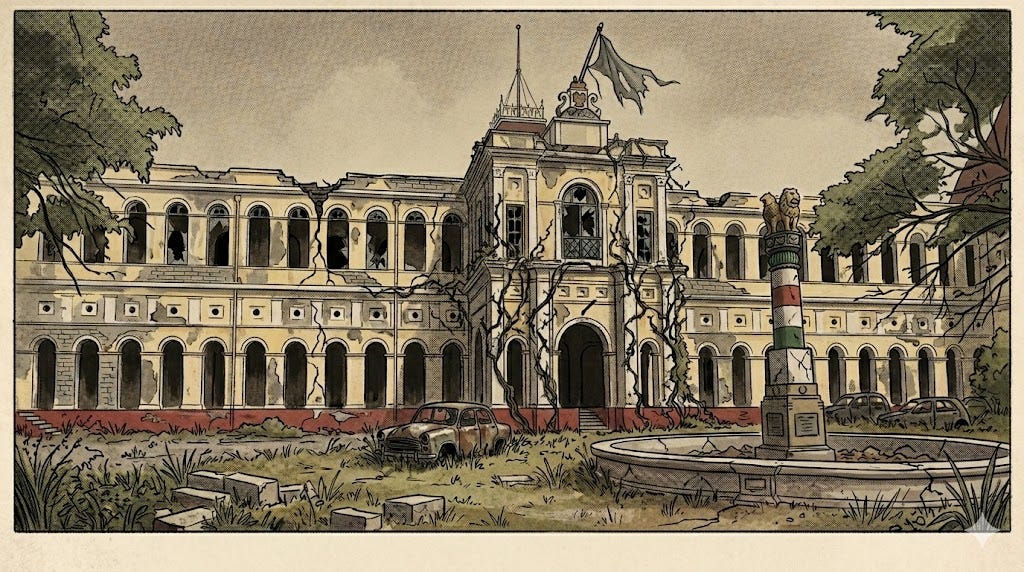
The University of Mysore’s trajectoryfrom a ‘Kashi of Knowledge’ to an institution beset by politicizationreveals how academic cultures unravel when identity and expedience eclipse merit. Drawing on testimonies preserved in Bhyrappa’s Bhitti, H.M. Nayak’s Mysore Diary, and accounts linked to B.G.L. Swamy, this analysis traces the sidelining of master teachers, the embittering of scholars like…
-
Kasha (Pratoda) in Hindu Iconography: Unveiling the Sacred Whip of Discipline and Divine Order
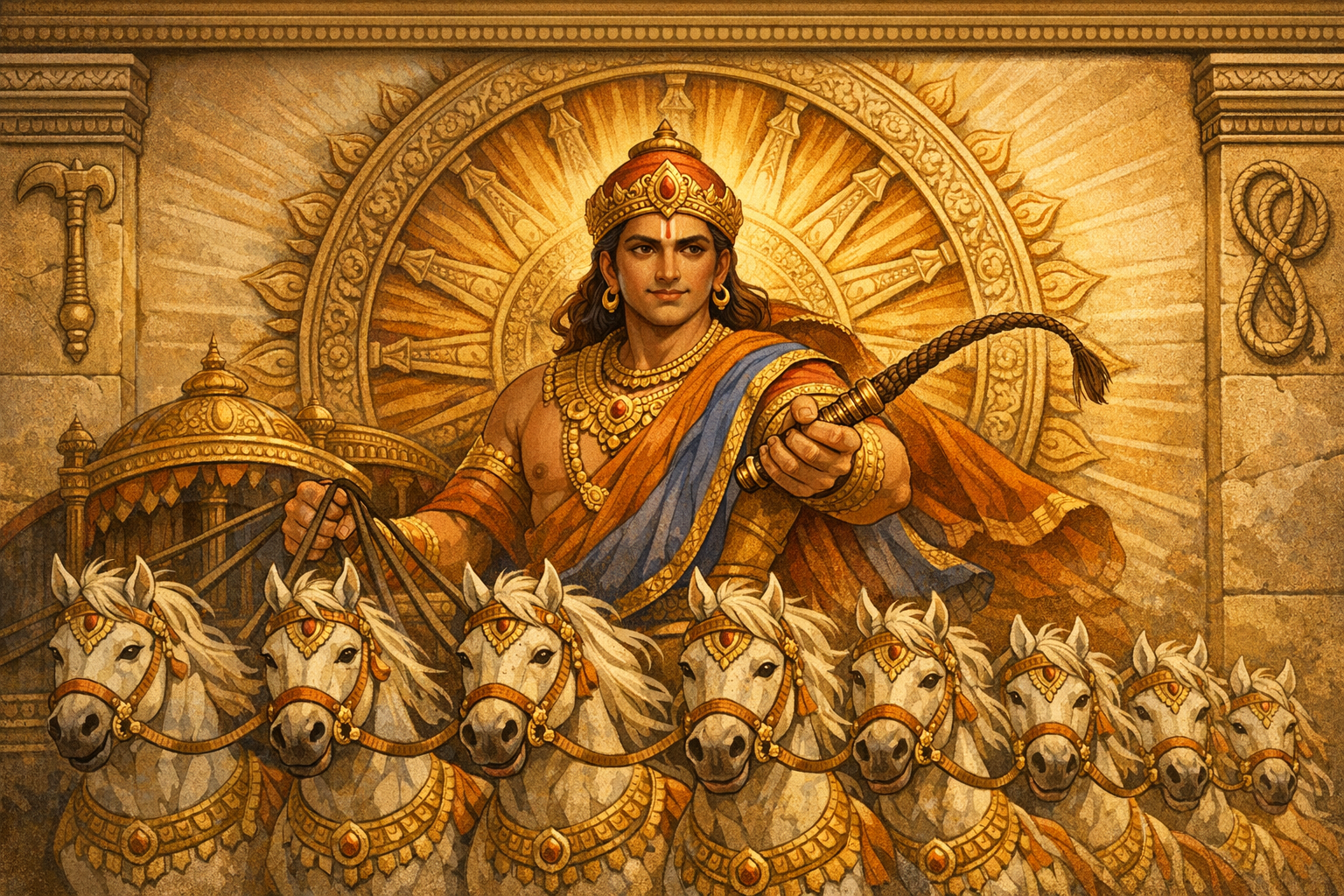
This study explores Kasha/Pratodathe sacred whipin Hindu iconography as a secondary ayudha that signifies authority, discipline, and dharmic order. It clarifies how Pratoda differs from aṅkuśa, pāśa, and daṇḍa while sharing their ethical vocabulary of guidance and restraint. Drawing on shilpa-śāstra principles, it explains why the whip appears with charioteers (notably at Konark), guardians, and…
-
Swamiye Saranam Ayyappa: Discipline, Bhakti, and the Inner Science of Sabarimala Pilgrimage

“Swamiye Saranam Ayyappa” is a living vow that unites devotion with rigorous self-discipline and inner purification. Framed by the Ayyappa vratham and the Sabarimala pilgrimage, it translates bhakti into verifiable habits rooted in yama and niyama. The journey’s symbolsthe irumudi kettu, the eighteen steps, and the nei abhishekammodel a practical ascent beyond compulsion into clarity.…
-
How Controlling Friendships Erode Self‑Trust: Recognize Subtle Manipulation, Reclaim Autonomy

Controlling friendships seldom announce themselves; they evolve through small, reasonable-seeming concessions that erode self-trust. This long-form analysis maps the mechanics of subtle manipulationgaslighting, emotional accounting, intermittent reinforcementand explains why intensity and loyalty can masquerade as intimacy. It offers a clear diagnostic question to assess relational health and outlines practical steps to set boundaries without escalation.…
-
Inside TOVP’s Countdown: Prabhupada 50 Grand Opening Vision and the Nrsimha Caturdasi Finale
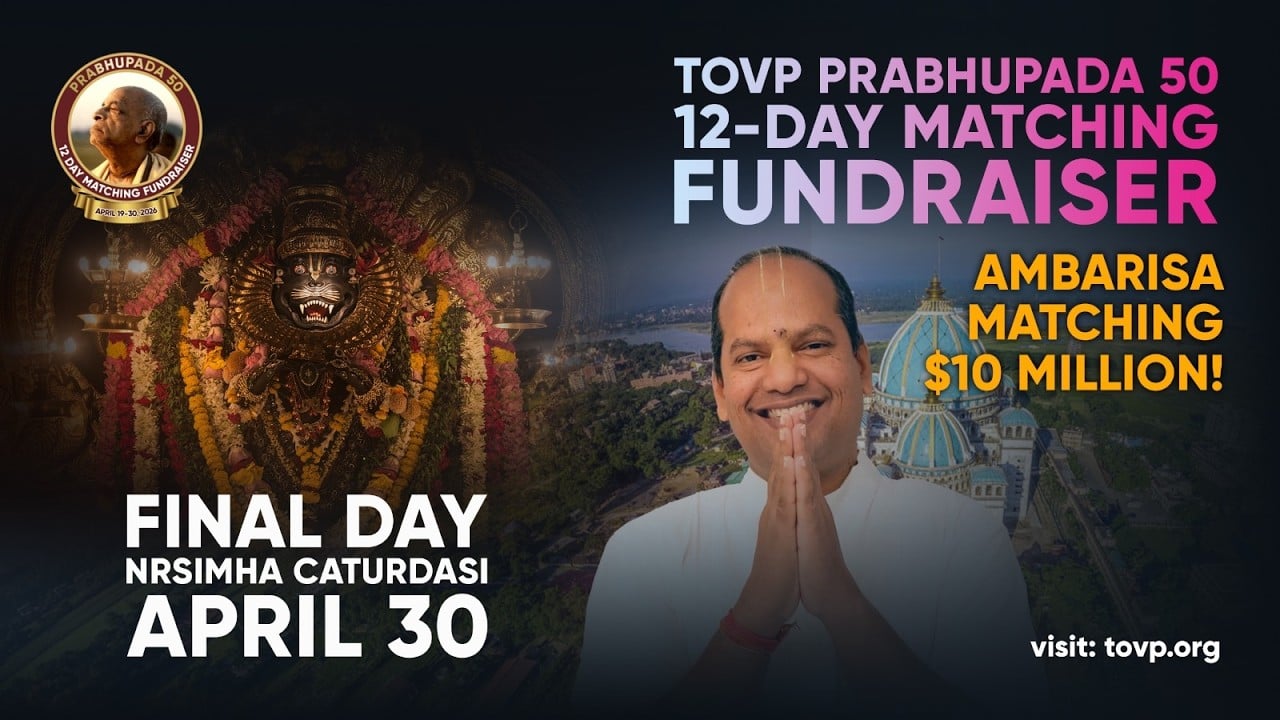
The Temple of the Vedic Planetarium in Mayapur marked a contemplative 12-day observance that concluded on Nrsimha Caturdasi, aligning the community’s attention with the Prabhupada 50 opening vision on November 1, 2027. The plan includes a three-month sequence of ceremonies to relocate the Mayapur Deities into their new palace home while maintaining unbroken worship. The…
-
Campus Bhakti Outreach: How a Little Extra Effort Turns Sankirtan into Lasting Dialogue

A week of campus outreach led by Madhavendra Puri Prabhu and a colleague demonstrated how Sri Caitanya Mahaprabhu’s sankirtan movement can be presented academically, ethically, and inclusively. The team paired conversation-led book distribution with an experiential Bhakti Yoga class that combined breath, kirtan, and open dialogue. Small, deliberate effortsclear summaries, QR-linked reading plans, and respectful…
-
Tarigonda Vengamamba Jayanthi 2026: Grand 296th Jayanti across Tirumala–Tarigonda
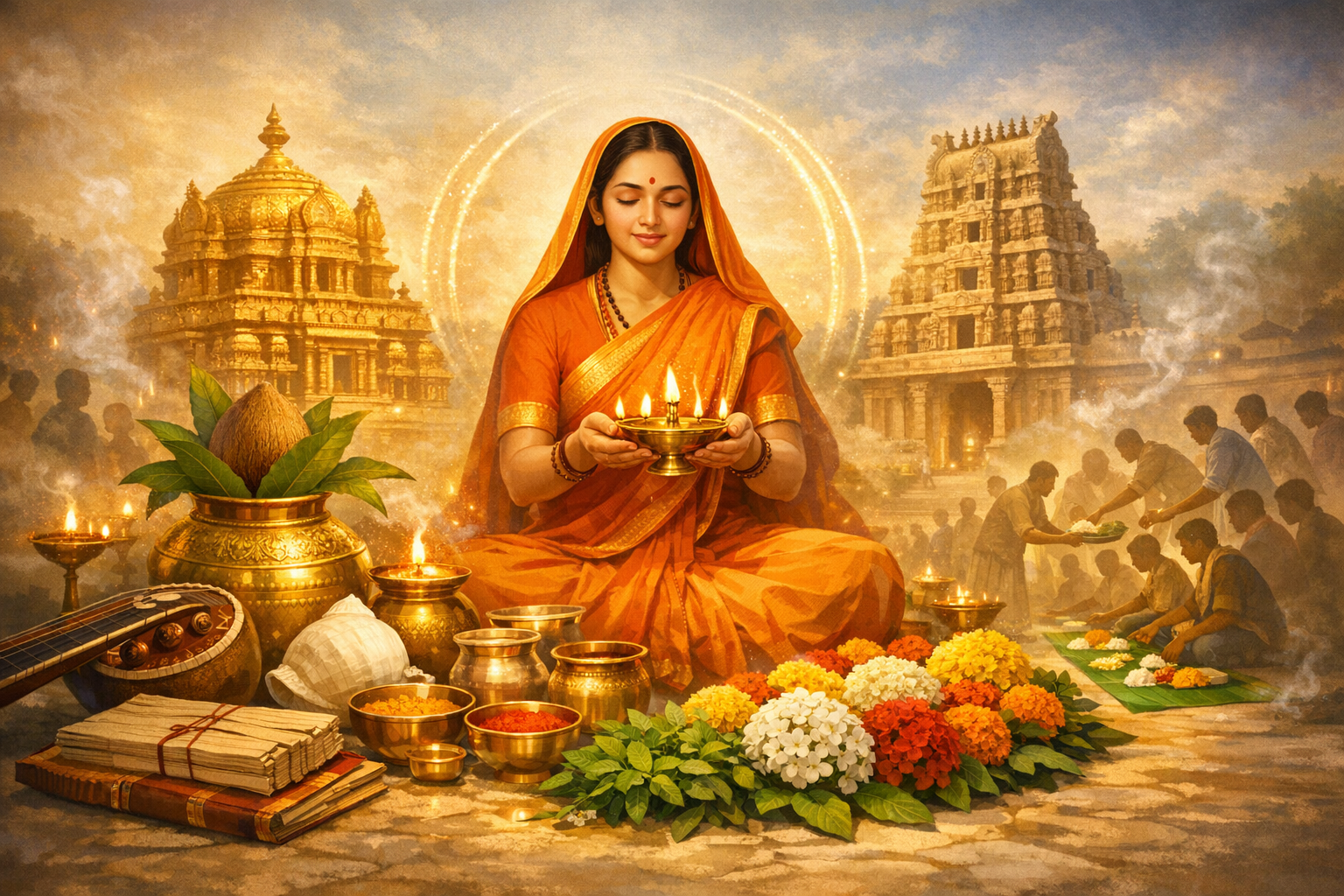
Tarigonda Vengamamba Jayanthi 2026 marks the 296th birth anniversary of the revered Telugu poet-saint with two days of celebrations across Tirupati–Tirumala and Tarigonda. The principal rites at Tarigonda feature Snapana Tirumanjanam at 7:00 am on 30 April at Sri Lakshmi Narasimha Swamy Temple, followed by Pushpanjali at Vengamamba’s statue. The observance highlights her enduring legacy…
-
Vamana Jayanti 2026: Celebrate Humility and Dharma on Shukla DwadashiDate, Rituals, Meaning
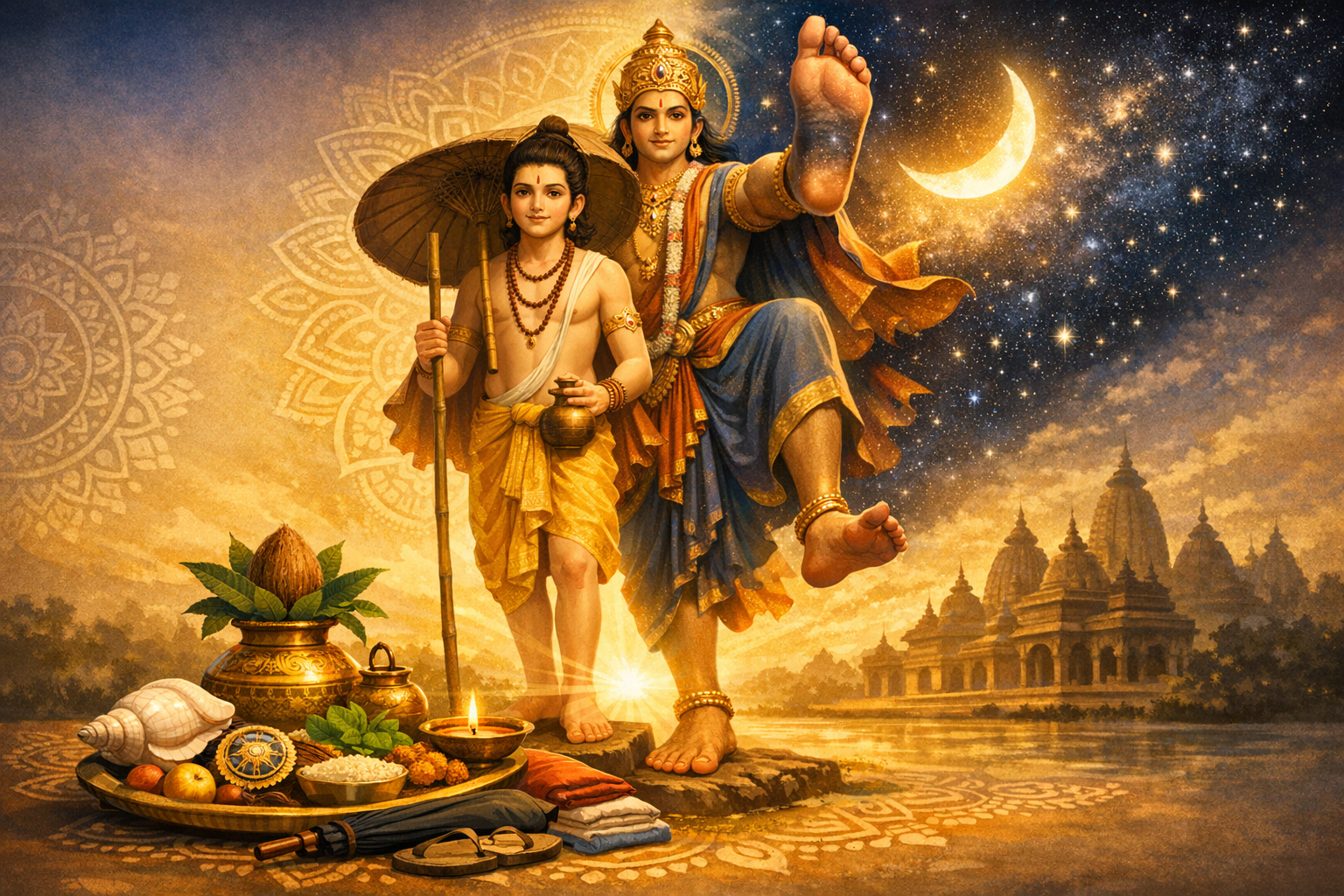
Vamana Jayanti 2026 falls on September 23 (Bhadrapada Shukla Dwadashi) and honors Lord Vamana, the fifth avatara of Lord Vishnu, celebrated through puja, stotra recitation, and charity. The observance follows the tithi-at-sunrise rule, so devotees should confirm local Panchang data for accuracy. The Vamana–Mahabali narrative highlights humility, truthfulness, rightful sovereignty, and generosity, values shared across…