
-
Varanasi’s Shri Ram Navami Procession Pledges Ram Rajya, Seva, and Dharmic Unity
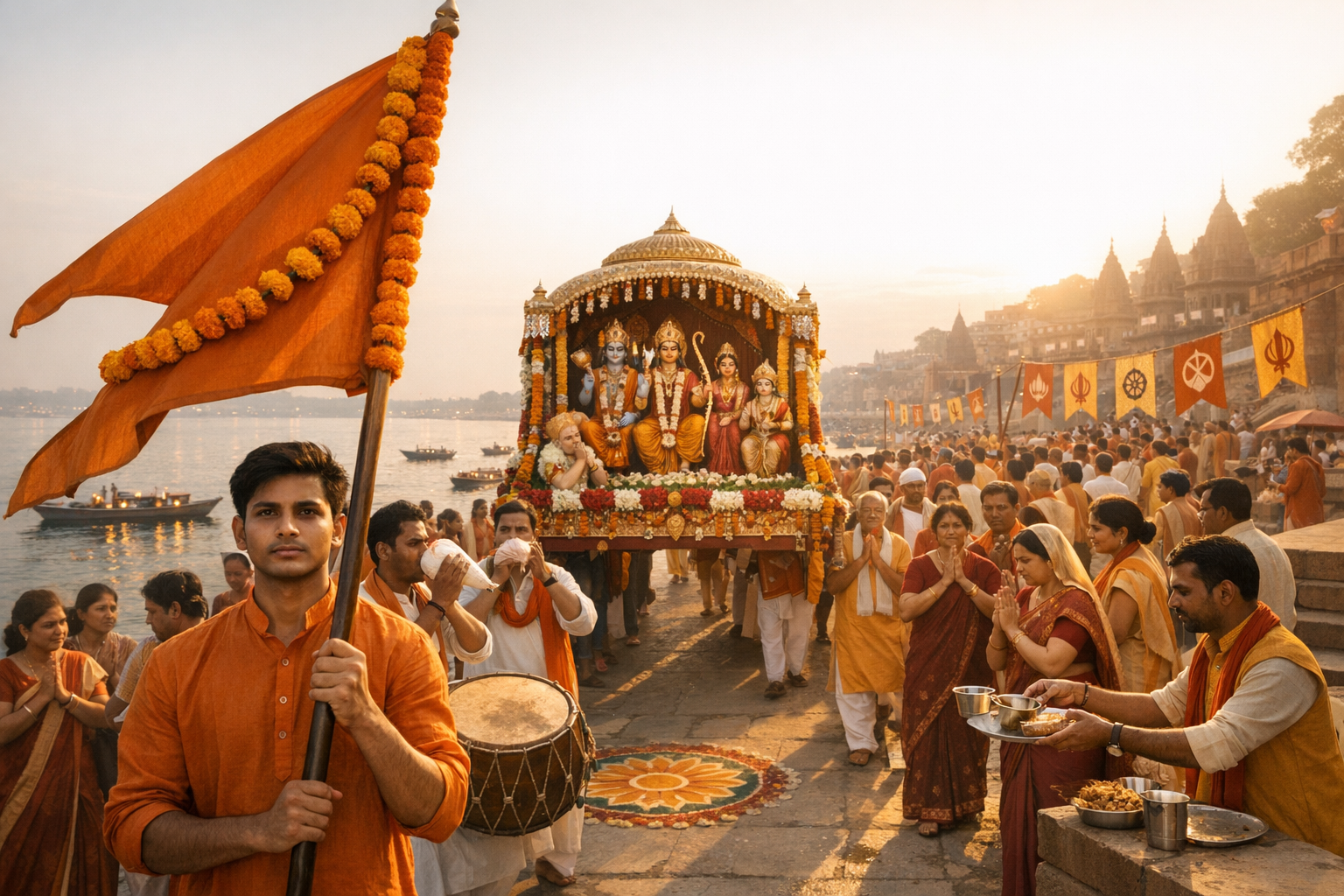
In Varanasi, hundreds of devotees marked Shri Ram Navami with a serene, well-organized procession and a collective pledge to work for Ramrajya and broad-based dharmic unity. The event framed Hindu unity as a bridge to wider solidarity with Buddhism, Jainism, and Sikhism, emphasizing shared values such as seva, nyaya, ahimsa, and sarbat da bhala. Rather…
-
From Atheism to Bhakti: How Srila Prabhupada Guided Visakha Devi Dasi Toward Lasting Fulfillment
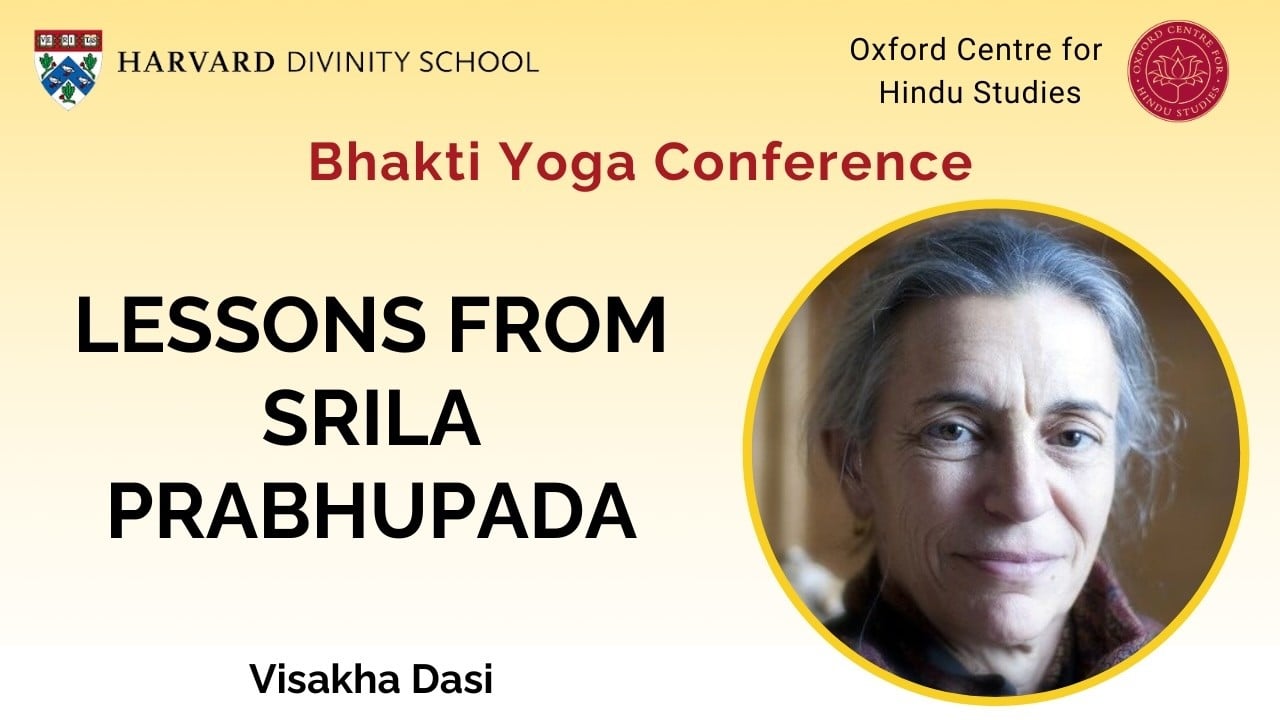
This long-form analysis traces Visakha Devi Dasi’s movement from atheism to Bhakti Yoga through Srila Prabhupada’s guidance, situating her experience within Vedic philosophy and contemporary inquiry. It explains how structured practiceschanting, study, seva, and communityoffer a replicable methodology for lasting fulfillment. The discussion clarifies the ninefold processes of bhakti, the epistemic role of the Guru-Shishya…
-
Mudgala Purana Decoded: Timeless Ganesha Wisdom, Eight Incarnations, and Why It Matters

The Mudgala Purana, a revered upapurāṇa, offers a focused and sophisticated theology of Gaṇeśa that unites story, ritual, and ethics. Central to its legacy are the eight incarnations of Ganesha, each conquering a specific inner vice and modeling a virtuean elegant map for practical transformation. Textual features such as dialogical framing, symbolic attributes (tusk, modaka,…
-
Shakini of the Vishuddhi Chakra: Bone-Breaking Power in Kubjika and Kularnava Tantras

Shakini, the yogini of the Vishuddhi Chakra, is celebrated in the Kubjika Mata Tantra and the Kularnava Tantra as the luminous power that purifies speech, refines breath, and clarifies understanding. Her epithet “bone-breaking” signals not violence but compassionate reshaping of inner rigidity, enabling truthful and compassionate voice. Rooted in matrika doctrine, she governs the vowels…
-
Resisting the Dream‑Big Mandate: The Liberating Dharma, Joy, and Science of Wanting Less

This essay interrogates the cultural pressure to “dream big” and shows, with research and Dharmic insight, why wanting less can enhance well-being. It traces how social comparison and positional goods narrow youthful aspirations into a single script centered on status and income. Drawing on hedonic adaptation and self-determination theory, it explains why material gains often…
-
Hinduism’s Universal Ideals: Defeating Stagnation and Igniting Flourishing with Dharma

This article argues that the absence of shared, universal ideals creates moral drift, weakens institutions, and precipitates social stagnation. Drawing on the Vedas, Upanishads, the Bhagavad Gita, Ramayana, Mahabharata, and Puranas, it distills Dharma, Ahimsa, Satya, Aparigraha, Seva, and Lokasangraha as civilizational anchors. It highlights resonances across Buddhism, Jainism, and SikhismAnekantavada, the Brahmaviharas, and sarbat…
-
Nilasukta Unveiled: Nila Devi’s Compassionate Radiance in a Vedic Hymn of the Taittiriya Samhita

Nilasukta (Nila Sukta) is a Krishna Yajurveda hymn linked to the Taittiriya Samhita that venerates Nila Devi, the compassion-aspect of Vishnu’s shakti. Drawing on the cosmic symbolism of Surya, Chandra, and Agni, it frames compassion as ethical clarity, serene poise, and transformative warmth. The article clarifies its textual transmission, triadic theology (Sri–Bhu–Nila), and ritual use…
-
Konna Poo (Cassia fistula) in Vishu: Science, Sacred Symbolism, and Sustainable Tradition

Cassia fistula (Konna poo/Kanikkonna), the golden shower tree, blooms in perfect synchrony with Vishu, anchoring the Vishukkani in Kerala with its luminous racemes. This comprehensive guide explains its taxonomy, morphology, native range, and seasonal ecology, then connects those facts to the solar new year’s symbolism in the Malayalam calendar. Readers learn how the golden hue…
-
Vishukkani Darshan Unveiled: Meaning, Muhurta, and Complete Setup for a Prosperous Vishu

Vishukkani Darshan is the sacred “auspicious sight” that inaugurates Vishu, the Malayalam solar New Year, by presenting a curated ensemble of light, abundance, and devotion. This comprehensive guide explains what Vishukkani is, when it is celebrated (on Mesha Sankranti, typically 14–15 April), and why each componentkonna pua, the ‘Uruli’ of rice, fruits, vegetables, lamp, mirror,…
-
Vishu Kanji & Vishu Katta: Authentic Kerala New Year BreakfastHistory, Method, and Meaning
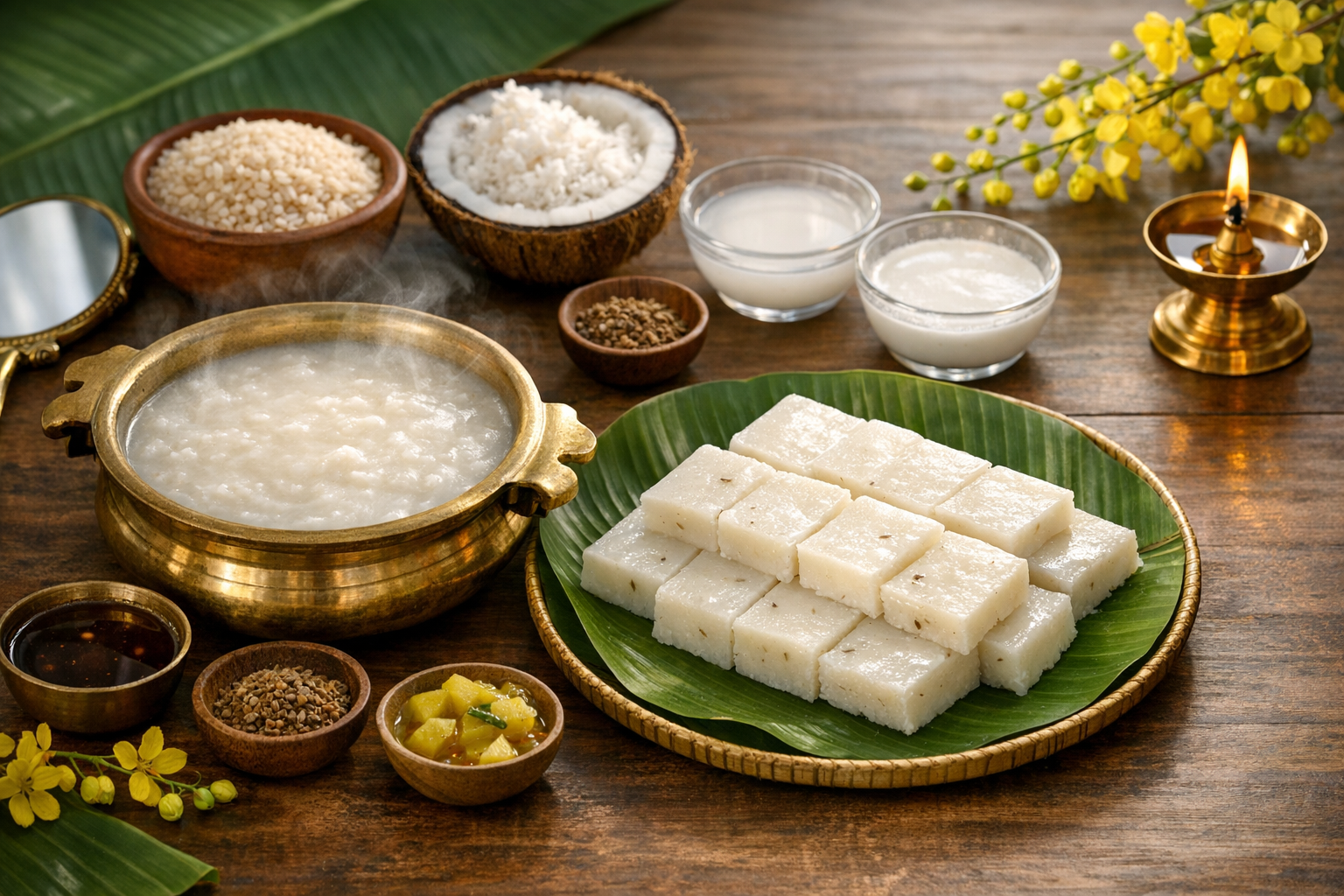
Vishu Kanji and Vishu Katta anchor the Vishu morning in Kerala with a sattvic, auspicious breakfast rooted in simplicity and seasonality. Drawing on raw rice, abundant fresh coconut, cumin, and a restrained use of salt, both dishes can be prepared within one hour. Vishu Kanji is a silken coconut–rice porridge, while Vishu Katta is a…
-
Vishu Festival Rituals and Customs: A Complete Guide to Vishukkani, Kaineettam, and Sadya
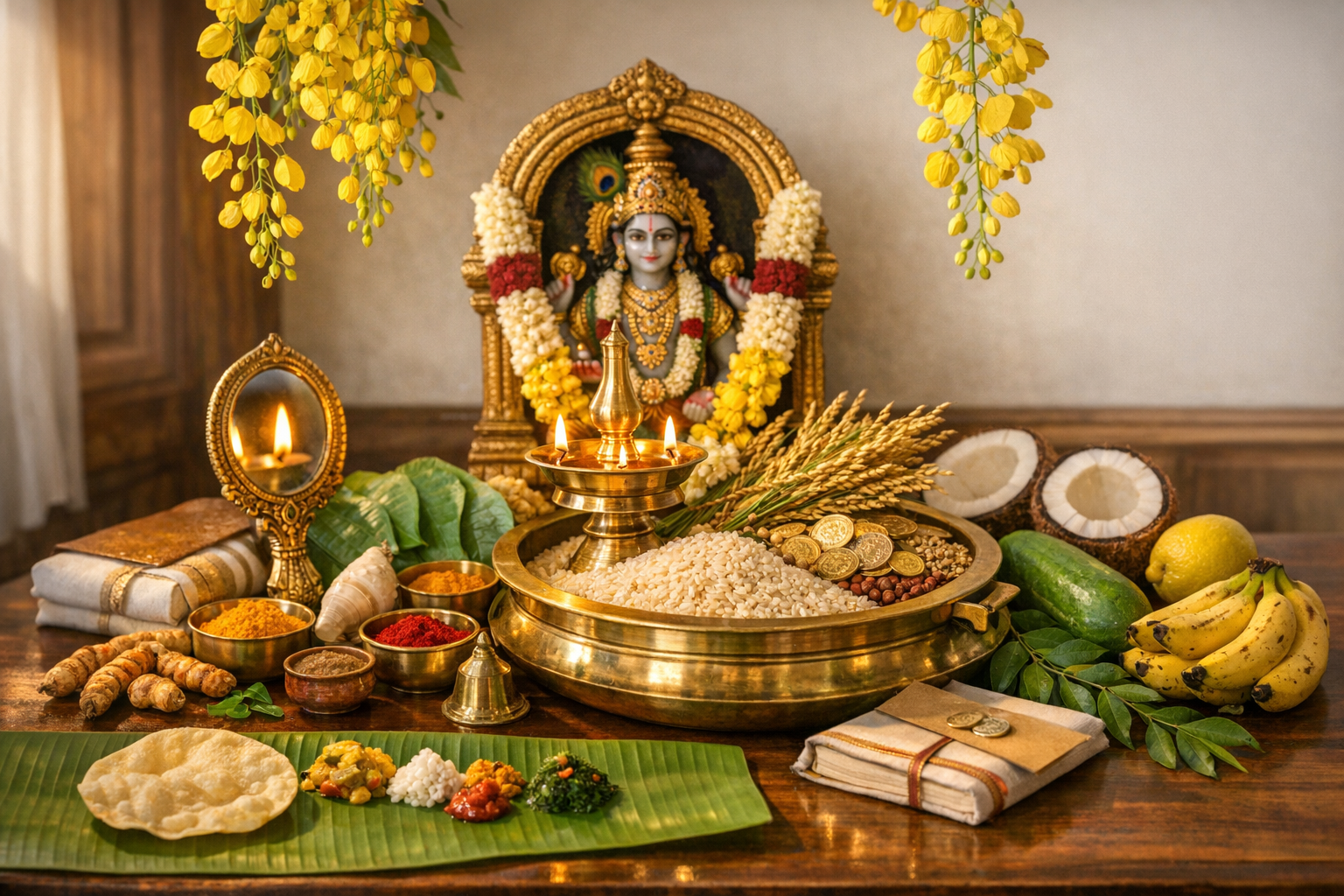
Vishu, Kerala’s astrological New Year, is observed on the first sunrise after Mesha Sankramana and centered on the sacred first sight called Vishukkani. This comprehensive guide explains the astronomy behind timing, clarifies the distinction between Vishu and the Malayalam civil new year, and details how to assemble the Vishukkani with nilavilakku, uruli, kani konna, grains,…
-
Rama Katha: Scholarly, Soul-Stirring Life History of Sri Rama, the Maryada Purushottama
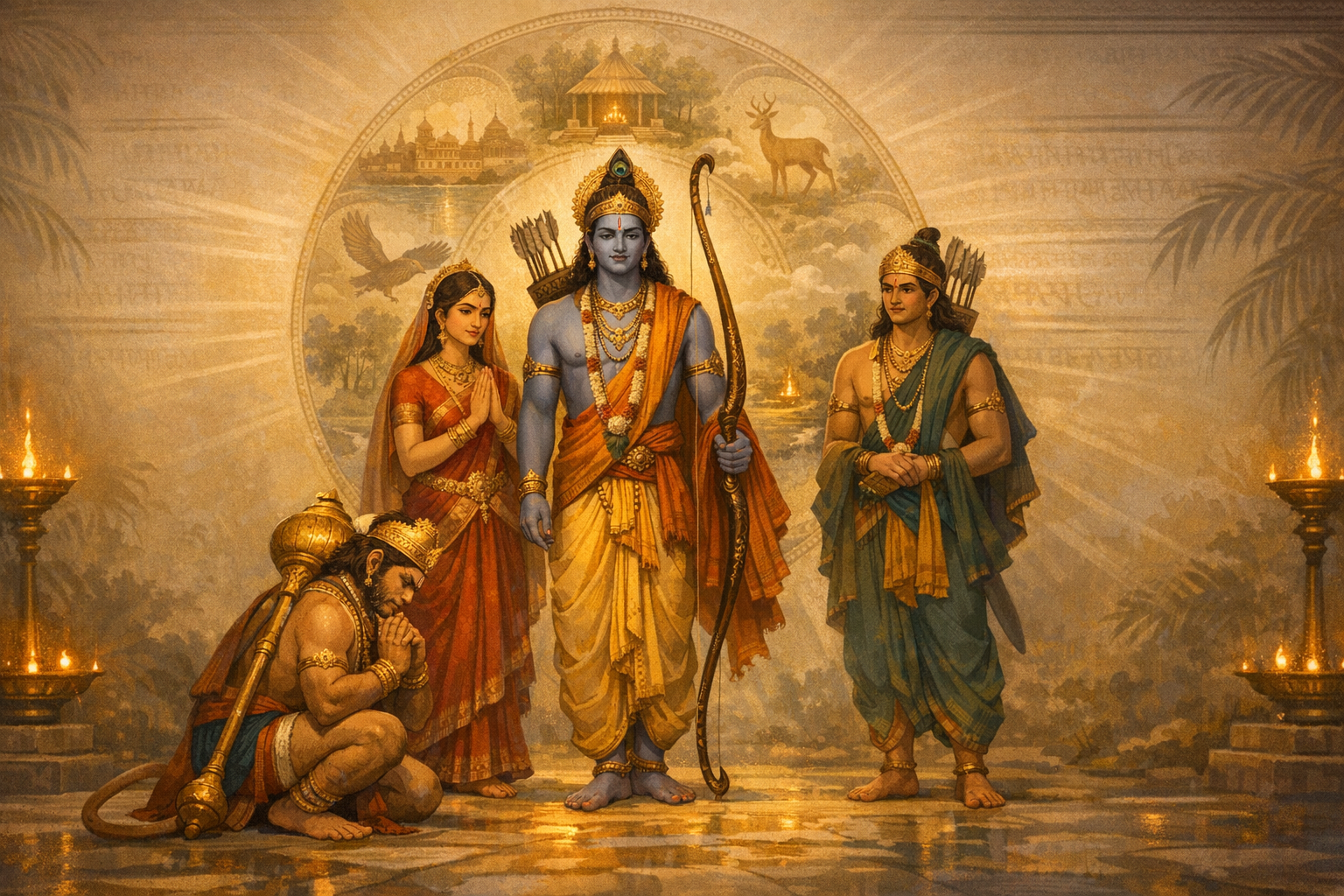
This comprehensive Rama Katha presents a scholarly yet accessible life history of Sri Rama, the Maryada Purushottama, rooted in Valmiki Ramayana and allied traditions. Readers gain a clear overview of the seven kandas, from Ayodhya and vanvas to the Setubandha, Yuddha Kanda, and Sri Rama Pattabhishekam. Ethical complexitiessuch as Vali-vadha and the Agni Parikshaare examined…
-
Non-attachment, Not Apathy: A Dharma-Based Guide to Compassionate Action in Hinduism

Non-attachment in Hinduism is often mistaken for apathy, yet classical sources show it is the basis for lucid, compassionate action. The Bhagavad Gita’s niṣkāma karma, Patañjali’s abhyāsa–vairāgya, and the Īśā Upaniṣad’s ethos of enjoyment through renunciation all unite clarity with care. Distinguishing vairāgya and anāsakti from indifference reveals a sattvic, not tamasic, qualitya stance that…
-
April 10, 2026 Panchang: Krishna Paksha Ashtami→Navami, Auspicious Muhurats, Nakshatra & Rashi

On Friday, April 10, 2026, the Hindu Panchang shows Krishna Paksha Ashtami until 7:34 PM IST, followed by Krishna Paksha Navami. The article explains tithi scientifically as 12-degree lunar elongations, clarifies why timings vary by location, and outlines how drik calculations with Lahiri ayanamsa are used. It details practical muhurta selectionAbhijit Muhurat, Choghadiya (with Friday’s…
-
Decoding the Golden Temple (Harmandir Sahib): Marble Motifs, Sacred Geometry, and Seva

This in-depth exploration decodes the Golden Temple (Harmandir Sahib) as a readable language of marble, motifs, and gilded form, revealing how architecture teaches Sikh ethics of oneness, seva, and equality. Readers will discover how geometry, calligraphy in Gurmukhi, floral arabesques, and jaali screens cohere into a visual theology aligned with continuous kirtan. The essay traces…
-
Dhurandhar: The Revenge ignites propaganda warsand a chance to bridge India’s cultural divide

Dhurandhar: The Revenge has become a box-office phenomenon and a flashpoint in India’s ongoing debate about propaganda, artistic freedom, and public ethics. This analysis situates the controversy within research on framing, agenda-setting, and audience reception to explain why sincere viewers reach sharply different conclusions. It outlines a practical checklist for evaluating films responsiblyseparating historical claims…
-
When Pride Breaks a God-Gifted Sword: The Curse that Unmade Ravana’s Chandrahasa

This long-form, research-informed reading of the Chandrahasa episode explains how later Ramayana and Puranic traditions frame Ravana’s celestial sword as a dharma-conditioned gift from Lord Shiva. It clarifies why the blade’s power failed: not through metallurgy but through a self-executing moral law that de-authorizes weapons when wielded in arrogance. It surveys variant tellings across regional…
-
Transform Overwhelm into Steady Calm: Seven Strengths for Dharmic Resilience and Clarity

Overwhelm is widespread, yet inner steadiness can be trained. A seven-strengths frameworkcultivating calm, clarity, compassion, courage, equanimity, connection, and integrationoffers a concise, research-aligned path to resilience. Short daily practices regulate the nervous system, reduce reactivity, and improve attention. Breath awareness builds vagal tone, compassion training softens harsh self-criticism, and values-based action converts avoidance into momentum.…
-
Viral Bengaluru Video: Monkey’s Embrace for Elderly Caregiver Reveals Profound Dharmic Bond
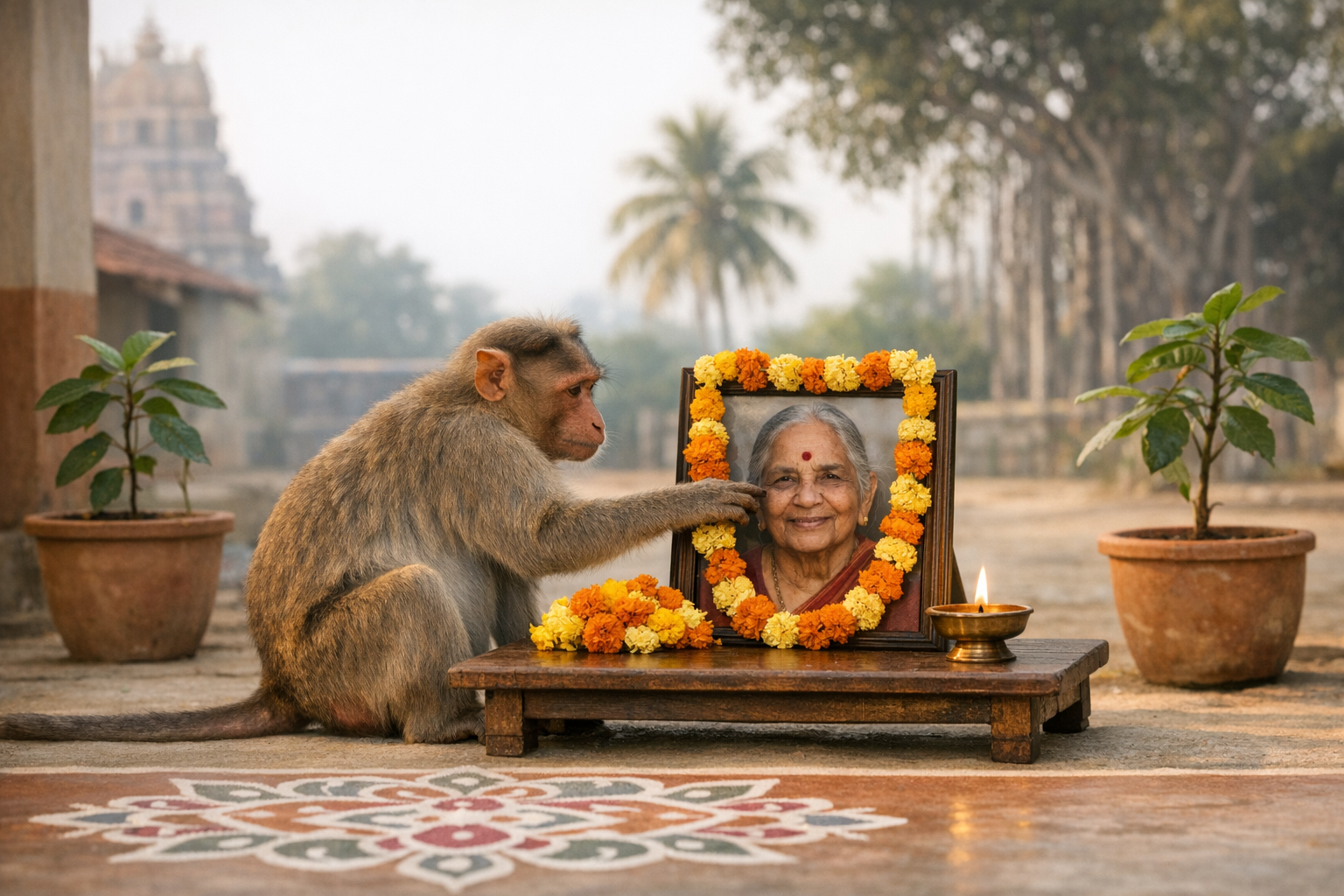
A viral video from Rayara Doddi in Channapatna near Bengaluru shows a monkey approaching the body of an elderly woman who had regularly fed local macaques and briefly embracing her, moving onlookers across India. Placed in context, the behavior aligns with known primate affiliative responsesproximity, touch, and stillnessobserved under social stress and familiarity. The incident…
-
Kali Yuga’s Vanishing Divide: Decoding How Asuras ‘Turn Human’ and What It Means for Dharma

This in-depth analysis decodes the Hindu claim that in Kali Yuga the line between asuras and humans fades, showing it as a moral-psychological map rather than a literal prophecy. Drawing on the Vishnu Purana, Bhagavata Purana, and the Bhagavad Gita, it explains how dharma degrades across the yugas and why the age demands simpler, heart-centered…