-
Vishwakarma’s Timeless Creations: How the Celestial Architect Shaped Hindu Cosmos and Culture

Vishwakarma emerges in Hindu scriptures as the celestial architect (Devashilpi) who shapes sacred cities, divine weapons, and ritual spaces that uphold cosmic order. Drawing on Rigvedic and Puranic traditions, the narrative highlights creations such as Amaravati, the Vajra, Lanka, Dwaraka, and the Pushpaka Vimana. It explains how sacred craftsmanship becomes sadhana—ethical work aligned with dharma—and…
-
Nationwide Protests over Netflix’s ‘Ghooskhor Pandat’: Urgent Calls for Respect, Sensitivity, and Unity
Protests across India have challenged the Netflix series ‘Ghooskhor Pandat’ for its title and portrayal of a Brahmin police officer, raising concerns about stereotyping and community stigmatization. Participants argue the controversy reflects wider issues of Hinduphobia, Anti-Brahminism, and media bias in cinematic representation. Cultural advocates call for responsible storytelling that safeguards dignity while respecting creative…
-
Bangladesh Ex-Minister Ramesh Chandra Sen’s Custodial Death Sparks Outrage, Vendetta Claims

Former Bangladesh minister and Hindu leader Ramesh Chandra Sen has died after reportedly falling ill while in custody, prompting allegations of custodial neglect and political vendetta. The incident raises urgent questions about detainee healthcare, due process, and institutional transparency in Bangladesh. A credible, independent inquiry—protected from political influence—can examine medical timelines, custodial procedures, and evidentiary…
-
Kamala Kamini Durga: Compassionate Two-Armed Mother—Iconography, Symbolism, Story

Kamala Kamini Durga presents a compassionate, two-armed manifestation of Goddess Durga that emphasizes rescue, reassurance, and inner restoration over outward conquest. The lotus symbolism of Kamala conveys purity and auspicious resilience, while the two hands often reflect abhaya and varada mudras. This form aligns naturally with shared dharmic values of daya, ahimsa, karuna, and seva,…
-
Baishakhi Sankranti at Kshirgram: The Sacred Awakening of Maa Jogadya and New Beginnings

Baishakhi Sankranti at Kshirgram Maa Jogadya Temple marks the Sun’s entry into Mesha (Aries) and the start of Baishakh, aligning with the Bengali New Year. The festival’s centerpiece is a solemn yet celebratory divine awakening of Maa Jogadya that symbolizes renewal, ethical intention, and harmony with seasonal cycles. Visitors encounter an immersive atmosphere of conch…
-
Hare Krishna Norway: Sraddha in Oslo—A Call to Ahimsa, Compassion, and Interfaith Harmony

Set in the context of Oslo’s Hare Krishna community, this reflection examines how Sraddha (faith) translates into compassionate, practical action. It emphasizes ahimsa (non-violence) across Hinduism, Buddhism, Jainism, and Sikhism while encouraging interfaith harmony and mutual respect. The piece reframes moral concern about large-scale animal slaughter as a shared ethical challenge rather than a point…
-
ISKCON Mayapur Sankirtan Welcome: Joyous Homecoming and Dharmic Unity (Feb 7, 2026)

On February 7, 2026, ISKCON Mayapur hosted a Sankirtan Devotees’ welcome ceremony that celebrated collective devotion and community service. The gathering highlighted Krishna-bhakti while reflecting values shared across Hinduism, Buddhism, Jainism, and Sikhism. With congregational chanting and a reverent atmosphere, the ceremony emphasized gratitude, seva, and social cohesion. Framed by living tradition, it functioned as…
-
Sri Dham Mayapur Victory 2025: Inspiring Unity and Devotion on February 7, 2026

The Sri Dham Mayapur Victory 2025 Celebration on February 7, 2026, brought together pilgrims and well-wishers in a sacred setting dedicated to devotion, learning, and seva. The program highlighted Bhakti Tradition as a living practice that strengthens community ties and preserves Cultural Heritage. Attendees reported renewed clarity and focus through kirtan, darshan, and service initiatives…
-
Honoring Sri Srimad Gour Govinda Swami Maharaj: ISKCON Mayapur’s Sacred Disappearance Festival 2026

ISKCON Mayapur will observe the Disappearance Festival of Sri Srimad Gour Govinda Swami Maharaj on February 06, 2026, offering a thoughtful tribute to a revered Gaudiya Vaishnava teacher. The commemoration emphasizes guru–shishya parampara, insightful study of Srimad-Bhagavatam and Bhagavad-Gita, and transformative practices such as kirtan and seva. Readers gain clarity on the meaning of a…
-
Safeguard students and sanctity: HJS presses Goa to close liquor shops near schools, temples

Hindu Janajagruti Samiti (HJS) has asked Goa Chief Minister Pramod Sawant to cancel licences of liquor shops located within 100 metres of schools and temples. The appeal focuses on student safety, respectful distance from sacred spaces, and the integrity of community life. It reflects a broader dharmic principle relevant to temples, viharas, derasars, and gurdwaras…
-
After Day-Long Protest, JnU Hindu Students Symbolically Begin Central Temple, Urge Campus Harmony
Hindu students at Jagannath University in Dhaka staged a day-long, peaceful protest to highlight the need for a designated Central Temple on campus. Their symbolic “inauguration” sought to draw attention to administrative inaction while affirming religious freedom and cultural identity. Participants emphasized non-violence, unity in diversity, and interfaith respect aligned with campus harmony. The episode…
-
Heart and Mind in Harmony: A Hindu Dharma Blueprint for Balanced, Compassionate Living

Modern life demands more than speed; it calls for a values-centered way to live with clarity and compassion. Hindu philosophy offers a practical synthesis of heart (karuṇā) and brain (buddhi), aligning emotion with discernment. Through brief daily practices—pranayama, svādhyāya, and seva—readers can cultivate inner peace, emotional balance, and ethical decision-making. The Bhagavad Gita’s integrated path,…
-
Symbolism of Durga’s Axe and Armor: Timeless Emblems of Courage, Protection, and Dharma

Goddess Durga’s axe (Kuthar or Parashu) and armor (Barm or Kavach) are profound symbols of ethical strength in Hinduism. The axe represents decisive wisdom that cuts through ignorance and adharma, while the armor reflects protective grace sustained by discipline and devotion. Referenced in texts like the Devi Mahatmyam (Durga Saptashati) and the Devi Kavacham, these…
-
Unveiling Tripura Sundari: Profound Symbolism of Shodashi on Shiva’s Navel Lotus

This exploration unpacks the symbolism of Goddess Shodashi (Tripura Sundari) seated on a lotus above Shiva’s navel, showing how Shakti’s luminous wisdom flowers from the stillness of consciousness. It clarifies the lotus as a shared dharmic emblem of purity and awakening across Hinduism, Buddhism, Jainism, and Sikhism. Readers gain a coherent understanding of Shiva’s nabhi…
-
From Quietism to Courage: Sri Aurobindo on Dharma, Action, and Dharmic Unity

This essay reframes contemporary debates about quietism and civic disengagement through Sri Aurobindo’s lens, emphasizing balanced Dharma: inner realization joined with ethical action. It highlights how the Bhagavad Gita integrates nonattachment with responsibility, using Arjuna as a template for principled courage. It proposes constructive, non-inflammatory ways for temples and community centers to preserve heritage, educate…
-
February 14, 2026 Panchang: Krishna Paksha Dwadashi to Trayodashi, Auspicious Hours & Rashi

February 14, 2026 features Krishna Paksha Dwadashi until 3:10 PM, followed by Krishna Paksha Trayodashi, according to the Hindu Panchang. The day’s cadence supports reflective practice in the waning moon phase while accommodating everyday duties. Dwadashi is apt for parana and charity, whereas post-3:10 PM activities may be organized under Trayodashi’s transition. Readers are encouraged…
-
GBC AGM 2026 Day 3: Mayapur Progress, ISKCON Affiliates Review, and MahaAvatar Nrsimha Insights

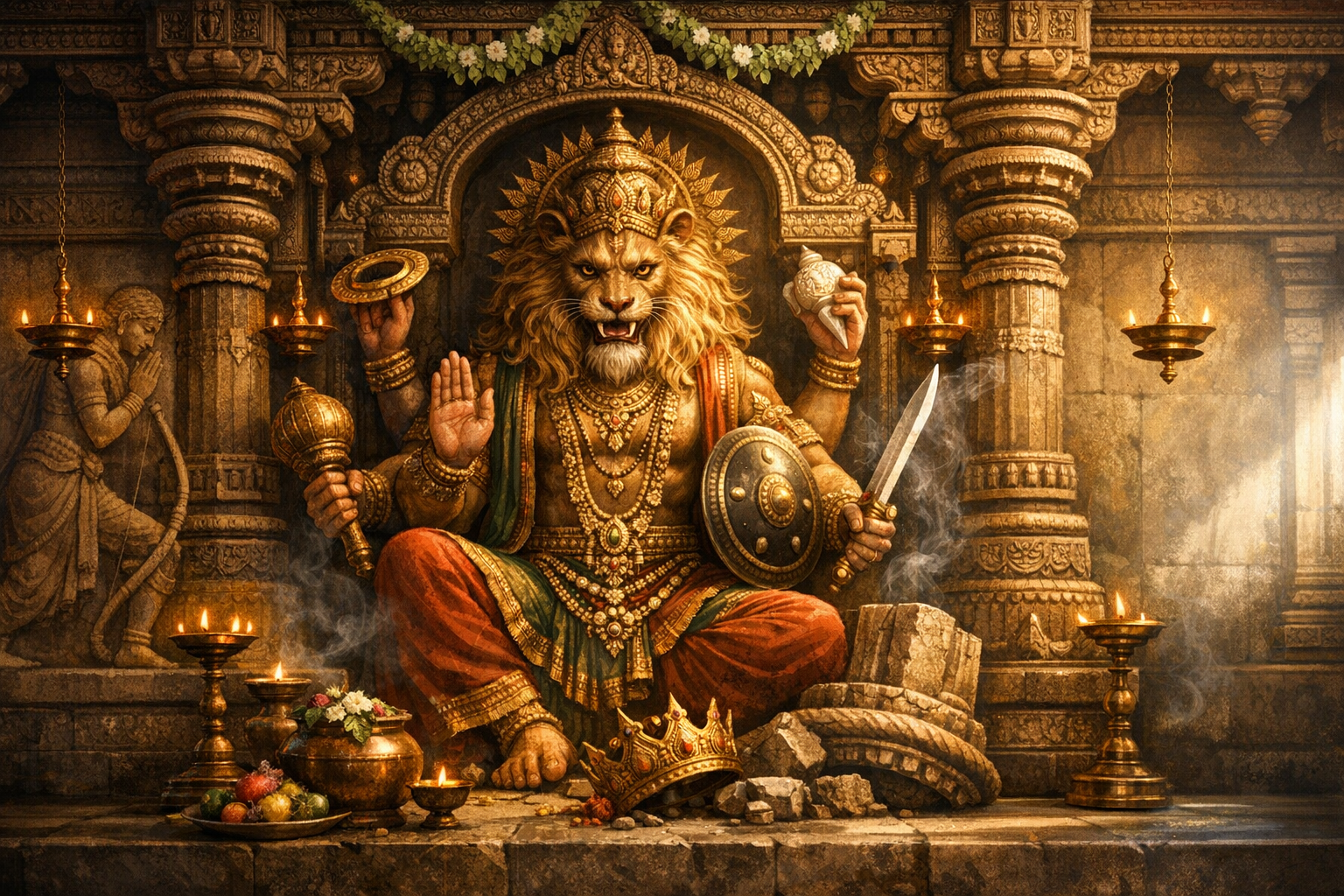
Day Three of the GBC AGM 2026 delivered a clear snapshot of progress in Sridhama Mayapur, with the Mayapur Executive Board outlining measurable milestones and responsible stewardship. Attendees welcomed the emphasis on transparent governance, heritage preservation, and inclusive community services. The review of ISKCON affiliates focused on mission alignment, ethical safeguards, and peer learning to…
-
Om Namah Shivaya Benefits: A Transformative Mantra for Calm, Clarity, Courage, and Grace

Om Namah Shivaya is a foundational Shaivite mantra known for enhancing calm, clarity, and emotional resilience through focused japa and mantra meditation. Its meaning—salutation to Shiva as auspiciousness—anchors ethical living and compassionate strength. Rhythmic recitation, aligned with the breath, supports stress reduction and balanced mood by gently calming the nervous system. Practitioners often experience improved…
-
Harsiddhi Mata, Sacred Shakti: Kula Devata Uniting Gujarat, Madhya Pradesh and Maharashtra

Harsiddhi Mata—also known as Harsiddhi Bhavani Devi—is venerated across Gujarat, Madhya Pradesh, and Maharashtra as a compassionate manifestation of Mata Parvati. Revered as a Kula Devata by Brahmin, Jain, and other communities, she anchors family rites, intergenerational continuity, and social cohesion. Coastal devotees and fishing communities especially uphold heartfelt worship, seeking blessings for safety and…
-
Dakshineshwari Stuthi: Timeless Praise of Shakti, Consort of Lord Dakshinamurthy

Dakshineshwari Stuthi honors Ma Dakshineshwari Mata as Shakti and as the consort of Lord Dakshinamurthy, the Guru form of Shiva. The hymn reveres her as the foremost Sanyasini, aligning renunciation, wisdom, and compassion in a single spiritual ideal. Devotees approach the stuthi with mindful breath, clear intent, and measured recitation—often during auspicious observances like Navaratri,…