-
Complete Panchang for February 26, 2026: Shukla Navami to Dashami, Good Time, Nakshatra & Rashi

On Thursday, February 26, 2026, the Hindu Panchang records a tithi transition: Shukla Paksha Navami ends at 2:24 AM and Shukla Paksha Dashami then prevails. The overview explains how tithi is calculated from solar–lunar angular separation and why exact end times vary by location. It outlines how to choose “Good Time” (Shubh Muhurat) using Abhijit…
-
Milk Offerings to Shiva: Evidence-Based Myth-Busting and Compassionate Redistribution at Dhyanalinga

A persistent claim suggests that milk used in Abhishekam for a Shiva Lingam is wasted while children go hungry. This analysis situates the ritual in its scriptural and ethical context and examines current temple logistics, showing how offerings are stewarded responsibly. A documented case from the Dhyanalinga temple (Isha Foundation) demonstrates that unopened, sealed milk…
-
Break Free from Hustle: Mindfulness and Yoga to Reclaim Joy, Clarity, and Inner Peace Now

This essay presents an evidence-informed, dharmic-aligned case for reclaiming the present moment from hustle culture. It argues that being fully present is not “unproductive” but foundational for joy, clarity, and inner peace. Drawing on mindfulness, yoga, and breathing exercises, it explains how gentle practices regulate the nervous system, reduce stress, and enhance resilience. It clarifies…
-
How a Fifth-Century Sanskrit Classic Anticipated the Emergency: Mricchakatika’s Warnings

Mricchakatika (The Little Clay Cart) is a fifth-century Sanskrit classic whose legal and civic insights strikingly anticipate the dynamics of India’s 1975–77 Emergency. Set in Ujjaini, it portrays how a weak sovereign and an unscrupulous power-broker deform institutions, and how conscience-driven citizens and spiritual witnesses restore justice. The Ninth Act, Vyavahaara (The Trial), functions as…
-
Enigmatic Two-Headed Golden Deer: What Regional Ramayanas Reveal about Sita’s Abduction

The Ramayana’s Sita abduction episode is not a fixed script but a living tradition across India. In select Kerala and Tamil Nadu repertoires, the golden deer becomes a two-headed marvel, amplifying the epic’s meditation on maya, desire, and deception. Anchored in Valmiki’s Aranya Kanda yet enriched by Kamba Ramayanam, Adhyatma Ramayanam Kilippattu, and folk performance,…
-
Sacred Damanak Chaturdashi 2026 at Puri Jagannath: Date, Dayana Rituals, Meaning, Travel Tips

Damanak Chaturdashi 2026, dedicated to Lord Jagannath, falls on Wednesday, April 1 (Chaitra Shukla Paksha Chaturdashi) and is marked at Puri Srimandir by distinctive offerings of Dayana (Damanaka) leaves. The festival’s focus on Artemisia indica integrates ritual aesthetics with botanical and Ayurvedic wisdom, symbolizing protection, clarity, and seasonal renewal. Temple lore preserves a symbolic ‘forcible…
-
Muthuswami Dikshitar: Timeless Master of Carnatic Music’s Sacred, Scholarly Soundscape

Muthuswami Dikshitar (1775–1835) shaped Carnatic music with compositions that unite devotion, Sanskrit scholarship, and raga–tala architecture. A pillar of the Trinity, his kritis function as sonic maps to South Indian temples, preserving iconography, rituals, and sacred geography. Anchored in the Venkatamakhin asampurna tradition, he crafted raga-lakshana masterpieces and explored talas beyond the ordinary with serene…
-
Timeless Tirumala Tirupati: History, Architecture, Ritual Science, and Venkateswara’s Grace

Tirumala’s Sri Venkateswara Temple is revered as Kaliyuga Vaikuntha and celebrated for its unbroken lineage of worship in Andhra Pradesh’s Seshachalam Hills. Historical inscriptions document centuries of royal patronage by Pallava, Chola, Pandya, and Vijayanagara rulers, including queens, who endowed land, lamps, and resources for ritual continuity. Architecturally Dravidian, the temple centers on the gold-crowned…
-
Hatkeshwar Jayanti 2026: Auspicious Date, Powerful Rituals, and Kuladevata Heritage

Hatkeshwar Jayanti (Hatkeshwar Mahadev Jayanti) in 2026 falls on April 1, observed on Chaitra Chaudasana, the 14th lunar day (Chaturdashi) of Chaitra. The day venerates Lord Hatkeshwar, a form of Shiva, with special emphasis on Kula Devata remembrance among families, especially in Gujarat and adjoining regions. Devotees prioritize pradosha-kala for Shivalinga abhisheka, mantra-japa (Om Namah…
-
Moksha Without Martyrdom: Why Hinduism Teaches Liberation Through Knowledge, Not Pain

The notion that God desires human suffering for spiritual realization conflicts with Hindu philosophy. Across the Upanishads, the Bhagavad Gita, and Vedanta, moksha arises through knowledge, devotion, selfless action, and meditation—not by glorifying pain. The Gita even censures self-mortification, framing tapas as disciplined refinement rather than injury. Hindu ethics centers ahimsa, while jnana, bhakti, karma…
-
Srimad Bhagvatam 4.14.34–37: Sacred Sound, Just Rule, and the Fall of King Vena

Srimad Bhagvatam 4.14.34–37 narrates how sages countered a tyrant’s denial of dharma using sanctified speech rather than weapons, offering a profound study in political theology, sacred sound, and ethical governance. The background of King Anga’s departure and King Vena’s misrule clarifies why authority without transcendence self-destructs. The episode is read not as praise of violence…
-
Beyond Temple Worship: Kapila on Seeing the Supersoul in All (Bhagavatam 3.29.21–27)

Srimad-Bhagavatam 3.29.21–27 defines authentic devotion as seeing the Lord (Paramātman) in every being, not only in the temple Deity. The discussion clarifies why ritual worship, though essential, remains incomplete without ahiṃsā and dayā. Drawing on the Bhagavad-Gita and the Upanishads, it shows how arcā-vigraha trains perception to recognize the indwelling Lord everywhere. Practical guidance translates…
-
Srila Gaura-Kisora Dasa Babaji: Austerity, Bhakti, and a Timeless Blueprint for Inner Freedom

Srila Gaura-Kisora dasa Babaji exemplified uncompromising renunciation within the Bhakti Tradition, keeping only Tulasi-mala and a few core texts while declining all personal service. Set in late colonial Bengal, his life centered on nama-japa and the deep internalization of Narottama Dasa Thakura’s Prarthana and Prema Bhakti Chandrika. His method foregrounded aparigraha and guarded attention, modeling…
-
Vaisnava Sarvabhauma Srila Jagannatha Dasa Babaji: Disappearance Day and Sacred Yoga Pitha Legacy

The Holy Disappearance Day of Srila Jagannatha Dasa Babaji is observed as a celebration of enduring guidance rather than an ending, highlighting his role as Vaisnava Sarvabhauma and his profound influence on Gaudiya Vaishnava practice. Traditional accounts preserved in Sri Navadwipa Dhama Mahatmya recount his decisive affirmation of Sri Caitanya Mahaprabhu’s birthplace at Mayapur’s Yoga…
-
Dantadhavana in Hinduism: Ancient Oral Care for Clarity, Sacred Cleanliness, and Health

Dantadhavana—the Hindu practice of cleaning the teeth—anchors hygiene, mental clarity, and ritual readiness within a single, structured morning routine. Classical Dharmashastra, Grihya Sutras, and Ayurveda integrate tooth cleaning with adjuncts like oil swishing and tongue scraping to support breath, digestion, and composure. Traditional materials such as neem, khadira, and pilu twigs offer biodegradable, medicinal options…
-
Population Policy, Principle, and Unity: A Data-Driven Appraisal of the RSS ‘Three-Child’ Call

A renewed three-child call linked to the Rashtriya Swayamsevak Sangh (RSS) has sparked debate about demography, ethics, and unity. This analysis clarifies India’s fertility transition using NFHS-5 and other indicators, explains replacement fertility, and maps state-level differences. It weighs normative appeals against constitutional protections for reproductive autonomy and the voluntary ethos of the National Population…
-
Sacred Robes Betrayed: Ravana’s Sanyasi Deceit, Sita’s Abduction, and Shiva’s Silent Wrath

This long-form analysis examines Ravana’s abduction of Sita through the guise of a Sanyasi, highlighting why the episode is treated across Ramayana traditions as a grave betrayal of civilizational trust. It clarifies the Valmiki baseline, explains later vernacular expansions, and separates popular motifs like the Lakshmana Rekha from the Sanskrit core while preserving their ethical…
-
Unveiling Rahu Navagraha: Why the Serpent Head Without a Body Embodies Desire and Eclipses

Rahu Navagraha’s depiction as a serpent’s head without a body encodes a dual truth: the human experience of insatiable desire and the astronomical mechanics of eclipses. This article clarifies the Puranic origin of Rahu and Ketu, unpacks the symbolism of a head that can consume but never digest, and links the image to the lunar…
-
Panchang 23 February 2026 (IST): Tithi, Nakshatra, Choghadiya, and Auspicious Windows Explained

This comprehensive guide explains how to read the Panchang for 23 February 2026 (Monday, IST) with clarity and confidence. It outlines the roles of Tithi, Nakshatra, Yoga, and Karana, and shows how practical muhurta tools—Choghadiya, Rahu Kalam, Yamaganda, Gulikai, Abhijit Muhurta, and Durmuhurtham—are computed and applied. Readers learn how Tarabalam, Chandrabalam, and Lagna timings personalize…
-
Guarding Lakshmi at the Door: Why Hindu Dharma Discourages Charity on the Threshold

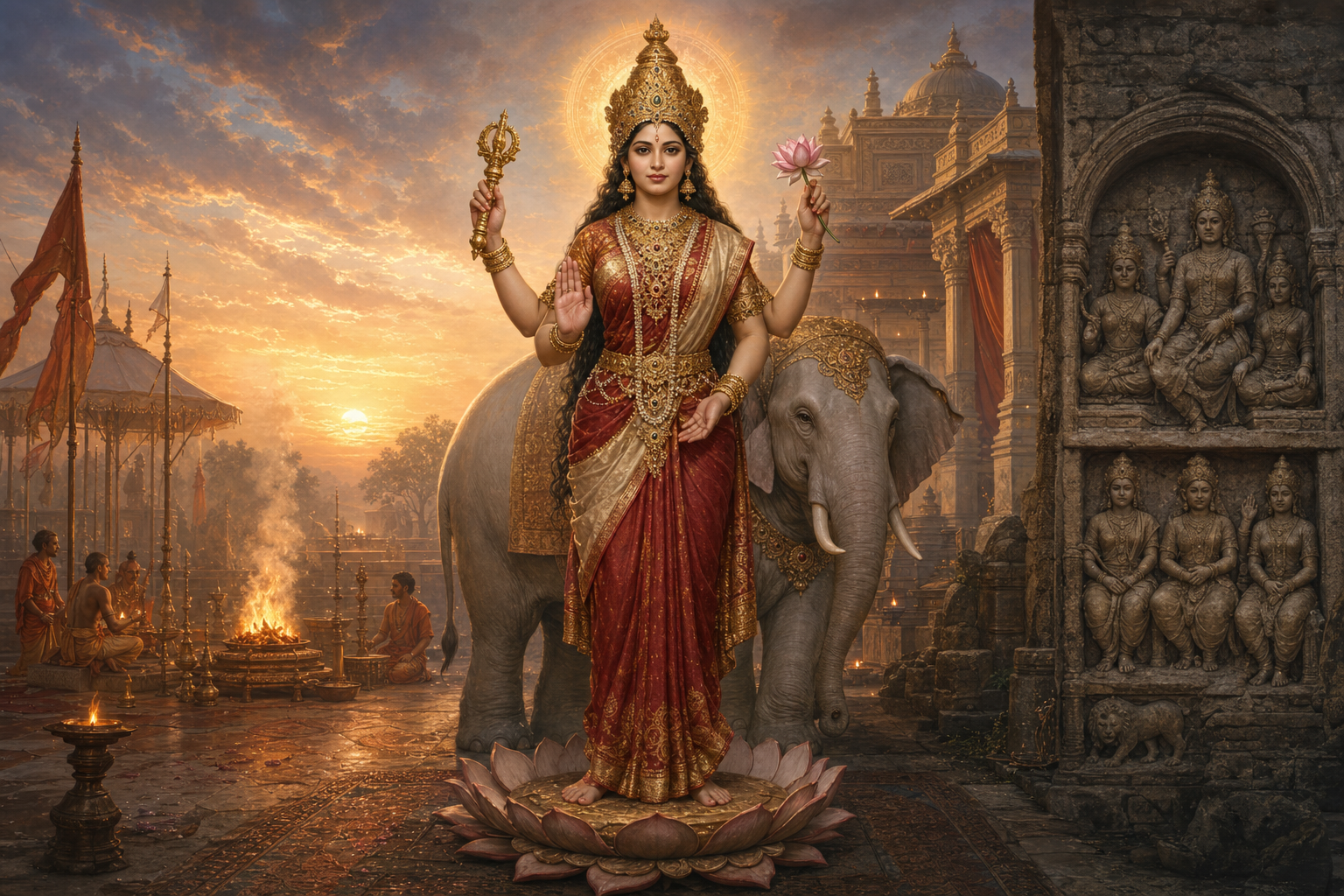
Why do many Hindu households discourage giving charity at the doorway? This article unpacks the threshold as a sacred, liminal space in Hinduism and explains how Vastu Shastra, the Grihya Sutras, and Dharmaśāstra converge on a single ethic: dāna should occur in a clean, clearly defined place with dignifying courtesies. It shows how “deśa–kāla–pātra–śraddhā” guide…