
-
Srila Prabhupada on Sleep: Timeless Humility, Disciplined Rest, and the Sacred Economy of Time
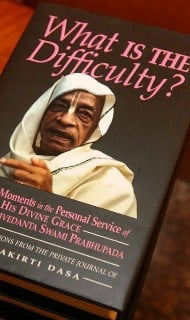
Srila Prabhupada’s two candid remarks on sleepone affirming a short post-lunch nap due to age, the other lamenting time lost when going to bedreveal a rigorous, compassionate ethic of rest. The article situates these reflections within the Bhagavad Gita’s moderation, Ayurveda’s nuanced view of divasvapna, and contemporary sleep science on restorative napping. It shows how…
-
From ‘Laziness’ to Nervous System Regulation: Trauma, Dopamine, and Dharmic Paths to Change

Many people who call themselves lazy are living with nervous systems tuned by early unpredictability, not moral failings. This article reframes apathy and inconsistency through neurosciencehighlighting neuroplasticity, allostasis, dopamine dynamics, executive function, and polyvagal theory. It explains why high-pressure contexts can boost performance while calm routines feel draining, and how this is a state-dependent pattern…
-
Awakening in Hinduism: Traits of a Jivanmukta from the Gita, Upanishads, and Yoga

Hinduism profiles the spiritually awakened personjivanmuktathrough durable traits, not passing states. Drawing on the Bhagavad Gita, the Upanishads, Yoga, and Vedanta, this analysis details equanimity, non-attachment, compassion, truthfulness, fearlessness, humility, and discernment as reliable indicators of realization. It explains how yama–niyama and sadhana-chatushtaya build the ethical and attentional bedrock for liberation (moksha). Practical resonance with…
-
Krishna Consciousness and Unshakable Clarity: Why a God-Centered Mind Defies Bewilderment
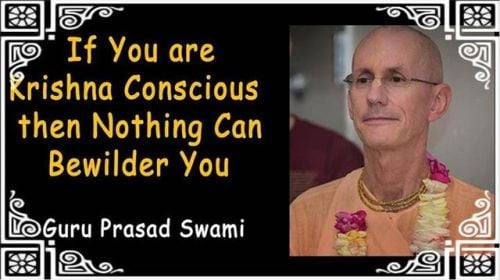
Guru Prasad Swami’s insight“If you are Krishna conscious then nothing can bewilder you”summarizes a classical bhakti thesis: devotional remembrance produces unshakable clarity. Grounded in Srimad Bhagavatam and Bhagavad-gita, the article explains how hearing, chanting, and service align attention, ethics, and resilience. It outlines a practical sadhana regimen common in ISKCONjapa, study, prasadam, and satsangathat steadily…
-
Master Presence with Nada Yoga: Harness Sound, Silence, and Stillness for Deep Mindful Awareness

This long-form guide explains how Nada Yoga develops presence by training attention through sound, silence, and stillness. It weaves classical sources such as the Hatha Yoga Pradipika and the Nada Bindu Upanishad with current insights in neuroscience on vagal tone, breathing, and heart rate variability. Readers receive three precise, beginner-friendly practicesdeep listening, conscious music listening,…
-
Mekhala and Kankhala: How Severed Heads Revealed the Deathless Mind on the Mahamudra Path

Mekhala and Kankhala’s startling legendself-decapitation and restorationencodes a precise Tantric teaching: cut egoic fixation and recognize the deathless, luminous nature of mind. Read across Hindu Śākta Tantra and Buddhist Vajrayāna, their story bridges traditions via shared yogic anatomy (ida, piṅgalā, sushumna nadi), iconography (Chinnamastā/Chinnamundā), and the Mahāmudrā path of direct recognition. The narrative affirms women’s…
-
Nirvicāra Samāpatti Demystified: Patanjali’s Path to Luminous Clarity and Unshakable Calm

Nirvicāra Samāpatti (often written as ‘Nirvichara Samapthi’) is a non-discursive, crystal-clear absorption described in Patañjali’s Yoga Sūtras, reached after progressing through savitarka, nirvitarka, and savicāra stages. It refines attention from gross objects to subtle ones until naming, memory, and conceptualization fall away without dullness. Patañjali links its maturation to adhyātma-prasādainner luminosityand to ṛtambharā prajñā, truth-bearing…
-
Hidden Survival Patterns: How Childhood Trauma Rewires Safetyand How to Heal

This trauma-informed narrative illustrates how childhood adversity wires the nervous system for hypervigilance, dissociation, and substance-based copingand how those patterns are adaptive rather than evidence of personal failure. It explains the physiology of survival through polyvagal theory, the self-medication hypothesis, and attachment science, then shows how neuroplasticity supports recovery. Readers learn concrete tools for nervous…
-
In Kali Yuga’s Shadow, Karuṇā Shines: The Dharma of Empathy for Collective Survival

Kali Yuga accentuates speed, scarcity, and social fragmentation, making empathy not just virtuous but vital. Drawing on Hinduism, Buddhism, Jainism, and Sikhism, this essay frames karuṇā as strategic dharmaethically right and instrumentally wise. It grounds empathy in the Bhagavad Gita, Anekantavada, Brahmavihāra practice, and Sikh seva, aligning with the civilizational ideal of Vasudhaiva Kutumbakam. Contemporary…
-
Layayoga in Hinduism: A Powerful Path to Dissolve Mind into Brahman via Nada and Kundalini

Layayoga, the yoga of dissolution, offers a rigorous pathway in Hinduism to absorb sensory, mental, and energetic activity into subtler awareness until the nondual identity of atman and Brahman is self-evident. Rooted in the Yoga Upanishads, Hatha Yoga, and Raja Yoga, it employs pratyahara, refined pranayama, mantra, and inner sound (nada) to stabilize attention in…
-
Decoding the Nathpanthis: Distinctive Marks, Sacred Symbolism, and Their Modern Relevance

The Nathpanthis (Kanphata Yogis) can be respectfully identified by a constellation of signssplit-ear kundalas, tripundra ash, rudraksha malas, jata, austere robes, and mantric salutations such as “Alakh Niranjan” and “Adesh.” This long-form guide explains what each marker means, how it functions within Shaivite practice, and how Nath monastic settings (mathas, akharas, dhunis) provide context. It…
-
Trauma Dumping to AI: Evidence-Based Risks, Real Benefits, and Dharmic Design Principles

More people now confide in AI systems during moments of distress, a shift that brings both promise and risk. This analysis defines trauma dumping to AI, explains how large language models simulate empathy, and outlines what current evidence actually supports. It details privacy safeguards, safety triage, and cultural-linguistic competence, with particular attention to South Asian…
-
Atma vs Anatma Explained: A Scholar’s Guide to Inner Freedom, Clarity, and Lasting Peace

This in-depth guide clarifies the difference between Atma (the changeless witness) and Anatma (all that arises and passes), showing why this insight is the key to inner freedom and lasting peace. Drawing on the Upanishads, the Bhagavad Gita, Vedanta, Sāṅkhya-Yoga, and Nyāya-Vaiśeṣika, it presents multiple, mutually reinforcing methods: Pancha Kosha Viveka, Drg-Drsya Viveka, Avasthātraya analysis,…
-
Patra Puja in Shakta Tantra: From Tamas to Amrita through Sacred Vessel Alchemy
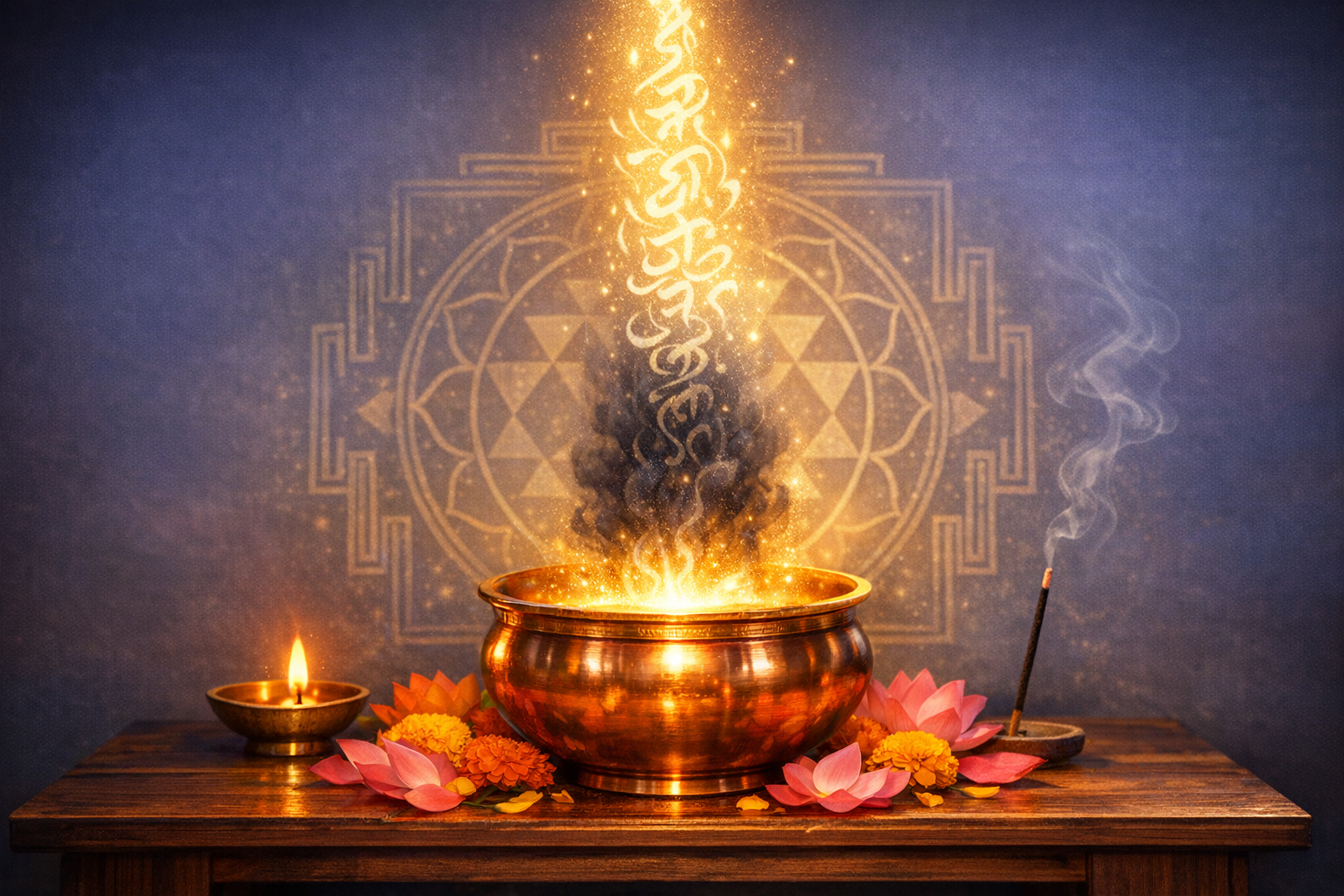
Patra Puja in Shakta Tantra is not a license for indulgence but a precise technology of inner alchemy that transmutes tamas into amrita through mantra, visualization, and disciplined attention. The sacred vessel (patra) is ritually consecrated as Devi’s body, and the offeringalcoholic or non-alcoholic by lineageoperates as a mirror for consciousness rather than a pharmacological…
-
Science‑Backed Calm for Haryana Students: HJS on Yoga, Pranayama and Sadhana for Stress Management
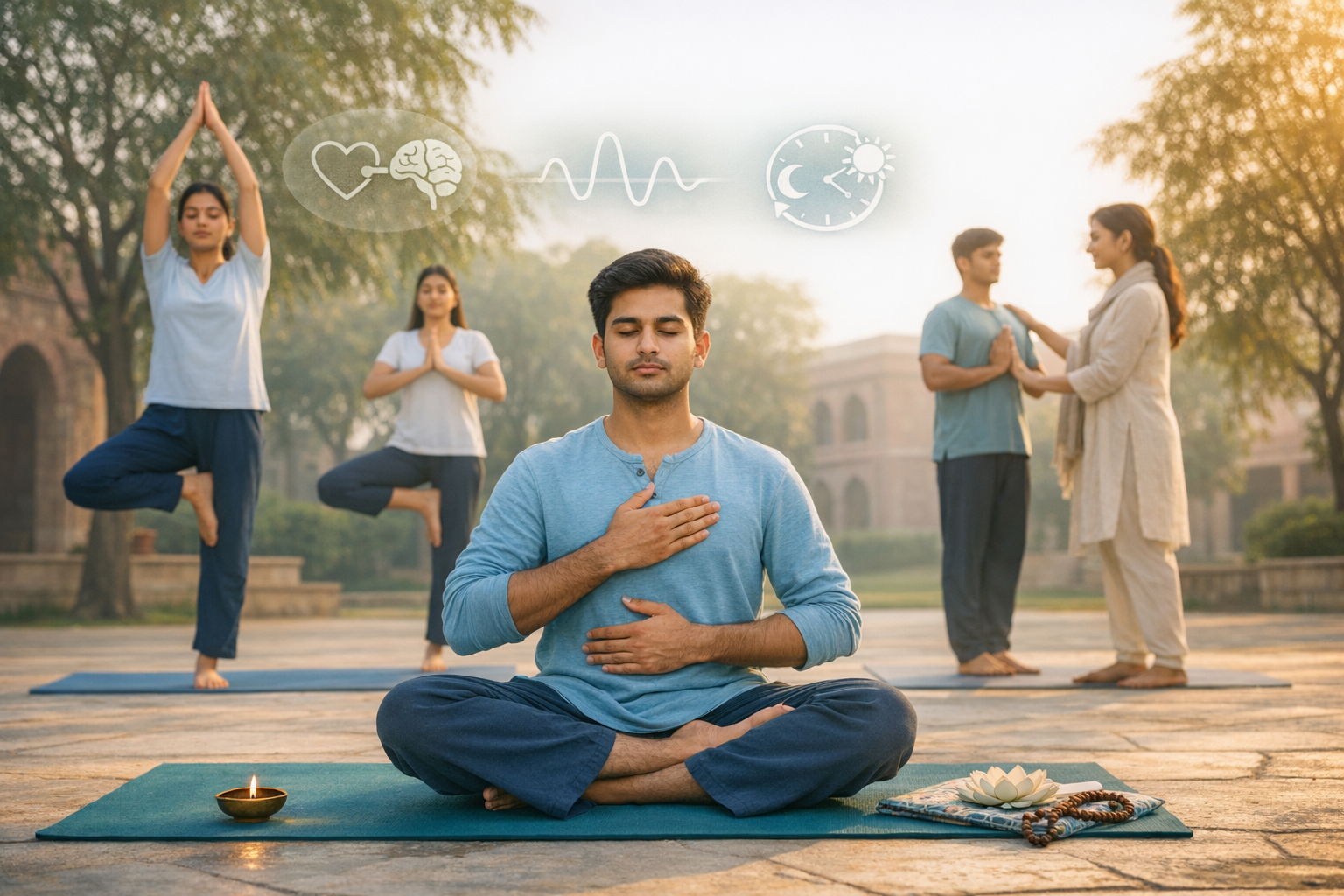
A student guidance programme in Palwal, Haryana, organised by HJS and led by Sadguru Dr. Charudatta Pingale, spotlighted routine, yoga, pranayama and sadhana as practical, science‑aligned methods to reduce stress and build self-confidence. The approach stabilises circadian rhythms, calms the autonomic nervous system and improves attention for study readiness. Simple asana sequences paired with slow,…
-
From Navadvipa to Neal’s Yard: Discover a Dharmic Sanctuary in London’s West End

A short turn from Covent Garden into Neal’s Yard reveals a compact London courtyard designed by scale, color, and greenery to function as a threshold oasis. Read as a cultural metaphor, the path ‘From Navadvipa to Neal’s Yard’ links Gaudiya Vaishnavism’s living bhakti lineage with everyday West End life through the Hare Krishna Movement (ISKCON)…
-
Mastering Lifelong Learning: Dharmic Methods that Transform Observation into Wisdom

Rote learning produces fragile knowledge; dharmic education converts observation into durable wisdom. Drawing on Hinduism, Buddhism, Jainism, and Sikhism, this piece outlines a replicable pathway: inquiry, reasoning, contemplative assimilation, and ethical action. It maps classical pramanas to modern evidence-based methods such as retrieval practice, spaced repetition, and mindfulness. Nyaya’s tarka, Mimamsa’s hermeneutics, Vedanta’s sravana–manana–nididhyasana, Buddhist…
-
Manava Janma Uddeshya: A Transformative Dharmic Guide to the Purpose of Human Life

This long-form exploration presents Manava Janma Uddeshyathe purpose of human birthas a rigorous, unified framework across Hinduism, Buddhism, Jainism, and Sikhism. It clarifies the Purusharthas within Sanatana Dharma, aligns worldy aims with Dharma, and situates Moksha as the culminating horizon. Readers gain an actionable, research-informed roadmap that integrates meditation, ethical discipline, devotion, study, and seva.…
-
Devotion Through Buddhi and Grace: Mastering Hindu Bhakti via Consciousness and Surrender

This essay examines two complementary currents of Hindu devotionbuddhi-yoga (devotion through consciousness and intelligence) and prapatti/śaraṇāgati (devotion through surrender)grounded in the Bhagavad Gita, the Bhāgavata Purāṇa, Vedānta, and Yoga. It explains how disciplined study, reflection, and mindful ritual refine devotion, while wholehearted entrustment to the divine expands receptivity to grace. The discussion translates classical terms…
-
International Yoga Day 2026: Science‑Backed Benefits, Surya Namaskar, and Dharmic Unity

International Yoga Day 2026, observed on 21 June by UN resolution 69/131, highlights yoga’s universal appeal and its shared roots across Hindu, Buddhist, Jain, and Sikh traditions. The solstice timing underscores the symbolism of Surya, often honored through Surya Namaskara and Arghya to the Sun (Surya Arghya). Research summarized by the US National Institutes of…