
-
Nagulapuram Vedanarayana Swamy Pushpayagam 2026: Timings, Vedic Rites, History & Significance
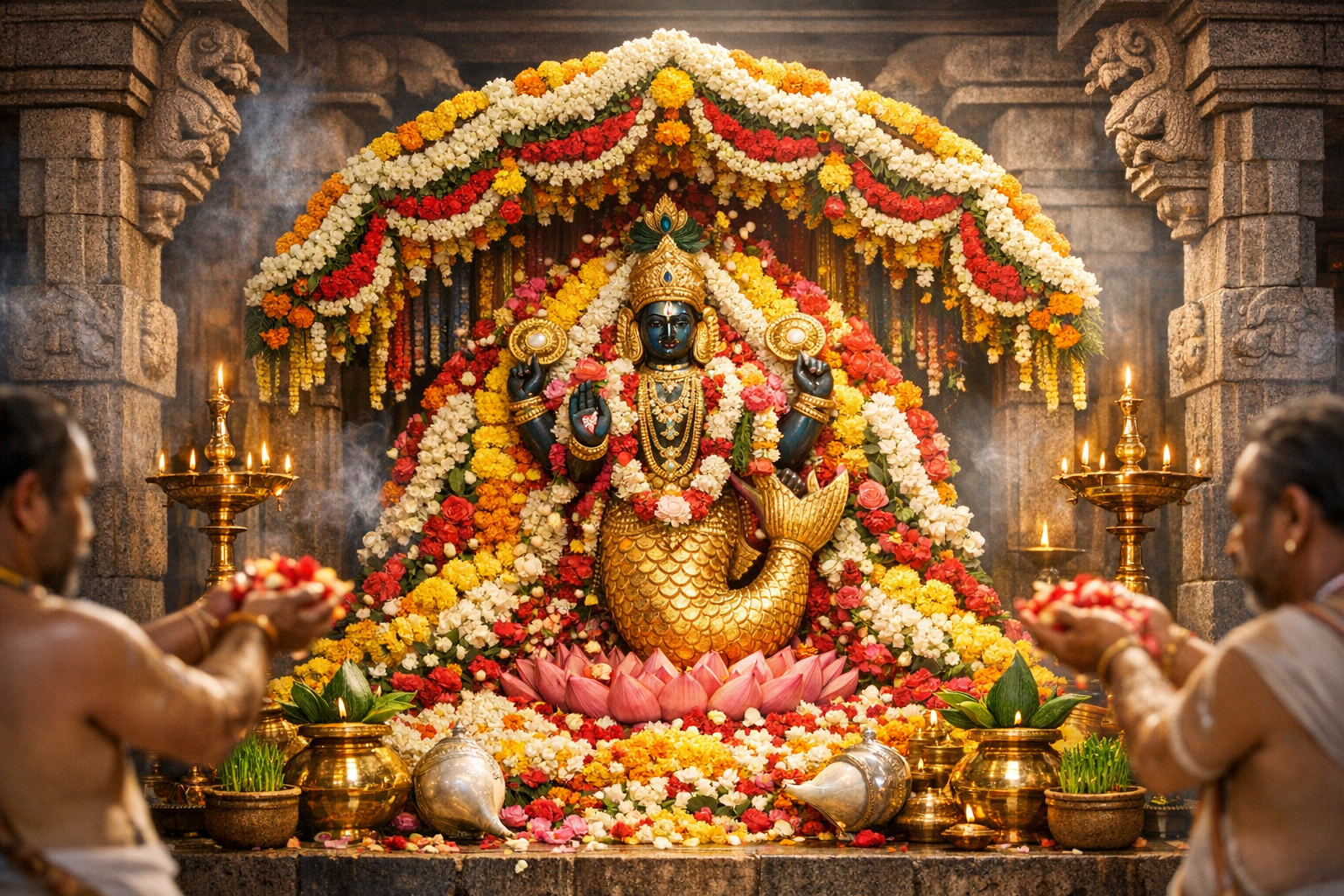
Nagulapuram (Nagalapuram) Sri Vedanarayana Swamy Temple will observe Pushpayagam Mahotsavam on 5 June 2026, with preparatory rites on 4 June from 6.15 pm to 7.45 pm IST. Scheduled rites include Punyahavachanam, Rakshabandhanam, Mrutsangrahanam, Senadhipati Utsavam, and Ankurarpanam, followed on 5 June by Snapana Tirumanjanam from 11.00 am IST and the floral Pushpayagam. The temple, administered…
-
Shri Rajmatangi Mahayagya in Mumbai: A potent Vedic call for Bharat’s protection and prosperity
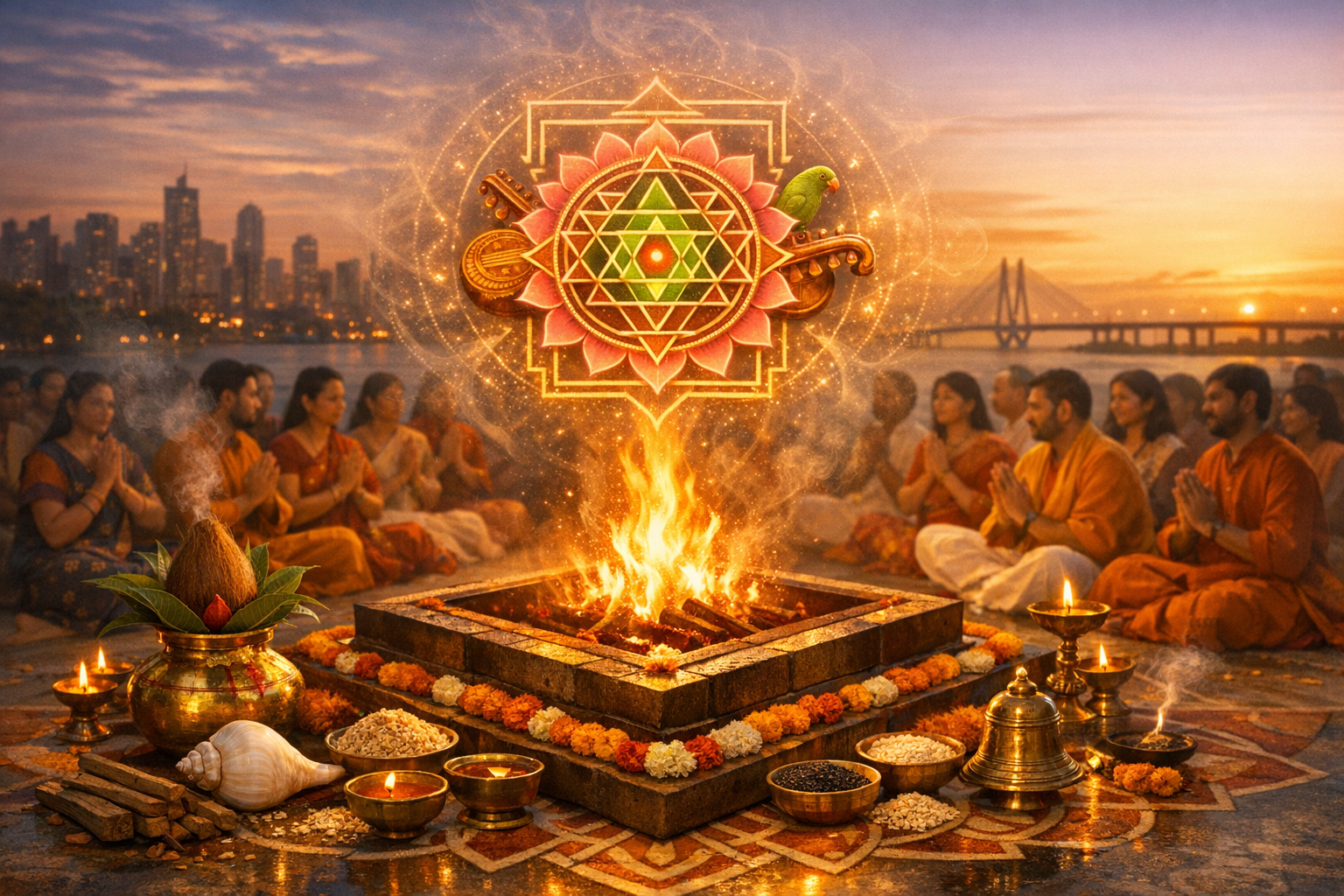
Held in Mumbai, the Shri Rajmatangi Mahayagya brought together devotees and ritual specialists for a meticulously structured Vedic–Agamic ceremony dedicated to Bharat’s protection and prosperity. Centered on Shri Rajmatangi (Raja Shyamala), a sovereign form of the Mahavidya Goddess Matangi associated with ethical speech and wise governance, the rite aligned mantra, homa, and communal sankalpa to…
-
Timeless Power of the Guru–Shishya Bond: Ancient Hindu Pedagogy That Shapes Character and Society
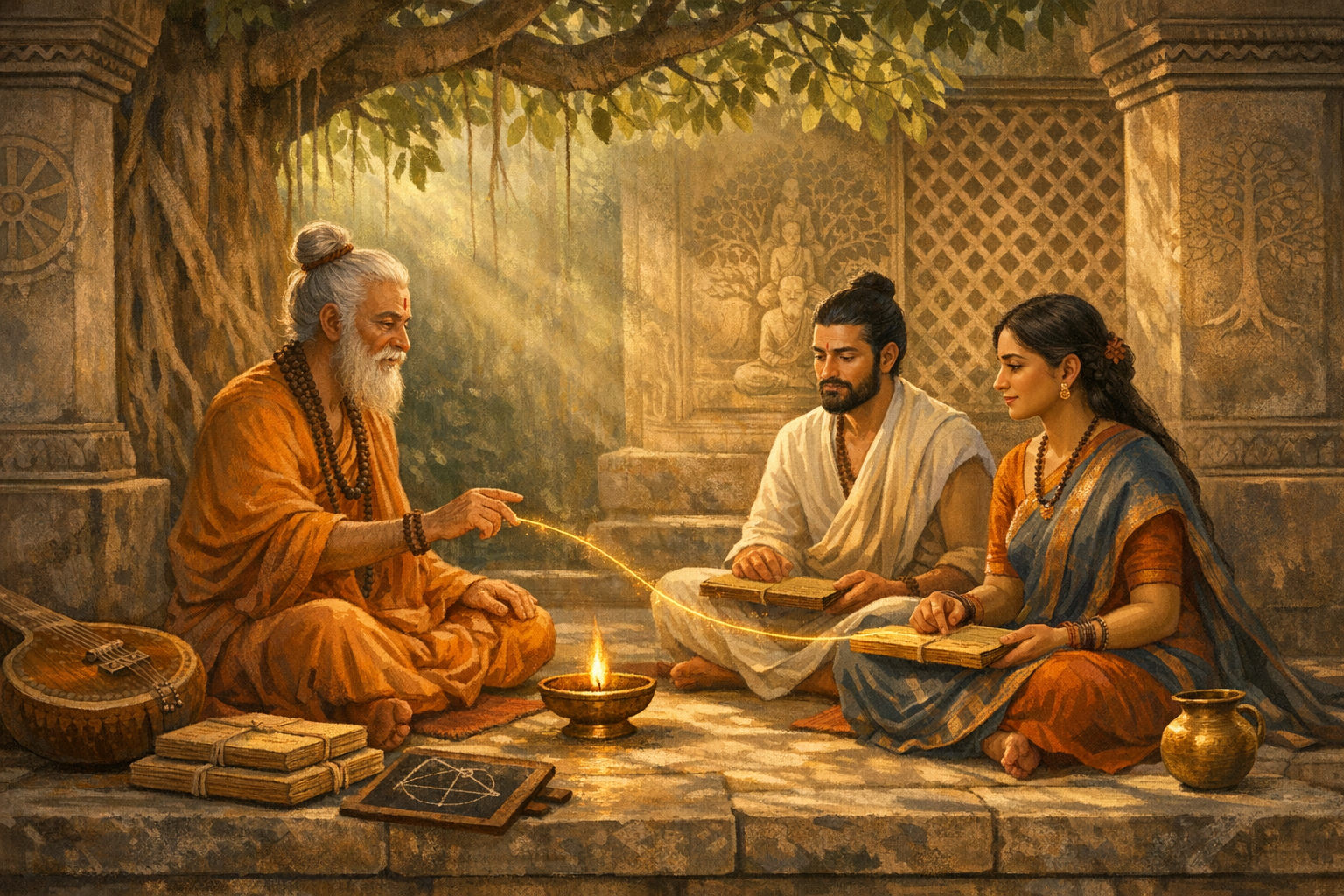
The Guru–Shishya tradition is a civilizational pedagogy that unites knowledge with character, shaping both competence and conscience. Drawing on the Upanishads and the Bhagavad Gita, it encodes reverence, inquiry, and service as the ethics of learning. Gurukulas integrated study with daily life, training the mind through śravaṇa–manana–nididhyāsana and broad curricula from Veda and Vedāṅgas to…
-
Karvetinagaram Venugopalaswamy Brahmotsavam 2026: Sacred Dates, Rituals, and a Devotee’s Guide
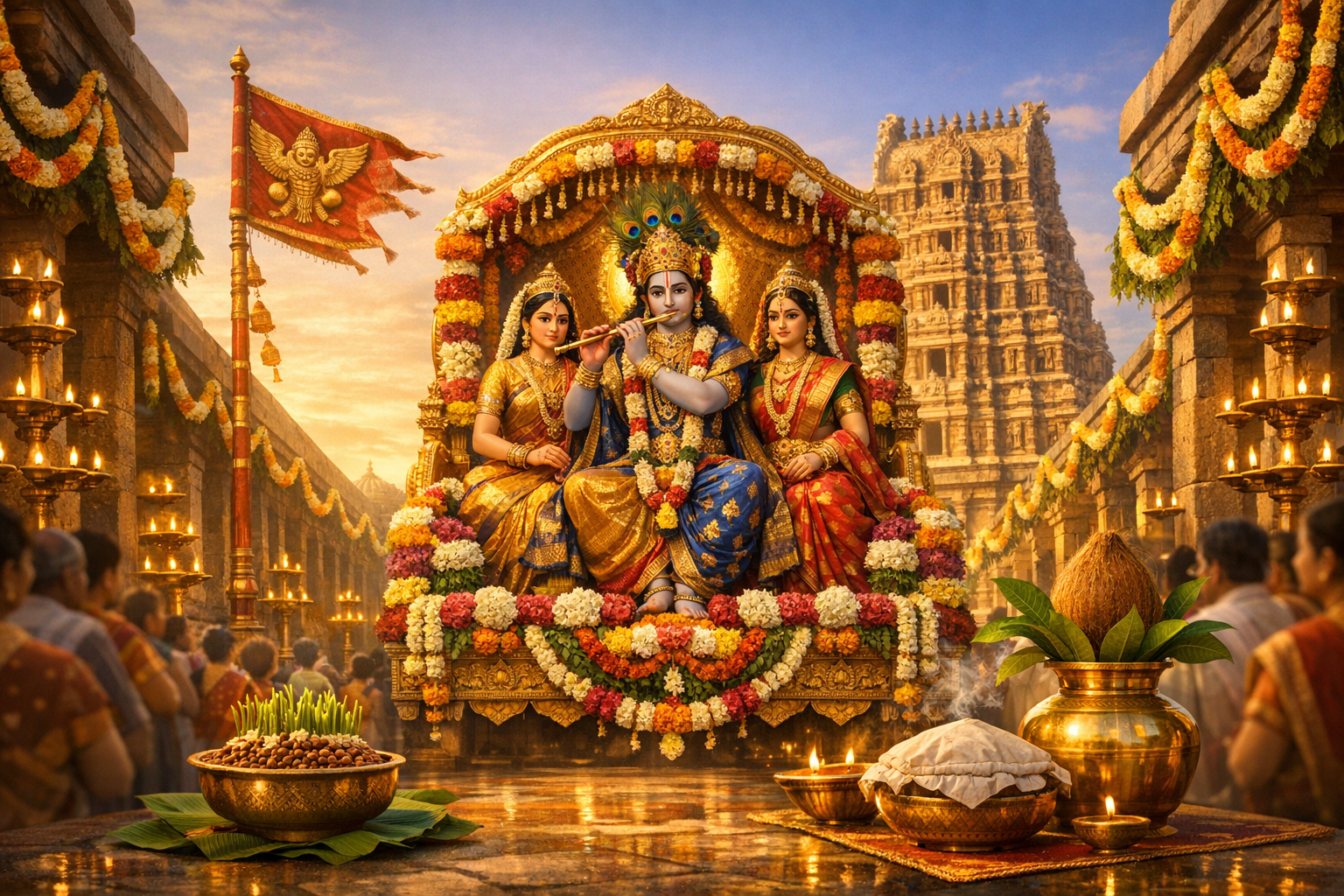
Karvetinagaram’s Venugopalaswamy Temple will celebrate Brahmotsavam from June 6–14, 2026, with Ankurarpanam on the evening of June 5 and Koil Alwar Tirumanjanam observed beforehand. The nine-day festival follows Vaishnava Agamic tradition, combining rigorous ritual structure with the emotive power of bhakti. Devotees can expect daily homas, archana, and morning–evening processions of the utsava murti, with…
-
Decoding the Dashagvas: Swift Angirasa Sages of the Rigveda and Their Living Legacy
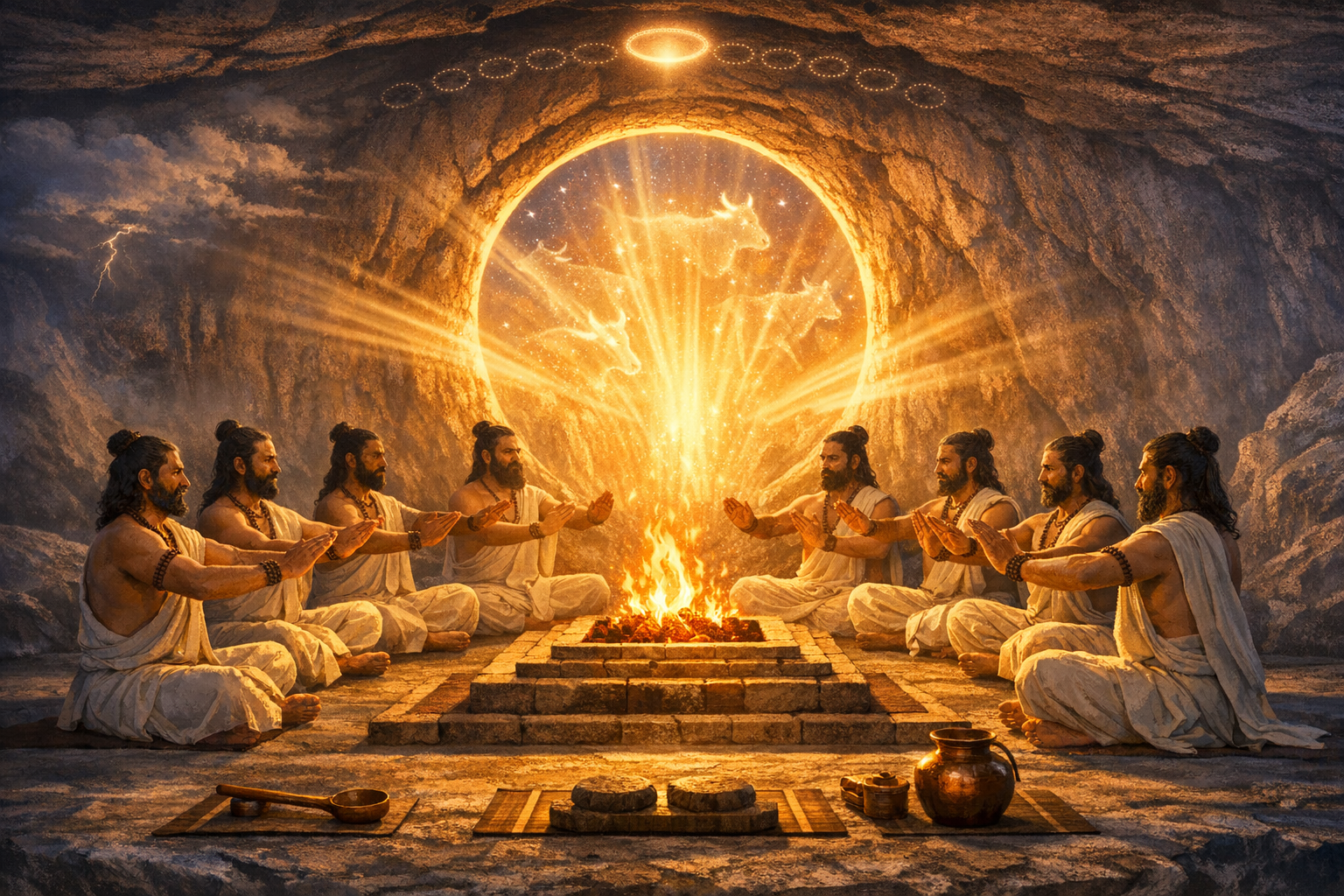
The Dashagvas, remembered in the Rigveda as Angirasa-aligned priests, exemplify the Vedic fusion of disciplined speech, precise timing, and communal practice. Tradition pairs them with the Navagvas and links their names to nine- and ten-month sacrificial cycles that culminate in the release of light symbolized as cows and dawns. Rather than celebrating haste, their famed…
-
Pournami Deepa Puja Explained: Sacred Science and Spiritual Power of Full-Moon Lamps

Pournami Deepa Puja (Deepa Pooja on the Full Moon) brings together ritual precision, contemplative focus, and communal warmth through the shared act of lighting lamps. Rooted in Vedic invocations to Agni and elaborated in Puranic-Agamic practice, the rite uses a living flame to link outer worship with inner steadiness. Aligning with the Full Moon’s clarity,…
-
Awe-Inspiring Pushpaka Vimana: Self-Restoring Design, Vedic Engineering, and Ramayana Legacy

Pushpaka Vimana, the famed aerial craft of the Ramayana, is widely remembered for adaptive flight, moral stewardship, and a compelling motif of self-restoration. Read as an engineering imagination, its traits anticipate modular design, redundancy, autonomous control, and lifecycle repair. Read as sacred symbolism, its self-reassembling power affirms dharma’s resilience and responsible governance. Cross-dharmic echoes in…
-
Shani Sade Sati for Tula Rashi: Viraya (Vyaya) Shani Effects, Timing, RemediesA Deep-Dive Guide

Shani Sade Sati for Tula Rashi begins when Saturn enters Virgo, launching the first 2½-year phase known as Viraya (Vyaya) Shani. This period emphasizes 12th-house mattersexpenditure, seclusion, sleep, and the dissolution of attachmentsframed by Saturn’s discipline and Virgo’s analytic rigor. The analysis explains how Saturn’s special aspects from Virgo shape communication, partnerships, and career through…
-
Unveiling Prishni: The Speckled Celestial Mother of the Maruts in Rigvedic Cosmology

Prishni, the “speckled” celestial mother of the Maruts in the Rigveda, illuminates how Hindu scriptures bind natural phenomena to sacred meaning. This analysis clarifies her etymology, traces her presence in Vedic hymnody, and examines her relationship to Indra, Rudra, and the storm-host. Readers gain a precise understanding of how “speckling” functions as Vedic symbolism for…
-
Niyama Vidhi in Purva Mimamsa: A Definitive Guide to Restrictive Injunctions and Dharma Precision

This in-depth guide clarifies niyama-vidhi (restrictive injunction) in Pūrva Mīmāṃsā and shows how it refines an already known duty by selecting a preferred means without creating a new obligation. It distinguishes niyama-vidhi from apūrva/utpatti-vidhi and parisankhyā-vidhi, and explains its cooperation with niṣedha and arthavāda within Vedic hermeneutics. Readers learn practical criteria for identifying a restrictive…
-
HG Daivi Shakti Mataji on Srila Prabhupada Lilamrita: Unveiling a Transformative Gaudiya Legacy
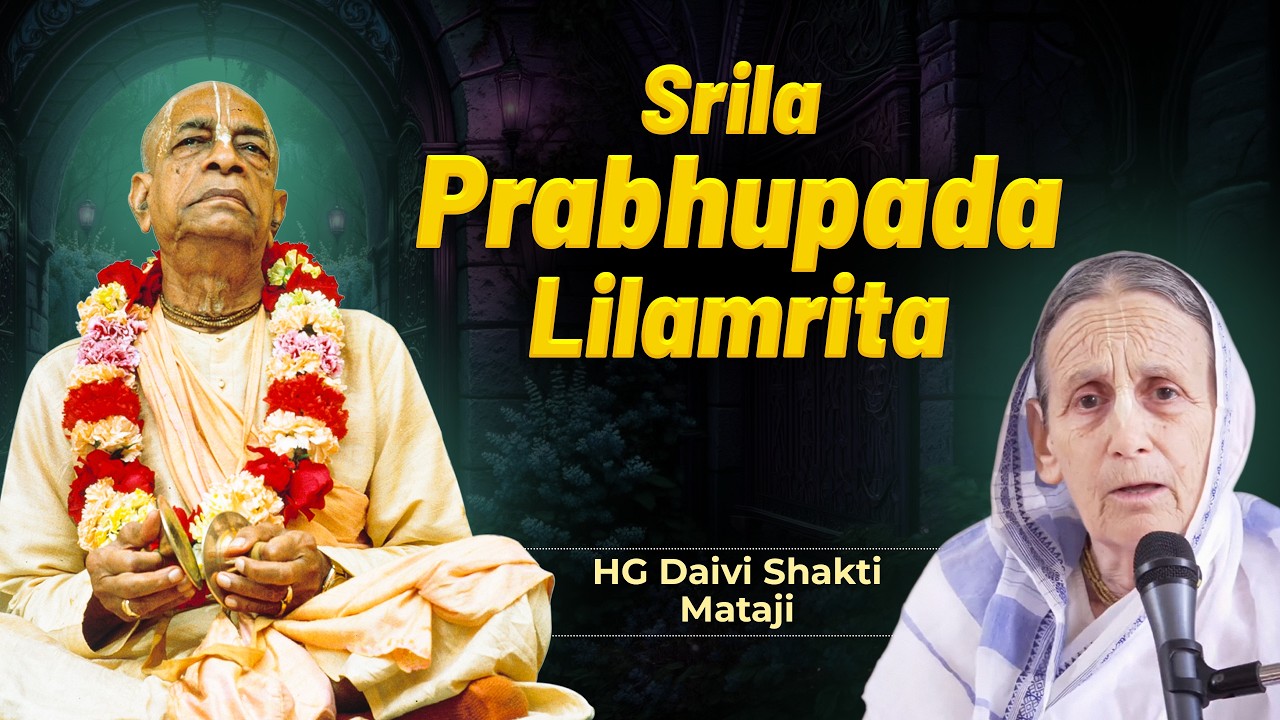
This analysis situates HG Daivi Shakti Mataji’s focus on Srila Prabhupada Lilamrita within a rigorous, source-aware approach to Gaudiya Vaishnavism. It explains how the biography blends archival research, oral histories, and textual study to illuminate Srila Prabhupada’s life, teachings, and institution-building. Readers gain a clear framework for studytriangulating letters, interviews, and BBT records while appreciating…
-
Veda Murtis Demystified: Living Forms that Illuminate Vedic Wisdom, Ritual, and Iconography

Hindu tradition presents the Vedas as living, relational knowledge by personifying them as Veda Murtisanthropomorphic embodiments that translate sacred sound into contemplative sight. Grounded in Mīmāṃsā, Agamas, and Śilpa-śāstra canons, these forms do not replace scripture; they deepen Vedic study by aligning hearing, seeing, and practice. Typical depictions personify the four Vedas with manuscripts and…
-
Paada Puja Explained: The Timeless, Transformative Ritual of Reverence and Dharmic Unity

Paada Puja (Paada Pooja) is a timeless Dharmic ritual that elevates hospitality into sacred practice, honors the guru–shishya relationship, and completes Hindu worship through the upachara of washing and adorning the feet. Rooted in the ideal Atithi Devo Bhava, it appears across sampradayas and Dharmic traditions, from Vaishnava padukas and śāṭāri customs to Buddhist Buddhapada…
-
Build Sacred Spaces: ApplyTTD SV Temple Architecture & Sculpture College 2026–27
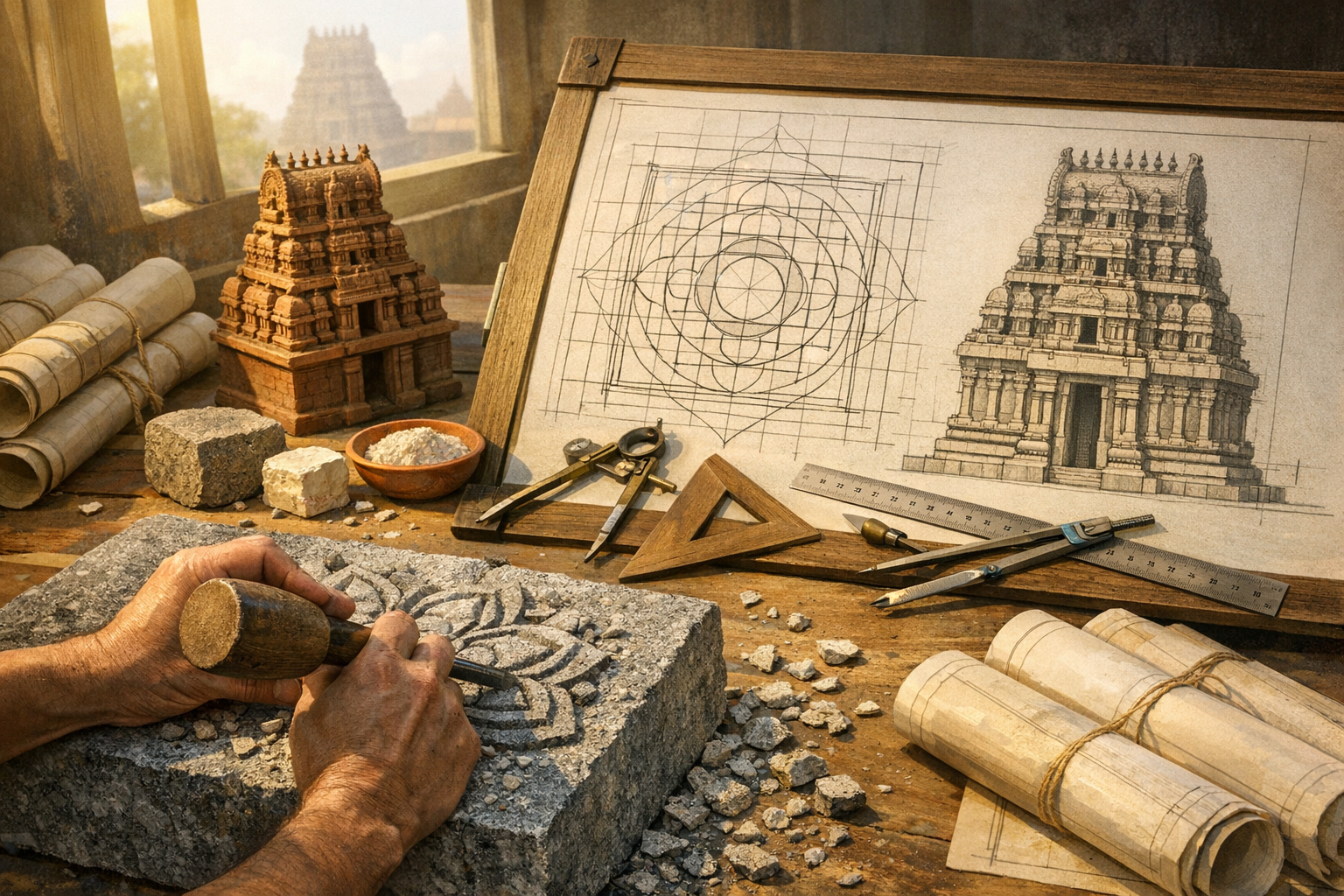
Applications are open from May 04 to June 20, 2026 for the 2026–2027 session at the TTD-run Sri Venkateswara Traditional Temple Architecture & Sculpture College, Tirupati. The College offers a four-year Diploma and a two-year Certificate, with eligibility for 10th-pass candidates and free accommodation for admitted students. Training in this field blends Vedic and Śilpa-śāstra…
-
Unveiling Nigada: The Hidden Vedic Mantras Orchestrating Yajña with Sacred Precision

Nigada designates a specialized class of Vedic utterances that coordinate action, timing, and intention within yajña. Set apart from rik, yajus, and saman, nigada acts like a subtle conductorsoftly voiced cues that synchronize priests, offerings, and chants. The piece clarifies how nigada differs from related forms like nivid and praīṣa, and why śikṣā (phonetics) and…
-
From Flower to Faith: Uncovering Puja’s Roots, Vedic Evolution, and Sacred Simplicity

This essay explores the timeless essence of puja by tracing its etymology, ritual history, and lived practice, from the Dravidian echo of ‘pu’ (flower) to Sanskrit notions of honor and reverence. It clarifies how Vedic, Purāṇic, and Agamic sources shaped today’s home and temple worship, including pañcopacāra and śoḍaśopacāra frameworks. Readers gain practical guidance for…
-
Dakshinagni Unveiled: The Southern Vedic Fire of Ancestors, Ritual Mastery, and Dharma

Dakshinagni is the southern member of the Vedic triad of fires, maintained by an ahitagni and widely identified with the anvāhāryapacana, the hearth used for ritual cooking. Placed to the south within the sacrificial area, it complements garhapatya (west) and āhavanīya (east) to complete a precise ritual ecology. Its role is both pragmaticpreparing ritual foods…
-
Karna’s Elephant-Chain Banner: Fate, Dharma, and the Unyielding Spirit of Kurukshetra

The Mahabharata’s standards were a battlefield lexicon, distilling each warrior’s identity and philosophy into potent symbols. Within this system, tradition associates Karna with an elephant-chain emblem, a motif that fuses material realismcontrol of war elephantswith moral allegorypower managed by duty. While not uniformly attested across all recensions, the emblem appears in parts of the textual…
-
Vamana Jayanti 2026: Celebrate Humility and Dharma on Shukla DwadashiDate, Rituals, Meaning
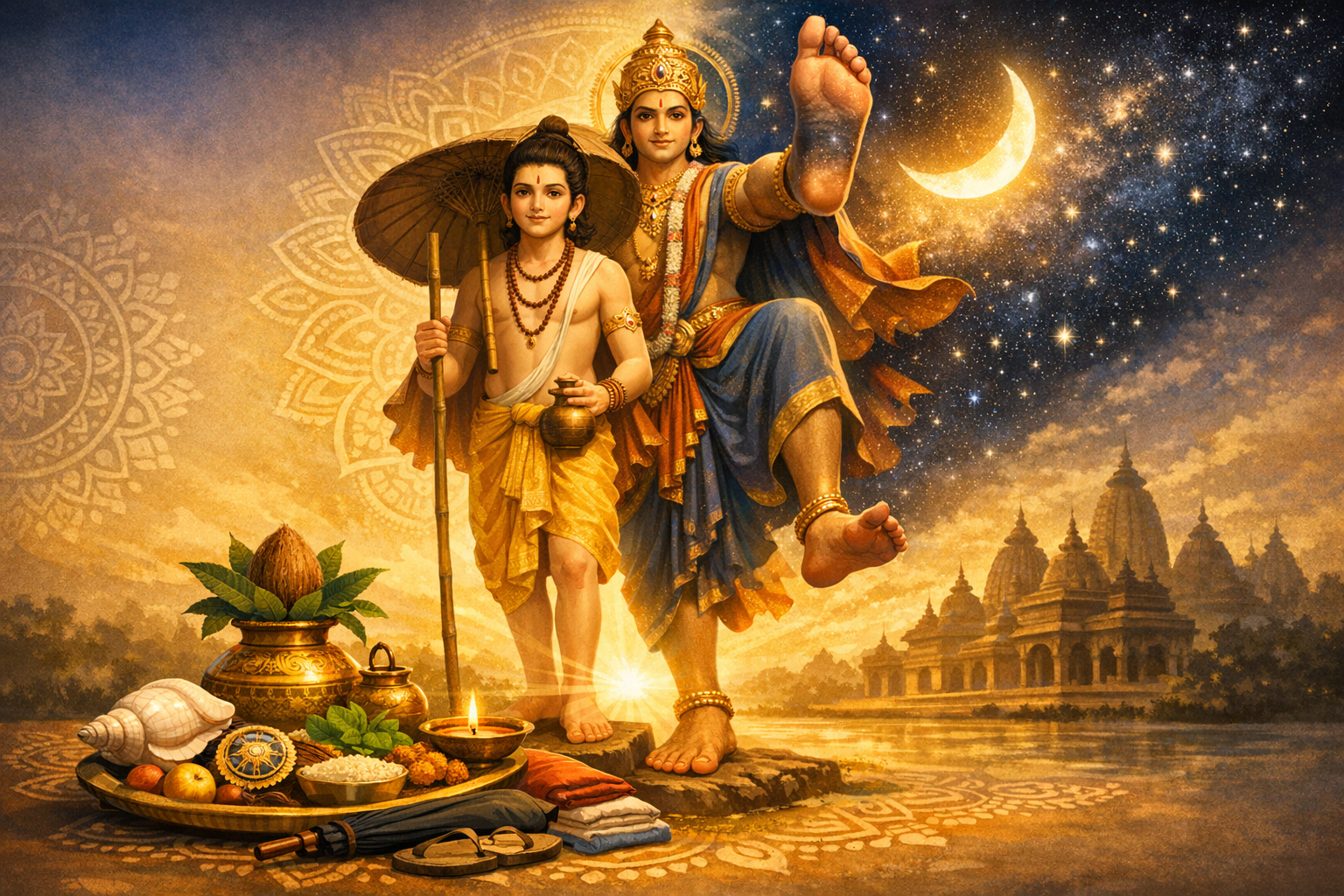
Vamana Jayanti 2026 falls on September 23 (Bhadrapada Shukla Dwadashi) and honors Lord Vamana, the fifth avatara of Lord Vishnu, celebrated through puja, stotra recitation, and charity. The observance follows the tithi-at-sunrise rule, so devotees should confirm local Panchang data for accuracy. The Vamana–Mahabali narrative highlights humility, truthfulness, rightful sovereignty, and generosity, values shared across…
-
Padmavathi Srinivasa Kalyanam 2026: Sacred Tirumala Dates, Rituals, Darshan and Travel Guide

Sri Padmavati Srinivasa Parinayotsavam (Padmavathi Srinivasa Kalyanam) will be held in Tirumala from 25–27 April 2026 at the Parinayotsava Mandapam, Narayangiri Gardens. This in-depth guide explains the festival’s theological significance, its Vaikhanasa Agama-based wedding rituals, and the role of Sridevi and Bhudevi with Sri Srinivasa in the Tirumala observance. Readers gain clear planning insights on…