
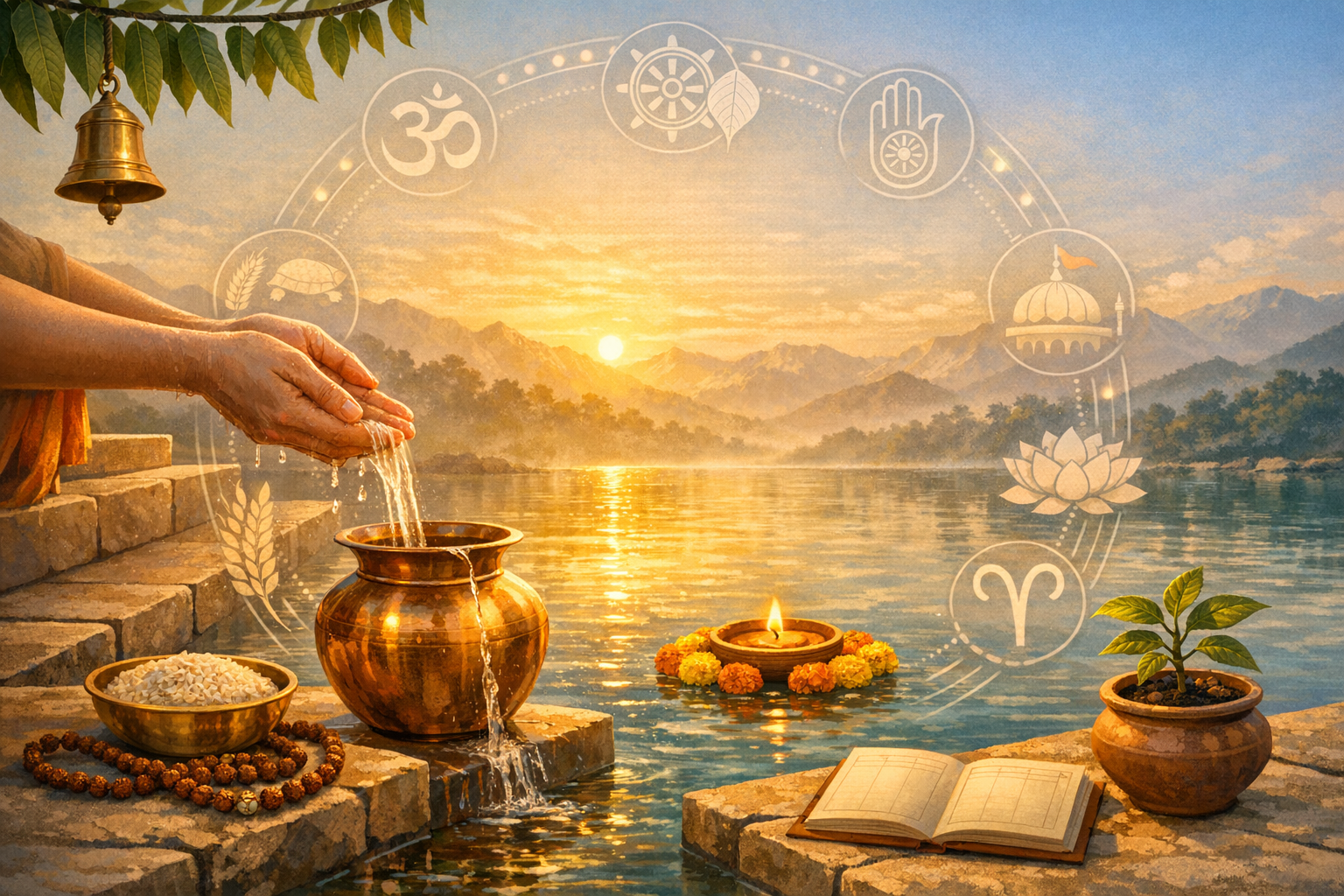
Vaishakh (also written as Vaisakh; Vaishakha masam, Vaisakh Mahina) is the second month of the Hindu lunisolar calendar and a bridge across dharmic traditions. In 2026, Vaishakh follows two well-established regional calculations. As per North Indian Hindi (Purnimanta) calendars, Vaishakh begins on 3 April 2026 and ends on 1 May 2026. In the Amanta system followed in Telugu, Kannada, Marathi, and Gujarati almanacs, Vaishakh starts on 18 April 2026 and concludes on 16 May 2026.
The difference between these spans arises from two traditional month-reckoning conventions. A Hindu lunar month tracks the synodic cycle of the Moon (approximately 29.53 days) and is divided into two fortnights (paksha): Shukla (waxing) and Krishna (waning). Purnimanta calendars count months from the day after a full moon to the next full moon; Amanta calendars count from the day after a new moon to the next new moon. Both use the same tithi (lunar day) rules grounded in sunrise at a given location, so festival days usually match nationwide even when the month label differs.
Geographically, the Purnimanta convention predominates in North and much of Central India, while the Amanta convention is standard in Maharashtra, Goa, Gujarat, Telangana, Andhra Pradesh, and Karnataka. For devotees and planners, the practical implication is straightforward: rely on a region-appropriate panchang for exact tithi windows, but expect pan-Indian observances to align by date because tithi is the controlling factor.
Vaishakh also corresponds to an important solar transition: Mesha Sankranti, when the Sun enters Aries, anchors regional solar new years around mid-April. The solar month of Vaisakh in Punjab begins at this juncture, and the festival of Vaisakhi (Khalsa Sajna Diwas) arises here. In parallel, other regions mark Puthandu (Tamil), Vishu (Kerala), and Pohela Boishakh (Bengal). Thus, Vaishakh naturally becomes a season of shared renewal across Hindu, Buddhist, Jain, and Sikh communities.
Classical dharmic texts extol Vaishakh as an especially meritorious time for vrata, snana (sacred bathing), japa, dana (charity), and annadana. Families often experience this month as a gentle turn from spring to early summer, when elders recount how a pre-dawn river bath, mindful fasting, and simple alms can recalibrate daily life with purpose and serenity. Pilgrims frequently describe the first Vaishakh dip in the Ganga at sunrise as deeply restorativean experience that blends devotion with the season’s clear light.
Several widely observed vratas and festivals typically fall within Vaishakh’s tithi framework. Akshaya Tritiya (Akha Teej) occurs on Vaishakha Shukla Tritiya and is regarded as a sarva-siddha muhurtaauspicious in itself without additional muhurta selectionfor japa, daan, yajna, and initiations; Jains also observe the Varshi-Tap Parana on this day. Mohini Ekadashi (Shukla Ekadashi) and Apara Ekadashi (Krishna Ekadashi) guide householders toward restraint and remembrance. Pradosha Vrat appears twice in the month (once in each paksha), Masik Shivaratri falls on Krishna Chaturdashi, and Vaishakh Amavasya is dedicated to tarpan and pitru-karya. Vaishakh Purnima carries multiple resonances: Kurma Jayanti in the Vaishnava tradition, Buddha Purnima (Vesak) in the Buddhist world, and the popular Satyanarayana Puja in many Hindu homes.
For 2026 planning, these observances will occur within the two verified month windows noted above: 3 April to 1 May (Purnimanta) and 18 April to 16 May (Amanta). Vaisakhi, anchored to the solar ingress around 13–14 April, coincides with the onset of the solar Vaisakh month and sits close to these lunar spans. Because local sunrise governs tithi boundaries, devotees should consult a credible regional panchang to confirm observance dates and the most suitable worship intervals in their city or village.
Ritual praxis in Vaishakh emphasizes sincerity over spectacle. On Akshaya Tritiya, many choose to begin study or seva initiatives precisely because the day itself is deemed auspicious. For domestic ceremonies that do require muhurta selection, practitioners typically look at sunrise-based tithi overlap, avoid Rahu Kalam, and consider customary intervals such as Abhijit Muhurta when appropriate. The principle of desa–kaala–patra (place–time–person) reminds practitioners to harmonize tradition with context and well-being.
Vaishakh Snanaperformed at home or during pilgrimagesappears in texts such as the Skanda Purana and Padma Purana as a practice that purifies and steadies the mind. Simple, compassionate acts, including jala-daan (water distribution), anna-daan, and tree-planting, become living dharma when the season grows warmer. Many households find that these practices foster intergenerational bonds, with children learning by participating in daily puja and small, consistent acts of kindness.
The Himalayan pilgrimage circuit often awakens with Vaishakh. In recent years, the Gangotri and Yamunotri shrines have customarily opened around Akshaya Tritiya, with Badrinath and Kedarnath following soon after as weather permits. Travelers planning a Chardham Yatra are well served by checking official temple and state advisories alongside their panchang to synchronize spiritual intent with mountain conditions and safe transit windows.
From a calendrical perspective, intercalation (adhika masa) occurs periodically to realign lunar and solar cycles; when it happens, panchangs explicitly mark it. In 2026, mainstream almanacs present a single Vaishakh according to the two regional systems listed at the outset. This clarity helps households coordinate life eventssuch as upanayana, griha-pravesh, or sankalpa for studieswithin Vaishakh’s widely honored timeframe.
Vaishakh’s broader significance lies in how it unifies shared values across dharmic paths. Vaishakh Purnima as Buddha Purnima (Vesak) underlines the Buddha’s message of compassion; Kurma Jayanti recalls the sustaining grace of Vishnu; Vaisakhi affirms the Khalsa’s courage and discipline; and Jain observances on Akshaya Tritiya model steadfast tapas and ethical restraint. The month’s tapestry thus becomes a living classroom of unity, where diverse practices express a common commitment to wisdom, compassion, and service.
In sum, Vaishakh 2026 offers a clear, verifiable schedule across regions3 April to 1 May (Purnimanta) and 18 April to 16 May (Amanta)and an invitation to deepen practice through vrata, dana, study, and pilgrimage. Aligning observances with a trusted local panchang, caring for community and environment, and celebrating the many ways dharma is lived across Hinduism, Buddhism, Jainism, and Sikhism together make Vaishakh a month of lasting goodness and renewal.
Inspired by this post on Hindu Pad.
