
-
Shattering the Illusion of Ego: How Pride Sabotages Liberation across Dharmic Traditions
Pride—whether named ahamkara, asmita, mana, or haumai—emerges as a shared obstacle to liberation across Hinduism, Buddhism, Jainism, and Sikhism. This essay synthesizes scriptural anchors from the Bhagavad Gita, Upanishads, and Yoga Sutra with parallel insights from Buddhist, Jain, and Sikh teachings to show how egoic inflation thrives on the illusion of separation. Readers will gain…
-
Divine Lawkeeper: How Dharma and Karma Make God the World’s Most Just Policeman

This essay presents a rigorous, accessible account of how Hindu philosophy understands God as the ideal lawkeeper through the integrated workings of dharma, karma, and ṛta. Readers learn how justice in Sanatana Dharma is primarily restorative and educational, privileging conscience, proportionality, and reform over retribution. The discussion bridges scripture (Bhagavad Gita, Dharmasastra, Arthasastra) with social…
-
Seeing the Banyan in a Seed: Profound Hindu Wisdom on Infinite Potential and Dharmic Unity
Hindu wisdom describes spiritual vision as the ability to perceive wholeness within the smallest fragment of reality, symbolized by seeing a vast banyan in a tiny seed. Drawing on the Chandogya and Mundaka Upanishads, the discussion clarifies how potentiality unfolds lawfully into form and how this insight aligns with Vedanta, Sankhya-Yoga, and systems science. Convergences…
-
Timeless Lila: Exploring the Divine Play of Being and Becoming Across Dharmic Paths
This long-form exploration presents Lila—the eternal divine play—as a framework for understanding how being and becoming interrelate across Hinduism, Buddhism, Jainism, and Sikhism. Drawing on the Upanishads, Vedanta (Advaita, Vishishtadvaita, Dvaita), the Bhagavad Gita, and Shaiva–Shakta thought, it clarifies how creation, preservation, and dissolution express a living unity. It maps key concepts like dharma, karma,…
-
Beyond Shadows: Plato’s Cave, Dharmic Wisdom, and the Mind’s Illusion of Reality

Plato’s allegory of the cave explains why humans often mistake partial images for complete reality; Dharmic philosophies show how to correct that error through disciplined practice. This article integrates Plato’s ascent with Hindu, Buddhist, Jain, and Sikh frameworks—avidya and maya, the two truths, anekantavada, and Naam—demonstrating how perception can be retrained. Readers gain a rigorous…
-
Beyond Facts: Transformative Teaching through Dharma—Timeless Hindu, Buddhist, Jain, Sikh Insights

Education is not the mere transfer of facts; in dharmic traditions it is a transformative process that unites knowledge, character, and contemplative depth. Drawing on Hindu, Buddhist, Jain, and Sikh insights, this analysis explains why śravaṇa–manana–nididhyāsana, anekāntavāda, and the triad of śabad–sangat–seva map onto evidence-based practices like active learning and mindfulness. It clarifies the parā/aparā…
-
Two Yet One: Advaita Vedanta’s Science of Oneness and a Dharmic Bridge across Traditions

The teaching ‘you and I are two persons; yet we are one’ expresses Advaita Vedanta’s core insight: empirical plurality and ultimate unity coexist without contradiction. This long-form exploration clarifies Brahman, Atman, and the roles of maya and avidya, situating ethics and devotion within a rigorous non-dual framework. Drawing on the Upanishads and the Bhagavad Gita,…
-
Affection Without Weakness: Timeless Dharmic Wisdom for Compassionate, Courageous Living

This article reframes affection as a resilient strength when aligned with discernment, boundaries, and ethical purpose across Hinduism, Buddhism, Jainism, and Sikhism. Drawing on the Bhagavad Gita, Vidura-niti, the Brahmavihāras, Anekāntavāda, and the Sikh Sant-Sipahi ideal, it shows how compassion matures with wisdom and becomes courage in action. Readers gain a practical decision process rooted…
-
Yoga Dakshinamurti Unveiled: Two Sacred Postures, Agamic Iconography, and Inner Silence

Dakshinamurti, Shiva’s south-facing form, embodies the Adi Guru whose silence instructs more deeply than speech. This long-form guide decodes two canonical idol forms of the Yoga Dakshinamurti—Dhyana-Padmasana and Virasana/Maharajalilasana—using Agamic and Shilpa Shastra principles. Readers learn practical cues to identify each form in temples, from asana and yogapatta to mudras, attributes, and the optional presence…
-
Goddess Shivani as Divine Shakti: Symbolism, Yogic Science, and Awakening Consciousness
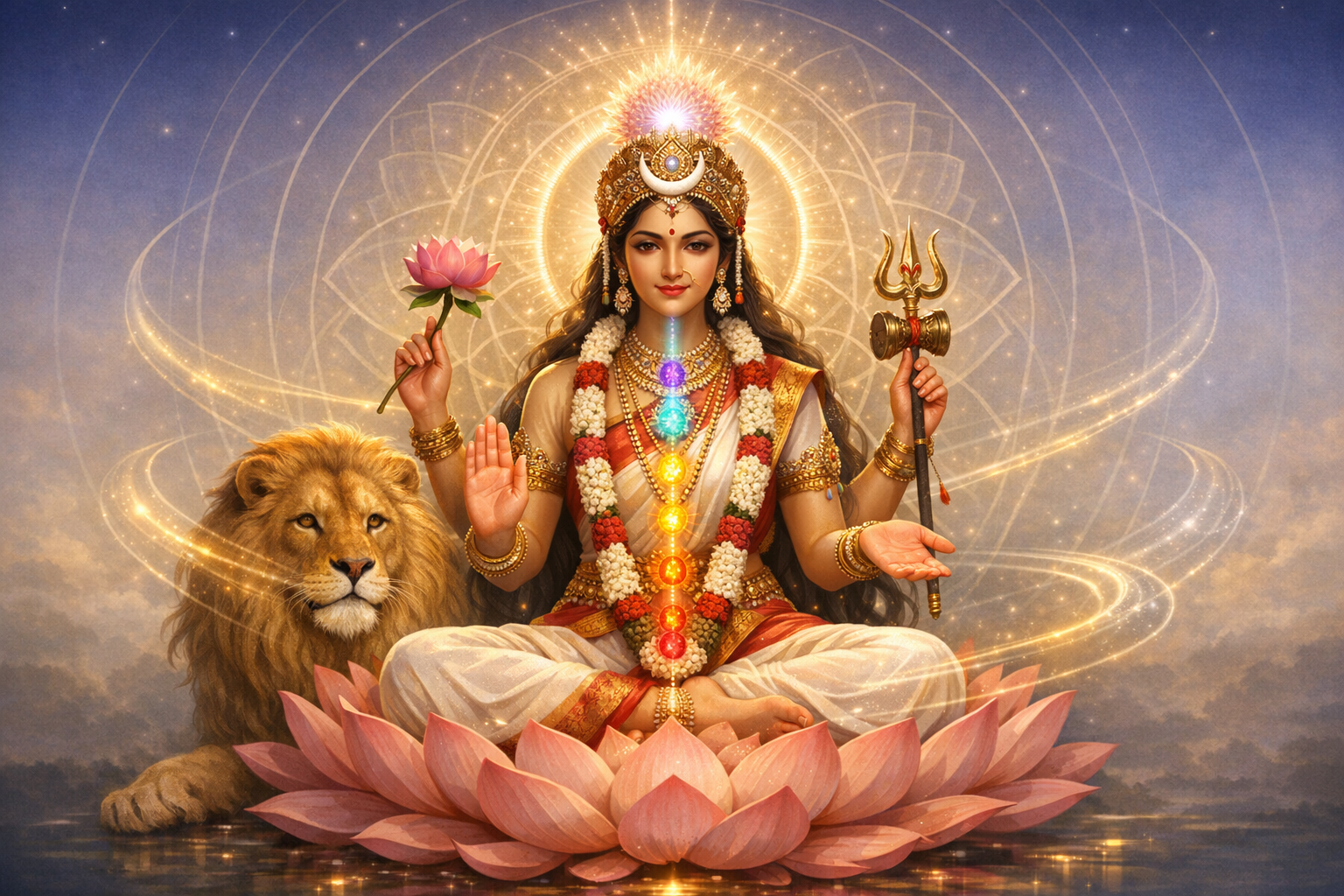
Goddess Shivani is presented as a luminous expression of Devi Shakti, the Sacred Feminine that awakens divine consciousness in Hindu philosophy. The discussion clarifies Shivani’s identity as an epithet aligned with Parvati, explores Shiva–Shakti non-duality, and explains the five cosmic functions, the triad of shaktis, and their ethical implications. Yogic science is detailed through Kundalini,…
-
A Guru Can Guide, Not Save: Self‑Realization Across Hindu, Buddhist, Jain, Sikh Paths

Across Hinduism, Buddhism, Jainism, and Sikhism, a unifying principle stands out: a guru can guide, not save, and Self-Realization depends on disciplined personal effort. This article grounds the point in the Bhagavad Gita and Upanishads, while showing its parallels in Buddhist, Jain, and Sikh teachings. It clarifies how grace and effort cooperate without inviting passivity,…
-
From Brahman to Cosmos: Decoding Hindu Cosmology, Cyclic Time, and Dharmic Unity

Hindu cosmology portrays creation as emergence from an undivided reality, Brahman, rather than a one-time act ex nihilo. Drawing on the Upanishads, Sāṅkhya, Vedānta, and the Puranas, it explains how the subtle becomes gross through ordered stages, from mahat and ahaṅkāra to the five elements. Cyclic time—yugas, manvantaras, and kalpas—replaces linear beginnings with rhythmic manifestation…
-
Why Pleasure Escapes Us: Hindu Wisdom on Desire, Avidya, and the Path to Lasting Ananda

Why does pleasure fade so quickly, and why does desire return so reliably? This long-form analysis uses Hindu philosophy—Bhagavad Gita, Yoga Sutras, and Upanishads—to explain the psychology of craving via avidya, raga-dvesha, samskara, and the gunas. It clarifies the distinction between sukha (contact-based pleasure) and ananda (enduring joy) and situates kama within the purusharthas under…
-
Clash and Convergence: How Vedic and Western Worldviews Shaped Science, Faith, and History

This long-form essay traces how encounters between Vedic knowledge systems and Western scholarship reshaped global debates on science, faith, and history. It contextualizes John Bentley’s 1825 rebuke of John Playfair within wider conflicts over chronology, authority, and civilizational legitimacy. Readers gain a clear view of India’s mathematical and astronomical achievements, the emergence of Indology, and…
-
Can God Be Seen? Discipline, Darshan, and the Hard-Won Freedom of True Liberation
Can God be seen? Dharmic traditions answer yes—but only when the instrument of knowing is refined by ethics, contemplation, study, service, and grace. Drawing on the Bhagavad Gita, the Upanishads, Yoga Sutras, and parallel insights from Buddhism, Jainism, and Sikhism, this essay explains why darshan is not a spectacle but a disciplined way of seeing.…
-
Dissolving Matter’s Mirage: Dharmic Wisdom on Returning to the Primordial, Nondual Source

This essay examines how dharmic traditions understand the illusion of materiality and the emergence of a primordial, nondual source through deep inquiry. Drawing on the Upanishads, Bhagavad Gita, Advaita Vedanta, and yogic practice, it explains the movement from gross to subtle via pañca-kośa and the triad of sthūla–sūkṣma–kāraṇa śarīra. It highlights complementary perspectives in Buddhism…
-
The School of Life: Insights from HH Svayam Bhagavan Keshava Maharaja’s Marathon Podcast (Dec 2025)

In December 2025, HH Svayam Bhagavan Keshava Maharaja’s Marathon Podcast, The School of Life, presented a disciplined framework for living as a spiritual education. The approach integrates puruṣārthas with yogic psychology, translating Vedic philosophy and the Upanishads into daily, reproducible practices. Bhakti, karma yoga, jñāna, and dhyāna are balanced with ethics like satya, ahiṁsā, and…
-
Why Sanskrit Calls Humans “Nara”: Deep Origins, Dharma, and the Power of Karma
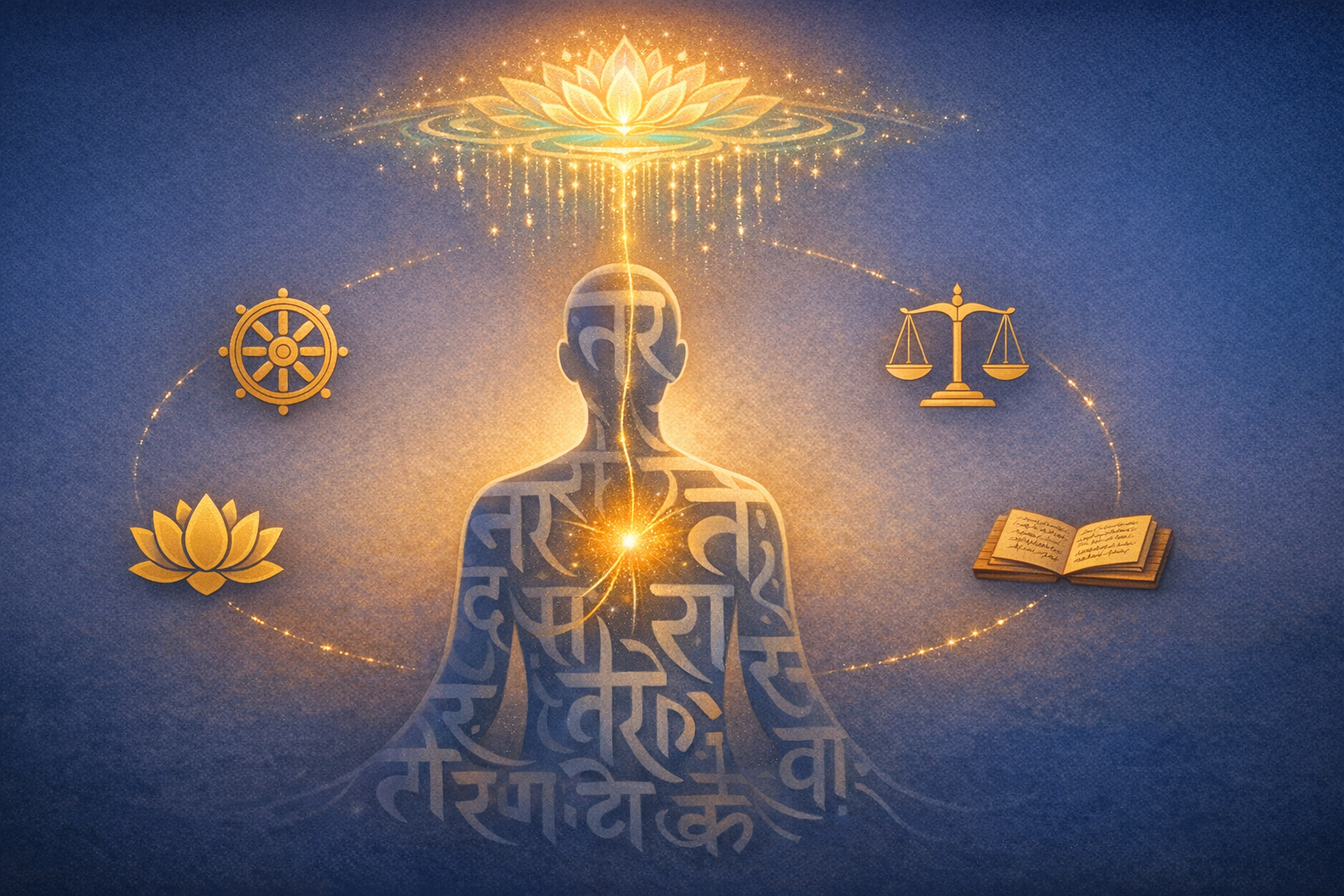
The Sanskrit term “nara” does more than denote a human being; it encodes a civilizational understanding of agency, ethics, and liberation. Its deep Indo-European etymology, rich scriptural presence, and philosophical nuance explain why Hinduism treats human life as uniquely suited to dharma and karma. Classical distinctions—sañcita, prārabdha, and kriyamāṇa karma—show how present choices reshape experience.…
-
Disarming the Ego: A Cross-Dharmic, Science-Backed Guide to Self-Realization and Freedom

Ego is the single greatest barrier to self-realization because it fuses awareness with passing roles and narratives, a pattern Dharmic traditions diagnose with remarkable agreement. This essay integrates Vedanta, Buddhism, Jainism, and Sikhism with cognitive science to explain how Avidya and identity habits form—and how to unwind them. Readers gain a precise map of the…
-
Satyakama Jabala: A Timeless Upanishadic Tale of Truth, Inclusion, and Vedic Learning
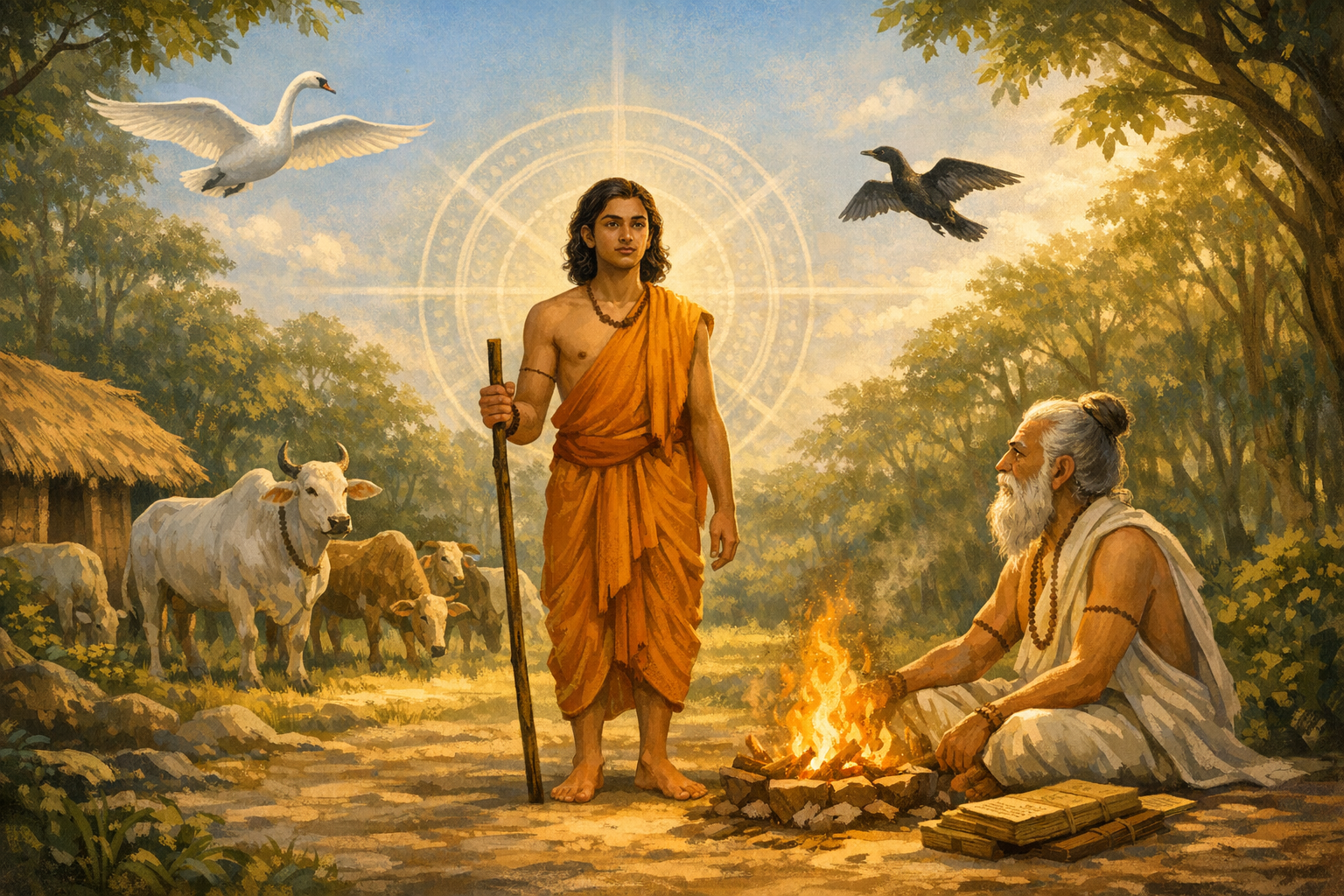
Satyakama Jabala, celebrated in the Chandogya Upanishad, embodies the Upanishadic conviction that truthfulness, not lineage, determines eligibility for the highest learning. His candid admission of uncertain ancestry and his acceptance by the sage Haridrumata Gautama have long been read as a scriptural affirmation of inclusion grounded in dharma. Through years of disciplined service in the…