
-
Sri Shankara Gita: Timeless Advaita Wisdom on Shiva’s Grace to Elevate Daily Practice

Sri Shankara Gita, traditionally associated with Adi Shankaracharya, distills Advaita Vedanta through the devotional lens of Lord Shiva’s grace. The text presents Shiva as the symbol of the Supreme Reality, guiding seekers from multiplicity to oneness. Its balanced integration of jnana, bhakti, and dharma makes the teachings both elevating and practical for daily practice. Readers…
-
Manas and Buddhi Explained: Harness the Two Minds for Clarity, Calm, and Wise Action

Manas and Buddhi describe two complementary functions of the mind in Hinduism: Manas gathers sensory impressions and emotions, while Buddhi provides discriminative clarity and ethical direction. The Bhagavad Gita (3.42) places Buddhi above Manas and both beneath the Self, offering a practical inner hierarchy for wise action. This model resonates across Buddhism, Jainism, and Sikhism,…
-
Jnana as Eternal Light: How Sacred Knowledge Unites Hindu, Buddhist, Jain, Sikh Paths

This essay presents jnana as the eternal light central to Hindu wisdom while connecting it with prajna in Buddhism, kevala-jnana in Jainism, and gyaan in Sikhism. It clarifies how knowledge in the Upanishads and Bhagavad Gita is transformative rather than merely intellectual, aligning atman with Brahman. Readers gain practical guidance—svadhyaya, dhyana, seva, satsanga—for integrating insight…
-
Paramapurushartha Explained: The Supreme Human Goal in Hindu Thought for Inner Freedom

Paramapurushartha signifies the supreme human goal in Hindu philosophy, situating moksha as the culmination of life’s aims while harmonizing dharma, artha, and kama. It offers a practical framework for meaning, guiding ethical prosperity and refined enjoyment toward inner freedom. Drawing on the Upanishads, Bhagavad Gita, and Yoga, it aligns with parallel ideals across Dharmic traditions—nirvana…
-
From Stone to Spirit: Temple Worship that Deepens Realization of the All-Pervading Divine

Temple worship and divine omnipresence are not rivals in Hinduism; they are complementary stages on one path of God-realization. By training attention through darshan, aarti, and japa, the temple prepares the mind for stable, formless meditation. The Ishta concept personalizes devotion without limiting the Divine, guiding the heart from the particular to the universal. This…
-
Destiny vs. Free Will: How Karma and Choices Shape Our Future Across Dharmic Traditions

Is the future predetermined, or do choices genuinely shape outcomes? Drawing on Hinduism, Buddhism, Jainism, and Sikhism, this piece clarifies how karma names conditions from the past while puruṣārtha preserves present agency. The Bhagavad Gita’s Karma Yoga, Buddhism’s emphasis on intention, Jainism’s ethical discipline, and Sikhism’s balance of Hukam and effort converge on responsible freedom.…
-
Beyond the Five Senses: Hinduism’s Profound Insight into Why Perception Misleads

Human perception is inherently limited, a point Hinduism has articulated for centuries and modern science increasingly affirms. The five indriyas capture only a fraction of reality, making errors of judgment likely without disciplined methods of knowing. Hindu epistemology balances pratyaksha (perception), anumana (inference), and shabda (authoritative testimony) to refine understanding. Concepts like Maya and Avidya…
-
Beyond the Senses: Hindu Wisdom on the Mind’s Subtle Realm and Paths to Inner Clarity

This reflection explores how Hindu wisdom understands the mind as operating beyond the reach of the physical senses, while aligning with shared insights from Buddhism, Jainism, and Sikhism. It outlines a subtle map of mind—manas, buddhi, ahamkara, and chitta—and shows why sensory data alone cannot fully explain consciousness. Practical methods such as pratyahara, breath awareness,…
-
Beyond Status and Titles: Hindu Wisdom on Power, Ego, and the Difference Between Fans and Love

Modern culture often confuses admiration for status with genuine love. Hindu philosophy, supported by the Bhagavad Gita, Upanishads, Vidura-niti, Panchatantra, and the Mahabharata, clarifies that bonds rooted in utility fade when advantage fades. Dharmic traditions agree: love grounded in dharma, maitri, aparigraha, and seva sees the person beyond the pedestal. Readers gain practical indicators to…
-
Kshara and Akshara in Hindu Philosophy: Embrace Impermanence, Realize the Eternal

Kshara and akshara illuminate a central insight of Hindu philosophy: the world of change and the reality of the changeless. Drawing on the Bhagavad Gita, Vedanta, and the Upanishads, this exploration shows how recognizing impermanence fosters resilience, clarity, and compassion. It connects Hindu thought with related insights in Buddhism, Jainism, and Sikhism, emphasizing unity among…
-
Happiness Beyond Problems: Hindu Wisdom for Unshakable Inner Peace and Resilient Living

Hindu philosophy reframes happiness as inner steadiness rather than problem-free living. Drawing on the Bhagavad Gita, Karma Yoga, and meditative practices, it shows how equanimity reduces reactivity and supports ethical clarity. Practical tools—mindfulness, pranayama, Yoga, and reflective self-inquiry—help cultivate resilience and emotional balance. Everyday challenges then become opportunities for insight instead of triggers for turmoil.…
-
Supreme Knowledge vs Worldly Wisdom: Decoding Para–Apara Vidyā for a Balanced Life

Hindu philosophy distinguishes para vidyā (supreme knowledge) from apara vidyā (worldly wisdom) and treats them as complementary pathways. Apara vidyā equips people to fulfill dharma through practical skills, ethics, and social responsibility. Para vidyā delivers direct insight into ātman–brahman, resolving existential anxiety and orienting life toward moksha. Integrated, they transform everyday work into karma yoga…
-
Deep, Insightful Stillness: Ancient Hindu Wisdom for Clarity, Compassion, and Courage

This exploration shows why “Wisdom Emerges From Moments Of Deep, Insightful Stillness” is central to ancient Hindu wisdom and the broader dharmic ethos. Stillness is presented as a cultivated mental and spiritual composure that clarifies perception and supports ethical action. The Bhagavad Gita and Upanishads ground this view, while dhyana translates it into trainable attention.…
-
Kandarishi in the Vedas: Sages of Karmakanda and Jnanakanda and Their Timeless Legacy

This article clarifies the meaning of Kandarishi in the Vedas as sages associated with specific sections (kanda) who articulate the balance of Karmakanda and Jnanakanda. It explains how ritual action (Samhita–Brahmana) and transcendent knowledge (Aranyaka–Upanishad) form a complementary continuum in Vedic tradition. Readers gain a clear map of Vedic structure alongside the roles rishis play…
-
Atmarina in Hinduism: Honoring the Self to Unlock Dharma, Clarity, and Liberation

Atmarina—the debt to the self—frames an inner commitment within Hinduism to cultivate clarity, virtue, and wisdom so that all other duties are fulfilled well. Grounded in the Upanishads, the Bhagavad Gita, and Yoga philosophy, it emphasizes svadhyaya, yama-niyama, wellbeing, and meditation. This approach strengthens Devarina, Pitrina, Rishirina, and Bhutirina by making worship sincere, tradition discerning,…
-
Beyond Circumstances: The Transformative Hindu Truth of Inner Freedom and the Ever-Free Self

This essay explains a core Hindu philosophical insight: true freedom is inner and independent of circumstance. Drawing on the Upanishads and the Bhagavad Gita, it clarifies how bondage stems from misidentification and how moksha is the recognition of the ever-free Self. It outlines practical pathways—Karma, Bhakti, Jnana, and Raja Yoga—that cultivate equanimity and clarity in…
-
Power and Tapas in Kalidasa: Tagore on Raghuvamsha and Kumarasambhava’s Lesson

Rabindranath Tagore’s reading of Kalidasa reveals a profound dialogue in Sanskrit literature between worldly power and inner discipline. Raghuvamsha maps the ascent born of tapas and the decline that follows indulgence, using dawn-and-dusk imagery to frame a moral architecture. Kumarasambhava then proposes the remedy: harmonize renunciation and enjoyment so that strength is born from balance.…
-
Master the Mind, Transform Reality: Dharmic Wisdom for Inner Freedom and Resilient Living

Dharmic wisdom teaches that mental mastery, not circumstances, determines freedom. The Bhagavad Gita, the Upanishads, the Dhammapada, Jain disciplines, and Sikh teachings converge on a shared insight: inner clarity transforms how reality is experienced. Practical methods such as breath awareness, mindfulness meditation, japa or simran, ethical restraint, and seva stabilize attention and soften reactivity. This…
-
Pashupati’s Sacred Symbolism: How Shiva Liberates Bound Souls and Guides All Beings
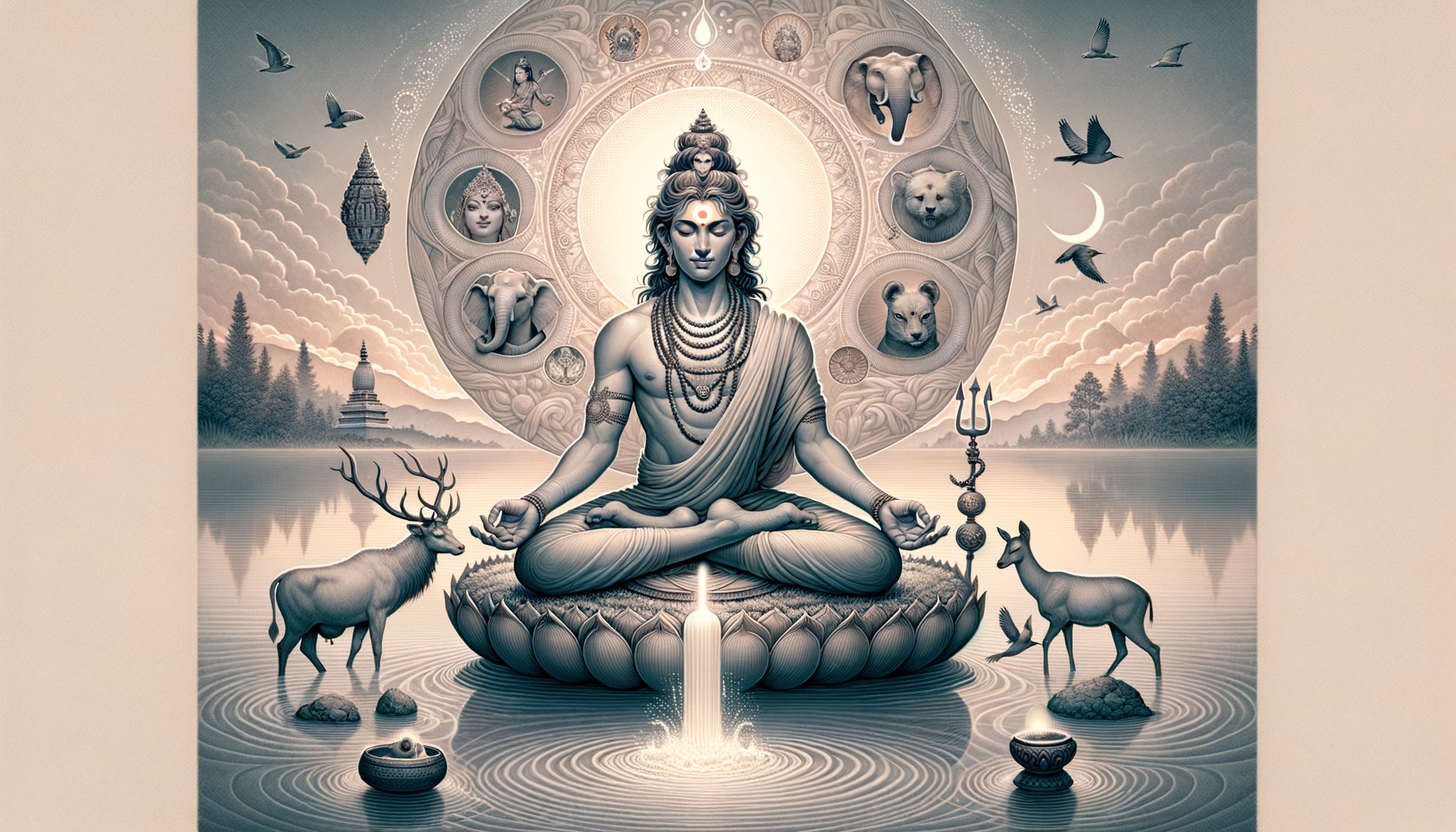
Pashupati, the profound epithet of Shiva, unites care for all beings with the promise of liberation from worldly bondage. Drawing on Hindu philosophy, it presents the Lord as protector of the bound soul and the One who severs the cords of ignorance and karma. The symbolism nurtures compassion, non-harm, and ethical living while guiding seekers…
-
Why Desires Persist in Kali Yuga: A Dharmic Roadmap to Master Craving, Age, and Satiety
Desire often outlives satiety and age in Kali Yuga, a pattern recognized across Hinduism, Buddhism, Jainism, and Sikhism. Dharmic teachings trace this persistence to avidya, samskaras, and ego, rather than mere lack of fulfillment. The Bhagavad Gita, Upanishads, Buddhist suttas, Jain ethics, and Sikh Gurbani converge on a practical cure: ethics, contemplation, and service. This…