
-
The Transformative Power of Divine Names: Vedas, Upanishads, and Epics for Inner Renewal

This reflection examines the power of divine names as preserved in the Vedas, Upanishads, Ramayana, and Mahabharata, highlighting how sacred sound directs the mind toward dharma. It presents chanting, mantra, and japa as disciplined practices that transform remorse into responsible action. The analysis emphasizes unity across Hinduism, Buddhism, Jainism, and Sikhism, where sacred namessuch as…
-
Why the 16 Samskaras Exclude Divorce: Sacred Purpose, Dharma, and the Role of Sannyasa

The 16 samskaras sanctify entry into life’s key stages, which is why a ritual for divorce does not appear among them. Vivāha is a consecration toward shared dharma, whereas dissolutions are handled through ethical and legal guidance, not sacramental rites. Sanyaasa illustrates how “letting go” is itself an initiation, not a deletion. Dharmashastras address separation…
-
The Transformative Power of Divine Names: Vedas, Epics, and Dharmic Unity
Divine names, celebrated in the Vedas, Upanishads, Ramayana, and Mahabharata, provide a practical discipline to steady attention, calm the breath, and strengthen ethical living. By anchoring the mind in nāma-smaraṇa or japa, practitioners experience reduced stress and clearer moral judgment. The same principle appears across Buddhism (Om Mani Padme Hum), Jainism (Namokar Mantra), and Sikhism…
-
Margazhi Masam 2025–2026 Dates: Auspicious Tamil Month of Devotion, Music, and Temple Rituals
Margazhi masam (Margali masam/Margali maasa) is the ninth month of the Tamil calendar, observed in 2025–2026 from 16 December 2025 to 14 January 2026. The month is renowned for early-morning temple openings, special pujas, and a strong emphasis on Brahma Muhurta worship. Traditions such as Tiruppavai and Thiruvempavai recitations, bhajans, and kolam-making infuse communities with…
-
Bhagavad Gita’s Timeless Intelligence: A Transformative Framework Beyond Modern Science

The Bhagavad Gita offers a rigorous framework that complements modern science by addressing meaning, ethics, and practice. Rather than a scientific treatise, it functions as a practical philosophy that stabilizes attention and clarifies action. Its insights into equanimity and non-attachment parallel contemporary psychological tools for resilience. Models such as the gunas and Panchakosha anticipate holistic…
-
Timeless Principles for Krishna Conscious Family Life: Culture-Sensitive, Dharmic Harmony

Krishna Conscious family life remains faithful to Srila Prabhupada’s teachings while adapting wisely to time, place, and circumstance. By prioritizing principles over rigid forms, families preserve authenticity and engage local culture with integrity. This approach aligns with the Hindu family system, supports Hindu spirituality and the Bhakti Tradition, and affirms unity in spiritual diversity across…
-
Why Choosing Spirituality Reflects True Wisdom: A Dharmic Path to Clarity, Peace, and Unity

Spirituality, within Hindu philosophy and related Dharmic traditions, is a deliberate, wise choice rooted in discernment and Dharma. It emphasizes distinguishing the temporary from the eternal, echoing the Bhagavad Gita and the Upanishads. Practically, it matures through ethics, Meditation, and Yoga philosophy, cultivating clarity, compassion, and resilience. Across Hinduism, Buddhism, Jainism, and Sikhism, diverse practices…
-
Remembering Gopichand Hinduja, 85: ISKCON Friend and Devotee of London’s Radha-Krishna Temple
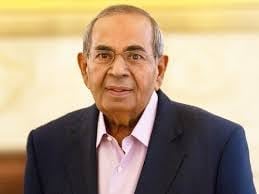
Gopichand Hinduja has passed at 85, remembered not only as a business leader but as a devoted friend of ISKCON in London. As shared by Kripamoya Prabhu, he visited London’s Radha-Krishna temple each morning before breakfast for kirtan and darshan. This steady discipline reflects core dharmic valuesseva, humility, and steadfast devotionthat resonate across Hinduism, Buddhism,…
-
Dharma as Living Ethics: A Compassionate Path to Spiritual Elevation and Unity
Dharma is a Sanskrit concept that defies exact translation, often approximated as righteousness, virtue, or moral law. It is best understood as living ethics: principles applied in daily life that elevate both the individual and society. This applied wisdom aligns personal responsibility with the common good, balancing svadharma and Lokasangraha. Across Hinduism, Buddhism, Jainism, and…
-
Mercury in the 12th House: Lalkitab Remedies for Peaceful Sleep, Clear Speech, and Inner Balance

This guide explores Mercury (Budha) in the 12th house through the lens of Lalkitab, offering practical, non-fatalistic remedies that foster clarity, restful sleep, and compassionate communication. It reframes older warnings about intoxication into a constructive call for sobriety and mindful routines. Readers will find accessible Wednesday observances, mantra practice, and simple household habits that stabilize…
-
Sat Sanga Dubai: Go-seva, Community Building, and GBC Leadership with HH Krishna Kshetra Swami
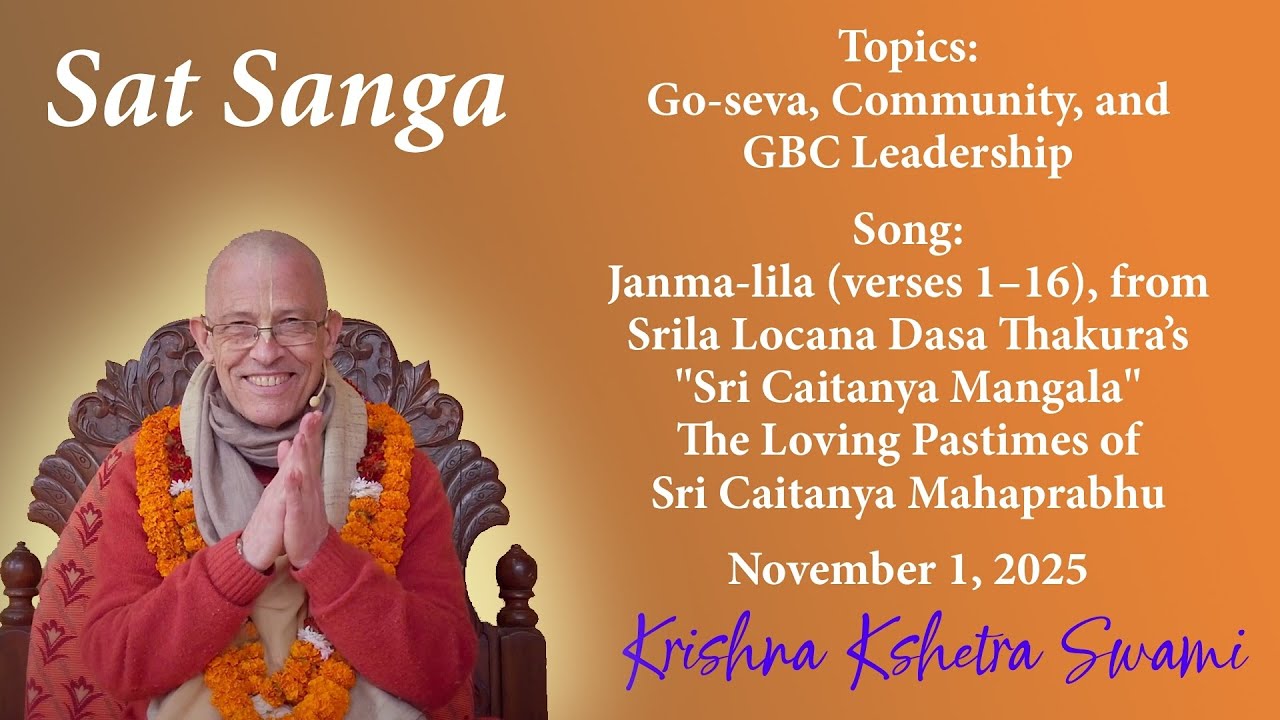
Held on November 1, 2025, in Dubai, this Sat Sanga with HH Krishna Kshetra Swami explored Go-seva, community building, and GBC leadership as mutually reinforcing pillars of devotional life. The session opened with Janma-lila (verses 1–16) from Sri Caitanya Mangala, setting a reflective, bhakti-centered tone. Practical takeaways included compassionate cow care, inclusive seva programs, and…
-
Eternal Truth in Time: How Hindu Avatars Restore Dharma and Inspire Inner Freedom
This article explores the Hindu concept of avatars as the eternal manifesting within time to restore dharma and guide beings toward moksha. It grounds the discussion in the Bhagavad Gita and Puranic narratives, while noting philosophical nuances across Advaita, Viśiṣṭādvaita, and Dvaita. Readers discover how avatars function as ethical exemplars whose presence educates through action…
-
Why Hinduism Has No Satan: A Powerful Dharmic Lens on Evil, Responsibility, and Liberation

Many ask why Hinduism has no Satan. The answer reveals a deliberate dharmic framework: evil is understood as ignorance, imbalance in the guṇas, and misalignment with dharmanot the work of an eternal adversary. Karma and the possibility of purification make an all-evil figure unnecessary, while epics like the Mahābhārata and the Bhagavad Gita emphasize inner…
-
See Through Conditioning: A Dharmic Guide to Compassionate Counsel without Attachment

The term “conditioned soul” conceals a vital insight: the self is distinct from matter even as conditioning shapes experience. This piece clarifies the paradox across Hinduism, Buddhism, Jainism, and Sikhism, showing how to consider conditioning without identifying with it. Readers gain practical toolssakshi-bhava, mindfulness, japa, seva, and graduated sadhanato offer compassionate guidance while staying anchored…
-
Who Are the ‘Good People’? A Dharmic Guide to Recognizing Virtue and Choosing Satsang

Spiritual traditions often advise keeping the company of the wise, yet the criteria can seem unclear. A dharmic lens makes the measure practical: consistent alignment with dharma, non-violence (ahimsa), truthfulness (satya), compassion (karuna), and self-restraint offers reliable evidence of goodness. The Bhagavad Gita’s daivi sampad and the Yoga Sutra’s yamas and niyamas provide observable markers.…
-
Para Prakriti in the Bhagavad Gita: Unveiling Higher Consciousness and Inner Freedom
This article clarifies the Bhagavad Gita’s teaching on para and apara prakriti, showing how the eightfold apara field relates to body, mind, and ego, while para prakriti points to the living awareness that enlivens experience. It references key verses (7.4–7.5, 15.7) and explains their practical relevance for yoga, meditation, and ethical life. Readers gain a…
-
Karnataka HC stays Dharmasthala ‘mass burial’ SIT probe, prioritizing due process and unity

The Karnataka High Court has issued an interim stay on the SIT investigation into the alleged ‘mass burial’ at Dharmasthala, emphasizing due process and judicial oversight. Petitioners linked to the original complaint asked the court to quash or withdraw aspects of their filing, prompting careful judicial review. The stay is not a verdict but a…
-
Jivanmukta Unveiled: The Silent Dance of Living Liberation in Hindu Philosophy

This article explores the jivanmuktaliving liberation in Hindu philosophyas an inner “silence” paired with an outer “dance” of unattached, compassionate action. It clarifies key traits such as equanimity, non-attachment, and dharma-guided service through the lens of the Upanishads, the Bhagavad Gita, and Advaita Vedanta. Readers gain practical markers of maturity: fewer reactive habits, steadier decision-making,…
-
Bhakti and the Worship of Form: Why Murti-Puja Guides the Mind Toward the Infinite

Bhakti embraces worship of form because the universe is seen as emerging from the Supreme Being, making contemplation of Bhagavan accessible. Since human cognition relies on imagery, murti-puja provides a practical bridge from form to the formless. As a symbolic focus, a murti does not limit the Infinite; it points beyond itself while cultivating one-pointedness…