
-
Odisha Case of Deception Spurs Call for Interfaith Trust, Consent, and Legal Accountability

A recent case from Kendrapara in Odisha highlights allegations of deception involving concealed identity and marital status, bringing attention to the importance of informed consent. The account underscores the need for legal accountability while discouraging communal stigma. It encourages communities to respond with empathy and a renewed commitment to interfaith harmony. Practical guidancesuch as transparent…
-
Haridwar Saints Call for Unity in IPL 2026: Calm, Dialogue over Bangladesh Player Row

Haridwar saints have opposed the inclusion of Bangladeshi cricketers in IPL 2026, warning of protests after Kolkata Knight Riders signed Mustafizur Rahman. This post explains the concerns in an academic, factual manner while emphasizing sports diplomacy, communal harmony, and interfaith dialogue. Readers gain a balanced overview of the issue and practical steps to de-escalate tensions.…
-
Why ‘Name and Form’ Create Suffering: A Powerful Dharmic Lens on Oneness and Freedom

Hindu philosophy traces suffering to separateness born of nāma (name) and rūpa (form), a misidentification that obscures underlying unity. Upanishadic and Advaita perspectives treat names and forms as provisional, while the Bhagavad Gita offers practicesjñāna, bhakti, and karma yogato reorient attention toward what endures. Everyday experiences show how labels intensify anxiety and craving; loosening identification…
-
Why a Harmonious Hindu Rashtra Remains Elusive: Confusion, Compromise, and Consequence

This analysis explains why the goal of a widely accepted Hindu Rashtra in Bharat remains elusive and how to realign the conversation with constitutional dharma. It clarifies the term’s meaning, separating civilizational ethos from theocracy, and shows how political compromises without clear frameworks erode trust. It maps the social consequences of ambiguitypolarization, misinformation, and policy…
-
Why Book Distribution Reignites Devotion: HH Niranjana Swami at ISKCON Mayapur

This reflection from ISKCON Mayapur captures HH Niranjana Swami’s core insight: inspiration in book distribution flows from sevapleasing Srila Prabhupada by sharing Krishna consciousnessrather than from taking breaks. By compelling compassionate dialogue about Krishna, the service aligns with Lord Chaitanya’s instruction to tell everyone about Krishna and “become a guru.” Practitioners commonly report that outreach…
-
Ram Temple Era in Bengal: Mamata’s Soft Hindutva, BJP Identity Politics, and a Call for Dharmic Unity

The Ram Temple era has intensified political competition in Bengal, as TMC and BJP recalibrate strategies around faith, identity politics, and governance. Mamata Banerjee’s soft Hindutva signaling, including public invocations like “Jai Mahakal.”, seeks to reassure Hindu voters while upholding a plural coalition. The BJP leverages Ayodhya’s symbolic momentum to deepen outreach and consolidate support…
-
Rantideva’s Radical Compassion: Reclaiming Boundaries, Dharma, and Everyday Kindness

This reflection reframes King Rantideva’s radical compassion as disciplined generosity rather than co-dependency. It addresses modern skepticism about politicians’ promises and charity by proposing dharmic discernmentviveka, vairagya, and svadharmaas tools for balanced kindness. Readers gain practical guidance on giving with boundaries: verify organizations, calibrate support to capacity, and serve through trustworthy community networks. The analysis…
-
Punjab’s Silent Cancer Epidemic: Urgent Actions to Protect Families, Farms, and Futures

Punjab faces a silent cancer epidemic, especially in the Malwa belt, where families shoulder the burden of late diagnoses and long-distance care. This analysis outlines the main risk factorsagrochemical exposure, groundwater contamination hot spots, industrial effluents, open burning, and lifestyle riskswhile emphasizing prevention through screening and environmental health. Readers gain a clear roadmap: integrated pest…
-
Unbreakable Loyalty in Chains: Sikh Brothers’ Principled Leadership during Captivity

This piece explores how Sikh brothers embodied principled leadership during wartime captivity, demonstrating the sant-sipahi (saint-soldier) ethos where courage is guided by compassion. It shows how steady routines, shared rations, simran, and fair mediation preserved dignity and morale in harsh conditions. The narrative emphasizes that loyalty, rooted in dharma and Sarbat da Bhala, is fidelity…
-
Honoring the Fading Ācārya: Guiding New Generations Toward Unified Dharma in Naperville
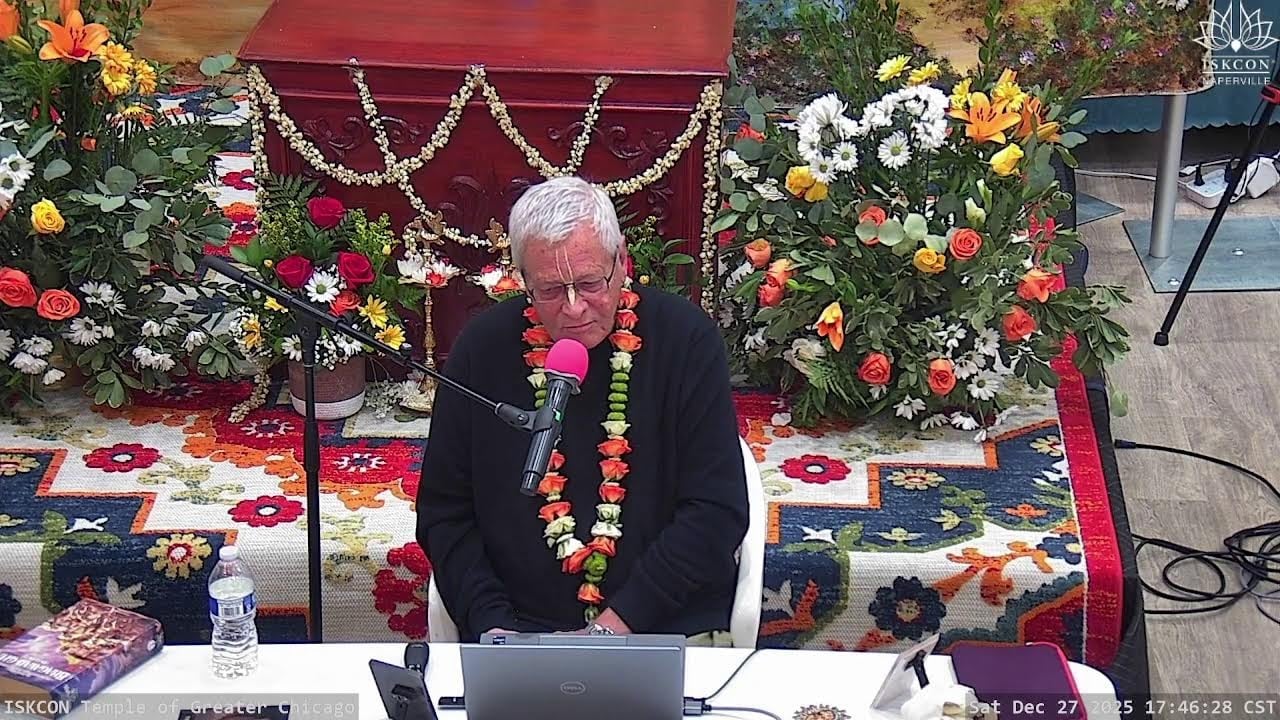
A December 27 gathering in Naperville, led by HG Gopal Bhatta Prabhu, explored how communities can honor a “fading ācārya” by strengthening intergenerational stewardship. Anchored in Srila Prabhupada’s metaphor of the “skyscraper skeleton,” the reflection urged later generations to refine and complete the legacy without compromising high standards. It outlined a progression in which the…
-
Why Humans Hurt Each Other: Dharmic Wisdom on Violence, Ahimsa, and Inner Healing

Human violence has evolved from survival struggles to conflicts over identity and ideology. Dharmic wisdomacross Hinduism, Buddhism, Jainism, and Sikhismoffers a rigorous, compassionate framework to reduce harm without denying responsibility. Concepts such as dharma-yuddha, ahimsa, and Anekantavada set ethical constraints, cultivate pluralism, and challenge absolutist thinking. Psychological insights into krodha, lobha, and moha pair with…
-
Harsu Brahma Jayanti 2026: Date, Tithi, and the Inspiring Legacy of Dharma and Courage

Harsu Brahma Jayanti 2026 falls on 27 January and commemorates the birth anniversary of Harsu Brahmaji. The day honors Harsu Brahma Pandey, a Kanyakubja priest remembered for principled resistance and moral courage. Observers are encouraged to consult the local Panchang to determine the precise Harsu Brahma Tithi and regional timings. The Jayanti’s significance lies in…
-
Beyond Differences: Dharmic Wisdom on Unity, Empathy, and the Illusion of Separation

Modern life often magnifies difference while obscuring shared humanity. Drawing on dharmic wisdom, this reflection shows how Hinduism, Buddhism, Jainism, and Sikhism converge on a vision of unity that honors diversity without erasing conviction. It highlights how concepts like Tat Tvam Asi, Anekāntavāda, pratītya-samutpāda, and Ik Onkar ground compassion and interfaith harmony in a coherent…
-
Kerala Oath Row: ‘Jai Hind’ Apology Spurs Debate on Patriotism, Pluralism, and Unity

An LDF councillor in Thiruvananthapuram apologised after saying “Jai Hind” during an oath-taking ceremony, sparking debate about party culture and public expressions of patriotism in Kerala. The BJP criticised the CPI(M)-led LDF, framing the apology as evidence of ideological pressure. The phrase “Jai Hind,” widely seen as inclusive and non-partisan, highlights the tension between procedural…
-
Cutting the Tree for Fruit: Hindu Dharma’s Warningand a Path to Climate Responsibility

This reflection explains how the Hindu metaphor of cutting down the tree to get the fruit exposes the dangers of short-term gains and guides long-term responsibility. It situates the teaching within ancient scriptures like the Bhagavad Gita and aligns it with environmental ethics and climate action. The piece highlights shared values across Hinduism, Buddhism, Jainism,…
-
Why Sanatana Dharma Endures: The Self-Correcting Wisdom Unifying Dharmic Traditions

Sanatana Dharma endures because it carries a built-in, self-corrective system that updates practice without losing core principles. Hinduism’s framework of shruti, smriti, ācāra, and yukti enables context-aware refinement guided by reason and community debate. Buddhism, Jainism, and Sikhism share this ethos through councils, Anekantavada, and collective deliberation, demonstrating a broader dharmic commitment to internal reform.…
-
Vidya Ganapati: A Scholarly Guide to Knowledge, Memory, and the Joy of Learning

Vidya Ganapati symbolizes knowledge, wisdom, memory, and disciplined learning, guiding students and scholars toward clarity, focus, and ethical study. The iconographybook, rosary, lotus, and mouseinvites humility, contemplation, and purity of intent. Across homes and classrooms, simple practices like mindful breathing and mantra help calm anxiety and steady memory without replacing hard work. The ethos resonates…
-
Allahabad HC declares ‘Sar Tan Se Juda’ an offence against the State, reinforcing unity and rule of law

The Allahabad High Court ruled that the slogan ‘Sar Tan Se Juda’ is an offence against the State because it challenges India’s sovereignty and incites armed rebellion. The decision clarifies the constitutional limits of free speech by distinguishing lawful dissent from explicit advocacy of violence. It offers actionable guidance for police, prosecutors, and lower courts…
-
Sahibzadas’ Supreme Sacrifice: A Moving Testament to Faith, Freedom, and Dharmic Unity

The saga of the SahibzadasGuru Gobind Singh’s four sonsrepresents a timeless testament to faith, freedom, and dharmic unity. Their martyrdom at Chamkaur and Sirhind in 1705 exemplifies moral courage under profound adversity, offering insights into Sikh history and broader Indian heritage. By foregrounding the shared values of dharma, satya, and compassion found across Hinduism, Buddhism,…
-
Assam grants 25 acres in Guwahati to TTDlandmark boost for Venkateshwara devotion and unity

The Government of Assam has allocated 25 acres in Guwahati for a Tirumala Tirupati Devasthanams (TTD) Venkateshwara Swamy Temple, marking a pivotal expansion of pilgrimage infrastructure in Northeast India. The Andhra Pradesh Chief Minister’s communication to the Assam Chief Minister regarding enhancement of the allotment highlights constructive inter-state cooperation. A TTD Temple in Guwahati can…