
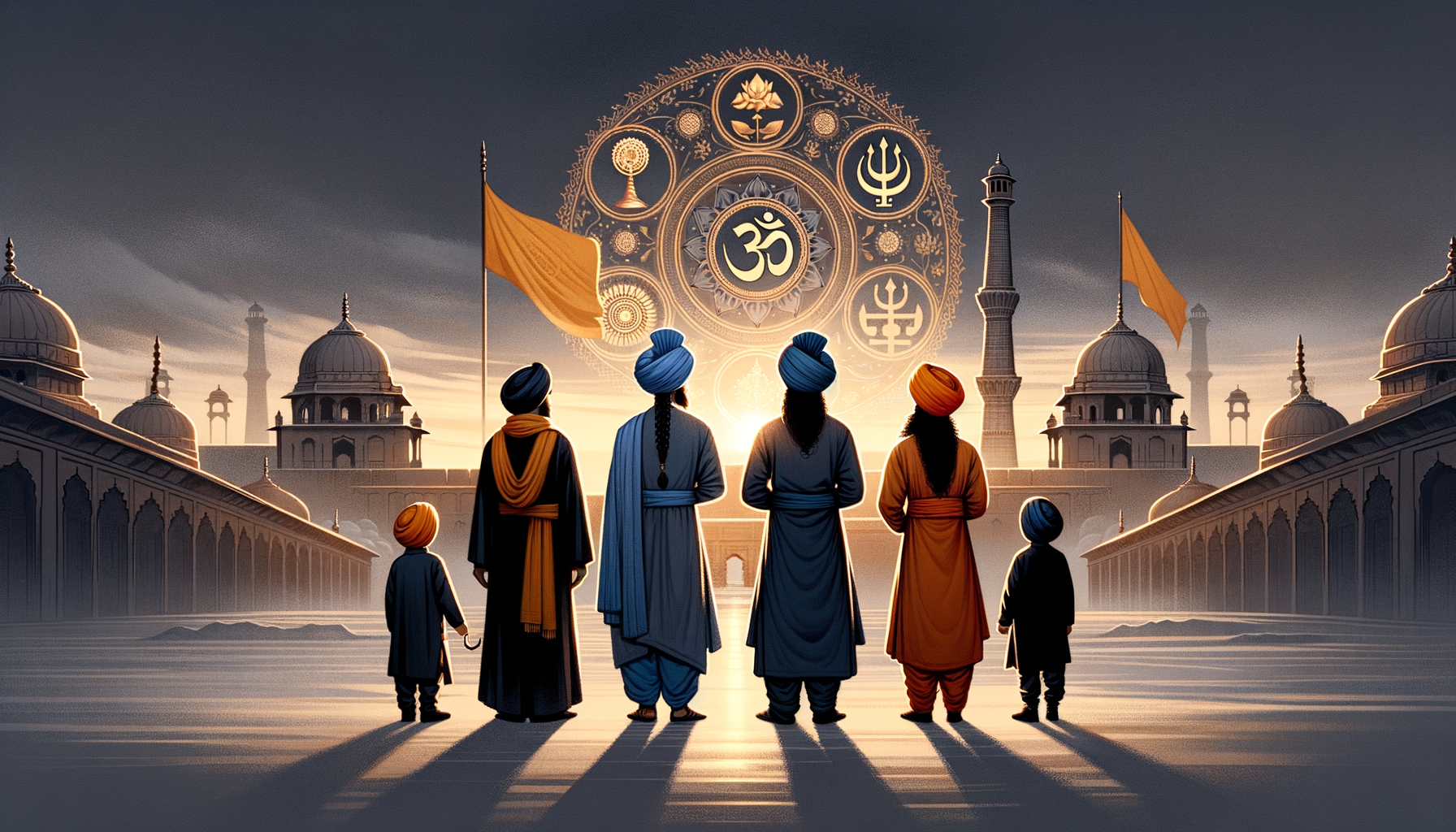
The eternal saga of the Sahibzadas stands as a luminous chapter in Indian history and Sikhism, embodying the supreme sacrifice for faith and freedom. In the early eighteenth century, the four Sahibzadasthe sons of Guru Gobind Singhchose righteousness over life itself, leaving a legacy that continues to inspire the Sikh community and countless others who cherish dharma, courage, and principled living.
Set against the backdrop of Anandpur Sahib, a pivotal center of Sikh spiritual life and community resilience, this narrative unfolds during a period of intense upheaval. The two elder Sahibzadas, Baba Ajit Singh and Baba Jujhar Singh, attained martyrdom at Chamkaur in 1705, defending ideals larger than themselvesjustice, dignity, and the freedom to live by one’s conscience. Their steadfastness under extreme adversity transformed an embattled moment into a timeless lesson on dharmic duty.
In the same winter, the younger Sahibzadas, Baba Zorawar Singh and Baba Fateh Singh, faced unimaginable trials at Sirhind. Their refusal to abandon their faith, even at a tender age, crystallized the Sikh ethos of unwavering commitment to truth. This martyrdom is remembered not merely for its pathos but for its clarity of purpose: spiritual integrity cannot be coerced, and the human spirit, anchored in dharma, can transcend fear.
The Sahibzadas’ sacrifice occupies a vital place in Cultural Heritage and History, reminding society that moral courage often emerges in the crucible of crisis. Their choices illuminate a universal principle shared across dharmic traditionsHinduism, Buddhism, Jainism, and Sikhismthat truth (satya), compassion (karuna), and righteous action (dharma) are indivisible. Even as each tradition expresses these values uniquely, their convergence reinforces Unity in Diversity as a living civilizational ideal.
For many who visit Anandpur Sahib today or engage with Sikh history through commemorations and narratives, the memory of the Sahibzadas evokes a profound emotional connection. Families recount stories across generations; communities reflect together during Nagar Kirtans; and students of Indian history examine how spiritual conviction can fortify resilience. These collective practices sustain cultural memory and foster interfaith respect.
Viewed through an academic lens, the Sahibzadas’ martyrdom also offers insights into the ethics of resistance and the philosophy of dharma-yuddhawhen the defense of fundamental freedoms becomes a moral imperative. Their example transcends sectarian boundaries and calls for a shared commitment to protect conscience, preserve cultural plurality, and honor the sanctity of spiritual choice.
In contemporary discourse, where identity, heritage, and rights often intersect, this saga provides a unifying framework. It encourages communitiesacross religions and regionsto stand together for dignity, pluralism, and the peaceful coexistence of faiths. By remembering the Sahibzadas as Indian martyrs whose sacrifice ennobles all, society reaffirms a common inheritance anchored in justice and empathy.
This tribute thus serves a dual purpose: it honors the Sahibzadas for their supreme sacrifice and invites a broader reflection on dharmic unity. As the Sikh community and the wider Indian society continue to draw strength from this history, the message remains clearfreedom of worship, cultural continuity, and mutual respect are not negotiable; they are the foundations of a resilient and compassionate civilization.
Inspired by this post on SikhNet – News.
