
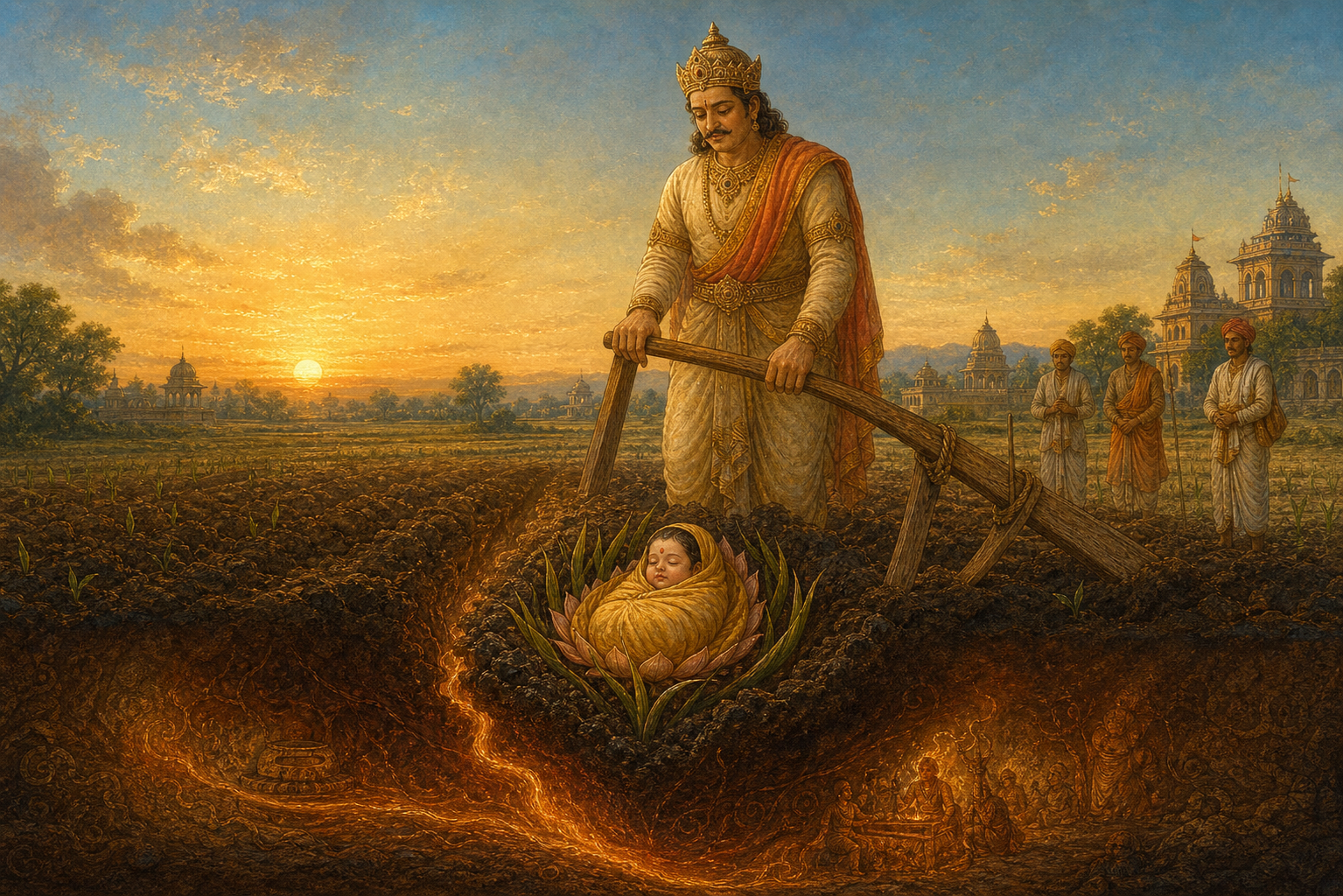
If you have encountered the claim that Sita was Mandodari’s daughter, you may wonder whether it contradicts her identity as Bhumija, the daughter of the earth. The contradiction appears only when several stages of her birth are compressed into a single modern idea of biological parentage.
Sita’s birth in the Adbhuta Ramayana begins before Janaka opens the earth with his plough. Mandodari’s accidental pregnancy belongs to that hidden prehistory, while the furrow remains the place from which Sita enters Janaka’s life. To understand the telling, you have to keep origin, gestation, manifestation, and parenthood distinct.
The story begins before Janaka reaches the furrow
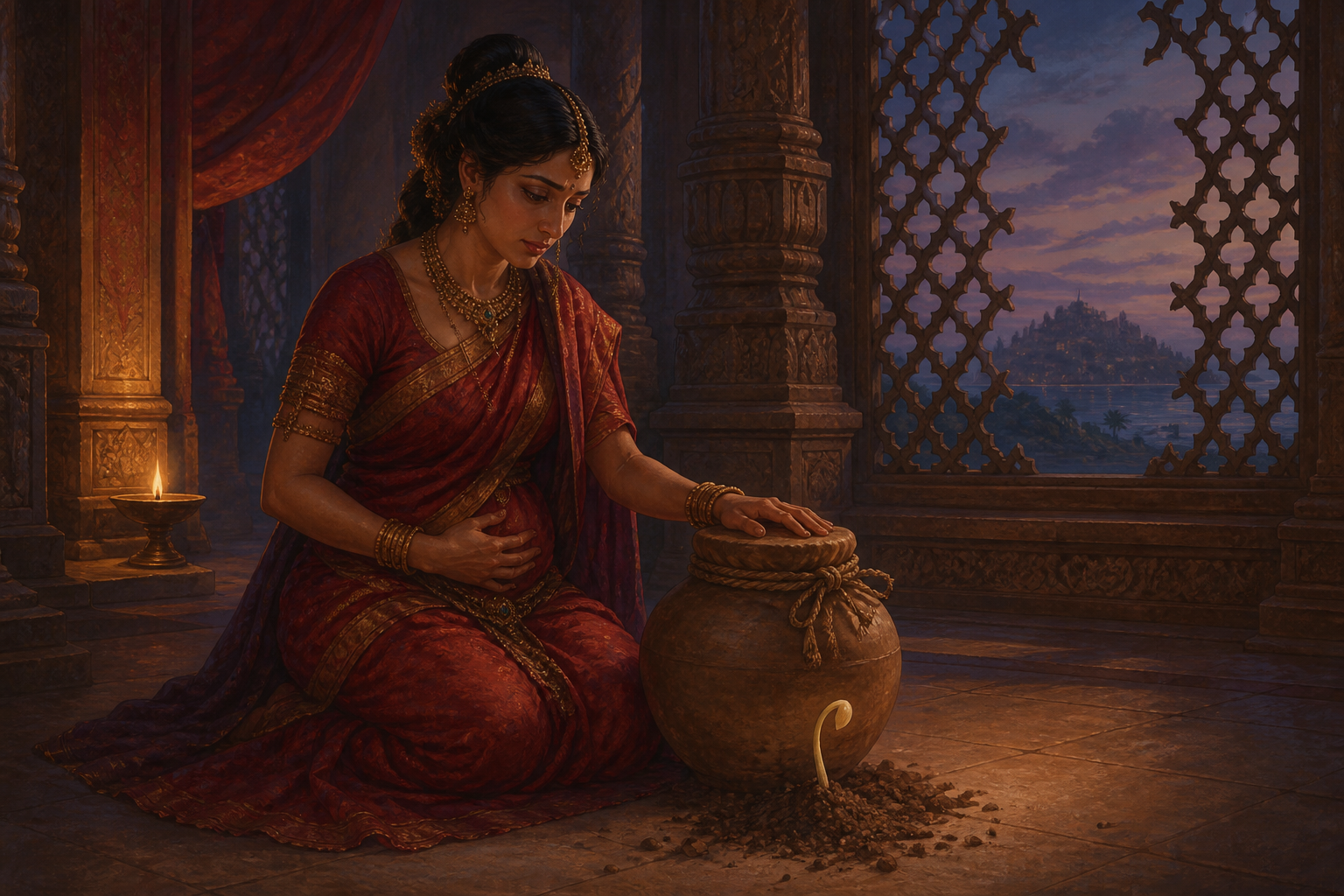
Most devotees first meet Sita as the infant discovered by Raja Janaka during a sacred ploughing ceremony. She comes from a furrow, is received as his daughter, and is therefore known as Bhumija. Within the Adbhuta Ramayana tradition, that familiar event remains in place, but it is preceded by a more unusual chain involving sage-blood, sacrificial power, and Mandodari’s unintended pregnancy.
The added prehistory does not convert Sita’s birth into an ordinary human conception. Sage-blood and sacrifice supply its sacred potency. Mandodari undergoes a pregnancy she did not intend, but she does not become Sita’s mother through choice, upbringing, or a publicly recognized family relationship. Earth then mediates Sita’s appearance, and Janaka receives her as his daughter.
The four layers answer different questions. Keeping them separate prevents the two most common mistakes: erasing Mandodari from this particular telling or erasing Sita’s earth-born identity in order to emphasize Mandodari.
| Layer of the birth | Figure or element | What it explains |
|---|---|---|
| Sacred potency | Sage-blood and sacrifice | Why Sita’s origin lies outside ordinary royal biology |
| Unintended gestation | Mandodari | How she enters the chain of Sita’s origin without becoming her nurturing mother |
| Earthly manifestation | The earth and its furrow | Why Sita remains Bhumija |
| Recognized family | Raja Janaka | Why Sita is rightly known as Janaka’s daughter and a princess of Mithila |
Why Mandodari does not cancel Sita’s identity as Bhumija
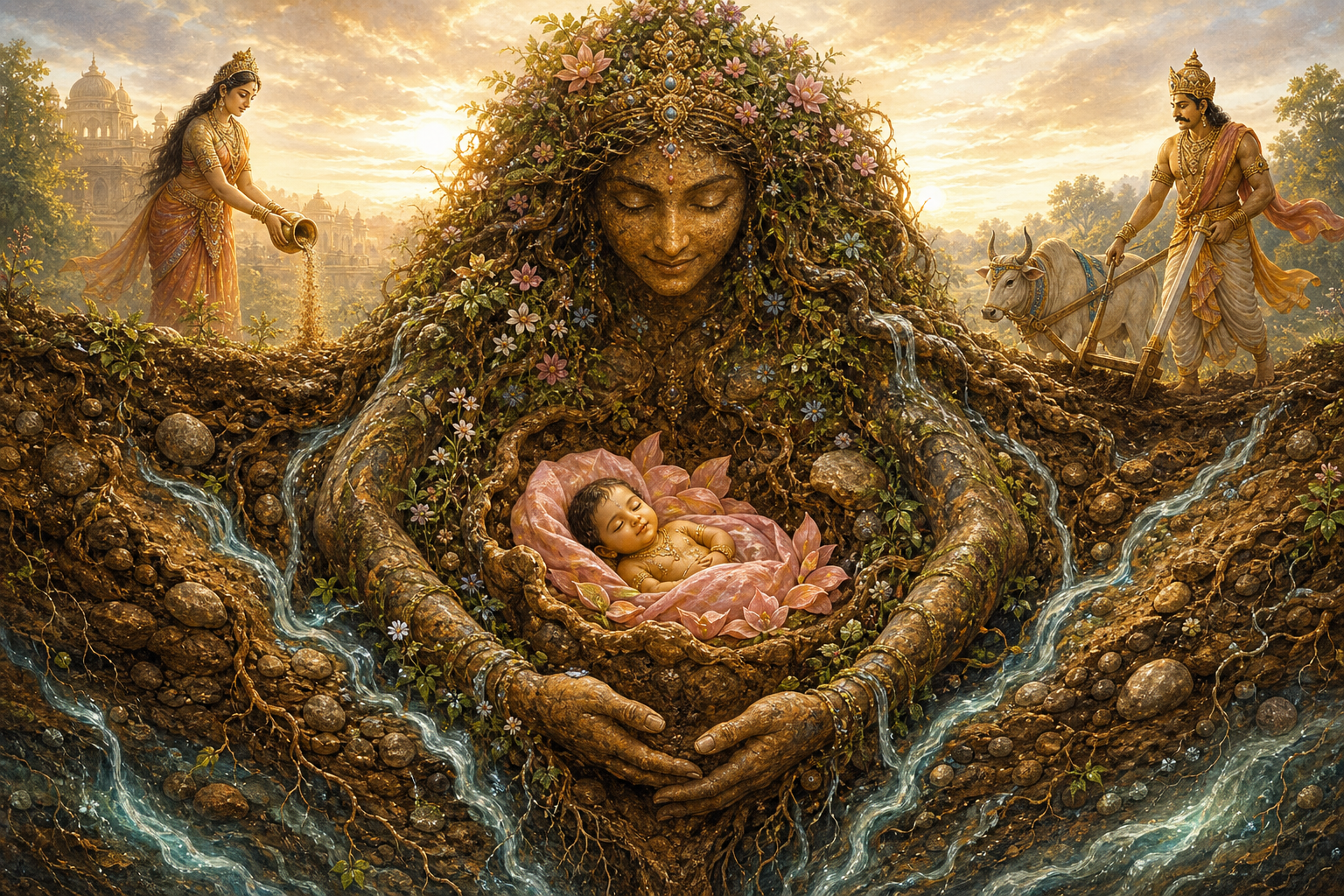
Modern family language usually asks for one mother and one father. A sacred birth narrative can answer several kinds of parentage at once: What power caused the birth? Who carried it? Through what place or element did the child appear? Who recognized, named, protected, and raised the child?
Mandodari occupies the gestational layer in this telling. Her pregnancy is accidental, so it should not be recast as a conventional union followed by conventional motherhood. Calling Sita simply Mandodari’s biological daughter imports categories that are too narrow for the narrative and makes the relationship sound more ordinary than it is.
Earth occupies another layer. The furrow is not a decorative detail added after the real birth; it is the decisive place of Sita’s manifestation. Her emergence during sacred ploughing binds her identity to Bhumi, cultivated land, fertility, and a king’s ritual responsibility toward the realm. Bhumija therefore remains a meaningful description of who she is, not merely where Janaka happened to find her.
Janaka’s fatherhood belongs to recognized and lived dharma. He discovers the infant, receives her as his daughter, and gives her a royal home in Mithila. Parenthood here is not reduced to physical generation. Acceptance, protection, formation, and public relationship carry their own moral reality.
The most accurate short formulation is this: in the Adbhuta Ramayana, Sita is linked to Mandodari through an unintended pregnancy, emerges from the earth as Bhumija, and becomes Janaka’s daughter. Remove any one of those clauses and you lose part of the telling.
What sage-blood and sacrifice contribute to the meaning
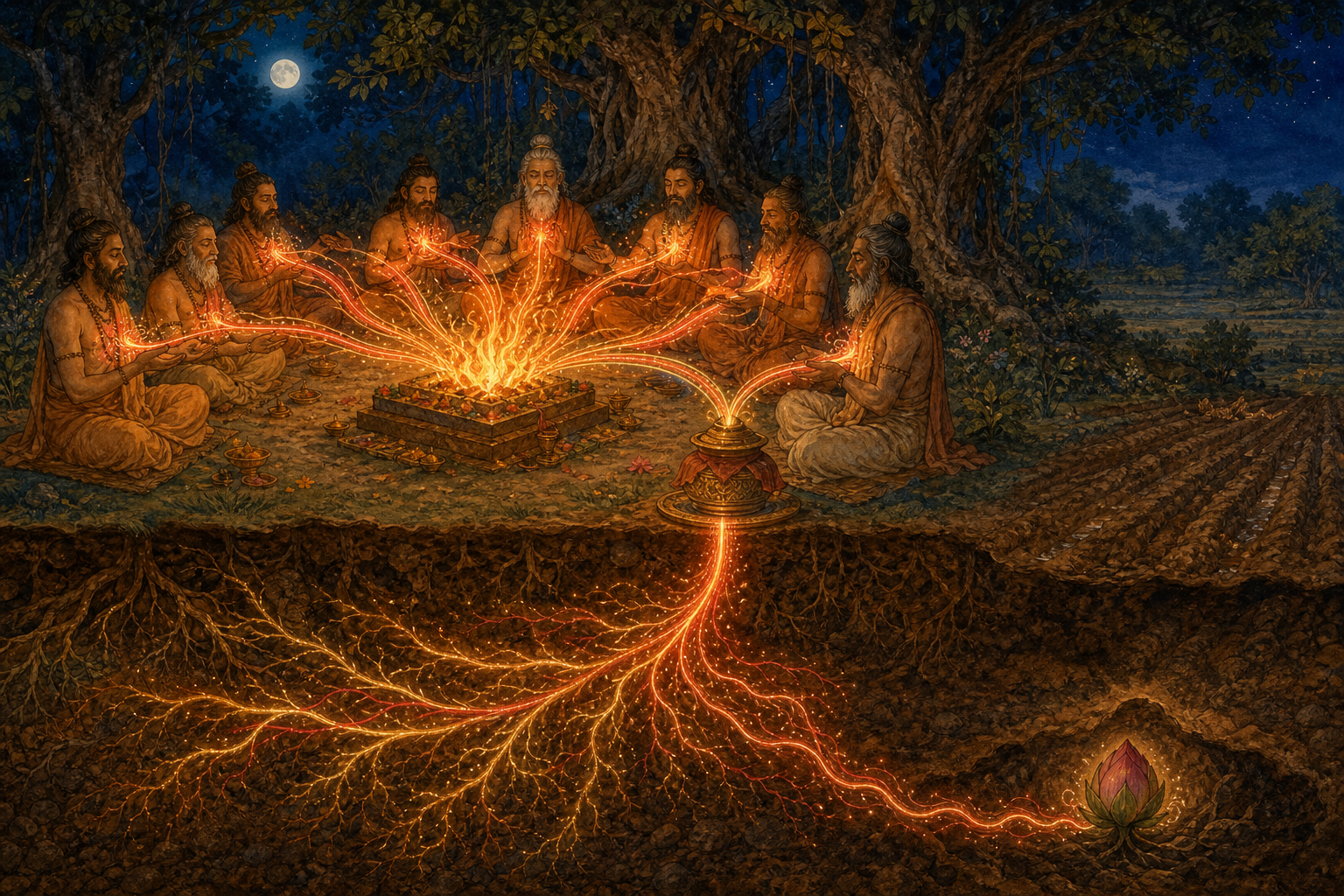
The sage-blood motif should not be treated as an ancestry chart. Its function is theological before it is genealogical. Blood associated with sages carries the force of tapas, discipline, and sacrificial life. Sita’s origin is therefore connected to accumulated sacred potency rather than to the prestige of a biological dynasty.
This changes the question you bring to the episode. Instead of asking only which woman should be entered as Sita’s mother, ask what kind of being could emerge from the combined imagery of tapas, sacrifice, unintended gestation, and earth. The answer points beyond an ordinary princess. Her appearance gathers powers that no palace genealogy could adequately explain.
One fruitful symbolic reading sees transformation at every stage. Ascetic potency does not disappear. Mandodari cannot turn an unintended pregnancy into an ordinary domestic bond. Earth receives what does not yet have a human place and later reveals it during a sacred royal act. What begins outside social order enters the world as the daughter of a dharmic king.
Mandodari’s involvement also creates deliberate moral tension. As Ravana’s wife, she stands inside the household most closely associated with Sita’s later suffering, yet she is not reduced to Ravana’s adharma. Her involuntary place in Sita’s origin keeps her morally distinct from his choices. You should therefore resist readings that treat Mandodari as either Sita’s secret conventional mother or a villain responsible for the pregnancy.
The earth completes the transformation. A hidden and unsettled origin becomes a public revelation in the furrow. Sita does not arrive through conquest, inheritance, or a king’s demand for an heir. Janaka encounters her while opening the ground in a sacred act. His proper response is recognition rather than possession.
How to discuss this birth without flattening Ramayana tradition
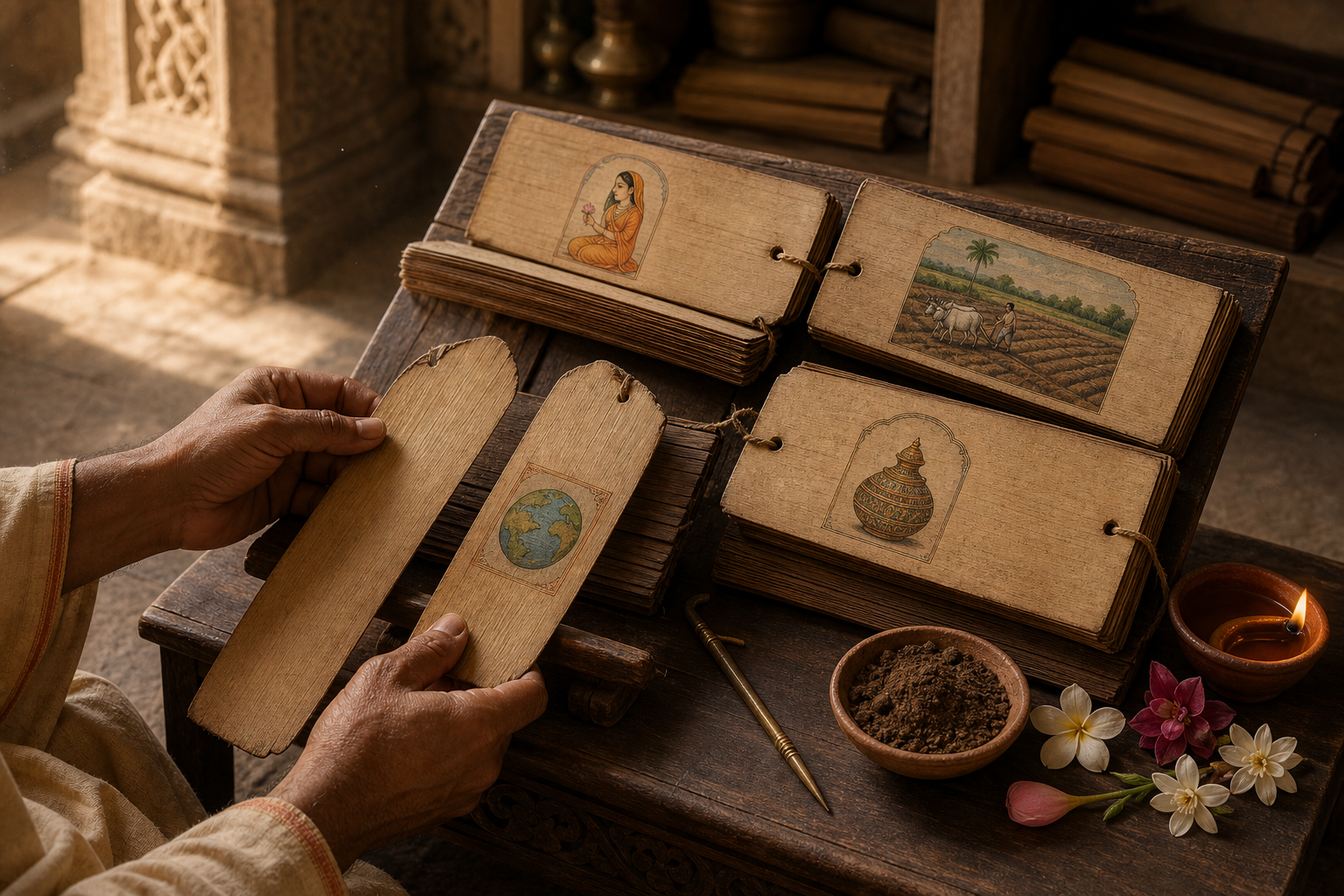
First, name the textual setting. Do not say without qualification that the Ramayana makes Sita Mandodari’s daughter. Say that this is Sita’s birth prehistory within the Adbhuta Ramayana. That one phrase tells your listener that you are discussing a particular telling rather than attempting to displace every other Ramayana tradition.
Second, distinguish discovery from the events preceding it. Janaka’s discovery in the furrow is not disproved by the Mandodari episode. The Adbhuta Ramayana places a hidden causal sequence before the public earth-birth. It expands the narrative backward rather than simply substituting one mother for another.
Third, do not force a choice between Mandodari and Bhumi. Mandodari is connected with gestation; Bhumi is connected with manifestation and identity. The same sacred life can be described through both relationships because the relationships do different work.
Fourth, keep narrated events and symbolic interpretation distinct. The accidental pregnancy and Janaka’s discovery belong to the sequence. Ideas about tapas becoming embodied, adharma failing to contain sacred power, or the earth transforming a hidden origin into a dharmic one are interpretations. They can illuminate the sequence, but they should be presented as readings rather than additional events.
Finally, do not use variation as evidence that the Ramayana tradition is defective or confused. A distinctive birth narrative can preserve the central identity of Sita while drawing out a different theological emphasis. The practical test is simple: does your explanation preserve Sita as Bhumija, Janaka as her father, Mandodari’s unusual role, and the sacred rather than ordinary nature of the birth? If it does, the apparent contradiction largely dissolves.
Key takeaways
- Sita’s Adbhuta Ramayana birth has several layers: sacred potency, unintended gestation, earthly manifestation, and recognized parenthood.
- Mandodari’s accidental pregnancy links her to Sita’s origin, but it does not make their relationship equivalent to ordinary maternal upbringing.
- Sita remains Bhumija because the earth and the furrow are essential to her manifestation, not incidental scenery.
- Janaka remains Sita’s father through recognition, acceptance, protection, and life in Mithila.
- The sage-blood and sacrifice motifs direct you toward Sita’s sacred power, not merely toward biological genealogy.
When you next encounter the claim that Sita was born to Mandodari, add the missing clauses instead of choosing a side: Mandodari is part of the hidden gestational chain, Bhumi is the ground of Sita’s manifestation, and Janaka is the father who receives her into dharma. That fuller sentence is both more accurate and more faithful to the mystery the telling is trying to preserve.
References
