

If someone tells you that accepting the Ramayana requires you to defend Sita’s Agni Pariksha, or that questioning the episode requires you to reject Rama, you are being handed a false choice. You can approach the question with reverence, intellectual honesty and moral clarity at the same time.
The first question is not whether the episode sounds noble, troubling or familiar. It is: which Ramayana, in which textual tradition, and in which edition? The fire ordeal is included in certain versions while remaining absent from many other scriptural tellings. That variation does not settle every historical question, but it makes sweeping claims about a single, uniform narrative impossible to defend.
Begin by asking which Ramayana is being discussed

The disputed scene is usually placed after Rama’s victory over Ravana and his reunion with Sita in Lanka. Beyond that basic narrative setting, you should not assume that every telling contains the same sequence, dialogue or theological emphasis. A familiar scene may belong to one version without occupying the same place in another.
This matters because the sentence “It is in the Ramayana” hides the very information needed to evaluate it. A textual claim becomes meaningful only when the speaker identifies the version being cited. A modern retelling, a translation, a regional narration and an edition assembled from manuscripts cannot automatically be treated as interchangeable witnesses.
When you encounter a confident claim about the Agni Pariksha, ask three questions before debating its meaning:
- What is the exact text? Ask for the title of the version, not merely the word “Ramayana.”
- What is the exact edition or translation? Translators and editors make choices, and a quotation without edition details cannot establish how widely a passage is attested.
- How broad is the claim? Evidence from one telling can establish what that telling narrates. It cannot, by itself, establish what every Ramayana has always narrated.
These questions are not evasions. They turn a slogan into a proposition that can actually be checked. If no version, edition or passage can be supplied, treat the claim as an assertion about cultural memory rather than a demonstrated conclusion about textual history.
Interpolation is a technical claim, not a term of abuse
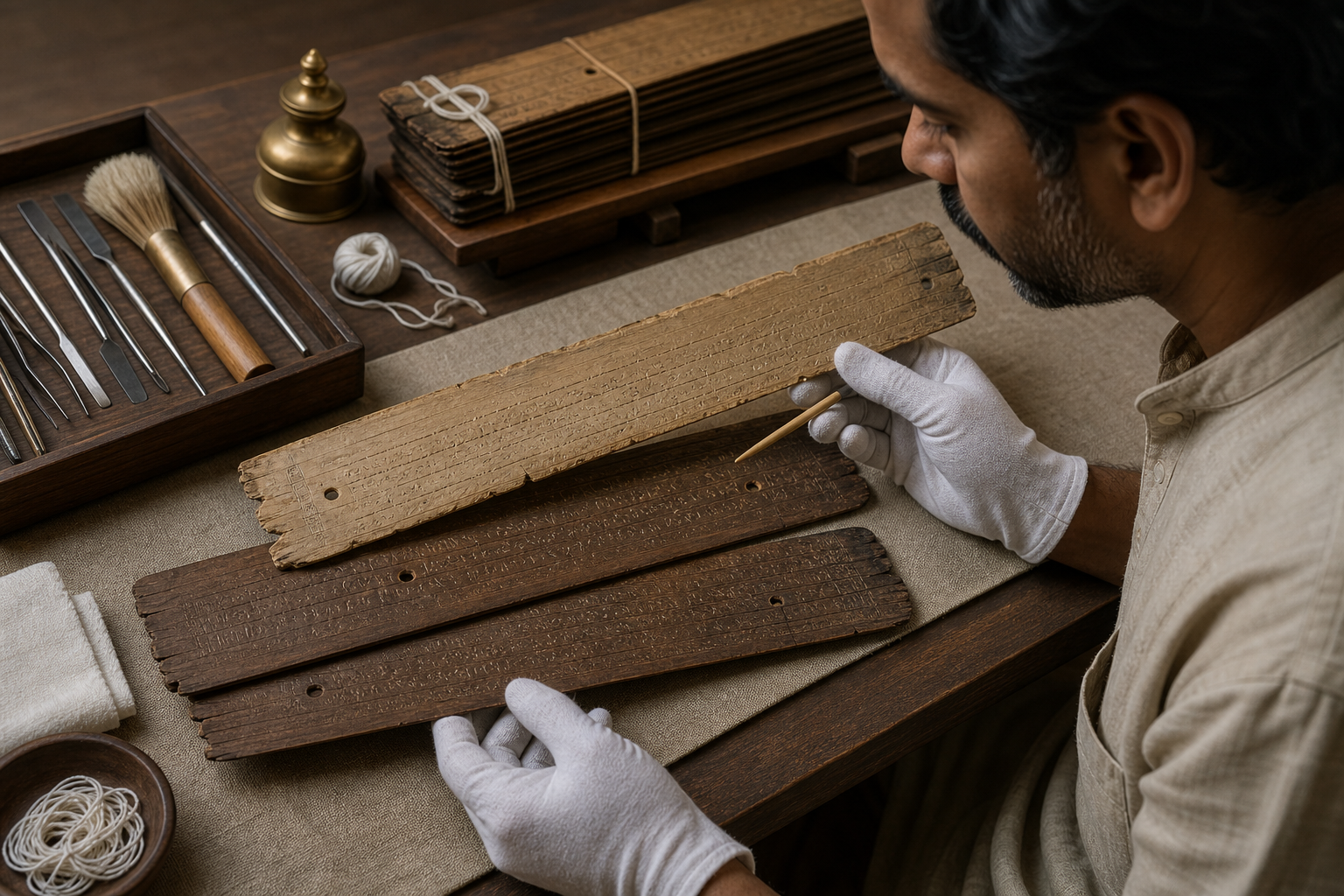
An interpolation is material judged to have entered a text after an earlier recoverable layer of that text. The term does not automatically mean fraud, conspiracy or malicious alteration. Texts transmitted across generations can acquire explanations, expansions, transitions and episodes for many reasons. Calling a passage an interpolation is therefore a historical hypothesis about transmission. It is not enough merely to dislike the passage.
A serious interpolation argument normally needs comparative evidence. Researchers may examine whether a passage is present across different manuscript families or recensions, whether its language and narrative movement fit its surroundings, whether the story proceeds coherently without it, and whether earlier witnesses appear to know it. No single clue should be made to carry the entire conclusion.
Absence from one telling does not, by itself, prove that a scene was inserted everywhere else. Presence in one edition does not prove that the scene belonged to every earlier form of the narrative. The defensible conclusion must remain proportionate to the evidence: the Agni Pariksha is not uniformly present across scriptural tellings, so its textual status has to be argued version by version.
This distinction protects both scholarship and devotion. If you use “interpolation” merely as a way to remove anything uncomfortable, the word loses its historical meaning. If you insist that every familiar episode must be equally ancient and universal, you erase the real plurality through which the Ramayana has been received.
Keep textual history, theology and ethics separate

Much of the heat around Sita’s Agni Pariksha comes from forcing several different questions into one argument. Separating them does not weaken a Dharmic reading. It makes the reasoning clearer.
The textual question
The textual question asks whether the episode belonged to an earlier recoverable form of a particular Ramayana tradition or entered at a later stage. This is where manuscript comparison, recension history and narrative analysis matter. Personal admiration for Rama cannot prove antiquity, just as personal discomfort with the ordeal cannot prove interpolation.
The literary question
The literary question asks what the scene does inside a version that contains it. Does it resolve a narrative tension, intensify one, explain a later development or change how the surrounding characters are presented? You can analyse that function without first deciding whether the passage is early or late. Later material can be literarily powerful, while ancient material can remain difficult.
The theological question
The theological question asks how a community understands Rama, Sita, dharma and divine conduct. Different traditions may interpret a narrated action through different premises. A claim about what one version says is not yet a complete statement of what all Hindus must believe about Rama or Sita.
The ethical question
The ethical question asks what, if anything, the episode should teach people to approve or imitate. Textual age cannot answer that question on its own. An early passage is not automatically a rule for social conduct, and a later passage is not automatically harmless. Description, interpretation and prescription are different acts.
This separation gives you a precise response when the episode is used to justify the humiliation or suspicion of women: even establishing that a particular text narrates an ordeal would not establish that contemporary families should reproduce it. Conversely, rejecting such social misuse does not require pretending that no Ramayana tradition has ever narrated the scene.
Use a disciplined test when the claim appears online

Online arguments often begin with an image, a translated quotation or a categorical sentence. Before sharing it, work through the following test. It takes only a few minutes and prevents most of the common overclaims.
- Identify the proposition. Is the person claiming that a version contains the scene, that the earliest recoverable layer contained it, or that Hindu dharma endorses the conduct? Those are three different claims.
- Request the textual location. A quotation without the name of its version and edition is not enough for a historical argument.
- Check whether the wording belongs to the text or the translator. Modern phrasing can smuggle an interpretation into what appears to be a direct statement.
- Look for comparative evidence. If interpolation is alleged, ask which textual witnesses include the passage and which omit it. One preferred telling cannot stand in for the whole transmission history.
- Separate evidence from inference. Variation is evidence. “Therefore the passage was inserted at a particular stage” is an inference that needs an argument.
- Match your conclusion to your evidence. Say “this version narrates” when you have evidence about one version. Say “not uniform across tellings” when you have evidence of variation. Reserve universal claims for genuinely universal evidence.
Two formulations show the difference. “The Agni Pariksha was never part of the Ramayana” reaches beyond evidence of variation. “The episode is absent from many scriptural tellings and appears in certain versions, so its textual history must be examined rather than assumed” states the narrower point that can be defended.
The opposite overstatement is equally weak: “The episode appears in a Ramayana, therefore Rama’s demand is an uncontested and universal teaching of Hinduism.” That jumps from the presence of a narrative in one textual form to a theological and ethical conclusion for every Hindu. The steps in between still have to be argued.
Key takeaways for a careful Dharmic reading
- Ask which Ramayana, edition and translation is being cited before accepting a universal claim.
- Treat interpolation as a testable hypothesis about textual transmission, not as a synonym for an unwanted story.
- Recognise that the Agni Pariksha is not uniform across all scriptural tellings.
- Do not let textual antiquity decide theological meaning or ethical application by itself.
- State conclusions at the same scale as the evidence: one version, several traditions or the broader reception history.
The next time the Agni Pariksha is presented as either a weapon against Hindu dharma or a loyalty test for Hindus, slow the conversation down. Ask for the exact textual witness. Name the kind of claim being made. Then answer only what the evidence can support. That combination of shraddha and discrimination serves Sita, Rama and the integrity of the tradition better than either denial or reflexive defence.
References
