
-
Murugan Born from Shiva’s Third Eye: Decoding Iccha Shakti and the Path of Sacred Will
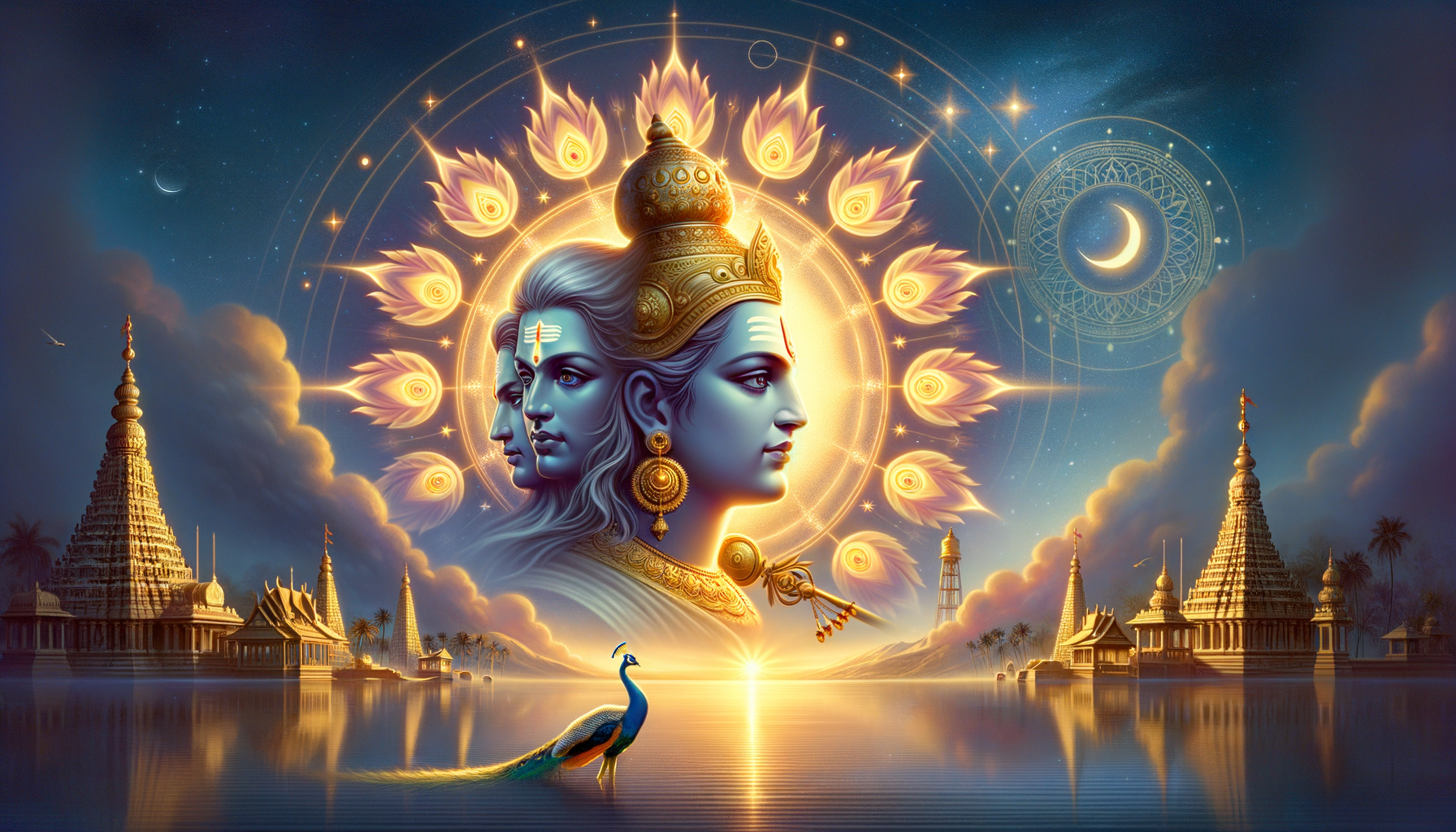
This article explores Murugan’s birth from Shiva’s third eye as a luminous teaching on Iccha Shakti—divine will aligned with wisdom. It explains the Puranic narrative, including the six sparks, the Krittikas, and the unification into Shanmukha, and interprets their symbolic meaning. Readers gain a clear framework for understanding Iccha, Jñāna, and Kriyā Shakti as complementary…
-
Daksha–Shiva and the Dharma Dilemma: Powerful Lessons on Order, Freedom, and Unity
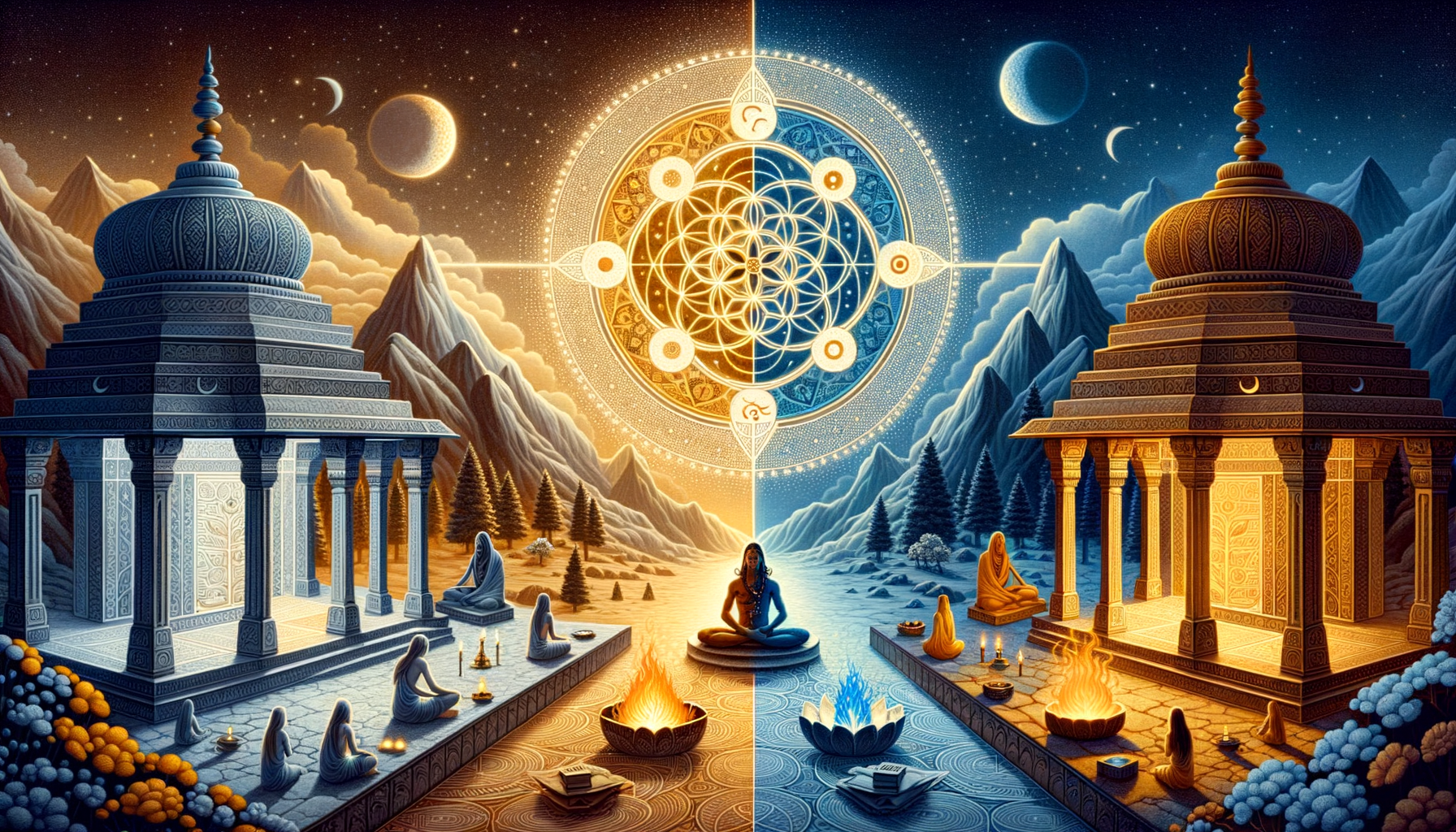
The Daksha–Shiva narrative illuminates a universal dilemma: how to balance social order with individual freedom without sacrificing either. This analysis interprets Daksha as the guardian of institutional harmony and Shiva as the emblem of spiritual sovereignty, arguing that dharma requires both. Drawing parallels with Buddhism’s Middle Way, Jainism’s Anekāntavāda, and Sikh ethics, it highlights a…
-
Shiva’s Five-Faced Epiphany before Parvati: A Sublime Vision of Wisdom, Love, and Dharma

This post explores the Shiva Purana’s account of Shiva manifesting before Goddess Pārvatī in His five-faced form, decoding its symbolism with academic clarity. It explains how each face—Sadyojāta, Vāmadeva, Aghora, Tatpuruṣa, and Īśāna—maps to creation, preservation, dissolution, contemplation, and grace. Readers gain a practical framework for meditation using the pañcākṣarī mantra and the five elements,…
-
Kala Rudra: Shiva’s Awe-Inspiring Face of Time, Destruction, and Renewal Explained

Kala Rudra, Shiva’s awe-inspiring form of time and transformation, reveals the compassionate purpose behind cosmic dissolution. Readers will learn how “Kala” (time) and “Rudra” (purifying force) together symbolize the end of stagnation and the beginning of renewal. The article clarifies iconography across Shaiva traditions while emphasizing the inner meaning: fearlessness, detachment, and clarity. Practical insights…
-
Shiva’s Serpent Sacred Thread: Timeless Symbolic Power, Protection, and Unity in Hinduism

Shiva’s serpent as a sacred thread (yajnopavita) encodes a living synthesis of Hindu symbolism, yogic practice, and cosmic vision. The serpent signifies awakened awareness, mastery of prana, and the transformation of fear into protection and compassion. As an image of cyclical time and eternity, it invites practitioners to see renewal, not threat, in life’s changes.…
-
Vajramukha: The Fearless Guardian of Hindu Temples and Shiva’s Ego-Devouring Grace

Vajramukha, often identified with Kirtimukha, crowns Hindu temple gateways as a sacred guardian linked to Śiva’s myth of ego-devouring grace. This concise guide explains its origin, meaning, and role as a threshold protector that transforms anxiety into reverence. Readers discover where to find the guardian in Dravidian and Nagara architecture and how its fierce visage…
-
Why the Gauripatta Faces North: Sacred Geometry of the Shivling and Temple Vastu

The Gauripatta (yoni/Argha) at the base of the Shivling is traditionally oriented toward the north, uniting symbolism, ritual function, and Vastu principles. North evokes stability, prosperity, and ascent—linked to Dhruva, Kubera, and the Himalaya, the realm of Pārvatī. This orientation channels abhisheka offerings through the Somasutra without disrupting the Nandi–Linga darshan line, preserving sanctity and…
-
Vilamal Temple’s Amavasai Annabhishekam: A Profound Shiva Ritual of Pithru Tharpanam
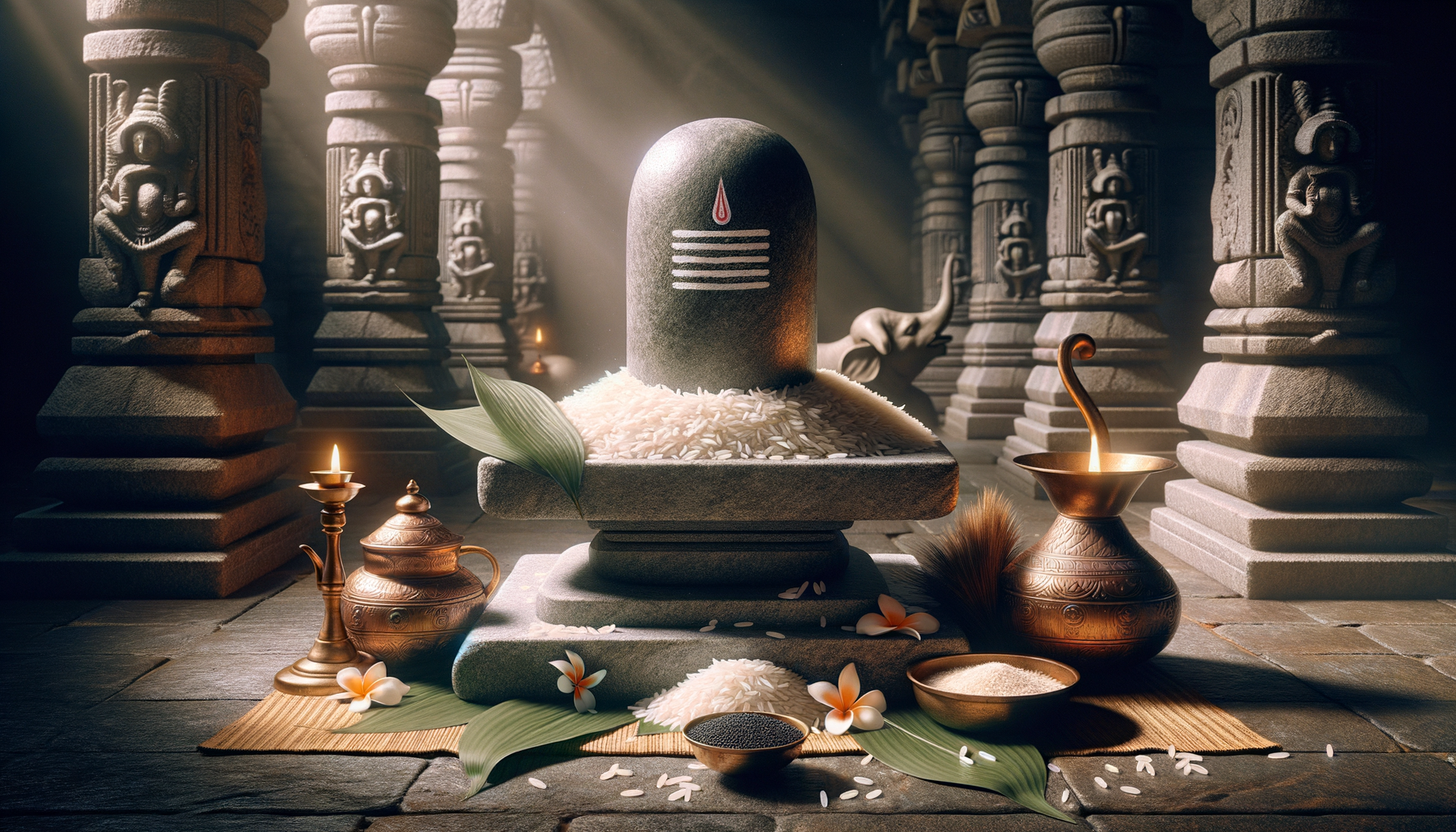
Vilamal Temple near Thiruvarur, Tamil Nadu, venerates Lord Shiva as Pathanjali Manoharar and is renowned for performing Annabhishekam on Amavasai rather than the more common Aippasi Pournami. This No Moon observance deepens contemplative focus and harmonizes naturally with Pithru Tharpanam, joining gratitude for sustenance with remembrance of ancestors. Associated with Ajapa Natanam, the temple’s ritual…
-
Champa Sashti 2025: Six Sacred Days of Khandoba’s Victory, Devotion, and Community
Champa Sashti 2025 is observed in Maharashtra from November 21 (Shukla Paksha Pratipada) to November 26 (Sashti) in the Margashirsha Month. The six-day festival commemorates Lord Khandoba’s victory over Mani and Malla, symbolizing dharma’s triumph over adharma. Devotees engage in fasting, abhishekam, aarti, and bhajans, with special reverence at temples such as those in Jejuri.…
-
Sacred Meaning Revealed: Why Hands Are Wiped Before Chandikeswarar in Tamil Nadu Shiva Temples
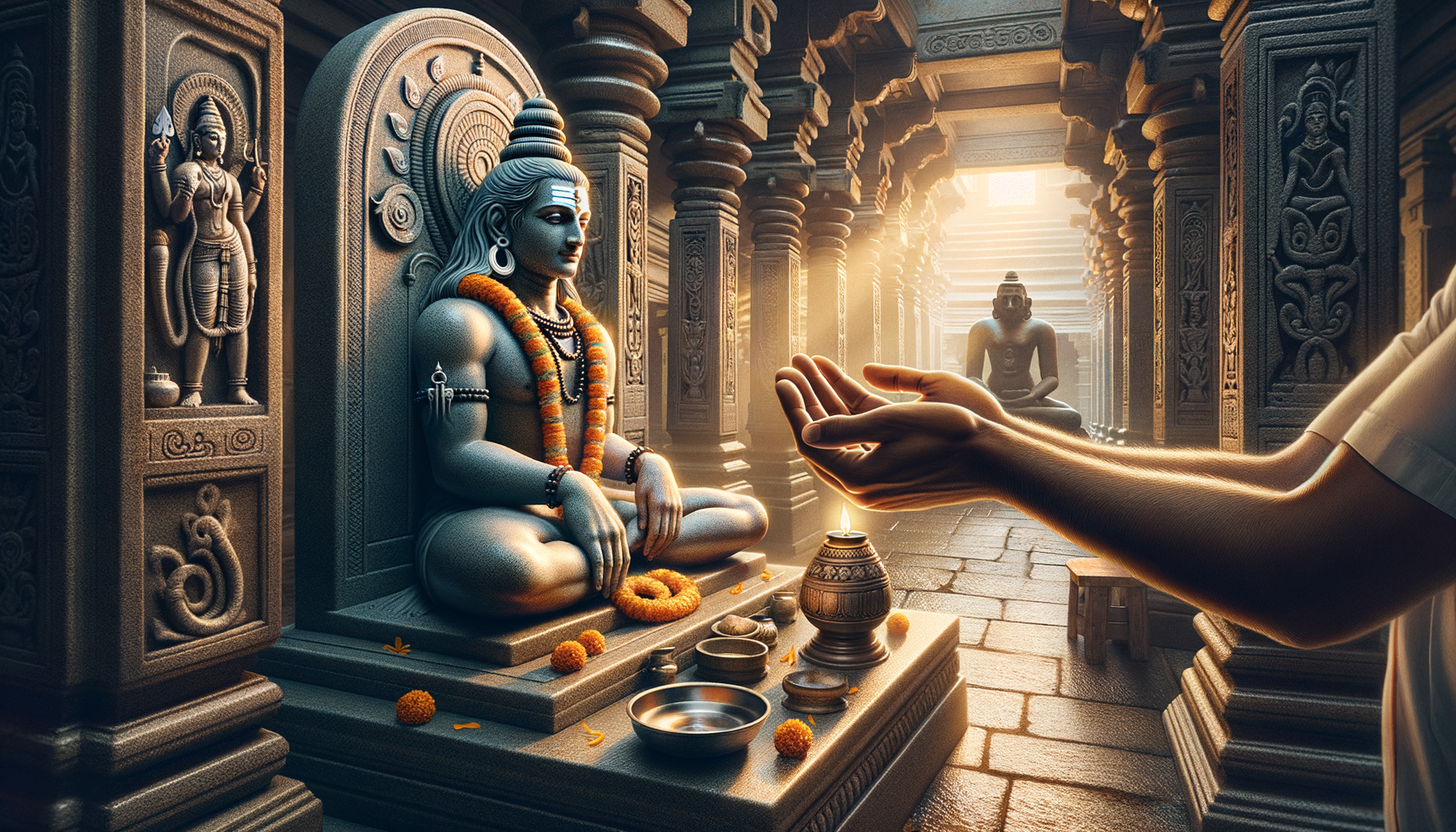
In Tamil Nadu Shiva temples, the hand-wiping gesture before Chandikeswarar is a concise ritual rich in meaning. It signals non-possession, affirming that no temple property is taken after worship. The act also embodies karmasamarpana—offering one’s actions to Shiva—by symbolically removing the residue of ego. Rooted in Shaiva Siddhanta and Agamic practice, the custom complements broader…
-
Dogs in Hinduism: Sacred Companions, Loyal Guardians, and Kalabhairava’s Vahana
Dogs hold a revered place in Hinduism as the vigilant vahana of Lord Kalabhairava, reflecting values of loyalty, protection, and compassionate guardianship. Their presence in iconography and living practice conveys the safeguarding of dharma through alertness and service. Community observances such as Kukur Tihar honor dogs with garlands and tika, deepening ethical awareness toward animals.…
-
Bhairava and Shiva’s Fierce Compassion: Trimurti Legend, Ego-Cutting Symbolism, Inner Protection
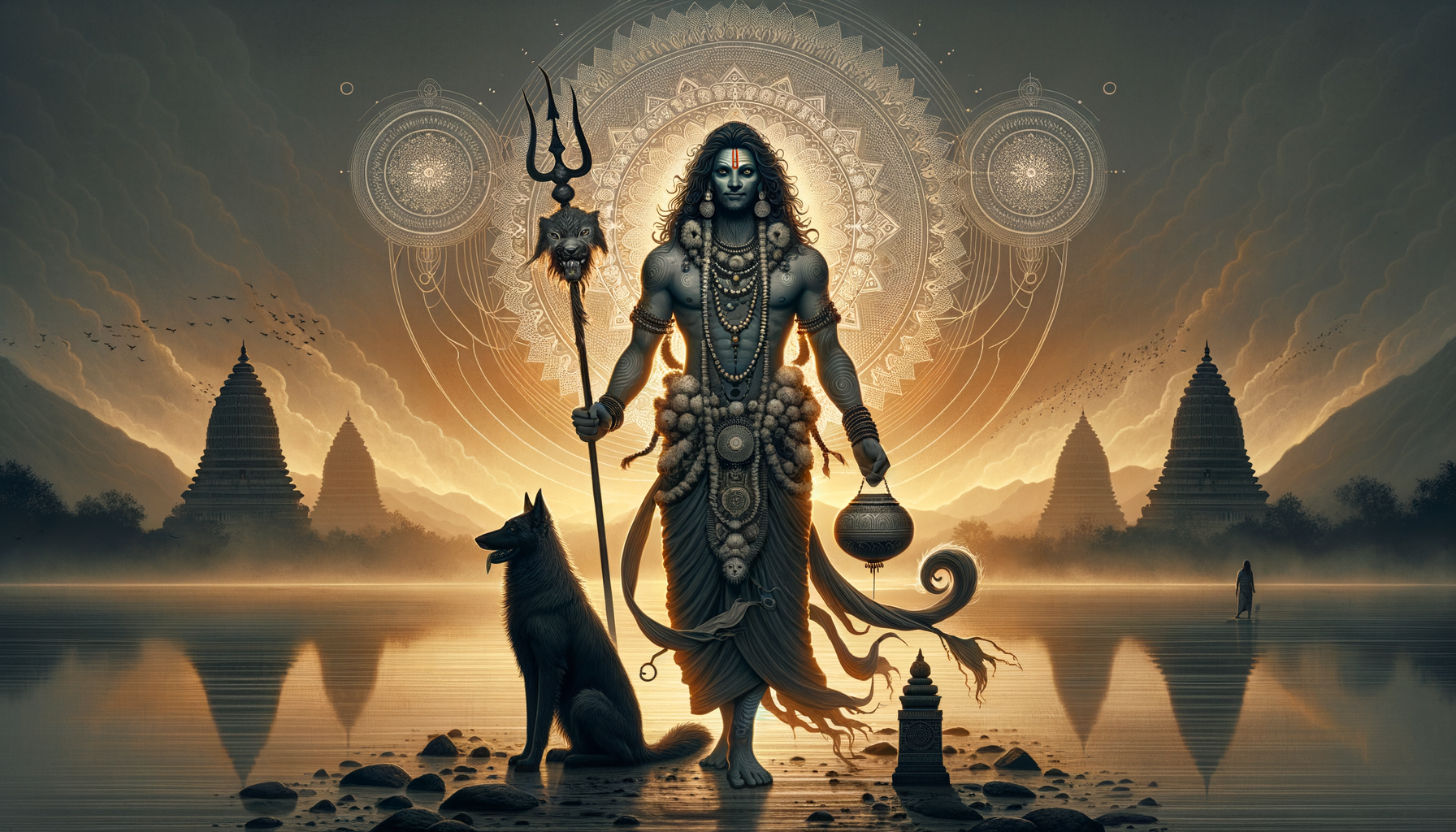
Bhairava represents the raudra, or fierce, aspect of Shiva—not unrestrained anger, but disciplined power that protects dharma and cuts through ego. Puranic narratives describe Shiva manifesting as Kala Bhairava to humble Brahma’s pride, symbolically severing the fifth head that represents arrogance. The legend culminates in Varanasi, where Bhairava becomes the guardian of Kāśī, affirming the…
-
Sri Dhabaleswar Temple on the Mahanadi: A Serene Shiva Island Sanctuary near Cuttack

Sri Dhabaleswar Temple is an ancient Shiva shrine set on a serene island in the Mahanadi River near Cuttack, Odisha. Stone inscriptions attest to its historical continuity and enduring devotional life. The river approach by bridge or boat heightens a contemplative atmosphere that visitors widely appreciate. Major observances during Karthika masam, notably Bada Osha and…
-
Kartik in Bengal: Sacred Seasons of a War-God Reborn as Harvest and Fertility Guardian

Kartik—known as Kartikeya, Skanda, Murugan, and Subrahmanya—assumes a distinct agrarian identity in Bengal as a guardian of fertility, family well-being, and seasonal prosperity. Set against the autumnal month of Kartik, his worship aligns with the ripening of aman paddy and the rituals of Kartika Purnima, creating a deep bond between devotion and agricultural timekeeping. Iconography…
-
Bholebaba of Bengal: Why Shiva’s Serene Compassion Captivates the Land of Kali
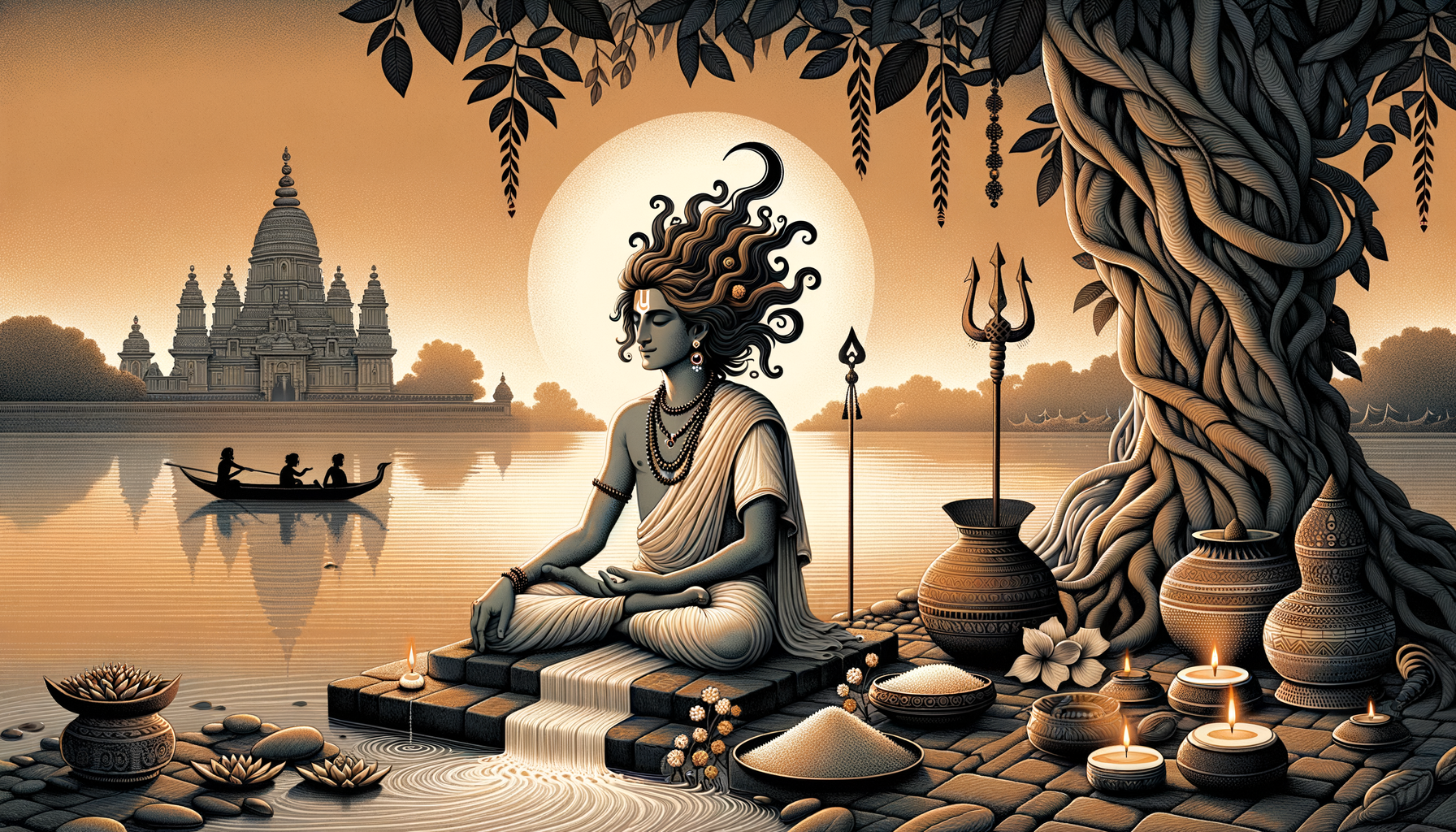
Bengal reveres Lord Shiva as Bholebaba, the simple-hearted and compassionate Mahadeva, highlighting serenity and forgiveness over ascetic severity. This devotional focus aligns with Bengal’s Shakta heritage, where Kali’s power complements Shiva’s tranquil grace in a harmonious spiritual balance. Simple offerings and accessible ritual practices reflect an egalitarian ethos within Hindu traditions. The ethic of karuna,…
-
कौनसी पूजा में कौनसी तिलक: शिव, कृष्ण, देवी और गणपति हेतु प्रमाणिक, सरल मार्गदर्शिका

यह मार्गदर्शिका बताती है कि कौनसी पूजा में कौनसी तिलक धरना करनी है | Kaunsi Puja me Kaunsi Tilak, ताकि उपासना अधिक सटीक और भावपूर्ण बने। शिव पूजा में विभूति/त्रिपुण्ड्र, कृष्ण/विष्णु पूजा में गोपी-चंदन का ऊर्ध्व-पुण्ड्र, देवी पूजा में कुमकुम/केसर-चंदन, और गणपति पूजा में रक्त-चंदन/सिंदूर का महत्व स्पष्ट किया गया है। ललाट बिंदु पर तिलक…
-
Jwalini Mata and Lord Mangala: Unveiling the Fiery Consort of Mars and Tuesday’s Power
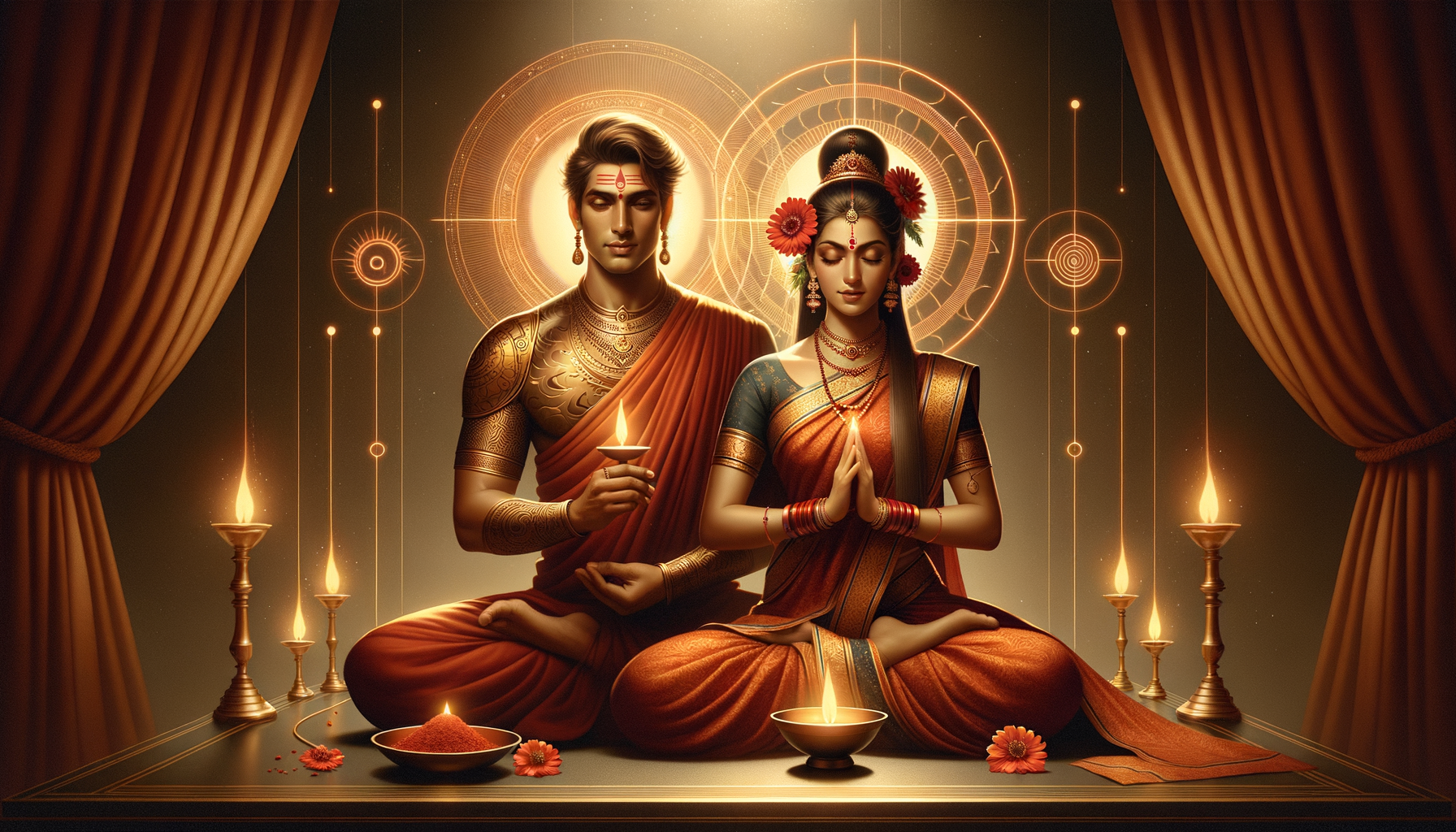
Jwalini Mata, revered as the consort of Lord Mangala (Mars), embodies fiery clarity that complements Mangala’s martial courage and ethical resolve. Rooted in Hindu cosmology of the Navagraha, this pairing guides disciplined energy and righteous action without aggression. Traditions often connect Mangala with Lord Muruga and Lord Veerabhadra, framing a protective yet refined power anchored…
-
Why Brahma Refuses Immortality Boons: Timeless Dharma, Cosmology, and the Path to Moksha

Why does Brahma never grant immortality? In Hindu cosmology, even the creator functions within time and cannot override the laws of dharma and karma. Puranic narratives, such as the story of Hiranyakashipu and Narasimha, illustrate that boons are conditional to preserve cosmic balance. This view shifts focus from bodily permanence to moksha, aligning with the…
-
Tirupati Kapileswara Temple November 2025: Powerful Homams and Sacred Kalyanotsavam
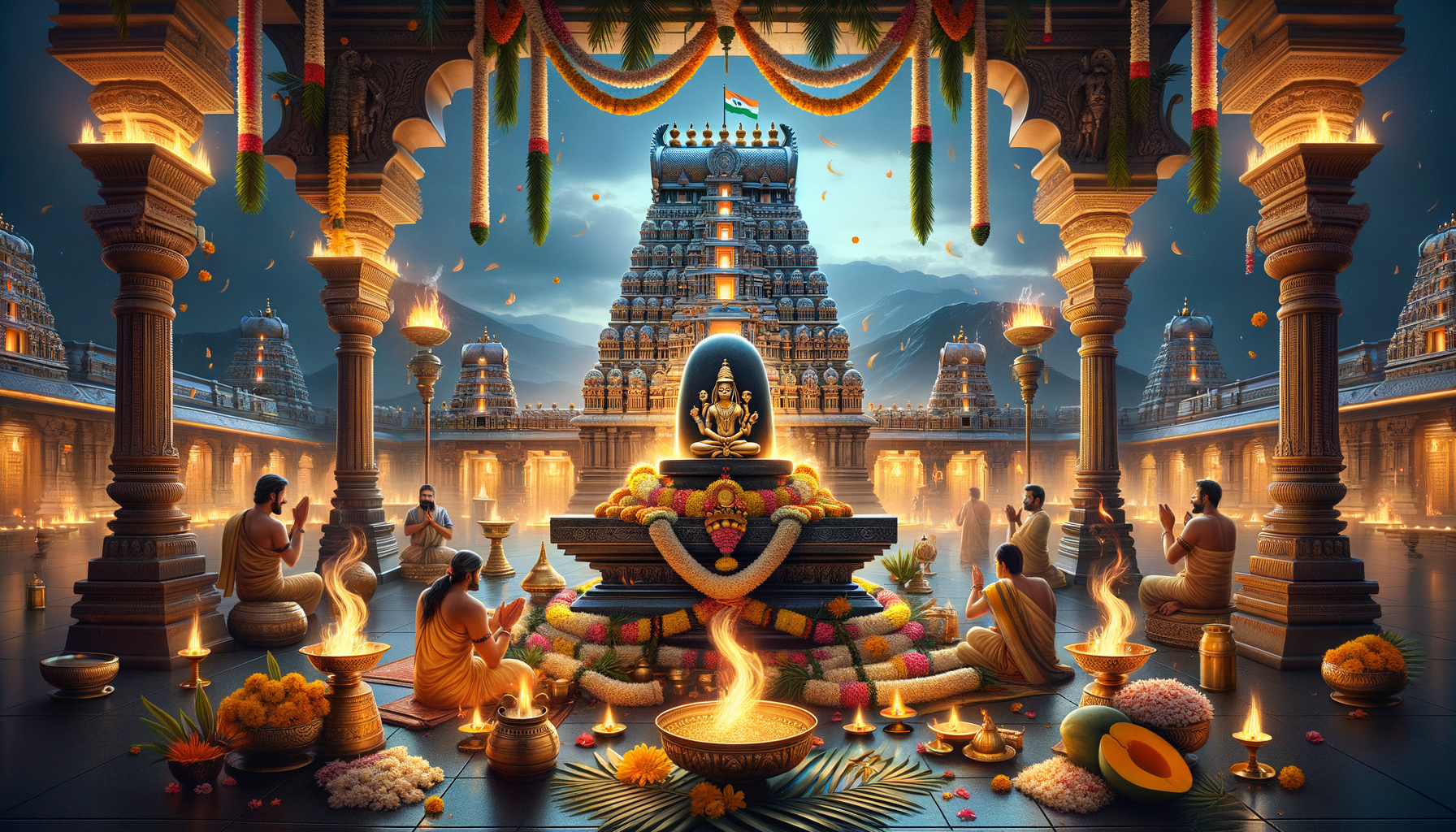
Sri Kapileswara Swamy Temple in Tirupati presents a meaningful November 2025 schedule featuring Sri Kamakshi Ammavari Homam (Chandi Yagam), an 11-day Rudra Homam, and the Kalyanotsavam of Sri Parvathi Parameswara Swamy. These observances encourage personal transformation through disciplined worship and collective uplift through community participation. The sequence highlights timeless values of compassion, self-restraint, and unity…
-
Budha Pradosha Vrat on Wednesday Trayodashi: Invoke Shiva’s Grace for Clarity, Healing, and Peace
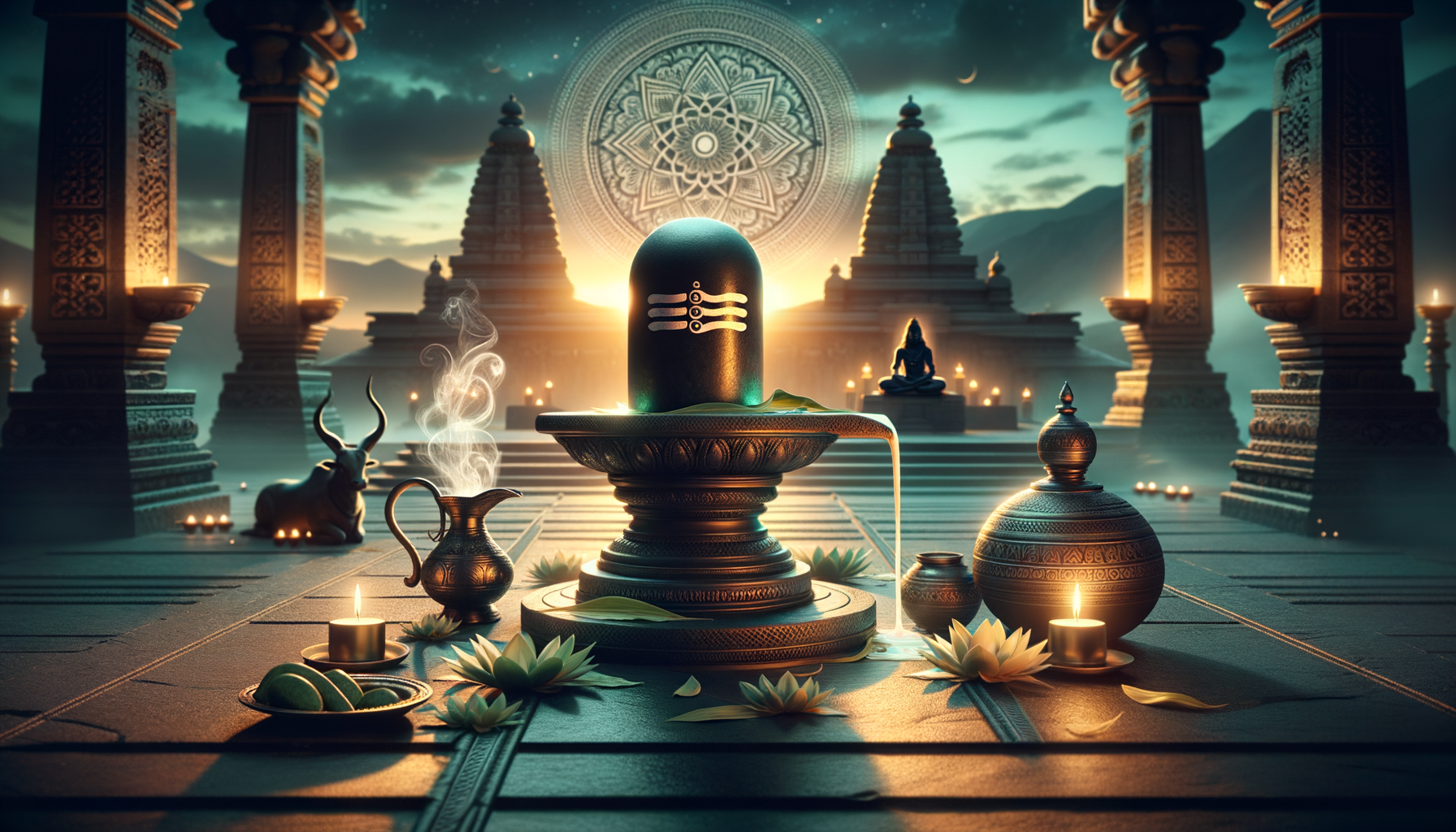
Budha Pradosha Vrat falls on a Wednesday Trayodashi, sanctifying twilight (Pradosha Kala) for focused worship of Lord Shiva. The Wednesday (Budha) alignment emphasizes clarity, compassionate communication, and graha shanti linked to Mercury. Observances include fasting to capacity, Shiva Abhishekam, bilva offerings, and the mantra “Om Namah Shivaya,” supported by local Panchang timings. Puranic themes highlight…