
-
Kundika Upanishad: Powerful Lessons on Sannyasa, Inner Freedom, and Dharmic Unity

The Kundika Upanishad, a Sannyasa Upanishad linked with the Sama Veda, presents renunciation as the culmination of a dharmic life aimed at moksha. Across 34 verses, it unites ethical restraint, contemplative practice, and radical simplicity into a coherent path for inner freedom. Its symbolismcentered on the kundika (water pot)speaks to purity, service, and sustainability. The…
-
Sanatana Gosvami’s Humble Plea: Timeless Vaishnava Etiquette, Devotion, and Dharmic Unity

Sanatana Gosvami’s request to be guided from within models the core of Vaishnava etiquettehumility, devotion, and disciplined conduct. The passage elevates service over self-assertion and places ethical behavior within the Guru-Shishya Tradition. It highlights how genuine learning begins with surrender and culminates in responsibility to scripture, community, and practice. These themes resonate across Hinduism, Buddhism,…
-
Magnanimous Devotion: How Exemplary Bhakti Inspires and Unites Dharmic Traditions

A magnanimous devotee, praised throughout the Bhakti Tradition and Hindu scriptures, is described as purifying, inspiring, and transformative in the lives of others. Even brief association with saintly personssadhu-sangaoften catalyzes ethical clarity, devotion, and renewed purpose. Comparable ideals appear across Buddhism, Jainism, and Sikhism, underscoring unity in spiritual diversity. The “ornaments” of the devoteehumility, compassion,…
-
Baahubali Reexamined: Untangling Timelines, Honoring Tradition, and Rediscovering Classicism

This reexamination of Baahubali highlights how its mythic ambition sometimes clashes with historical coherence, especially in geography, periodization, and nomenclature. It explains how the film’s use of Mahishmati and Kuntala, the presence of a Persian arms dealer, and the inclusion of Pindaris amplify a sense of timelessness while challenging viewers who value historical accuracy in…
-
Kashi–Varanasi as Moksha Sthala: Uncover the Sacred City Within and the Path to Liberation

Kashi (Varanasi) is honored as a Moksha Sthala not only for its sacred geography at the confluence of Varuna and Asi, but for the inner journey it reflects. The city’s sanctity points to the Ajna chakra, the inner seat of clarity central to Yoga and contemplative practice. Pilgrimage (Tirtha-Yatra) thus becomes a dual movementtoward the…
-
Atmarina in Hinduism: Honoring the Self to Unlock Dharma, Clarity, and Liberation

Atmarinathe debt to the selfframes an inner commitment within Hinduism to cultivate clarity, virtue, and wisdom so that all other duties are fulfilled well. Grounded in the Upanishads, the Bhagavad Gita, and Yoga philosophy, it emphasizes svadhyaya, yama-niyama, wellbeing, and meditation. This approach strengthens Devarina, Pitrina, Rishirina, and Bhutirina by making worship sincere, tradition discerning,…
-
Why Sanatana Dharma Endures: The Self-Correcting Wisdom Unifying Dharmic Traditions

Sanatana Dharma endures because it carries a built-in, self-corrective system that updates practice without losing core principles. Hinduism’s framework of shruti, smriti, ācāra, and yukti enables context-aware refinement guided by reason and community debate. Buddhism, Jainism, and Sikhism share this ethos through councils, Anekantavada, and collective deliberation, demonstrating a broader dharmic commitment to internal reform.…
-
6 Legendary Shiva Tales That Illuminate Dharma, Courage, and Compassion for Modern Life

Six legendary Shiva storiesNeelkanth, Gangādhara, Ardhanārīśvara, Tripurāntaka, Daksha Yajña, and Kirātārjunīyaoffer timeless insights for modern life. Each tale highlights a core dharmic value: compassion that contains harm, wisdom that channels power, balance of complementary energies, disciplined focus, humility with reconciliation, and perseverance aligned with dharma. Read together, they illuminate Sanatana Dharma’s emphasis on character and…
-
Tiruppavai at Dawn in Tirumala: Andal Sri Godai and the Sacred Power of Dhanurmasam
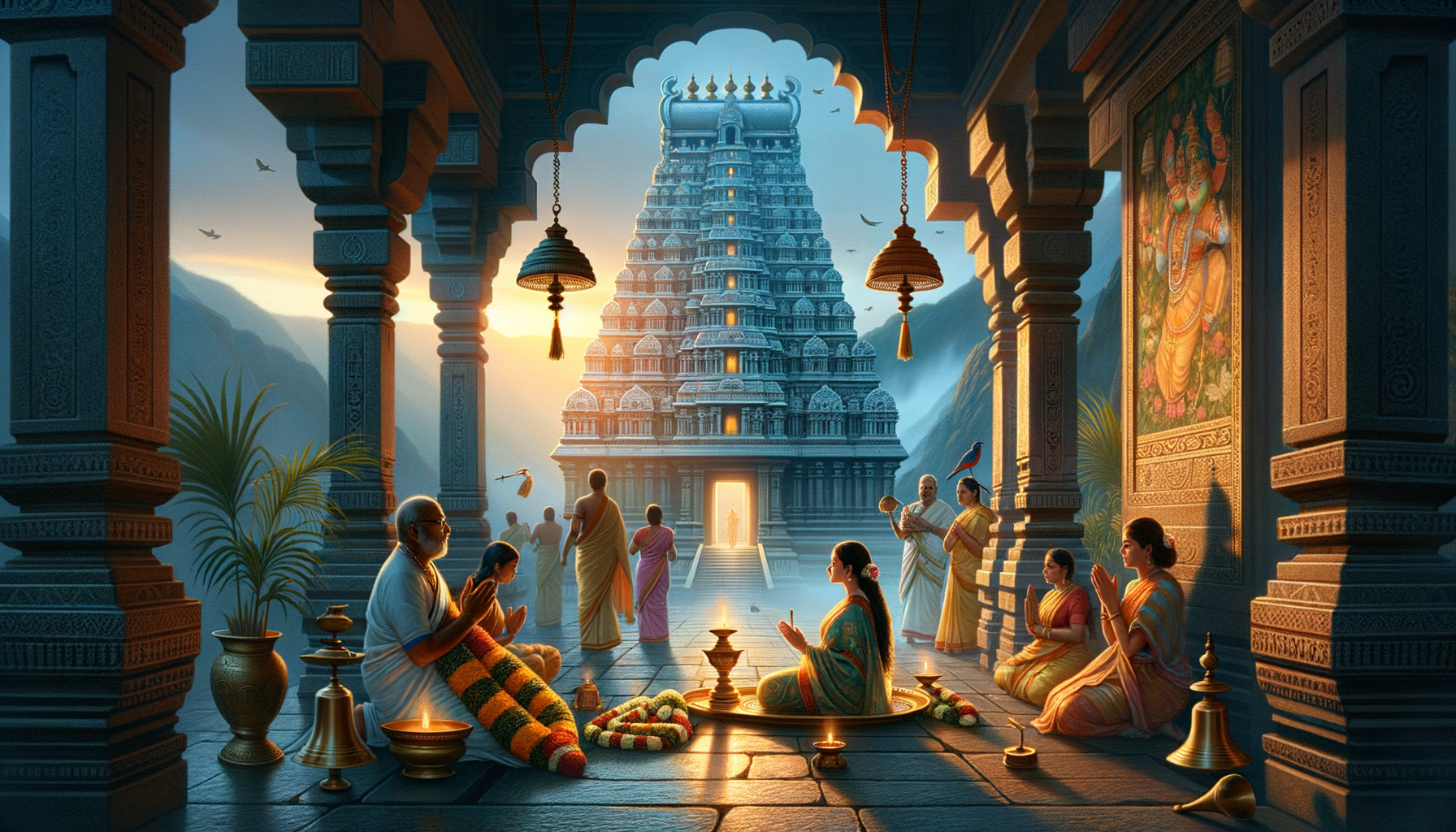
Dhanurmasam, which began on December 16, 2025 at 1.23 PM, ushers in a distinctive dawn practice at the Tirumala temple: Tiruppavai Parayanam replaces the daily Suprabhatam from December 17 onward. Rooted in Andal Sri Godai’s thirty pasurams, this tradition centers the season on devotion, humility, and contemplative discipline. Tomala and Archana in Ekantam further deepen…
-
Justice G.R. Swaminathan Impeachment: Why Judicial Independence and Dharmic Harmony Matter

This analysis situates the impeachment motion against Justice G.R. Swaminathan within India’s constitutional framework and a longer jurisprudential history dating back to Nani Palkhivala’s warnings in 1970. It explains why the constitutional standard for impeachment is intentionally exacting and why judicial independence must remain insulated from political pressures. It contextualizes the Thirupparankundram case by tracing…
-
Sacred Descent of Patanjali: Adi Shesha’s Incarnation and the Origins of Yoga Wisdom

This retelling explores the sacred origin of Sage Patanjali as an incarnation of Adi Shesha, situating the legend within Sanatana Dharma and the wider stream of Hindu spirituality. Readers gain clear context for Gonika’s prayer to the Sun God, the etymology of the name “Patanjali,” and the narrative’s symbolism for Yoga practice. The account balances…
-
Dharma as Cosmic Law: A Timeless Path of Harmony, Responsibility, and Dharmic Unity

Dharma is presented as the cosmic law that sustains life and nurtures harmony across individuals, societies, and species. It is dynamic rather than rigid, aligning personal duty with universal values and linking ethical action to spiritual aims such as Karma and Moksha. The dharmic traditionsHinduism, Buddhism, Jainism, and Sikhismconverge on compassion, responsibility, and pluralism, making…
-
Viral Hanuman Chalisa Rap Meets Hip-Hop: A Powerful Fusion Echoing Sanatana Dharma’s Unity

A viral Hanuman Chalisa rap demonstrates how Sanatana Dharma adapts across time, place, and genre without losing sacred intent. By melding bhajans and mantras with hip-hop, the piece offers an accessible entry point for youth and diaspora audiences. Listeners often describe renewed devotion, cultural pride, and a sense of global belonging. Concerns about commercialization underscore…
-
Beyond Time and Space: Bhusundi Ramayana and the Immortal Crow’s Countless Ramayanas

Bhusundi (Kākabhūśuṇḍi), the immortal crow sage, embodies the Hindu vision of cyclical time by witnessing Ramayana’s unfolding across infinite kalpas. The Bhusundi Ramayana asserts that there are countless Ramayanascontextual, complementary, and united by dharma’s essence. This plurality aligns with Jain anekāntavāda, Buddhist dependent origination, and Sikh remembrance of the Divine, underscoring unity across dharmic traditions.…
-
Society, Friendship, and Love: Unmasking Maya and Embracing Dharmic Unity

This reflection clarifies why Srila Prabhupada described “Society, Friendship and Love” as a gift of maya when driven by clinging, not by dharma. It explains maya as misidentification with roles and relationships, then shows how Hinduism, Buddhism, Jainism, and Sikhism converge on transforming attachment into compassionate engagement. Readers gain a practical frameworkseva, satsang, japa or…
-
Skanda Purana Stories: Timeless Tales of Valor, Devotion, and Dharma for Modern Life

The Skanda Purana, one of the eighteen Mahapuranas, presents Lord Skanda (Kartikeya/Muruga) as a model of disciplined devotion and protective courage. Its narrativesframed as dharma-yuddhaportray valor as service to the common good, guided by compassion and self-control. Rich with tirtha-mahātmyas (e.g., Kashi Khanda), the text connects personal practice with sacred geography and community life. Iconography…
-
Kolkata’s Grand Gita Recitation: Massive Preparations to Welcome 5 Lakh Devotees at Brigade

Kolkata is completing massive preparations for a grand Bhagavad Gita recitation at Brigade Parade Ground, with an expected turnout of five lakh devotees. The event, known as Panch Lokkha Konthe Gita Path 2025, emphasizes disciplined devotion and meticulous civic planning. Safety, accessibility, and sanitation measures aim to ensure a calm and orderly experience for families,…
-
When Honor Is Misplaced: Skanda Purana’s WarningFear, Famine, and Death Follow

Skanda Purana, Kedara Khanda (3.45), links misplaced honor to societal breakdown symbolized as fear, famine, and death. The teaching, conveyed through Lord Vishnu, gains clarity when read alongside the narrative of Daksha’s transgression and the disruption of ritual order. Interpreted as a diagnostic model of dharma and adharma, it explains how fear rises when moral…
-
Shiva Loka Unveiled: Mount Kailash and the Timeless Abode of Lord Shiva

Shiva Loka is revered in Hinduism as the abode of Lord Shiva, reflected on earth by Mount Kailash. The Shiva Purana presents Shiva’s compassion and transformative power as ethical and contemplative guides for modern life. Pilgrims describe the Kailash parikrama as a humbling encounter with silence and awe, deepening bhakti beyond ritual. As Nataraja, Shiva’s…
-
Threads of Oneness: How Hinduism Inspires Unity in Diversity Across Dharmic Traditions

Hinduism’s core insight is that life is fundamentally interconnected, and this truth is expressed through diverse forms of worship, philosophy, and community ritual. By honoring Ishta and multiple yogic paths, it sustains unity in diversity without demanding uniformity. Ethical commitments such as ahimsa and seva translate this vision into daily conduct and social responsibility. Related…