
-
Moksha Beyond the Gunas: A Definitive, Scholarly Guide to Liberation and Dharmic Unity

Moksha in Hindu philosophy is best understood as freedom from the three gunassattva, rajas, and tamasrather than the dominance of any one of them. This comprehensive guide explains how Sankhya, Vedanta, and Yoga converge on transcending material nature, while the Bhagavad Gita clarifies why even sattva can bind. It offers a clear synthesis of Jnana,…
-
Maitrayaniya (Maitri) Upanishad: Origins, Structure, Sixfold Yoga, and Transformative Wisdom
The Maitrayaniya (Maitri) Upanishad of the Krishna Yajurveda blends Vedanta and early Yoga with unusual precision, making it a key late-Upanishadic text. It analyzes time and the timeless, the mind’s role in bondage and freedom, and the threefold nature of suffering, while culminating in a concise sixfold Yoga. Readers gain a clear map from inquiry…
-
Ultimate Reality Cannot Be Taught: Profound, Experiential Wisdom in Hinduism and Dharmic Paths
This long-form exploration clarifies why Ultimate Reality in Hindu philosophy cannot be taught as a mere concept and must be realized through direct experience. It maps the classical triad of śravaṇa–manana–nididhyāsana and the role of Guru–Shishya Tradition, highlighting how scripture and guidance remove ignorance rather than transfer realization. Readers gain a technically sound overview of…
-
Queen Leela and King Padma in Yoga Vasistha: The Eternal Dance of Desire, Time, and Liberation
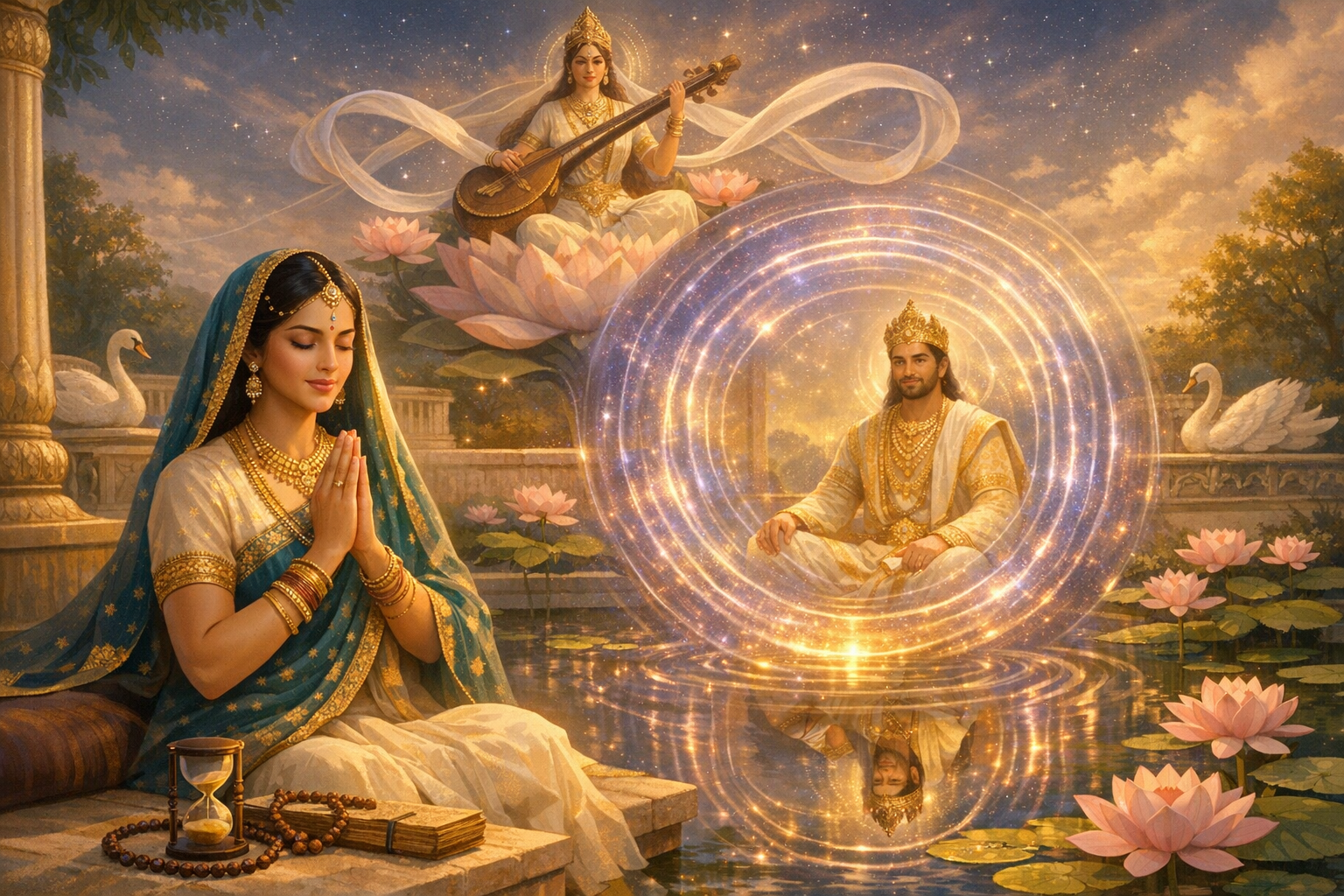
This long-form exploration of Queen Leela and King Padma in the Yoga Vasistha unpacks how consciousness, desire, and time interweave to produce the felt world. Readers learn why the text situates death and rebirth within the triad of gross, subtle, and causal bodies, clarifying continuity without clinging. The analysis translates core methodsshravana, manana, nididhyāsana, and…
-
Beyond Indra’s Heaven: King Arishtanemi’s Bold Renunciation and Yoga Vasishta’s Vairagya
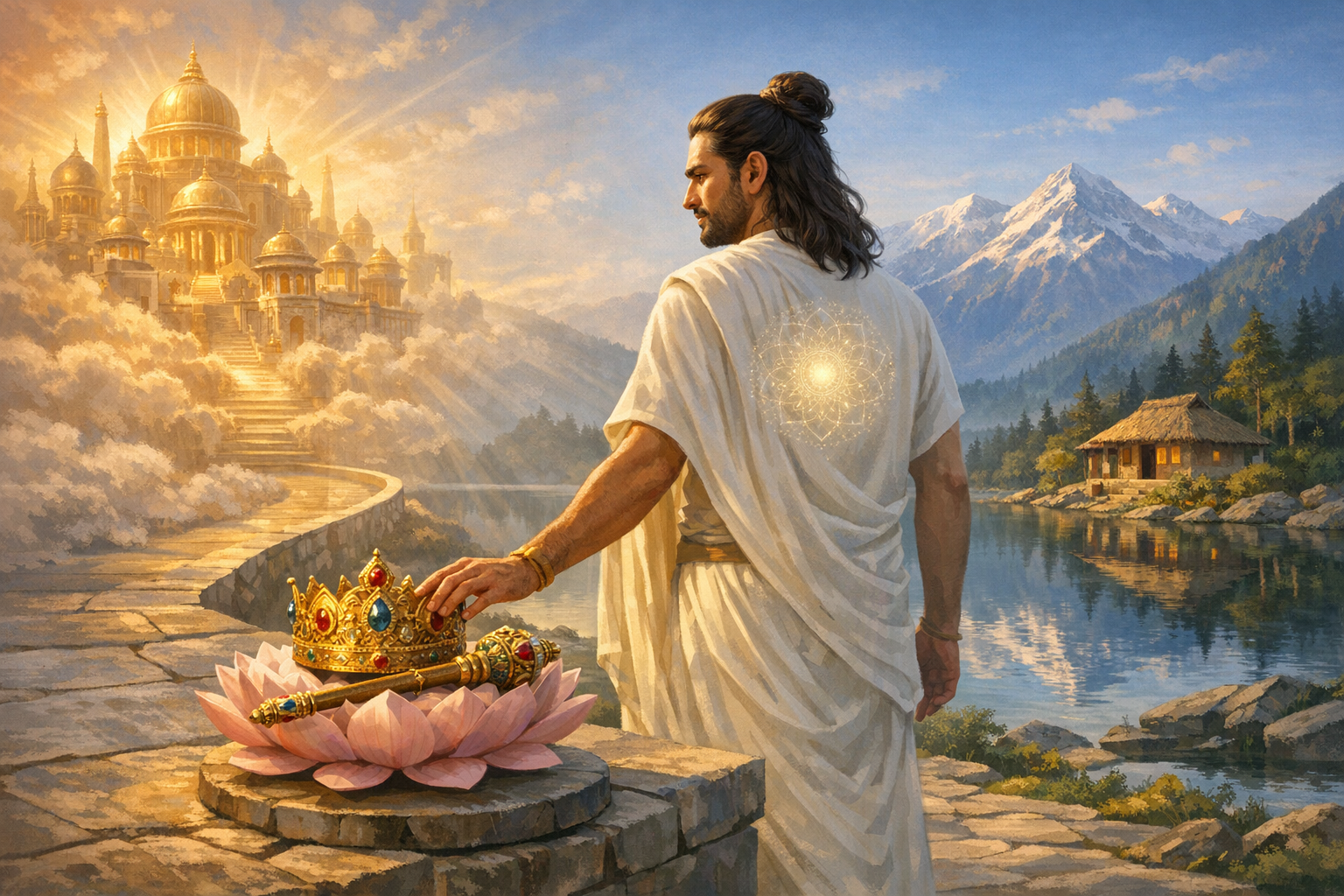
The opening narrative of the Yoga Vasishta, where King Arishtanemi declines Indra’s heaven, distills the text’s core teaching: lasting freedom arises from vairagya (renunciation) grounded in clear discrimination (viveka). Rather than reject joy, the king outgrows the promise of celestial pleasure by recognizing its impermanence and karmic limits. This analysis situates the story within Yoga…
-
Beyond Death’s Arrow: How Arishtanemi’s Tapas in the Mahabharata Reveals Deathless Dharma

This essay examines how the Mahabharata’s doctrine of tapas frames spiritual discipline as “divine protection,” reading the image of going beyond death’s arrow as a technical claim about fearlessness and clarity. It situates Ariṣṭanemi (Neminātha in Jain tradition) within a shared Dharmic milieu, linking ahiṃsā and aparigraha to the epic’s tapas-centered ethic. Drawing on Shanti…
-
Shattering the Illusion of Chains: Advaita Vedanta’s Guide to the Ever‑Free Self
Advaita Vedanta proposes a radical clarity: in ultimate truth there is neither bondage nor liberation; the Self (Atman) is ever-free, and only ignorance creates the sense of captivity. This article explains the logic of avidya and adhyasa, distinguishes empirical from absolute perspectives, and shows how moksha functions as recognition rather than attainment. Drawing on the…
-
Kailash Giri Pradakshina: Definitive, Soul-Stirring Guide to Manasarovar Yatra and Parikrama

Mount Kailash, beside Lake Manasarovar and Lake Rakshastal, is revered across Hinduism, Buddhism, Jainism, and Bon, making the Kailash Manasarovar Yatra a living emblem of dharmic unity. This comprehensive guide explains the spiritual grammar of circumambulationpradakshina, parikrama, Girivalam, and korawhile detailing the three-day, ~52 km Outer Kora from Darchen over Drolma La Pass. Practical sections…
-
Shreyas vs Preyas: Katha Upanishad’s Timeless Guide to What Truly Lasts in Life
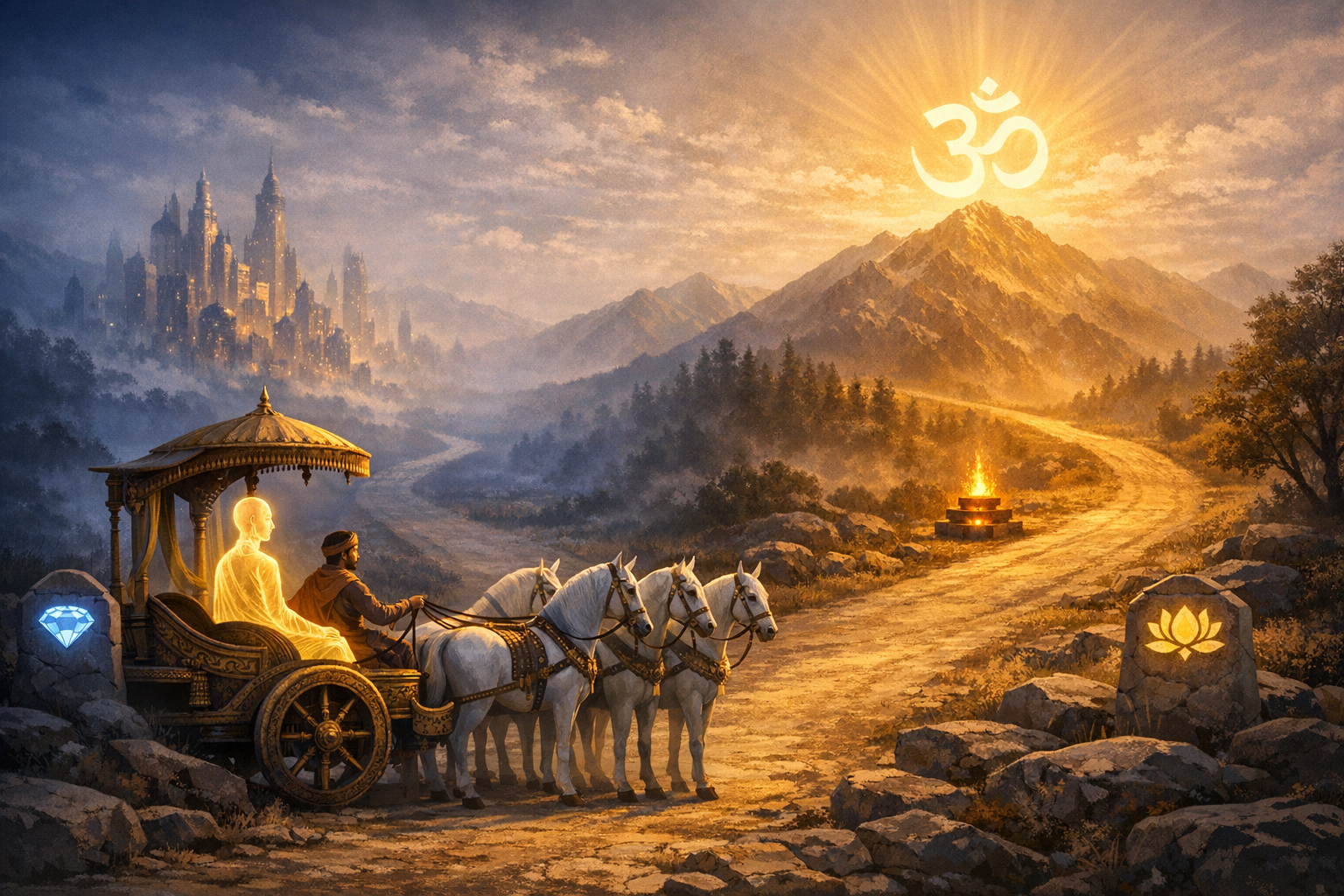
The Katha Upanishad presents a precise framework for choosing between what is permanent (śreyas) and what is fleeting (preyas), dramatized in the dialogue between Naciketas and Yama. It clarifies how prosperity and pleasure can be integrated under dharma and directed toward moksha, rather than rejected. The chariot allegory offers a technical model of inner governancesenses,…
-
Nish Shreyas in Hinduism: The Life-Changing Choice of Shreyas over Preyas toward Moksha
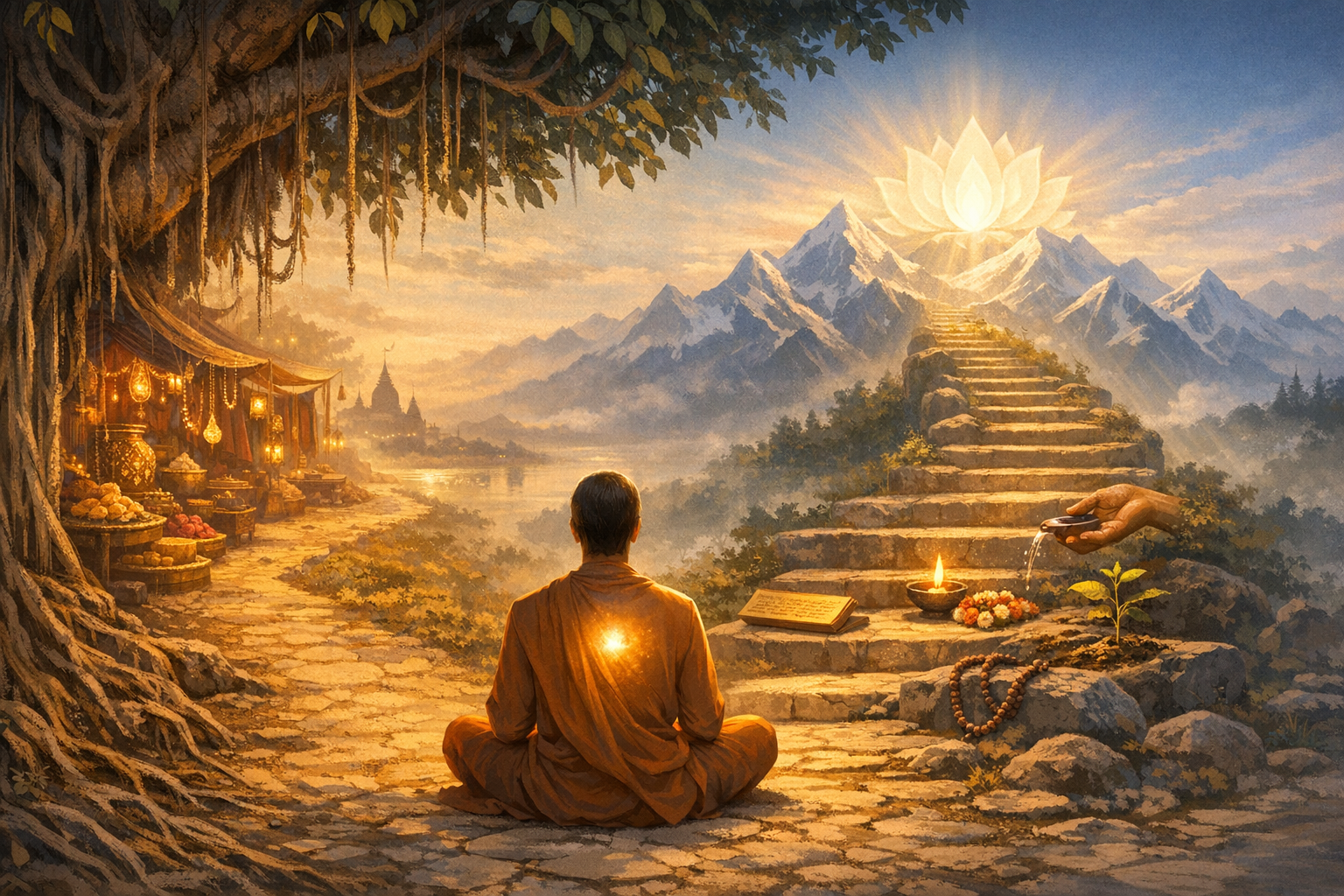
Nish Shreyas denotes the ultimate good in Hinduismthe enduring well-being that culminates in mokshaclarified through the Katha Upanishad’s contrast between preyas (the pleasant) and shreyas (the beneficial). This article explains how Vedanta, the Bhagavad Gita, and integrated yogic disciplines channel everyday decisions toward freedom rather than compulsion. It offers a clear decision framework and practical…
-
Kalatita Unveiled: A Rigorous Guide to the Timeless Self and Eternal Truth in Hinduism
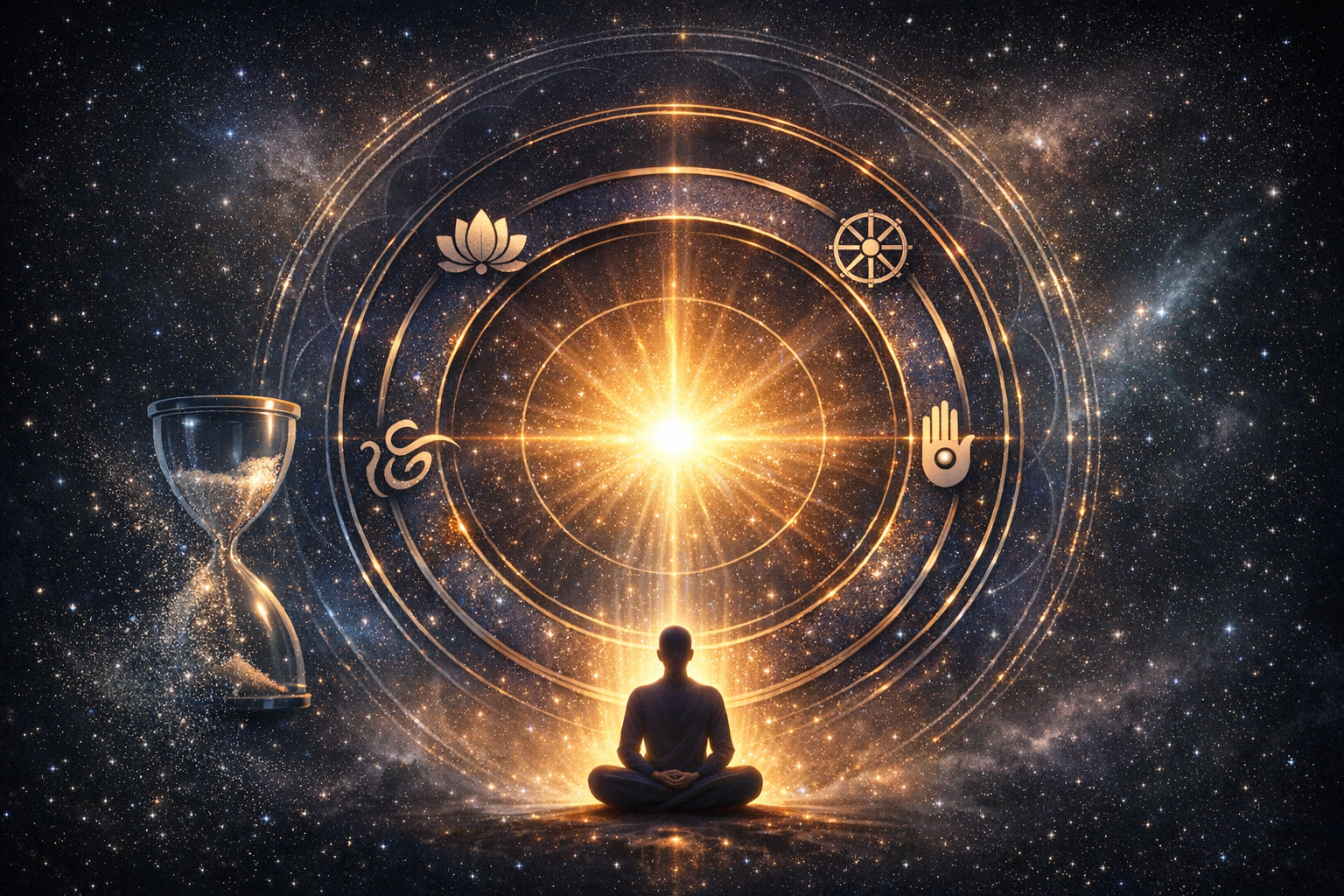
This article presents a rigorous, accessible exploration of Kalatita’beyond time’in Hindu philosophy, anchored in the Upanishads, Bhagavad Gita, and Yoga Sutra. It clarifies how cyclical time (yuga, kalpa) coexists with the timeless ground of Brahman, using Advaita Vedanta, Sāṅkhya, and Bhakti perspectives. The discussion bridges theory and practice with concrete contemplations, showing how presence, fearlessness,…
-
The Upanishads’ Radical Vision: Beyond Worship to Realize Atman–Brahman Within
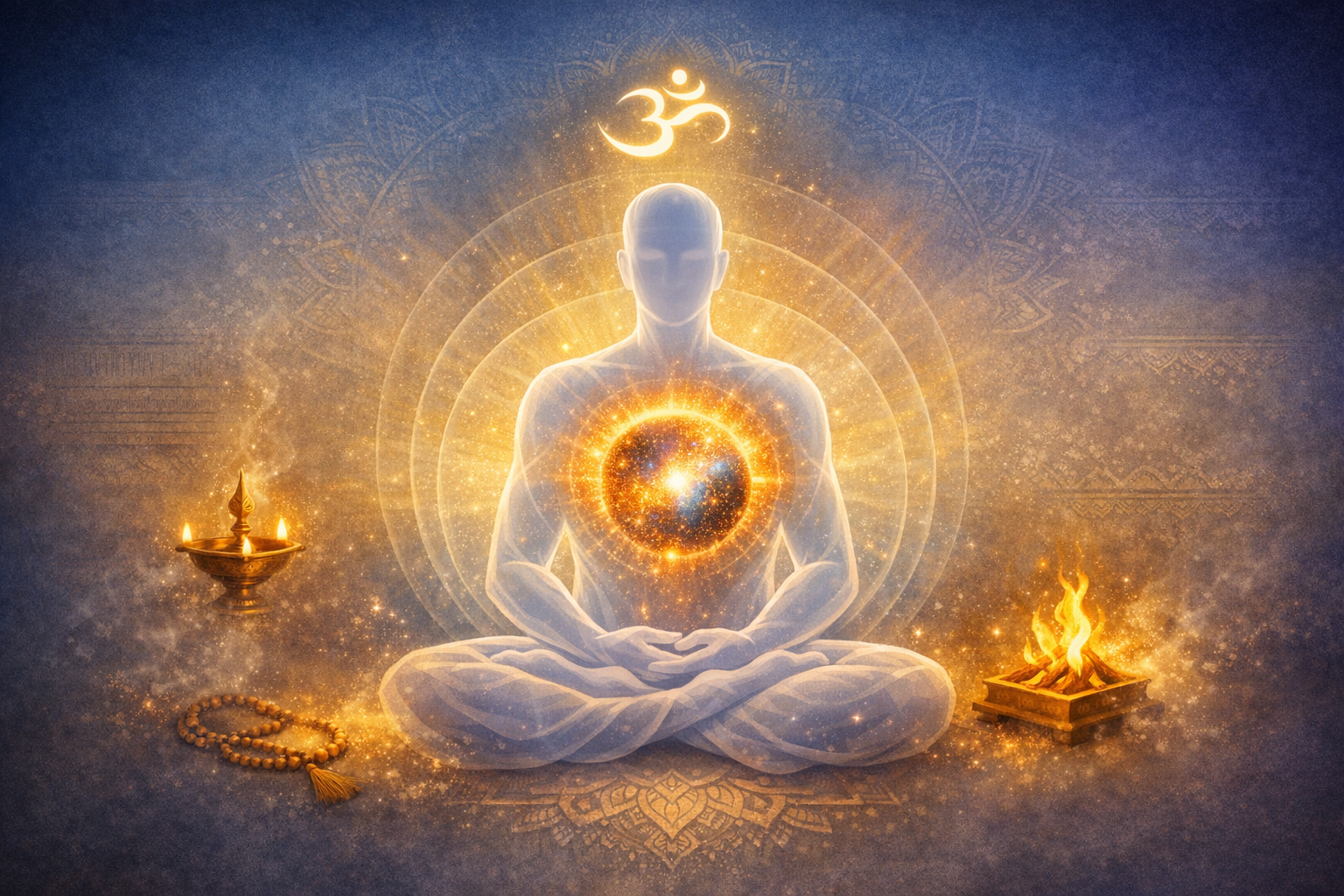
This essay clarifies the Upanishads’ radical claim that ultimate reality is not an external deity to be appeased but the Self (Atman), recognized as non-different from Brahman. It explains how ritual and devotion (upāsanā) are honored as preparatory means, while liberating knowledge (jñāna) is the goal. Readers gain a technical overview of key methodsśravaṇa, manana,…
-
Freedom from the Senses: A Dharmic Pathway to Moksha, Mastery, and Inner Sovereignty

This essay explores the Hindu philosophical insight that freedom from the slavery of the senses constitutes liberation and shows how it converges with parallel teachings in Buddhism, Jainism, and Sikhism. It clarifies how indriyas, raga-dvesha, and samskaras generate compulsion, and how masterynot repressionunlocks moksha. Drawing from the Bhagavad Gita, the Upanishads, and Yoga philosophy, it…
-
Karma in Hinduism: A Definitive, Practical Guide to Action, Consequence, and Liberation

Karma in Hinduism is a precise ethical and philosophical system linking intention, action, and consequence within the larger pursuit of moksha. Drawing on the Bhagavad Gita, the Upanishads, and allied schools of Hindu philosophy, this long-form guide explains the threefold temporal modelsanchita, prarabdha, and agamialongside the Gita’s categories of karma, akarma, and vikarma. It clarifies…
-
Transformative Bhakti: Śrīmad-Bhāgavatam 3.32.22–36 Reveals a Clear Roadmap to Moksha

This exploration of Śrīmad-Bhāgavatam 3.32.22–36 distills how faithful śravaṇa about Kṛṣṇa initiates and sustains bhakti-yoga as a clear pathway to moksha. It clarifies the Sāṅkhya distinction between the witnessing self and the body-mind, showing how devotion both utilizes and transcends analysis. Practical stepsdaily hearing, kīrtana or japa, seva, sat-saṅga, and reflective svādhyāyaare presented alongside minimalist…
-
Shattering the Illusion of Ego: How Pride Sabotages Liberation across Dharmic Traditions
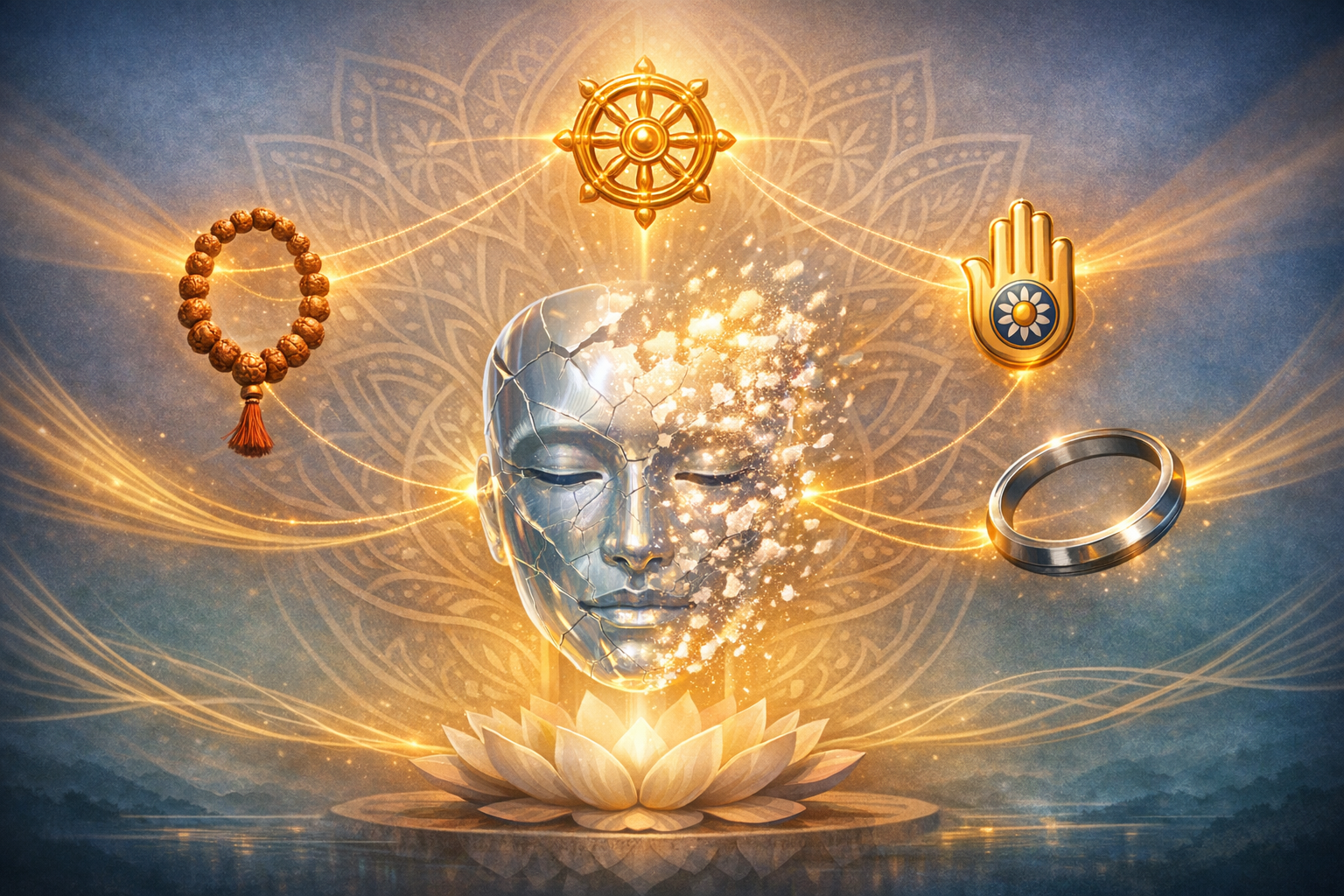
Pridewhether named ahamkara, asmita, mana, or haumaiemerges as a shared obstacle to liberation across Hinduism, Buddhism, Jainism, and Sikhism. This essay synthesizes scriptural anchors from the Bhagavad Gita, Upanishads, and Yoga Sutra with parallel insights from Buddhist, Jain, and Sikh teachings to show how egoic inflation thrives on the illusion of separation. Readers will gain…
-
Timeless Lila: Exploring the Divine Play of Being and Becoming Across Dharmic Paths
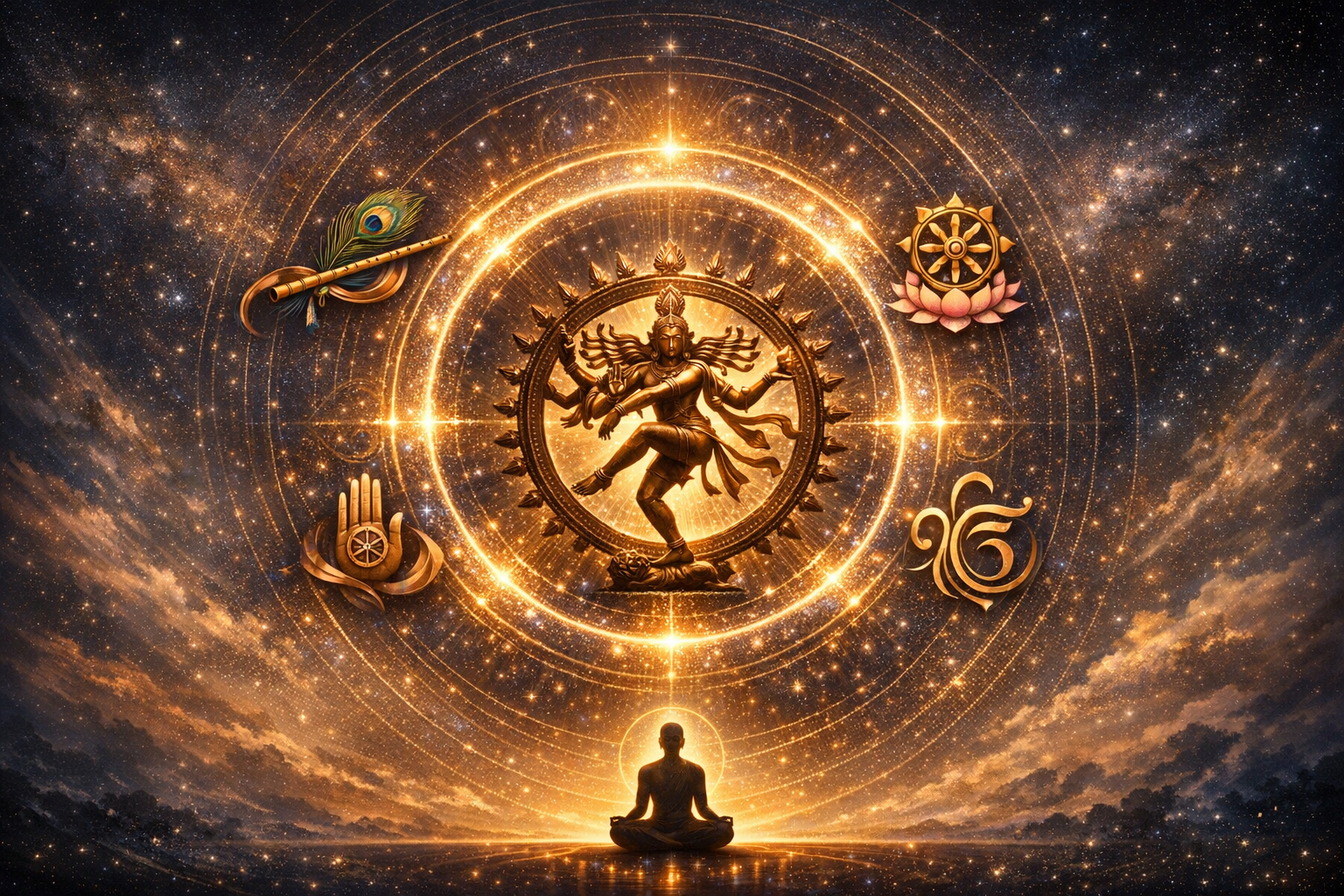
This long-form exploration presents Lilathe eternal divine playas a framework for understanding how being and becoming interrelate across Hinduism, Buddhism, Jainism, and Sikhism. Drawing on the Upanishads, Vedanta (Advaita, Vishishtadvaita, Dvaita), the Bhagavad Gita, and Shaiva–Shakta thought, it clarifies how creation, preservation, and dissolution express a living unity. It maps key concepts like dharma, karma,…
-
Two Yet One: Advaita Vedanta’s Science of Oneness and a Dharmic Bridge across Traditions

The teaching ‘you and I are two persons; yet we are one’ expresses Advaita Vedanta’s core insight: empirical plurality and ultimate unity coexist without contradiction. This long-form exploration clarifies Brahman, Atman, and the roles of maya and avidya, situating ethics and devotion within a rigorous non-dual framework. Drawing on the Upanishads and the Bhagavad Gita,…
-
A Guru Can Guide, Not Save: Self‑Realization Across Hindu, Buddhist, Jain, Sikh Paths

Across Hinduism, Buddhism, Jainism, and Sikhism, a unifying principle stands out: a guru can guide, not save, and Self-Realization depends on disciplined personal effort. This article grounds the point in the Bhagavad Gita and Upanishads, while showing its parallels in Buddhist, Jain, and Sikh teachings. It clarifies how grace and effort cooperate without inviting passivity,…
-
Why Pleasure Escapes Us: Hindu Wisdom on Desire, Avidya, and the Path to Lasting Ananda

Why does pleasure fade so quickly, and why does desire return so reliably? This long-form analysis uses Hindu philosophyBhagavad Gita, Yoga Sutras, and Upanishadsto explain the psychology of craving via avidya, raga-dvesha, samskara, and the gunas. It clarifies the distinction between sukha (contact-based pleasure) and ananda (enduring joy) and situates kama within the purusharthas under…