
-
Nari Semari Temple, Mathura: Timeless Devi Peeth Where Krishna Revealed His Narayan Form to Radha

Nari Semari Temple near Chhata in Mathura, Uttar Pradesh, is a revered Devi Peeth dedicated to Brij Rakshika Mata and regarded as the Kuldevi shrine for many families across Mathura and Agra. Temple lore holds that Sri Krishna revealed His Narayan form to Radha here, deepening the site’s devotional resonance within Braj. The sanctum features…
-
Kāma vs Prema in Chaitanya-charitamrita: Transforming Desire into Selfless Divine Love

C.C. Adi-lila 4.158–162 offers a lucid distinction between kāma (self-centered desire) and prema (selfless love), showing how intention transforms desire into devotion. The class by H.G. Braja Bihari Prabhu emphasizes that prema seeks to gladden Kṛṣṇa through service, humility, and steadfastness. A preserved Sanskrit verse highlights love’s resilience even when dissolution seems justified. Parallels across…
-
Uddhava-gita Unveiled: Krishna’s Profound Counsel in Srimad Bhagavatam Beyond Kuruksetra

This piece introduces Uddhava-gita as Krsna’s intimate counsel in Dvaraka, complementing the battlefield instruction of Bhagavad-gita at Kuruksetra. It clarifies how each text addresses different stages of spiritual growthduty and discernment on one hand, and mature devotion and contemplative wisdom on the other. Readers gain a comparative framework that deepens understanding of Hindu philosophy, bhakti,…
-
Truth, Freedom, and Unshakeable Devotion: Insights on SB 10.1.58 from HH Devamrita Swami
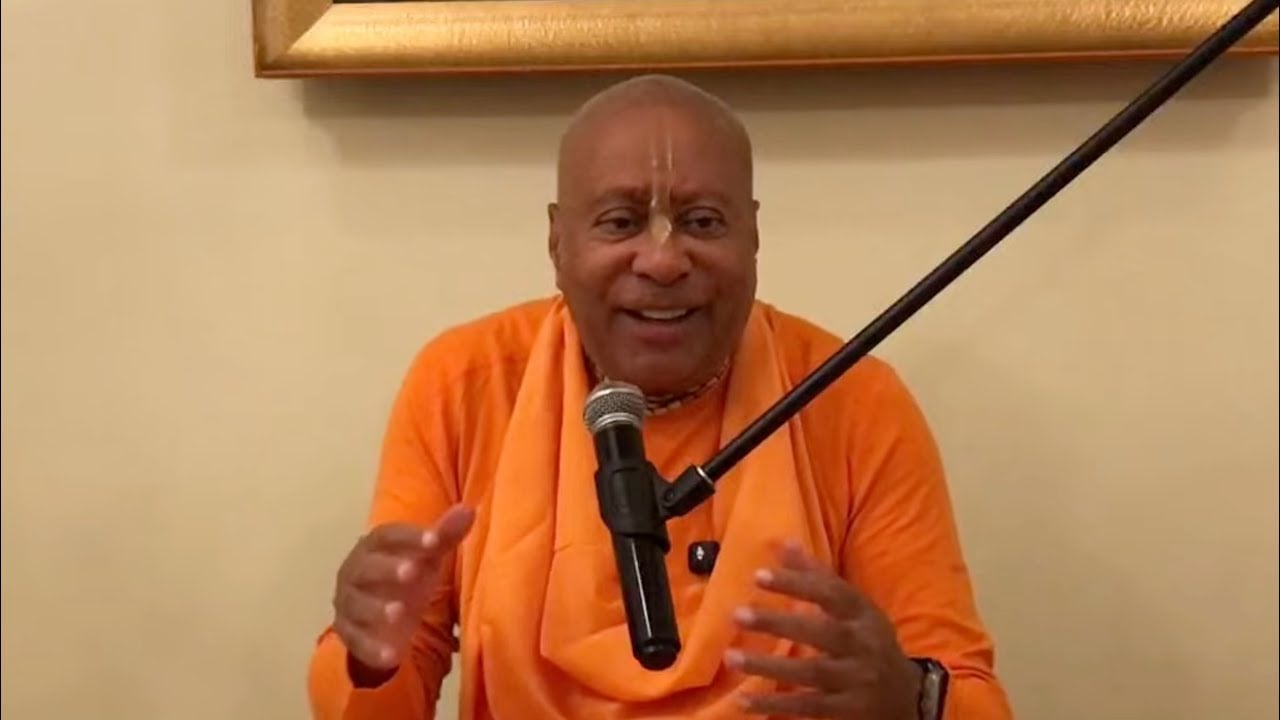
This reflection on Srimad-Bhagavatam (SB 10.1.58), drawn from a morning class by HH Devamrita Swami, distills four enduring lessons: truthfulness reduces avoidable suffering, spiritual realization fosters genuine freedom, ethical lapses erode boundaries, and devotion anchors life in purpose. Readers gain a clear framework for daily practicespeak truth kindly, simplify habits, serve others, and deepen scriptural…
-
Empowerment Prayers of Sukadeva GosvamiHG Narayani Mataji on Living Bhagavatam

This lecture on Srimad Bhagavatam (Canto 2, Chapter 4, verses 11–17) explores Srila Sukadeva Gosvami’s empowerment prayers and the mood necessary to speak, hear, and live the Bhagavatam. It emphasizes humility and dependence on Krishna (Hrishikesha) as the foundation for meaningful spiritual communication. HG Narayani Mataji highlights how speech and action gain clarity through divine…
-
New Mayapur’s Living Legacy: Srila Prabhupada’s Vision of Bhakti, Community, and Self‑Sufficiency

This concise documentary offers a focused window into New Mayapur in France, where Srila Prabhupada’s vision of rural community life and self‑sufficiency is actively practiced. It highlights how bhakti, kirtan, and seva shape daily rhythms, linking sacred spaces to practical responsibilities. The narrative shows how Hare Krishna traditions can adapt to European settings without diluting…
-
Mystic Power of the Divine Name: How Chanting Awakens the Heart across Dharmic Traditions

This reflection addresses a classic paradox in devotional life: if the Name of God is truly transcendental, what is achieved through congregational chanting? Drawing on Bhaktivinode Thakur’s insight that the Name descends and acts upon the heart, it explains how chanting functions as cooperation with grace rather than a human conquest. The analysis clarifies why…
-
Misheard ‘Crishne’, Found Krishna: How Music Sparked a Transformative Dharmic Quest

A simple misspelling“Crishne” instead of Krishnasparked a thoughtful journey from music to meaning. Guided by the sounds of Ravi Shankar and George Harrison, curiosity evolved into an informed exploration of Krishna, bhakti, and Hindu philosophy. A chance search led to credible resources, including krishna.com, turning cultural interest into structured learning. The narrative shows how modern…
-
Reflections of the SoulSB 10.1.43 with HG Aniruddha Prabhu: Calm Mind, Clear Vision

This session on Srimad-Bhagavatam (SB) 10.1.43 with HG Aniruddha Prabhu uses a vivid reflection metaphor to clarify how mental turbulence distorts perception while the self remains unchanged. It draws unifying parallels across Hindu, Buddhist, Jain, and Sikh traditions, showing a shared commitment to clarity and compassion. Practical takeaways include breath awareness, mantra-japa, and contemplative self-inquiry…
-
Kumara Vyasa (Naranappa): Architect of the Kannada Mahabharata and a Beacon of Dharma

Kumara Vyasa (Naranappa) crafted the iconic Kannada Mahabharata, the Karnata Bharata Kathamanjari, blending poetic elegance with moral inquiry. Situated in the cultural radiance of the Vijayanagara era, his work remains central to Kannada literature and living performance traditions like Gamaka and Yakshagana. The narrative’s Bhamini Shatpadi meter and nuanced characterizations of Krishna, Arjuna, Karna, and…
-
Legendary New Vrindaban Prasadam: Devotional Sweet Rice and Ice Cream from Krishna’s Cows

New Vrindaban’s early prasadam culture is remembered through two legendary offerings: Amburish Dasa’s sweet rice and Pitambar Dasi’s ice cream, both made with fresh milk from Krishna’s cows. Without prior culinary or cow-care experience, they learned through seva, transforming simple dairy into much-loved treats. Amburish’s journey began with a 1971 visit, initiation by Srila Prabhupada,…
-
Purification and Transcendent Elevation: Sincere Chanting, Bhakti Practice, and Dharmic Unity

This reflection presents a Gaudiya Vaishnava perspective on how sincere chanting of the holy name of Krishna, supported by worship, listening, and service, cultivates purification and transcendent elevation. It explains that intention and humility, rather than mere repetition, unlock the practice’s transformative power. The discussion connects these insights with shared dharmic values across Hinduism, Buddhism,…
-
Serving the Divine Through Tulasi: Gaudiya Insights on Bhakti, Wonder, and Sacred Growth

Gaudiya Vaishnava teachings present Tulasi as a sacred manifestation of the Lord’s internal potency, inviting devotion grounded in humility and wonder. This article explains how serving Tulasi functions as direct service to Krishna through daily care, offerings, and the Hare Krishna chant. It highlights Srila Jiva Gosvami’s insight on the Divine’s inconceivable nature and shows…
-
Magnanimous Devotion: How Exemplary Bhakti Inspires and Unites Dharmic Traditions

A magnanimous devotee, praised throughout the Bhakti Tradition and Hindu scriptures, is described as purifying, inspiring, and transformative in the lives of others. Even brief association with saintly personssadhu-sangaoften catalyzes ethical clarity, devotion, and renewed purpose. Comparable ideals appear across Buddhism, Jainism, and Sikhism, underscoring unity in spiritual diversity. The “ornaments” of the devoteehumility, compassion,…
-
Bhakti Beyond Reason: When the Bhagavad-gita Unites Head and Heart in Devotion to Krishna

Bhakti becomes transformative when the head’s clarity and the heart’s devotion work together. The Bhagavad-gita serves as a trustworthy map for this integration, revealing Krishna as the source of all attractiveness (10.08, 10.41). With that insight, choosing devotion does not mean losing joy; it means connecting with its origin. Through bhakti-yogakirtan, japa, and sevapractitioners often…
-
Dronacharya’s Fall at Kurukshetra: How Truth, Dharma, and Strategy Changed the War

Drona’s death in the Mahabharata marks a pivotal ethical and strategic turning point in the Kurukshetra War. After Bhishma’s fall, Dronacharya’s battlefield mastery proved insurmountable until a plan leveraged his attachment to Ashwatthama. Yudhishthira’s qualified statement“Ashwatthama hata iti gaja”preserved the letter of truth while straining its spirit, prompting Drona to lay down arms. Dhrishtadyumna then…
-
Make Krishna-katha a Daily Joy: Practical Insights from Srimad Bhagavatam 10.1.8–13

This presentation on Srimad Bhagavatam 10.1.8–13 by H.H. Hanumat Presaka Swami demonstrates how Krishna-katha can become a daily joy even within busy, modern schedules. Grounded in the Bhagavad-gita, it shows how ordinary experiencestasting water, seeing sunlight, or noticing strength and beautycan serve as contemplative cues for remembrance. Emphasizing “tailor-made” practice, it endorses diverse, temperament-sensitive methods…
-
Yudhishthira’s Half-Truth: Decoding a Heart-Rending Dharma Dilemma of the Mahabharata

Yudhishthira’s half-truth in the Mahabharata presents a timeless ethical dilemma: when personal virtue conflicts with public duty in the midst of war, how should leaders act? The episode, centered on Drona’s disarmament after the ambiguous proclamation “Aśvatthāmā hataḥ,” highlights dharma-sankata and the costs of hard choices. Rather than offering easy answers, it encourages a method…
-
Two Energies, One Choice: Transforming Daily Life through Krsna’s Material and Spiritual Power

Krsna’s two energiesmaterial and spiritualcan be engaged through intention, much like electricity directed to different purposes. The living entity, as marginal potency, continually chooses between self-centered exploitation and selfless service. This framework aligns with Buddhist, Jain, Sikh, and Hindu teachings, highlighting a shared dharmic path from craving to compassion. Practical disciplines such as study of…
-
Bhishma’s Fall in the Mahabharata: Strategy, Dharma, and Leadership Lessons from Kurukshetra

Bhishma’s fall marks a decisive shift in the Kurukshetra War, blending strategy with dharma in a way few epic moments achieve. The account clarifies why Bhishma’s vows shaped both the tactics and ethics of the Mahabharata. Readers gain context for Arjuna’s role, Krishna’s guidance, and the use of Shikhandi in preserving Dharma-Yuddha. The narrative shows…