
-
Prayer Is the Voice of the Soul: Timeless Dharmic Science for Healing, Clarity, and Grace

This article unpacks the Hindu teaching “Prayer is the voice of the soul” as a precise, reproducible inner science shared across Hinduism, Buddhism, Jainism, and Sikhism. It explains technical frameworks such as vāk (levels of speech), Pancha-kosha viveka (five sheaths), and the discipline of japa, dhyana, and pranayama. Readers gain a clear practice framework that…
-
Facing Mortality, Finding Dharma: Why Mastering Dying Is the Ultimate Art of Living

A pivotal episode from the Mahabharata frames a universal insight: death is certain, denial is common, and wisdom begins when that denial ends. This long-form analysis shows how Hinduism, Buddhism, Jainism, and Sikhism converge on a shared disciplinefacing mortality to live more ethically, courageously, and compassionately. Drawing on the Bhagavad Gita, the Upanishads, maranasati, samayik–pratikraman,…
-
Beyond Endless Craving: Dharmic Science of Ambition, Lust, and Lasting Happiness

Progressive ambition often fails to produce lasting happiness because the senses–mind complex is mismatched to the goal of enduring joy. Vedic philosophy explains this law of material nature and locates fulfillment in the jiva’s spiritual quality as a particle of Sachidananda Vigraha. Converging insights from Hinduism, Buddhism, Jainism, and Sikhism show that inner realignmentnot external…
-
Ego (Ahamkara), Conflict, and Liberation: A Dharmic Synthesis with Practical Tools for Peace
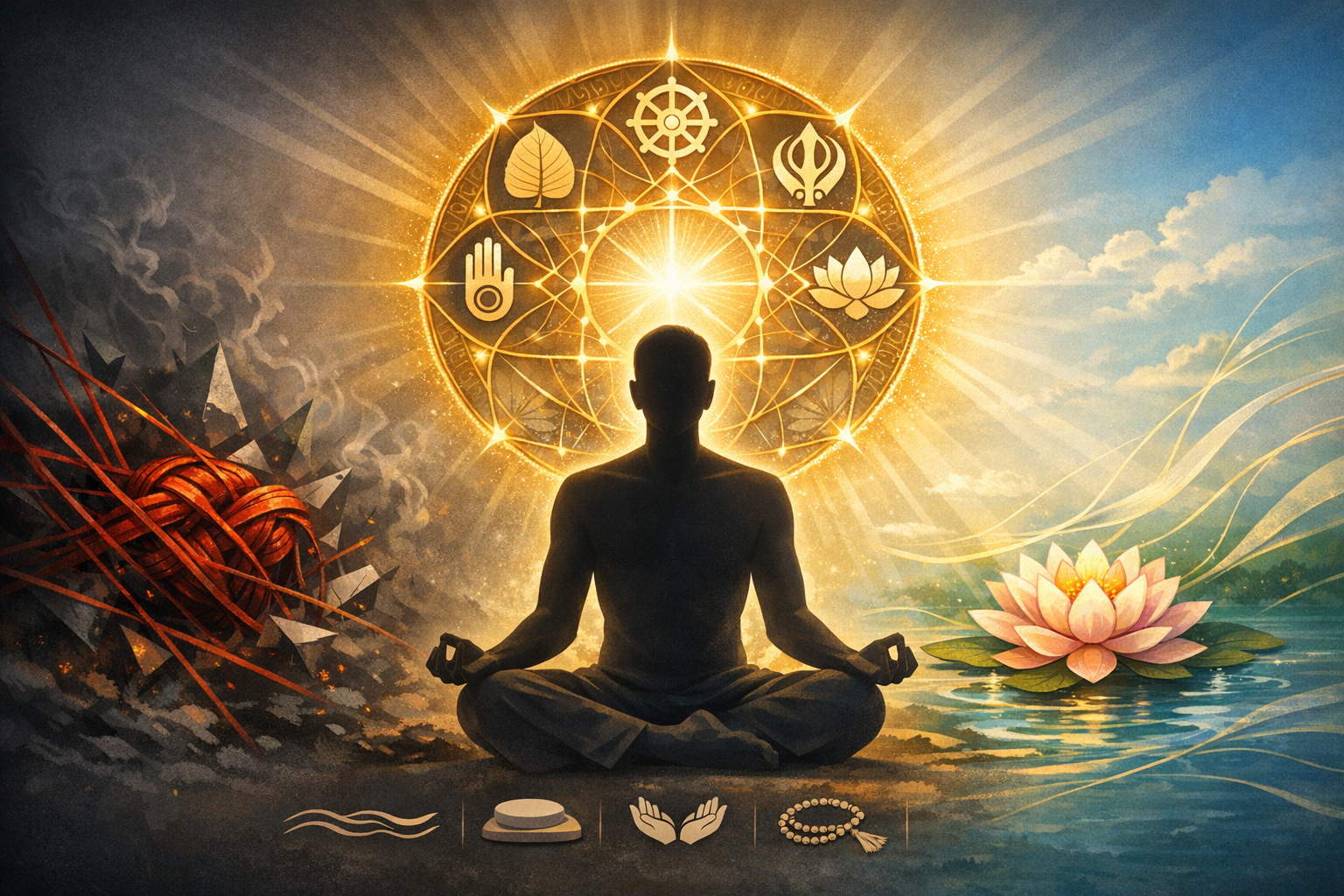
This article examines why ego (ahamkara) is repeatedly identified by Hinduism, Buddhism, Jainism, and Sikhism as a root driver of conflict, and how each tradition prescribes precise methods to transform it. It clarifies the mechanism from avidya to anger found in the Bhagavad Gita and Yoga philosophy, then correlates those insights with Buddhist anatta, Jain…
-
Empathy as the Mark of Divinity: Dharmic Teachings on Karuṇa, Dayā, and Universal Compassion

Empathy is presented as the defining mark of divinity across Hinduism and the broader dharmic family, where compassion (karuṇa/dayā) is both spiritual practice and social ethic. Grounded in scriptural foundations such as Bhagavad Gita 6.32 and 12.13, the article links inner realization with the welfare of all beings. It highlights convergences with Buddhism’s Brahmavihāras, Jainism’s…
-
Bhagwan Parshvanatha: Life, Four Vows, and the Enduring Legacy of Jainism’s Compassionate Reformer

Bhagwan Parshvanatha, the 23rd Tirthankara, helped shape Jain ethics through a clear fourfold disciplineahimsa, satya, asteya, and aparigrahalater integrated with Mahavira’s expanded code. Born in Varanasi and widely regarded as historical, Parshvanatha’s legacy is visible in sacred sites like Sammed Shikharji and in distinctive serpent-canopied iconography. Texts such as the Kalpa Sūtra and the Uttarādhyayana…
-
Avanaddha: The Sacred Science of Indian Drums from Vedic Pushkara to Pakhawaj

Avanaddha, the classical Indian family of drums defined in the Natyashastra, links Vedic references such as pushkara and dundubhi with today’s diverse performance, ritual, and communal traditions. This article explains how construction techniquesshell materials, membrane fastening, and the famed syahi loadingengineer near-harmonic overtones and pitch-centered strokes. It surveys major drum types (mridangam, pakhawaj, khol, chenda,…
-
Hik Sathi Laddham: The Timeless Companion Uniting Dharmic Wisdom and Sindhi Sufi Song

Anchoring on the Sindhi phrase “Hik Sathi Laddham” (“The Companion”), this essay maps a unifying motif across Hinduism, Buddhism, Jainism, and Sikhism, in dialogue with Sufi song. It clarifies the companion as inner witness and outer guide through Upanishadic sakshi, Buddhist kalyāṇa-mitra, Jain śuddhātman and the Three Jewels, and the Sikh Satguru and Śabad. Readers…
-
Eternal Paradox of Being: Nothing Is Lost, Yet Everything Changes in Hindu-Dharmic Thought

This essay decodes the paradox “Nothing can be wiped out; but nothing remains same” through the lens of Hindu philosophy and the wider dharmic traditions. It shows how the Upanishads, the Bhagavad Gita, Advaita, Samkhya, Nyaya-Vaisheshika, Buddhism, Jainism, and Sikhism converge on a coherent view: being persists while forms transform. Readers gain clear definitions (sat,…
-
Desire Beyond Need: Dharmic Strategies to Transform Craving into Clarity and Freedom

This article clarifies why, in Hindu thought, desire is not a need but a demand that reaches beyond needand how that demand can be guided rather than suppressed. It maps desire across the puruṣārthas and pañca-kośa models, showing when desire serves dharma and when it becomes compulsion. It integrates insights from the Bhagavad Gita, Yoga…
-
Beyond ‘300 Ramayanas’: Valmiki’s Legacy, Rasa Aesthetics, and Dharmic Unity in Retellings
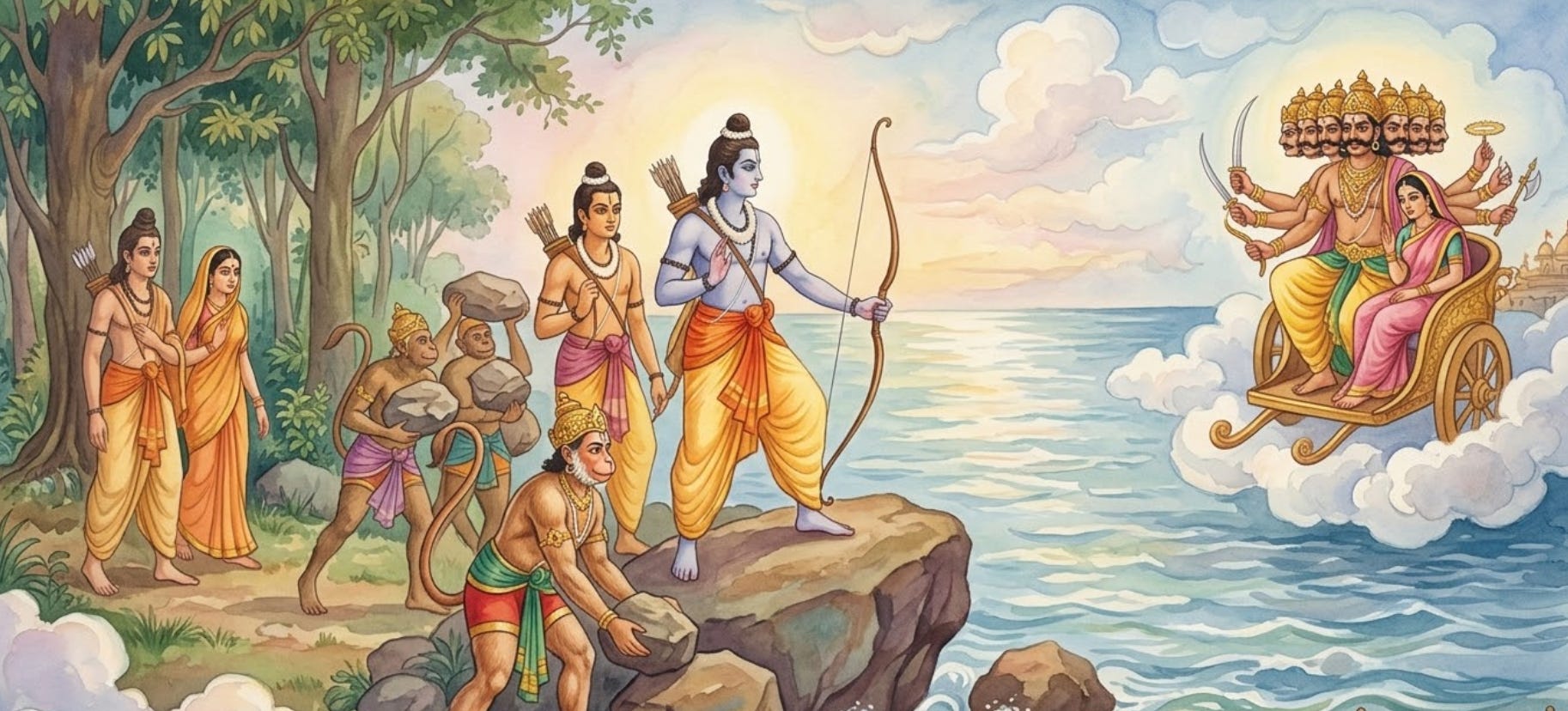
This essay maps the many Rāmāyaṇa traditions while reaffirming the aesthetic primacy of Vālmīki’s Sanskrit epic. It classifies adaptations into four clear streamsdharmic subtraditions, texts attributed to Vālmīki and folk narratives, classical kāvya and drama, and modern ideological readingsso readers can evaluate variations without losing the original’s moral and poetic center. Murāri’s verse and Ānandavardhana’s…
-
From Adversity to Excellence: How Dharmic Wisdom Transforms Hardships into Strength

This article explains how adversity functions as a deliberate curriculum for strength and wisdom across Hinduism, Buddhism, Jainism, and Sikhism. It synthesizes dharmic teachings with contemporary research on resilience to present a unified, practical method. Readers gain a daily protocol that combines Karma Yoga, meditation, yogic breathing, ethics, and seva to build measurable resilience. Clear…
-
When Nothing Remains, Fear Ends: A Dharmic Science of Abhaya beyond Ego and Identity

This essay maps a dharmic science of fearlessness (Abhaya) grounded in Hindu philosophy and harmonized with Buddhism, Jainism, and Sikhism. It clarifies how fear originates in avidya and duality, then outlines practical pathsJnana, Karma, Bhakti, and Raja Yogato dissolve misidentification and regulate reactivity. Readers gain scriptural anchors from the Upanishads, the Bhagavad Gita, and the…
-
From Ego to Empathy: A Dharmic, Science-Backed Path to a Cleaner Mind and Heart
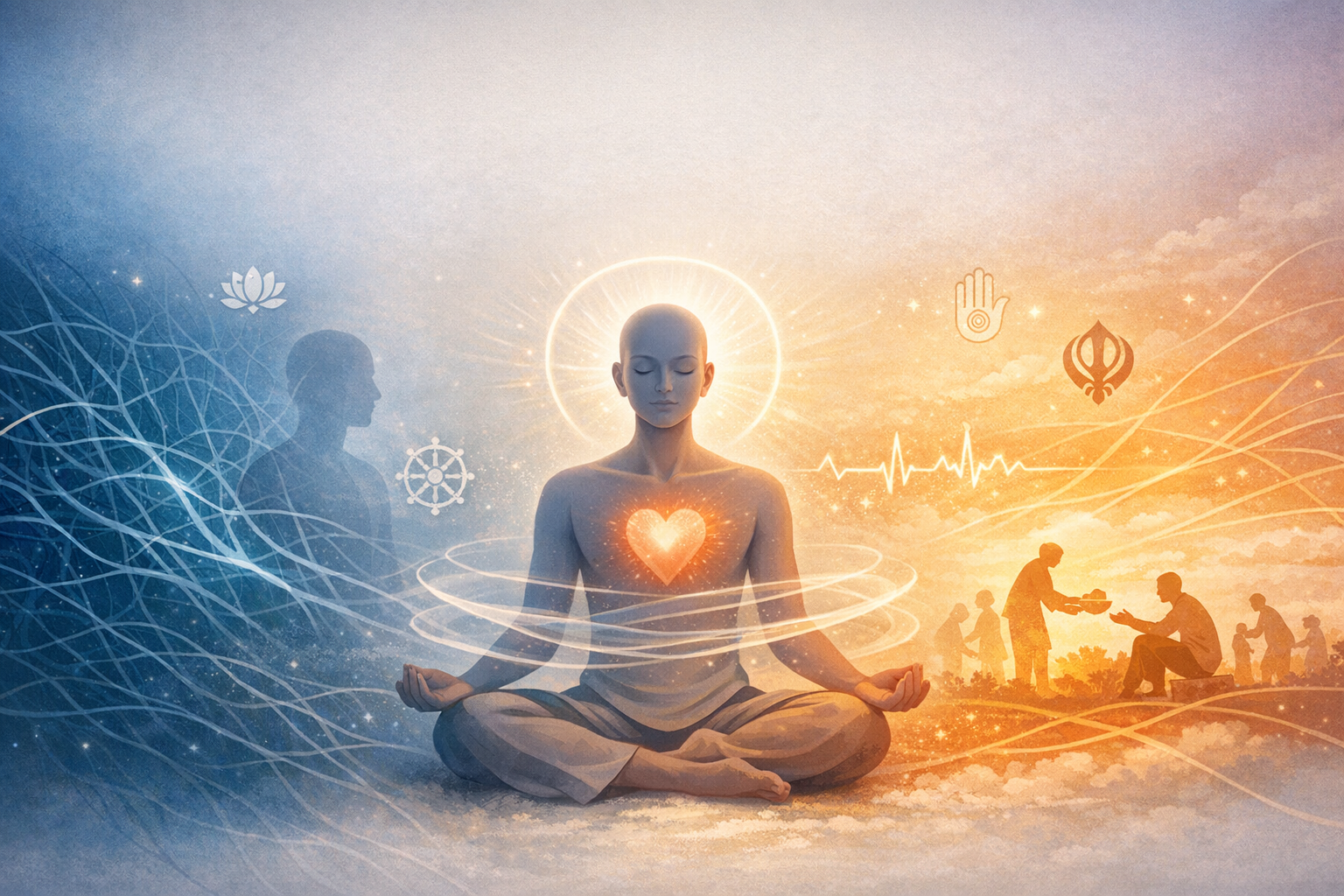
Reducing self-absorption is a practical way to keep the mind clear and the heart clean. Dharmic traditionsHinduism, buddhism, jainism, and sikhismconverge on this insight through ahimsa, aparigraha, seva, metta, simran, and Yoga, offering unity in spiritual diversity. Psychological research on mindfulness, compassion training, and breath regulation supports these practices by reducing rumination, stabilizing attention, and…
-
When Mistakes Happen: A Dharma-Guided, Science-Backed Playbook for Calm, Compassionate Resilience

Errors are inevitable, but responses can be principled, compassionate, and effective. This essay synthesizes dharmic wisdom from Hinduism, Buddhism, Jainism, and Sikhism with evidence-based tools from behavioural science and reliability engineering to offer a practical protocol for handling mistakes. Readers will learn a five-step responseregulate, acknowledge, repair, learn, and recommitthat protects relationships while improving systems.…
-
Unraveling Karma’s ‘Complicated Play’: Dharmic frameworks of action, causality, and grace

This long-form guide unpacks why “Gurudev says that it is a complicated play,” showing how Karma operates across intention, action, impressions, and outcomes. It compares Hindu, Buddhist, Jain, and Sikh frameworks, clarifying doership, responsibility, and grace without collapsing their differences. Readers gain a precise map of sañcita–prārabdha–kriyamāṇa, Buddhist intentionality (cetanā) and dependent origination, Jain karmic…
-
Ultimate Reality Cannot Be Taught: Profound, Experiential Wisdom in Hinduism and Dharmic Paths
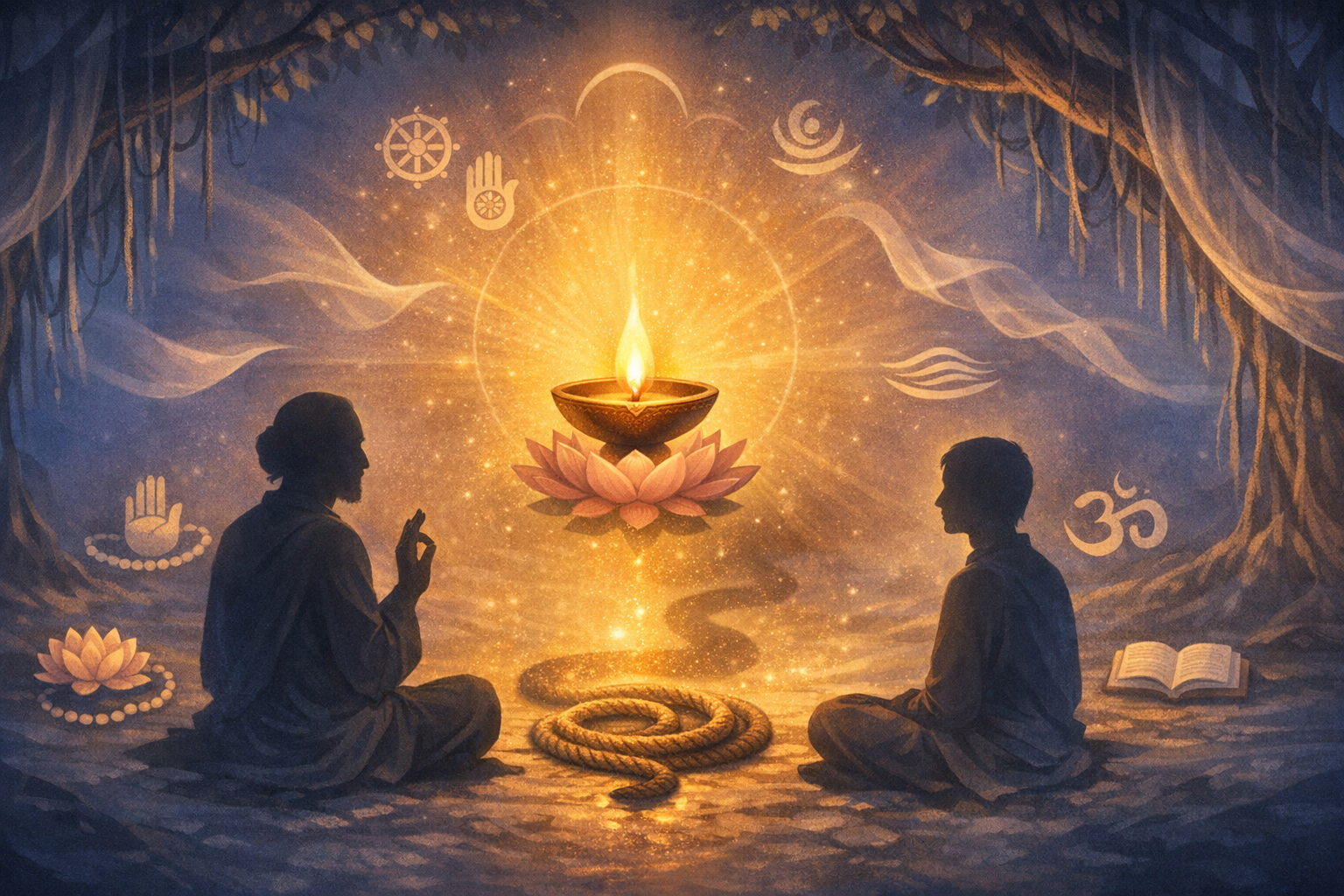
This long-form exploration clarifies why Ultimate Reality in Hindu philosophy cannot be taught as a mere concept and must be realized through direct experience. It maps the classical triad of śravaṇa–manana–nididhyāsana and the role of Guru–Shishya Tradition, highlighting how scripture and guidance remove ignorance rather than transfer realization. Readers gain a technically sound overview of…
-
Kundalini Tantra Unveiled: A Scientific, Dharmic Guide to Awakening the Serpent Power
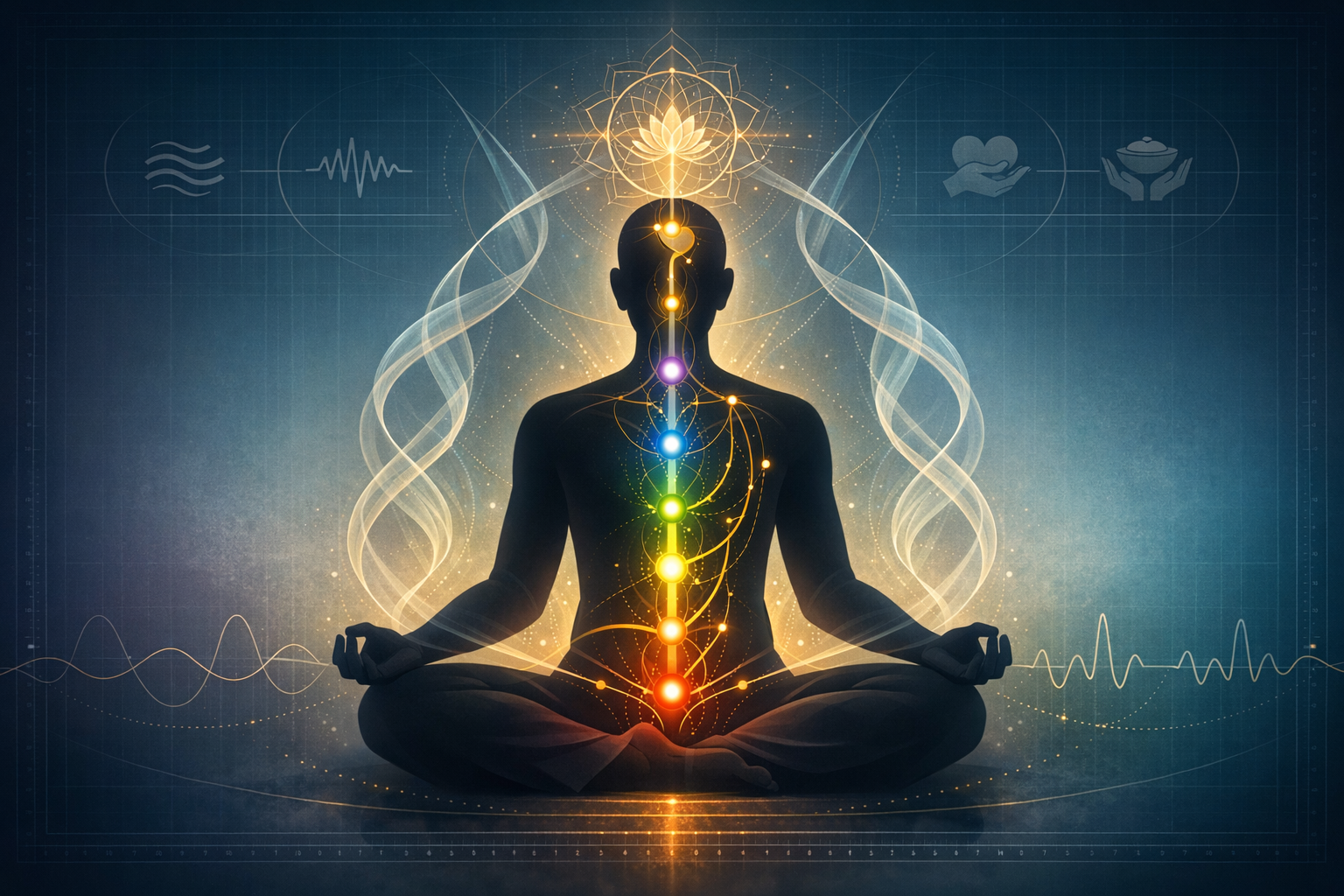
This comprehensive guide presents Kundalini Tantra as a precise, ethical, and integrative science shared across dharmic traditions. It clarifies yogic anatomy (nadis, chakras, sushumna nadi) and explains how breathwork, bandhas, mudras, mantra, and meditation organize subtle energy safely. A stepwise 12-week framework details how to build foundations with yama-niyama, asana, and pranayama before progressing to…
-
From Ritual to Realization: Ending Barren Devotion with Dharmic Discipline and Insight
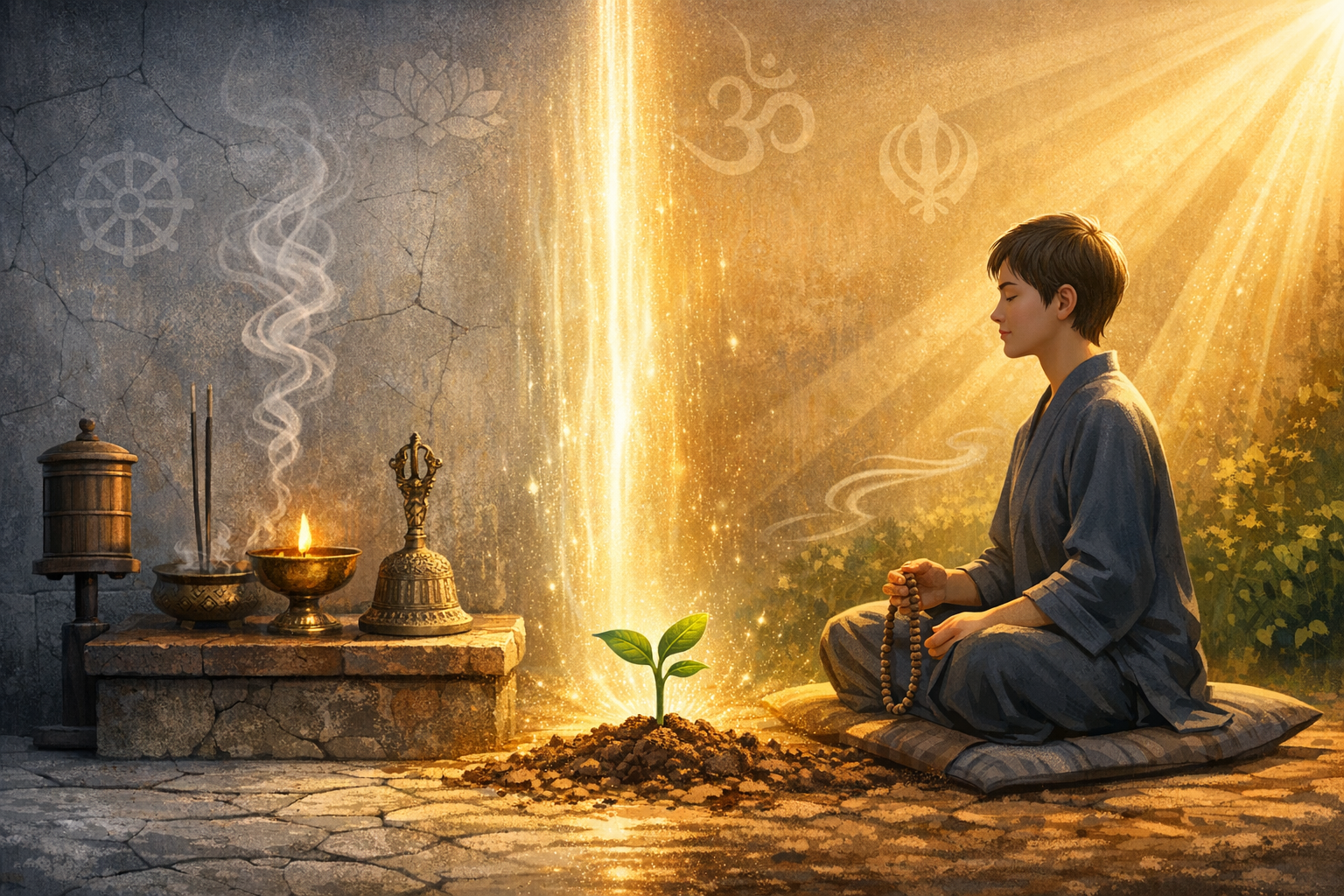
Modern worship often looks vibrant yet feels spiritually thin. This long-form, academic analysis explains why devotion turns barrentransactional aims, inattentive ritual, neglected ethics, and fragmented attentionand details what Hindu, Buddhist, Jain, and Sikh scriptures actually prescribe for transformation. It offers an integrated method grounded in yama–niyama or śīla, daily abhyasa of japa or dhyana, breath…
-
From Overwhelm to Ease: A Dharmic, Science-Backed Guide to Cooling an Anxious Mind

Anxiety can be cooled reliably by combining physiology, contemplative training, and ethical living. This guide bridges modern neuroscience with dharmic wisdom from Hinduism, Buddhism, Jainism, and Sikhism to offer practical tools that downregulate the nervous system. Readers learn how breath awareness, pranayama, and humming stimulate the vagus nerve and improve HRV for fast-acting calm. Somatic…