
-
Science of Sacrifice: Dharmic principles to practice tyaga, seva, and everyday yajna wisely

Sacrifice in a dharmic sense is intelligent, freely chosen renunciation that serves a higher, shared good. This comprehensive guide defines tyaga in relation to dana, tapas, seva, and yajna, and shows how sattva, rajas, and tamas shape the quality of any offering. It unifies insights from Hinduism, Buddhism, Jainism, and Sikhismlinking loka-sangraha, dana, Aparigraha, and…
-
Unquenchable Spiritual Thirst: A Dharmic Path of Bhakti, Japa, Seva, and Inner Realization

Spiritual thirst is a disciplined, one-pointed aspiration for ultimate truth, cultivated through listening, singing, remembrance, mantra-japa, and ethical living. Across Hinduism, Buddhism, Jainism, and Sikhism, it matures when aspiration is yoked to steady practice, community support, and responsible conduct. The Varkari tradition exemplifies how sustained kirtan, abhangas, and pilgrimage transform longing into culture. Vedānta names…
-
Idle Mind Is the Devil’s Workshop: A Dharmic, Scientific Guide to Focus and Virtue

This article reframes the proverb ‘An idle mind is the devil’s workshop’ through a dharmic and scientific lens, unifying insights from Hinduism, Buddhism, Jainism, and Sikhism with contemporary psychology. It distinguishes restorative rest from unstructured idleness and shows how right effort, seva, and mindfulness reduce rumination and impulsivity. Readers gain a practical framework: align purpose…
-
From War Thunder to Living Gods: Ratha (Chariot) as Weapon, Ritual, and Wisdom in Ancient Hinduism
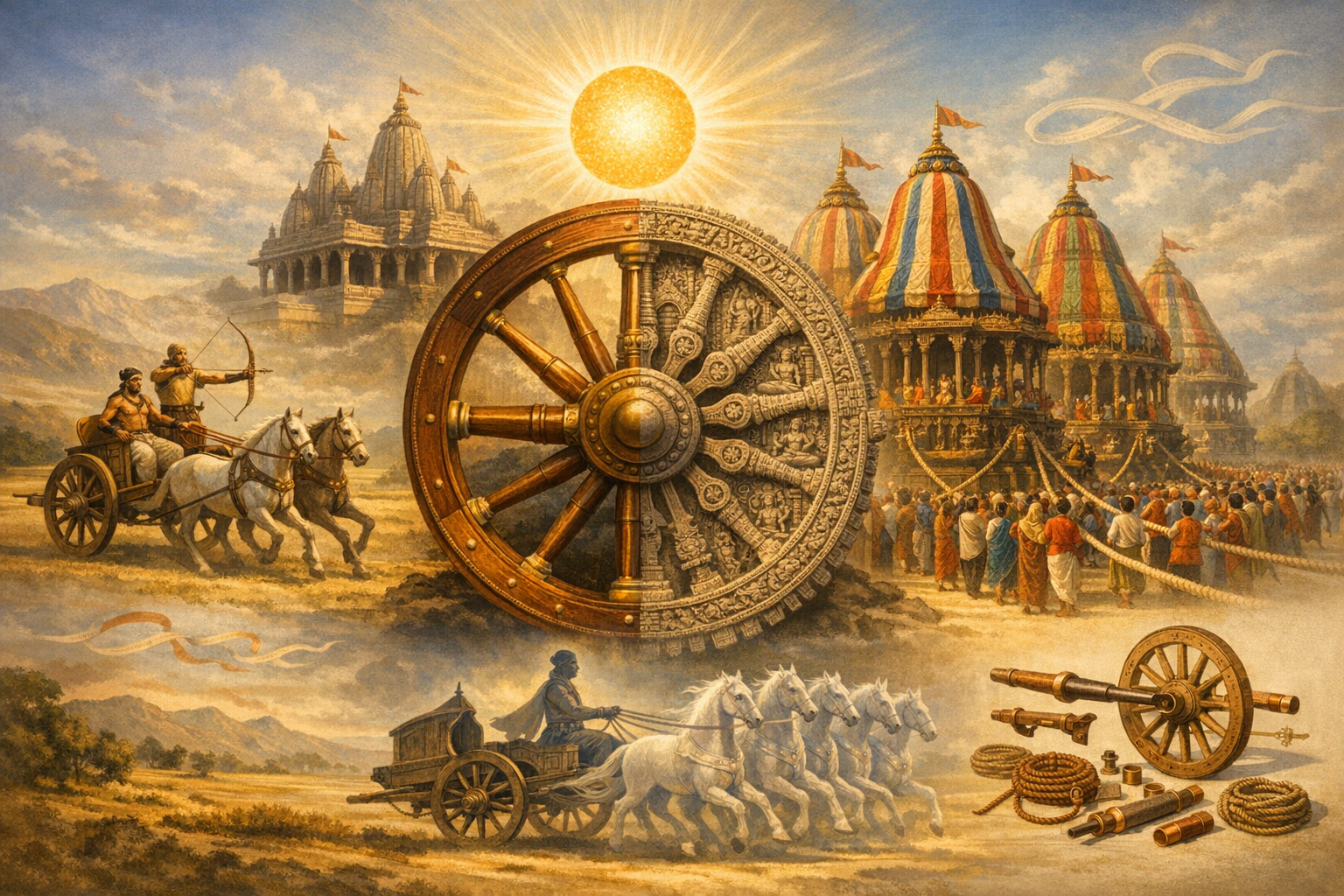
This long-form, research-driven essay follows the ratha (chariot) from its earliest Vedic mentions through epic warfare, temple architecture, and living festivals. Readers gain a balanced view of textual evidence (Rigveda, Mahabharata, Upanishads), archaeological debates (including Sinauli), and the Arthaśāstra’s statecraft, alongside technical insights into chariot design, crew roles, and battlefield tactics. It unpacks the Kaṭha…
-
The Lantern of Dayā: Uniting Dharmic Traditions through Compassion, Ahimsa, and Seva
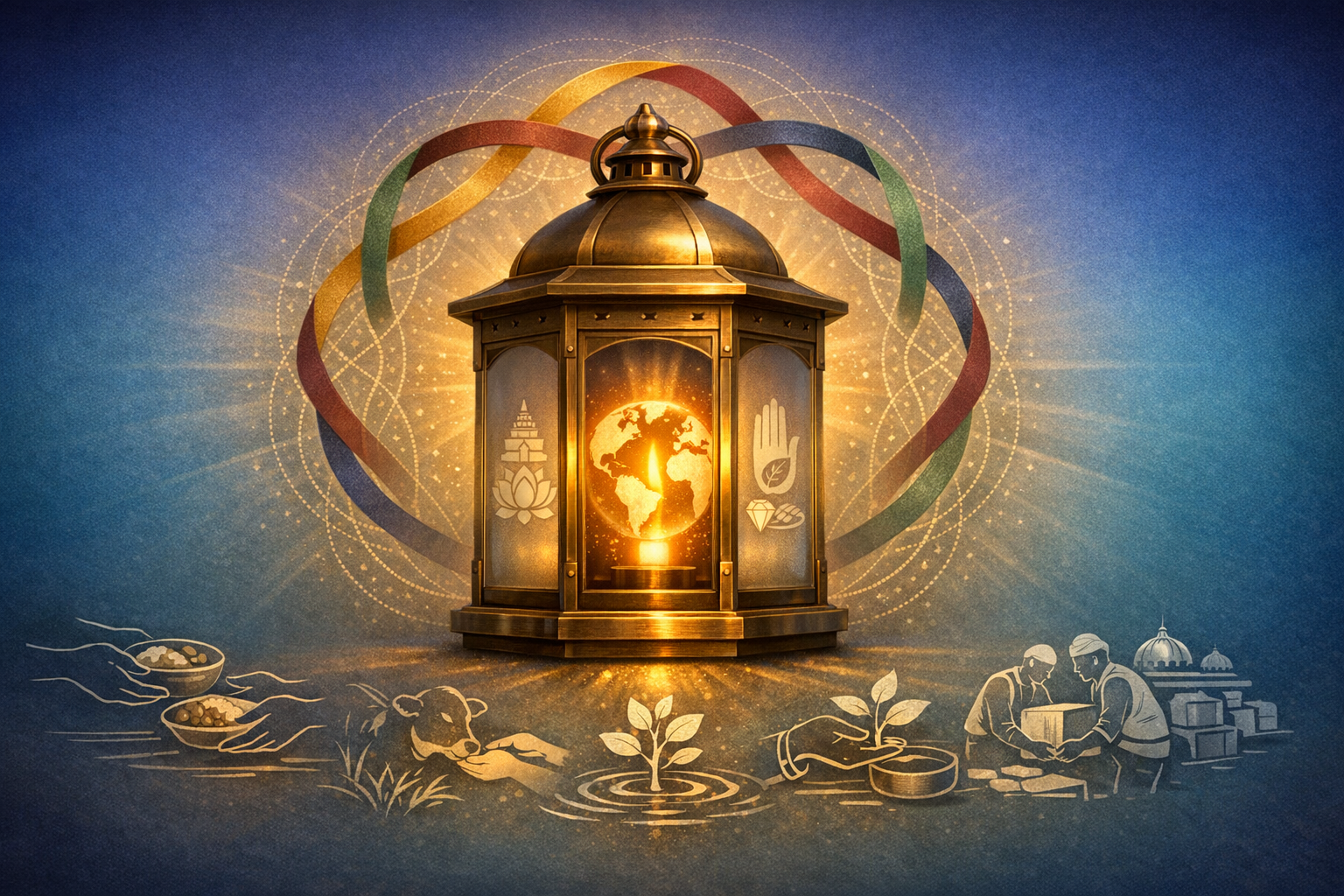
The Lantern of Dayā advances a clear, comparative framework for compassion that unites Hinduism, Buddhism, Jainism, and Sikhism without erasing their distinct identities. It traces how dayā/karuṇā functions as disciplined practice, social ethic, and policy-relevant principle rooted in Dharma, Ahimsa, Anekantavada, and Seva. Readers gain a rigorous yet accessible mapping across texts and institutionsfrom Yoga…
-
Timeless Grace Beyond Scholarship: Women’s Devotional Intelligence Unifying Dharmic Traditions

This essay reframes spiritual intelligence through a Dharmic lens, showing how sincerity of purposeexpressed through bhakti, seva, and ethical disciplineelicits transformative results more reliably than scholastic display alone. It grounds this claim in Indian epistemology (pramana), the Bhagavad Gita, and parallel concepts in Buddhism, Jainism, and Sikhism. Historical exemplarsfrom Gargi and Maitreyi to Andal, Mirabai,…
-
Shabda Pramana in Mimamsa: The Timeless Power of Vedic Testimony for Truth and Dharma

Shabdaverbal testimonyholds a privileged place in Mimamsa Darshana, where it functions as a rigorous means of valid knowledge for matters of dharma beyond the reach of perception and inference. By affirming the Vedas as apauruṣeya (authorless), Mimamsa secures scriptural authority through a detailed theory of semantics, sentence meaning, and hermeneutic indicators. The Bhāṭṭa and Prābhākara…
-
Five Sacred Trees of Tantra: Living Altars for Deep Meditation and Inner Awakening

Tantric practitioners across the dharmic traditions purposefully select five sacred treesAśvattha (Peepal), Nyagrodha (Banyan), Bilva, Nimba (Neem), and Āmalakī (Amla)to create a stable, lucid environment for deep meditation. Each species contributes a distinct blend of scriptural symbolism, ayurvedic energetics, ecological benefit, and subtle-body alignment. The Peepal supports clarity and uplift; the Banyan grounds long sittings;…
-
Digital Maya Unmasked: Rethinking Influencer Culture with Sikh Wisdom and Dharmic Ethics

Influencer culture often amplifies urgency, comparison, and performance, but Sikh philosophy reframes these pressures as Digital Maya that can be met with clarity and care. Grounded in Hukam, Seva, Santokh, and Sarbat da Bhala, the article offers a practical, ethical framework for creators. It shows how Naam Japna, Kirat Karni, and Vand Chhakna translate into…
-
From Turmoil to Tranquility: SB 3.28.10 on Yogic Breathing and the Power of Chanting
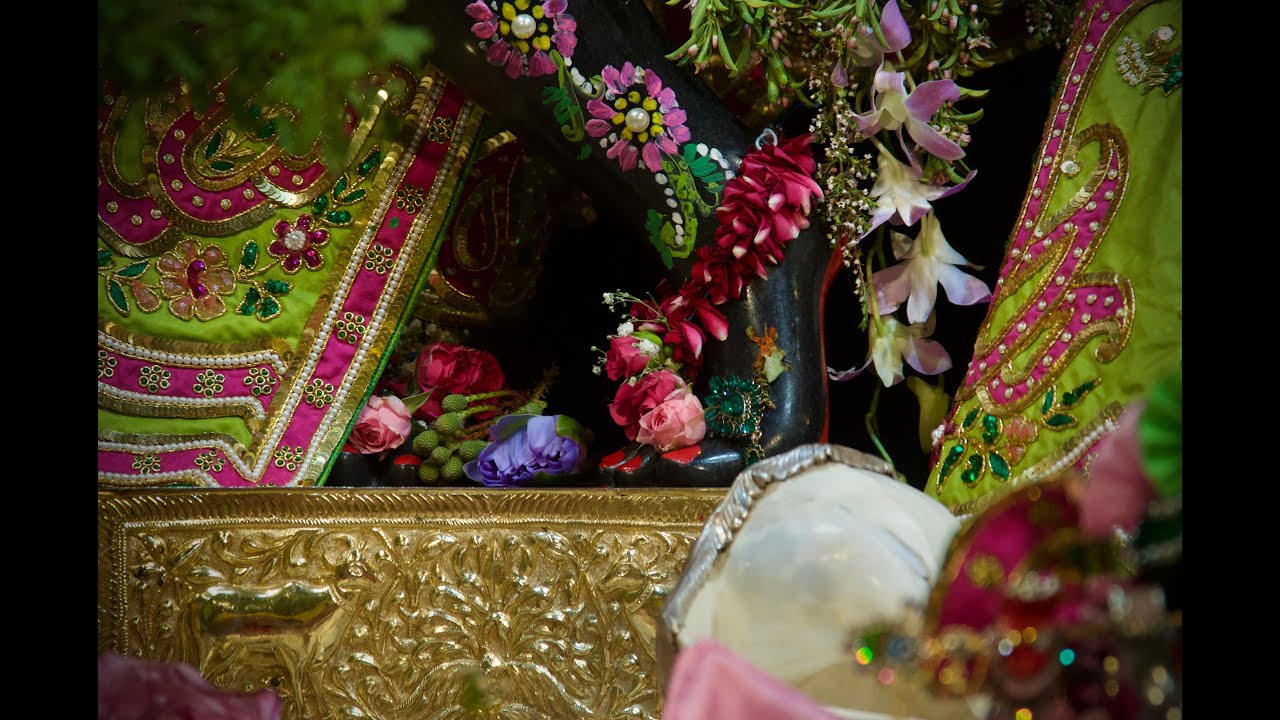
Srimad-Bhagavatam 3.28.10 presents a precise blueprint for mental purification: disciplined attention (the fire) and regulated breath (the air) refine the mind as heat and fanning purify gold. Framed by HH Ramai Swami’s exposition, the verse aligns with modern findings on vagal tone, heart-rate variability, and the calming effects of slow, coherent breathing. Lord Caitanya’s recommendation…
-
Modern Education’s Illusion of Control: Dharmic Wisdom to Build Resilient, Purposeful Lives

Modern culture often trains people to believe life can be engineered into submission. Dharmic traditionsHinduism, Buddhism, Jainism, and Sikhismoffer a corrective: disciplined agency paired with principled surrender. The Bhagavad Gita’s focus on action without attachment, the Yoga Sutra’s blend of practice and non-attachment, Buddhism’s insight into impermanence, Jainism’s many-sidedness, and Sikhism’s hukam together form a…
-
Ego’s Illusion of Difference: Dharmic Wisdom on Avidya, Unity in Diversity, and Healing

This essay examines why humans manufacture differences where none ultimately exist, using a dharmic framework drawn from the Upanishads, the Bhagavad Gita, Yoga Sutra, Anekantavada, Buddhist anatta, and Sikh teachings on Ik Onkar. It explains how avidya and ahankara harden provisional distinctions into identity, and how sama-darshana resists that process. It integrates classical Indian logic…
-
Person or Energy? Find Clarity in a Dharmic Synthesis across Vedanta, Buddhism, Jainism, Sikhism

This essay clarifies whether the Divine is best understood as Person or Energy by synthesizing perspectives from Vedanta, Buddhism, Jainism, and Sikhism. It defines key terms (Brahman, purusha, shakti, prana) and shows how saguna–nirguna, nirgun–sargun, and anekantavada converge in a coherent framework. Readers gain a precise yet accessible model that honors both devotional intimacy and…
-
Pure Mind Beyond Desire: A Rigorous Path to Moksha in the Gita, Upanishads, and Yoga

This article offers a rigorous, text-anchored exploration of the Hindu ideal of a pure mind free from desire, linking it to moksha in the Bhagavad Gita, the Upanishads, and Patanjali’s Yogasutra. It clarifies the difference between eliminating compulsive craving and nurturing dharma-aligned intention, avoiding the common pitfall of suppression or nihilism. Readers gain a practical…
-
Kali Yuga’s Vanishing Divide: Decoding How Asuras ‘Turn Human’ and What It Means for Dharma

This in-depth analysis decodes the Hindu claim that in Kali Yuga the line between asuras and humans fades, showing it as a moral-psychological map rather than a literal prophecy. Drawing on the Vishnu Purana, Bhagavata Purana, and the Bhagavad Gita, it explains how dharma degrades across the yugas and why the age demands simpler, heart-centered…
-
Deep Ecology through Vedic Wisdom: A Dharmic Blueprint for Compassionate Sustainability
This essay presents a rigorous, dharmic framework for deep ecology rooted in Vedic culture and enriched by convergences across Hinduism, Buddhism, Jainism, and Sikhism. It explains how Krishna-centrism and principles like ahimsa, aparigraha, and seva generate practical Environmental stewardship. Readers gain a clear understanding of the Bhagavad Gita’s ethical architecture, the Guna model’s relevance to…
-
Akshaya Tritiya’s Eternal Blessings: Scriptural Events, Shared Dharma, and Timeless Charity

Akshaya Tritiya, observed on Vaishakha Shukla Tritiya, is celebrated across dharmic traditions as a day of inexhaustible merit and compassionate action. Hindu scriptures connect it with Parashurama Jayanti, the Akshaya Patra narrative in the Mahabharata, Annapurna’s alms to Shiva, and the traditional commencement of Vyasa’s dictation to Ganesha. Popular associations also include the spirit of…
-
The Eternal Now: Guru Nanak’s Mindfulness for Fearless Clarity and Compassionate Living

Guru Nanak’s teachings present a precise, research-aligned path to mindfulness that integrates attention training (Naam Simran), ethical action (Kirat Karo, Vand Chhako, Seva), and wise acceptance (Hukam). By cultivating fearless clarity (nirbhau) and non-resentment (nirvair), practitioners stabilize presence in the “eternal now” and translate inner poise into compassionate service. The approach resonates with dharmic practices…
-
Vedic Environmentalism: Dharmic Ethics for Sustainability, Ahimsa, and Planetary Care

This in-depth exploration of Vedic environmentalism presents a rigorous, dharmic framework for sustainability that unites Hinduism, Buddhism, Jainism, and Sikhism around shared ecological ethics. Drawing on the Īśā Upaniṣad, Bhūmi Sūkta, and the Bhagavad Gītā, it translates reverence into practical guidance on resource conservation, circular economy design, and Clean Energy transitions. It highlights sacred groves,…
-
Beyond Perfection: Liberating Dharmic Wisdom on Impermanence, Dharma, and Divine Order

Perfection, as popularly pursued, continually recedes because all conditioned things are impermanent; dharmic traditions convert this problem into a path by aligning aspiration with dharma and the Divine Order. Drawing on the Bhagavad Gita, Upanishads, Yoga philosophy, and the broader insights of Buddhism, Jainism, and Sikhism, the essay reframes success as excellence grounded in clarity,…