
Across dharmic traditions, the loss of a father is experienced as a profound turning pointone that often raises searching questions about destiny, duty, and meaning. Vedic astrology (Jyotisha) offers a structured way to study paternal health and longevity, not to fix an unavoidable fate, but to understand patterns that can inspire timely care, ethical decision-making, and compassionate support. Any discussion of father’s death in Vedic astrology must therefore be grounded in technical rigor and humane restraint.
A central principle used to assess the father in a birth chart is Bhavat Bhavam (house-from-house). Instead of reading only from the native’s Lagna (Ascendant), the analysis rotates the frame of reference so that the house signifying the father becomes the working “first house.” In most Parashari traditions, the father is assigned to the 9th house (Dharma bhava). By treating the 9th as a temporary Lagna, standard rules of strength, affliction, maraka (death-inflicting) houses, and the 8th house of longevity can be applied specifically to the father.
Classical sources show nuance in signification. Parashara generally emphasizes the 9th house and the Sun (Surya) as the key karakas for father. Some texts and lineages note an alternative for night births in which the 10th house may be assessed for father; however, in contemporary practice the 9th remains the primary reference due to its consistent thematic links to lineage, dharma, and blessings. In Jaimini astrology, the Pitru Karaka (the planet holding the “father” chara-karaka rank by lowest degrees) further refines paternal indications.
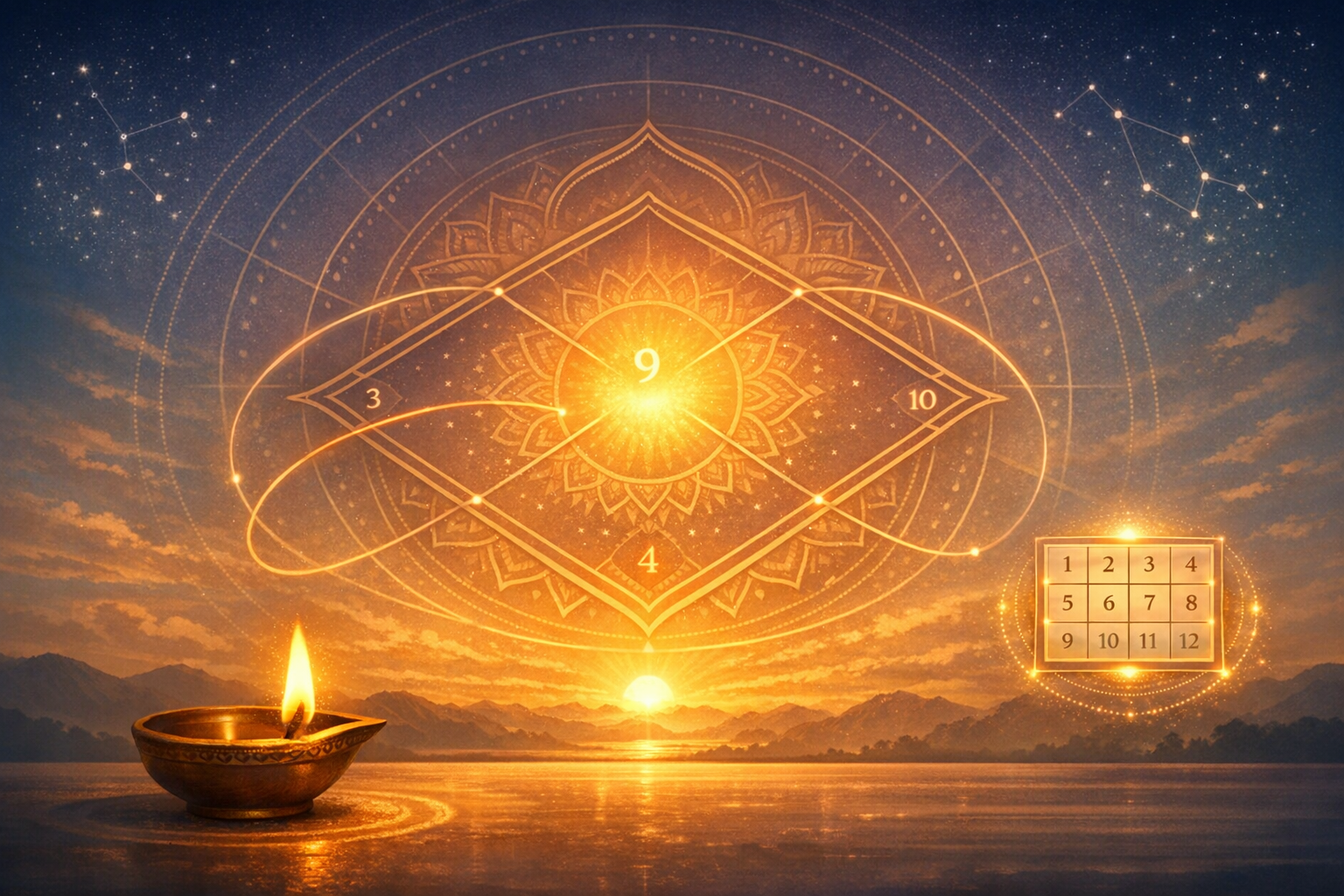
When applying Bhavat Bhavam, the 9th house becomes the father-lagna. From there, the 8th house relative to the father-lagna represents the father’s ayurdaya (longevity). Because the 8th from the 9th is the 4th from the native’s Ascendant, the 4th house of the birth chart often carries information about the father’s longevity in this derived framework. The maraka houses to the father are the 2nd and 7th counted from the father-lagna, which correspond to the native’s 10th and 3rd houses. In timing work, the lords and occupants of these derived maraka houses can operate as significant triggers for paternal health crises when supported by other factors.
Technical evaluation typically begins with: (1) the inherent strength of the 9th house and its lord; (2) the condition of the Sun as the sthira karaka (fixed significator) for father; (3) the 8th house from the father-lagna and its lord; (4) planets occupying or aspecting the father’s maraka houses (2nd and 7th from the father-lagna); and (5) the Dwadashamsha (D12), the divisional chart explicitly connected to parents. Benefic influences (Jupiter, Venus, a strong Mercury, a waxing Moon) tend to protect; harsh influences (Saturn, Mars, Rahu, Ketu), especially when combined or aspecting sensitive points, may correlate with strain.
Strength and affliction are assessed using established measures. Shadbala, sign dignity (exaltation/debilitation, own sign, moolatrikona), combustion, retrogression, and planetary avasthas inform baseline vitality. Ashtakavarga points add a statistical perspective to sign strength, while classical aspects and special aspects (e.g., Saturn’s 3rd/10th aspects, Mars’s 4th/8th) refine the analysis. The more convergences that favor protection of the 9th, its lord, and the Sun, the more resilience the chart suggests for the father; repeated, multi-layered afflictions warrant mindfulness and proactive care.
The Dwadashamsha (D12) is indispensable. In D12, the Sun’s placement and dignity illuminate paternal themes with finer granularity. The 9th from the D12 Ascendant, its lord, and their relationship to the Sun indicate support or vulnerability in the parental line. Strong, well-supported placements can mitigate stress shown in the rashi (natal) chart, while afflictions in D12 often foreground periods when paternal well-being requires attention.
Jaimini parameters complement Parashari techniques. The Pitru Karaka’s strength, sign dignity, and relationship to the 9th house and the Sun can sharpen interpretations. Chara Dasha periods of signs housing or aspecting the Pitru Karaka, or carrying the derived maraka houses to the father, sometimes act as temporal gates for paternal events, especially when they align with Parashari Vimshottari Dasha indications.
Timing windows are generally explored through Vimshottari Dasha and transits. In the dasha sequence, mahadashas/antardashas of the 9th lord, the Sun, or the lords of the derived maraka houses to the father (native’s 10th and 3rd) gain importanceparticularly if those planets are simultaneously afflicted or functional malefics. Transits of Saturn and Rahu–Ketu across the 9th house, over the natal Sun, or through the 8th from the father-lagna are carefully watched. Overlaps among dasha periods and such transits create high-likelihood windows for paternal health concerns. Cross-validation with D12 dashas (if used) or Jaimini Chara Dasha strengthens timing confidence.
Ethical practice requires multiple confirmations before drawing strong conclusions. Responsible astrologers look for convergence across at least three domains: (1) natal rashi placements and derived houses (Bhavat Bhavam), (2) D12 indications, and (3) synchronized dashas and transits. Even where convergences appear, the emphasis is on suggesting windows for medical checkups, family support, and practical preparednessnot on fatal predictions. This aligns with the dharmic principle of ahimsa (non-harm) in counsel.
A simple worked illustration helps clarify the derived-house logic. Suppose the Ascendant is Aries. The father-lagna (9th) is Sagittarius. The 8th from Sagittarius is Cancer, which is the 4th from Aries; placements or afflictions here speak to paternal longevity. The maraka houses to the father are the 2nd and 7th from SagittariusCapricorn (native’s 10th) and Gemini (native’s 3rd). If the lords of Capricorn or Gemini are heavily afflicted and simultaneously activated by dasha, and Saturn or Rahu transits reinforce those sensitive areas while the Sun is also stressed, a prudent recommendation would be to prioritize the father’s health checks, emotional support, and logistical readiness during that time.
Day–night birth nuances can be acknowledged without overcomplication. Some lineages examine the 10th house for father in nocturnal charts, but even then, most practitioners retain the 9th (and Bhavat Bhavam from it) as the backbone, using any 10th-house cues as a secondary lens. In all approaches, the Sun’s condition remains paramount.
Across the broader dharmic family, remembrance and compassion for forebears are shared values. In Hindu practice, observances such as Shraddha and Tarpana during Pitru Paksha honor the lineage with gratitude. In Buddhist traditions, acts of dana (giving), karuṇā (compassion), and dedicating merit to departed elders sustain a living connection through ethical action. Jain practice emphasizes ahiṁsā, satya, and self-discipline, with charitable works offered in the spirit of detachment and reverence for life. Sikh tradition centers remembrance, kirtan, and seva, affirming that love, service, and truthful living uphold the family legacy. These unifying gestures of care and gratitude sit harmoniously alongside any astrological inquiry.
Supportive measures are most effective when practical and spiritual actions work together. On the practical side, families can encourage regular medical screenings, review emergency contacts, and discuss important legal documents with care and respect. On the spiritual side, daily Surya arghya (offering water to the Sun at sunrise), reciting Aditya Hridayam, or chanting the Mahamrityunjaya Mantra with sincere intention are traditional practices used to cultivate clarity, courage, and well-being. Acts of sevafeeding the hungry, planting trees, or donating for education and healthcareembody dharmic solidarity with one’s parents and ancestors.
Many find that Jyotisha becomes most meaningful when it shifts the conversation from prediction to preparation, from fear to responsibility, and from isolation to community. Studied with Bhavat Bhavam, karakas, D12, and synchronized dasha–transit analysis, father-related indications in Vedic astrology can guide timely vigilance and heartfelt support. Approached with compassion and ethical restraint, this knowledge strengthens family bonds and honors the lineage that sustains everyone on the path.
Inspired by this post on Hindu Pad.
