
-
Artabhakti Unveiled: The Transformative Power of Devotion in Distress and Dharmic Unity

Artabhaktidevotion in distressstands as a potent form of bhakti in Hinduism, recognized in the Bhagavad Gita as a direct and transformative path to the Divine. Classic narratives like Gajendra Moksha and Draupadi’s appeal to Krishna reveal how sincere surrender in crisis invites grace, resilience, and ethical clarity. Psychologically, suffering can focus attention and open the…
-
Riksharaja’s Astonishing Origin: The Dual-Gender Parent of Vali and Sugriva in Ramayana

Some Ramayana traditions portray Riksharaja as the dual-gender progenitor of Vali and Sugriva, a striking motif that expands the epic’s philosophical depth. Born from Brahma’s tear and associated with Indra and Surya, Riksharaja embodies both fatherhood and motherhood in one sacred figure. This narrative resonates with dharmic symbolism such as Ardhanarishvara, where complementarity and balance…
-
Divine Responsibility and the Yadus: Transformative Lessons from Srimad Bhagavatam 11.1.4
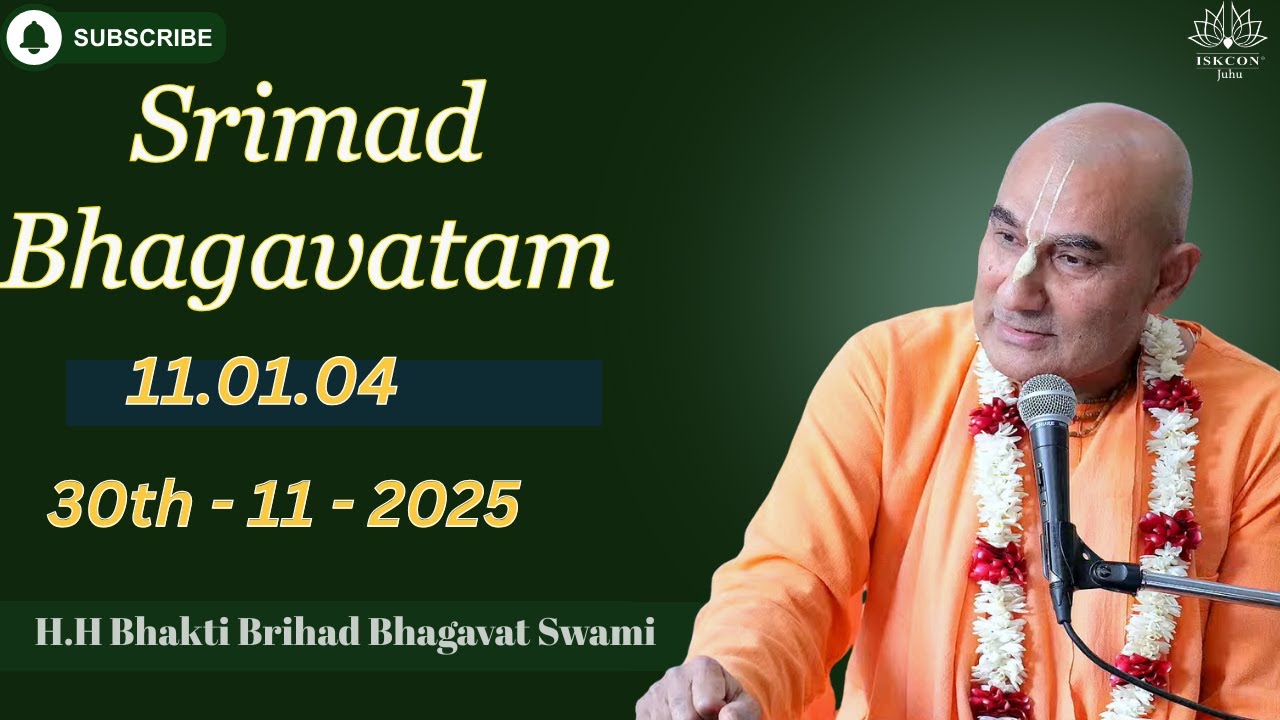
This reflection on Srimad Bhagavatam 11.1.4, presented at ISKCON Juhu by H.H Bhakti Brihad Bhagavat Swami, explains why Lord Krishna did not allow others to end the Yadu dynasty. As His own family, the Yadus could not be destroyed by any being in the universe, not even the demigods, ensuring that no external party accrued…
-
Tiruppavai in Hindi (तिरुप्पावै): Meaning, Practice, and Andal’s Divine Bhakti for Margazhi
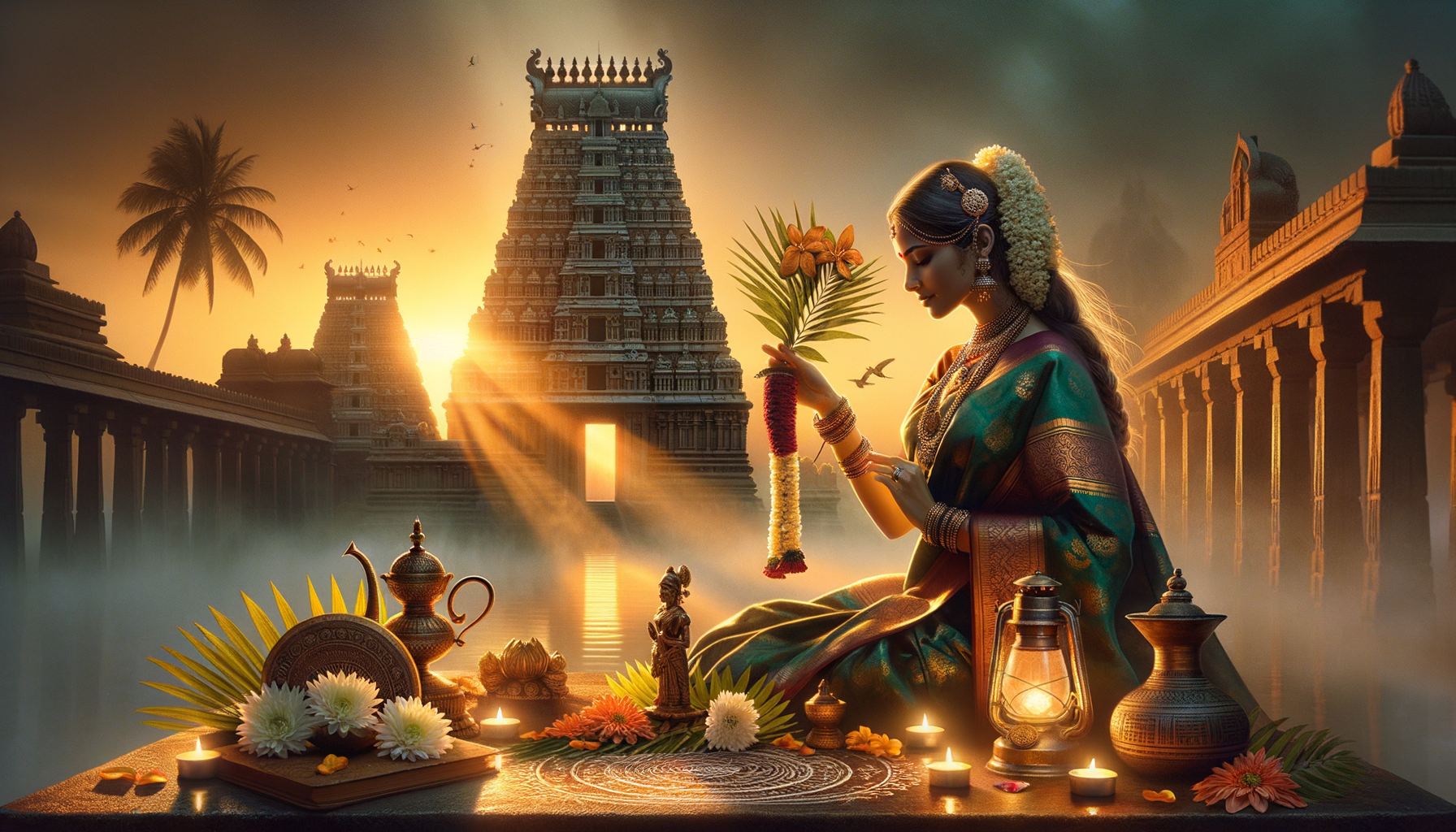
Tiruppavai in Hindi (तिरुप्पावै) brings Āṇḍāḷ’s thirty Margazhi hymns into clear focus for Hindi readers, blending poetic beauty with scriptural depth. The preserved dhyānam honors गोदा as the awakener of Krishna and teacher of Vedic essence through loving surrender. Presented in an academic yet accessible style, the post explains key themesgrace, prapatti, communal vows, and…
-
Parijata’s Celestial Origins: Kashyapa, Aditi, and the Sacred Wish-Fulfilling Tree

The Parijata, revered as a wish-fulfilling Kalpavriksha, emerges from the Samudra Manthan as a symbol of restored harmony and divine grace in Hindu scriptures. Its placement in Indra’s Nandana garden reflects the ethical duty of leadership to protect prosperity for all. Through the lineage of Sage Kashyapa and Aditi, the narrative emphasizes compassion, disciplined devotion,…
-
Shankhu Chakradhari Brahma: Decoding a Rare, Awe-Inspiring Icon of Sudarshana and Shankhu

This exploration decodes the rare icon of Shankhu Chakradhari Brahma, where Lord Brahma bears the Sudarshana Chakra and Shankhu. Readers gain a clear understanding of how this iconography aligns creation with preservation within Sanatana Dharma. The symbolism of the chakra (order, time, discernment) and conch (primordial sound, prāṇa) is explained in an accessible, academic style.…
-
Surpanakha’s Karmic Odyssey: Desire, Dharma, and Redemption in Brahma Vaivarta Purana

This article explores Surpanakha’s story as a karmic odyssey across yugas, drawing on the Ramayana and interpretive Puranic traditions associated with the Brahma Vaivarta Purana. It examines how desire, when unguided by dharma, invites consequence yet also opens pathways to learning and inner refinement. Readers gain an emotionally resonant, academically grounded view that balances compassion…
-
Murugan Born from Shiva’s Third Eye: Decoding Iccha Shakti and the Path of Sacred Will
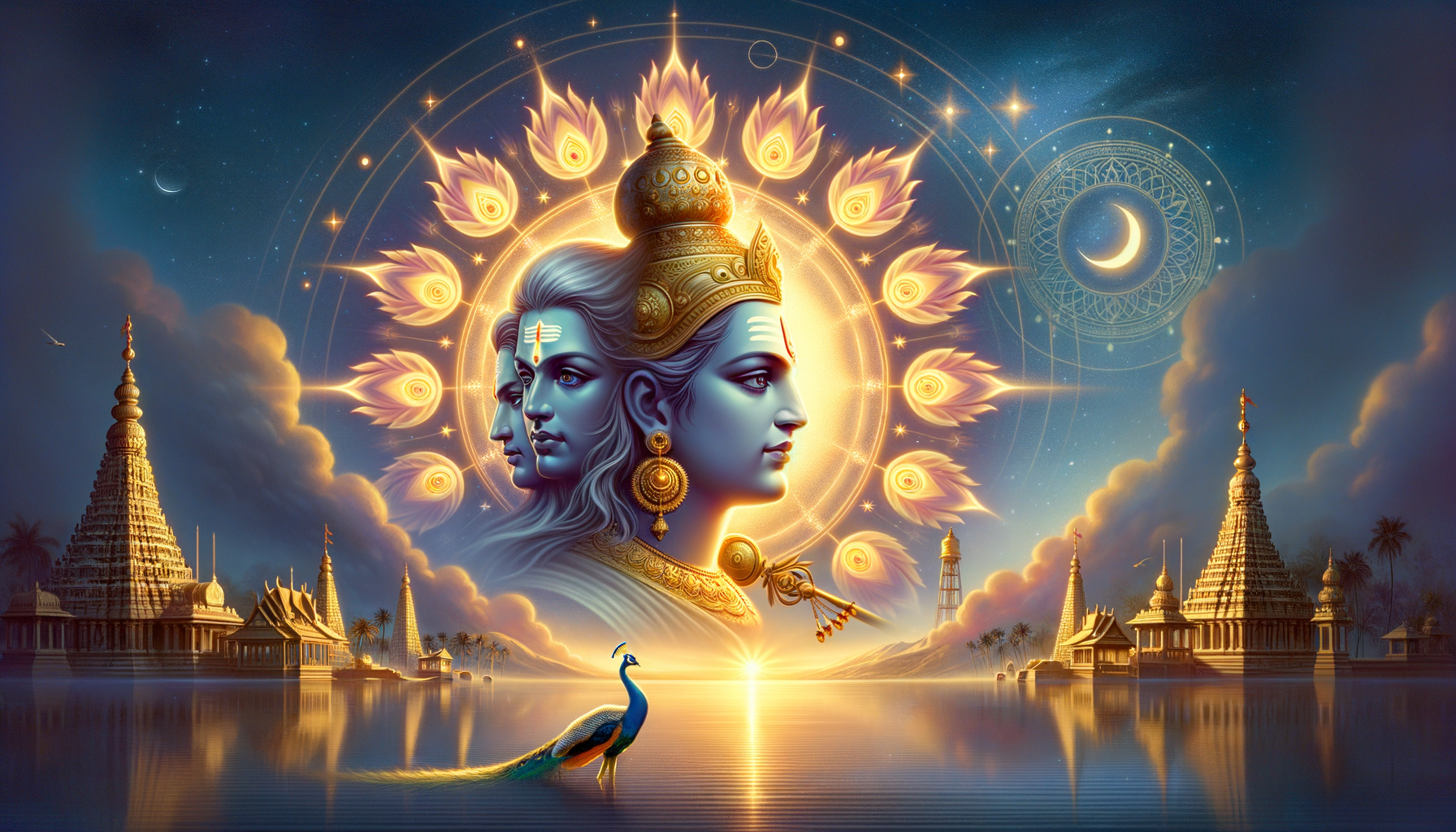
This article explores Murugan’s birth from Shiva’s third eye as a luminous teaching on Iccha Shaktidivine will aligned with wisdom. It explains the Puranic narrative, including the six sparks, the Krittikas, and the unification into Shanmukha, and interprets their symbolic meaning. Readers gain a clear framework for understanding Iccha, Jñāna, and Kriyā Shakti as complementary…
-
CC Madhya 10.62–73 Explained: Devotional Wisdom and Harmony at ISKCON Govardhan Eco Village
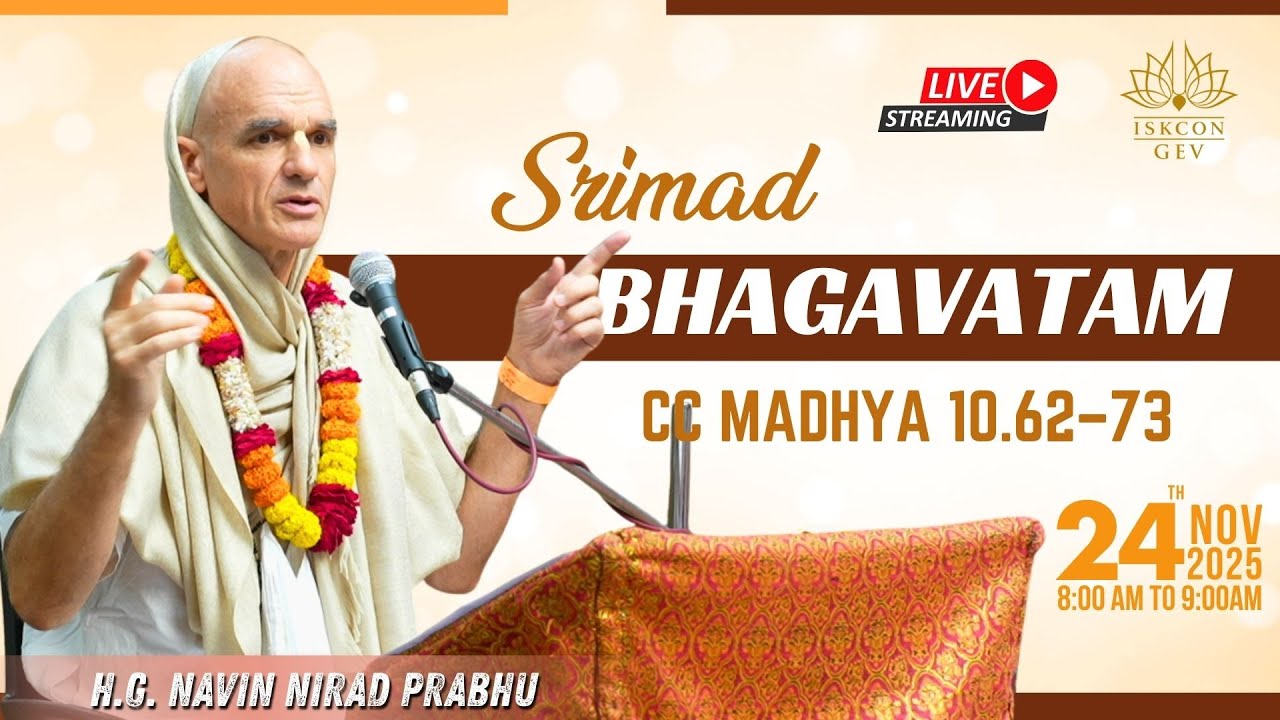
This academic yet accessible class at ISKCON Govardhan Eco Village examined Sri Caitanya-caritāmṛta, Madhya-līlā 10.62–73, drawing out enduring principles of humility, service, and attentive devotion. H.G. Navin Nirad Prabhu connected scriptural insights to daily routines, emphasizing nāma-saṅkīrtana, compassionate conduct, and steady sādhana. The session highlighted how Lord Chaitanya Mahaprabhu’s teachings translate into ethical action and…
-
Six Profound Transformations of Life: A Dharmic Guide to the Eternal Self Beyond Change

Hindu scriptures teach that embodied life unfolds through six universal transformationsexistence, birth, growth, decay, disease, and deathwhile pointing to the atman beyond change. Seeing these phases clearly reduces fear, strengthens resilience, and fosters compassionate conduct guided by dharma. Parallel insights in Buddhism, Jainism, and Sikhism reinforce impermanence, many-sided truth, and alignment with divine order, cultivating…
-
Parashurama, Balarama, Sri Rama: Mapping Humanity’s Ascent from Force to Righteousness

Hindu scriptures present an integrated model of moral evolution through Parashurama, Balarama, and Sri Rama. Together, these avatars map a movement from raw force to cultivated strength and ultimately to principled righteousness. Parashurama encodes the courageous correction of entrenched adharma. Balarama anchors strength in restraint, agriculture, and social balance. Sri Rama perfects the arc through…
-
All Rivers and Oceans Crowned a King: Prithu’s Dharma and Earth’s Blessing in Brahma Purana
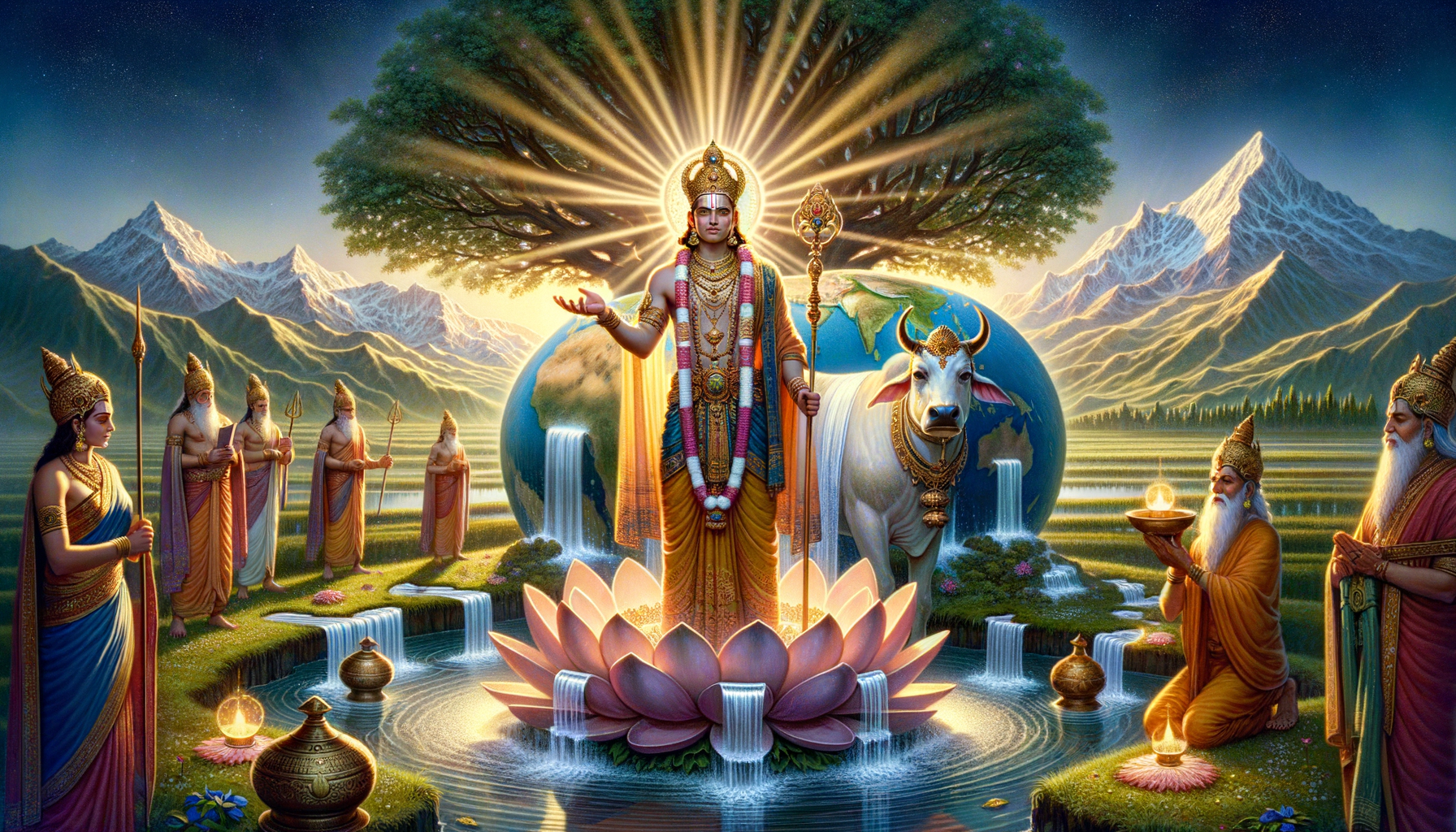
The Brahma Purana preserves a rare episode in which all rivers and oceans gather to anoint King Prithu, symbolizing the universal sanction of just rule. Emerging from the Dhruva lineage after the fall of Vena, Prithu’s reign restores dharma and inaugurates sustainable prosperity through a covenant with Earth personified as a cow. The story models…
-
When Rivers and Oceans Crowned a King: Prithu’s Epic Anointing in Brahma Purana

The Brahma Purana recounts a rare coronation in the line of Dhruva: a king anointed by all rivers and the oceans, symbolizing nature’s endorsement of righteous rule. Set against the moral contrast of Anga and Vena, the narrative culminates in Prithu’s emergence and the restoration of rajadharma. The scene functions as sacred geography and ethical…
-
Srimad Bhagavatam 2.2.5: Nature’s Abundance, Divine Shelter, and Fearless Simplicity
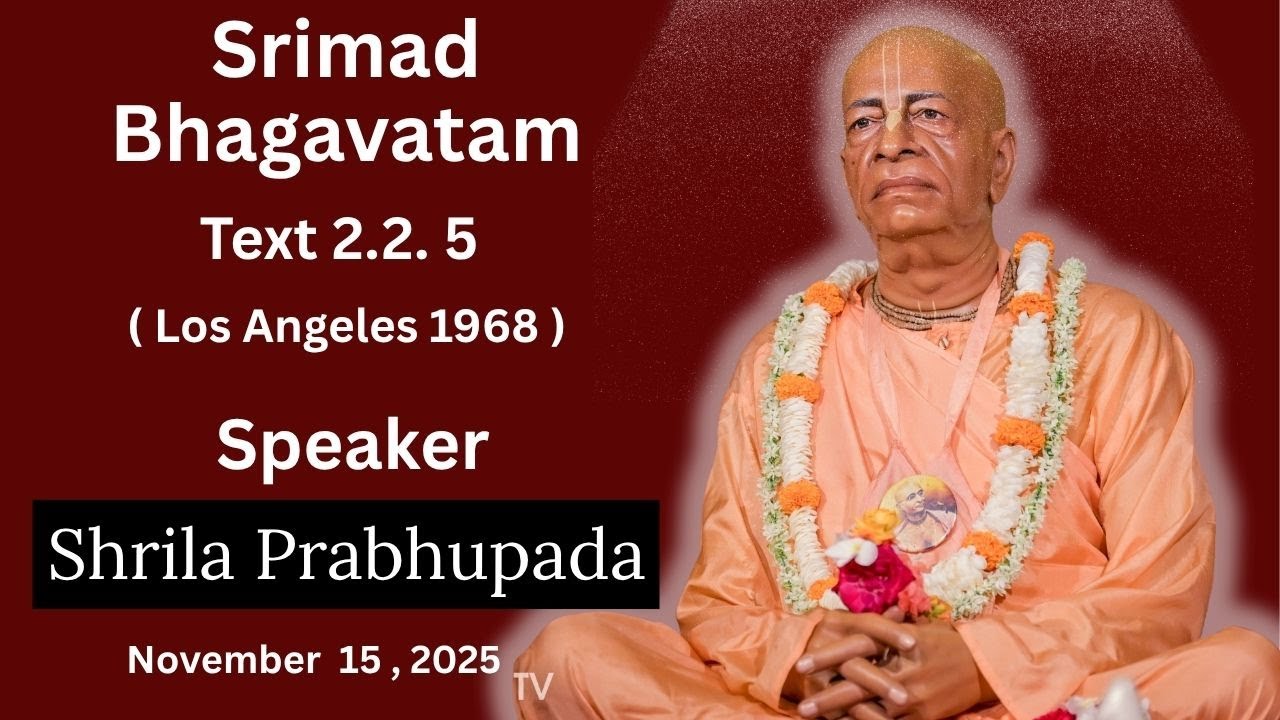
Srimad Bhagavatam 2.2.5 uses striking imagerytorn cloth, generous trees, life-giving rivers, and mountain cavesto argue that nature itself sustains a simple, dharmic life. The verse culminates in the assurance of divine protection, aligning security with inner renunciation and devotion rather than accumulation. Its values resonate across Hinduism, Buddhism, Jainism, and Sikhism through shared ideals like…
-
Dhruva Charitra: Steadfast Devotion and Dharma in the Vishnu and Bhagavata Puranas

Dhruva Charitra, preserved in the Vishnu Purana and the Bhagavata Purana, presents the life history of Dhruva as a model of steadfast devotion and dharma. The narrative shows how a child’s wounded heart transformed into disciplined meditation through the guidance of Narada and unwavering bhakti to Lord Vishnu. Dhruva’s establishment as the pole star symbolizes…
-
Pushpaka Vimana: Legendary Flying Chariot in Vedas, Puranas, Ramayanaand a Unifying Vision

Pushpaka Vimana, the most renowned among ancient vimanas, is presented in Hindu scripturesespecially the Ramayana and Puranasas a radiant aerial chariot bound to dharma. Traditionally linked to Lord Kubera and later seized by Ravana, it ultimately returns Sri Rama, Sita, and Lakshmana to Ayodhya, symbolizing moral restoration. Descriptions emphasize inclusivity and immense capacity, reinforcing ideals…
-
Lakshmana’s Measured Justice: Symbolism and Dharma in Surpanakha’s Nose-Cutting

The Dandaka forest episode of Surpanakha in the Ramayana presents a nuanced study in proportionate justice. Lakshmana’s cutting of her nose and ears is framed not as impulse but as a measured defense of Sita within Kshatra Dharma. Dharmashastra context shows such penalties aligned with culturally recognized sanctions for harassment and attempted harm. Symbolically, the…
-
King Rantideva’s Final Offering: Compassion, Dharma, and Unity in SB 9.21.8–11
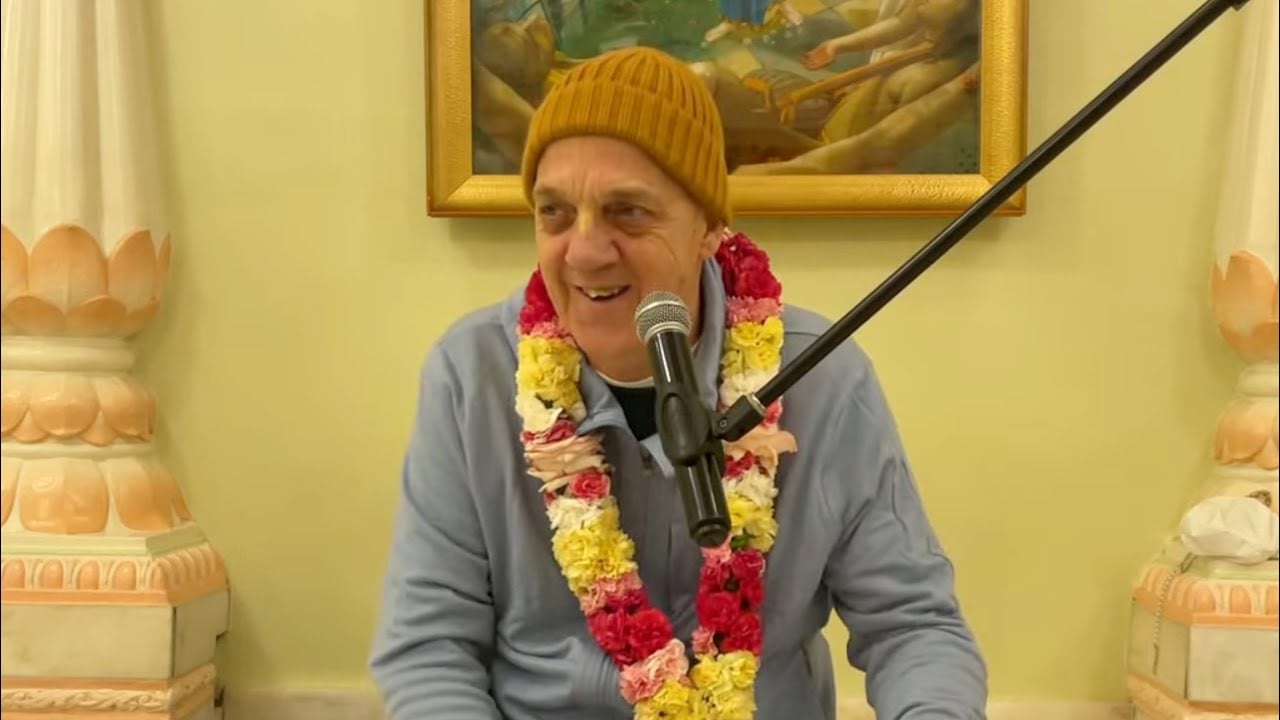
This session on SB 9.21.8–11, taught by HG Nrsimha Kavaca Prabhu, highlights King Rantideva’s extraordinary compassion and unwavering devotion under conditions of scarcity. The narrative shows how he honors every guestincluding animalswith full respect and service. It reframes hospitality as a rigorous spiritual discipline, not a social courtesy. The episode connects bhakti with dana, ahimsa,…
-
Eight Extraordinary Flowers of Bhava: Madhvacharya’s Devotion and Dharmic Harmony
The ‘Sumadhva Vijaya’, a foundational biographical work by Sri Narayana Panditacharya, portrays how Sripad Madhvacharya adorned Lord Narayana with eight ‘bhava pushpa’inner virtues offered as devotion. Centered in the fourteenth sarga, verse 37 reframes worship as an ethical-psychological discipline grounded in Vedic wisdom and Bhakti Tradition. The teaching emphasizes virtues such as ahimsa, kshama, satya,…
-
Six Grave Offenders in Vasistha Smriti: Timeless Dharma Principles to Protect Life and Justice

The Vasistha Smriti identifies six grave offendersṣaḍ-ātātāyinaḥwhose actions pose immediate threats to life, dignity, and community stability. Framed within the Dharmashastra tradition, these categories (poisoner, arsonist, lethal assailant, plunderer, land-grabber, and abductor/violator) articulate a calibrated ethic of protection rather than retribution. The underlying principlespreservation of life, deterrence of extreme harm, and responsibility of governanceparallel modern…