
-
Anjali Mudra in Hinduism: Powerful Sacred Meaning, Symbolism and Inner Grace

Anjali is the sacred Hindu gesture of joining the palms in reverence, devotion, humility, and inner alignment. It functions as a greeting, a mudra, a ritual offering, and a spiritual discipline that turns the body into an instrument of worship. Its symbolism joins dualities such as action and knowledge, effort and grace, and individual self…
-
Ardhanarishvara Shiva: Powerful Symbol of Divine Balance and Shakti Unity
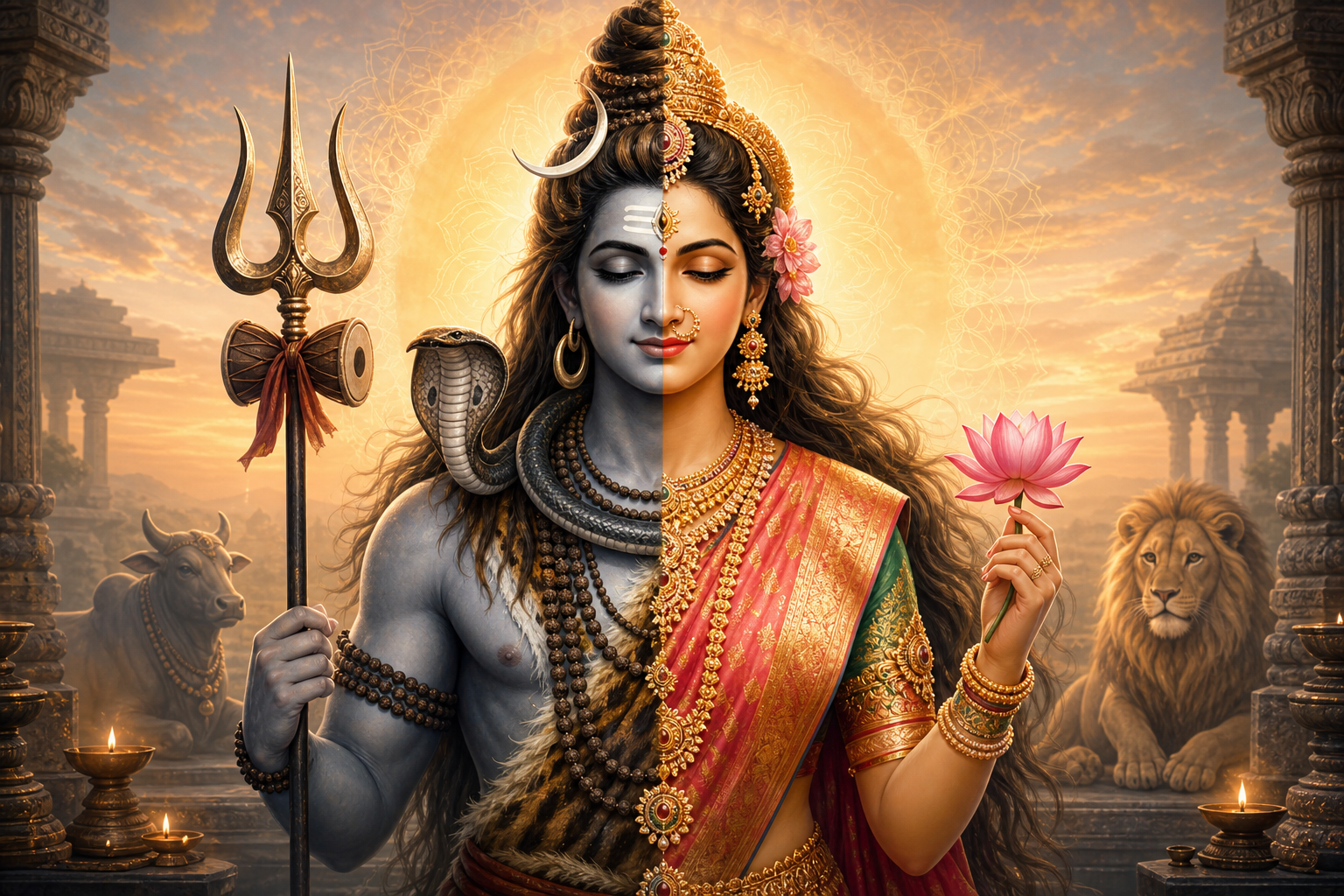
Ardhanarishvara Shiva is the sacred half-male and half-female form of Lord Shiva and Parvati Mata, expressing the inseparable unity of Shiva and Shakti. This form teaches that consciousness and energy, stillness and activity, ascetic discipline and creative abundance are not opposing forces but complementary aspects of one divine reality. The Puranas preserve several narratives explaining…
-
Madhvacharya’s Powerful Pathway to God: Devotion, Grace, and Liberation
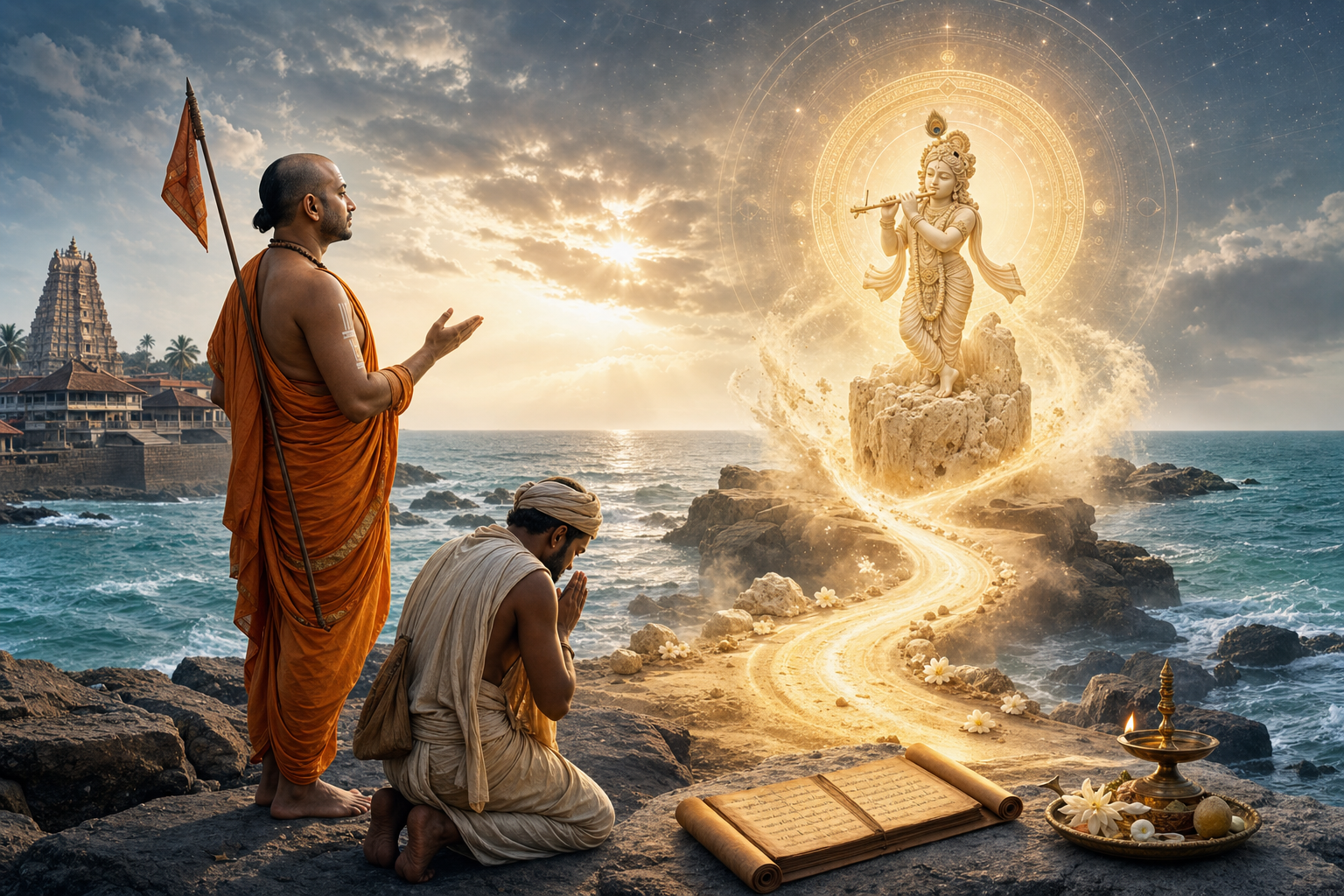
Madhvacharya’s pathway to God presents the Divine as the sanctuary of weary souls moving through worldly existence. His Dvaita Vedanta emphasizes the real distinction between God, the soul, and the world, making devotion a meaningful relationship rather than an abstract idea. The teaching highlights bhakti, ethical purification, control of anger and passion, and dependence on…
-
Dharma as the Powerful Key to an Integrated, Ethical and Meaningful Life

Dharma offers a comprehensive framework for living an integrated, ethical, and meaningful life. It connects personal conduct, social responsibility, spiritual discipline, and inner growth into one coherent path. Rather than treating life as a cycle of desires and necessities, Dharma sees human progress as a movement from ignorance to wisdom and from fragmentation to wholeness.…
-
Sanatana Dharma as Living Wisdom: Pluralism, Practice, and Purpose in a Complex World
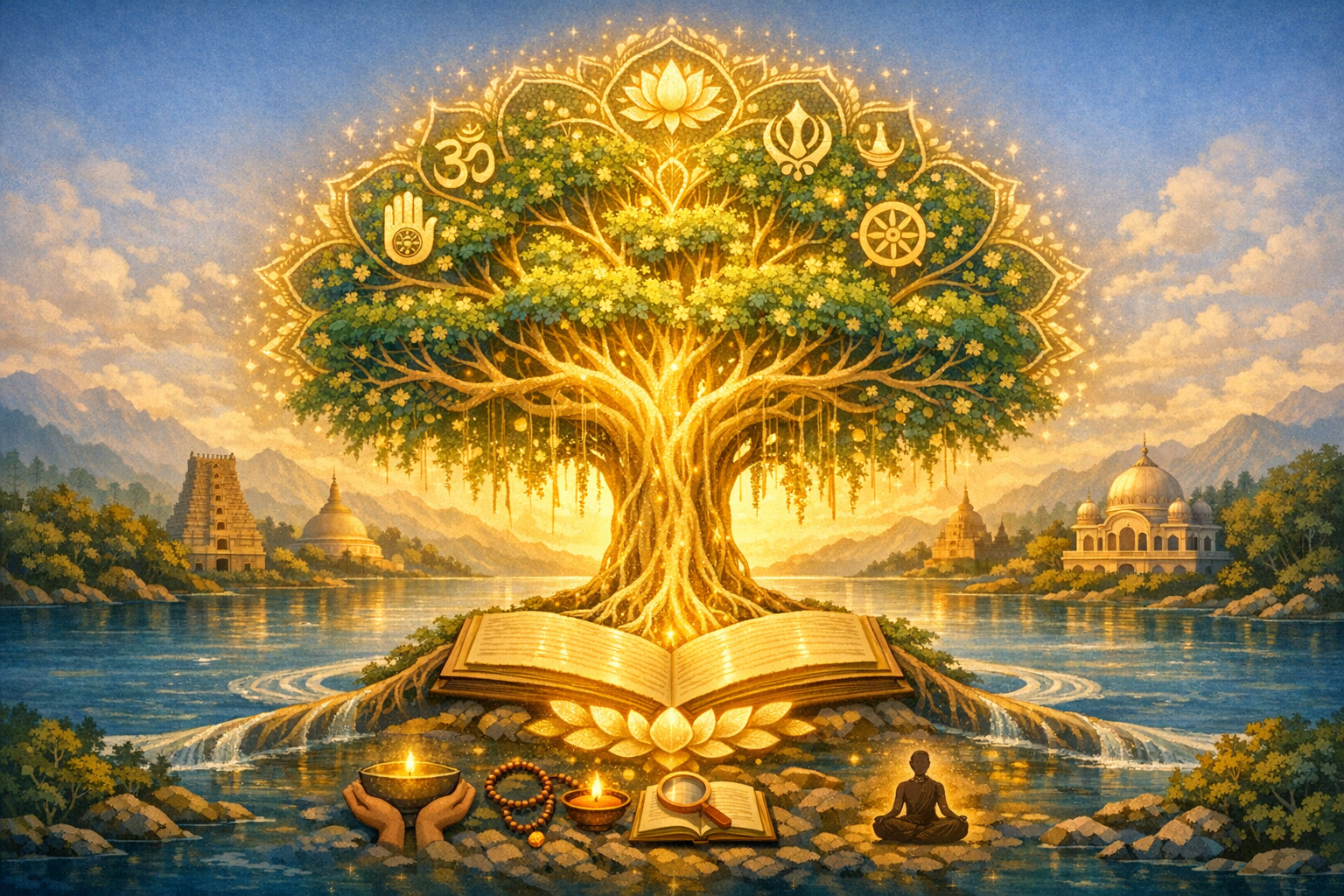
Sanatana Dharma is presented as a living wisdom traditioncivilizational in scope and practical in methodrather than a narrow, prescriptive religion. The discussion explains how pluralism, exemplified by Ishta and enriched by Jain Anekantavada, Buddhist upaya, and Sikh Ik Onkar, establishes unity in spiritual diversity across Dharmic traditions. It surveys layered scriptures, the six darshanas, and…
-
Brihaspati Smriti: Reconstructing a Lost Hindu Legal Classic on Law, State and Economy

Brihaspati Smriti, though no longer extant as a complete text, survives through fragments cited in medieval digests and remains a cornerstone for understanding Hindu jurisprudence. The work is renowned for its clear focus on legal procedure, evidence, commercial law, and proportionate punishment, aligning dharma with the practical imperatives of artha and dandaniti. It recognizes multiple…
-
Panchabrahma & Panchakritya: Unveiling Shiva’s Five Faces and the Universe’s Five Acts
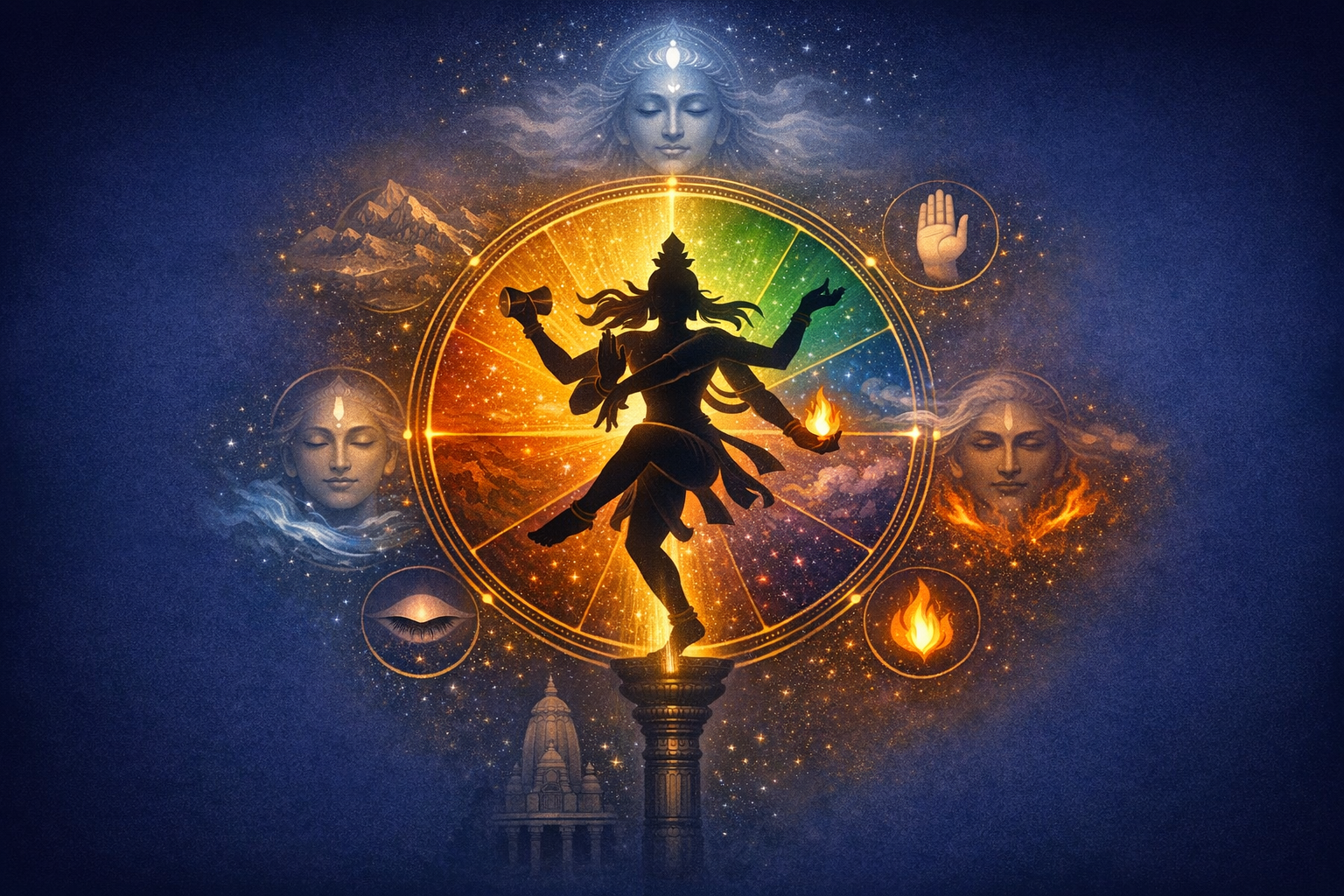
Shaiva philosophy teaches that the universe is not separate from Shiva but is Shiva in five continuous actscreation, preservation, dissolution, concealment, and grace. This article decodes Panchakritya and Panchabrahma, showing how the five acts and the five faces (Sadyojata, Vamadeva, Aghora, Tatpurusha, Ishana) structure both cosmic process and inner transformation. Drawing on Vedic, Upanishadic, Agamic,…
-
Piercing the Veil of Māyā: Dharmic Wisdom on the Illusion of Human Supremacy over Nature
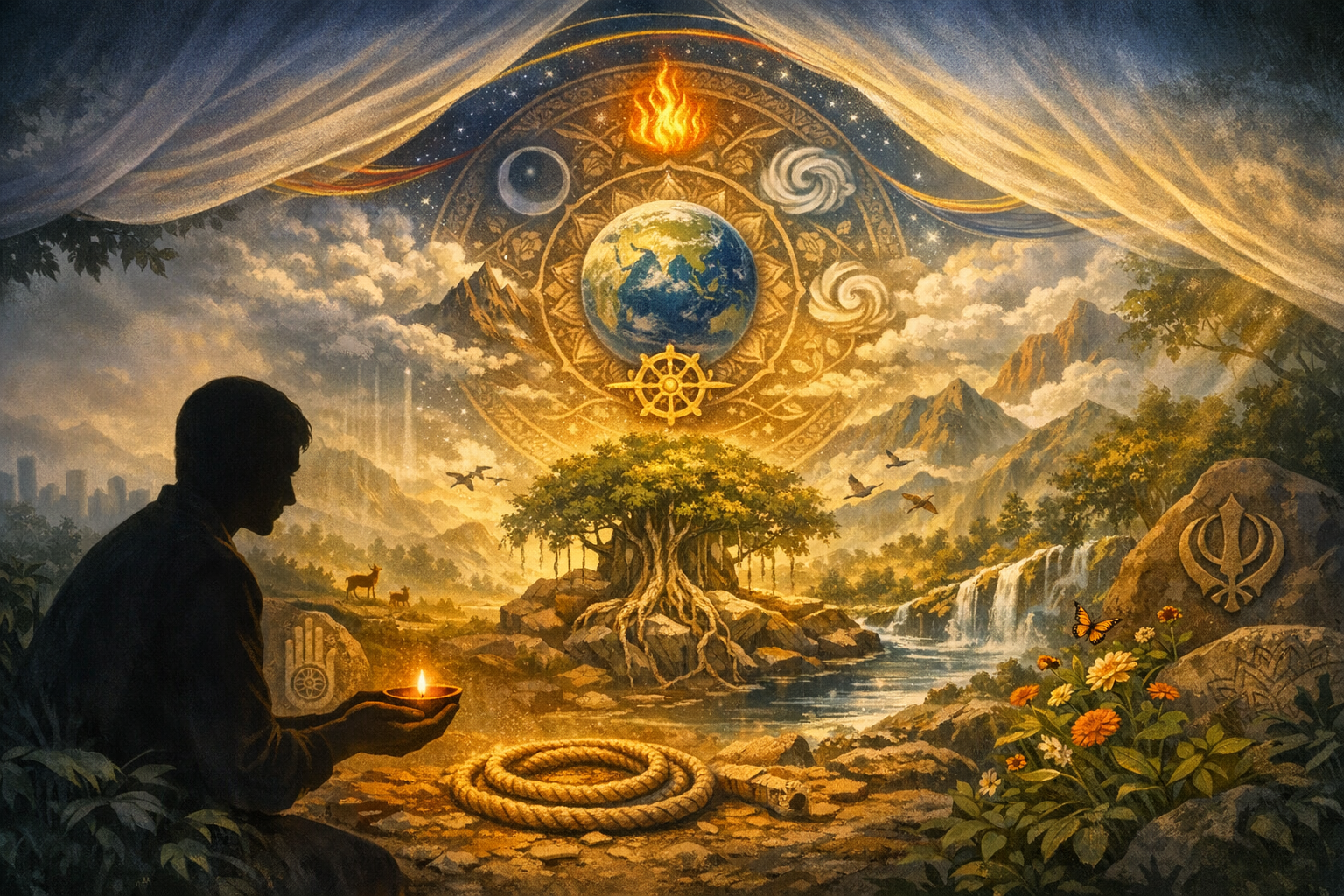
This essay examines why the belief that humans are stronger and greater than Nature is identified in dharmic traditions as a profound form of māyā. Drawing on Advaita Vedānta, Sāṅkhya–Yoga, and the Bhagavad Gītāalongside Buddhism, Jainism, and Sikhismit shows how avidyā and ahaṁkāra distort perception and ethics. Scriptural anchors such as īśāvāsyam idaṃ sarvaṃ and…
-
Bhakti Beyond Ritual: Renunciation and Absorption in the Gopalapurvatapani Upanishad

The Gopalapurvatapani Upanishad defines bhakti with striking precision as two inseparable movements: renunciation of both this world and the next, and unwavering absorption in the Supreme Self. This account goes beyond ritual and emotion, aligning devotion with the Upanishadic quest for liberation while integrating knowledge, meditation, and ethical clarity. By rejecting reward-seekingworldly or heavenlyit grounds…
-
Six Paths of Sannyāsa in the Nārada Parivrājaka Upanishad: Timeless Map to Inner Freedom
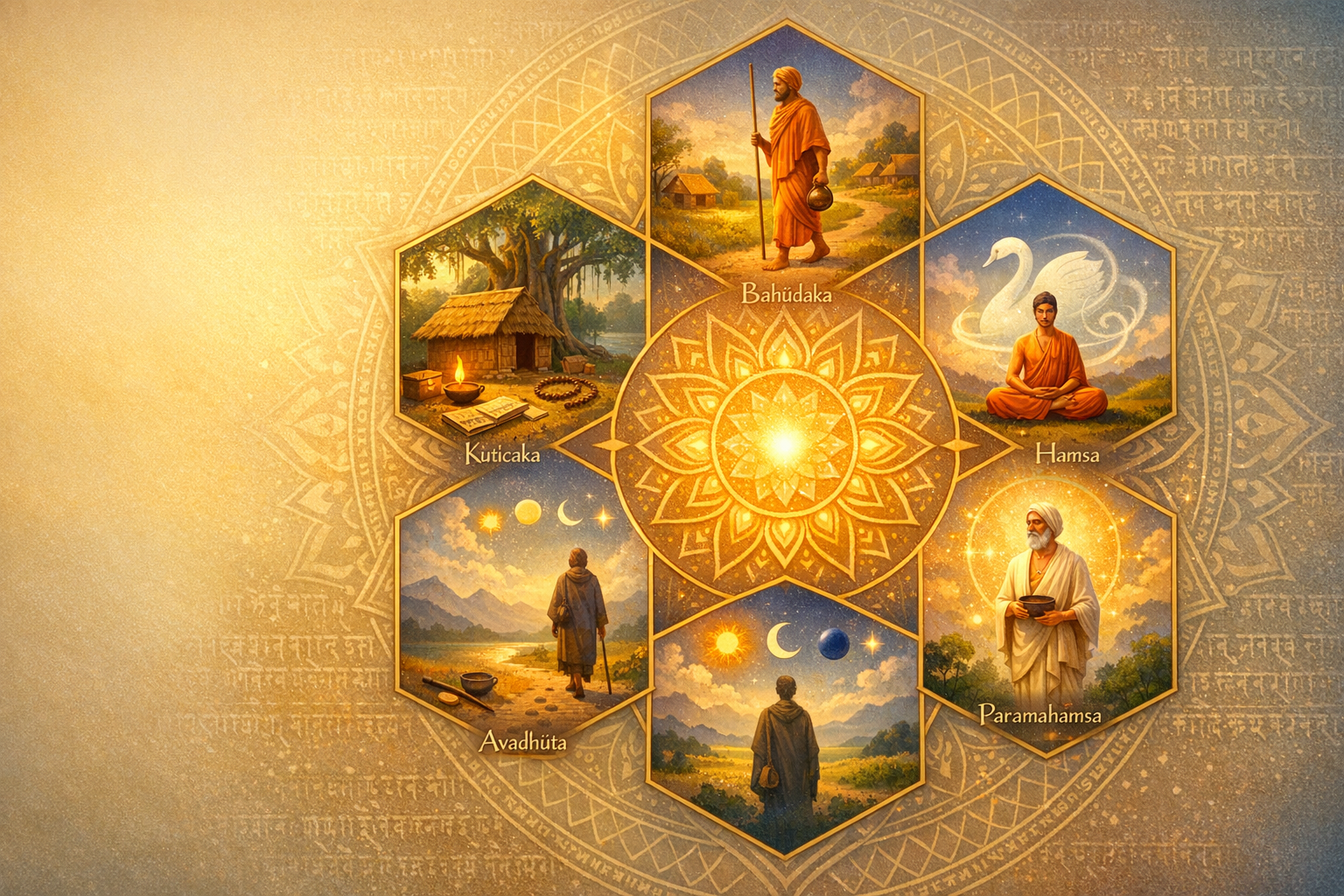
Renunciation in the āśrama system reaches a mature articulation in the Narada Parivrajaka Upanishad, which maps six authentic paths of sannyāsa without enforcing a single mold. It names kuṭīcaka, bahūdaka, haṁsa, paramahaṁsa, turīyātīta, and avadhūta as complementary modes that guide a seeker from external disciplines toward interior freedom. Each type balances ethical foundationsahiṁsā, satya, and…
-
Following, Not Imitating: The Acarya Principle and Highest Compassion in ISKCON
This article clarifies the Acarya principle at the heart of ISKCON: Srila Prabhupada, as Founder-Acarya, models the highest compassion by providing a reproducible path rather than a performance to imitate. It explains why following in the footstepsanchored in clear instructions, ethical boundaries, and accountable communityproduces steady realization, while imitation yields anxiety, spectacle, and drift. Drawing…
-
Tula, Karma, and Dharma: The Sacred Weighing Balance in Hindu Icons, Rituals, and Cosmology
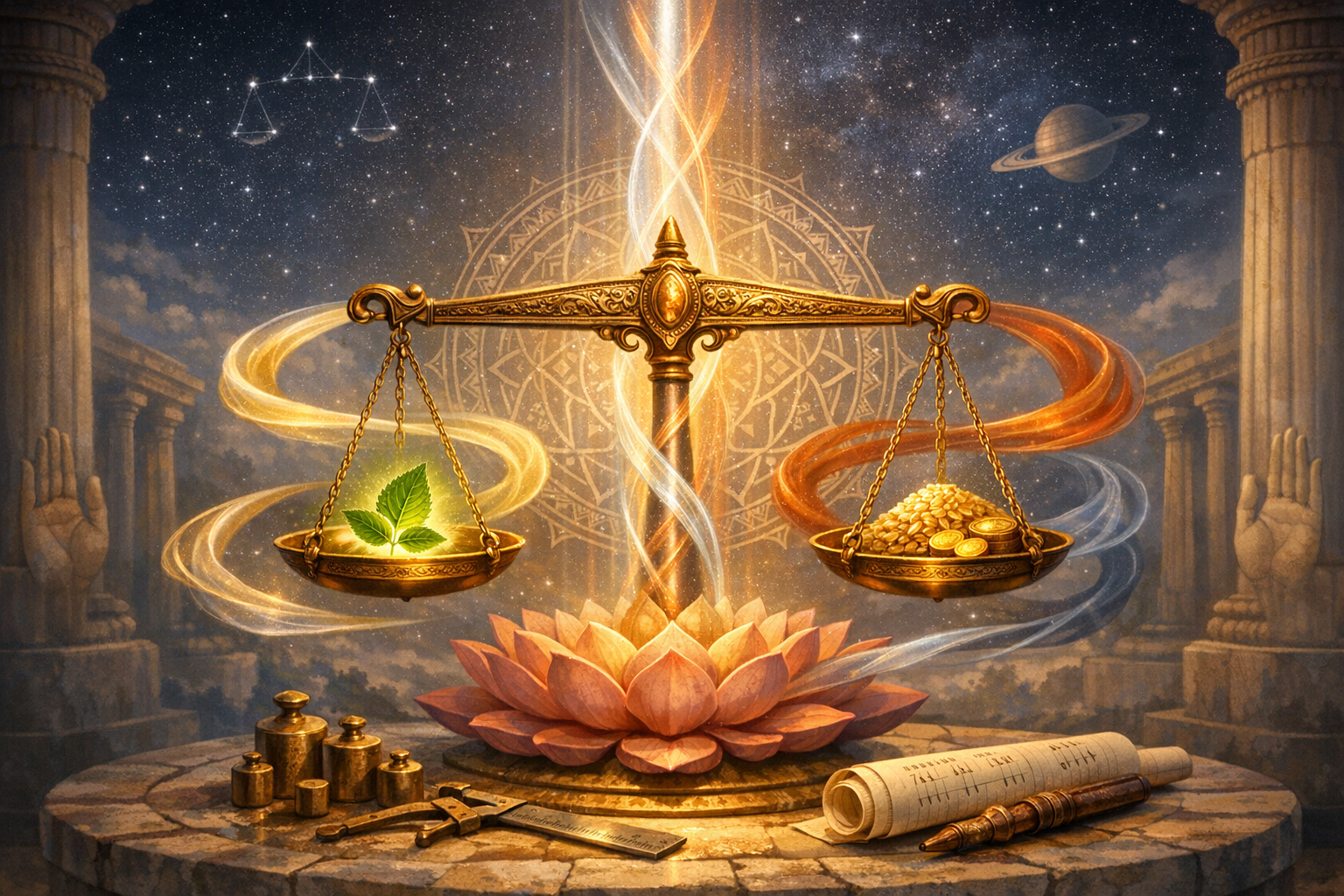
The weighing balance (tula) is a rare yet profound Hindu symbol that encodes a civilizational ethic: weigh intentions, actions, and outcomes in the light of karma and dharma. Rather than relying on frequent iconographic depictions, the symbol operates powerfully across ritual (tulābhara), philosophy (samatā in the Bhagavad Gita), and astrology (Tula Rashi’s emblem of parity).…
-
The Perils of Kuttichathan Worship in Kali Yuga: Safeguarding Dharma and Peace

This analysis examines Kuttichathan within Kerala’s Tantric and folk matrices and explains why, in Kali Yuga, spirit-propitiation invites psychological, ethical, and social risks. Drawing on scriptural priorities for the age and the guna framework, it recommends a shift toward sattvic worship that reliably purifies mind and fosters family harmony. It distinguishes cultural heritage (Theyyam, Bhuta…
-
Why We Suffer: Tiruvalluvar on Raga, Dvesha, Avidyaand a Dharmic Path Beyond Sorrow
Human suffering, Dharmic traditions teach, begins within. Tiruvalluvar’s Tirukkural aligns with a shared analysis across Hinduism, Buddhism, Jainism, and Sikhism: three inner blemishesraga (clinging likes), dvesha (aversive dislikes), and avidya (mis-knowing)distort perception and seed fresh sorrow. Read alongside Patanjali’s kleshas and the Bhagavad Gita’s cascade from attachment to downfall, the Kural’s ethics map a precise…
-
Kamadeva Unveiled: Reclaiming Hinduism’s Sacred Science of LoveNot Lust
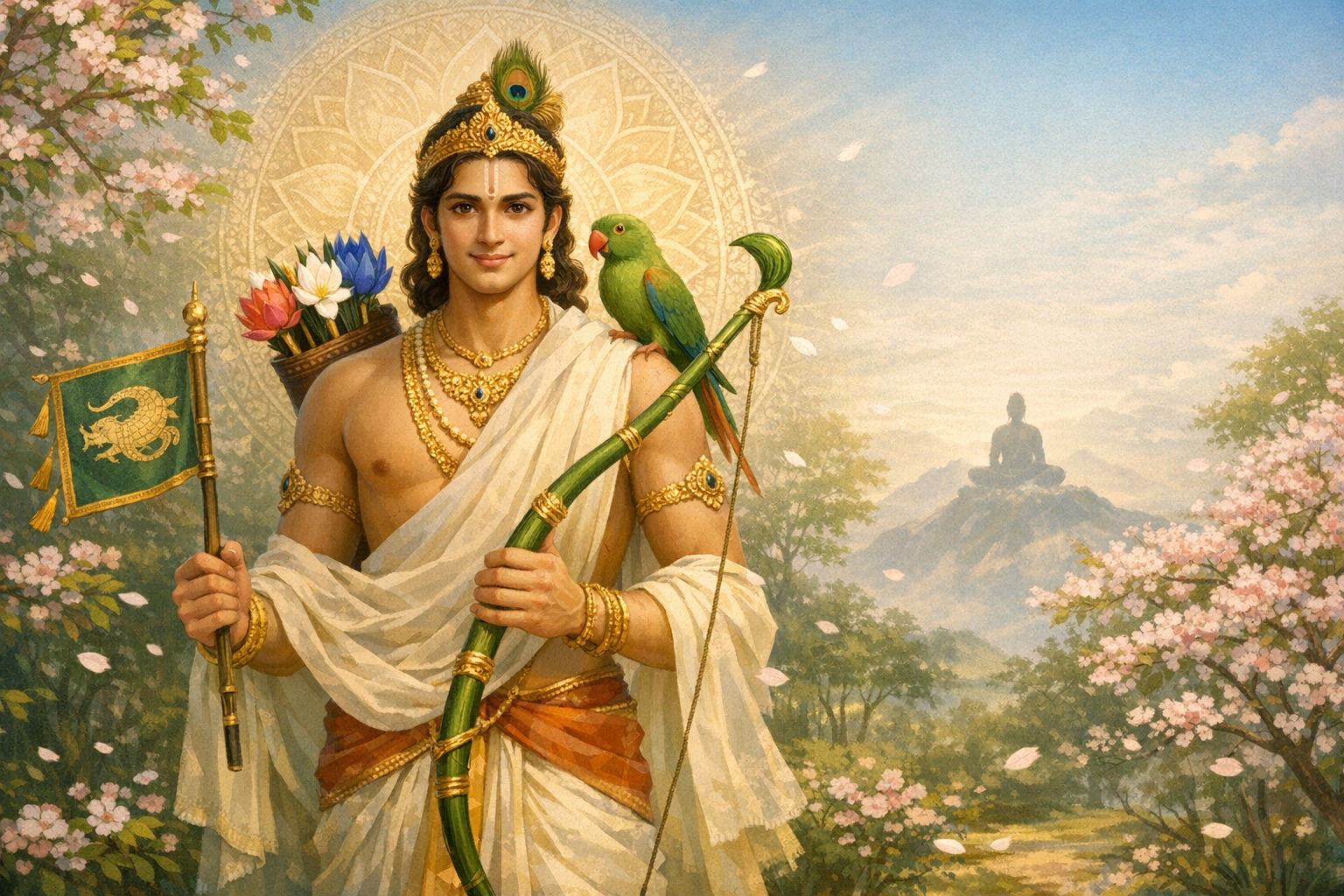
Kamadeva in Hindu thought is not a Cupid-like figure of conquest but the ethically governed power of love and creative desire. Vedic and Atharvavedic sources locate kama at the heart of cosmogenesis, while Purāṇic narratives refine it through the Ananga episode and Pradyumna motif. Framed within the purusharthas, kama is pursued under dharma, distinguishing love’s…
-
Shatprakara (Shadamnaya) Explained: Six Shakta Streams Powering Tantra’s Living Unity
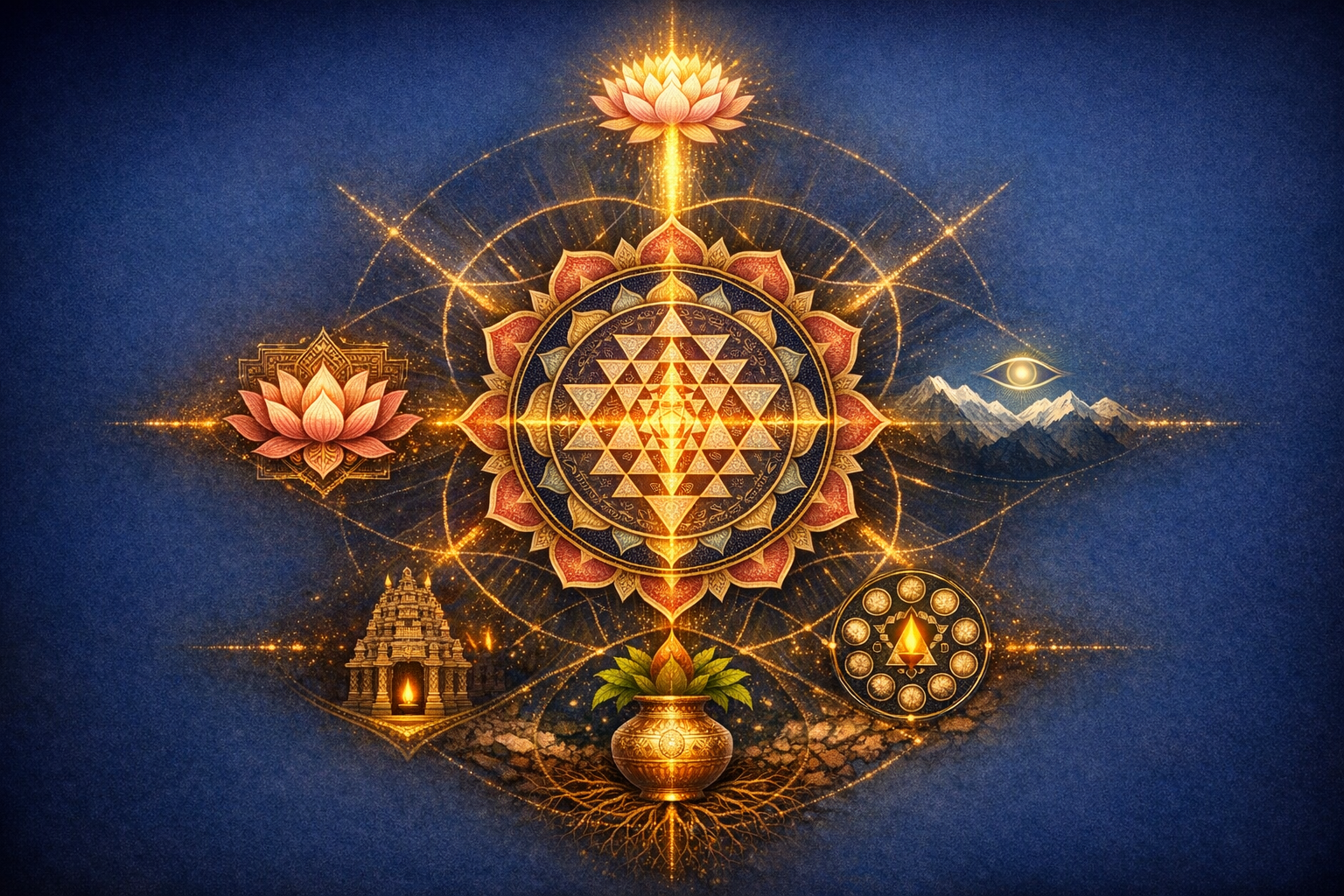
This long-form guide clarifies Shatprakara (Shadamnaya) as the sixfold transmission of Shakta doctrine that maps ritual, mantra, and philosophy across the four directions and a vertical axis. It explains how varying attributions in Kaula, Sri Vidya, Trika, and Yogini traditions are complementary rather than contradictory. Readers learn the core ritual grammarmantra, nyasa, kundalini, Sri Chakra…
-
Guru as Pure Giver: Varahi Tantra’s Compassionate Ethic and the Dharma of Guidance

Hindu tradition locates the guru’s authority in unconditional giving rather than transactional exchange, a principle Shakta lineages honoring Varahi emphasize through an ethic of compassionate protection and grace. Framed by aparigraha and dāna, authentic guidance confers capacity, context, and corrective feedback without coercion or commodification. Varahi-oriented Tantrism articulates this through calibrated initiation, from mantra-dīkṣā to…
-
Awakening in Hinduism: Traits of a Jivanmukta from the Gita, Upanishads, and Yoga

Hinduism profiles the spiritually awakened personjivanmuktathrough durable traits, not passing states. Drawing on the Bhagavad Gita, the Upanishads, Yoga, and Vedanta, this analysis details equanimity, non-attachment, compassion, truthfulness, fearlessness, humility, and discernment as reliable indicators of realization. It explains how yama–niyama and sadhana-chatushtaya build the ethical and attentional bedrock for liberation (moksha). Practical resonance with…
-
Vachaka Shakti Unveiled: The Timeless Power of Words in Mimamsa, Nyaya, and Dharmic Thought
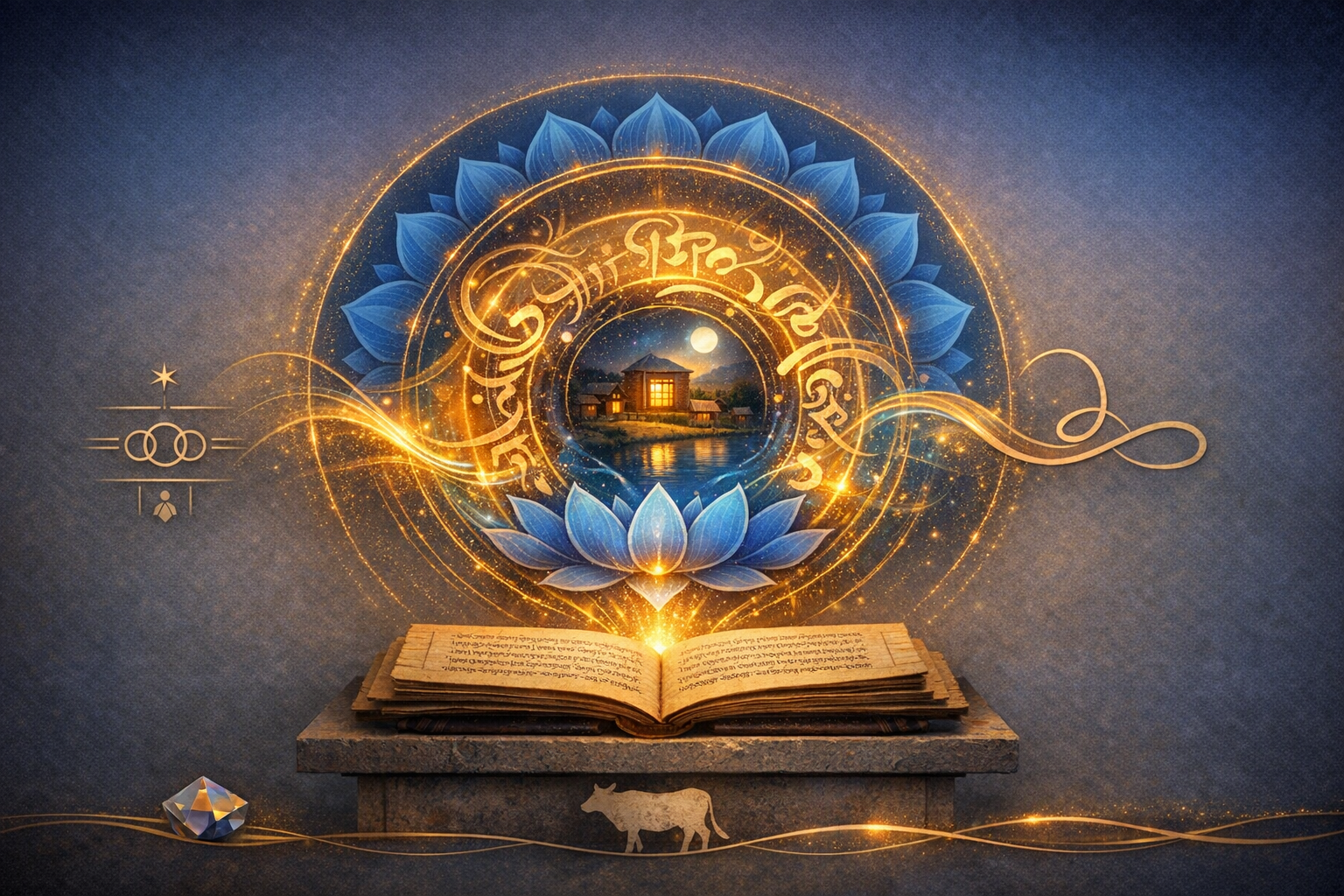
Vachaka Shaktilanguage’s inherent potency to convey meaningserves as a shared foundation across Mimamsa, Nyaya, Vyakarana, Buddhist, Jaina, and Sikh traditions. The classical Indian framework of abhidha (denotation), lakshana (secondary extension), and vyanjana (suggestion) shows how words communicate directly and indirectly with precision and depth. Mimamsa debates (abhihitanvaya vs. anvitabhidhana) and Nyaya’s conditions (akanksha, yogyata, sannidhi)…
-
Decoding Lokayatra Vidhayini: The Goddess Who Guides All Worlds and Purifies the Soul
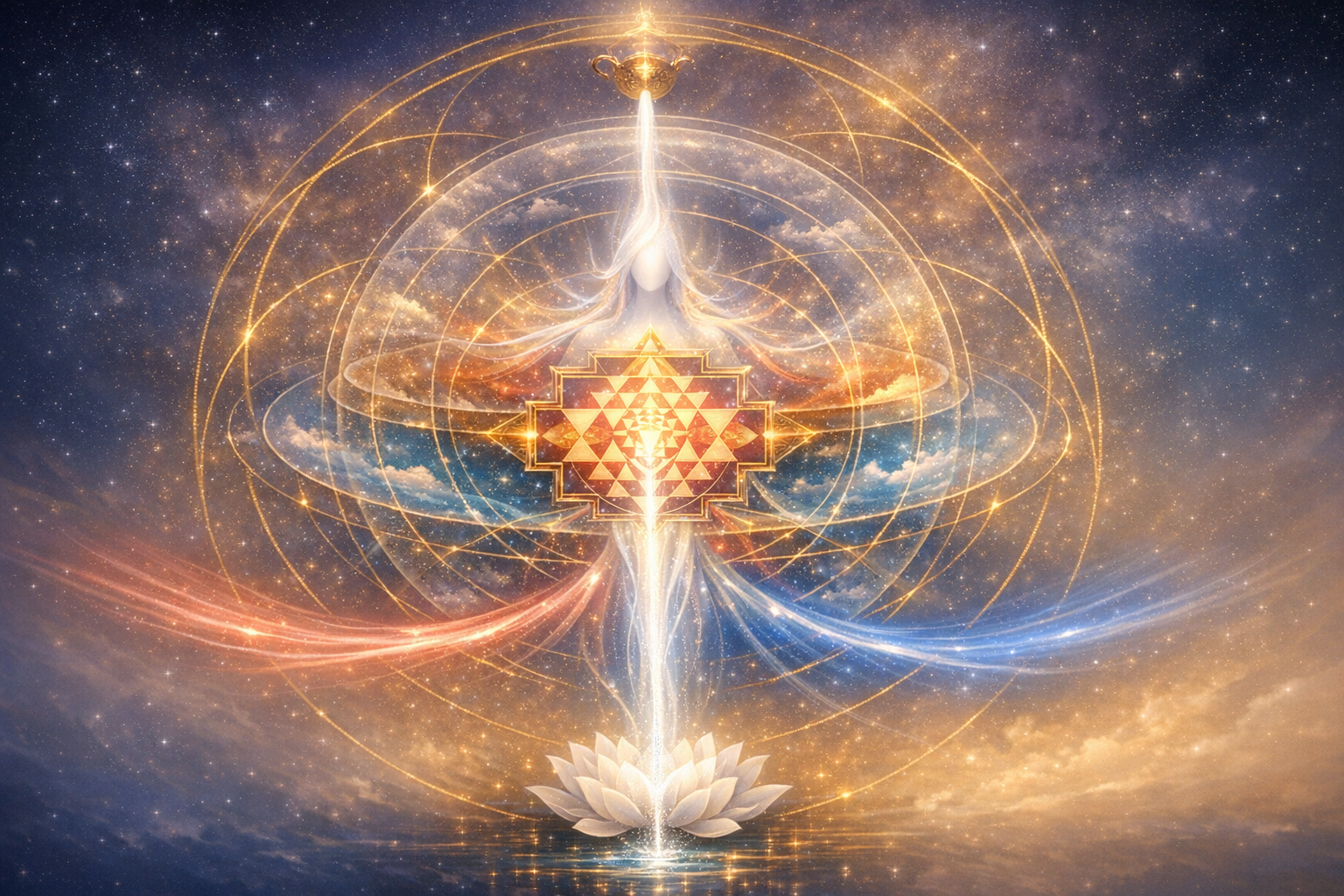
This essay decodes Lokayatra Vidhayini“She who directs the journey of the universe”as a concise theology of cosmic order and inner purification drawn from the Lalita Sahasranama and the Sri Vidya tradition. It explains the Sanskrit roots of loka, yatra, and vidhayini, and situates the name in Shakta metaphysics, the pañcakṛtya cycle, and Hindu cosmology. Readers…