
-
In Kali Yuga’s Shadow, Karuṇā Shines: The Dharma of Empathy for Collective Survival
Kali Yuga accentuates speed, scarcity, and social fragmentation, making empathy not just virtuous but vital. Drawing on Hinduism, Buddhism, Jainism, and Sikhism, this essay frames karuṇā as strategic dharmaethically right and instrumentally wise. It grounds empathy in the Bhagavad Gita, Anekantavada, Brahmavihāra practice, and Sikh seva, aligning with the civilizational ideal of Vasudhaiva Kutumbakam. Contemporary…
-
Unraveling the Soul in Mimamsa: Ritual Power, Karma Mechanics, and Liberation in Classical Hinduism

Mimamsa develops a precise account of the soul (ātman) by grounding ethics in Vedic authority, ritual grammar, and the law of karma. It explains how apūrva (the unseen potency) links present actions to future results, safeguarding karmic justice across rebirths without requiring a discretionary deity. The soul is eternal, responsible, and known through robust pramāṇa…
-
Perception Shapes Destiny: Vibhishana and Ravana on Dharma, Devotion, and Right View
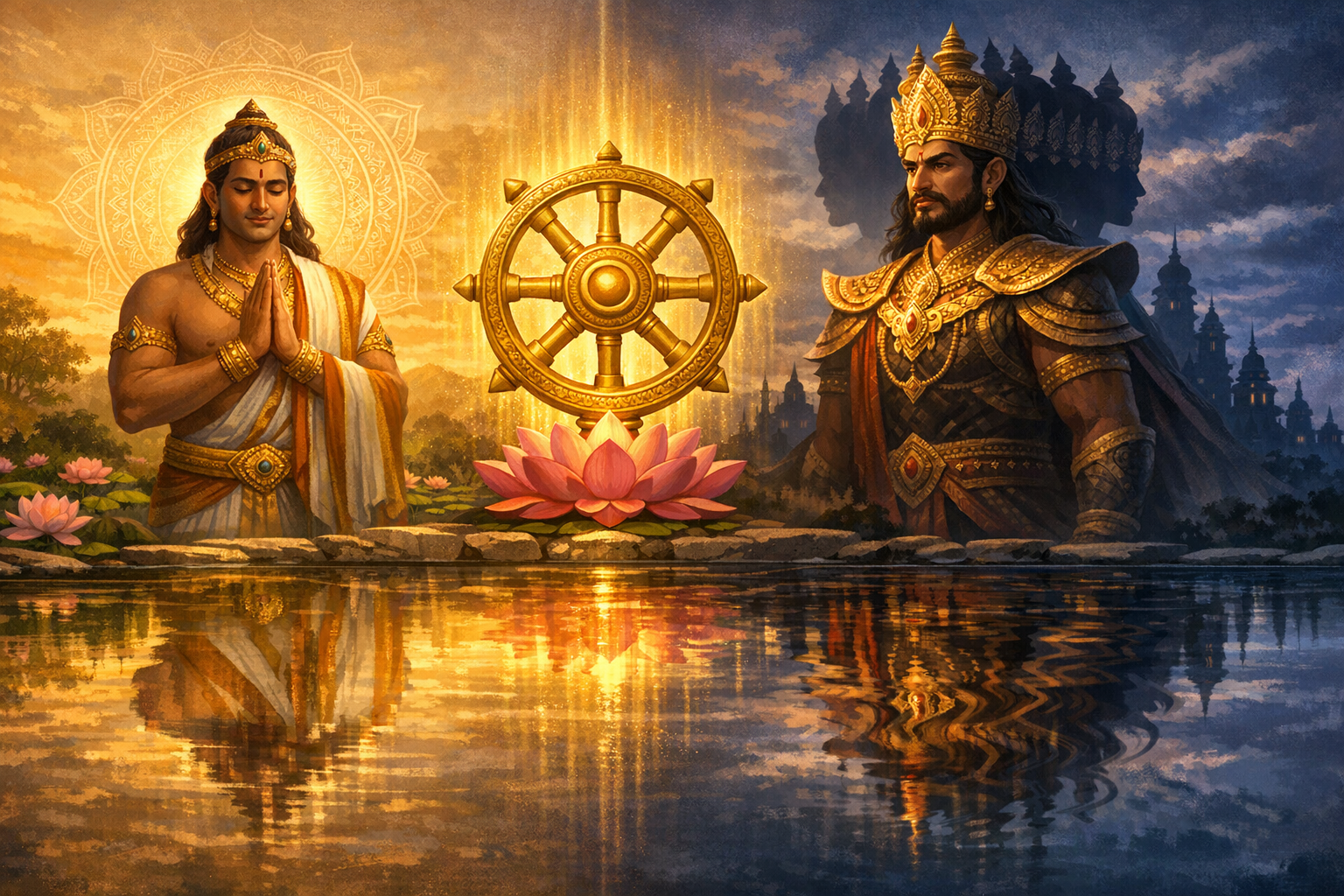
The Vibhishana–Ravana contrast in the Ramayana shows how perception actively shapes devotion, decision, and destiny. Vibhishana’s sattvic clarity leads to ethical counsel, śaraṇāgati to Sri Rama, and the restoration of just kingship. Ravana’s rajasic ambition and tamasic delusion produce cognitive bias, institutional decay, and ruin. The narrative aligns with Buddhist samyak dṛṣṭi, Jain Anekantavada and…
-
Mastering the Mind with Vedanta: Discern Uplifting vs Harmful Thoughts for Inner Freedom

Hindu philosophy provides a precise, time-tested method for discerning between wholesome and unwholesome thoughts using tools from Vedanta, the Bhagavad Gita, and the Yoga Sutra. The framework integrates nitya–anitya–viveka, guna diagnostics, and pratipaksha–bhavana to remodel mental habits at the root. Case studies from the Ramayana illustrate how sattva stabilizes action under pressure while rajas and…
-
Decoding Yuga Sandhya: The Cosmic Twilight Between Yugas and Its Dharmic Significance
Yuga Sandhya, or Yuga Sandhi, denotes the transitional ‘cosmic twilight’ between two Yugas in Hindu cosmology. Classical Purāṇic arithmetic specifies dawn and dusk segments bracketing each Yuga, emphasizing that change proceeds lawfully and gradually. The Dvapara–Kali junction, anchored to the 3102 BCE epoch, illustrates how avatars and ethical recalibrations mark these thresholds. Read diagnostically, sandhi…
-
Bridging God and Science: Vaishnava Sāṅkhya’s Insights for Christian Theologies of Nature

This essay explores how Christian models of divine action engage modern science and shows how the theistic Sāṅkhya of the Bhagavata Purana (Srimad-Bhagavatam) deepens that conversation. It clarifies primary and secondary causation, non-interventionist action, and kenotic/panentheistic intuitions in light of Vaishnava metaphysics. By mapping guṇa-based regularities to scientific laws and explaining non-physical causation through the…
-
Beyond ‘Man a Machine’: La Mettrie, Mind–Body Science, and Dharmic Wisdom on the Soul
Julien Offray de La Mettrie’s Man a Machine ignited Enlightenment debates by claiming that mind and soul arise from bodily organization. Contemporary neuroscience now validates much of that clinical intuitionanesthesia, neuropharmacology, and brain–behavior correlationswhile also exposing the limits of strict reductionism. This article situates La Mettrie historically, surveys modern theories of consciousness, and then stages…
-
Patra Puja in Shakta Tantra: From Tamas to Amrita through Sacred Vessel Alchemy
Patra Puja in Shakta Tantra is not a license for indulgence but a precise technology of inner alchemy that transmutes tamas into amrita through mantra, visualization, and disciplined attention. The sacred vessel (patra) is ritually consecrated as Devi’s body, and the offeringalcoholic or non-alcoholic by lineageoperates as a mirror for consciousness rather than a pharmacological…
-
Five Supreme Forms of Vishnu: Definitive Guide to Para, Vyuha, Vibhava, Antaryami, Archa
This in-depth guide explains the five supreme forms of VishnuPara, Vyuha, Vibhava, Antaryami, and Archashowing how one reality spans transcendence and immanence. It grounds each form in authoritative sources such as the Pancharatra Agamas, the Mahabharata’s Narayaniya, the Bhagavata Purana, and Vedanta discussions in the Brahma Sutra. Readers gain a clear, technical understanding alongside practical…
-
Mastering Lifelong Learning: Dharmic Methods that Transform Observation into Wisdom

Rote learning produces fragile knowledge; dharmic education converts observation into durable wisdom. Drawing on Hinduism, Buddhism, Jainism, and Sikhism, this piece outlines a replicable pathway: inquiry, reasoning, contemplative assimilation, and ethical action. It maps classical pramanas to modern evidence-based methods such as retrieval practice, spaced repetition, and mindfulness. Nyaya’s tarka, Mimamsa’s hermeneutics, Vedanta’s sravana–manana–nididhyasana, Buddhist…
-
Pancha Mahapretas: Why Even Gods Are Inert Without Shakti (Tantric Hinduism Explained)
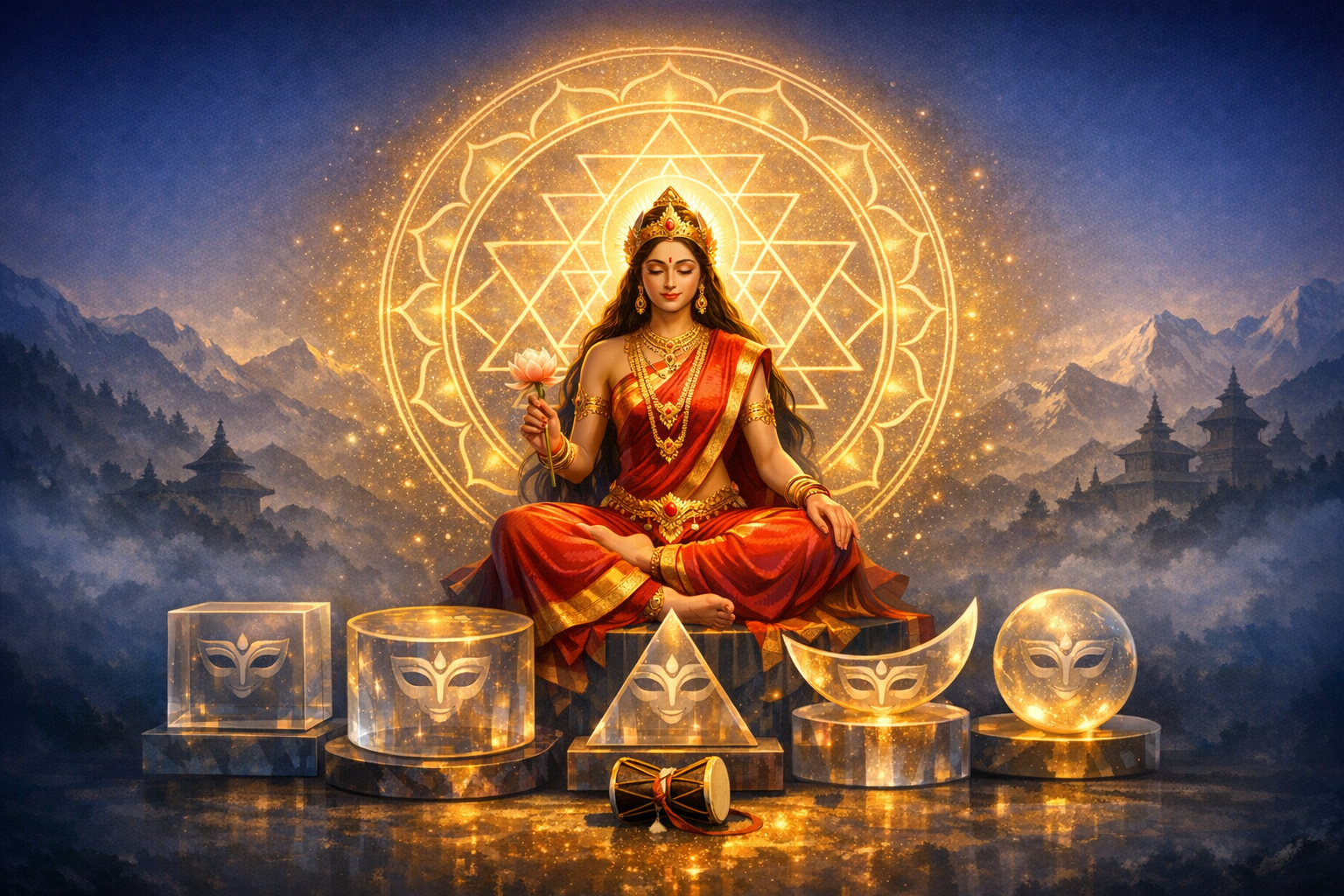
The Pancha Mahapretas“Five Great Inert Ones”explain a central Tantric truth: without Shakti, even the highest divine functions remain quiescent. This long-form analysis clarifies how the five (Brahma, Vishnu, Rudra, Īśvara, Sadāśiva) map to the five cosmic acts and why they are called “pretas” only in the technical sense of inert supports. It decodes five-skull iconography,…
-
Many Gods, One Reality: Scientific, Historical, and Philosophical Logic of Hindu Plurality

Why does Hinduism speak in many divine names yet point to one Reality? This long-form analysis synthesizes Vedic and Upanishadic insights with anthropology, cognitive science, and systems theory to show how multiplicity in Hinduism is an intentional design for accessibility, memory, and social cohesion. It clarifies the debated phrase “330 Million Gods in Hinduism,” explains…
-
Unveiling the Golden Wisdom of Sri Sadasiva Brahmendra: Advaita Quotes, Music, and Practice
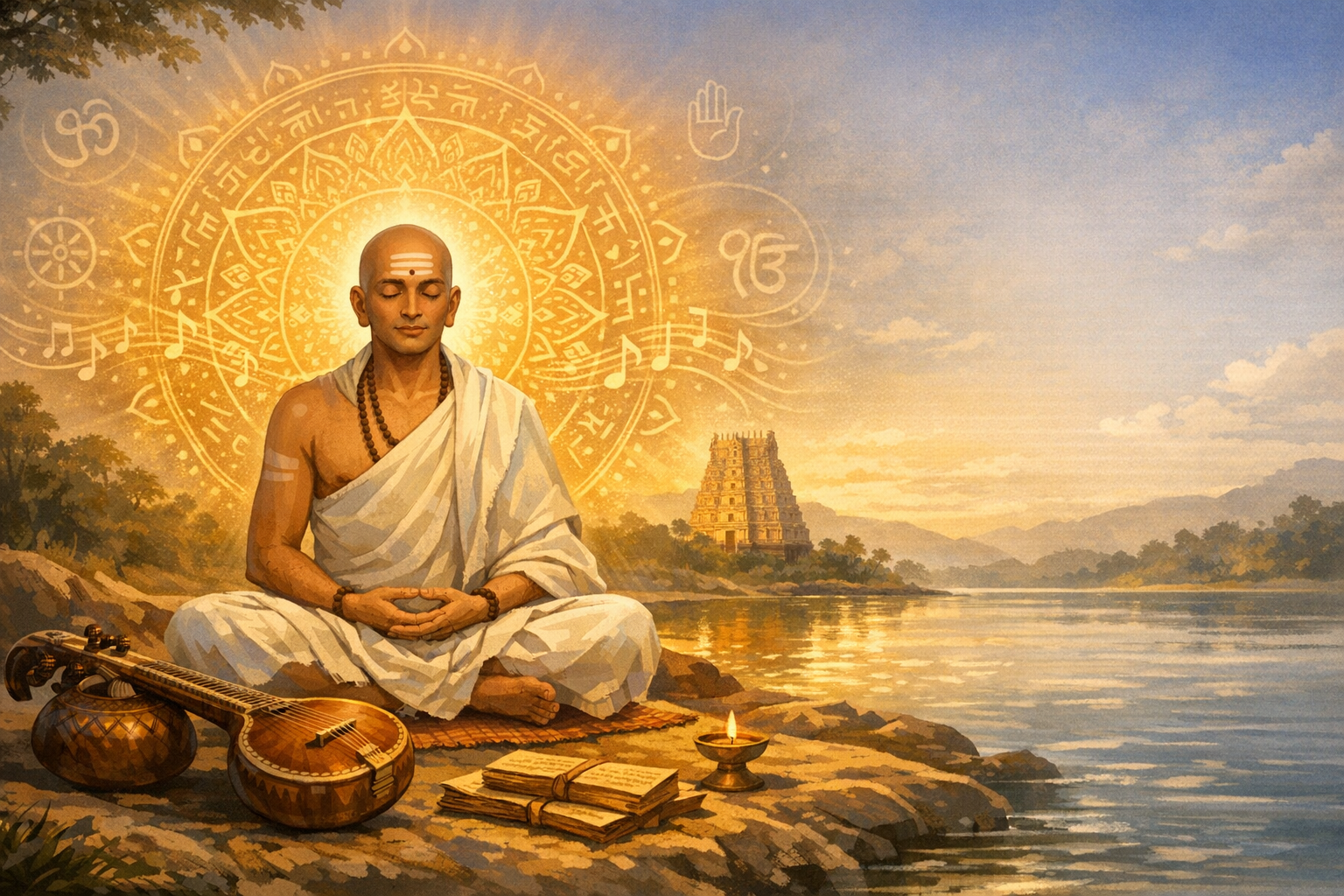
Sri Sadasiva Brahmendra, the 18th‑century Advaita sage of Tiruvisainallur near Kumbakonam, shaped South Asia’s spiritual landscape through luminous Sanskrit kirtanas and incisive nondual teaching. His widely cherished refrains“Sarvam Brahma-mayam,” “Manasa sañcarare Brahmani,” and “Pibare Rāma-rasam”translate Upanishadic insight into accessible, daily practice. Read together, they offer a coherent path: perceive all as Brahman, abide the mind…
-
Arise, Awake: Swami Vivekananda’s Call to Relentless Focus, Dharmic Grit, and Goal Mastery

This essay situates “Arise, Awake, and Stop not till the Goal is reached” within its Katha Upanishad roots and explains how Swami Vivekananda shaped it into a modern, action-oriented ethic. It decodes the triadArise (initiate), Awake (attend), and Stop not (complete)as a full cycle of disciplined effort aligned with Dharma. Drawing on the Bhagavad Gita…
-
Devotion Through Buddhi and Grace: Mastering Hindu Bhakti via Consciousness and Surrender
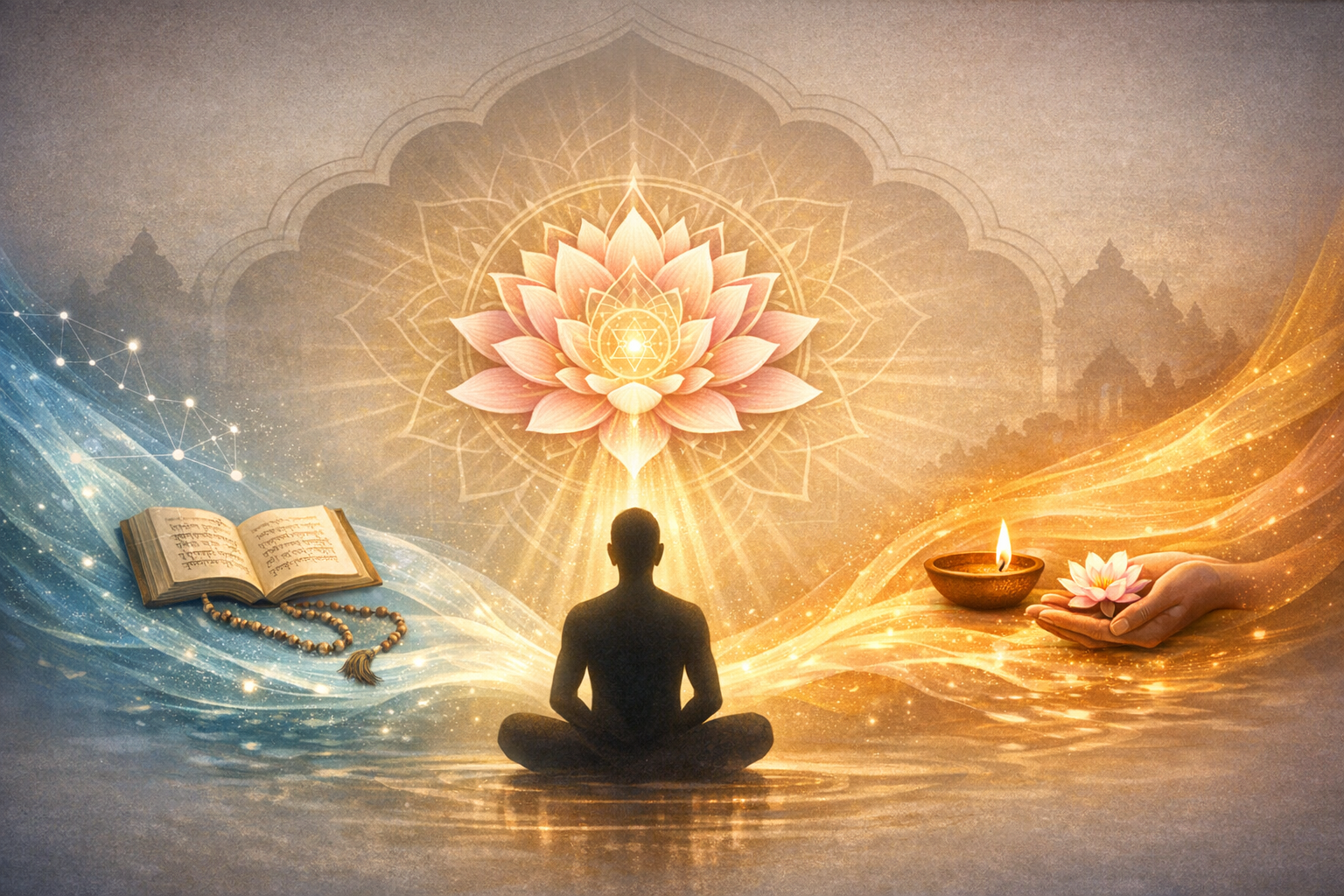
This essay examines two complementary currents of Hindu devotionbuddhi-yoga (devotion through consciousness and intelligence) and prapatti/śaraṇāgati (devotion through surrender)grounded in the Bhagavad Gita, the Bhāgavata Purāṇa, Vedānta, and Yoga. It explains how disciplined study, reflection, and mindful ritual refine devotion, while wholehearted entrustment to the divine expands receptivity to grace. The discussion translates classical terms…
-
When Life Finds Balance: The Dharmic Science of Harmony in Hinduism, Buddhism, Jainism, Sikhism
This in-depth exploration shows how balancedefined as dynamic homeostasis guided by dharmaproduces well-being, clarity, and social harmony across Hinduism, Buddhism, Jainism, and Sikhism. Drawing on puruṣārtha, guna theory, Panchakosha, the Bhagavad Gita, Patanjali’s Yoga, and Ayurveda, it explains why moderation is a rigorous discipline, not a compromise. Parallels with the Buddhist Middle Path, Jain Anekantavada,…
-
Half-Love Trap: Situationships through a Dharmic Lens and How to Safeguard the Heart

Situationships promise closeness without commitment, but dharmic traditions caution that warmth without ethical walls quickly becomes restlessness. This analysis reads Gen Z’s half-love trend through Hindu, Buddhist, Jain, and Sikh frameworks that balance kama with dharma. It explains why ambiguous contracts elevate anxiety and how the Purusharthas, Right Speech, ahimsa, and seva realign intimacy with…
-
Decoding the Silent Guru: Powerful Differences Between Vyakhyana and Jnana Dakshinamurti
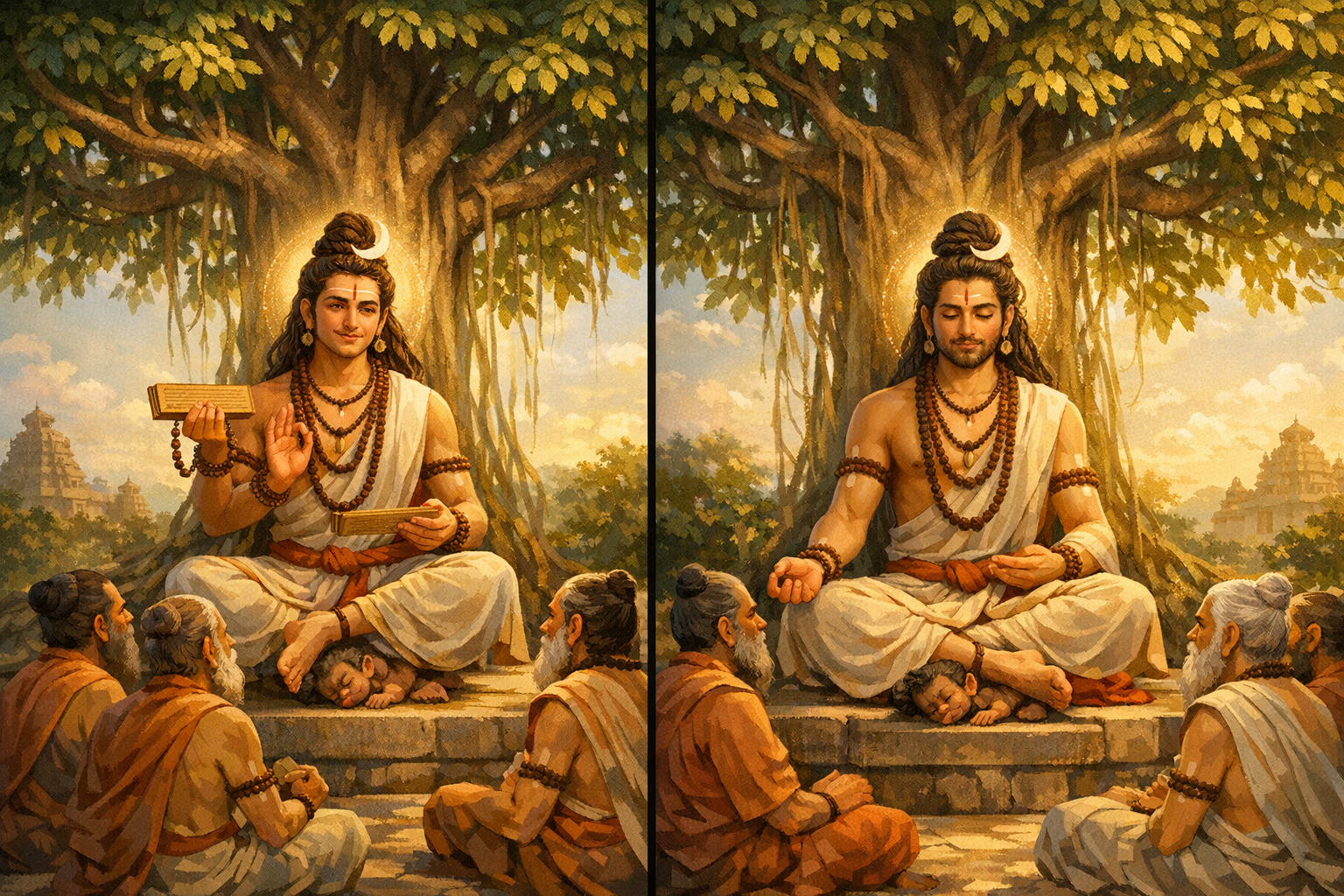
Dakshinamurti in Śaiva tradition manifests as the primordial teacher, with two pedagogically distinct but complementary forms: Vyakhyana Dakshinamurti (exposition) and Jnana Dakshinamurti (direct realization). This article clarifies their iconographic markerschinmudra versus vyakhyana/vitarka mudra, the prominence of pustaka and akshamalaand interprets their philosophical import through Vedanta’s arc from śravaṇa and manana to nididhyasana. Drawing on the…
-
Why Detachment Unlocks Maximum Happiness: A Dharmic, Evidence-Based Guide from Gita to Yoga

Detachment in Hinduism is a trainable skill that unlocks maximum happiness by freeing the mind from compulsion. Grounded in the Isha Upanishad and Bhagavad Gita, it reframes enjoyment as arising from renunciation and the release of outcome-clinging. Yoga Sutra’s abhyasa-vairagya method makes this pragmatic, while allied teachings in Buddhism, Jainism, and Sikhism affirm the shared…
-
Timeless Dharmic Science of Joy: A Sacred Blueprint for Lasting Happiness Within
Hindu philosophy holds that lasting happiness is not acquired but uncovered by cultivating a living relationship with the Divine within. Drawing on the Upanishads, Bhagavad Gita, and Yoga philosophy, this exploration distinguishes fleeting pleasure from the abiding fullness called ānanda. The analysis integrates Advaita, Viśiṣṭādvaita, and Dvaita perspectives, while honoring dharmic unity with Buddhism, Jainism,…