
-
Freedom from the Senses: A Dharmic Pathway to Moksha, Mastery, and Inner Sovereignty

This essay explores the Hindu philosophical insight that freedom from the slavery of the senses constitutes liberation and shows how it converges with parallel teachings in Buddhism, Jainism, and Sikhism. It clarifies how indriyas, raga-dvesha, and samskaras generate compulsion, and how masterynot repressionunlocks moksha. Drawing from the Bhagavad Gita, the Upanishads, and Yoga philosophy, it…
-
Beholding Vishnu’s Virat Purusha: A Scholarly, Step-by-Step Guide to Transformative Dhyana Practice

This comprehensive guide outlines a rigorous, step-by-step approach to meditating on the Virat Purusha, the cosmic form of Bhagavan Vishnu. It situates practice within scriptural sources like the Purusha Sukta, the Bhagavad Gita’s Vishvarupa, and Puranic correspondences, while clarifying the Vedantic triad of Virat–Hiranyagarbha–Ishvara. Readers gain precise, accessible methods for posture, breath regulation, mantra, and…
-
Karma in Hinduism: A Definitive, Practical Guide to Action, Consequence, and Liberation

Karma in Hinduism is a precise ethical and philosophical system linking intention, action, and consequence within the larger pursuit of moksha. Drawing on the Bhagavad Gita, the Upanishads, and allied schools of Hindu philosophy, this long-form guide explains the threefold temporal modelsanchita, prarabdha, and agamialongside the Gita’s categories of karma, akarma, and vikarma. It clarifies…
-
Transformative Bhakti: Śrīmad-Bhāgavatam 3.32.22–36 Reveals a Clear Roadmap to Moksha

This exploration of Śrīmad-Bhāgavatam 3.32.22–36 distills how faithful śravaṇa about Kṛṣṇa initiates and sustains bhakti-yoga as a clear pathway to moksha. It clarifies the Sāṅkhya distinction between the witnessing self and the body-mind, showing how devotion both utilizes and transcends analysis. Practical stepsdaily hearing, kīrtana or japa, seva, sat-saṅga, and reflective svādhyāyaare presented alongside minimalist…
-
When the Lord Becomes a Son: Kardama Muni and the Descent of Real Knowledge (SB 3.24.30)

Srimad Bhagavatam 3.24.30 captures Kardama Muni’s address to the Lord, who descends to fulfill a sacred promise and inaugurate the dissemination of real knowledge in the heart of family life. The episode anticipates Kapila’s theistic Sankhya, where analytical clarity and bhakti-yoga form a coherent path to liberation. By highlighting divine fidelity“to fulfill Your word”the verse…
-
Shattering the Illusion of Ego: How Pride Sabotages Liberation across Dharmic Traditions

Pridewhether named ahamkara, asmita, mana, or haumaiemerges as a shared obstacle to liberation across Hinduism, Buddhism, Jainism, and Sikhism. This essay synthesizes scriptural anchors from the Bhagavad Gita, Upanishads, and Yoga Sutra with parallel insights from Buddhist, Jain, and Sikh teachings to show how egoic inflation thrives on the illusion of separation. Readers will gain…
-
Divine Lawkeeper: How Dharma and Karma Make God the World’s Most Just Policeman

This essay presents a rigorous, accessible account of how Hindu philosophy understands God as the ideal lawkeeper through the integrated workings of dharma, karma, and ṛta. Readers learn how justice in Sanatana Dharma is primarily restorative and educational, privileging conscience, proportionality, and reform over retribution. The discussion bridges scripture (Bhagavad Gita, Dharmasastra, Arthasastra) with social…
-
Timeless Lila: Exploring the Divine Play of Being and Becoming Across Dharmic Paths

This long-form exploration presents Lilathe eternal divine playas a framework for understanding how being and becoming interrelate across Hinduism, Buddhism, Jainism, and Sikhism. Drawing on the Upanishads, Vedanta (Advaita, Vishishtadvaita, Dvaita), the Bhagavad Gita, and Shaiva–Shakta thought, it clarifies how creation, preservation, and dissolution express a living unity. It maps key concepts like dharma, karma,…
-
Plantain-Born Kadaligarbha in Kathasaritsagara: Divine Origins, Relentless Karma, and Vairagya

The Kathasaritsagara’s tale of Kadaligarbha, the plantain-born maiden, fuses literary beauty with precise philosophical instruction. It stages the inevitability of karma while demonstrating how dharma and vairagya (detachment) reshape response without denying consequence. Readers gain a clear map of the classical classification of karmasancita, prarabdha, and agamiand see why only disciplined non-attachment can blunt compulsive…
-
Navya Nyaya’s New Logic: Precision Tools for Knowledge across Dharmic Traditions

Navya Nyaya, the “New Logic” within the Nyaya tradition, emerged in 13th-century Mithila with Gangesha Upadhyaya’s Tattva-Chintamani and transformed Indian epistemology through unmatched analytic precision. It refines the four pramanaspratyaksha, anumana, upamana, and shabdausing a technical idiom that specifies locus, qualifier, and delimitor to prevent ambiguity. Later masters such as Raghunatha Siromani and Gadadhara Bhattacharya…
-
Beyond Shadows: Plato’s Cave, Dharmic Wisdom, and the Mind’s Illusion of Reality

Plato’s allegory of the cave explains why humans often mistake partial images for complete reality; Dharmic philosophies show how to correct that error through disciplined practice. This article integrates Plato’s ascent with Hindu, Buddhist, Jain, and Sikh frameworksavidya and maya, the two truths, anekantavada, and Naamdemonstrating how perception can be retrained. Readers gain a rigorous…
-
Collective Karma and National Destiny: Dharmic Ethics That Safeguard a Nation’s Future

This essay examines how collective karma operates across Hinduism, Buddhism, Jainism, and Sikhism to shape national destiny through the normalization of harm or restraint. It synthesizes classical sourcessuch as the Manusmriti, Mahabharata, and the Gita’s doctrine of loka-saṅgrahawith contemporary evidence on public health, environmental externalities, and social trust. The discussion reframes high‑risk behaviorshiṁsā in diet,…
-
Unlocking Sacred Meaning in Hindu Philosophy: Vācya, Lakṣaṇā, and Vyañjanā Demystified

Language in Hindu philosophy operates through three layered modes of meaningvācya (literal), lakṣaṇā (indicated), and vyañjanā (suggested)that guide readers from clear denotation to transformative insight. This long-form, research-driven exploration clarifies each mode with classical examples, links them to Nyāya, Mīmāṁsā, Vedānta, and Alaṅkāra-śāstra, and highlights the contributions of Ānandavardhana, Abhinavagupta, and Bhartṛhari. It demonstrates how…
-
Pure and Trained Mind in Hindu Dharma: A Practical, Science-Backed Guide to Wise Decisions

This article presents a comprehensive, academically grounded framework for cultivating a pure and trained mind to improve decision-making in contemporary life. Drawing on Hindu philosophy and complementary insights from Buddhism, Jainism, and Sikhism, it explains how sattva, abhyasa, and ethical guardrails like yama–niyama elevate judgment under stress. It details a practical viveka–vichara loop for real-world…
-
Cosmic Harmony in Daily Puja: Aligning Five Elements and Senses for Transformative Worship

Daily puja in the Hindu way of life is a precise, sense-centered discipline that aligns the five elements (Pancha Mahabhuta) with the five senses (Pancha Indriya). Drawing on the Bhagavad Gita 7.4 and allied traditions, it maps offerings such as gandha, pushpa, dhupa, deepa, and naivedya to smell, sight, sound, touch, and taste. Earth, water,…
-
Beyond Facts: Transformative Teaching through DharmaTimeless Hindu, Buddhist, Jain, Sikh Insights

Education is not the mere transfer of facts; in dharmic traditions it is a transformative process that unites knowledge, character, and contemplative depth. Drawing on Hindu, Buddhist, Jain, and Sikh insights, this analysis explains why śravaṇa–manana–nididhyāsana, anekāntavāda, and the triad of śabad–sangat–seva map onto evidence-based practices like active learning and mindfulness. It clarifies the parā/aparā…
-
Beyond the ‘Better’ Trap: A Dharmic Guide to Hope Without Clinging or Burnout

Hope is powerful fuel, but it can become a trap when peace depends on outcomes. This long-form, research-informed reflection clarifies the difference between direction and demand, showing how mindfulness, equanimity, and non-attachment protect motivation without creating pressure. Drawing on a unified dharmic lensBuddhist equanimity, Hindu Karma Yoga, Jain aparigraha, and Sikh hukam and sevait reframes…
-
Mukhyartha in Hinduism: Unlock the Power of Abhidha-Shakti for Precise, Sacred Meaning
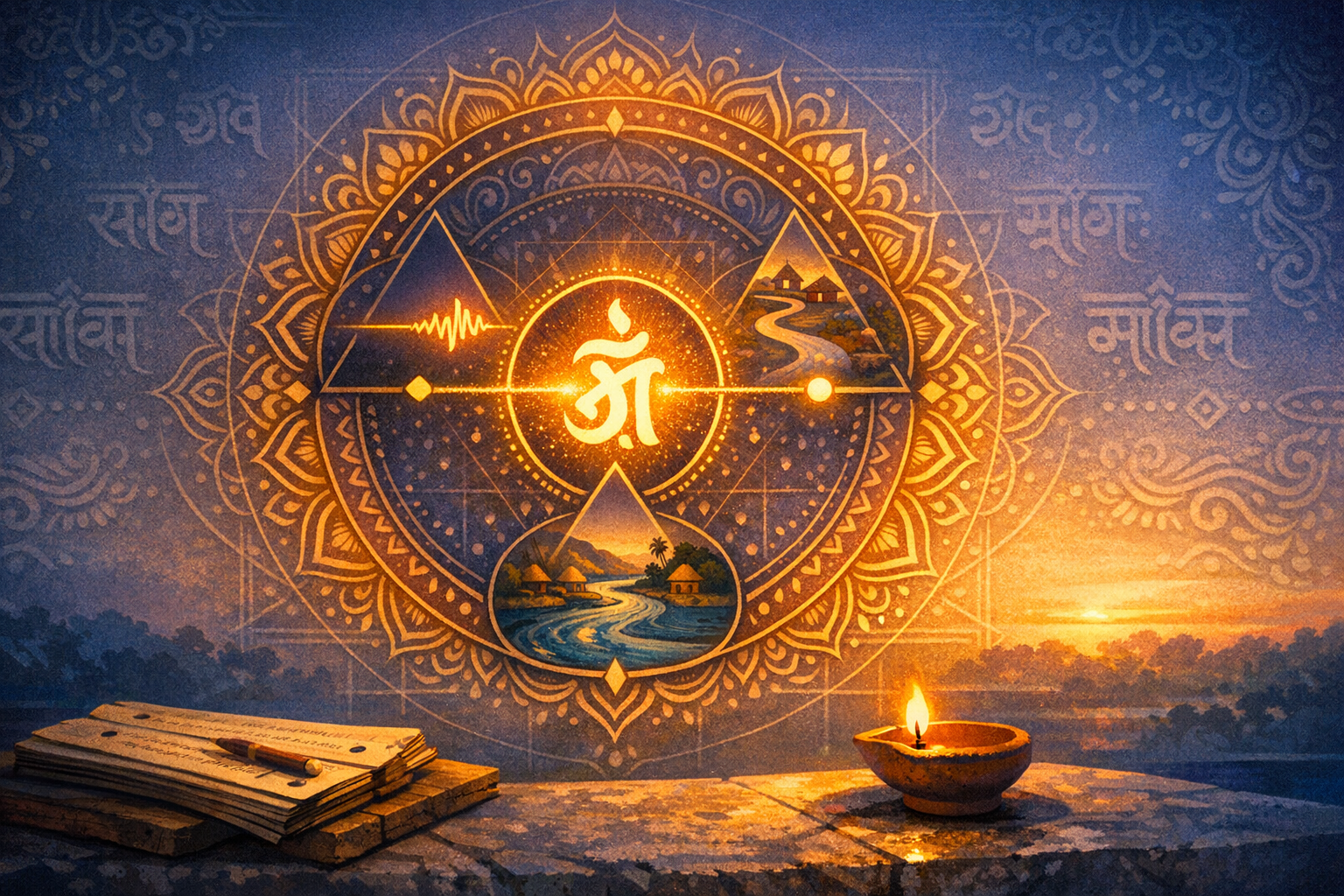
Mukhyarthasecured by abhidha-shaktiprovides the primary, literal meaning that anchors Hindu hermeneutics, ritual, and scripture. This article clarifies how primary sense operates in sentences, why context can trigger shifts to lakshana (secondary meaning) and vyanjana (suggestion), and how classic criteria like akanksha, yogyata, and sannidhi preserve coherence. It surveys perspectives from Mimamsa, Nyaya, Vedanta, and the…
-
Affection Without Weakness: Timeless Dharmic Wisdom for Compassionate, Courageous Living

This article reframes affection as a resilient strength when aligned with discernment, boundaries, and ethical purpose across Hinduism, Buddhism, Jainism, and Sikhism. Drawing on the Bhagavad Gita, Vidura-niti, the Brahmavihāras, Anekāntavāda, and the Sikh Sant-Sipahi ideal, it shows how compassion matures with wisdom and becomes courage in action. Readers gain a practical decision process rooted…
-
No Two Days Are Alike: Hindu Wisdom on Impermanence, Resilience, and Joyful Equanimity

The insight that no two days are alike is a core teaching of Hindu philosophy, linking impermanence to disciplined resilience rather than despair. Drawing on the Bhagavad Gita, the Upanishads, and the Yoga Sutra, it explains how abhyasa, vairagya, and titiksha cultivate equanimity in the face of change. Comparative perspectives from Buddhism (anicca and upekkha),…