
-
Conquer the Kleshas: Patanjali’s Yoga Sutras on Ending Suffering and Reclaiming Clarity

This in-depth guide explains Patanjali’s doctrine of kleshasthe inner afflictions that fuel sufferingand shows how the Yoga Sutras translate diagnosis into a practical path of freedom. Readers learn the five kleshas (avidya, asmita, raga, dvesha, abhinivesha), their activation states, and how they perpetuate karma and samskaras. The article details Kriya Yoga and Ashtanga Yoga as…
-
Why Devotional Focus Suddenly Turns Sensualand Science-Backed Ways to Steady the Mind

Devotional focus can collapse into sensual distraction with surprising speed because material desire functions like a gravitational pull on attention. Classical frameworks from Hinduism, Buddhism, Jainism, and Sikhism explain this shift through gunas, kleshas, hindrances, and the five thieves, while neuroscience highlights cue-driven reward predictions and attentional capture. A practical, evidence-aligned toolkit helps steady the…
-
Sankalpa to Samadhi: How Focused Intention Forges Divine Union Across Dharmic Paths

This article examines how strong intentionsaṅkalpa, cetanā, bhāvanā, or alignment with Hukambecomes the central engine of transformation across Hinduism, Buddhism, Jainism, and Sikhism. It explains the shared architecture that links ethics, attention training, contemplative absorption, and compassionate action, showing how these elements cohere into divine union or ultimate realization. Drawing on the Bhagavad Gita, the…
-
Overcoming Inner Battles in Meditation: Hindu-Yogic, Buddhist, Jain, Sikh Tools for Calm

Meditation across the dharmic traditions often collides with restlessness, distracting thoughts, emotional agitation, doubt, and subtle resistance. Drawing on the Yoga Sutras of Patanjali and the Bhagavad Gitaalongside Buddhist, Jain, and Sikh parallelsthis piece delivers a technical, evidence-informed roadmap to stabilize dhyana. Readers learn how to diagnose obstacles (antaraya), regulate arousal with breath awareness and…
-
Why Ganesha Rides a Mouse: Mastering the Restless Mind Through Ancient Sacred Symbolism
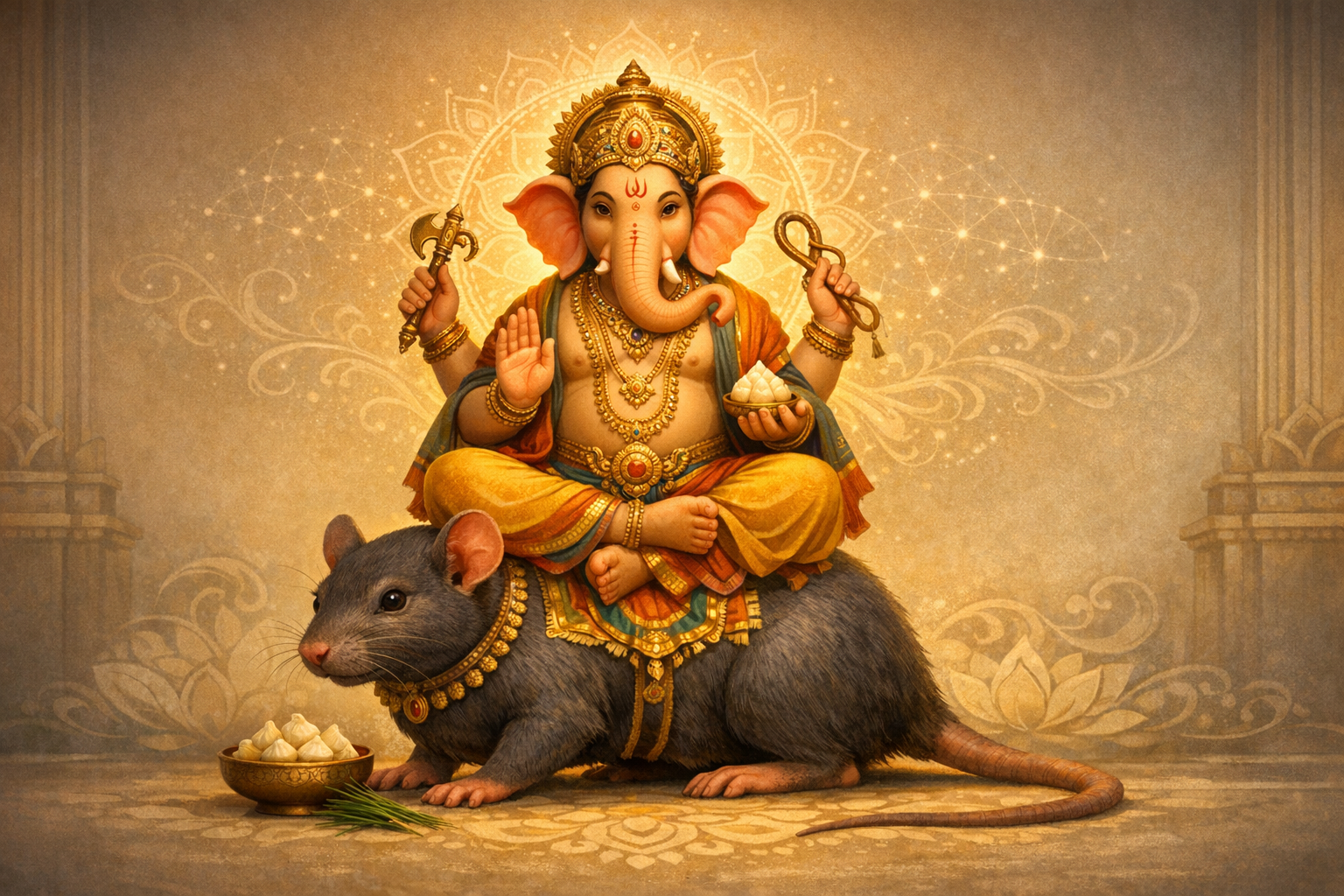
The celebrated image of Śrī Gaṇeśa seated on a mouse encodes a complete psychology of spiritual practice: wisdom seated above impulse, directing and calming the restless mind. Philological analysis of mūṣika (“the thief”) aligns with traditional models of manas, buddhi, and ahaṃkāra, while Purāṇic sources frame the vāhana as a pedagogical tool. Read alongside Yoga,…
-
Maha Shivaratri Jagran: Why Devotees Stay Awake All Night and How It Transforms Sadhana
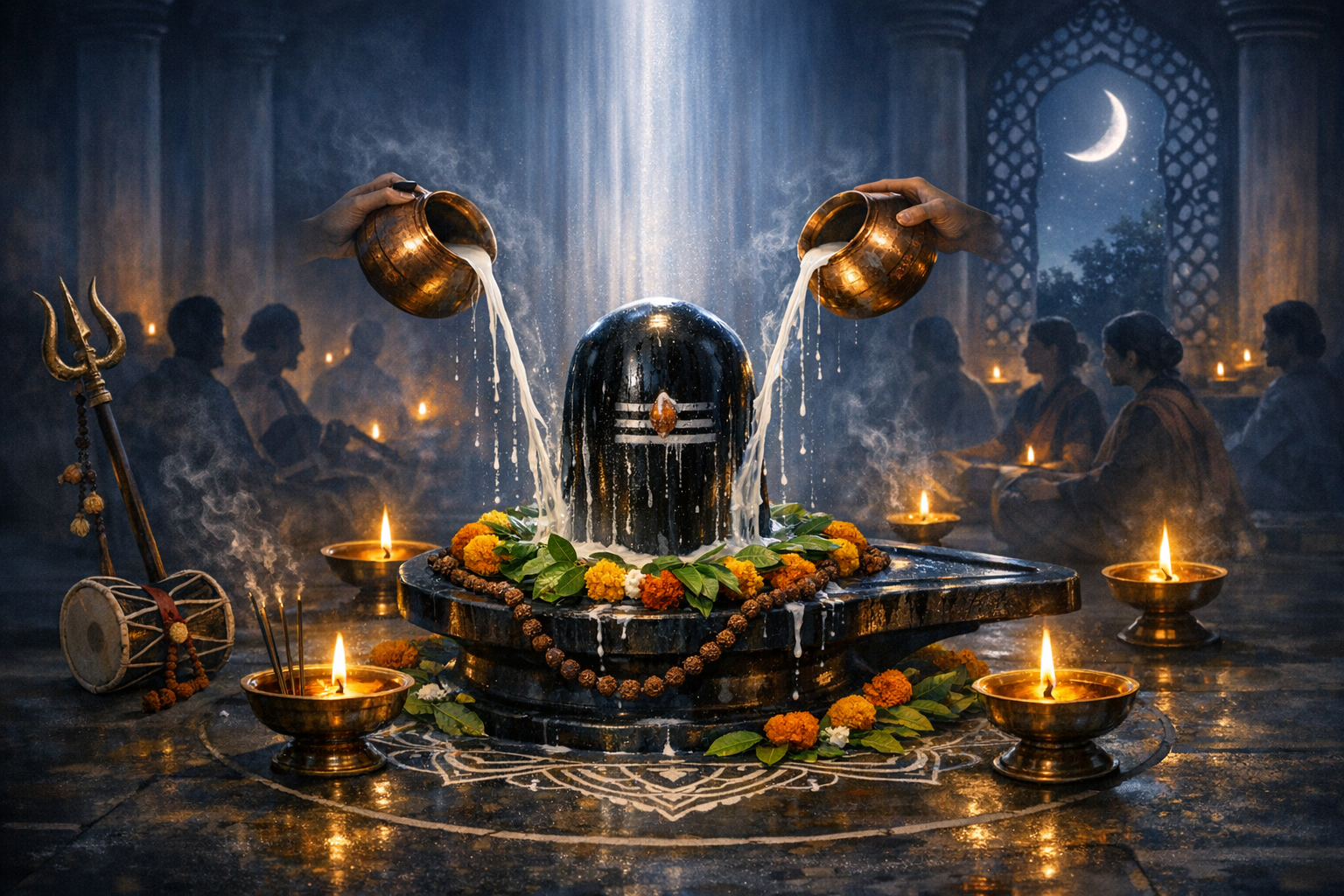
Maha Shivaratri Jagran is not merely a custom; it is a disciplined spiritual practice that aligns ritual, philosophy, and yogic awareness in one sacred night. Scriptural traditions such as the Shiva Purana emphasize wakeful worship during Chaturdashi, when the mind’s fluctuations are symbolically at their lowest. Across four prahars, devotees perform Rudrabhisheka, chant Om Namaḥ…
-
Ganesha’s Small Eyes, Vast Vision: Iconography, Mindfulness, and Dharmic Unity Lessons
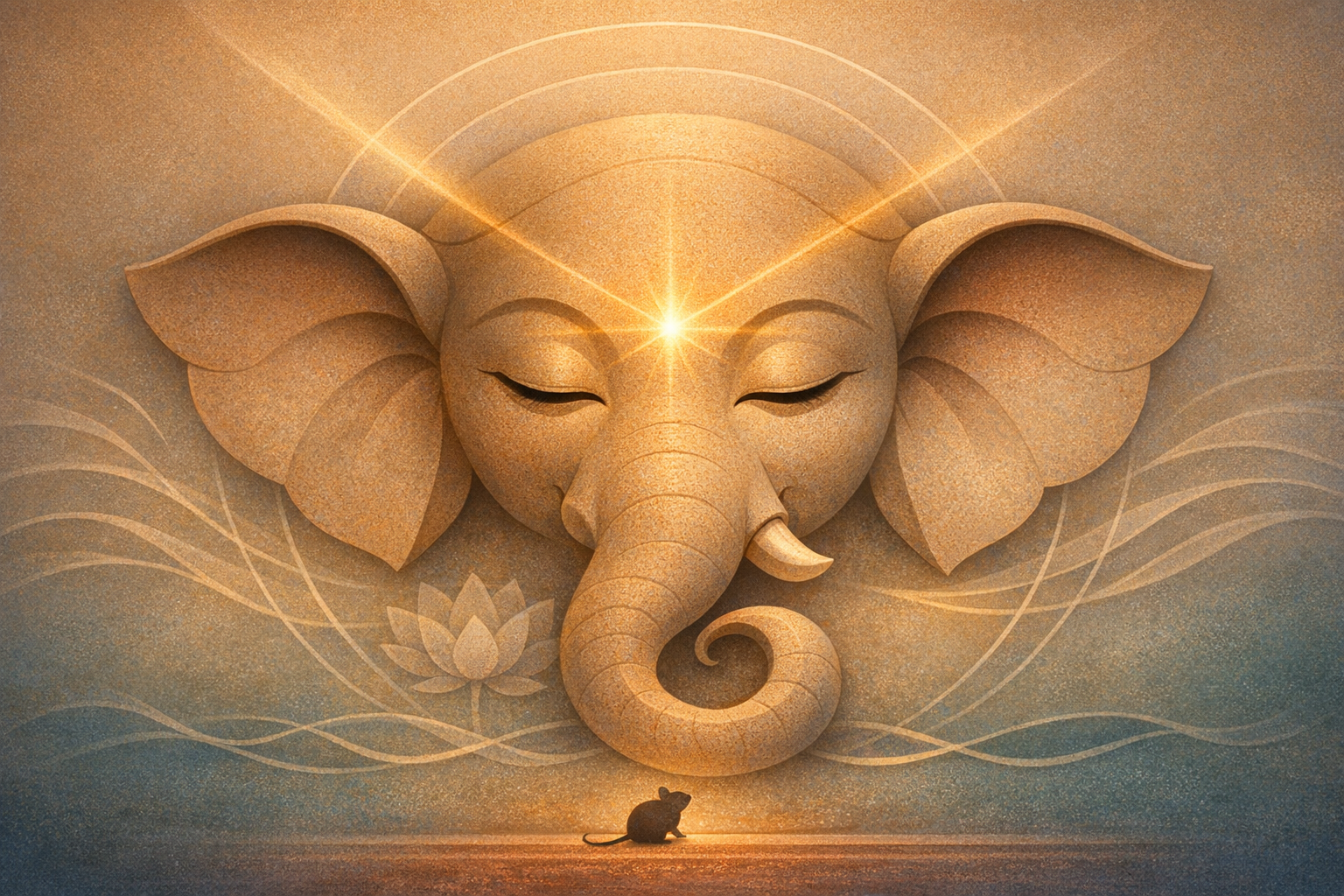
Ganesha’s small, intent eyes encode a powerful contemplative teaching: expansive wisdom arises from focused, compassionate attention. Drawing on Hindu iconography and Yoga philosophy, the symbol aligns with pratyahara, dharana, and dhyana, and is reinforced by the Bhagavad Gita’s guidance on nasikagra-drishti. Contemporary attention science complements this reading, linking steady gaze with reduced cognitive load and…
-
Sacred Solitude in Kali Yuga: Hindu Wisdom to Turn Loneliness into Inner Strength

Kali Yuga’s turbulence often magnifies loneliness, yet Hindu wisdom reframes solitude as a disciplined practice for clarity and compassion. Drawing on the Bhagavad Gita, Yoga Sūtras, and Upanishadic thought, sacred solitude is shown to renew attention, emotional resilience, and ethical steadiness. Complementary insights from Buddhism, Jainism, and Sikhism highlight shared practicesmindfulness, kāyotsarga, and simranthat deepen…
-
Jyotishmati in Yoga: Awakening an Illuminated Mind for Clarity, Sattva, and Inner Wisdom

Jyotishmatirooted in “Jyoti” (light) and “mati” (mind)signifies an illuminated consciousness within Yoga. It describes a sattva-filled mind where clarity, discernment, and wisdom become reliable guides. The concept unites dharmic traditions by resonating with prajna in Buddhism, kevala-jñāna in Jainism, and the divine jyot in Sikhism. Practical cultivation relies on dhyana, mindfulness, pranayama, ethical discipline, and…
-
Abhyasa Yoga Explained: Master the Mind with Steady Practice and Dharmic Unity

Abhyasa Yoga emphasizes disciplined, continuous practice that steadies attention and prepares the mind for dhyana and samadhi. Grounded in Patanjali’s Yoga Sutra and the Bhagavad Gita, it integrates yama, niyama, asana, pranayama, pratyahara, and focused meditation into a coherent path. Practitioners benefit from small, consistent sessions that build cognitive clarity, emotional balance, and ethical insight.…
-
Students’ Guide to Saraswati Dhyana & Mantra Japa: Focus, Memory, and Exam Success

This guide presents Saraswati dhyana and mantra japa as a disciplined daily practice that supports students’ focus, memory, and exam performance. It explains how brief, consistent sessions can reduce anxiety, stabilize attention, and create a calm, ethical study rhythm. The method emphasizes posture, breath awareness, and silent japa, integrated into study blocks for maximum benefit.…
-
Dhyana and Vichara: Harmonizing Meditation and Enquiry for Self-Realization in Hinduism

This article presents an academic yet accessible synthesis of Dhyana (meditation) and Vichara (enquiry) as complementary paths in Hindu philosophy. It explains how moksha is the unveiling of the ever-present Self (Atman) as Brahman, grounded in the Upanishads, Vedanta, and the Bhagavad Gita. Readers gain practical clarity on how meditation stabilizes attention while enquiry dissolves…
-
Conquering avidyā with ekāgra chitta: dharmic wisdom to end spiritual blindness

Spiritual blindness, or “avidyā,” obscures the “ātman” and fuels suffering; dharmic wisdom teaches that only sustained steadiness“ekāgra chitta”can dissolve this ignorance. Hinduism, Buddhism, Jainism, and Sikhism converge on this principle while honoring diverse methods such as dhyāna, remembrance, ethical restraint, and self-inquiry. Practical stepsdaily meditation, mindful breathwork, japa, and reflective study of the Upanishads and…
-
Beyond the Witness: How True Meditation Dissolves the Experiencer into Non-Dual Awareness

True meditation in Hindu philosophy reaches its culmination when the experiencer, the act of observing, and the observed no longer stand apart. This non-dual insight, often described as moving “beyond the witness,” dissolves the subtle identity of a separate meditator without denying the vividness of life. The Upanishads, Advaita Vedanta, and Yoga philosophy converge on…
-
The Inner Inferno: How Hindu Wisdom Transforms Uncontrollable Anger into Clarity and Peace

Hindu philosophy reframes hell as an inner stateuncontrollable anger (krodha)that distorts judgment and harms relationships. Drawing on the Bhagavad Gita and yogic disciplines, this article explains how anger escalates and how breath, meditation, and self-study interrupt the cycle. Practical stepssuch as short pranayama sets, mindful naming of emotions, and satttvic routinesbuild emotional resilience and self-control.…
-
Prajnajyoti: A Timeless Beacon for Atman Realization across Dharmic Traditions

Prajnajyoti“the light of wisdom”names a mature state of Hindu spiritual realization where Atman is known as the innermost reality. It integrates Jnana, Bhakti, Karma, and Raja Yoga, grounded in ethical practice and guided by a guru. The state manifests as clarity, compassion, and equanimity rather than abstract belief. Parallels across Buddhism, Jainism, and Sikhism underscore…
-
Antaraya in Hinduism: Overcoming Yoga’s Inner Obstacles with Steady, Devoted Practice

Antaraya in Hinduism explains why even sincere Yoga practice sometimes loses momentum and clarity. Classical guidance identifies nine common obstacles and shows how they undermine abhyasa, pratyahara, and dhyana. Recognizing these patterns helps practitioners diagnose distractions early rather than mistaking them for failure. Practical remediessteady abhyasa with vairagya, ethical discipline, breath awareness, and nairantarya abhyaserestore…
-
When Silence Speaks: Hindu, Buddhist, Jain, and Sikh Wisdom for Social Media Calm

Social media rewards speed and outrage, yet dharmic traditions teach that silence is disciplined strength. Hindu philosophy frames silence (mauna), meditation (dhyana), and sensory restraint (pratyahara) as ethical practices that refine speech and preserve clarity. Parallel insights in Buddhism, Jainism, and Sikhism elevate non-reactivity, compassionate truth, and inner equipoise. Applied today, choosing “no response” can…
-
Quieting the Overthinking Mind: Ashtavakra’s Advaita Wisdom for Modern Mental Clarity

Information overload and constant notifications have intensified overthinking and anxiety. Ashtavakra’s Advaita insightone is not the mindoffers a clear, practical antidote by shifting identity from mental turbulence to steady awareness. The article explains sakshi (witness) consciousness, links it to Pancha Kosha discernment, and shows how breath awareness, pratyahara, dhyana, and inquiry (vichara) reduce reactivity. It…
-
Avadhuta’s Radical Stillness: Transformative, Goal‑Free Awareness across Dharmic Traditions

This reflection examines the Avadhuta ideal in Hinduism as a disciplined, goalless awareness that reveals freedom without withdrawal from life. It clarifies that “sitting and watching” is rigorous witness-consciousness (sakshi-bhava), not apathy or inertia. The discussion situates this insight within Advaita Vedanta and aligns it with parallel practices across Buddhism, Jainism, and Sikhism, highlighting unity…