
-
One Sin, Two Verdicts: Unmasking Dharma, Justice, and Power in Kali Yuga’s Public Life
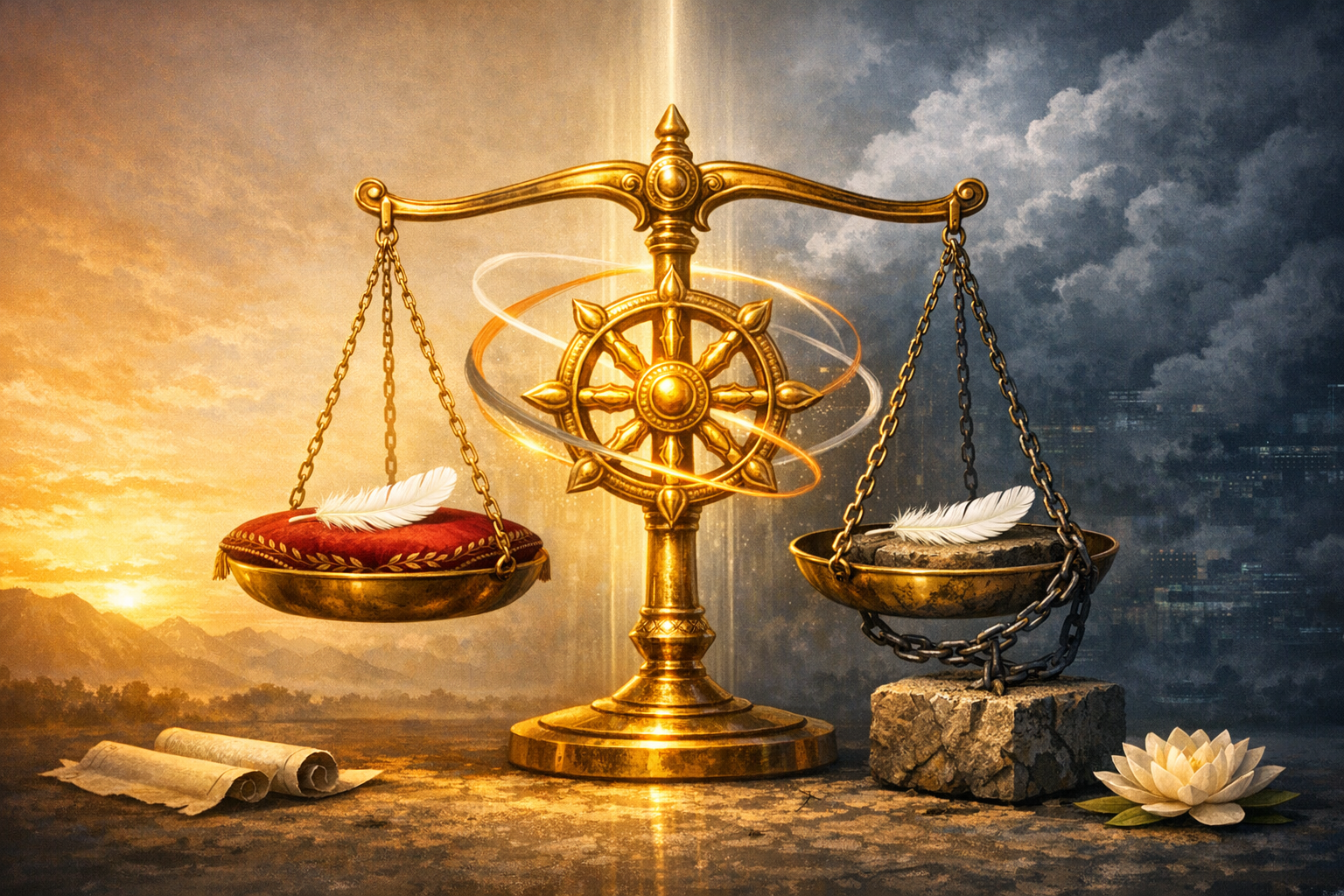
Public life often displays a troubling asymmetry: identical acts judged differently for the powerful and the powerless. This essay examines that disparity through the dharmic lens of Kali Yuga and outlines how Hindu Dharmasupported by Buddhist, Jain, and Sikh insightsdefines justice as impartial, compassionate, and oriented to the common good. Drawing on rajadharma in the…
-
The Floating Chariot of Yudhishthira: Dharma’s Power, a Necessary Lie, and a Profound Fall
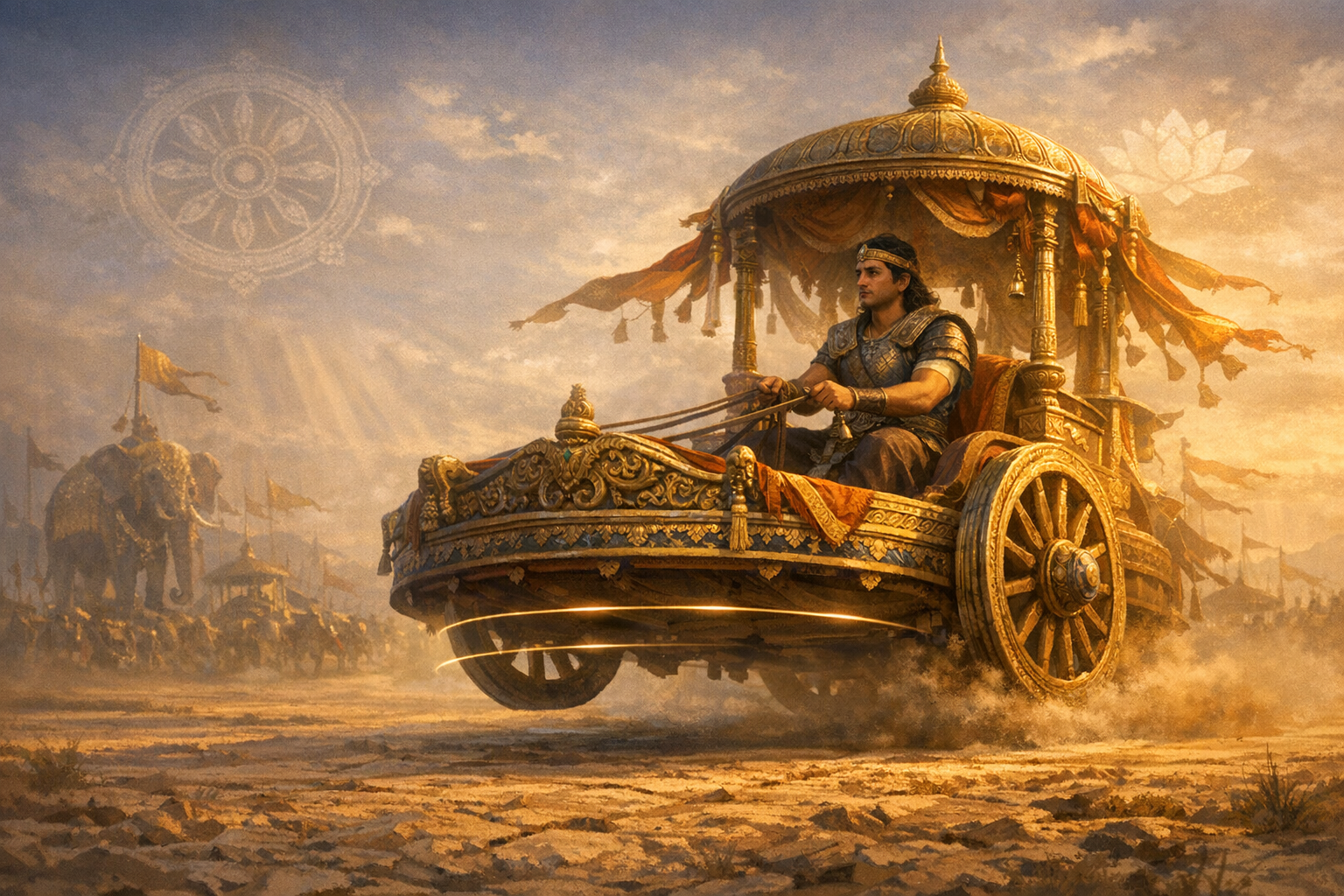
This essay revisits the Mahabharata’s striking image of Yudhishthira’s chariot floating four finger-breadths above the earthand its sudden descent when he consents to the Ashvatthāma stratagem. It analyzes the episode through the lenses of rajadharma, kshatra-dharma, and apaddharma to show how Dharma in Hinduism balances deontological truth with harm-minimizing prudence. The discussion incorporates cross-traditional insights…
-
Perception Shapes Destiny: Vibhishana and Ravana on Dharma, Devotion, and Right View
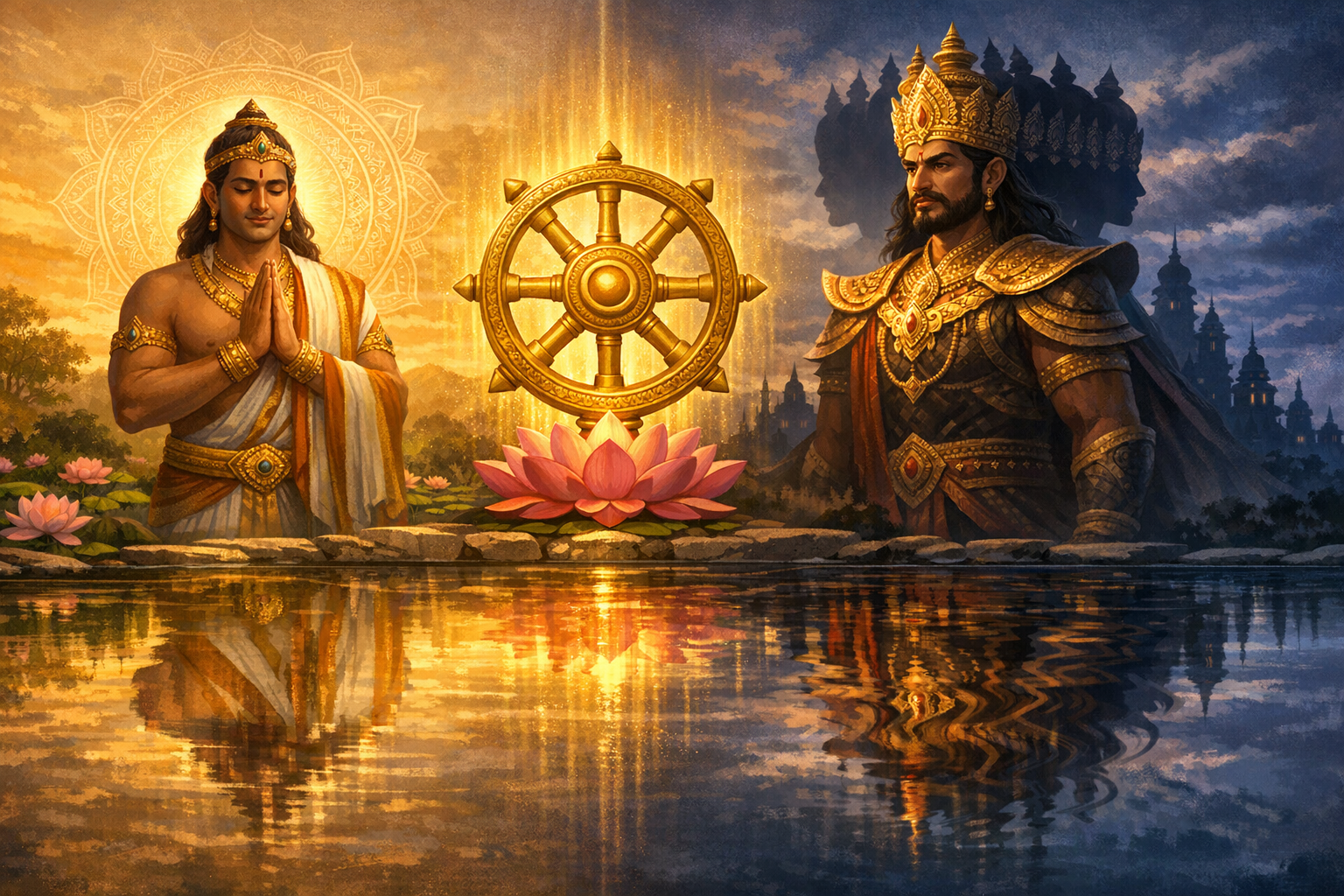
The Vibhishana–Ravana contrast in the Ramayana shows how perception actively shapes devotion, decision, and destiny. Vibhishana’s sattvic clarity leads to ethical counsel, śaraṇāgati to Sri Rama, and the restoration of just kingship. Ravana’s rajasic ambition and tamasic delusion produce cognitive bias, institutional decay, and ruin. The narrative aligns with Buddhist samyak dṛṣṭi, Jain Anekantavada and…
-
Kadru’s Curse and Janamejaya’s Sarpasattra: Dharma, Deceit, and Astika’s Compassionate Intervention
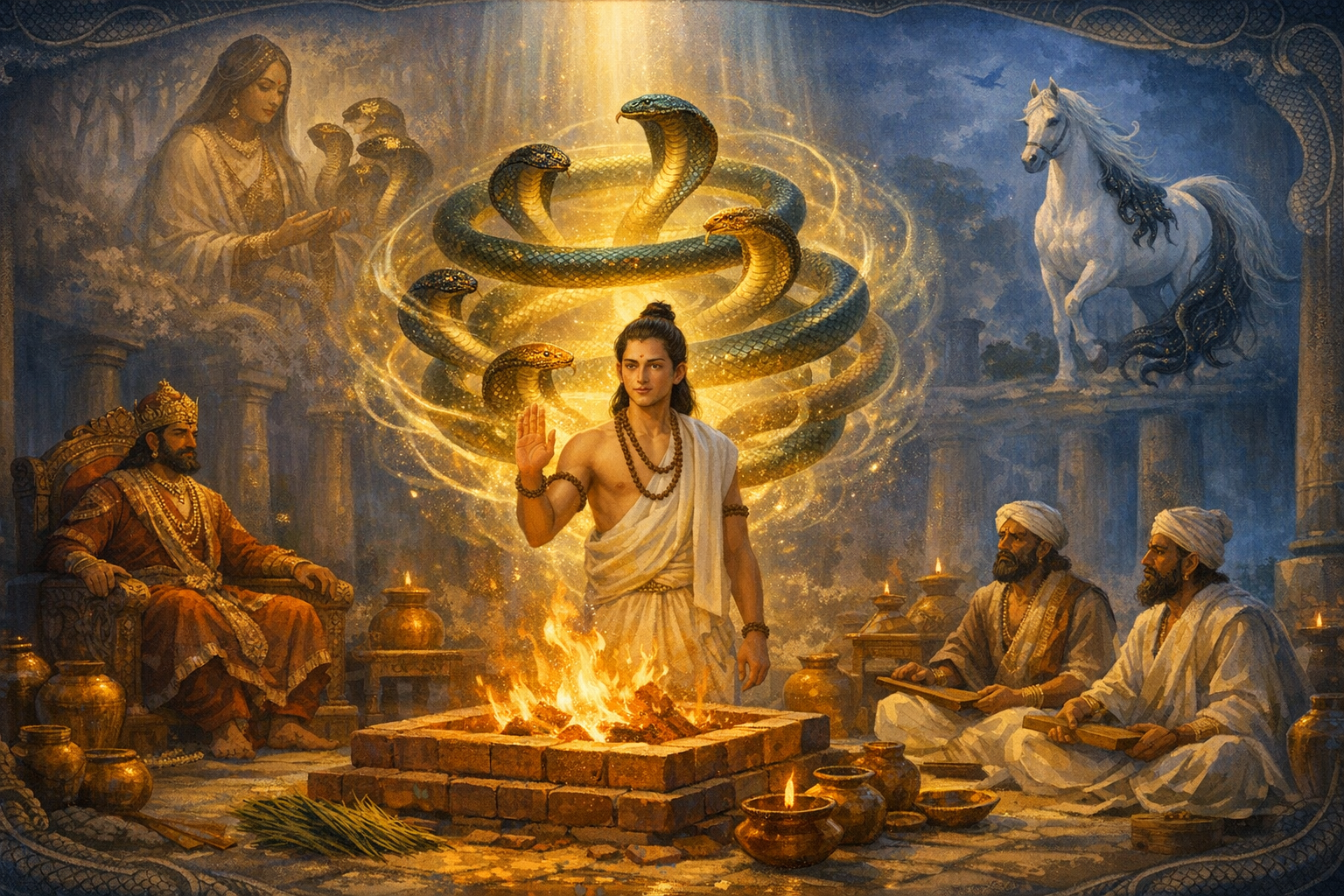
The Adi Parva’s account of Kadru’s curse and Janamejaya’s Sarpasattra fuses maternal authority, filial courage, and the perils of ritual power into a single, ethically charged arc. It traces how a deception over Uchchaihshravas spirals into a kingdom-scale sattra, and how Astika’s compassionate intervention halts annihilation without trivializing grief. Readers gain a clear view of…
-
When Strength Yields to Dharma: Bhima, the Serpent Nahusha, and Wisdom’s Enduring Victory

The Ajagara Parva of the Mahabharata records a pivotal moment in which Bhima’s unmatched strength is checked by a serpentNahushauntil Yudhishthira’s calm, precise answers on dharma secure release. Set during the Pandavas’ forest exile, the episode methodically contrasts force with ethical insight and shows how wisdom governs power. It clarifies a hierarchy of capacities: strength…
-
Choosing Dharma Over Blood: Vibhishana and Yuyutsu’s Moral Courage in India’s Epics
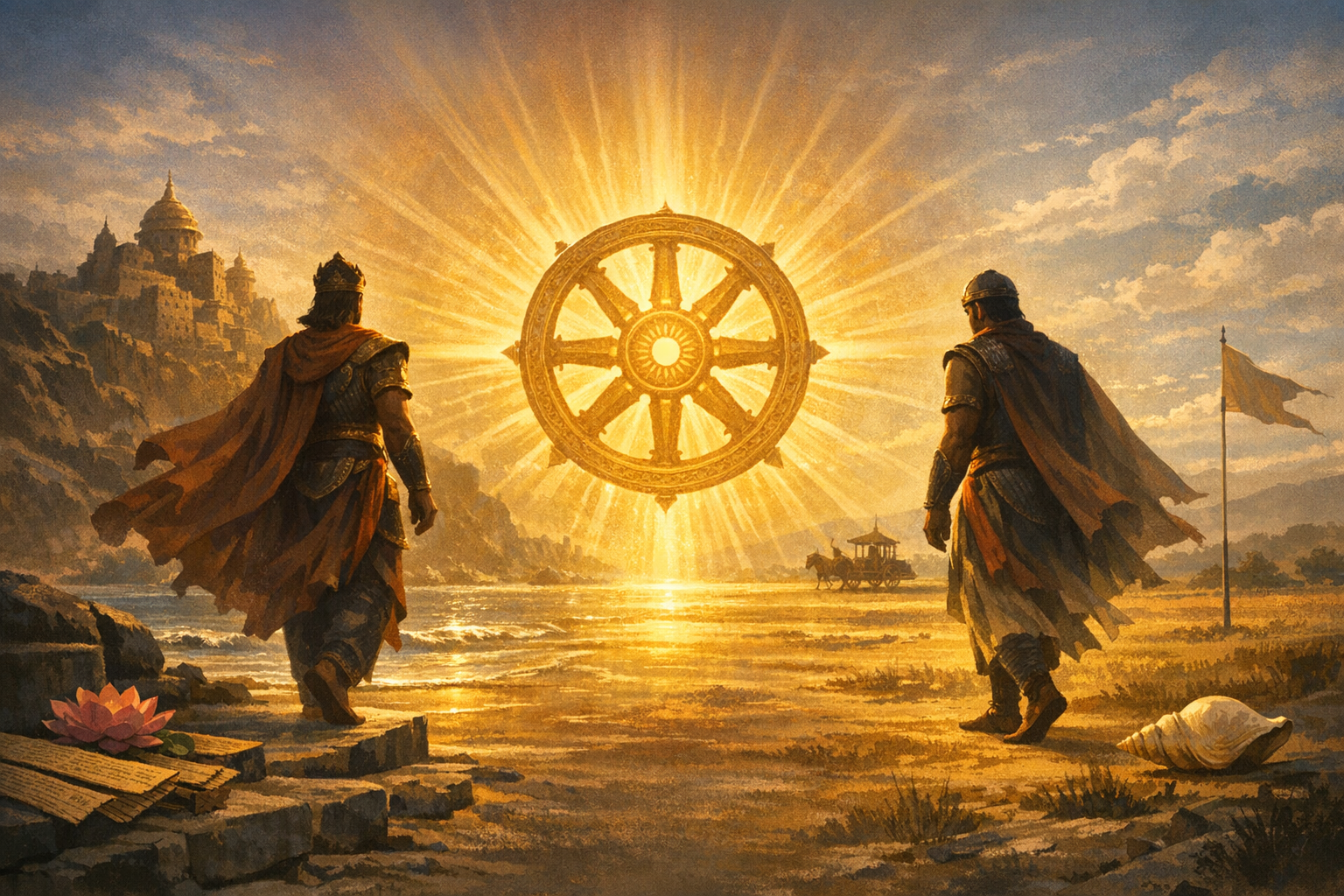
This comparative essay examines how Vibhishana in the Ramayana and Yuyutsu in the Mahabharata choose dharma over kinship, modeling ethical defection that prioritizes truth and justice above partisan loyalty. It analyzes their decisions through rajadharma, kshatra dharma, Vidura-niti, and the just-war ethos of Dharma-Yuddha, showing how both epics legitimize power only when allied with righteousness.…
-
A Rakshas’s Warning to Duryodhana: Indra’s Deception, Karna’s Fate, and Dharma at War
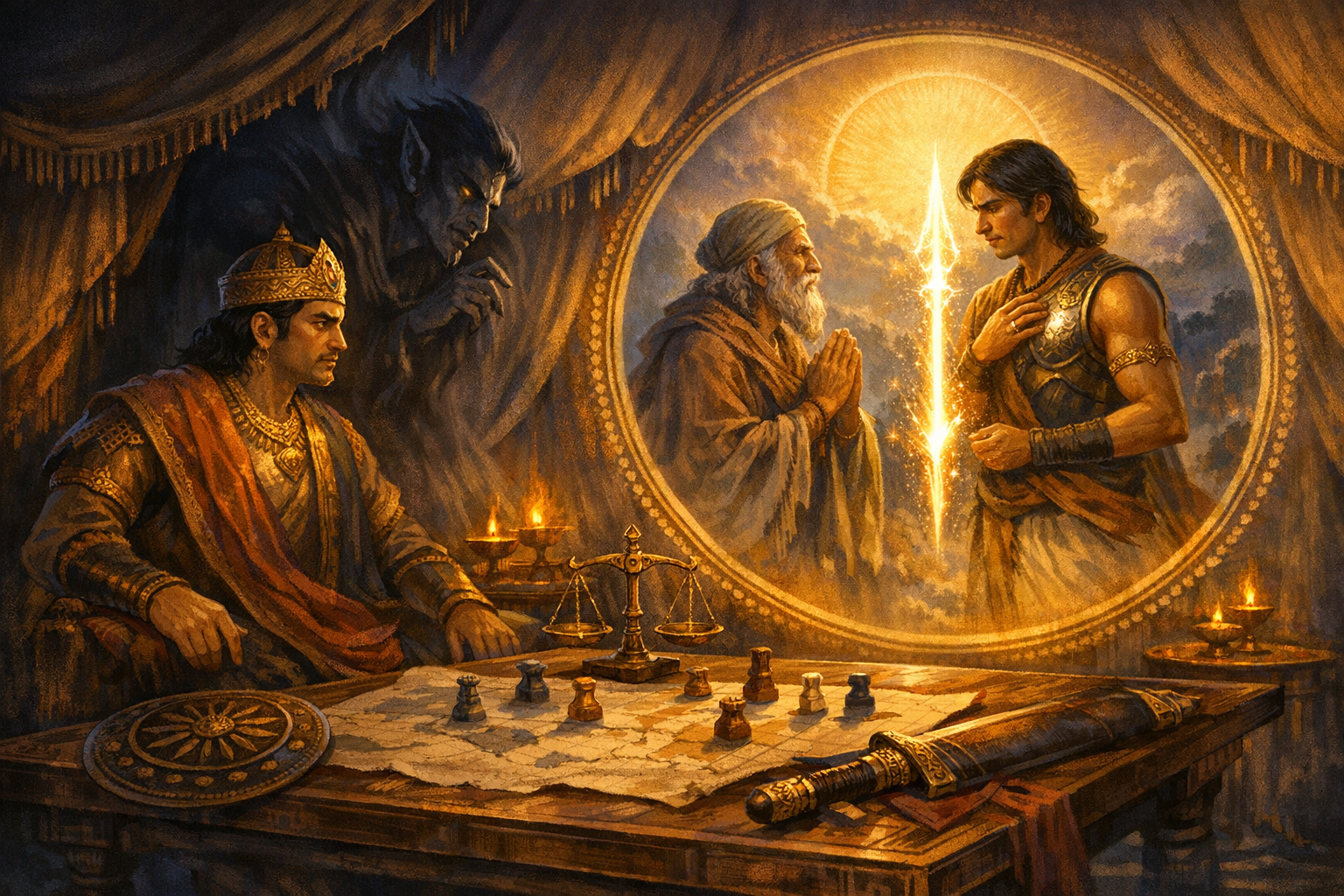
A striking Mahabharata motif recounts a Rakshas warning Duryodhana of Indra’s plan to strip Karna of his birth armor and earrings. Read alongside the Udyoga Parva’s canonical account of Indra’s disguised petition, this version highlights the epic’s multivocality and the tension between strategic counsel and unbreakable personal vows. Karna’s dana-vrata leads him to exchange his…
-
Why Devas Drink Amrita While Asuras Wield Sanjeevani Vidya: The Timeless Balance of Dharma
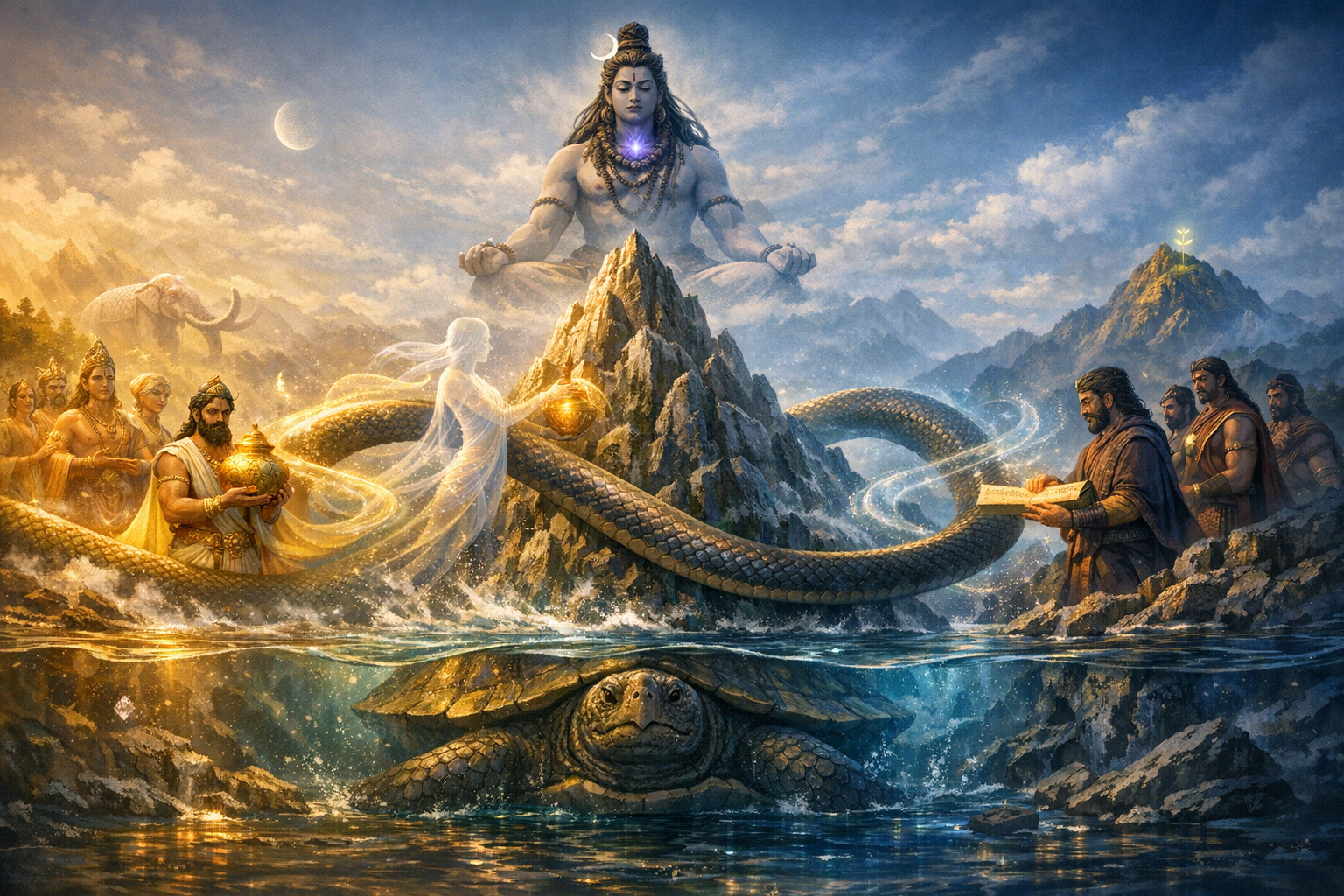
This article decodes why Hindu narratives pair Amrita with Sanjeevani Vidya as complementary boons that create a dynamic equilibrium between Devas and Asuras. It explains Samudra Manthan’s mechanicsMandara, Vasuki, and Kurmaand the ethical meaning of Shiva as Neelakantha. Readers learn how Dhanvantari’s Amrita and Shukracharya’s Sanjeevani Vidya prevent any single force from achieving unchecked dominance.…
-
Ramayana’s Human–Asura Divide: Dharma, Social Order, and the Psychology of Power
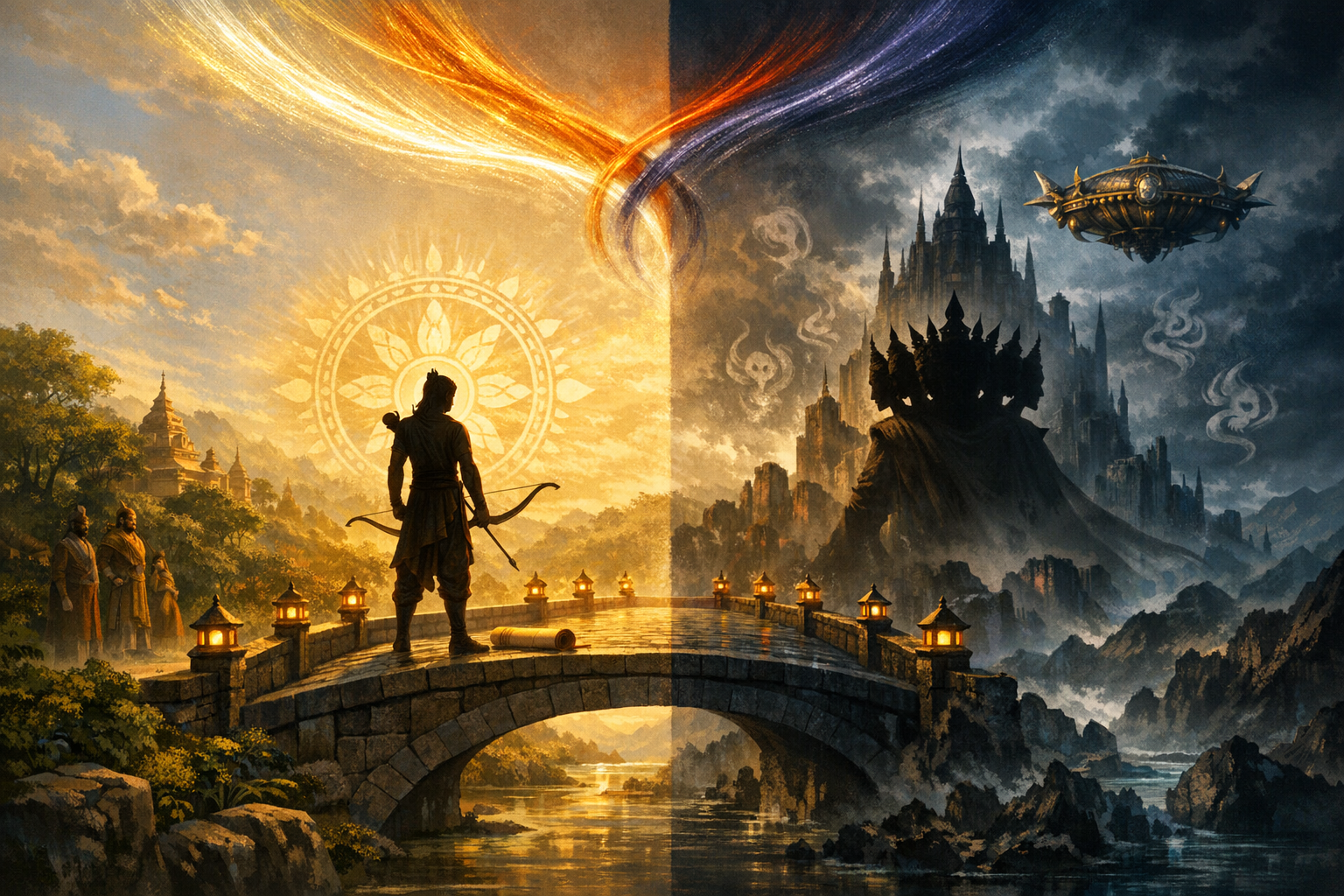
This long-form analysis reads the Ramayana as a rigorous philosophical statement about two enduring orientations: the social human bound by maryada and the Asura driven by unbounded appetite. It clarifies how Dharma-Yuddha, Rajadharma, and lokasangraha translate into modern ethics of governance, technology, and community. Drawing on Hindu, Buddhist, Jain, and Sikh perspectivesMāra in Buddhism, Anekantavada…
-
Sumali’s Grand Design: How a Cunning Patriarch Forged Ravana and Reshaped the Ramayana
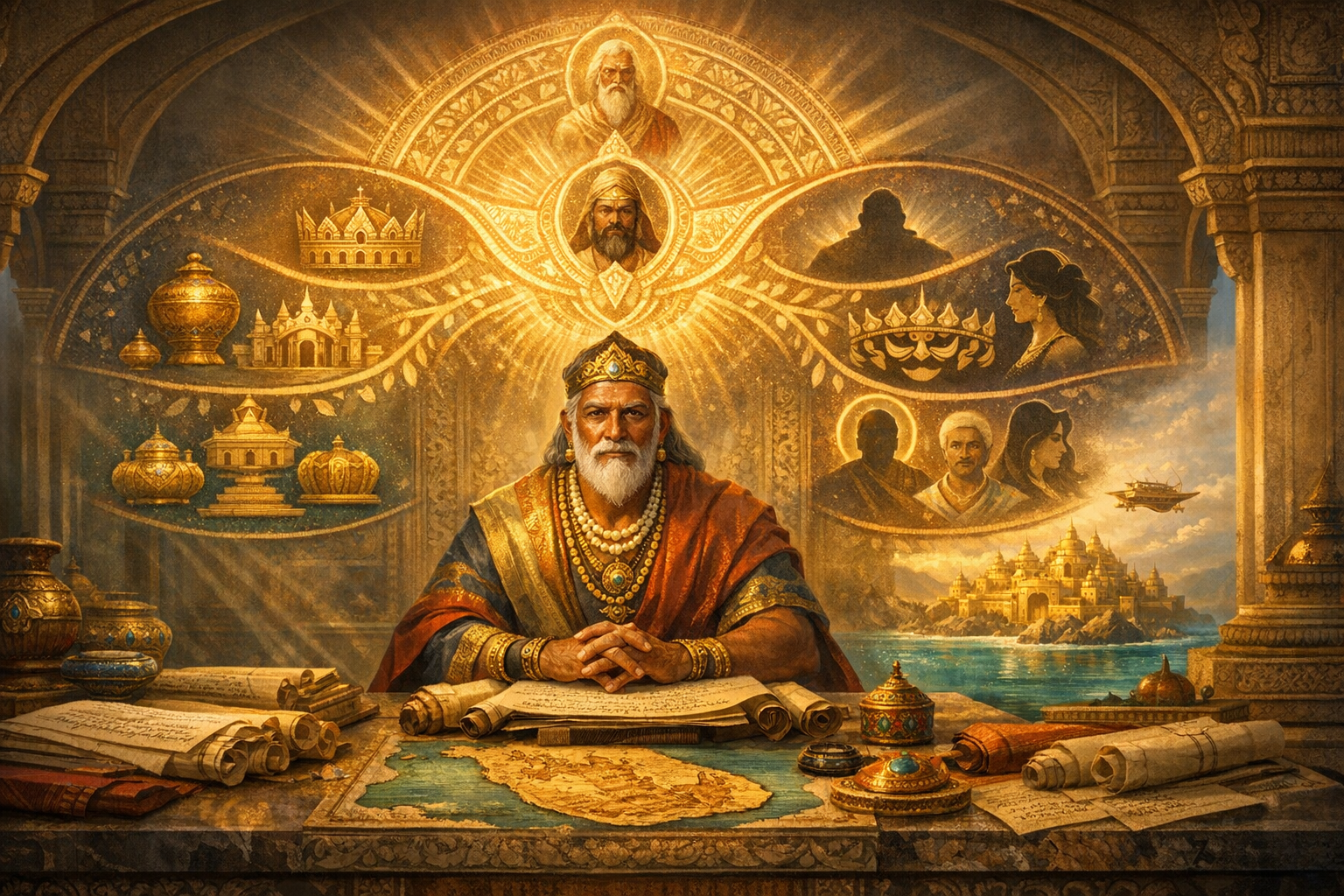
This article re-centers Sumali, the rakshasa patriarch and grandfather of Ravana, as a decisive strategist whose marriage diplomacy and counsel shaped the Ramayana’s political and ethical arc. Drawing on the Valmiki Ramayana (Uttara Kanda) and later traditions, it maps the genealogical fusion of Kaikesi and Vishrava that enabled Lanka’s transfer from Kubera to Ravana. The…
-
Makaradhwaja and Hanuman’s Karmaphala: Unveiling Dharma, Lineage, and the Fire of Lanka

This essay offers a scholarly, engaging reading of Makaradhwajathe wondrous “son of Hanuman” said to arise from sweat after the Lanka Dahanaas a profound meditation on karmaphala in the Ramayana tradition. It clarifies that the tale is absent from the Valmiki Ramayana and instead flourishes in later and regional sources such as the Krittivasi Ramayan,…
-
From Axe to Bow: Parashurama and Rama’s Weapons across India’s Civilizational Evolution
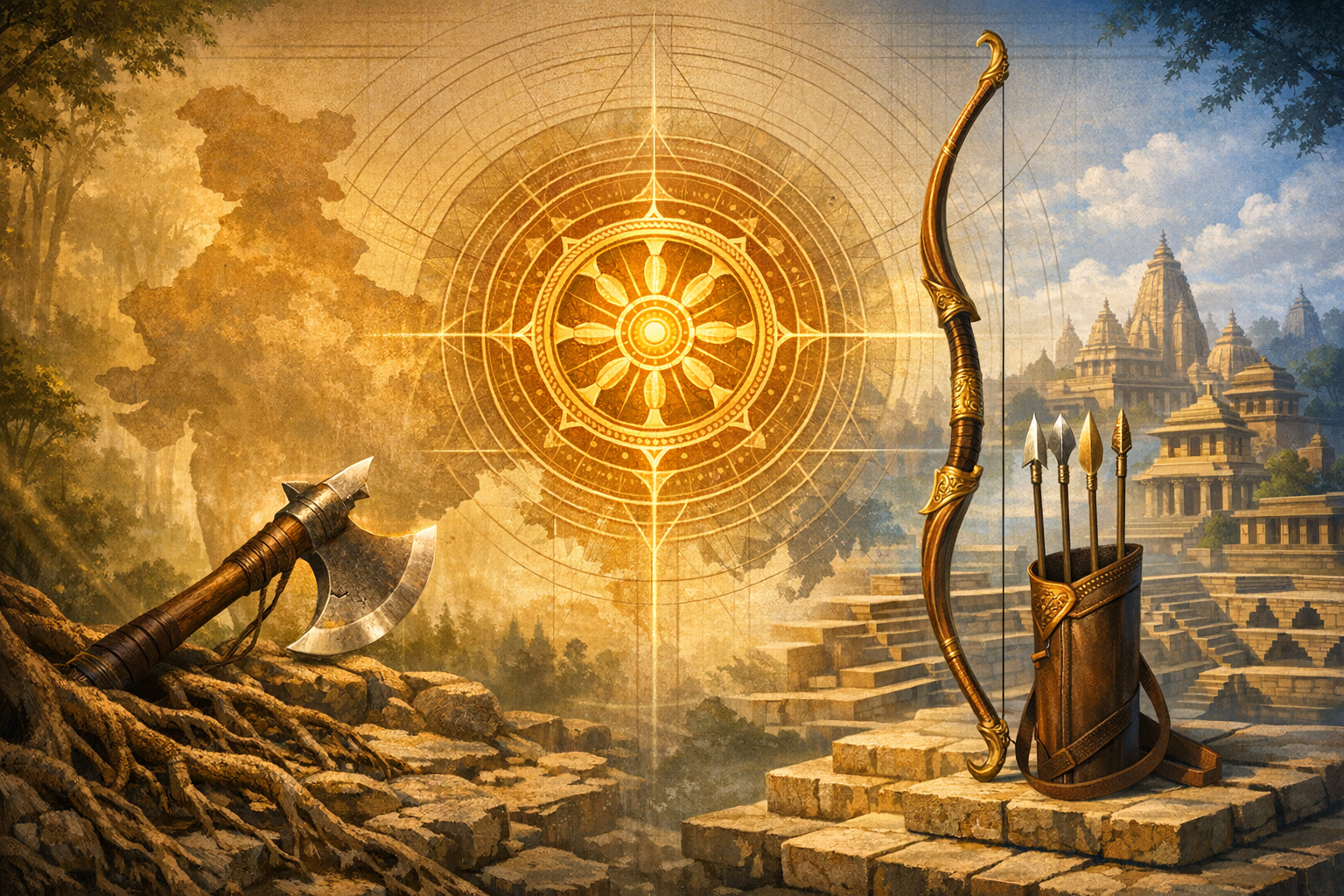
Parashurama’s axe and Rama’s bow are more than weapons; they are precise metaphors for India’s civilizational evolution from corrective severity to codified restraint. Read together, they chart the passage from foundational pruning to lawful kingship, illuminating Kshatra Dharma and maryada in the Ramayana. The parashu symbolizes necessary removal of entrenched harm, while the Kodanda embodies…
-
Dhruva’s Turning Point: Manu’s Counsel on Anger, Humility, and Surrender (SB 4.11.15–35)
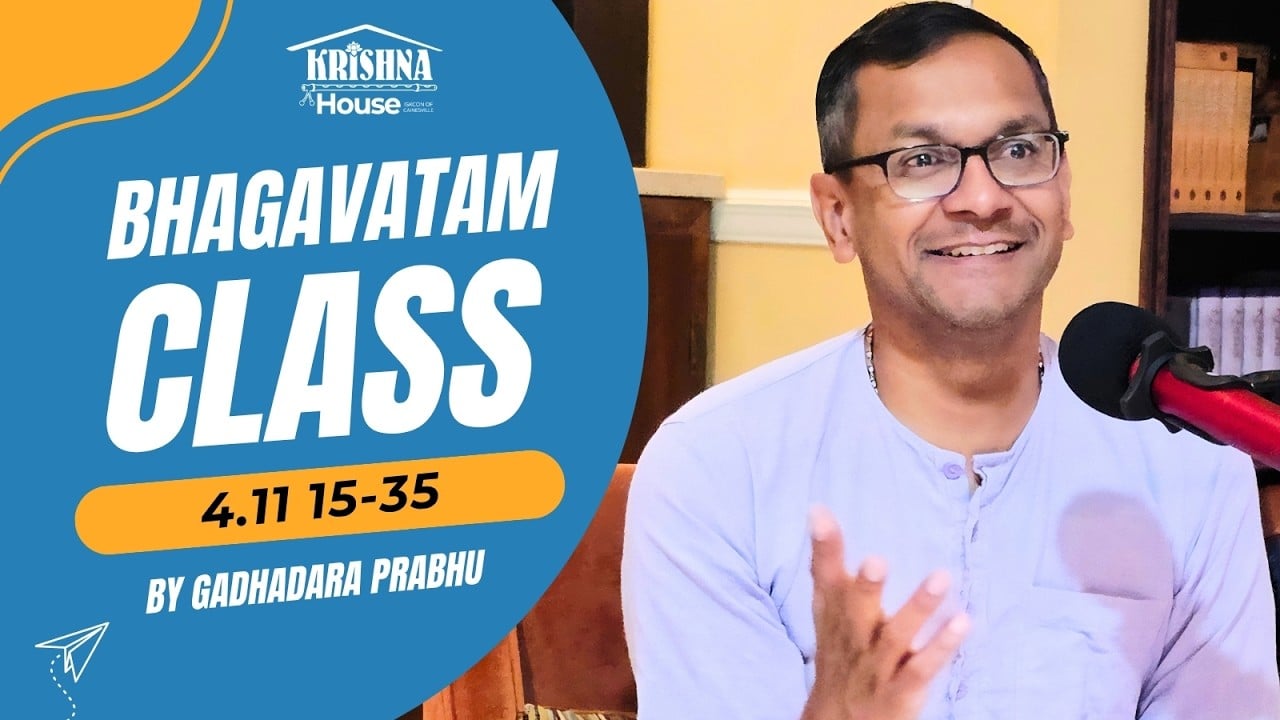
Bhagavatam Class 4.11 15–35 explores Svayambhuva Manu’s intervention as Dhruva Maharaja shifts from reactive anger to disciplined humility. The class clarifies a core Vaishnava principle: the Supreme Lord is the ultimate cause behind all causes, guiding practitioners toward surrender rather than escalation. Verse 27 functions as a cognitive pivot, redirecting the mind from krodha to…
-
Does God Really Exist? Evidence, Yuga Dharma, and Dharmic Wisdom across Indic Traditions
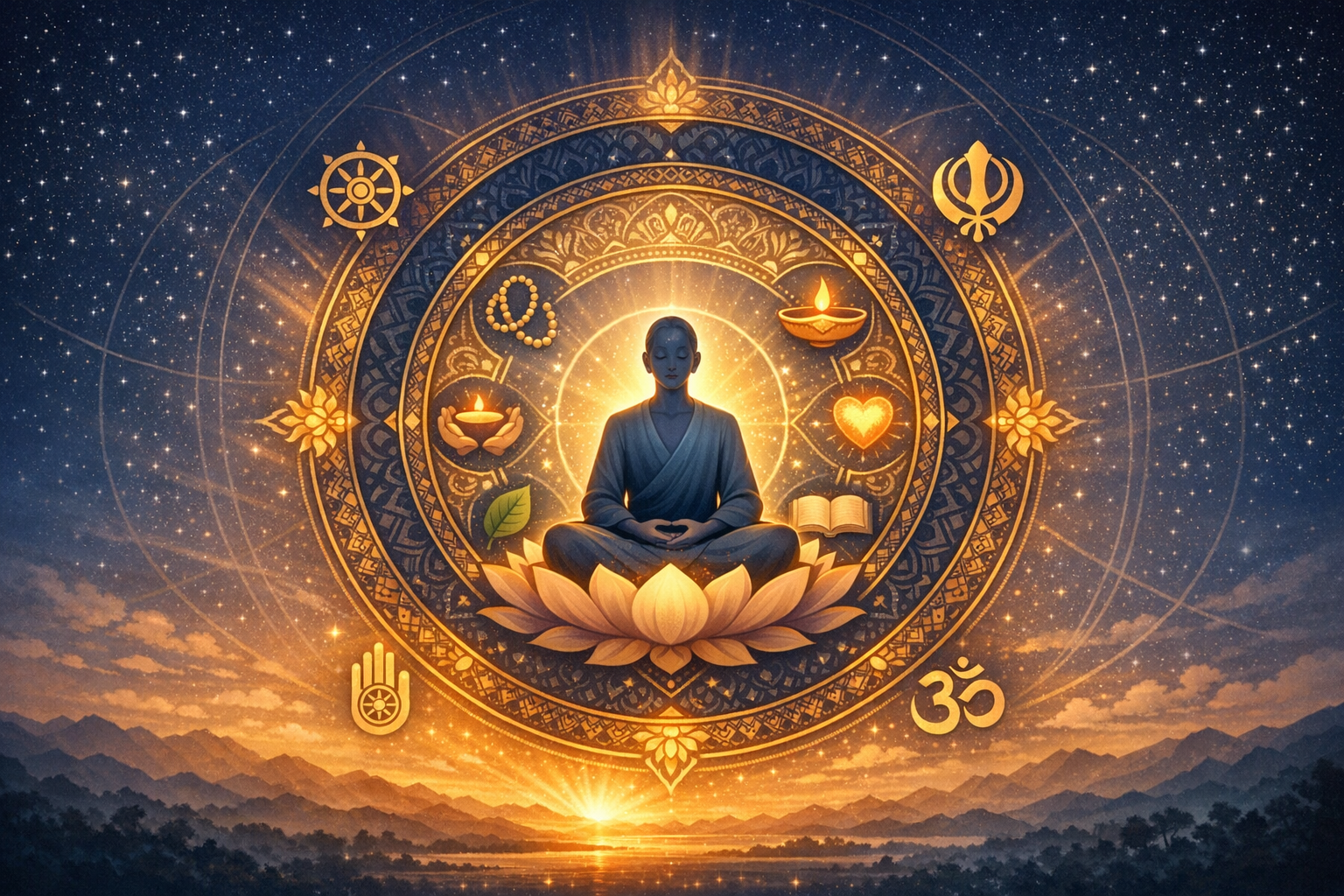
This essay examines the perennial question ‘Does God really exist?’ through the lens of Yuga Dharma and the shared wisdom of Hindu, Buddhist, Jain, and Sikh traditions. It explains how Kali Yuga conditions intensify suffering yet elevate the effectiveness of simple, sincere practices such as devotion, meditation, simran, ahiṃsā, and seva. Drawing on classical Indian…
-
Virabhadra vs Bhairava: Decoding Shiva’s Fierce TwinsOrigins, Iconography, Tantra, Temple Worship
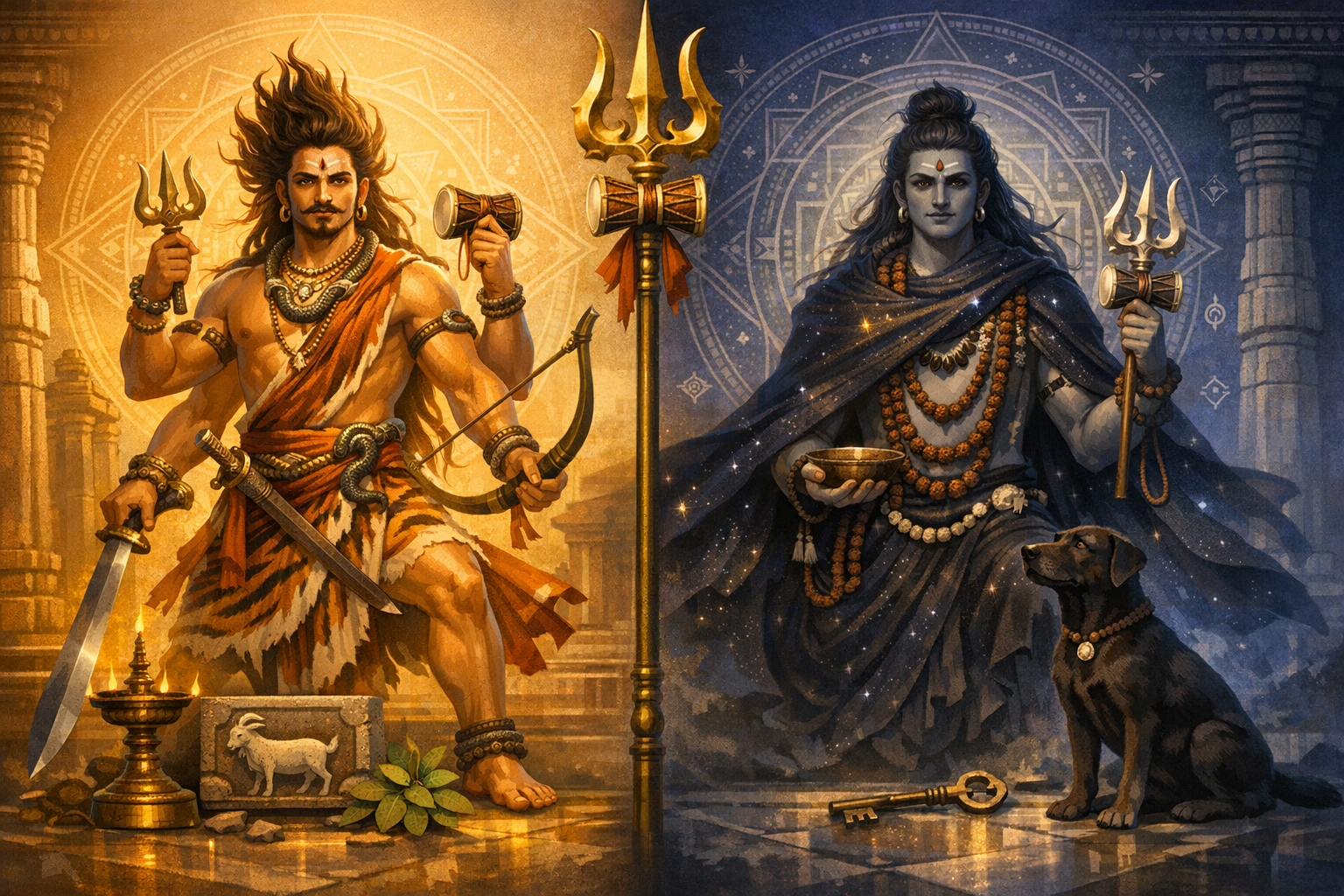
Virabhadra and Bhairava are Shiva’s fiercest yet compassionate forms, distinguished by purpose, scope, and soteriology. Virabhadra embodies event-specific dharmic correction in the Daksha Yajna narrative, while Bhairava serves as perennial guardian of thresholds and time. Their iconographies differVirabhadra as heroic warrior and Bhairava as digambara sentinel with skull-bowl and dog vahanayet both enact restorative justice.…
-
Indrajit’s Final Penance: A Riveting Study of Dharma, Filial Loyalty, and Redemption in Ramayana

This long-form analysis explores Indrajit (Meghanada) as one of the Ramayana’s most complex figuresan invincible warrior confronting a profound dharmic dilemma between filial loyalty and moral law. Anchored in the Valmiki Ramayana and enriched by regional traditions such as the Krittivasi Ramayana, it explains how the Nikumbhila sanctuaryoften associated with Kaliframes his final yuddha-yajna as…
-
Ramayana’s Unfinished Truth: Why Rama and Sita Don’t Get a Fairy-Tale Ending (and Dharma’s Lesson)

Ramayana is not a fairy tale about bliss after victory; it is a rigorous meditation on dharma under the pressures of love, power, and public trust. The narrative after Ravana’s defeat intensifies into a study of rajadharma, where Rama’s personal anguish and public duty collide. Sita’s trialsAgni Pariksha, exile, and her return to Mother Earthexpose…
-
When a Republic Fell: Kamsa’s Coup, Mathura’s Sudharma, and the Price of Lost Dharma
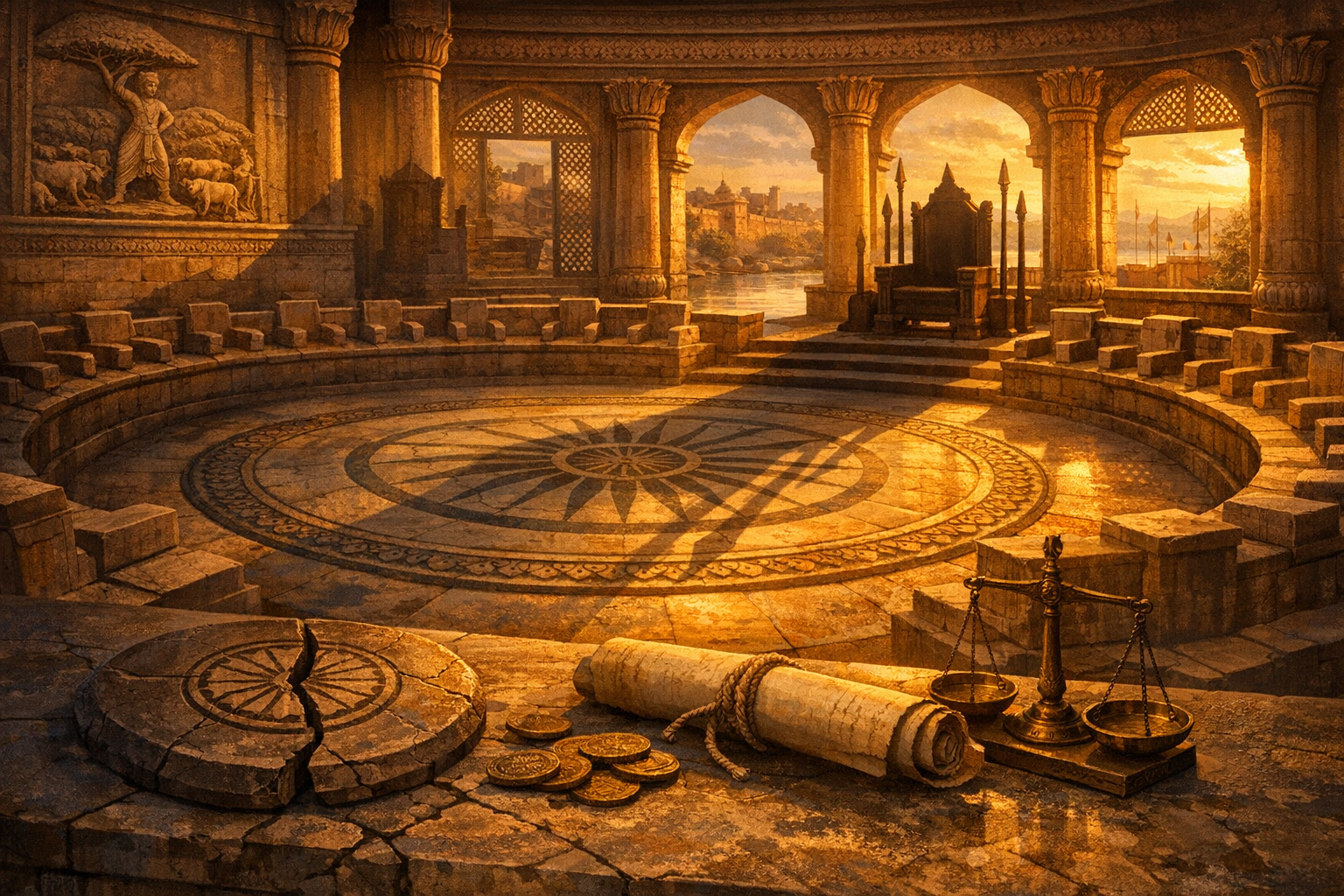
Mathura’s fall from republican equilibrium to Kamsa’s tyranny illustrates how coups dismantle not only rulers but also institutions such as the Sudharma council that once mediated power through counsel and custom. Drawing on the Bhagavata Purana, Vishnu Purana, Harivamsa, and the Arthasastra, the narrative analyzes the mechanics of usurpation, alliance with Magadha, and the militarization…
-
Kamsa Syndrome: How Fear Breeds Tyranny and How Dharmic Wisdom Defuses It
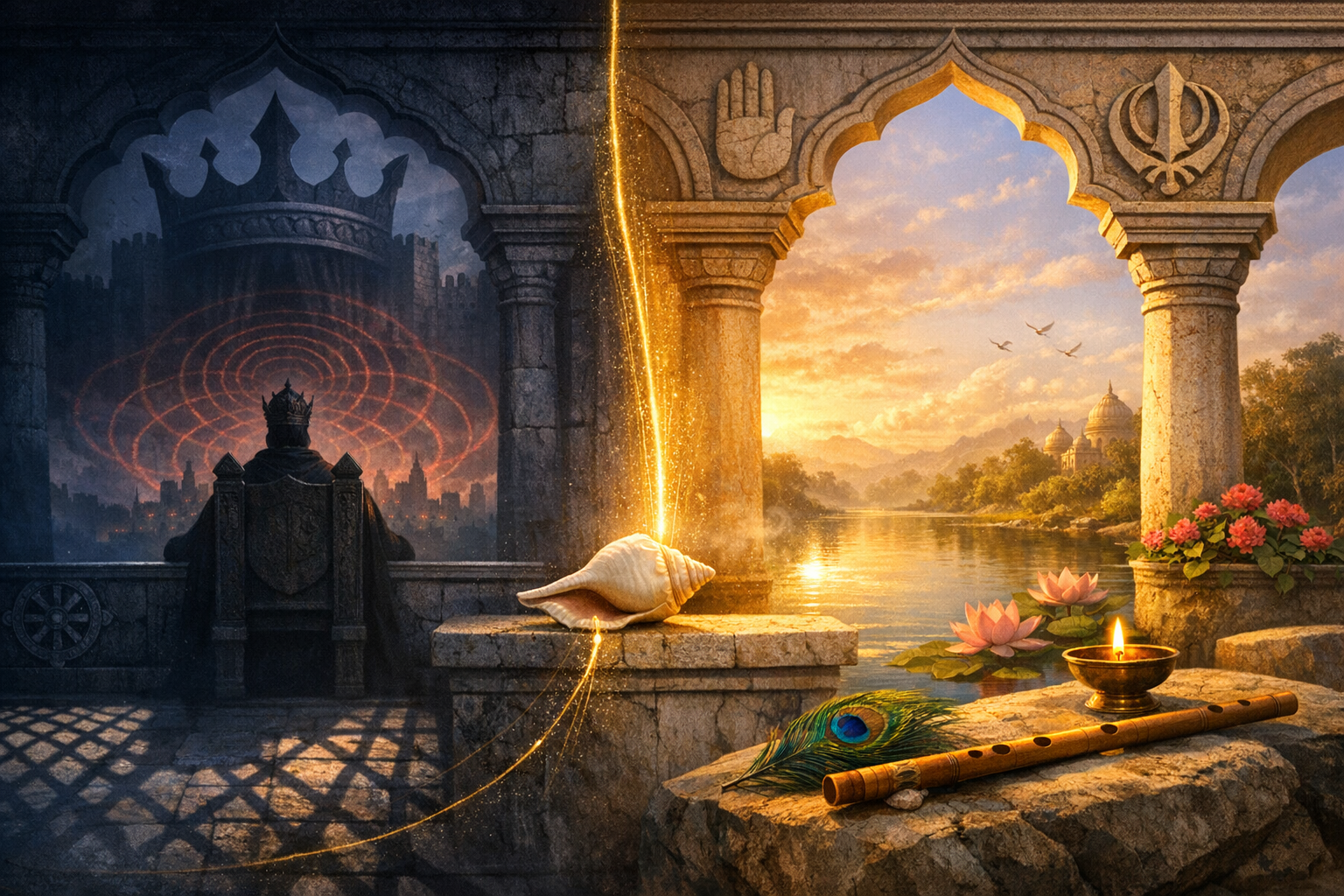
The Bhagavata Purana’s portrait of Kamsa presents a precise psychology of tyranny: fear, mishandled as policy, becomes a self-fulfilling catastrophe. This article defines the “Kamsa syndrome” and analyzes how a single prophecy, filtered through insecurity, produced surveillance, purges, and escalating violence in Mathura. It reads the narrative alongside the Bhagavad Gita’s ethics of abhaya and…
-
Kumbhakarna and Vikarna: Tragic Brothers of Conscience, Loyalty, and Dharma in the Epics
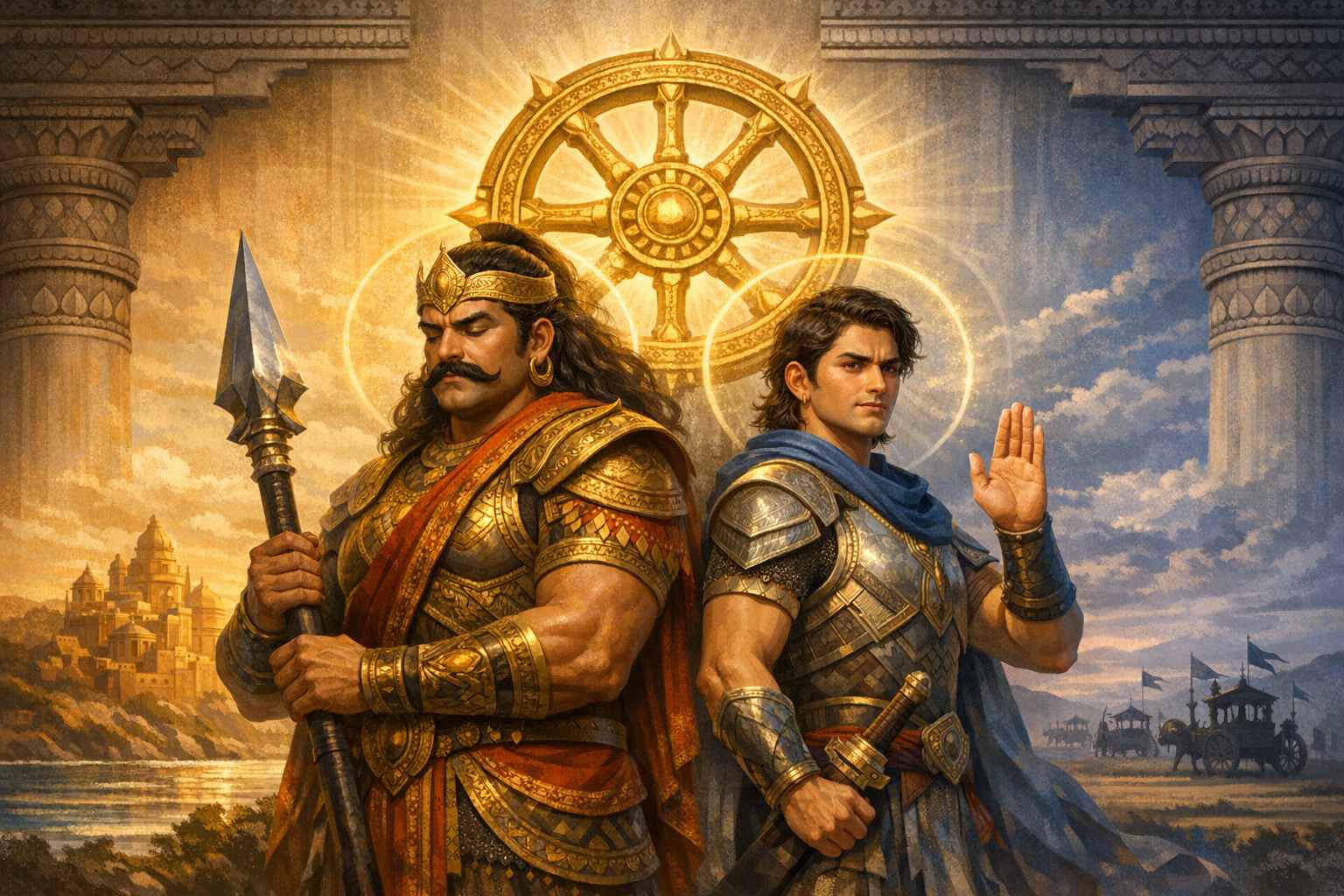
Kumbhakarna (Ramayana) and Vikarna (Mahabharata) embody the epic dilemma between loyalty to kin and loyalty to dharma. This rigorous, text-grounded comparison explains how each man speaks the truth, anticipates disaster, and yet dies fighting for causes he judged unjust. Readers gain a practical frameworkkṣātra-dharma, bandhu-dharma, rāṣṭra-dharma, and ātma-dharmato evaluate conflicts of duty. The analysis connects…