
-
Kumbhakarna vs Karna: Loyalty’s Tragic Valor and Vibhishana’s Dharma in the Ramayana

The crisis in Lanka dramatizes a timeless ethical conflict: should loyalty to kin outrank allegiance to universal righteousness? Through Vibhishana’s principled dissent and Kumbhakarna’s tragic loyalty, the Ramayana clarifies how Dharma-Yuddha prioritizes justice over faction. A comparative glance at the Mahabharata’s Karna sharpens this lesson, showing that valor cannot redeem complicity in adharma. Read alongside…
-
Punya and Paap Unveiled: The Moral Physics of Karma in Hindu Dharma and Dharmic Unity

Punya and Paap are presented here as the moral physics of Hindu Dharma, explaining how intention, means, and consequence shape character, community, and future conditions. Readers gain a clear, text-grounded understanding of karma, including sañcita, prārabdha, and āgāmi, with practical guidance on cultivating Punya and attenuating Paap through yamas, niyamas, dāna, prāyaścitta, and daily mindfulness.…
-
Kumbhakarna’s Counsel to Ravana: Timeless Dharma, Restraint, and Leadership Beyond Passion

Kumbhakarna’s counsel to Ravana in the Ramayana distills a core dharmic principle: restraint must govern power. The episode situates kāma (unchecked passion) as the chief contaminant of judgment and urges restitutionreturning Sitaas both moral necessity and strategic prudence. Read through niti and rajadharma, the advice anticipates classical statecraft: choose conciliation before force and align policy…
-
Mahāpātakas in Hinduism: Decoding Heinous Sins, Dharma, and Their Urgent Modern Relevance
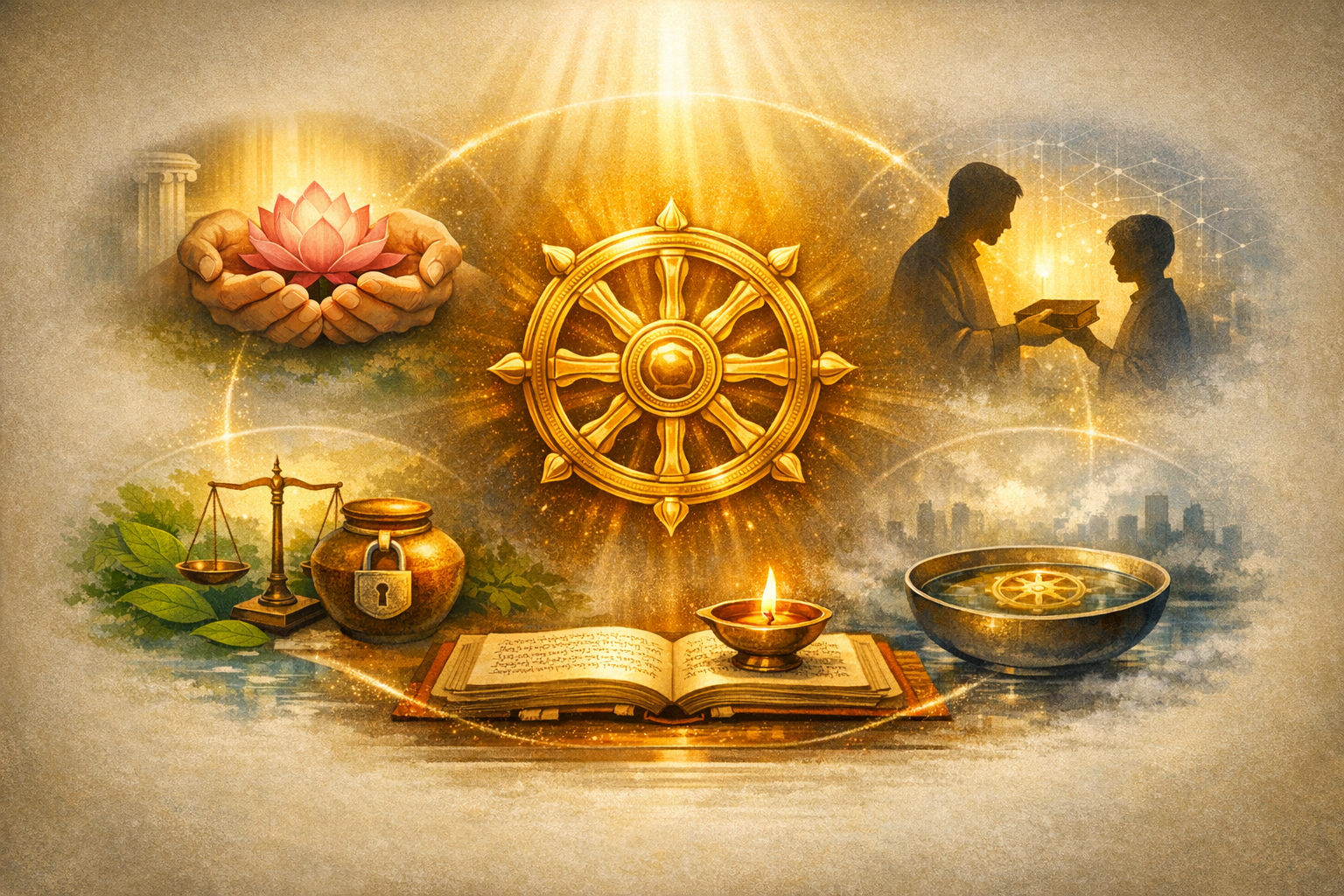
Mahāpātakas, the “heinous sins” in Hindu ethics, delineate acts that rupture the very fabric of dharma by attacking life, trust, truth, and sound judgment. Grounded in the Dharmashastras, these categories are interpreted here through a principle-first lens that fits modern lifeworkplaces, digital spaces, and public institutions. The analysis explains how intention, participation, and reparability shape…
-
Divine Timing vs Desperation: Kumbhakarna’s Forced Awakening and Ravana’s Catastrophic Folly
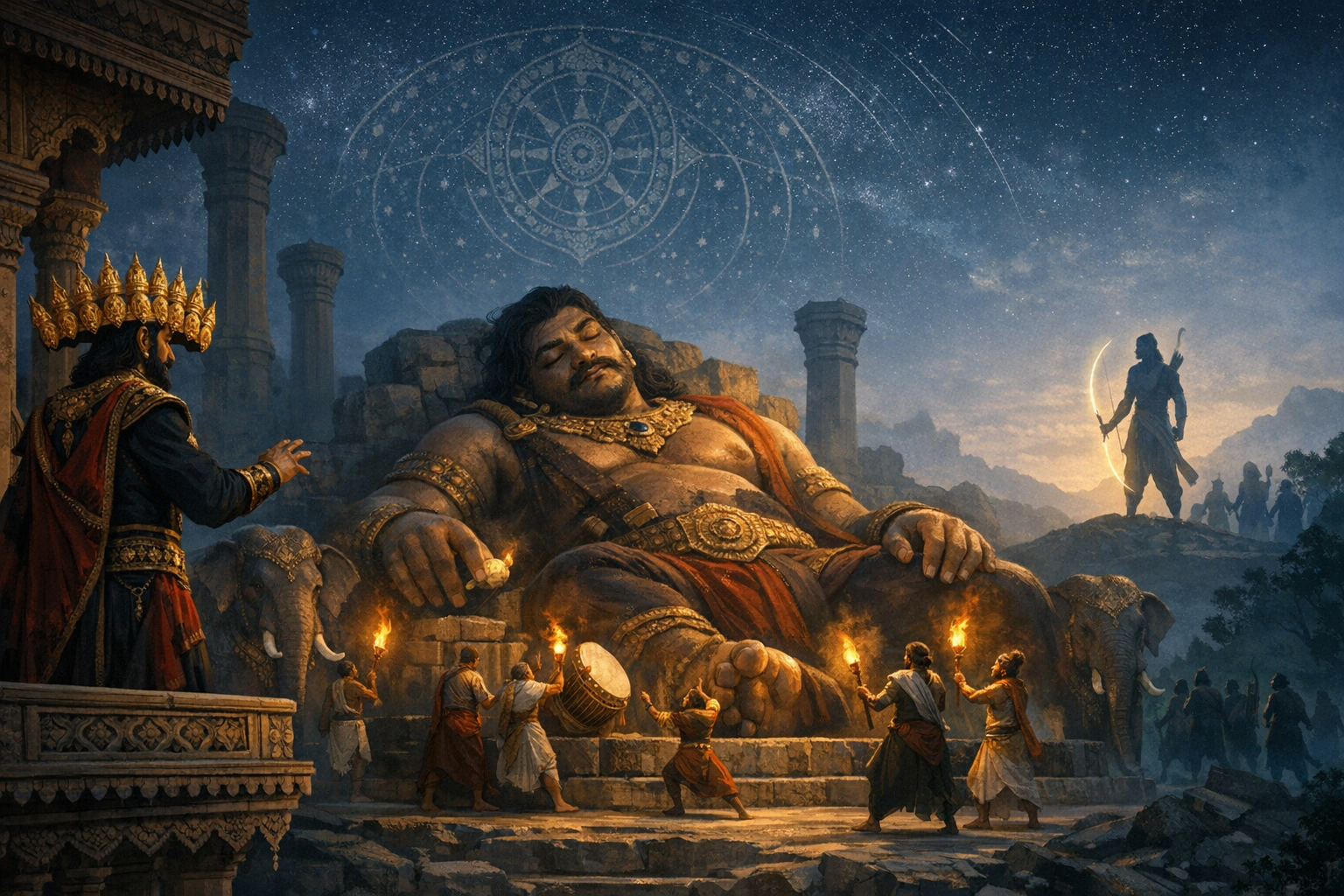
This essay examines Kumbhakarna’s forced awakening in the Ramayana as a study in divine timing and human impatience. It clarifies the nature of his cyclical sleep, traces textual variants, and situates Ravana’s choice within decision theory and dharma-yuddha ethics. The battlefield narrative is read alongside modern sleep science to show how premature activation degrades performance…
-
Kumbhakarna’s Six-Month Slumber: A Tragic Shield, Strategic Weakness, and Dharma in the Ramayana

Kumbhakarna’s six-month sleep in the Ramayana is both armor and Achilles’ heel, a boon that restrains destructive potential while creating a fatal strategic gap when broken. Drawing on Valmiki’s account and later retellings, this analysis clarifies how a slight, divinely guided shift from indrāsana to nidrāsana reconfigures cosmic balance. It explores the symbolism of nidra…
-
Sita’s Agni Pravesha and Exile: Understanding Sri Rama’s Dharma, Duty, and Moral Dilemma
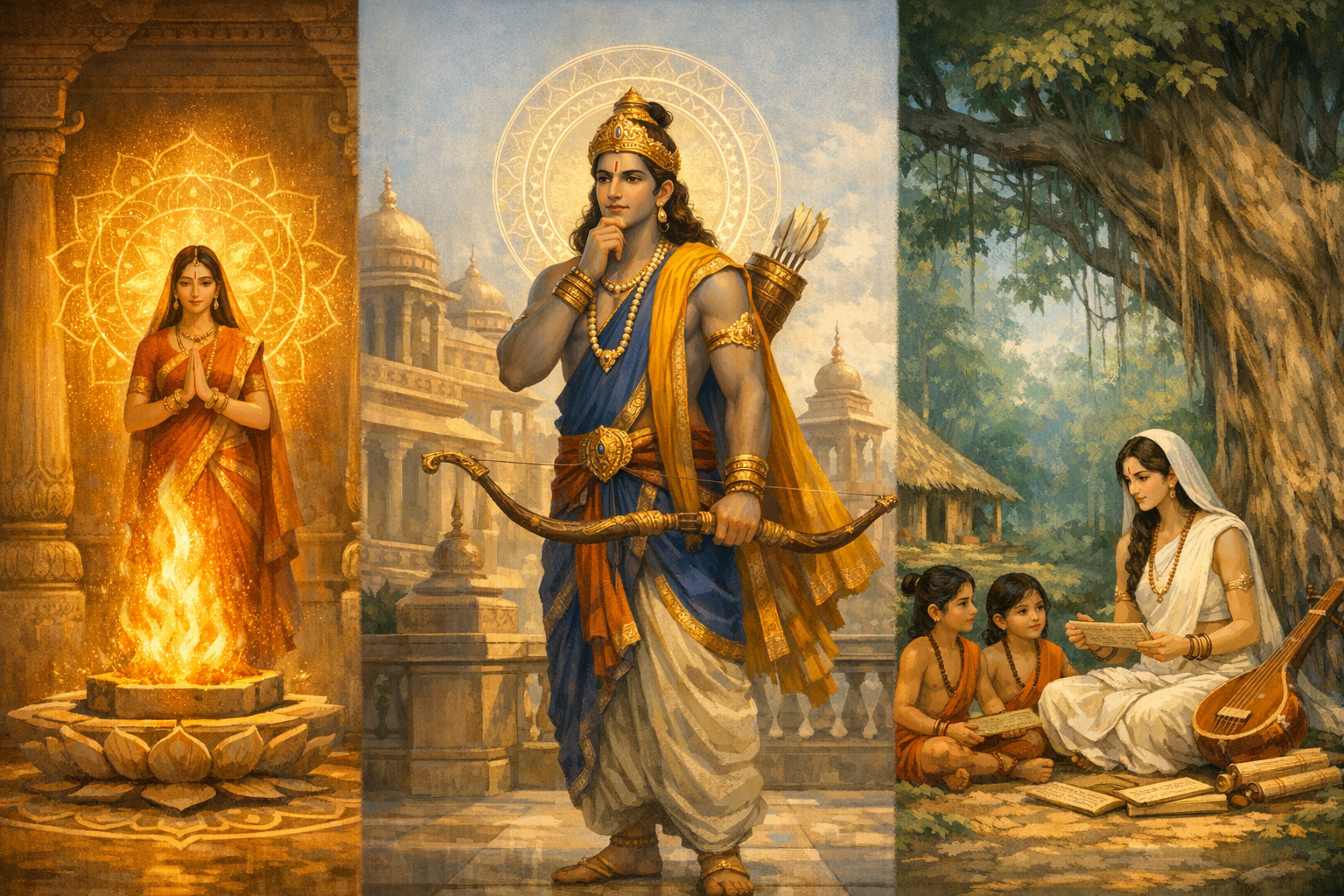
This in-depth analysis clarifies why Sri Rama sent Devi Sita to exile despite knowing her purity by separating two often-confused episodes: Sita’s Agni Pravesha in the Yuddha Kanda and her later exile in the Uttara Kanda. It explains Agni Pravesha as a theological attestation within Vedic ritual logic and highlights puranic teachings (such as the…
-
Rama vs Ravana: A Dharma-first resolution to the Ramayana’s toughest moral dilemmas
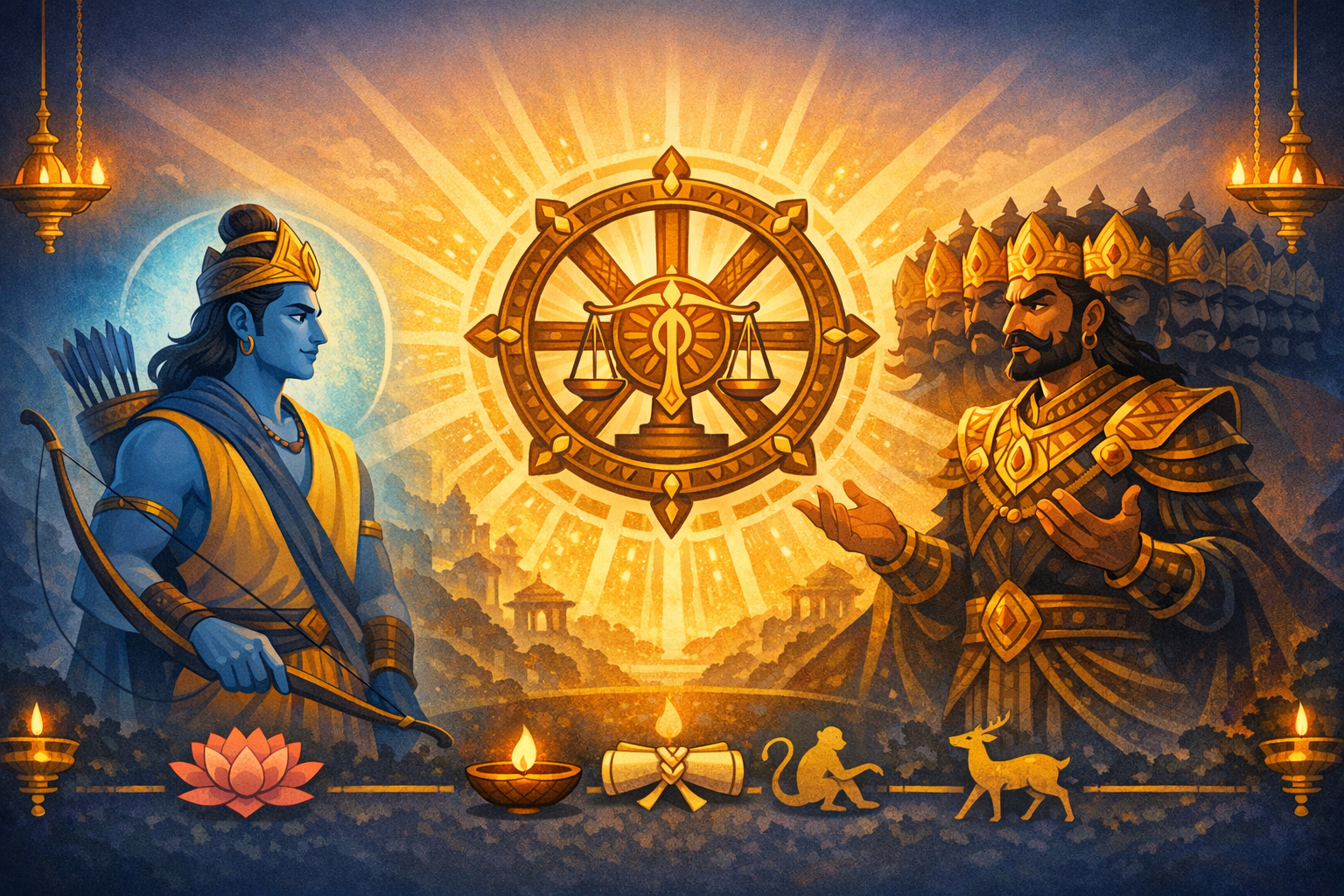
This essay answers the enduring question of why Rama is revered as righteous while Ravana is condemned, even though Ravana was a learned Brahman and Rama faced morally hard choices. It uses a dharma-first framework grounded in the Ramayana to evaluate intention, lawful means, and just ends across contested episodes such as the exile, the…
-
Indratva vs Nidratva: Kumbhakarna’s Boon, Ambition, and the Lost Science of Balance

Kumbhakarna’s story in the Ramayana, often reduced to a trope of excess, encodes a precise philosophy of balance through the dialectic of Indratva (unbounded agency) and Nidratva (overpowering inertia). Read across Valmiki and later retellings, the episode becomes a systems lesson in regulating rajas and tamas under sattva’s guidance. The analysis connects dharmic psychology with…
-
Sita’s Agni Pravesha and Exile: The Contested Ethics of Rajadharma and Public Trust

Sita’s Agni Pravesha and exile remain the Ramayana’s most debated ethical crucible. Read closely, the episodes test the alignment of substantive truth with public trust, contrasting private duty and rajadharma under intense social scrutiny. Valmiki’s narrative presents Agni as the supreme witness, while later traditions (such as the Maya Sita motif) further safeguard Sita’s inviolability.…
-
Inside Ravana’s Swabhava: Pride, Passion, and the Tragic Integrity of the Asura Emperor
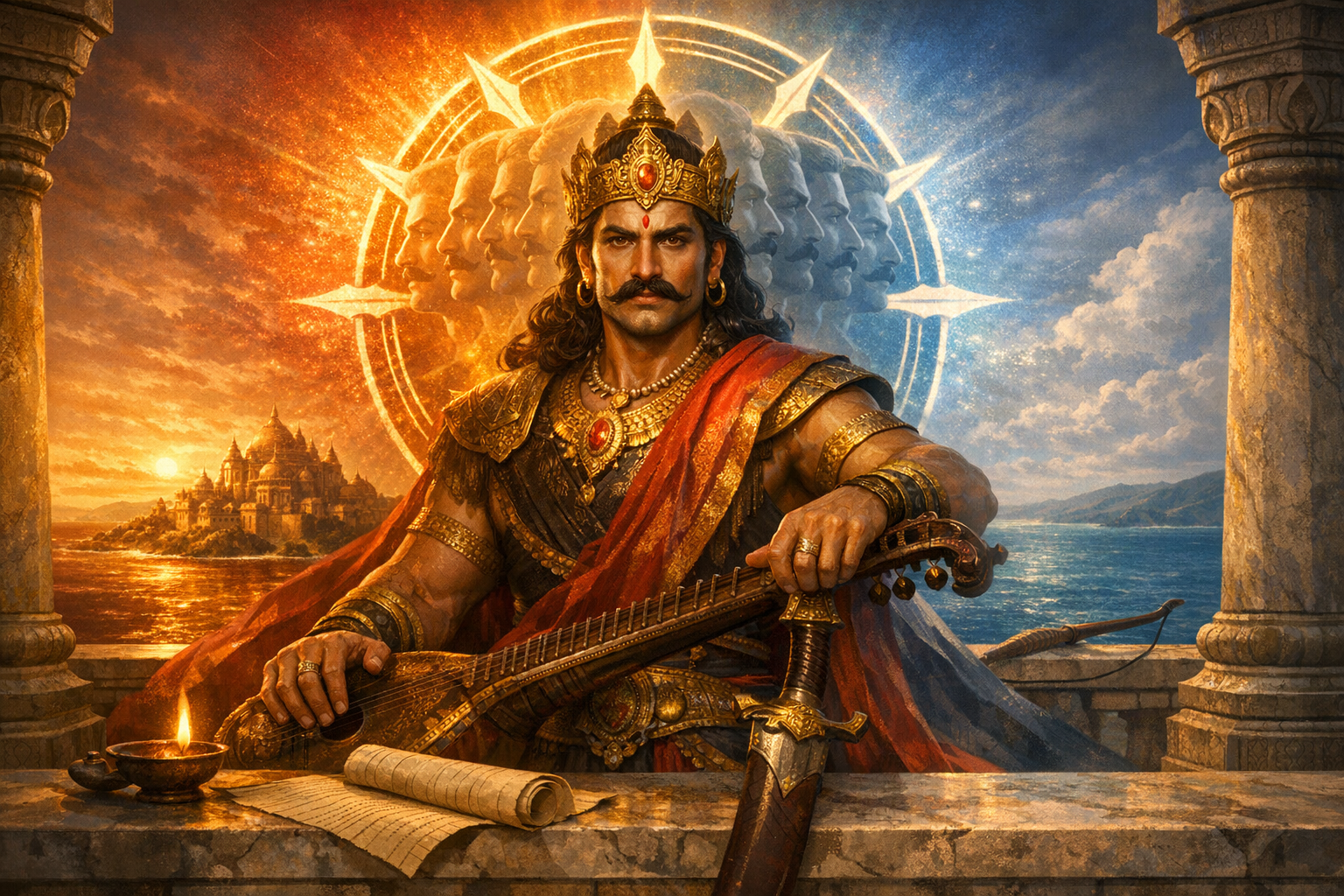
This essay reframes Ravana in the Ramayana as a philosophical study of swabhavainner naturerather than a mere antagonist. It explores how pride and passion, empowered by learning and tapas, evolve into adharma when unrestrained by counsel and maryada. Drawing on Hindu philosophy, Jain Anekantavada, Buddhist analysis of the kleshas, and Sikh reflections on haumai and…
-
Sita’s Agni Pravesha and Exile: The Contested Ethics of Rajadharma and Public Trust
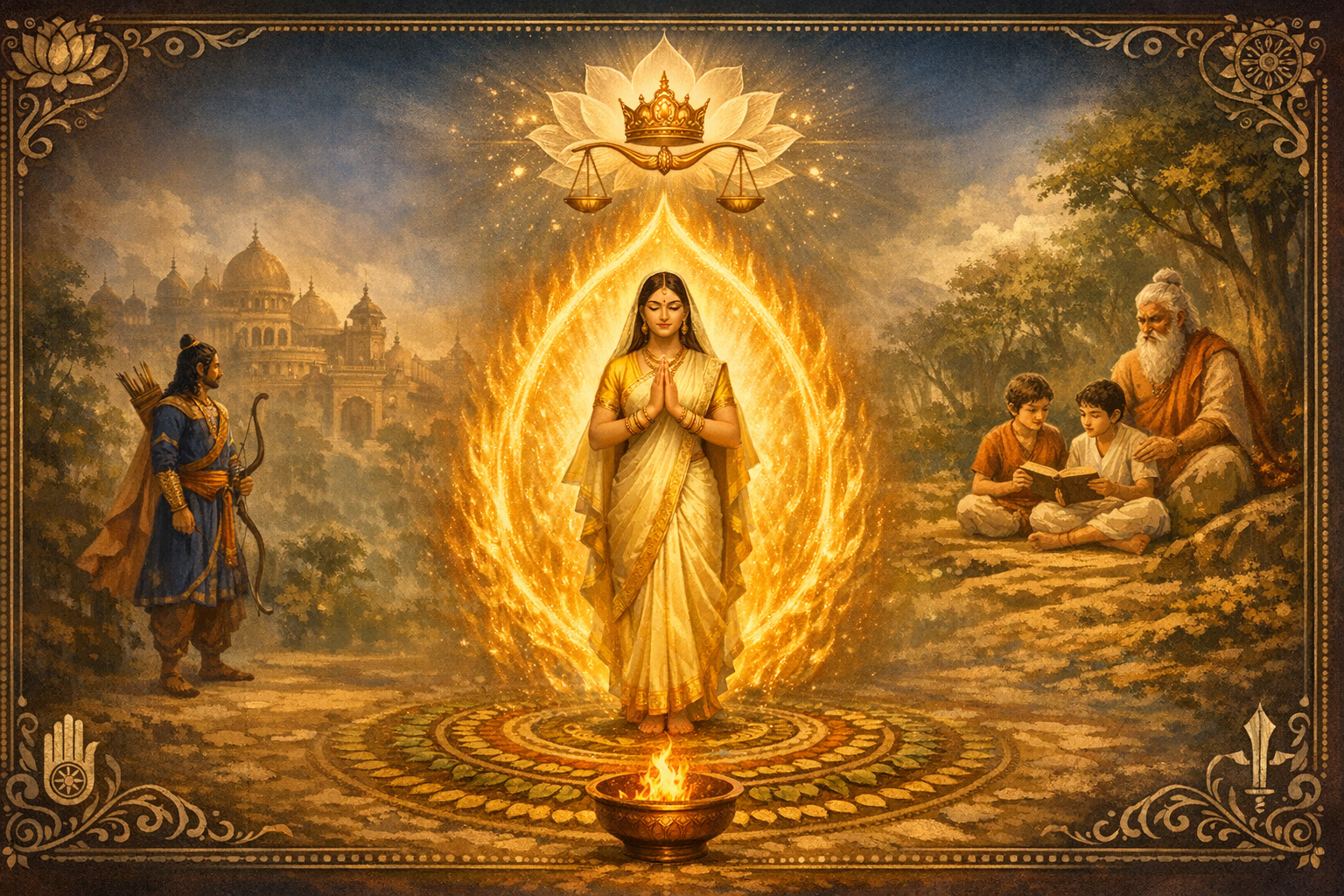
Sita’s Agni Pravesha and exile remain the Ramayana’s most debated ethical crucible. Read closely, the episodes test the alignment of substantive truth with public trust, contrasting private duty and rajadharma under intense social scrutiny. Valmiki’s narrative presents Agni as the supreme witness, while later traditions (such as the Maya Sita motif) further safeguard Sita’s inviolability.…
-
Balarama’s Wrath and Wisdom at Naimisharanya: Dharma, Humility, and Romaharshana’s End

At Naimisharanya, Balarama’s startling decision to end Romaharshana’s life with a blade of kuśa grass becomes a profound lesson in dharma, humility, and institutional accountability. Set within the Bhagavata Purana’s sacred milieu, the episode weighs an assembly’s vow against the demands of ethical conduct in public religious life. By empowering Ugraśrava Sauti to complete the…
-
Purochana in the Mahabharata: Lac Palace Conspiracy, Fatal Loyalty, and Dharmic Lessons
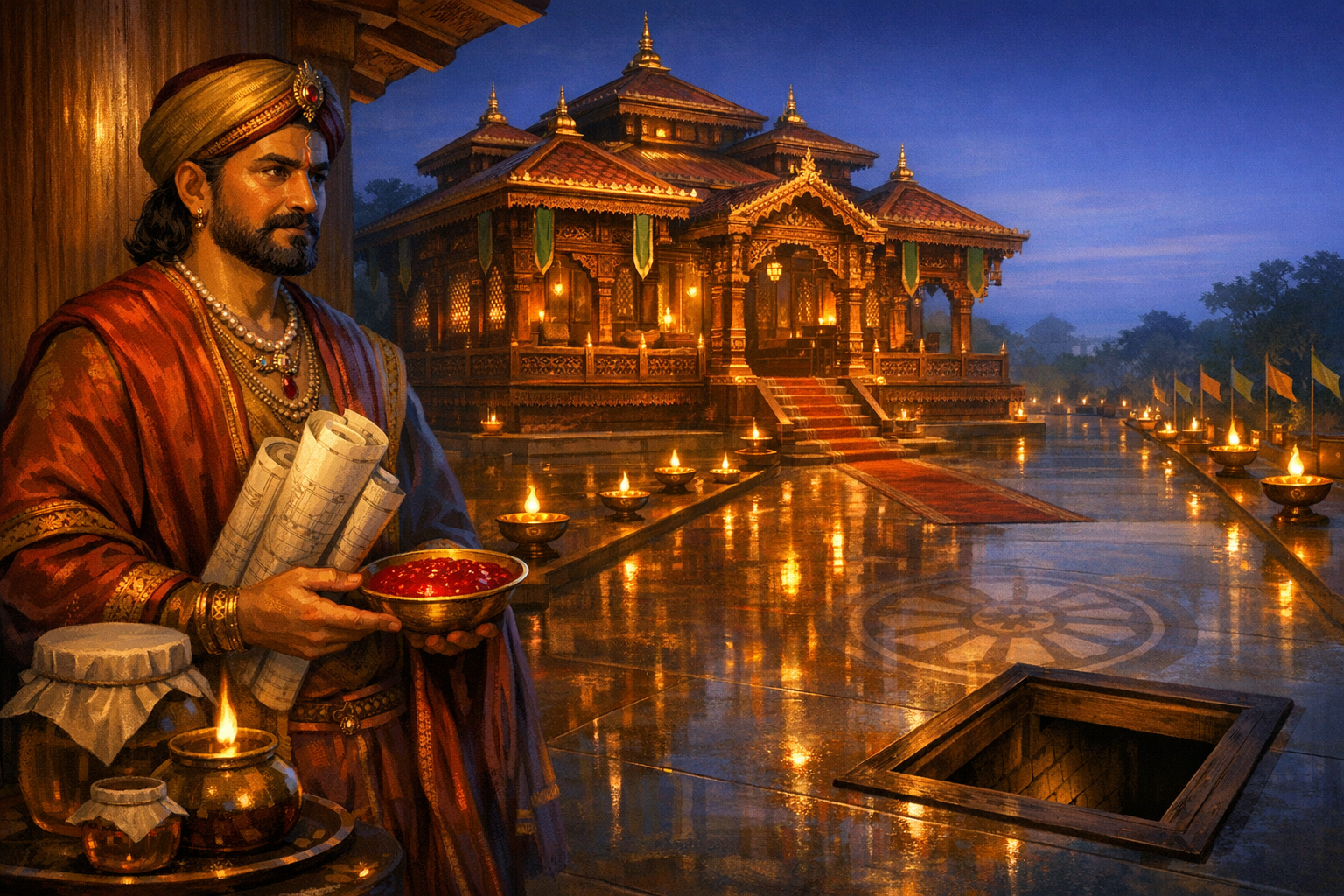
This analysis unpacks Purochana’s role in the Mahabharata’s Lakshagraha conspiracy as a study in ruthless loyalty, covert statecraft, and ethical failure. It situates the plot in the Adi Parva and explains how a luxurious lac palace was engineered as a flammable death trap through lākṣā, ghṛta, and taila. Vidura’s quiet counter-intelligence and tunnel strategy illustrate…
-
Why Dushasana’s Savage End in the Mahabharata Became Dharma’s and Karma’s Verdict
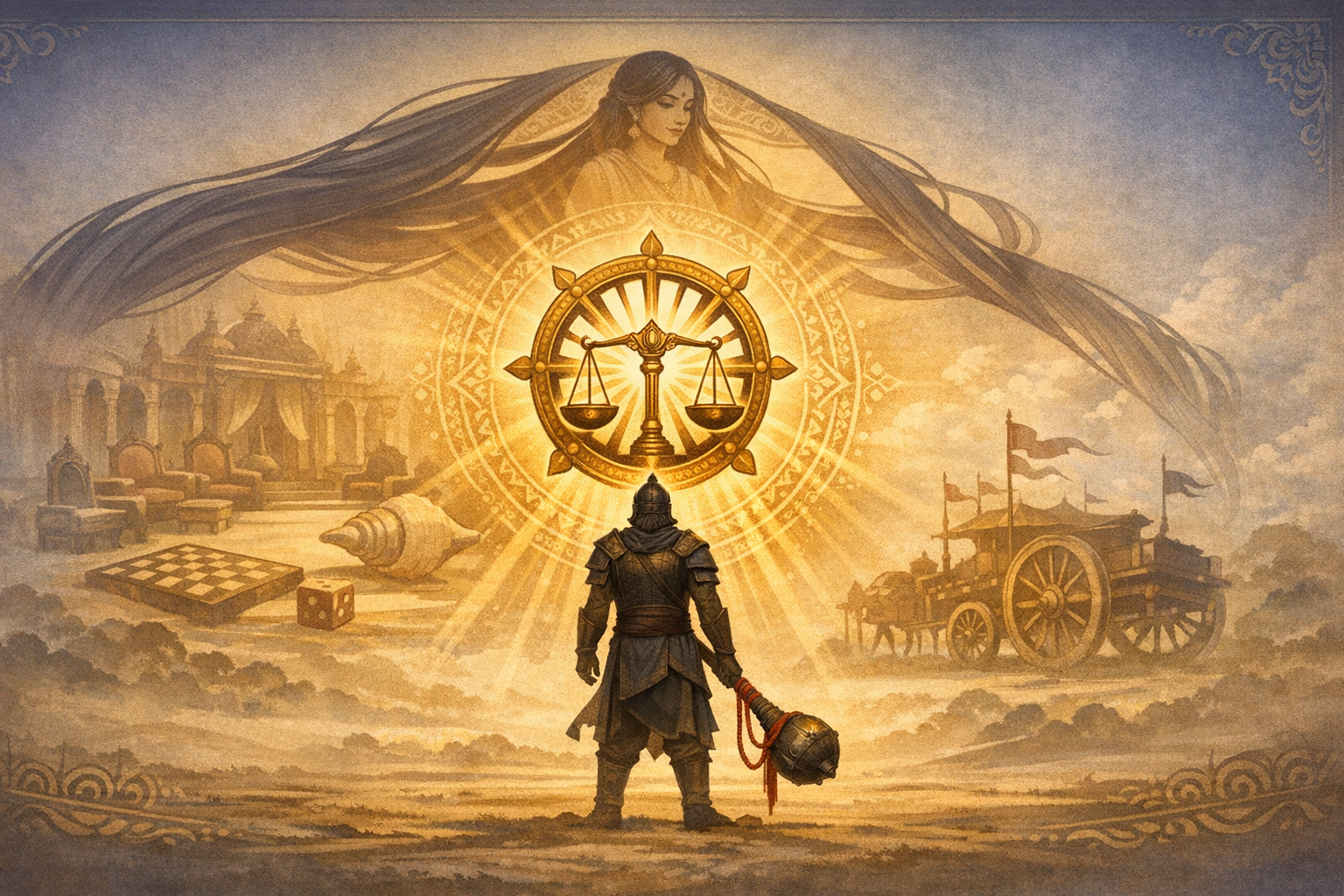
Dushasana’s death in the Mahabharata is not gratuitous violence but a juridical and karmic reckoning anchored in dharma. The Sabha Parva’s humiliation of Draupadi creates an ethical debt that battlefield dharma later settles when institutions fail. Bhima’s vow and its fulfillment on the sixteenth day fit the epic’s vow-driven architecture of justice, illustrating apad-dharma under…
-
Jada Bharata vs. Kali Yuga: Unmasking Algorithmic Gurus and Reclaiming Timeless Dharma

Jada Bharata’s encounter with the modern attention economy offers a precise lens for navigating Kali Yuga’s spiritual noise. Grounded in the Bhagavata Purana, the sage’s teachings on vairagya, mauna, sakshi-bhava, and nishkama-karma map cleanly onto today’s influencer culture and consumer spirituality. Clear criteria from the Upanishads and the Gita help distinguish authentic guidance from spectacle…
-
Dharma Paripalana Moorthy: Sri Rama’s Timeless Blueprint of Rajadharma in Rama Rajya
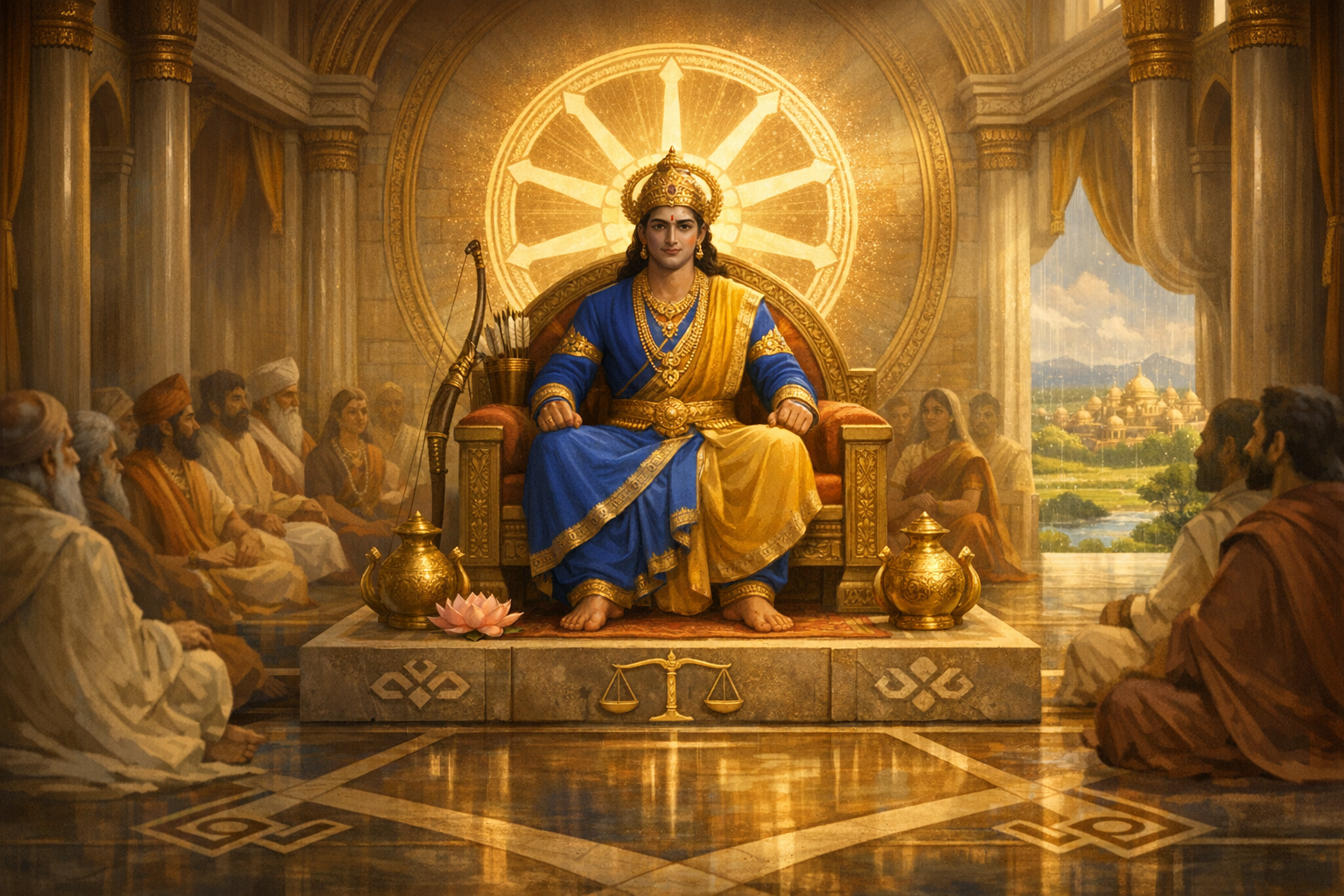
Sri Rama as Dharma Paripalana Moorthy embodies a rigorous model of ethical governanceRama Rajyathat continues to inform discussions on justice, welfare, and leadership. Grounded in the Valmiki Ramayana, including the Uttara Kanda’s portrayal of an 11,000-year reign, the narrative articulates rajadharma as personal virtue aligned with fair institutions and compassionate law. The analysis situates this…
-
Myth-Busting the ‘Traitor’ Label: Vibhishana’s Dharma-First Loyalty in the Ramayana

This analysis challenges the popular notion of Vibhishana as a betrayer and demonstrates, with reference to Ramayana ethics, that his alignment with dharma over family partisanship constitutes exemplary loyalty. It explains how Rajadharma and Sharanagati frame his choice as morally necessary rather than opportunistic. By contrasting Vibhishana with Kumbhakarna and drawing on Dharmashastra principles, it…
-
SB 10.4.8 on Power and Protection: Kamsa’s Rage, Devi’s Deliverance, and Living Dharma Today

This long-form analysis of Srimad-Bhagavatam (SB) 10.4.8 explores Kaṁsa’s attempt to kill a newborn and Devi’s decisive deliverance as a powerful study in dharma versus adharma. It situates the verse within the Bhagavata Purana’s narrative, unpacks its ethical, theological, and symbolic layers, and highlights its convergence with Buddhist, Jain, and Sikh principles of compassion and…
-
Parashurama Jayanti 2026 on Akshaya Tritiya: Auspicious Date Rules, Muhurta, Puja, and Meaning
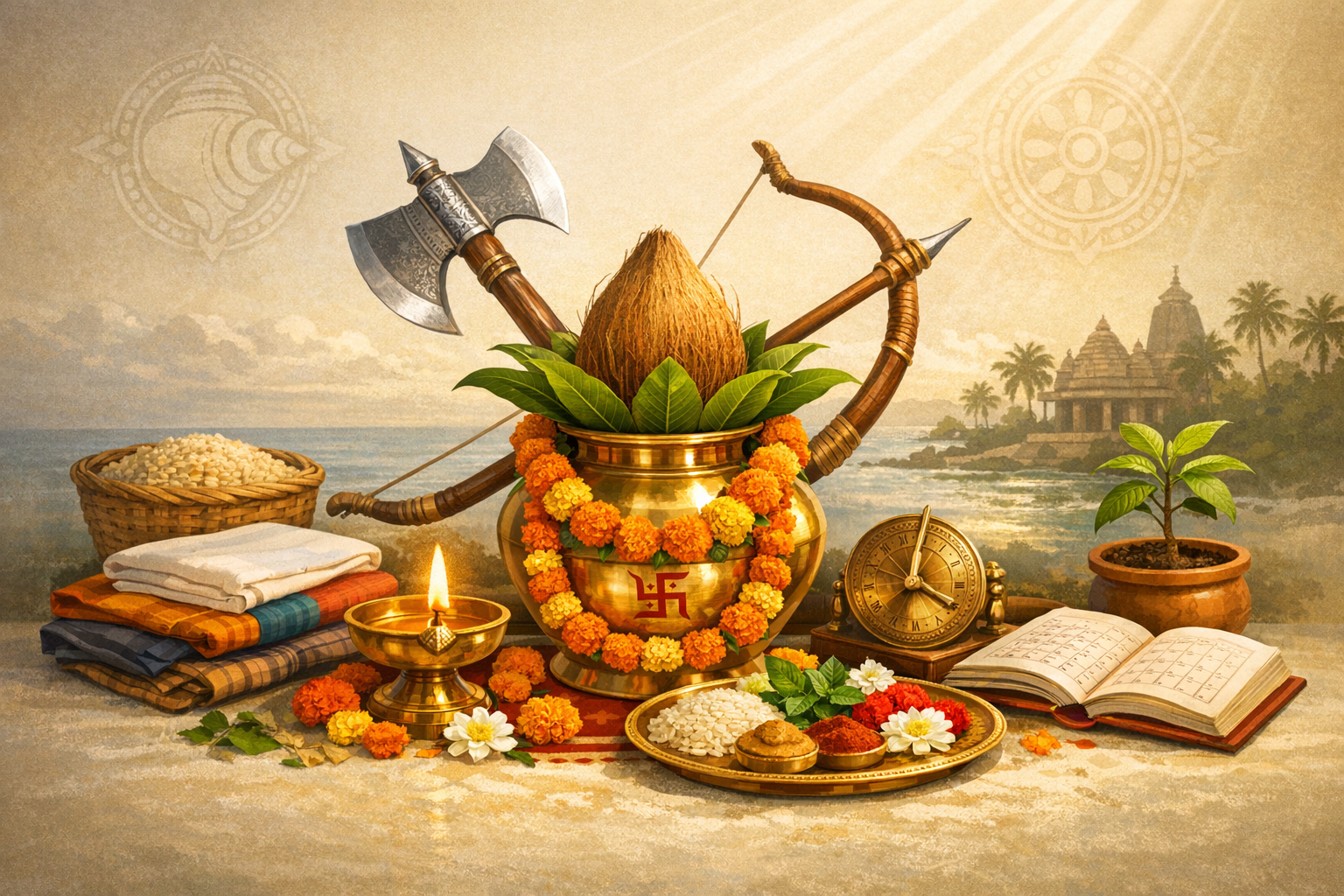
Parashurama Jayanti 2026 coincides with Akshaya Tritiya, observed on Vaishakh Shukla Tritiya, and is dedicated to Lord Parashurama, the warrior-sage avatar of Lord Vishnu. Because the Tritiya tithi can overlap civil dates and time zones, traditions may choose the day based on sunrise or Madhyahna, so local Panchang consultation is essential. The day’s core practices…