-
Tirupati Kodandarama Swamy Pushpayagam Ankurarpanam: Timings & Complete Guide (22 April 2026)

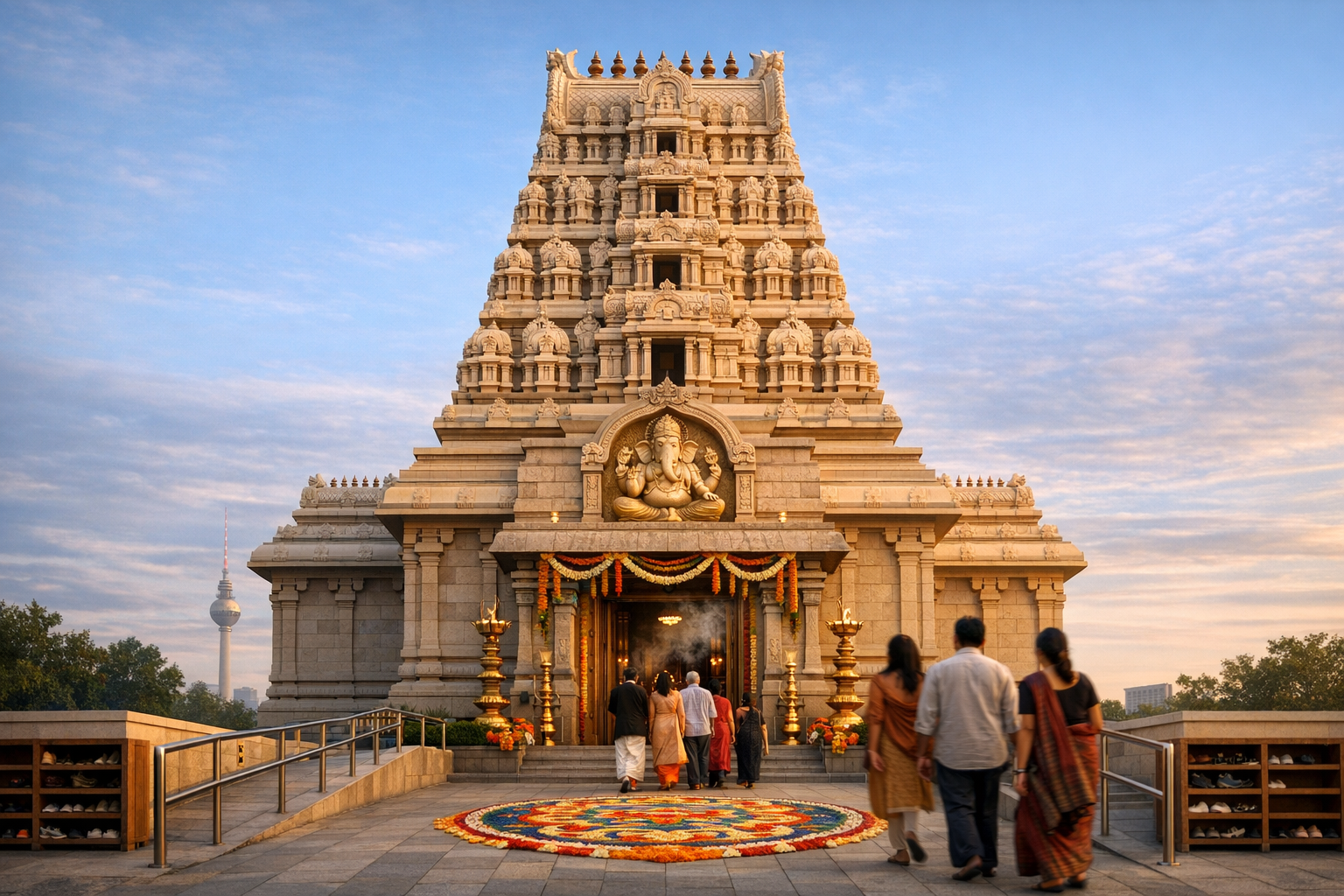
Sri Kodandarama Swamy Temple in Tirupati will perform Ankurarpanam for Pushpayagam on 22 April 2026 from 6:00 PM to 8:30 PM IST. This seed-sowing rite, grounded in Agamic tradition, sanctifies the temple and community before the flower-offering ceremony. Following Brahmotsavams held from 17–25 March, the sequence underscores a complete liturgical arc: festival, consecration, and floral…
-
Chhattisgarh Mandir Mahasangh: A Bold Plan to Protect Temples and Renew Dharmic Heritage

Temple trustees and priests in Chhattisgarh have resolved to establish a Mandir Mahasangh to professionalize temple management, protect temple lands from encroachment, and renew Dharmic heritage. The proposed federation emphasizes legal compliance, financial transparency, and standard operating procedures while respecting local traditions. It recommends GIS-based land protection, conservation-grade heritage care, and robust safety and crowd…
-
Ratha Yatra 2026 in Brisbane: Soul-Stirring Procession, Heritage Insights, and Photo Reflections

On 18 April 2026, ISKCON Brisbane’s Ratha Yatra carried the deities of Lord Jagannath, Balabhadra, and Subhadra through the city in a profound celebration of devotion, culture, and community. The procession balanced scriptural fidelity with contemporary best practices in safety, sustainability, and accessibility. A photo album from the day documents marigold-draped chariots, resonant kirtan, and…
-
Singing Between the Lines: Ekendra Das on Spiritual Messaging in Krsna Conscious Music and Theater

This long-form profile examines how Ekendra Das (Ekendra Prabhu) unites professional musicianship with disciplined seva to communicate dharmic wisdom through Krsna Conscious bands, theater, and responsible humor. It explains how Straight Edge ethics parallel Hindu vrata and align with Buddhist, Jain, and Sikh disciplines, framing music as a practice of clarity rather than escape. Drawing…
-
Unmasking Mental Colonialism: English Publishing vs Sanskrit and Bharatiya Bhasha Heritage

This essay examines how social media has disrupted legacy gatekeeping and why that disruption matters for English-language publishing in India. It argues that a prestige hierarchy—English over non-English—has long shaped acquisitions, prizes, and curricula, producing a deracinated sensibility often mislabeled as cosmopolitan. Drawing on Hartosh Singh Bal’s analysis of the “Literary Raj,” it highlights the…
-
Preserving Raag and Reverence: International Seminar on Bhai Avtar Singh Ragi’s Legacy

This in-depth overview of the International Seminar on Bhai Avtar Singh Ragi’s legacy explains how his disciplined, raag-based approach to Sikh kirtan shaped modern Gurmat Sangeet. Readers gain a clear view of the musicological building blocks—raag, taal, rahao, ghar, and partaal—and how they serve the semantic and spiritual heart of the shabad. The summary outlines…
-
Rama Navami at Bhaktivedanta Manor: Devotion, Diversity, and Civic Leadership

Bhaktivedanta Manor’s Rama Navami festival showcased how devotion and diversity can reinforce each other in public life. With three local Mayors and Miatta Fahnbulleh MP in attendance, the celebration affirmed the temple’s role as a civic partner and interfaith convener. The event’s bhakti-centered program—kirtan, Ramayana readings, and abhishekam—translated timeless Hindu values into inclusive, relatable experiences…
-
Sanskrit vs Prakrit in Ancient India: A Sacred Dialogue Shaping Faith, Culture, and Power

Sanskrit and Prakrit formed a sacred dialogue in Ancient India, shaping ritual, philosophy, drama, and everyday communication across Hinduism, Buddhism, Jainism, and later Sikhism. Rather than rigid opposites, they functioned as complementary registers within a diglossic ecology that prized both precision and accessibility. The article maps their historical development from Old to Middle to New…
-
Honoring HG Caru Prabhu ACBSP: Utah’s Krishna Temples, KHQN, and Holi Legacy

HG Caru Prabhu ACBSP, founder of Utah’s Krishna temples, KHQN Radio, and the Utah Holi Festival of Colors, passed away on April 7, 2026, following a car accident. This tribute examines how temple-building, inclusive festivals, and devotional broadcasting shaped the Hindu American Community in the Intermountain West. It clarifies the significance of his ACBSP discipleship…
-
Vishukkani Vili of North Malabar: Children’s Calls, Community Joy, and Vishu’s Living Heritage

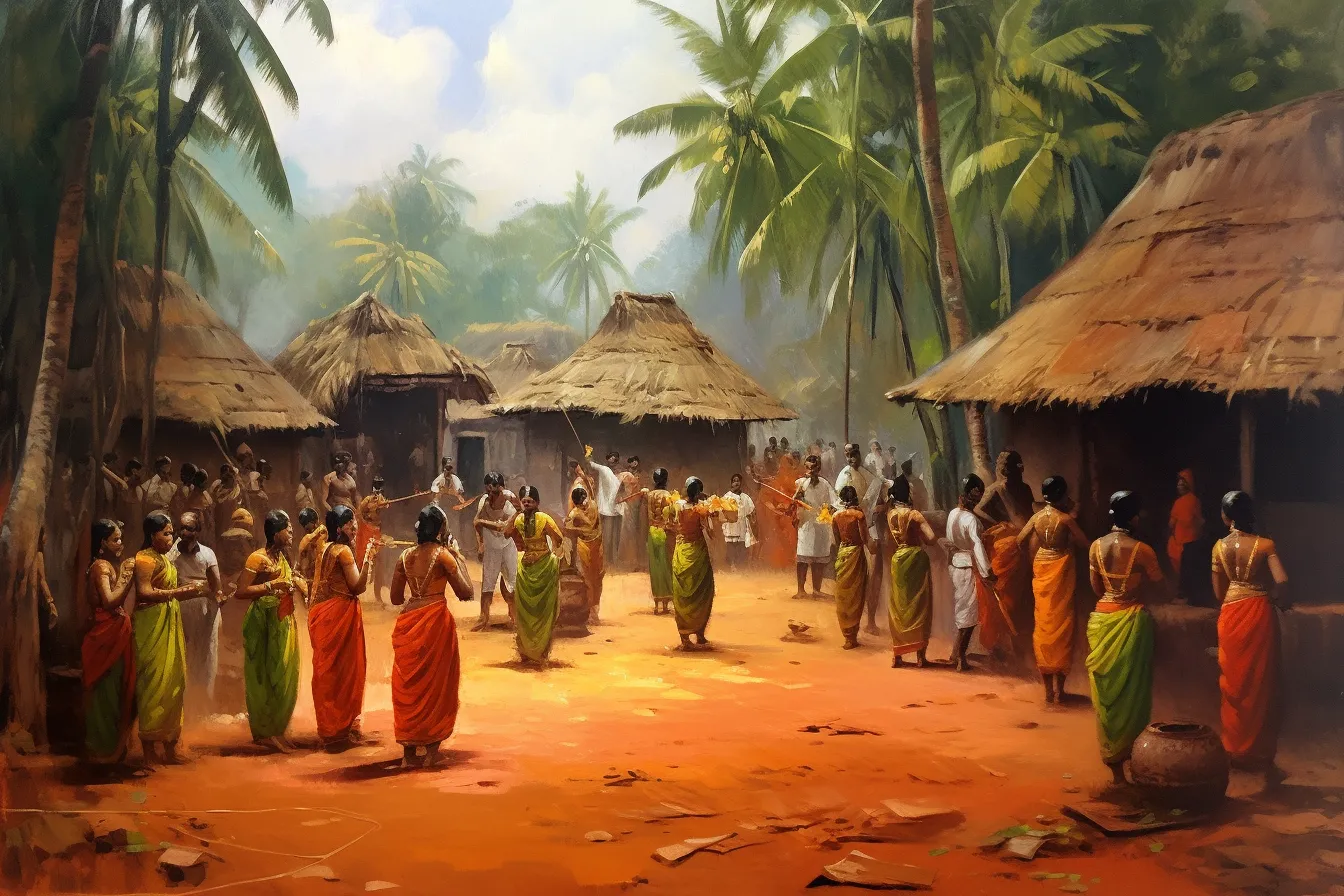
Vishukkani Vili is a living North Malabar custom in Kerala that brings the spirit of Vishu—the Malayalam New Year—out of the home and into the village street. At dawn, groups of children move house to house calling ‘vishukaniye, vishukaniye.’, receiving modest tokens that formalize generosity and goodwill. This article explains the astronomical and cultural logic…
-
This Is Life: A Poignant Classic of Hindi Cinema Restored by ITV—Story, Context, Legacy

This Is Life, reproduced by ITV, offers a succinct yet affecting window into classic Hindi social drama and is now more accessible through English subtitle autotranslation. The ensemble story of Anand Narayan, Gayetri, Kamla, Madhu, and Govind evokes shared ethical intuitions across Hinduism, Buddhism, Jainism, and Sikhism, modeling unity in diversity. Read as a socio-cultural…
-
Bhagwan Parshvanatha: Life, Four Vows, and the Enduring Legacy of Jainism’s Compassionate Reformer

Bhagwan Parshvanatha, the 23rd Tirthankara, helped shape Jain ethics through a clear fourfold discipline—ahimsa, satya, asteya, and aparigraha—later integrated with Mahavira’s expanded code. Born in Varanasi and widely regarded as historical, Parshvanatha’s legacy is visible in sacred sites like Sammed Shikharji and in distinctive serpent-canopied iconography. Texts such as the Kalpa Sūtra and the Uttarādhyayana…
-
Beyond ‘300 Ramayanas’: Valmiki’s Legacy, Rasa Aesthetics, and Dharmic Unity in Retellings

This essay maps the many Rāmāyaṇa traditions while reaffirming the aesthetic primacy of Vālmīki’s Sanskrit epic. It classifies adaptations into four clear streams—dharmic subtraditions, texts attributed to Vālmīki and folk narratives, classical kāvya and drama, and modern ideological readings—so readers can evaluate variations without losing the original’s moral and poetic center. Murāri’s verse and Ānandavardhana’s…
-
Manasollasa Unveiled: A 12th‑Century Masterwork of Indian Statecraft, Arts, and Cuisine

Manasollasa (Abhilashitartha Chintamani) is a 12th‑century Sanskrit encyclopedic treatise by King Someshvara III that integrates statecraft, justice, economy, arts, architecture, music, and culinary science into a single civilizational vision. It details rajadharma, due process, village administration, and fair markets alongside rigorous guidance on hydrology, architecture, and guild regulation. Musicology and dance are situated between Bharata’s…
-
Trichy Rockfort Pilgrimage: Abhishekam, 400 Steps, and Timeless South Indian Heritage

This research-driven account documents a 09.02.2026 pilgrimage to the Trichy Rockfort Temple complex, tracing an early start from Kalyanapuram via Kumbakonam to Tiruchirappalli and culminating in multiple Abhishekham rites with honey, milk, curd, and Panchamirtham. It explains the sacred sequence of Manikka Vinayakar, Thayumanaswami, and Ucchi Pillayar temples, the significance of climbing over 400 steps,…
-
Kanya Puja 2026: Exact Dates, Ritual Steps, and Deep Significance for Navratri & Durga Puja

Kanya Puja, also called Kumari Pooja or Kanjak Pooja, is a central rite of Navratri Durga Puja in which prepubescent girls are honored as embodiments of Devi. In 2026, the principal date is October 18 (Durgashtami), with many traditions also observing it on October 19 (Mahanavami); during Chaitra Navaratri, it falls on Thursday, March 26.…
-
Women’s Wellbeing at Bhaktivedanta Manor: Empowering, Protecting, and Inspiring Through Dharma

A Women’s Wellbeing event at Bhaktivedanta Manor, convened by DEVI with Devotee Care, showcased a rigorous, dharmic approach to empowerment, connection, protection, and inspiration. Timed between International Woman’s Day and Mother’s Day, it linked civic appreciation with everyday care, emphasizing Yoga, Mindfulness, bhakti-kirtan, and accessible Ayurveda for practical self-care. The presence of Cllr Parveen Rani…
-
Sardar Baghel Singh: The Visionary Who Etched Sikh Heritage on Delhi’s Sacred Map (1783)

Sardar Baghel Singh (c. 1730–1802) transformed Delhi’s sacred geography in March 1783 through a negotiated accord with the Mughal court that authorized, secured, and funded the construction of Sikh shrines at historic sites. Rather than a mere military episode, his intervention institutionalized Sikh memory—most notably at Sees Ganj Sahib and Rakab Ganj Sahib—through a sustainable…
-
Sardar Baghel Singh: The Visionary Who Etched Sikh Heritage on Delhi’s Sacred Map (1783)

Sardar Baghel Singh (c. 1730–1802) transformed Delhi’s sacred geography in March 1783 through a negotiated accord with the Mughal court that authorized, secured, and funded the construction of Sikh shrines at historic sites. Rather than a mere military episode, his intervention institutionalized Sikh memory—most notably at Sees Ganj Sahib and Rakab Ganj Sahib—through a sustainable…
-
Shiva–Shakti Raasa Leela: Unveiling the Cosmic Dance of Love, Consciousness, and Creation

Shivashakti Raasa Leela—also known as Sri ShivShakti Rasalila—presents the union of Śiva and Śakti as a continuous dance and embrace that render Shaiva metaphysics visible and livable. Anchored in Natyashastra aesthetics, Shaiva Āgamas, and Kashmir Shaivism’s rasa theory, it interprets creation as spanda (vibration) and devotion as aesthetic savoring (rasa). Iconography of Śiva Naṭarāja, Somāskanda,…