
-
Choose Mental Fuel, Not Noise: Dharmic Wisdom to Protect Self‑Respect and Clarity

This essay presents a rigorous, dharmic framework for curating a nourishing “mental diet” that protects clarity and self‑respect in an age of digital distraction. Drawing on the Upanishads, the Bhagavad Gita, and Yoga Sutra, it explains how sattva, abhyasa–vairagya, and pratyahara translate into concrete media habits. Buddhist thought contributes the four nutriments and wise attention;…
-
Anityam Asukham Lokam (Gita 9.33): A Powerful Guide to Inner Freedom in Change

Bhagavad Gita 9.33 encapsulates a clear diagnosis of worldly lifeimpermanent and unreliableand couples it with a precise remedy: orient devotion, action, and insight toward the Ultimate. The phrase “Anityam Asukham Idam,” read with its fuller context, explains why outcomes alone cannot secure lasting peace. Rather than pessimism, the verse offers a liberating realism that frees…
-
Kapi Dhvaja Unveiled: How Hanuman on Arjuna’s Banner Powered Dharma at Kurukshetra

Arjuna’s Kapi Dhvajathe “ape-banner” of Hanumananchors the Bhagavad Gita’s battlefield in a powerful blend of scripture, strategy, and spirituality. The term kapidhvajaḥ in Gita 1.20 is not decorative; it signals divine sanction, morale-building semiotics, and an ethic of service above strength. Traditional lore explains Hanuman’s presence as a boon following Arjuna’s humility before Krishna, binding…
-
Is Life Easy or Difficult? Dharmic wisdom unites dukkha and ananda with practical tools

The longstanding paradoxBuddhism’s dukkha versus the claim that life is joyresolves when viewed through dharmic frameworks that distinguish conventional from ultimate truth. Buddhism names the instability of conditioned life, while Vedanta points to ananda as the intrinsic nature of consciousness; Jain Anekantavada and Sikh Chardi Kala further harmonize these insights. This synthesis is practical, not…
-
Tasting the Whole Krishna: Beyond One‑Dish Devotion to the Complete Vishvarupa Experience
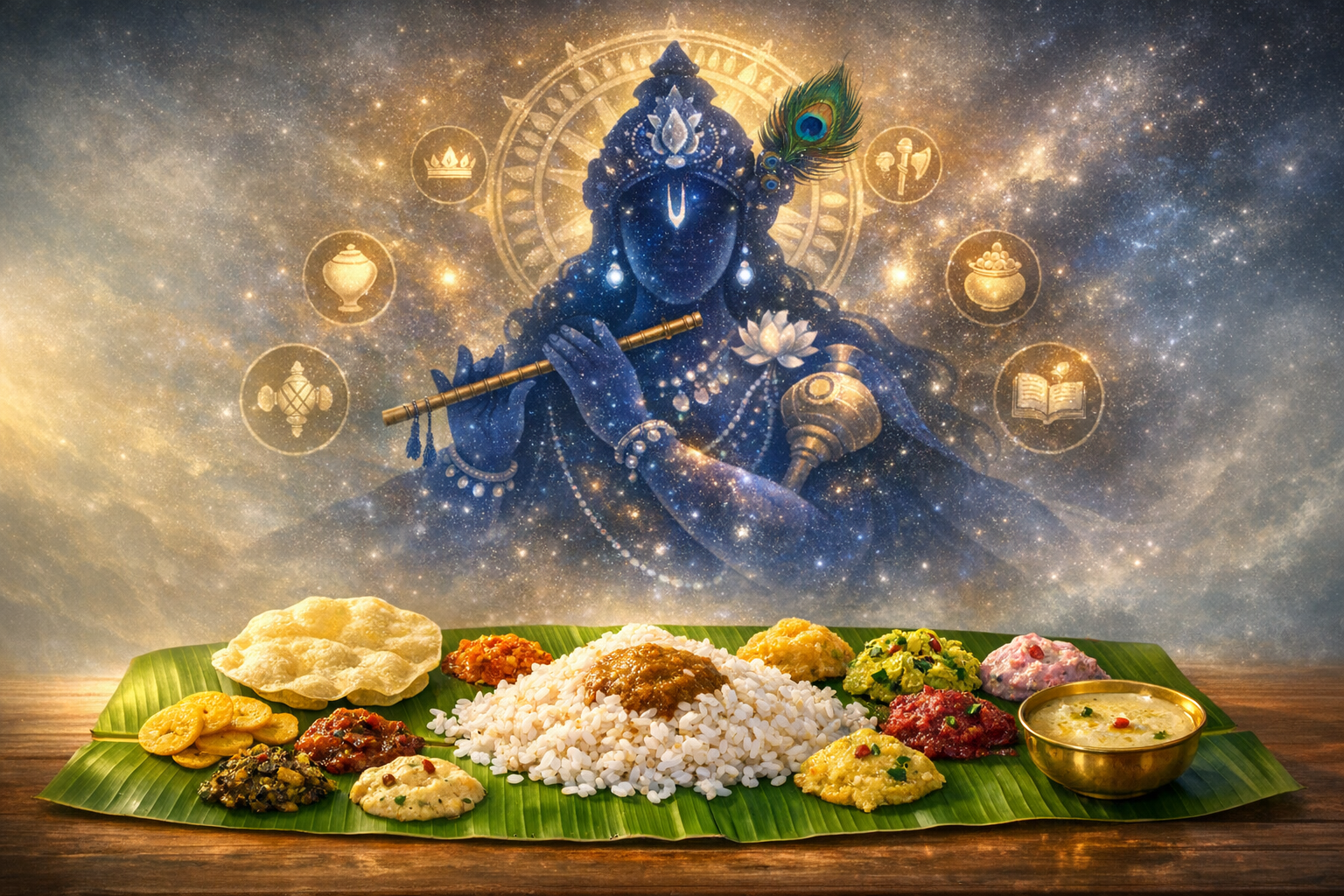
A Kerala Sadhya on a banana leaf offers the perfect metaphor for understanding Sri Krishna: tasting only the sweet payasam is not the same as experiencing the complete meal. This long-form reflection shows how the Bhagavad Gita, the Bhagavata Purana, and Vaishnava theology present a whole visionVishvarupa, six divine opulences, multiple rasas, and the vyūha…
-
To Know Sanatana Dharma, Become It: Transform Study into Embodied, Breath-by-Breath Wisdom

Studying Sanatana Dharma offers orientation; living it confers transformation. This essay explains how knowledge becomes embodied through śravaṇa–manana–nididhyāsana, prāṇāyāma, meditation, and ethical discipline, aligning ancient insights with contemporary understanding of attention, stress, and habit-formation. It shows how Hinduism, Buddhism, Jainism, and Sikhism converge on shared methodsbreath, mindfulness, vows, and sevawhile honoring pluralism via Ishta and…
-
Neo‑Vedanta Unveiled: A Powerful Modern Synthesis Bridging Dharmic Wisdom and Pluralism

This article examines Neo‑Vedanta as a rigorous, modern synthesis of Vedāntic wisdom grounded in the Prasthanatraya (Upanishads, Bhagavad Gita, Brahmasutras). It traces historical catalysts in nineteenth‑century India and explains how Sri Ramakrishna and Swami Vivekananda anchored a plural, practice‑oriented vision. Readers gain a clear understanding of Ishta as a principle of respectful diversity and see…
-
Sacred Science of Nidra: Yogic Sleep in Vedas, Upanishads, and Ayurveda for Whole-Person Wellbeing

Nidra, or sleep, occupies a sacred and carefully defined role in yoga and Hindu scriptures: it stabilizes the nervous system, ripens sattva, and supports deeper meditation. The Upanishads interpret deep sleep as a vital experiential key to understanding consciousness, while Patanjali frames nidra as a distinct mental modification that can inform contemplative practice. The Bhagavad…
-
Dissolving Trishna’s Hidden Fire: Timeless Dharmic Strategies to Transform Craving into Freedom

This long-form, research-driven exploration explains trishna (craving) as the subtle energy that precedes actionthe “root before the root.” It integrates Hindu, Buddhist, Jain, and Sikh perspectives to present a unified Dharmic framework for transforming craving into clarity and freedom. Readers gain a technical map (kleśas, vāsanās, vedanā, dependent arising), scriptural anchors (Yoga Sutra, Bhagavad Gita,…
-
Backbiting and Dharma: Psychological, Social, and Karmic CostsPlus Practical Remedies

Backbiting may appear trivial, yet dharmic ethics and modern psychology converge on its real costs: eroded trust, increased anxiety, fragmented communities, and deepened karmic imprints. Hinduism (Bhagavad Gita 17.15), Buddhism (Right Speech), Jainism (ahimsa and satya), and Sikhism (rejection of ninda) all prescribe compassionate, truthful, and beneficial speech. Research likewise shows that malicious gossip undermines…
-
Is Life Easy or Difficult? An Evidence-Backed Dharmic Guide to Joy, Suffering, and Mastery

Is life easy or difficult? A dharmic analysis shows the question spans two complementary levels: the conventional reality of dukkha (unsatisfactoriness) and the ultimate discovery of ananda (joy). Buddhism’s Four Noble Truths, the Yoga Sutra, Vedanta’s ananda doctrine, Jain anekantavada, and Sikh Chardi Kala together form a unified method for transforming difficulty into resilience while…
-
Eternal Longing, Infinite Union: Decoding Radha–Krishna’s Divine Love and Sacred Separation

This long-form exploration decodes why Radha–Krishna’s love is revered not as a tragic failure of union but as a sacred pedagogy of longing. Drawing on Srimad Bhagavatham, Gīta Govinda, and Gaudiya Vaishnava theology, it explains how vipralambha (separation) heightens devotion and refines ethical action. The article clarifies key conceptsrasa, sambhoga, vipralambha, and mahābhāvawhile situating them…
-
ISKCON Navi Mumbai Unveils IGST 2026: Transformative Gita Scholarship Test and Immersive Retreat

ISKCON Navi Mumbai’s International Gita Scholarship Test (IGST) 2026 pairs rigorous study of the Bhagavad Gita with an immersive retreat to address academic stress, digital distraction, and the need for ethical leadership among youth. The initiative emphasizes comprehension, application, and reflection rather than rote memorization, aligning learning outcomes with established pedagogical frameworks. Daily practice recommendationsspaced…
-
From Sadhana to Etiquette: Angas of Bhakti for Daily Practice and Interfaith Dharmic Harmony
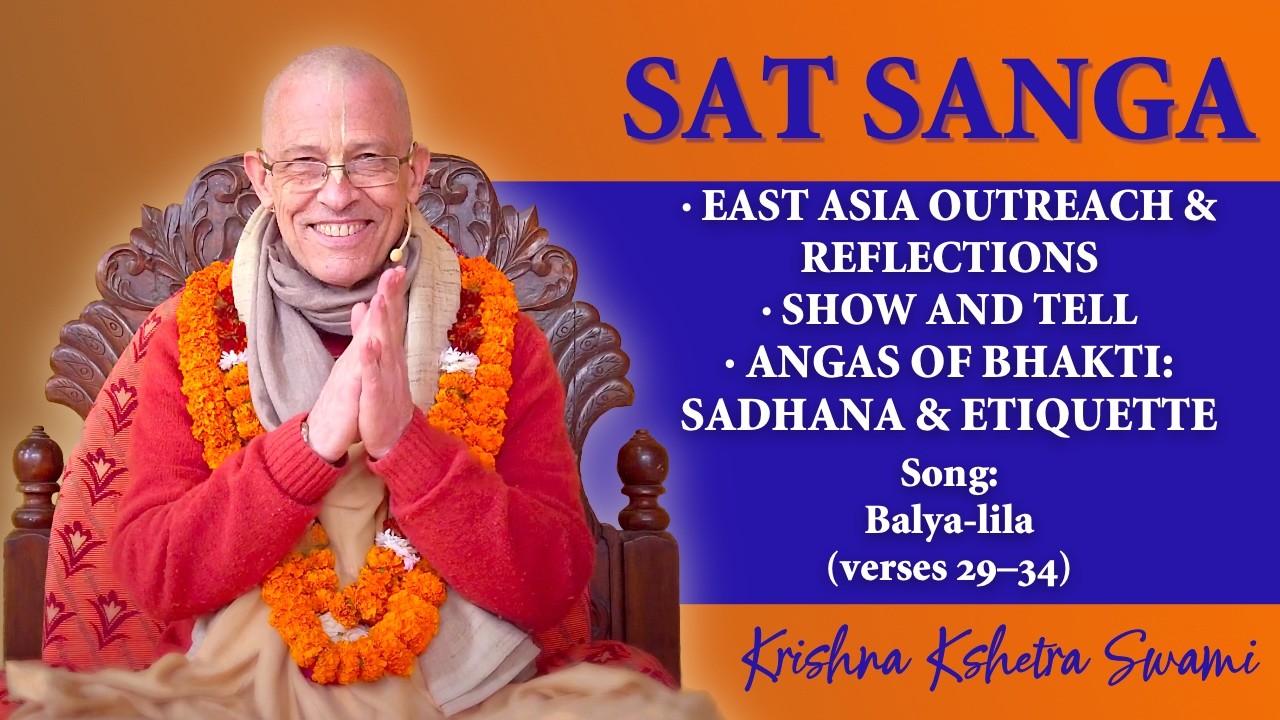
This in-depth reflection on a Sat Sanga with HH Krishna Kshetra Swami (09.05.2026) unpacks the Angas of Bhaktihow sadhana (disciplined daily practice) and Vaishnava etiquette (sadachara) jointly mature devotional life. Readers gain a clear map of foundational and potent practices from the Gaudiya tradition, learn practical routines for japa, kirtana, and study, and see how…
-
Srila Prabhupada’s 1976 Vrindavan Marathon: Seva, Scholarship, and Global Sankirtana
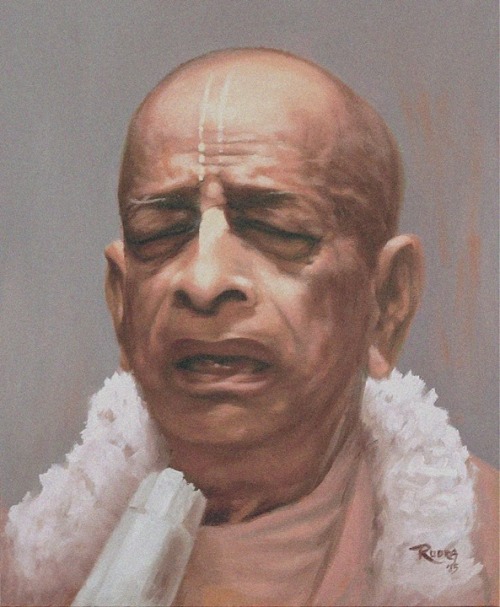
In 1976 at Vrindavan, Srila Prabhupada’s day began at mangal arotik and ended past midnight with a Mathura pandal program before more than twenty thousand attendees. Eyewitness detailssuch as the right-hand lesson during a morning walkreveal how subtle etiquette conveyed dharmic principles. His apology for speaking in Hindi at the pandal highlighted humility and inclusive…
-
Surrender that Liberates: How Dāsa‑Bhāva Shapes Bhakti, Seva, and Dharmic Unity
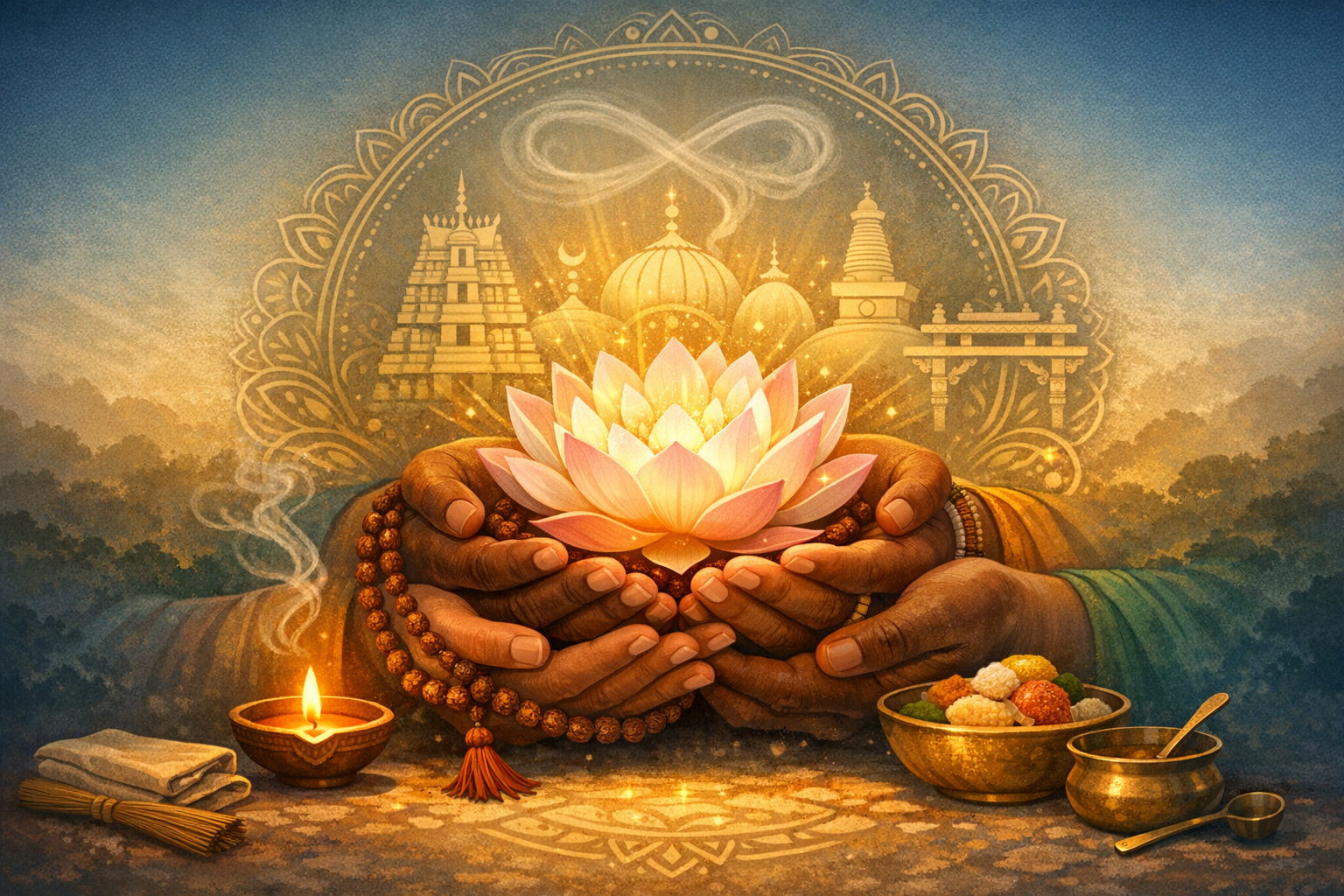
The Bhakti concept of “dasa” (dāsa)a chosen identity of loving service and surrenderanchors Hindu spirituality in a disciplined ethic of humility, seva, and śaraṇāgati. Grounded in scriptural sources like the Bhagavad Gita and Srimad Bhagavatham, dāsya-bhāva appears across Vaishnava, Śaiva, and Śākta traditions and is elaborated by Ramanujacharya, Madhvacharya, and Chaitanya Mahaprabhu. It flourishes in…
-
Purpose of the Vedas: Why Vaishnavas Champion Bhakti over Jnana, Karma, and Yoga

This in-depth exploration clarifies the purpose of the Vedas, tracing their layered structure from ritual to contemplative wisdom and showing how Vedānta articulates their culmination. It explains why Vaishnava traditions foreground Bhakti: not as sentiment, but as an integrative discipline endorsed by the Bhagavad Gita and Śrīmad-Bhāgavatam. It maps Bhakti’s relationship to Jñāna, Karma, and…
-
How Sharing Food Heals Enmity: Timeless Dharmic Practices from Hindu, Buddhist, Jain, Sikh Traditions
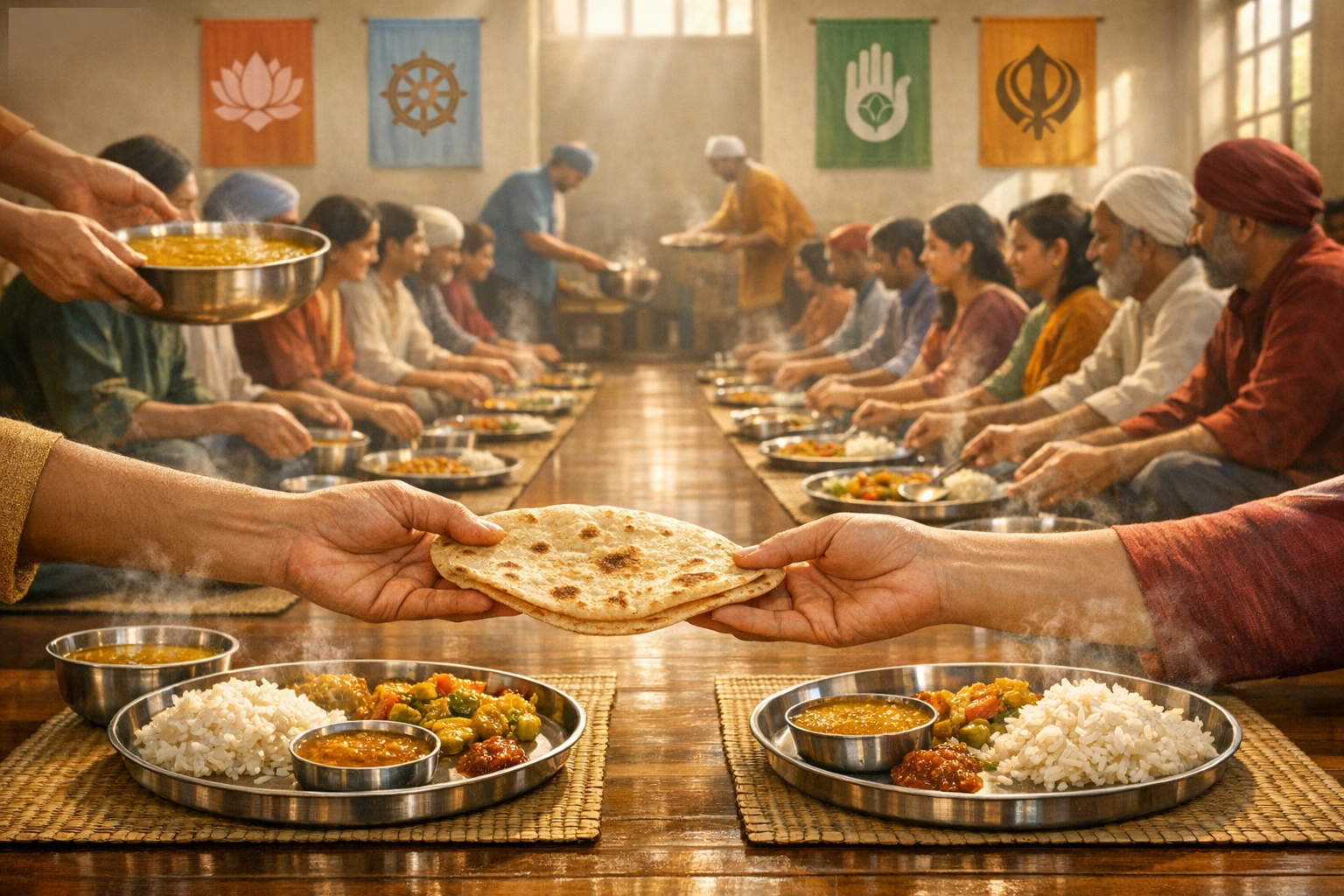
Hinduism and its sister dharmic traditions treat shared food as a deliberate instrument of reconciliation. Philosophical axioms such as Annam Brahma, Atithi Devo Bhava, and Vasudhaiva Kutumbakam elevate feeding from charity to peacecraft. Ramayana narratives, temple prasada, Sikh langar, Jain anna-kshetras, and Buddhist dana converge on a single ethic: dignified, vegetarian commensality dissolves social distance…
-
Shattering the Myth: Why Enlightenment Demands ActionDharma, Karma Yoga, and Sacred Work

Many assume enlightenment frees a person from work; Hindu philosophy and its dharmic counterparts show the opposite. The Bhagavad Gītā teaches that action is unavoidable and must be transformed through Karma Yoga into selfless service. Dharma aligns individual role and aptitude with the common good, while prārabdha karma explains why even the realized remain outwardly…
-
As You Believe, So You Live: Hindu Dharma’s Science of Mindset, Health, and Longevity

This long-form analysis explores how dharmic wisdomHinduism, Buddhism, Jainism, and Sikhismanticipated modern findings on the mind-body connection by showing that belief (śraddhā, bhāva) measurably shapes healthspan and longevity. It integrates Bhagavad Gita and Yoga Sūtra insights with Ayurveda’s sattvavajaya and rasāyana, and aligns them with contemporary stress biology, autonomic regulation, and immune resilience. Practical guidance…