
-
Transcend Forms, Find Clarity: Hindu Wisdom for Locating the Cause Behind All Phenomena

This article examines a central teaching of Hindu philosophy: look past nāma-rūpa (names and forms) to the abiding kāraṇa (cause). Drawing on the Upaniṣads and Bhagavad Gītā, it explains how Vedānta distinguishes empirical from ultimate reality and why māyā is a principle of appearing rather than mere illusion. It shows how forms function as upāyameans…
-
Decoding ‘One in a Million’ Knows God: A Vedantic Blueprint for Rare Realization

The ancient saying that “one in a million knows God in reality” is best read as a diagnostic of depth rather than an exclusionary claim. Grounded in Bhagavad Gita 7.3 and clarified by Upanishadic methods, it highlights why direct realization is rare: the path requires exacting qualifications, disciplined practice, and tested guidance. This article unpacks…
-
Dissolve Thoughts at Their Source: Hindu Wisdom and Dharmic Science for a Clearer Mind

Ancient Hindu wisdom teaches that thoughts gain power only when grasped; dissolving them at inception restores clarity and self-mastery. The method aligns with Yoga Sutra principles of vritti-nirodha, abhyasa, and vairagya, and is reinforced by Upanishadic and Bhagavad Gita guidance. Practical protocolsbreath coherence, light labeling, mantra gating, atma-vichara, and somatic defusionmake the technique accessible in…
-
Bhagavad Gita at New Govardhana: Profound Bhakti-Yoga Insights by HG Caitanya Caran das
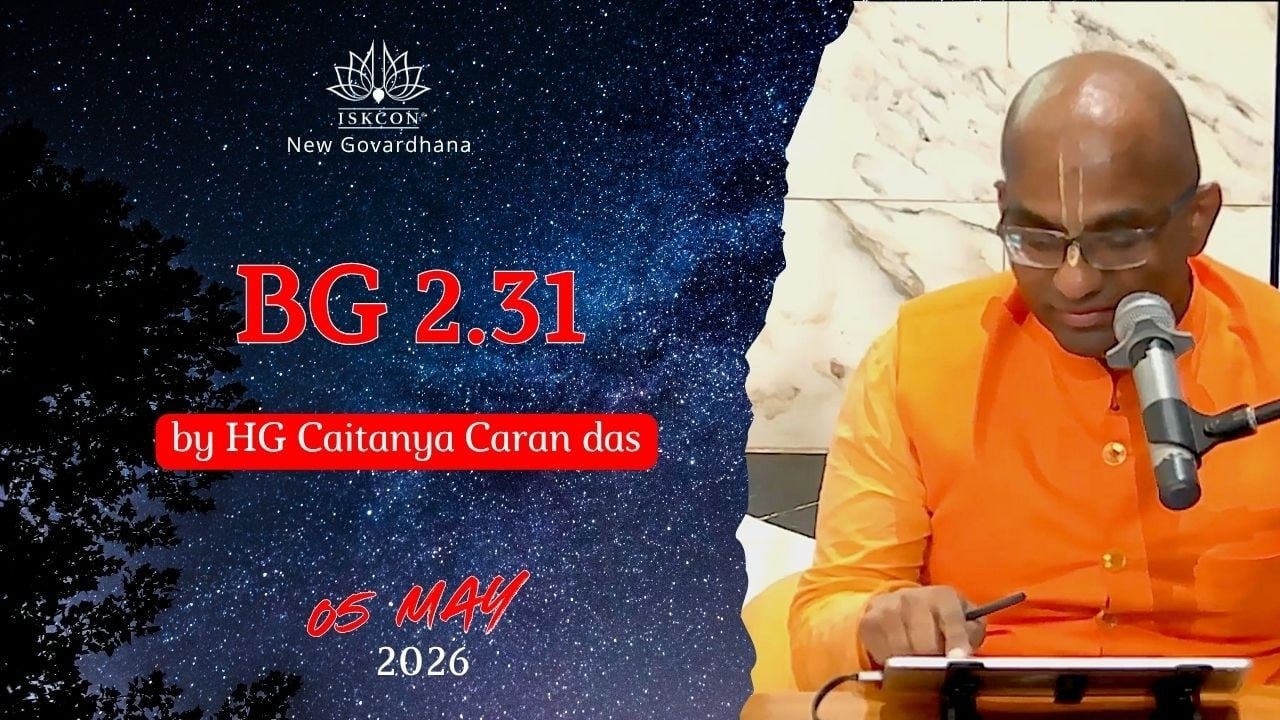
On 05 May 2026, ISKCON New Govardhana Temple hosted a Bhagavad Gita class by HG Caitanya Caran das that united rigorous exegesis with practical Bhakti-Yoga. The session mapped Karma, Jnana, and Bhakti as an integrated pathway, grounding ethical action in devotion and clear discernment. Attendees received a concise practice blueprint: daily japa, structured reading, reflective…
-
Trust in Krishna’s Protection and the Dharma of Duty: Srila Prabhupada on Nrsimhadeva

This article analyzes the Vaishnava synthesis of divine protection and human duty through Srila Prabhupada’s assurance regarding prayers to Nrsimhadeva. It explains how confidence in Krishna’s guardianship aligns with the Bhagavad Gita’s ethics of disciplined action without attachment to results. It clarifies that surrender is not fatalism but a stance that deepens responsibility, courage, and…
-
Unlock the Ocean Within: Dharmic Pathways to Atman, Timeless Wisdom, and Resilient Strength

This essay examines the statement “You know little of that which is within you. Within you is the ocean of infinite power” through the shared frameworks of Hinduism, Buddhism, Jainism, and Sikhism. It explains the Upanishadic vision of ātman and Brahman, the yogic map of prāṇa and kundalinī, and the ethical preconditions that make inner…
-
From Riyadh to Tehran: How Srila Prabhupada’s Vedic Wisdom Inspires Unity and Hope

Interest in India’s ancient knowledge has expanded across Arab and Persian cultural spheres, especially during periods of uncertainty. This article examines why Srila Prabhupada’s books resonate in these contexts: philosophical clarity, rigorous translation, and accessible practice. It explains how Arabic and Persian editions preserve Vedic nuance while remaining readable for university courses and interfaith study…
-
Beyond Sectarianism: Dharmic Wisdom for an Inclusive, Boundless Vision of the Divine

This essay examines the insight that a sectarian mind yields a defective image of the Divine, drawing on Hindu philosophy and the wider Dharmic traditions. It traces Vedic and Upanishadic roots of pluralism, explains the Bhagavad Gita’s inclusivism, and shows how Ishta, Advaita, Vishishtadvaita, and Dvaita approach the One-and-many problem without mutual negation. It integrates…
-
Conquer Fear of Failure: Evidence-Backed Dharmic Practices to Unlock Peak Efficiency

Fear of failure often hijacks attention and slows execution just when performance matters most. This article integrates dharmic wisdom and behavioral science to convert that fear into steady, reliable efficiency. It explains how breath-first resets like Bhramari pranayama and Nadi Shodhana regulate arousal and restore cognitive control. It shows how Nishkama Karma reframes success around…
-
Omnipotence and Sacred Sound: Why Krishna’s Words Remain a Living Presence Across Traditions

Omnipotence in Vedic philosophy explains how Krishna remains in unbroken companionship with living beings through sacred sound. Vaishnava theology teaches nāma–nāmi abheda, the non-difference between the Divine Name and the Divine Person, grounding the transformative power of the Hare Krishna Mahāmantra. The principle of śabda-brahman shows that divine words are not merely symbolic; they are…
-
Ace Your Hardest School Year with Dharmic Detachment: A Bhagavad Gita–Aligned Study Blueprint

Students often face a painful dilemma: work hard yet see mixed results, then oscillate between self-criticism and fatalism. A dharmic frameworkrooted in the Bhagavad Gita and harmonized with Buddhism, Jainism, and Sikhismreplaces that false choice with a synthesis: disciplined, evidence-based effort joined to inner surrender of outcomes. This approach anchors study in karma yoga and…
-
Beyond Heaven and Hell: Karma, Consciousness, and Self-Reward in Dharmic Philosophy

This essay explains, in clear academic terms, why Dharmic traditions reject an externalized reward-and-punishment model after death while affirming a rigorous moral universe. It clarifies karma-phala using concepts like sanchita, prarabdha, and agami, and links Mimamsa’s apurva and Nyaya–Vaisheshika’s adrishta to a self-executing moral order. Hindu philosophy, Buddhism, Jainism, and Sikhism are presented in harmony:…
-
Vasudhaiva Kutumbakam and Dharma: A Powerful Blueprint for Shared Global Peace

Vasudhaiva Kutumbakam frames global peace as a disciplined practice of shared responsibility rooted in Rta, Dharma, and the ethics of ahimsa and karuna. The essay explains how loka-samgraha in the Bhagavad Gita links personal virtue to social welfare through reciprocal duty. It outlines pluralism across Hinduism, Buddhism, Jainism, and Sikhism as a practical foundation for…
-
Bhagavan and Ishvara, One Truth: Why Vishnu and Shiva Bear These Timeless Honorifics

The titles Bhagavan and Ishvara carry precise theological weight in Hindu philosophy without enforcing hierarchy. Bhagavan highlights the plenary, relational fullness of the Divine, while Ishvara emphasizes sovereign lordship and cosmic governance. Scriptures apply both titles across deitiesVishnu is called Ishvara, and Shiva is addressed as Bhagavansignaling complementarity rather than exclusivity. Vedantic schools, Shaiva traditions,…
-
Avatar vs Prophet: Decoding Sacred Roles, Divine Presence, and Dharma Across Faiths

This in-depth analysis explains the core difference between a Hindu avatāra and an Abrahamic prophet by examining ontology, revelation, soteriology, and ritual life. It shows how the avatāra is the Divine Presence entering the world to restore dharma, while the prophet is a human messenger who conveys God’s guidance. The piece nuances the comparison by…
-
Dharma Unveiled: The Living Code of Virtue Guiding Daily Life Across Dharmic Traditions

Dharma is presented as a living, context-sensitive code of virtue shared across Hinduism, Buddhism, Jainism, and Sikhism. The article clarifies its scopefrom universal virtues like ahiṃsā and satya to role-specific dutiesand shows how it governs the pursuit of prosperity and well-being without compromising conscience. It draws on classical sources (Dharmashastras, the Bhagavad Gita, Buddhist canons,…
-
Servant of a Glorious Master: The Transformative Power of Seva and Guru-Tattva Across Dharmic Paths
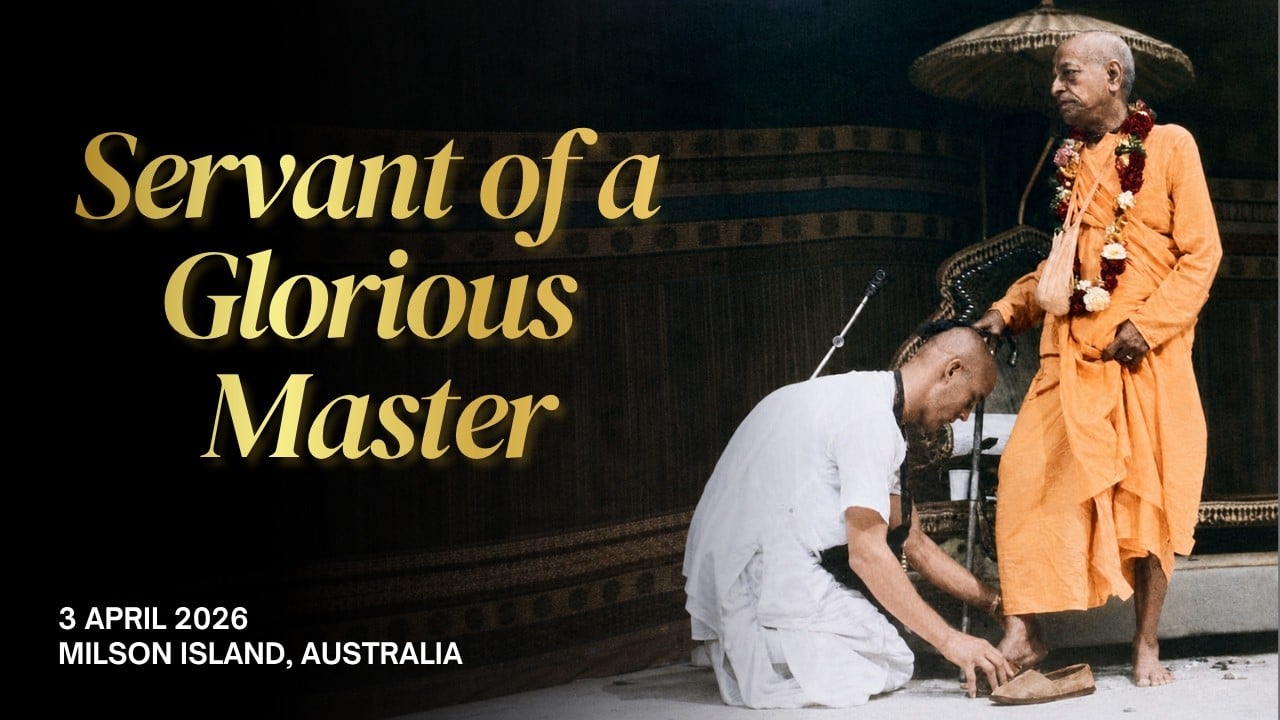
This long-form reflection reframes ‘Servant of a Glorious Master’ as a disciplined path of seva, wisdom, and devotion shared across Hindu Dharma, Buddhism, Jainism, and Sikhism. It clarifies how dasya-bhava, prapatti, nam-simran, refuge, ahimsa, and anekantavada converge as a common grammar of service. Drawing on the Bhagavad Gita and classical Bhakti theory, it distinguishes service…
-
Beyond the Flute: Why Bala‑Krishna Thrives as Parthasarathi’s Warrior Ethos Lies Dormant
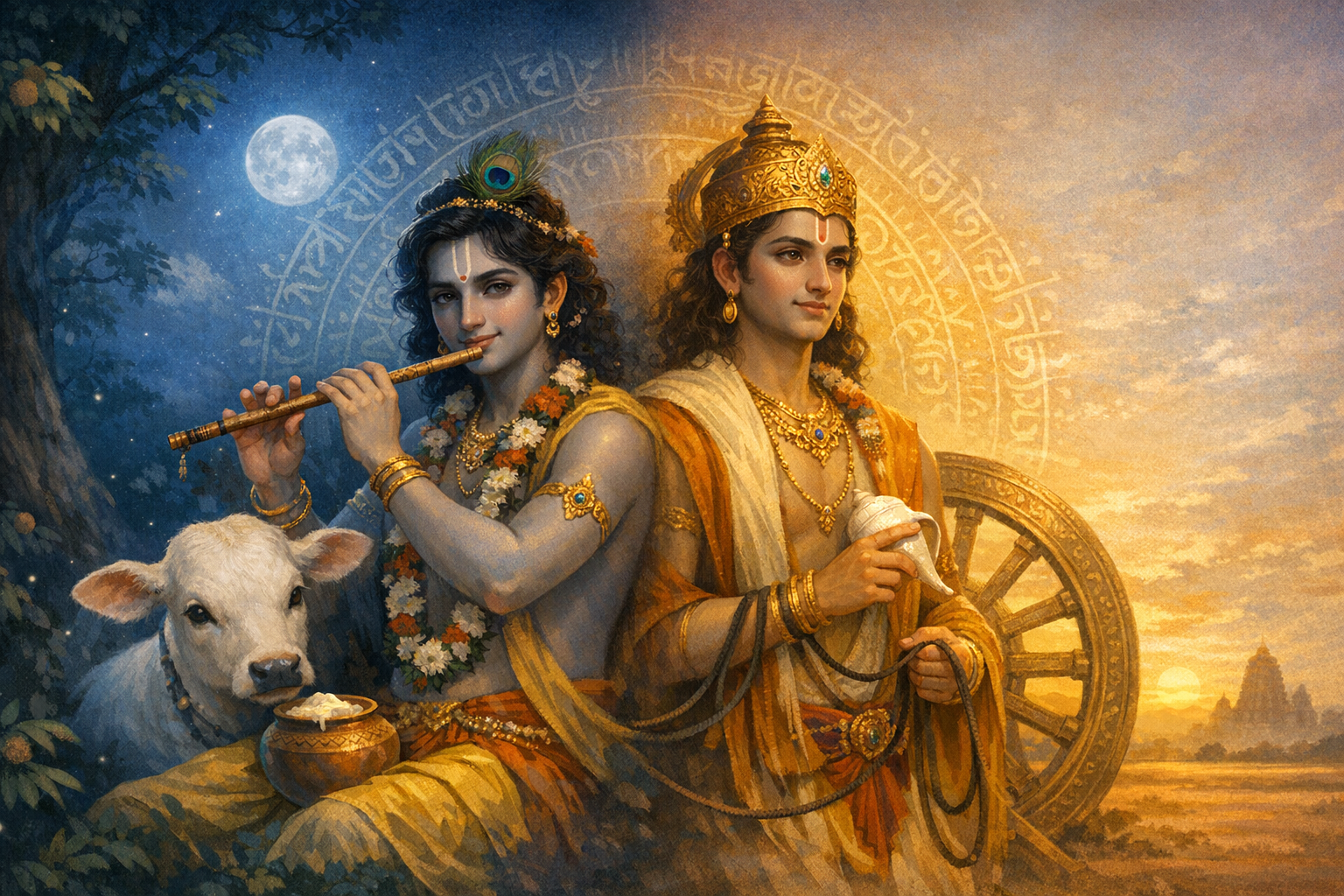
Images of Bala‑Krishna dominate homes and temples, while Parthasarathithe charioteer and teacher of the Bhagavad Gitaappears less often in popular devotion. This long‑form analysis explains the imbalance through rasa theory, bhakti history, temple networks, pedagogy, and modern media. It shows how intimacy‑focused worship naturally favored child and flute‑playing forms, whereas Krishna’s kshatra ethics are harder…
-
Introspection to Self-Realization: A Rigorous Dharmic Blueprint for Knowing the Divine

This long-form analysis explains why disciplined self-analysis is a direct, repeatable path to self-realization and knowing the Divine across Hinduism, Buddhism, Jainism, and Sikhism. It integrates the Upanishads, the Bhagavad Gita, Patanjali’s Yoga Sutra, the Satipaṭṭhāna Sutta, Jain Anekāntavāda with Samayik and Pratikraman, and Sikh Naam-centered living under hukam. A rigorous seven-phase practice cycleintention, observation,…
-
Krishna’s Omnipotence Explained: Why Name, Mantra, and Scripture Offer Direct, Daily Companionship

This article explains, in clear Vedic and Bhakti terms, why Krishna’s omnipotence means His words, names, and teachings are non-different from Him, offering direct companionship at any moment. It shows how the concept of shabda as an efficacious, self-revealing medium makes scriptural hearing and mantra recitation a living encounter rather than mere symbolism. Drawing on…