-
Do Our Words Convey Our Heart? HG Caitanya Charan Das on Dharmic Speech at ISKCON Adelaide

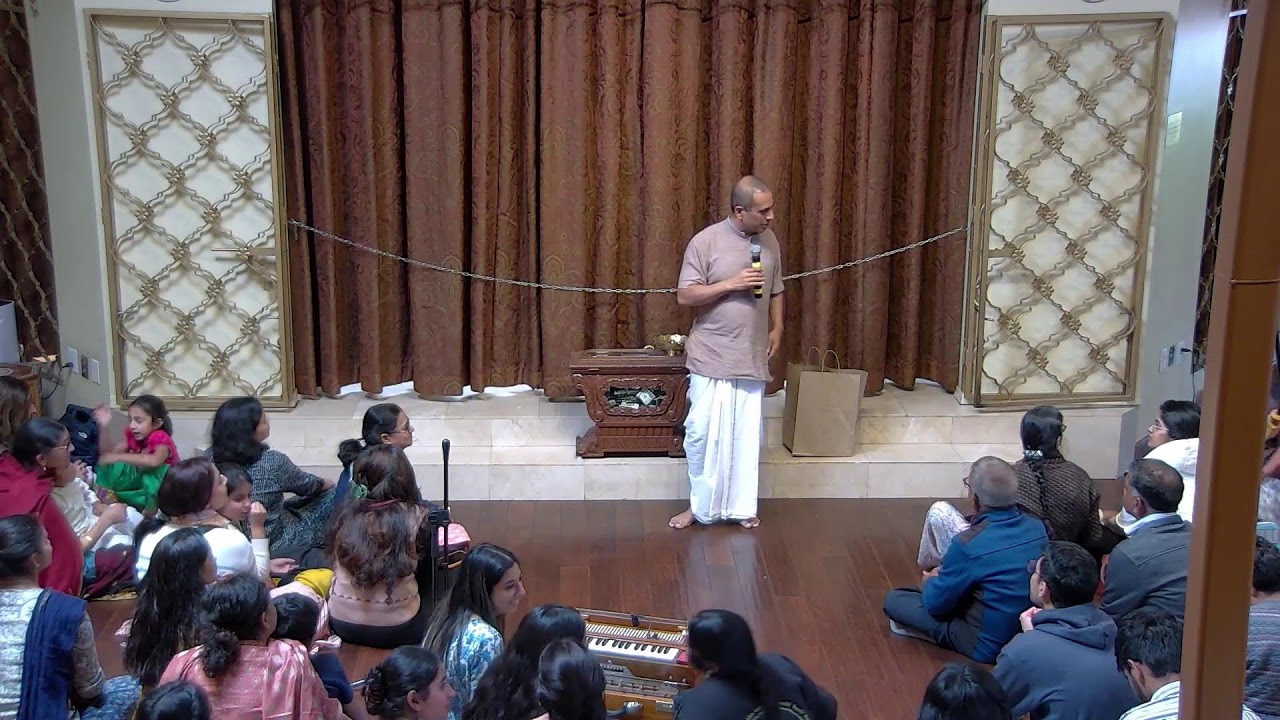
At ISKCON Adelaide on 01.05.26, HG Caitanya Charan Das explored how speech reflects inner consciousness and why language, refined through sādhana, is central to bhakti and community harmony. Grounded in Bhagavad Gita 17.15, the essay outlines a composite ethic for speech—truthful, kind, beneficial, and non-agitating—that resonates across Hinduism, Buddhism, Jainism, and Sikhism. It translates classical…
-
Tapasya in Hinduism: Transformative Austerity for Self-Realization, Clarity, and Inner Power

Tapasya in Hinduism is a disciplined, life-affirming austerity that refines body, speech, and mind to foster Self-Realization and ethical clarity. Drawing on the Upanishads, Bhagavad Gita, and Yoga philosophy, it is defined as a transformative heat that burns impurities and ripens insight. The Gita’s typology (sāttvika, rājasika, tāmasika) and Patañjali’s Kriyā Yoga supply practical guardrails…
-
When Do Our Actions Bear Fruit? Unraveling Karma’s Timing with Profound Dharmic Insights

A perennial dharmic question asks when the actions of this lifetime truly bear fruit. Drawing on Hindu sources such as the Bhagavad Gita, Upanishadic thought, the Yoga Sutras, and dharmashastra, this analysis explains how outcomes may manifest immediately, over time, or in future births through the interplay of sanchita, prarabdha, and agami karma. It integrates…
-
Facing Impermanence Now: Urgent, Courageous Surrender to Krishna—and Dharma’s Unifying Path

Srila Prabhupada’s call for urgent surrender to Krishna, echoed by Radhanath Swami, is best understood as a clear-eyed response to life’s impermanence rather than as fear or fatalism. This essay situates sharanagati within a unifying dharmic framework shared by Hinduism, Buddhism, Jainism, and Sikhism, highlighting convergences around anitya/anicca, aparigraha, Hukam, and refuge. It explains maya…
-
Beyond Ashes: Dharmic Wisdom on Death, Rebirth, and Why Restraint Sustains Our World

Modern discourse often assumes that death ends consciousness. Dharmic traditions—Hinduism, Buddhism, Jainism, and Sikhism—offer a rigorous alternative: the body returns to elements while awareness continues in accordance with karma. This article explains the classical Vedic framework (sthula, sukshma, and karana sharira), unpacks the memorable triad of the body’s material end—stool, ashes, or earth—and situates it…
-
Fierce Compassion on Narasimha Caturdashi: Dharma’s Triumph, Prahlada’s Faith, Rituals and Meaning

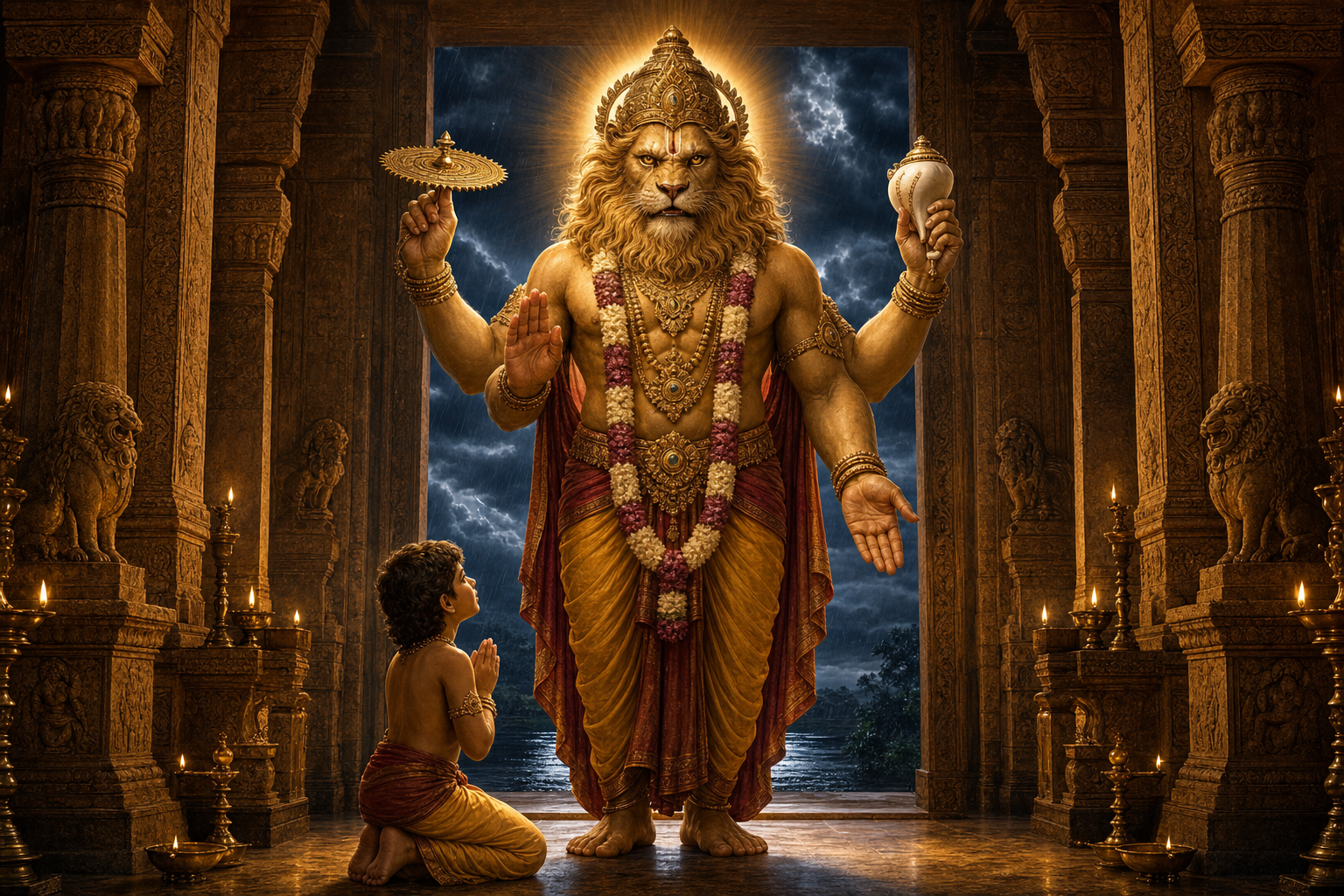
Narasimha Caturdashi (Narasimha Jayanti) commemorates the man-lion avatara of Vishnu who restores dharma while protecting steadfast devotees, as outlined in the Bhagavad-gita’s verses on divine intervention. The Prahlada narrative from the Bhagavata Purana illustrates unwavering bhakti in the face of authoritarian suppression, framed not as sectarian conflict but as a timeless lesson in ethical resilience.…
-
Hindu Wisdom Beyond Pride: Shattering Ego’s Illusion to Reveal the Sacred in All Creation

This essay examines the illusion of worthlessness through Hindu philosophy and a classic teaching tale, The Search for the Void. It explains how ahaṃkāra (ego) and avidyā (misapprehension) distort judgment, while the Upaniṣadic vision—īśāvāsyam idaṁ sarvam and sarvaṁ khalvidaṁ brahma—reveals intrinsic, relational value. A detailed retelling of the Guru–Śiṣya narrative shows how “void” becomes a…
-
Bhagavan Alone Is Real: Timeless Vedanta, Living Bhakti, and the Joy of Dharmic Unity

This article unpacks the aphorism “Know that Bhagavan alone is real. Nothing else matters” through the lenses of the Upanishads, Bhagavad Gita, and major Vedanta schools (Advaita, Vishishtadvaita, Dvaita). It clarifies Bhagavan as the sat-chit-ananda ground of being and explains why the phrase does not deny ethical life but re-centers it in the Real. Readers…
-
Master One-Pointed Attention: Dharmic Science to Transform Every Action into Sacred Power

Modern life fractures attention, but Dharmic traditions teach a precise science of wholeness through one-pointed engagement. Drawing on the Bhagavad Gita, Yoga Sutra, Buddhist Satipatthana, Jain Samayik, and Sikh simran, this article explains how complete presence elevates everyday action. It integrates cognitive science on task switching, attentional residue, and flow with practices like pratyahara, dharana,…
-
No Destination, Only Awakening: Timeless Hindu Wisdom on the Transformative Spiritual Journey

Hindu wisdom reframes the spiritual path as unveiling rather than arrival: there is nowhere to go, nothing to acquire, and everything to recognize. Drawing on the Upanishads, the Bhagavad Gita, Advaita (advait), and the Yoga Sutra, this exploration clarifies the paradox of “no destination” as a disciplined return to presence. It outlines core methods—Jnana, Bhakti,…
-
Facing Life’s Final Examination: Gita 8.6 on Consciousness at Death — ISKCON Insights

This in-depth analysis distills HH Guru Prasad Swami’s “final examination” metaphor for Bhagavad-gita 8.6, showing how consciousness at death reflects a lifetime of formation, not a last-minute tactic. It explains key Sanskrit terms and situates the verse within Gita 8.5–8.14 to emphasize abhyāsa (practice) integrated with bhakti (devotion). Practical guidance translates classical Hindu philosophy into…
-
People Over Power: HG Amogh Lila Prabhu’s Dharmic, Research-Backed Guide to Healing Relationships

This analysis distills HG Amogh Lila Prabhu’s core message—people are the true strength of any company, organization, or family—and translates it into a research-aligned, dharmic framework for sustaining healthy relationships. It integrates insights from Hindu Dharma, Buddhism, Jainism, and Sikhism with concepts such as psychological safety and self-determination theory. Readers gain practical methods for dignified…
-
The Eternal Joy Within: Dharmic Wisdom on True Happiness, Ananda, and Freedom from Suffering

Modern culture often ties happiness to external milestones, yet Hindu wisdom distinguishes this conditional pleasure from intrinsic ananda—the steady joy of awareness. Drawing on the Upanishads, the Bhagavad Gita, and Yoga philosophy, this essay maps how attention becomes entangled in craving and how disciplined living restores clarity. It outlines four complementary yogas—karma, bhakti, jñāna, and…
-
Piercing the Veil of Avidya: How Ignorance Blocks Spiritual Growth—and How to End It

Avidya—misapprehension rather than mere lack of information—sits at the root of suffering and obstructs spiritual progress. This analysis synthesizes Hindu philosophy with allied insights from Buddhism, Jainism, and Sikhism to show how ethics, meditation, devotion, and knowledge converge to dispel ignorance. Drawing on the Upanishads, the Bhagavad Gita, Vedanta, and the Yoga Sutra, it clarifies…
-
Krishna Katha at ISKCON Silicon Valley: Transformative Bhakti through Chanting and Hearing

This long-form analysis contextualizes the Krishna Katha presented by H.G. Vaisesika Dasa at ISKCON of Silicon Valley on 26 April 2026. It explains why hearing and chanting are central in the Bhakti Tradition, grounding the discussion in the Bhagavad Gita and Srimad Bhagavatham. The piece outlines practical methods of kirtan and japa, describes their physiological…
-
Already Enough: Dharmic Wisdom on Love, Self-Acceptance, and Living Authentically Today

The post argues that love and acceptance are not earned through perfection but revealed through authentic living, aligning with core insights of Hinduism, Buddhism, Jainism, and Sikhism. It explains Atman, anatta, anekantavada, and Ik Onkar as complementary lenses for intrinsic worth and compassionate action. Drawing on the Bhagavad Gita and Upanishads, it reframes perfectionism as…
-
Beyond the Senses’ Trap: Dharmic Science of Lasting Joy across Hindu, Buddhist, Jain, Sikh

Modern restlessness around pleasure and possession is precisely mapped in the shared wisdom of Hinduism, Buddhism, Jainism, and Sikhism. Each tradition explains how untrained senses agitate the mind and how disciplined attention—through pratyahara, mindfulness, aparigraha, Seva, and devotion—transforms agitation into equanimity. The piece integrates Hindu models of the indriyas, Gita psychology of desire, Buddhist dependent…
-
Ananya Sharan Bhaava Explained: Fearless Single‑Minded Devotion Beyond Spiritual Shopping

Ananya Sharan Bhaava (single-minded devotion) is not acquired from outside; it is an innate capacity uncovered by simplifying attention and practicing consistently. Dharmic sources—from the Bhagavad Gita and Narada Bhakti Sutra to Buddhist refuge, Jain sāmāyika, and Sikh Nām Simran—converge on the same principle: refuge becomes single-minded when remembrance is continuous and ethics are integrated.…
-
Krishna as Paramananda: Unlocking the Highest Pleasure and Enduring Inner Bliss

The proposition that ‘Krishna means the highest pleasure’ is a technical statement of Vedic philosophy that distinguishes fleeting stimulation from enduring bliss (ānanda). Drawing on the Upanishads and the Bhagavad Gita, it locates true happiness in alignment with the Infinite and explains why inner joy is ‘beyond the senses’ yet discernible by a refined intellect.…
-
Timeless Union: The Transformative Power of Jnana and Yoga for Moksha in Hindu Philosophy

This long-form exploration shows how Jnana and Yoga converge in Hindu philosophy to deliver both liberating knowledge and lived stability. It clarifies Vedantic epistemology alongside Patanjali’s practical method, demonstrating why insight requires disciplined cultivation. It maps ethical foundations shared across Hinduism, Buddhism, Jainism, and Sikhism, highlighting a profound unity among dharmic traditions. It offers a…